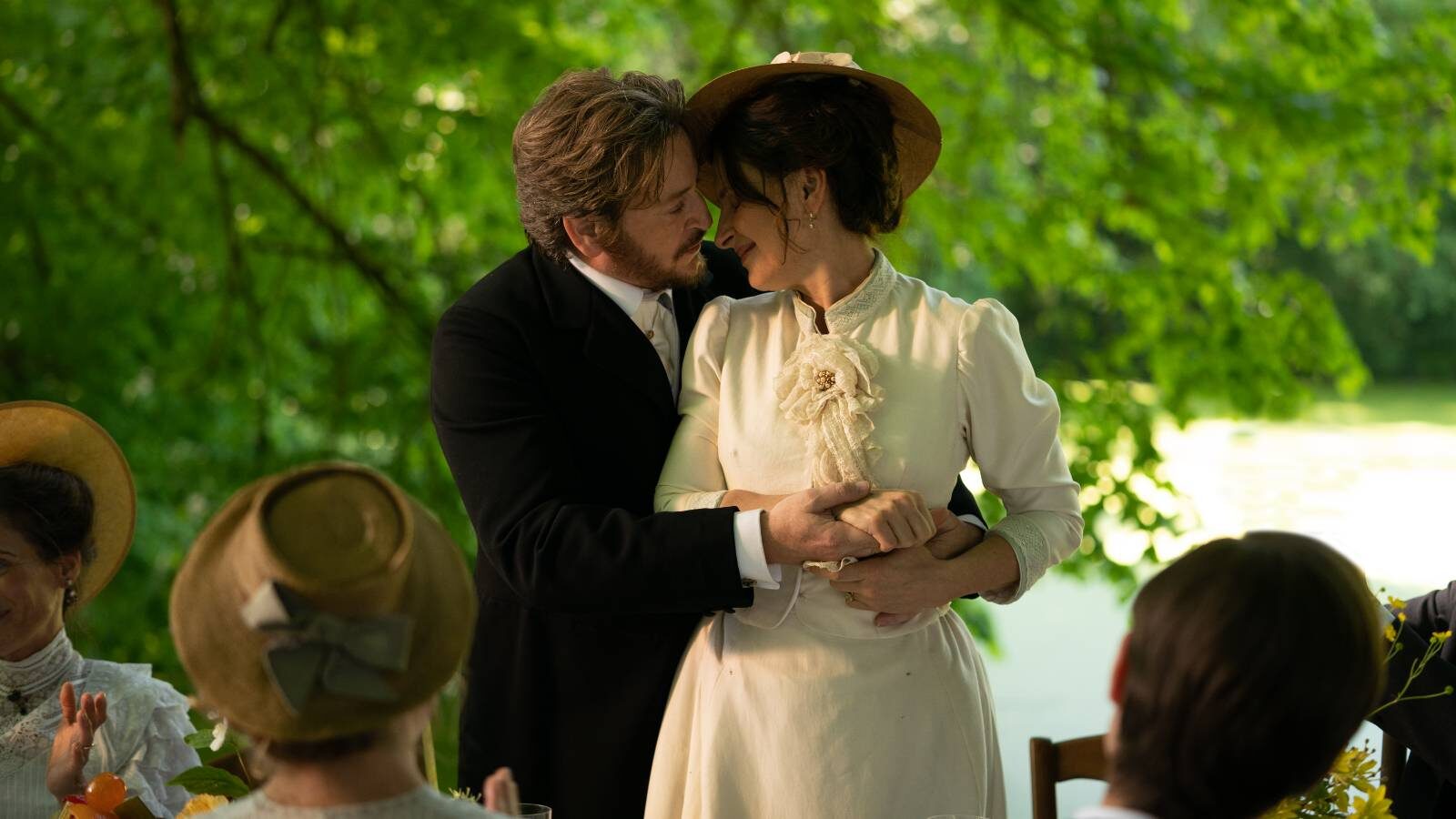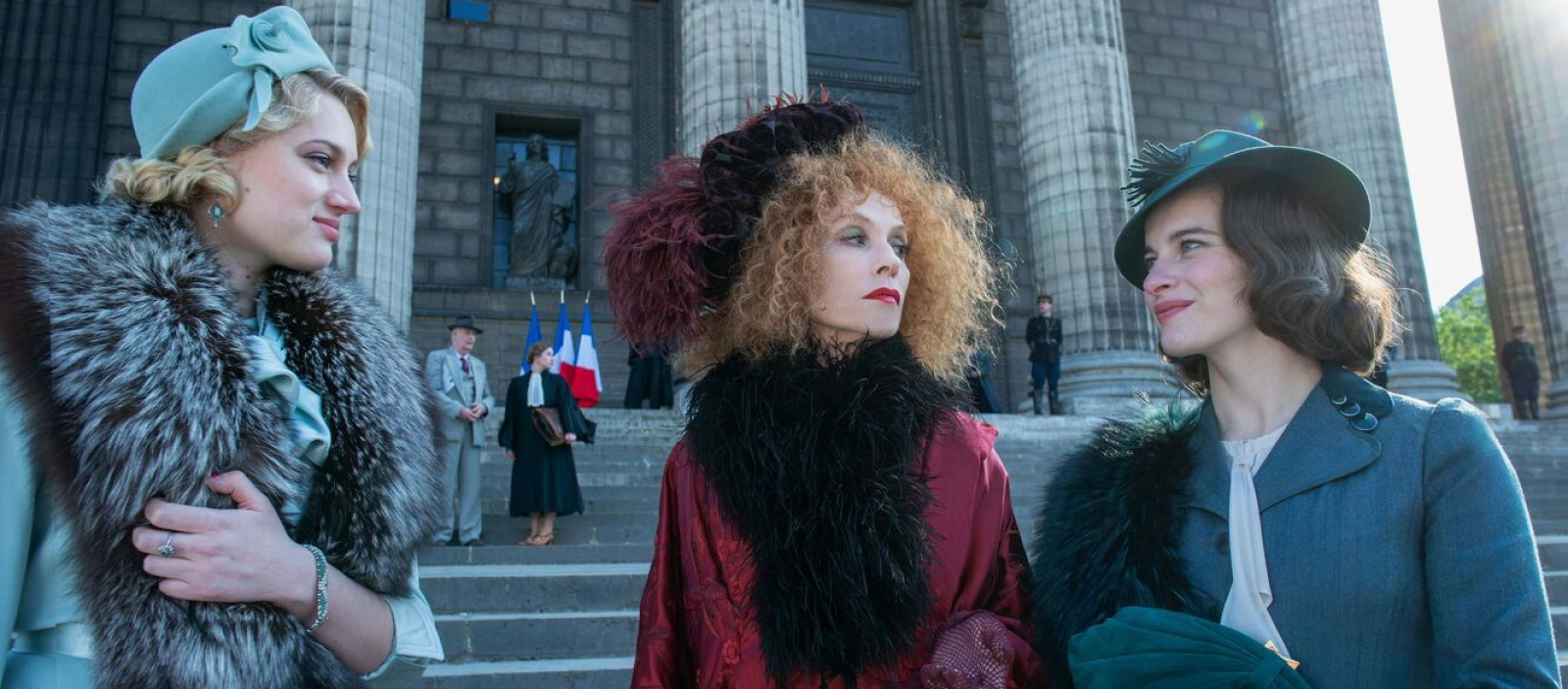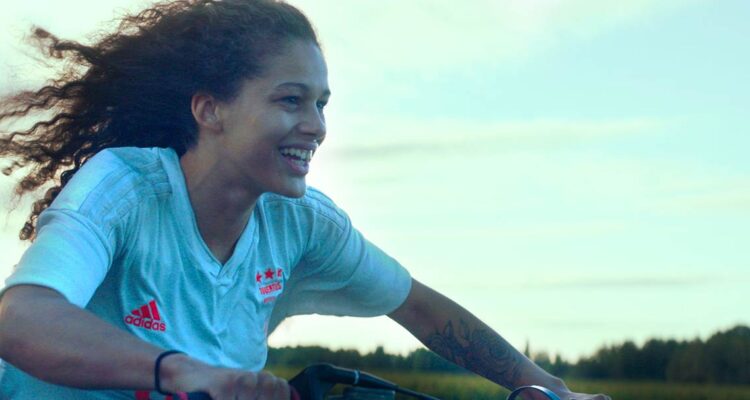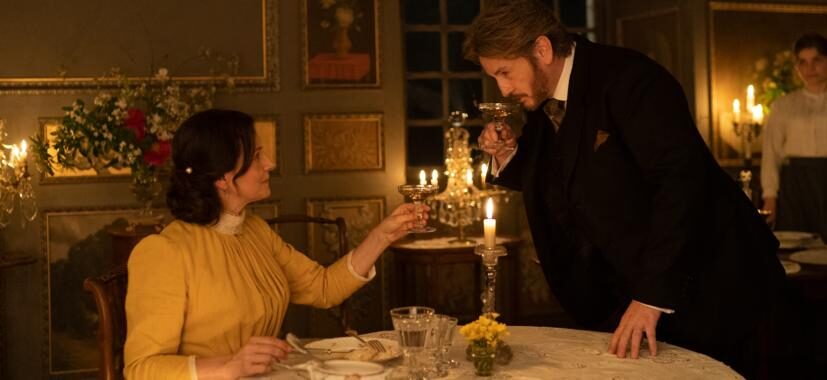
Photo caption: Nadia Tereszkiewicz, Isabelle Huppert and Rebecca Marder in THE CRIME IS MINE. Courtesy of Music Box Films.
Set in 1930s France, the breezy French comedy The Crime Is Mine is a proto-feminist farce. Madeleine (Nadia Tereszkiewicz of Only the Animals) is an actress struggling to find jobs because she won’t submit to the casting couch. Her roommate Pauline (Rebecca Marder) is a lawyer who law firms will not hire because of her gender. Madeleine seems to be the last person seen with a murder victim, a lecherous producer, and falls under police suspicion.
Pauline “defends” Madeleine with an ingenious strategy – confess to a killing that she didn’t commit, claim self-defense and ride the resultant wave of publicity to fame and riches.
The central joke, of course, is that a protagonist is trying to be proven guilty for a crime that she did not commit. The other novelty is that, in a decidedly non-feminist time and place, two young women without means must survive with dignity by their own cleverness and moxie.
I found all this mildly amusing until mid-film, when Isabelle Huppert shows up, playing a once famous diva of the silent screen. This character is unashamedly venal, and Huppert, as we can always expect, goes all in. She’s hilarious.
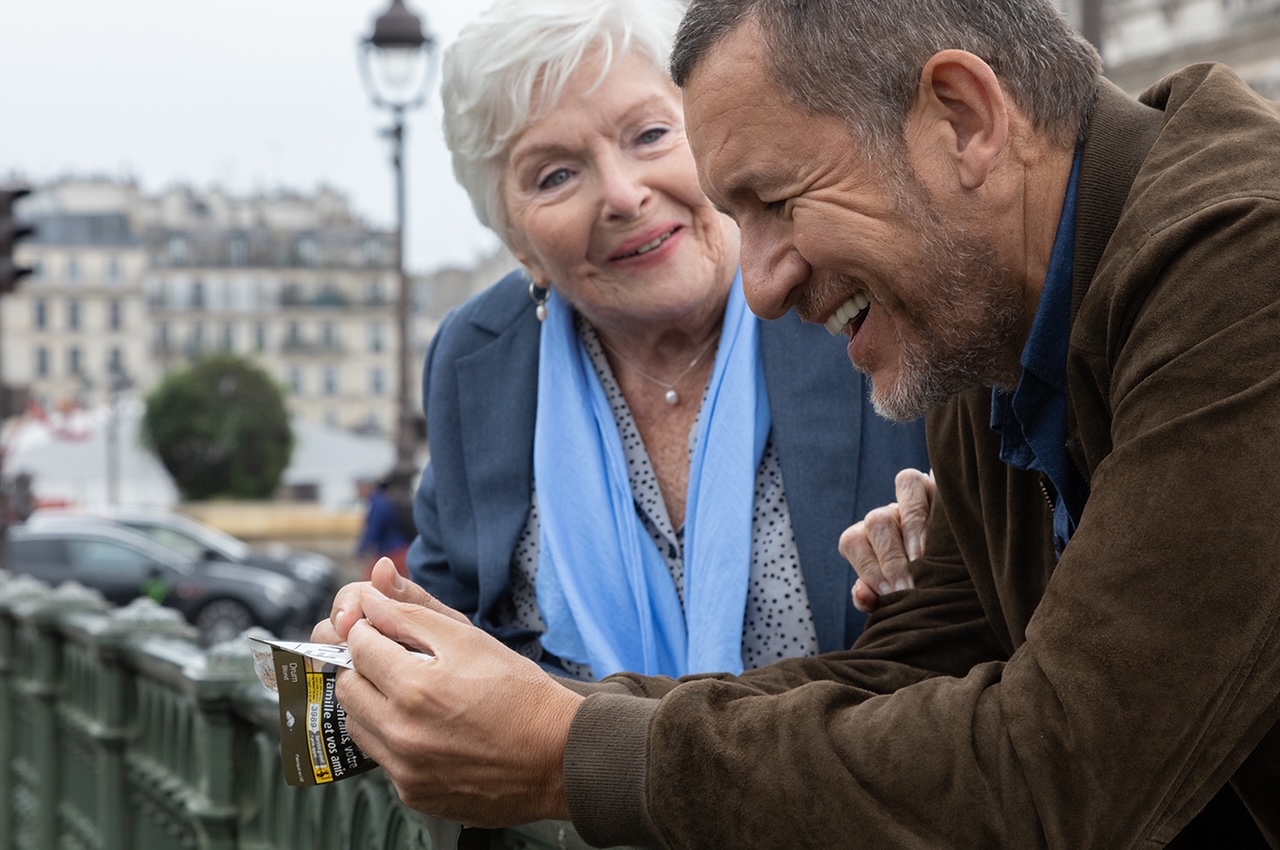
French comedian Dany Boone is a talented comic actor, and makes another welcome appearance here in a supporting role.
Director François Ozon is known for his light comedies like In the House and Potiche (as well as his recent drama Summer of 85),
As funny as Huppert’s performance is, the overall experience of watching The Crime Is Mine is more cerebral than emotionally engaging. The Crime Is Mine releases into theaters on December 25.
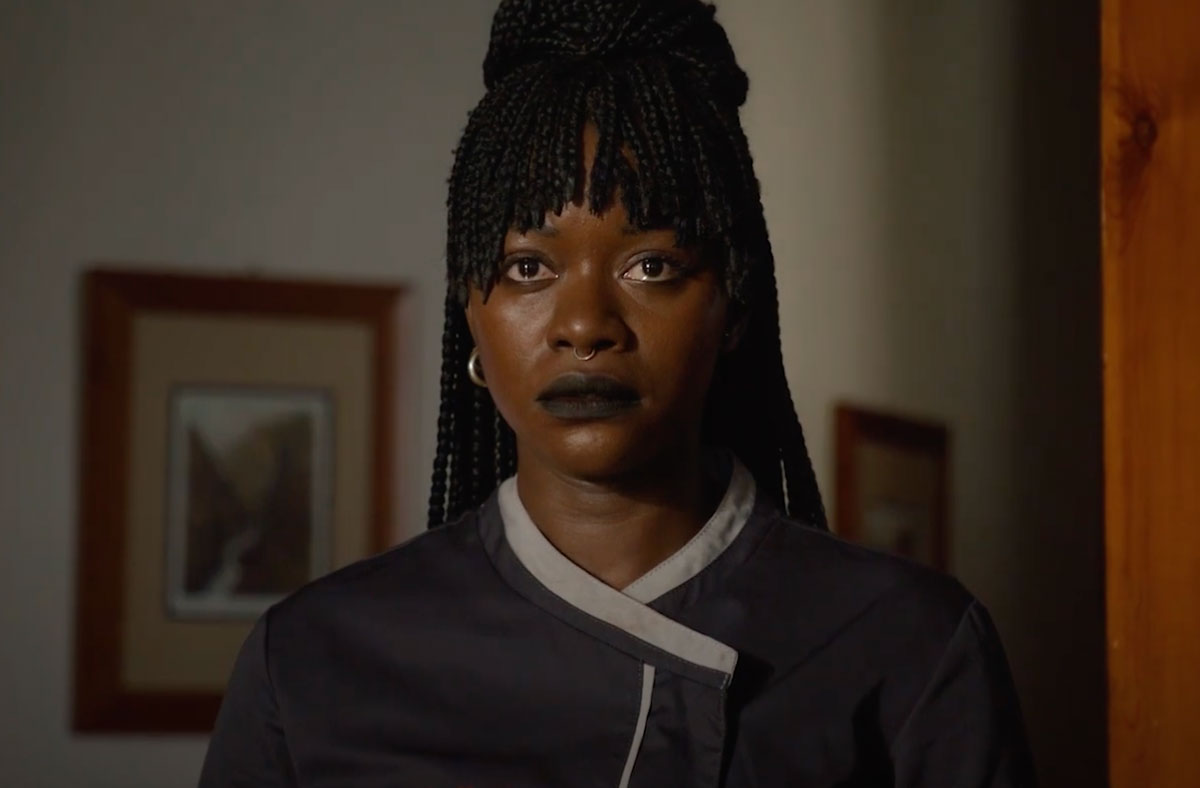
Photo caption: Babetida Sadjo in OUR FATHER, THE DEVIL. Courtesy of Cinedigm.
In the gripping drama Our Father, the Devil, an African immigrant in France is rocked when an African priest shows up in her workplace – and he could actually be the savage warlord who traumatized her in her homeland.
Marie (Babetida Sadjo) is the head chef at an elder care facility in a French mountain town. We see that Marie is talented, competent and kind. There are hints of trauma in her past – a hair trigger reaction to a possible threat, a scar on her back.
The new priest (Souleymane Sy Savane) shows up, and Marie fixes on his voice before she sees him and, before we see his face, she has positively identified him as the young commander from decades before. We wonder how she can be so certain, although that is later revealed.
Our Father, the Devil makes for a riveting character study of Marie that becomes a thriller when Marie gets extreme. We learn more and more about the back story – it’s not just her own victimization that has traumatized Marie. Does violence traumatize the perpetrators as well as the victims? And Our Father, the Devil ultimately poses this question – can revenge extinguish trauma?
Our Father, the Devil is the first feature for Cameroon-born, American writer-director Ellie Foumbi, and she’s both an impressive director and screenwriter.
Babetida Sadjo delivers a compelling performance as Marie, built on the intensity of her gaze and her extraordinarily expressive eyes.
Souleymane Sy Savane, so good in 2008 as the sympathetic, relatable lead in Ramin Bahrani’s fine Goodbye Solo, brings texture and depth to the priest – and his own evolving view of his past.
Our Father, the Devil benefits from interesting and filled-out minor characters – Marie’s dying mentor Jeanne Guyot (Martine Amisse), her cheeky best friend Nadia (Jennifer Tchiakpe), her love interest Arnaud (Franck Saurel), and even her stressed-out boss Sabine (Maelle Genet). There’s not a two-dimensional character or a poor performance in the lot.
Our Father, the Devil has been nominated for an Independent Spirit Award and has won the best picture award at over13 film festivals. I saw Our Father, the Devil at the SLO Film Fest in April, where it also won the jury award for Best Narrative Feature, and it’s now streaming from AppleTV, Vudu, YouTube and redbox.
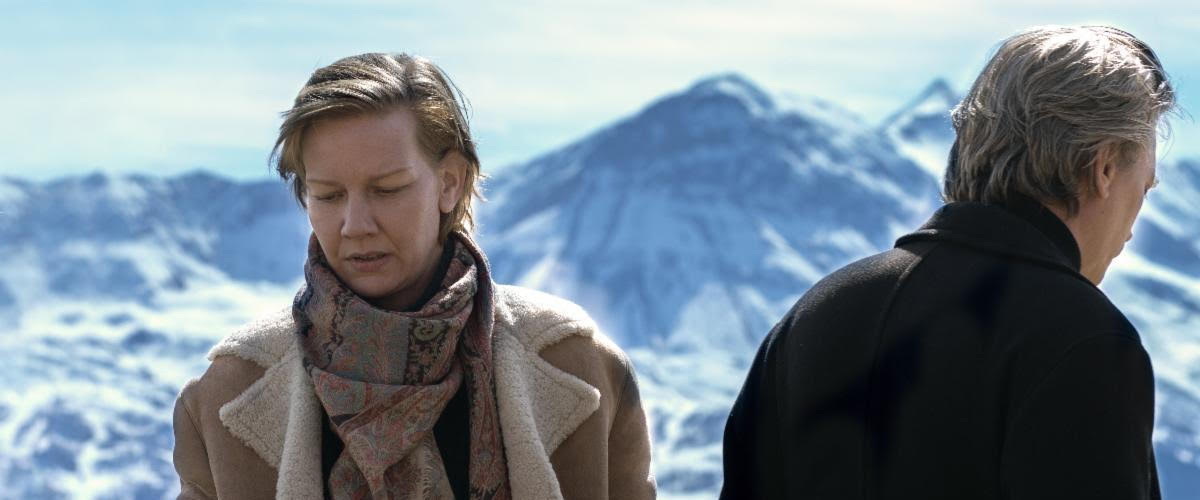
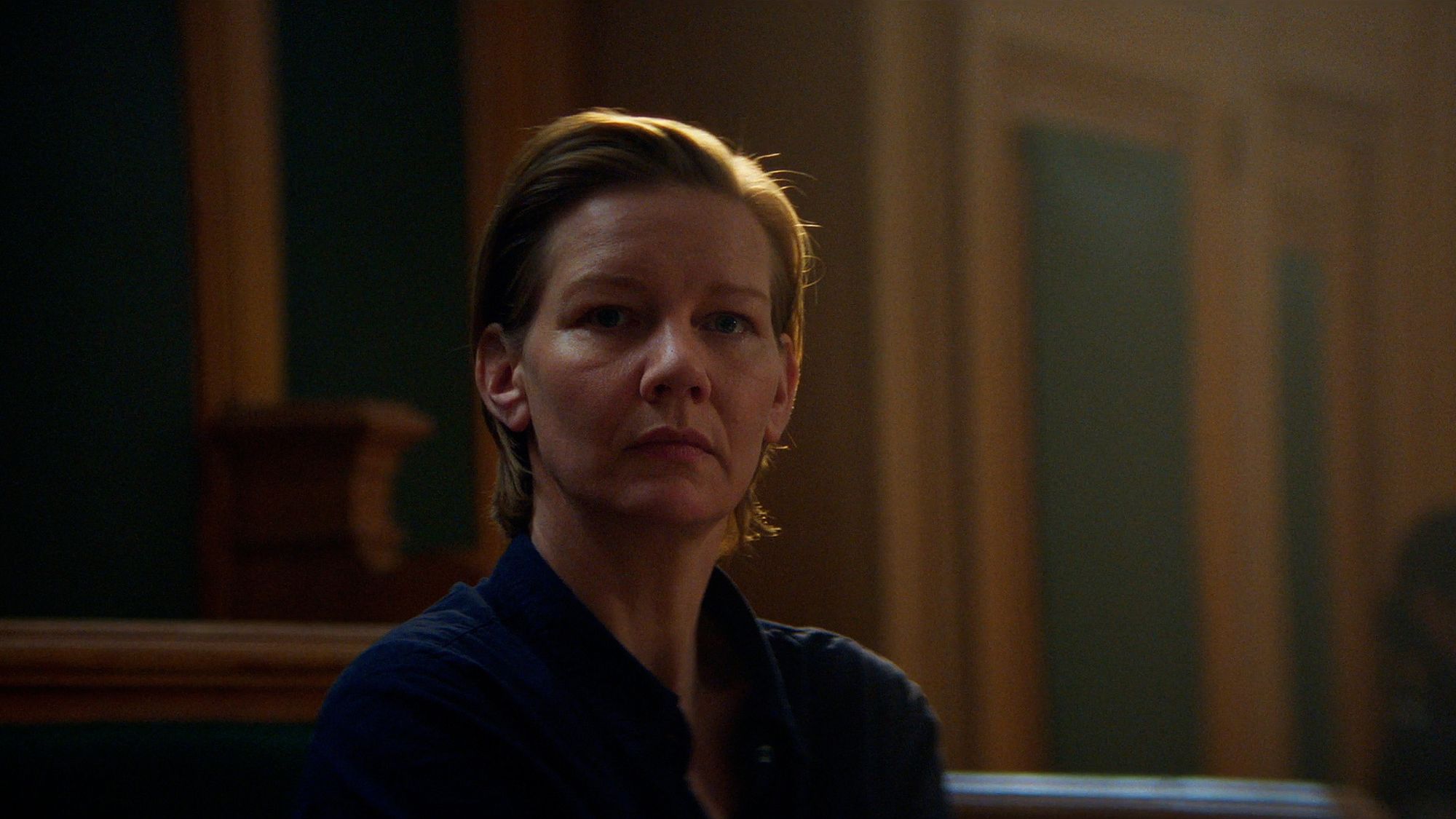
Photo caption: Sandra Huller and Swann Arlaud in ANATOMY OF A FALL. Courtesy of NEON.
Anatomy of a Fall is such a great film, on so many levels, that it’s taken me an entire week to mull over why it’s so good.
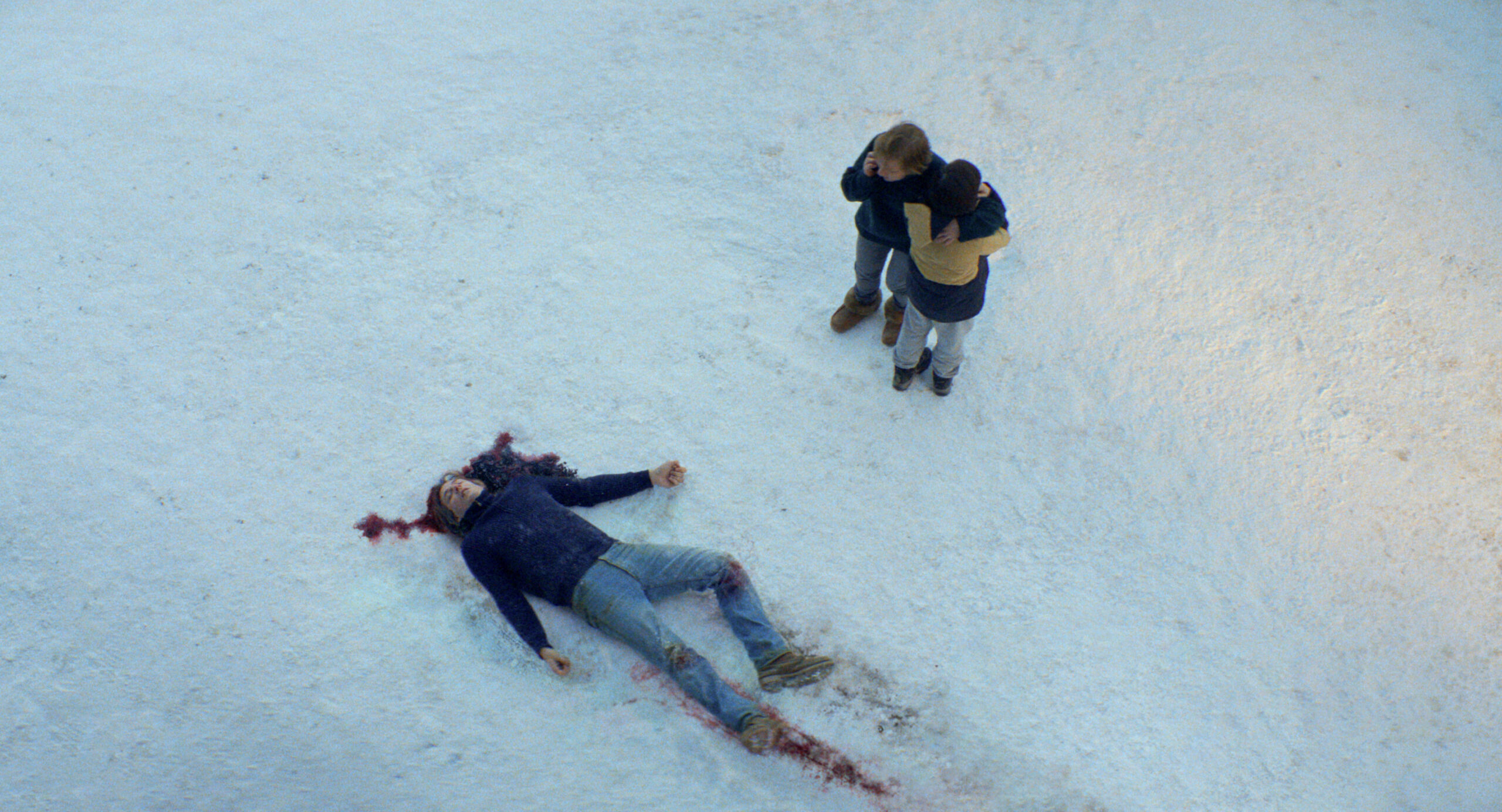
Here’s the story. The successful German novelist Sandra (Sandra Huller) and her French husband Samuel (Samuel Thiess), a teacher and wannabe writer, live in his hometown in the French Alps near Grenoble. They moved there, into a chalet that needs renovation, after a car accident caused their now 11-year-old son Daniel (Milo Machado Graner) to lose his eyesight. Daniel and his dog Snoop return from a walk and discover Samuel, who has fallen to his death from the chalet’s high attic window. Only Sandra was home at the time of Samuel’s death.
The evidence from Samuel’s autopsy might point to a suicide or to a murder. The investigators find something provocative on a thumb drive, and charge Sandra with Samuel’s murder. Anatomy of a Fall goes from a whodunit to a courtroom drama, and then to a family psychological drama, as the trial reveals explosive secrets.
Director and co-writer Justine Triet makes ambiguity more delicious than we could possibly expect. As Jon Frosch wrote in The Hollywood Reporter about Sandra, “But Richard Kimble she’s not. ” We don’t know if Sandra, unlike the famed The Fugitive, is really innocent.
Sandra might be a Kafkaesque victim, unjustly put through a humiliating and terrifying trial, Or she might be an extraordinarily gifted sociopath.
Ironically, Sandra’s literary success has come from transforming her real life experiences, and those of others, into best selling fiction. But Sandra is very closemouthed about her own private life and anything but confessional. Her worst nightmare is to have details of her marriage and her sex life exposed in a public trial.
As the onion of Sandra and Samuel’s marriage is peeled back, Anatomy of a Fall explores just how multi-faceted relationships, the dynamics of guilt and resentment, and how a marriage survives a trauma – or doesn’t. And each scene is filled with ambiguity andthe uncertainty of memory.
As the close of the trial approaches, there’s a a Wowzer cliffhanger that keeps us on the edges of our seats.
Although the story is set in France, most of the dialogue is in English because Sandra and Samuel speak English at home, and Sandra speaks English in the French courtroom.
Sandra Hullermust play Sandra so we believe that she could be innocent or guilty. In addition, Sandra’s character is complicated, even full of paradoxes. Huller’s performance has not been surpassed by that of any other screen actor this year, and she certainly deserves the Best Actress Oscar.
American art house audiences know her best for Toni Erdmann, where her corporate striver character must react to her zany father’s onslaught of ever more elaborate, outrageous and high-stakes practical jokes by maintaining a straight face and carrying on without giving away her shock, embarrassment and desperation. She’s on the verge of abject mortification for the entire movie. Hüller proved herelf a master of the take and the slow burn. She was similarly exquisite in a smaller role in Triet’s Sybil.
No one plays aggrieved, while struggling to maintain composure, as well as Huller. Can you imagine having to listen to your dead spouse’s shrink testify in public about all of his complaints about you in their private sessions? There are many injustices in that situation, and Huller makes us understand that Sandra is feeling each layer of indignity.
Huller has won Best Actress Awards from the European Film Awards and the Berlin and Toronto film festivals. She also stars in the upcoming Zone of Interest, another of the very most acclaimed films of 2023.
Anatomy of a Fall is just the fourth narrative feature for Justine Triet, a firecracker director. This one is the least comedic. I described her most recent film, Sibyl, as “masking its trashiness with expert filmmaking”.
In Anatomy of a Fall, Triet tells us so much before the opening credits. In just a few moments, we see both Sandra’s success and her off-putting manner, undeniable friction in her marriage, the boy’s visual handicap, his spirit and his loyal dog. And the discovery of a dead husband. Wow!
The entire cast is solid, especially Swann Arlaud (with a fabulous haircut) as the defense counsel, passionate about Sandra’s defense and perhap devoted to Sandra herself, but uncertain (and indifferent) as to her innocence. Samuel Thiess brings Samuel alive in flashbacks, especially in a searing mano-a-mano with his wife. Milo Machado Graner is wonderful as Daniel, a spunky kid who insists on his right to hear everything at the trial, but is unable to imagine all that will entail.
Howard Hawks said that a great movie is “three great scenes and no bad scenes”. There are no bad scenes in Anatomy of a Fall, and there are at least four great scenes:
An incredibly authentic argument (in flashback) between husband and wife;
Sandra’s courtroom confrontation with her husband’s shrink.
Sandra’s testimony after the courtroom has listened to a taped conversation.
Daniel’s explosive scene with his court-appointed social worker and Snoop.
BTW Snoop the dog is great. I’m now finding my own dogs very inadequate in comparison. There’s also the unexpected use of an instrumental version of 50 Cent’s P.I.M.P. to great effect.
Anatomy of a Fall won the Palm d’Or, the highest prize at the Cannes Film Festival. (That may indicate that the film is sublime like Shoplifters and Parasite or an unwatchable mistake like Titane, but, this time, it’s the former).
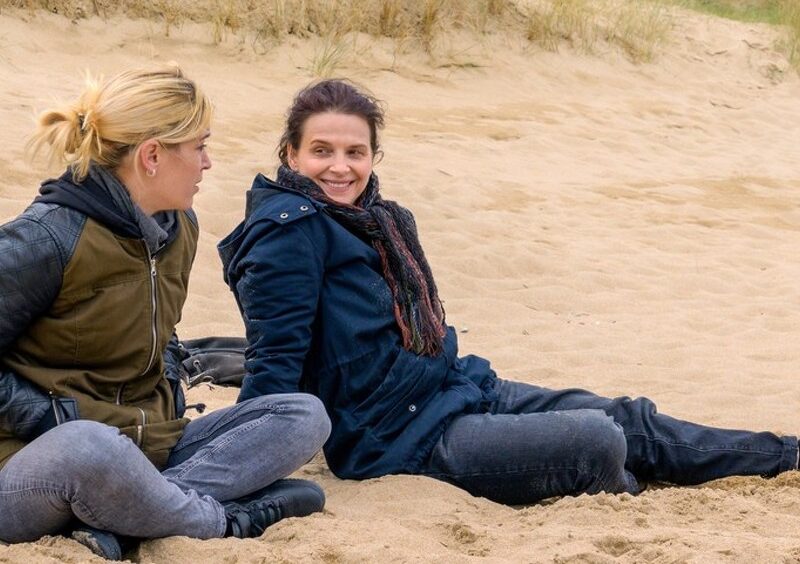
Photo caption: Hélène Lambert and Juliette Binoche in BETWEEN TWO WORLDS. Courtesy of Cohen Media Group.
The workplace drama Between Two Worlds, starring Juliette Binoche, is based on a recent French bestseller that explores workers scrambling for precarious, crappy employment amid rampant job insecurity. It’s a harsh new reality in France, felt even more keenly in a nation where robust employment protections were the norm until recent “reforms”.
Binoche plays a character new in town, purportedly starting her life over from scratch after a bad break-up. She’s looking for a job – any job – and navigates the unwelcoming world of employment office job fairs to get a minimum wage gig with a cleaning company. That job goes so NOT well, that she ends up on everyone’s job of last resort – on the cleaning crew of the vehicle ferry between Ouistreham, France, and Portsmouth, England. (The movie’s French title is Ouistreham.)
This ferry job is acknowledged by everyone – even the supervisor – to be a hellish job. 230 en suite berths must be serviced, with bed linens changed and the toilets cleaned, in the 90 minutes between voyages. It’s physically taxing and disgusting drudgery – and it’s a race against the clock. Our protagonist is accepted and guided by more experienced local women on the crew and forms friendships.
At the beginning of the second act, there is a significant revelation, which explains some vibes we have picked up and adds another element of tension through the rest of the story, to its perfectly modulated ending.
I’ve been watching Juliette Binoche movies since The Unbearable Lightness of Being, and Binoche is always glorious. That’s true here, too, in a role where she is often concealing her thoughts and feelings from the other characters.
Remarkably, director Emmanuel Carrère has surrounded Binoche with first-time actors who play her colleagues in the underclass; they are great, particularly Hélène Lambert, who is effectively the second lead, Léa Carne and Emily Madeleine.
Between Two Worlds is two movies in one – a political exposé and a relationship melodrama. At the ending, I couldn’t help thinking of the Pulp song Common People (and the William Shatner/Joe Jackson version is my fave).
The US release of Between Two Worlds is rolling out; it’s opening at San Francisco’s Opera Plaza this weekend.
Photo caption: Julie Ledru in RODEO. Courtesy of Music Box Films.
In the ever-kinetic Rodeo, a remarkably fierce young woman invites herself into a crew of dirt riders. Rodeo is set with remarkable verisimilitude in a subculture of young bikers from France’s hardscrabble immigrant communities. It’s an edgy scene, and Julia (newcomer Julie Ledru) penetrates it only because she’s a little scary herself.
Julia is a force of nature, and she is able to back off guys with an explosive hostility. When she is ready to adopt a dangerous new passion on two wheels, no one can stand in her way. Off she rides, on a journey with life-and-death stakes.
Rodeo is the first feature for French director Lola Quivoron, who is the real star of this roller coaster of a movie. If she wants to, Quivoron will be making big Hollywood action films like The Fast and the Furious.
Rodeo won the Un Certain Regard coup de coeur prize at Cannes, and I screened it for the SLO Film Fest. Rodeo is now available to stream from Amazon, Apple TV and Vudu.
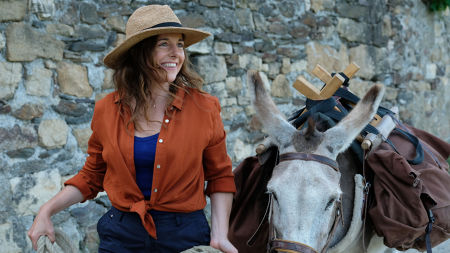
In the intriguingly titled French comedy My Donkey, My Lover & I, Antoinette (Laure Calamy) is a vivacious and goofy schoolteacher in a French provincial town. She’s single, but she’s head over heels into a fling with a married man. She’s excited that’s he’s taking her away to a resort at the upcoming school holiday, but – at the very last minute – he instead submits to a mountain hiking trip with his family.
Antoinette’s distraught and angry disappointment soon transforms into determination and lunacy – she decides to go to the same network of mountain trails, rent a donkey and encounter him in the mountains.
Here’s what I didn’t know before I stumbled on this film at the Mill Valley Film Festival. In 1879, a lovelorn Robert Louis Stevenson, with only a donkey companion, took a solitary hike in Southern France and penned his travel memoir Travels with a Donkey in the Cévennes. It’s common for today’s French to spend a week of their vacations re-creating Stevenson’s experience. It’s a thing, and it’s spawned a cottage industry of donkey rentals and mountain hostels.
Antoinette can be an over-sharer, and when she blurts her mission to another hiker, it goes viral, and soon everyone else in the mountains knows. Having prepared for a lie-by-the-pool vacation, she is ill-equipped, especially in the footwear department, to trudge over mountains,. And, of course, she gets the very most uncooperative donkey. How is she going to find her lover – and, if she does, what is she going to do with him?
Laure Calamy is a brilliant comic actress (and one of the highlights of last summer’s Sibyl). She knows that the key to comedy is for an actor to be absolutely committed (with no hint of winking at the audience) to an absurd course of action. This is why Buster Keaton, Lucille Ball and Gene Wilder were performance geniuses. And it is why Will Ferrell isn’t as funny as Bill Hader or Kristen Wiig.
In My Lover, My Donkey & I, Calamy is all in on Antoinette, a woman who can be both alarmingly unself-conscious and cringingly self-conscious, and both pathetic and empowered. Antoinette endures indignity after indignity, but Calamy’s radiance shines through.
The premise of this film seems utterly unbelievable, but the story is based on actual events which are well-known in France, hence the French title Antoinette dans les Cévennes.
My Lover, My Donkey & I may not be Annie Hall or even There’s Something About Mary, but there are worse ways to spend 97 minutes than with the delightful Laure Calamy. It’s opening July 22, including in the Bay Area at the Opera Plaza and the Rafael.
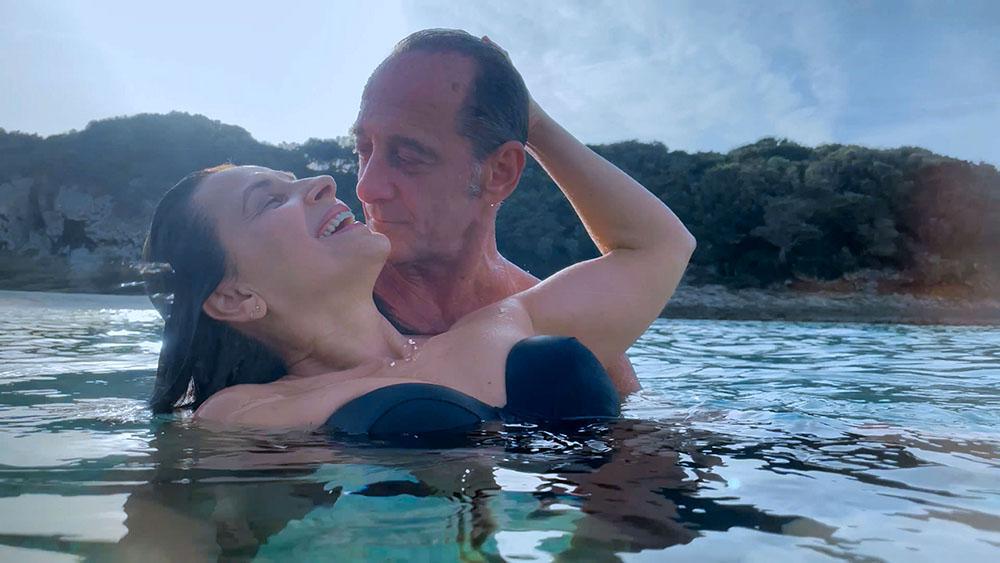
Photo caption: Juliette Binoche and Vincent Lindon in Claire Denis’ BOTH SIDES OF THE BLADE (FIRE). Courtesy of SFFILM.
With some of Frances’s top filmmakers on the job – Both Sides of the Blade is not your conventional love triangle.
Sara (the ever rapturous Juliette Binoche) has built a ten-year relationship with Jean (Vincent Lindon), that has survived his prison sentence. Sara had previously been with François (Grégoire Colin), but left him because she valued Jean’s reliability, loyalty and decency. When François shows up again in their lives, Sara is drawn to him again.
Both Sides of the Blade is the work of French auteur Claire Denis (35 Shots of Rum, Let the Sunshine In). With Denis, Binoche and Lindon layering in all the complexities of these characters, the result is unexpected.
I screened Both Sides of the Blade (also known as Fire) earlier this year for this year’s San Francisco International Film Festival (SFFILM). It opens in Bay Area theaters this week.
Photo caption: Lina Al Arabi and Esther Esther Bernet-Rollande in BESTIES. Courtesy of Frameline.
The absorbing coming of age drama Besties is set among Algerian teen girls in a hardscrabble immigrant urban French neighborhood. They’re growing up on the streets with minimal supervision by their hard-working single moms, and even their modest aspiration of a day trip to the beach seems beyond their grasp.
Yet, despite her downtrodden circumstances, the spirited Nedjima (Lina Al Arabi) is especially comfortable in her own skin. Supremely confident, she leads her girl squad, athletically matches up with the boys, and can talk trash like an NBA player.
Lina Al Arabi in BESTIES. Courtesy of Frameline.
Nedjima is fascinated by Zina (Esther Bernet-Rollande), a new girl in the hood, with relatives in a rival crew. Although Nedjima and Zina are on different sides (as in Sharks/Jets, Montagues/Capulets), there are attracted to each other and begin a secret romance.
Suddenly, Nedjima’s own identity is rocked – she never imagined that she could be a lesbian. This may be France, but even the kids in this insular immigrant community are homophobic. Suddenly she’s lost her community status and her support group. She reveals to Zina what teens often feel and never say, “I’m afraid of everything.” How is Nedjima going to recover her own agency and navigate being lesbian in her family and neighborhood?
Esther Bernet-Rollande (center) in BESTIES. Courtesy of Frameline.
Besties’ two leads, Al Arabi and Bernet-Rollande are very charismatic. Al Arabi’s performance could be star-making. Her Nedjima registers strength and vulnerability, wilfulness and confusion, and the audience is on her side all the way.
Besties is the first feature for writer-director Marion Desseigne-Ravel, and it’s an impressive debut. The milieu seems absolutely authentic. Besties is briskly paced, and Desseigne-Ravel tells her story economically and powerfully, without a single false moment. The final shot captures the briefest of glances, the perfect culmination of Nedjima’s story.
Besties is a showcase for Al Arabi’s magnetism and Desseigne-Ravel’s storytelling. Bestiesscreens at Frameline on June 19.
Photo caption: Charlotte Gainsbourg and Jane Birkin in JANE BY CHARLOTTE. Courtesy of Utopia.
In Jane by Charlotte, the actress Charlotte Gainsbourg examines the life of her mother Jane Birkin in a series of cinéma vérité candid moments and on-camera interviews. The English-born Birkin was a beauty in Swinging London known for her 1968-1980 Paris-based relationship with singer-songwriter lover Serge Gainsbourg, who is is a cult figure in France. Birkin and Gainsbourg collaborated in music and film, and were a celebrity couple.
Charlotte Gainsbourg and Birkin are an amiable mom-daughter, very comfortable with each other. Because of that, and perhaps because Birkin is so used to being in front of cameras (acting in movies, modeling and being hounded by paparazzi), Birkin opens up about her relationships, her parenting and what it’s like to physically age.
The thing is, I’m not really that interested in Jane Birkin (or Serge Gainsbourg, for that matter) – and I’m a Baby Boomer, formed in the era when Birkin was a minor pop icon. (Can someone be a minor icon?) Jane and Charlotte are two nice people, pleasant enough to spend 88 minutes with, but it’s not a compelling, unforgettable experience.
The one captivating segment of Jane by Charlotte is when Charlotte brings back Jane back to Serge Gainsbourg’s apartment, which Jane had not visited in four decades. Jane and Serge’s love nest for 12 years and Charlotte’s childhood home, it is fraught with memories and loaded with emotion. The museum-like apartment itself, reflecting Serge Gainsbourg’s singular taste and eclectic interests, is pretty cool.
BTW I’m a big fan of Charlotte Gainsbourg’s. She’s an often fearless and always interesting actor (including in Sundown earlier this year). (Just wish she hadn’t appeared in so many movies by that cynical provocateur Lars Von Trier; I originally posted that Von Trier was a dickwad, but The Wife made me change it.) This is Charlotte’s directing debut.
Photo caption: Nicolas Maury in MY BEST PART. Courtesy of Altered Innocence.
In the French coming of age dramedy My Best Part, the young actor Jérémie (Nicolas Maury) is teetering on the verge of a breakdown. Not that Jérémie is generally a stable person – he is so needy and dramatic that he attends Jealous Anonymous. But he loses a gig that he was counting on, his credit card is declined, and worst of all, Jérémie’s smothering jealousy sabotages his relationship with his veterinarian boyfriend (Arnaud Valois), Jérémie’s neurotic fit having disrupted ferret surgery.
With his tail between his legs, Jérémie Paris retreats to hos boyhood home in rural Limousin (the area around Limoges) and the arms of his mother (Nathalie Baye). Jérémie is open to infantilization, but the matter-of-fact Mom is anything but neurotic. With prodding from his mom, will he start behaving like a sane, stable grownup and get his life back on the rails?
Nathalie Baye and Nicolas Maury in MY BEST PART. Courtesy of Altered Innocence.
I’ll watch ten-time César Award nominee Nathalie Baye in anything. Here, in an unchallenging role, she brightens every scene with the sniveling son.
One of the world’s funniest actors, Laure Calamy gets to play a hilarious meltdown in a brief turn as a narcissistic film director.
My Best Part is the feature directing debut for Maury, who also co-wrote the screenplay. My Best Part was nominated for the César for Best First Film.
Parts of My Best Part drag, especially a slooooooow nighttime poolside scene. The final scene, in which Jérémie sings lyrics that explicitly detail his character’s growth, is off-putting and self-indulgent.
My Best Part opens Feb 25 on VOD and at the Glendale Laemmle.