FRAMELINE Celebrates Its 50 Years of LGBTQ+ Cinema

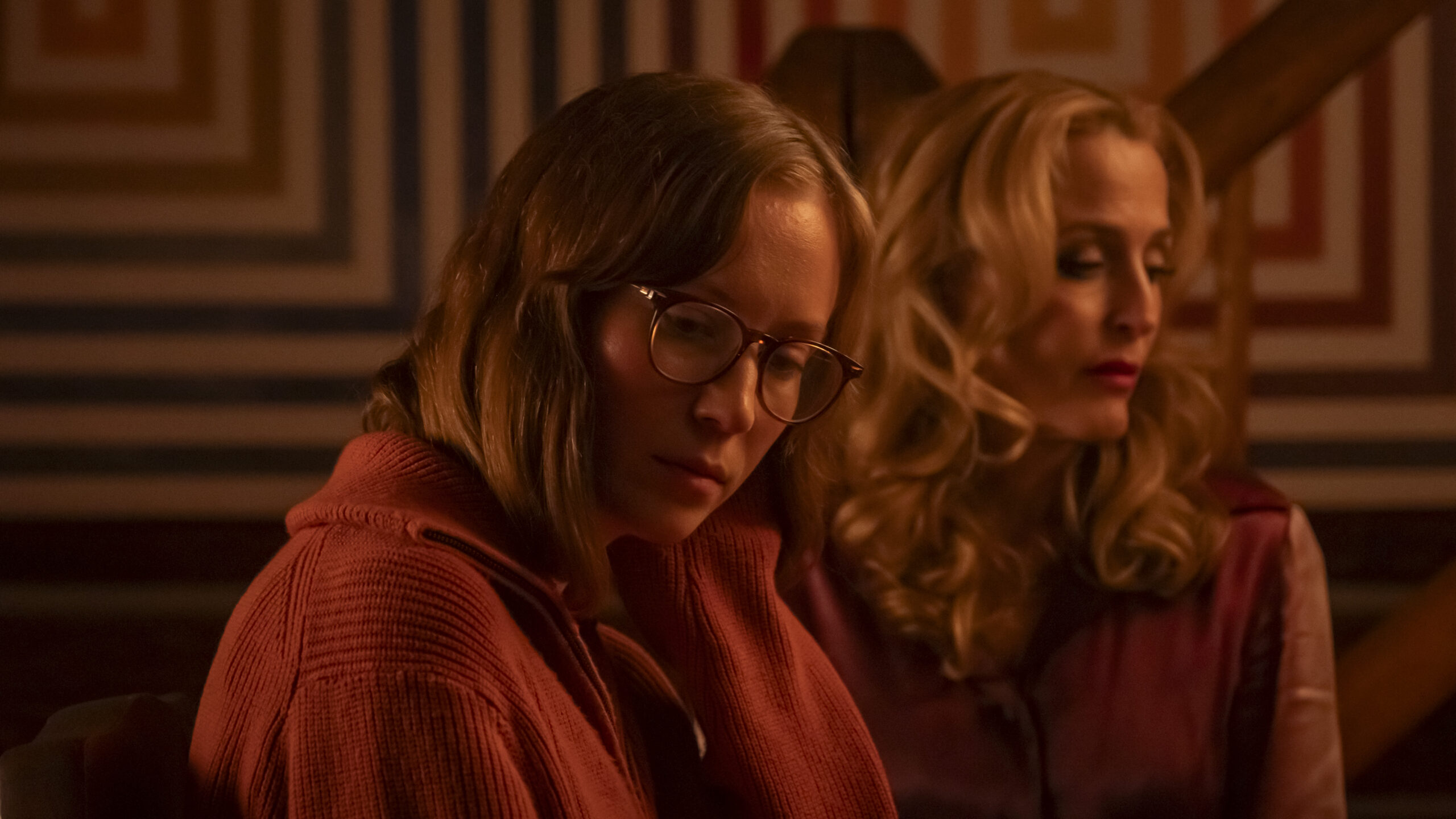
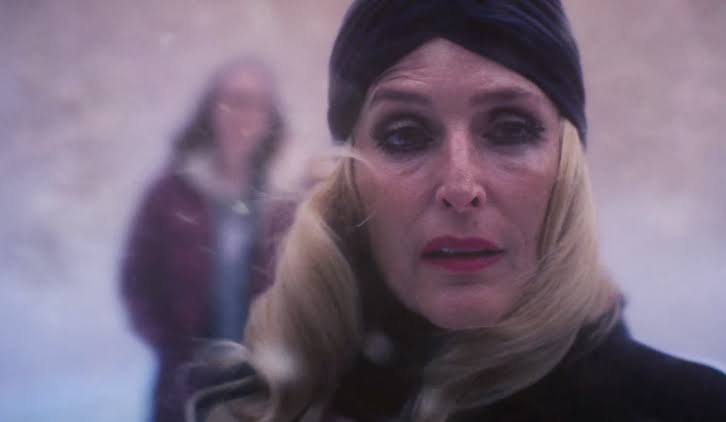
Photo caption: Hannah Einbinder and Gillian Anderson in TEENAGE SEX AND DEATH AT CAMP MIASMA. Courtesy of Frameline and Mubi.

Frameline, the oldest and longest-running LGBTQ+ film festival in the world, celebrates its FIFTIETH annual festival, beginning June 17 and running through June 27. Frameline50 brings us festival award-winners from Cannes to the Berlinale, with over 140 films from 35 countries.

This year, the festival returns after several years to San Francisco’s Castro Theatre for its biggest night. Other venues in San Francisco, Berkeley, and Oakland include the Roxie Theater, the Vogue Theatre, Berkeley Art Museum and Pacific Film Archive (BAMPFA), and The New Parkway Theater.

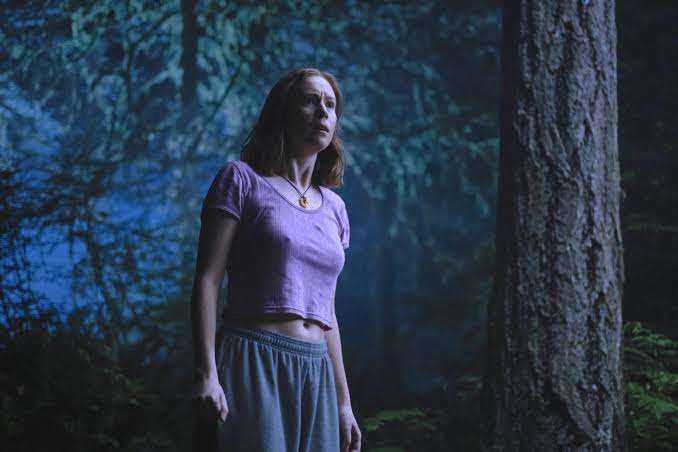
I’m guessing that the hottest ticket will be for the fest’s closing night film: Teenage Sex and Death at Camp Miasma, the latest from writer-director Jane Schoenbrun, following up their breakthrough hit I Saw the TV Glow. Highly acclaimed at its Cannes premiere last month, Teenage Sex and Death at Camp Miasma is an affectionate homage to slasher filmmaking driven by queer sexual obsession, starring Emmy-winners Gillian Anderson (The X-Files) and Hannah Einbinder (Hacks). Schoenbrun and Einbinder will appear in person at the screening.

Other festival highlights will include:

  • Opening Night with D’Arcy Drollinger’s Lady Champagne, the Festival Centerpiece – Byrdie O’Connor’s Barbara Forever, and the Pride Kickoff Film, Jennifer M. Kroot’s Hunky Jesus, .
  • The newest sex comedy from pioneering queer filmmaker Gregg Araki (Mysterious Skin), I Want Your Sex, starring Olivia Wilde and Cooper Hoffman (Licorice Pizza). 
  • Actor Colman Domingo will attend in person to receive an award.
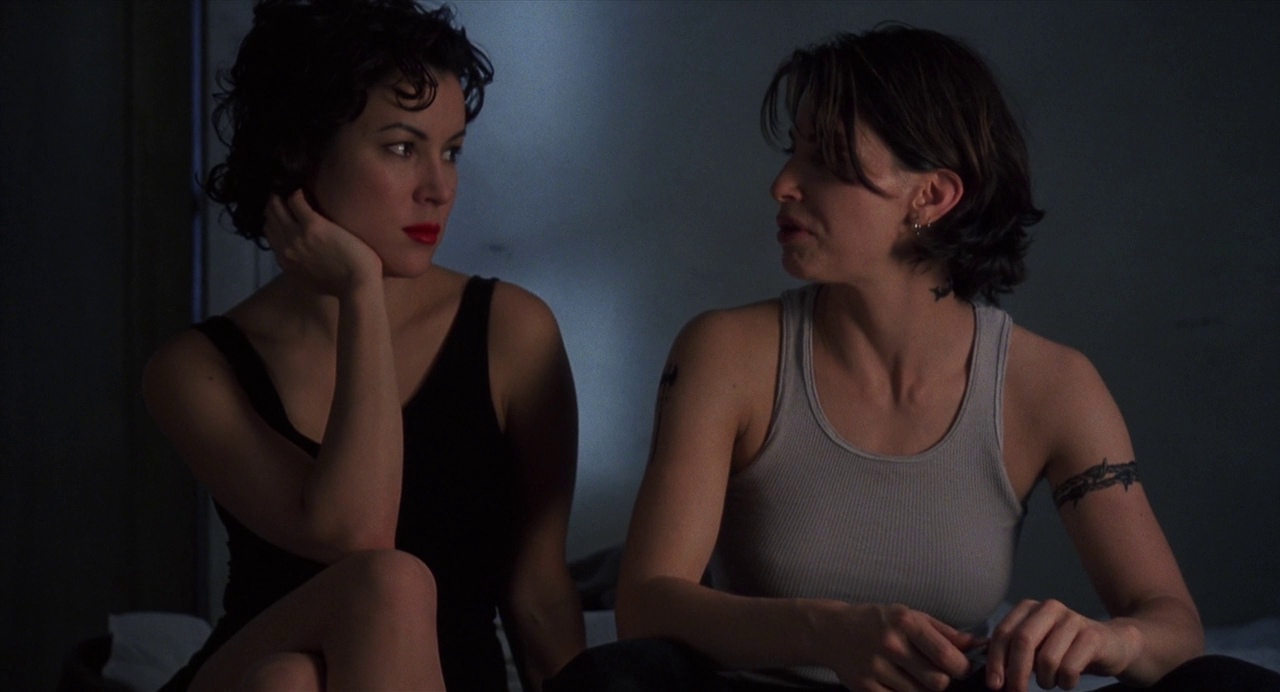
  • As befitting a silver anniversary, Frameline50 will look back on films from its past half-century of programming:  Bound, All Over the GuyDesert HeartsCruising, Still Black: A Portrait of Black Transmen, Paris Is Burning (now celebrating its 35th anniversary), Caravaggio, and the newly restored Macho Dancer.
Jennifer Tilly and Gina Gershon in BOUND. Courtesy of Frameline.

As in my Frameline coverage last year, I’ll be focusing on international cinema, especially directorial debuts. The Frameline programmers have a gift for finding the promising first films of new directors, such as last year’s Diciannove. In this year’s program, I’ve already focused on some promising films from South Africa, Tunisia, Brazil, Norway and French-speaking Canada. Just before the fest opens, I’ll be coming back with specific recommendations.

You can peruse the program and get passes and tickets at Frameline. Here’s the festival trailer.

GONDOLA: funny, sweet, imaginative – and silent

Photo caption: GONDOLA Courtesy of Frameline.

This charming comedy Gondola is the work of a unique filmmaker, German writer-director Veit Helmer, who has been making dialogue-free films in Central Asian nations for a decade. A gondola links two mountainsides in rural Georgia, and the two female gondola operators fall in love as they pass each other high above the valley.

It’s remarkable how Helmer is able to pack so many story elements into a film without dialogue. (I also love Helmer’s The Bra, which I tagged as just your average silent Azerbaijani comedy.) Gondola is ever funny, sweet and imaginative.

I screened Gondola for the 2024 Frameline film festival. Gondola can be streamed for free from kanopy and can be rented inexpensively from Amazon, AppleTV and YouTube.

DICIANNOVE: coming of age – his way

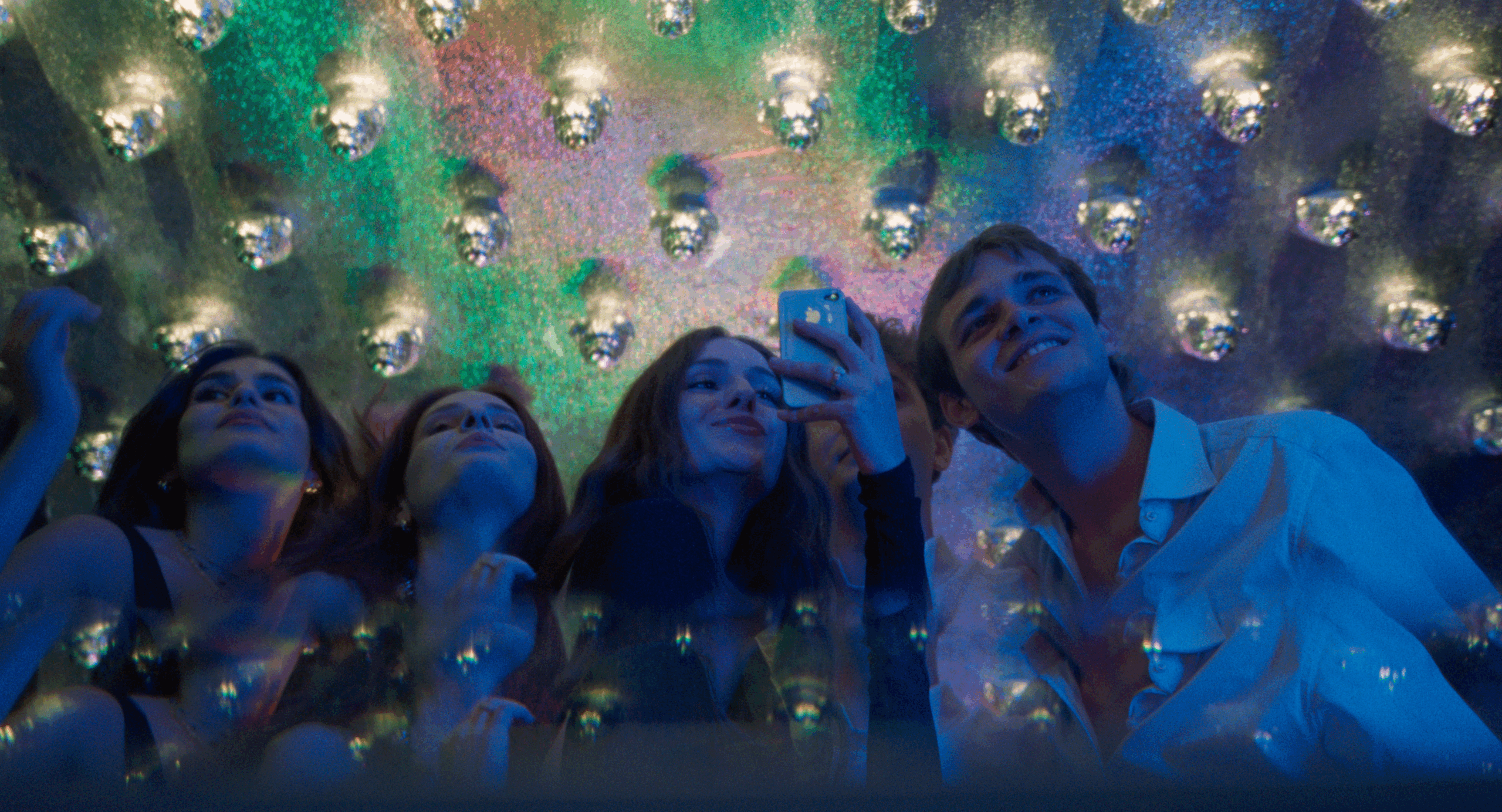
Manfredi Marini (right) in Giovanni Tortorici’s DICIANNOVE. Courtesy of Oscilloscope Laboratories and Frameline.

The title of the coming-of-age film Diciannove is Italian for nIneteen, the age of Leonardo (Manfredi Marini), who is leaving his Palermo home for the first time to begin college in London. Ever restless, he is eager to embark on his life journey, but doesn’t know where to head, and, being nineteen, he won’t listen to anyone else. In mere days, Leonardo pivots from business courses in London to the study of Italian literature at a university in Siena. He discovers a passion for old Italian writers – just not the ones his professor assigns.

Nineteen is an age that most of us sample experiences, but Leonardo is an introvert, sometimes bratty, who refuses to socialize, and we wonder if he will ever forge relationships or act on his sexual urges. Diciannove is that highly original coming-of-age film in which what even Leonardo chooses NOT to do is interesting, and we can’t predict what could make his spirit soar at the end.

Diciannove is the debut feature for writer-director Giovanni Tortorici, a protege of Luca Guadagnino, who produced the film. Tortorici and cinematographer Massimiliano Kuveiller (who has also worked with Guadagnino) maintain visual interest by throwing everything at the screen – disco scenes with an operatic score, slow motion, animated dreams and every kind of fancy cut. Nighttime scenes in a cold and hard London give way to lovingly beautiful shots of tranquil Siena.

Diciannove is the singular and imaginative calling card of a new auteur; Tortorici may be a visual show-off, but he has an uncommon gift for creating a realistic, but compelling and unpredictable character.

I screened Diciannove in June for Frameline. It’s now releasing into US arthouse theaters, including Laemmle’s Monica Film Center and the Glendale.

KILL THE JOCKEY: surrealism in the stables

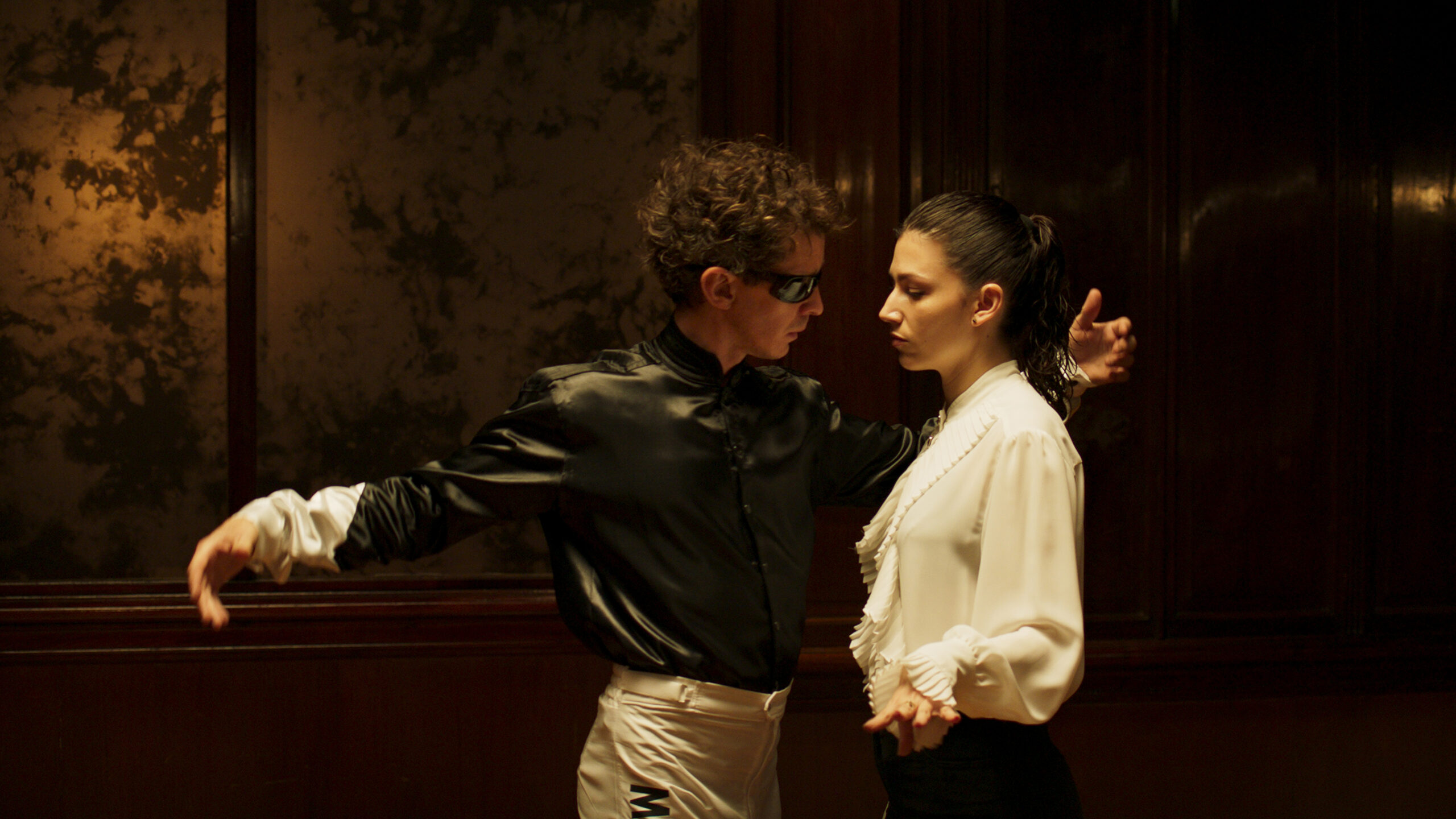
Photo caption: Nahuel Perez Biscayart and Ursula Corbero in KILL THE JOCKEY. Courtesy of Music Box Pictures.

In the surreal Argentine comedy Kill the Jockey, Remo (Nahuel Perez Biscayart) is a once-champion jockey, who is zealously self-sabotaging his career; self-medicating with alcohol and even swiping the racehorses’ drugs and the booze left on a good luck altar, he has become utterly unreliable. Remo can only emerge from his narcosis to demonstrate his passion for his wife Abril (Ursula Corbero). Abril is also a jockey, and her racing career is on the upswing, although she will soon have to pause it to have their baby.

Both Remo and Abril ride for a mobster (Daniel Jimenez Cacho), who, against all available evidence, has concluded that Remo can still win a big race. As a result, Remo suffers a brain injury, which spurs catatonia and, eventually, a major change in his identity. Remo leaves the hospital without being discharged, and wanders the city in a walking stupor, unaware that both a frantic Abril and the mobster’s murderous goons are searching for him. At this point, Remo is not an ideal gunowner, but he gets a pistol, and the lives of Remo, Abril and the mobster take significant twists. Kill the Jockey morphs into a fable of identity.

Nahuel Perez Biscayart in KILL THE JOCKEY. Courtesy of Music Box Pictures.

Director and co-writer Luis Ortega tells this story with plenty of droll absurdism. Inexplicably, the mobster usually carries an infant, a mounted brass band suddenly appears, the possessions of a coat pocket include a live fish, and there’s ceiling-walking. Kill the Jockey has its share of LOL moments in the first half of the film.

Early in the film, Abril launches a celebratory dance, is soon joined by Remo, and the two move together as unhinged marionettes. It’s as if figures in a Dali painting broke into a sensuous dance. This is a spellbinding scene, the best one in Kill the Jockey and, possibly, in any movie this year so far.

Unfortunately, the second half of Kill the Jockey, with more Remo and less Abril, is not as compelling. Ortega keeps throwing in the entertainingly bizarre, but the film loses momentum as Remo transforms.

I first saw Nahuel Perez Biscayart as the star of the psychological Holocaust thriller Persian Lessons. He’s a good choice to play the tragicomic Remo, a broadly funny character that morphs into a heartfelt one. But the most interesting performance in Kill the Jockey is Ursula Corbero’s as Abril – brimming with charisma and vitality; Abril must navigate her life and Remo’s as Remo’s condition keeps changing dramatically.

Kill the Jockey is Argentina’s submission for the Best International Feature Film Oscar and has been nominated for significant awards, including the Goya (best Iberoamericano film) and the best film at Venice Film Festival. It releases into theaters this weekend, including the Laemmle NoHo in LA, the Roxie in San Francisco and the Smith Rafael Film Center in San Rafael.

DRONE: stalked by a mystery

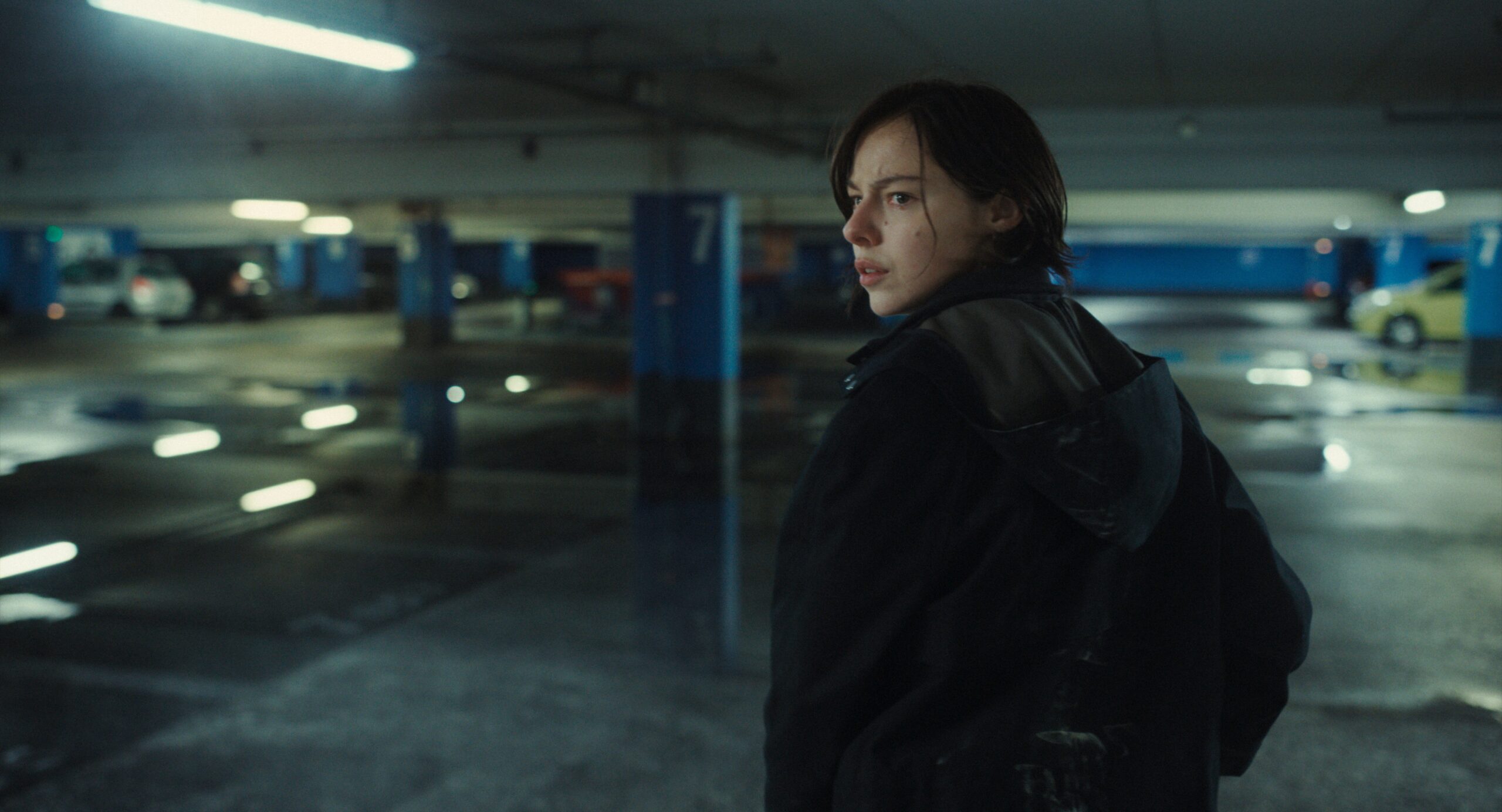
Photo caption: Marion Barbeau in DRONE. Courtesy of Frameline.

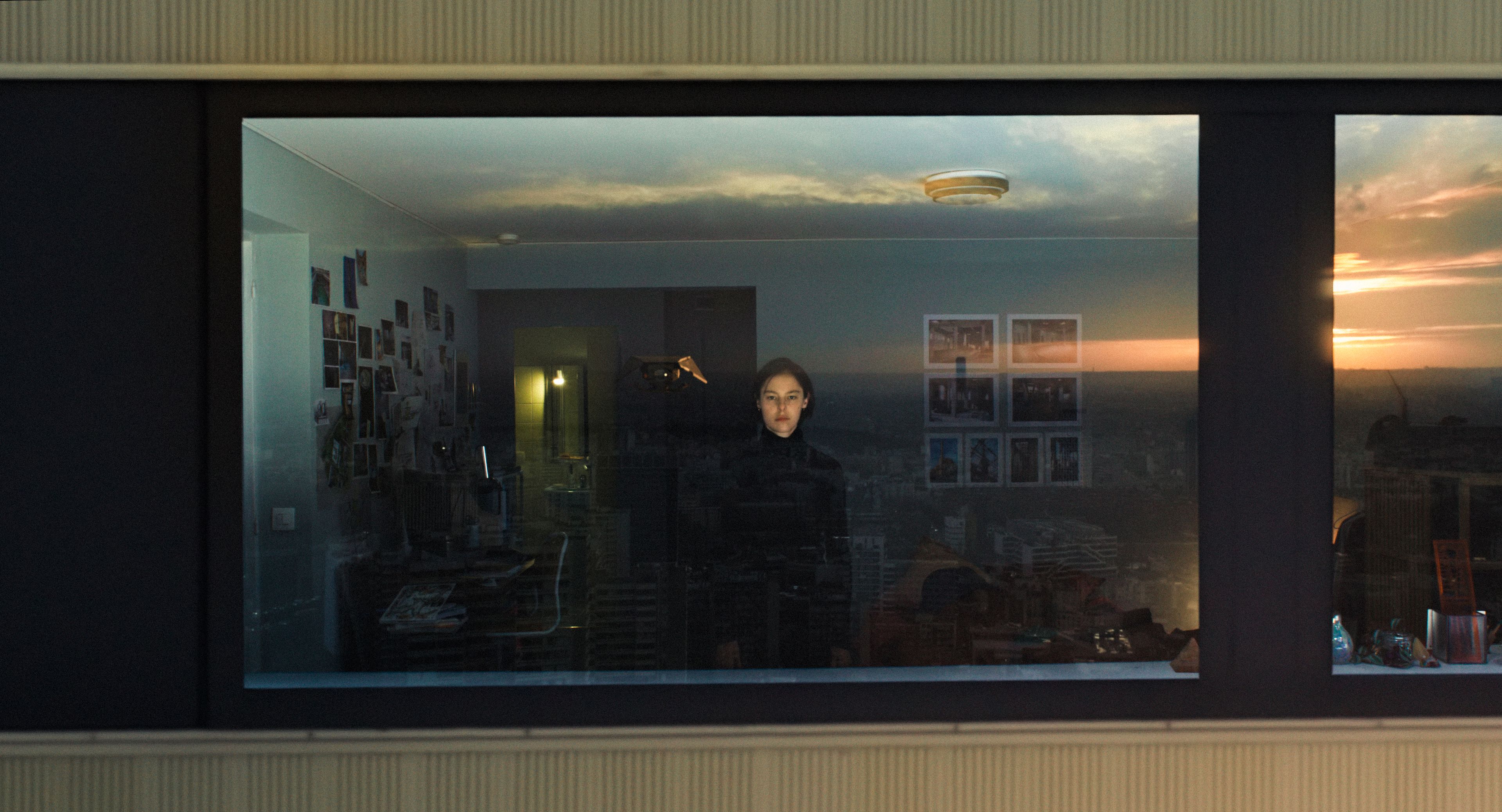
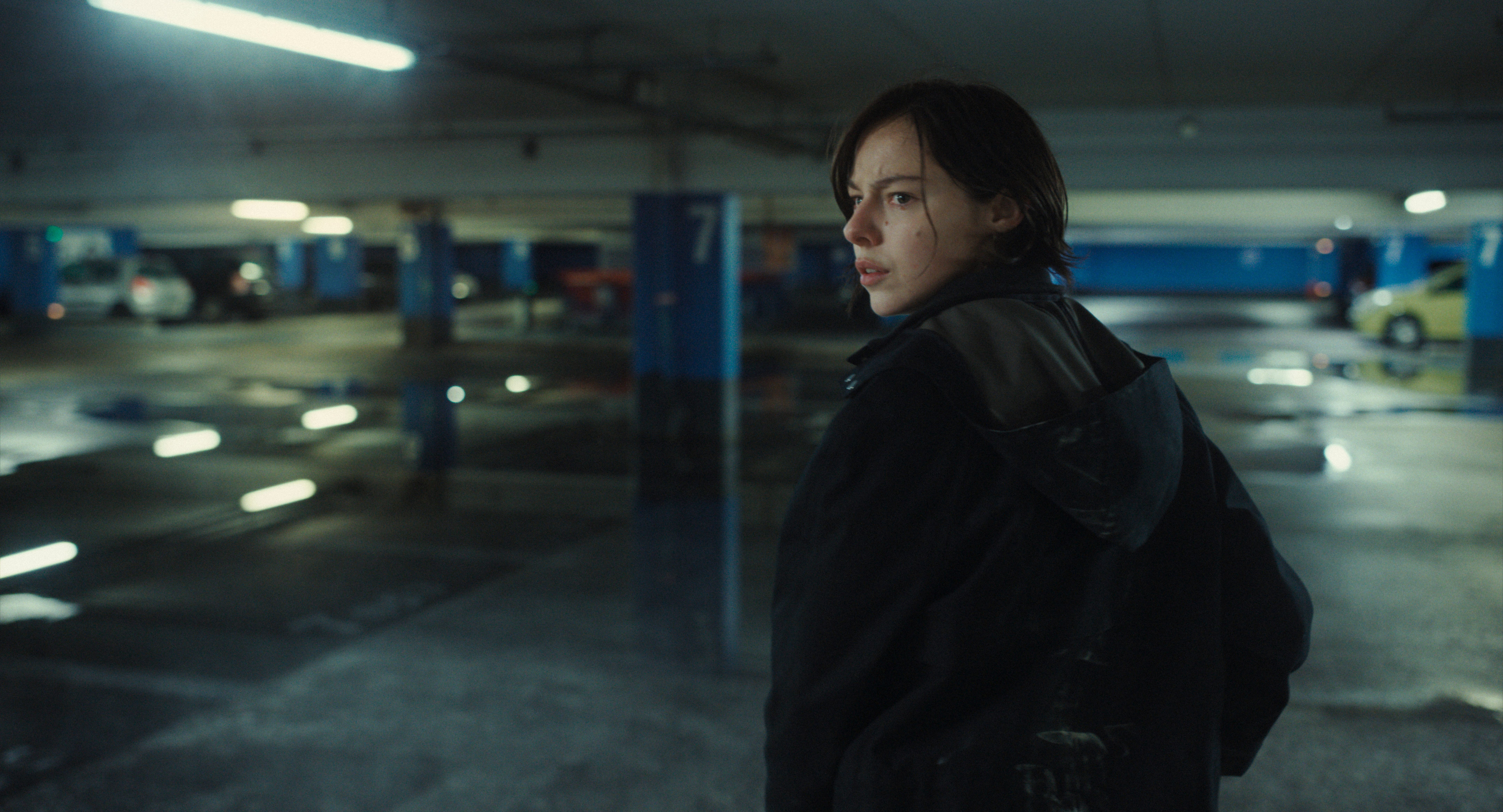
Émilie (Marion Barbeau) is stalked through Paris by a mysterious drone, in Drone, a thriller that explores issues of privacy and the male gaze. A magnificent 4-minute opening sequence, introduces us to the vulnerability caused by the voyeur drone. Émilie is funding her architecture studies by working as a cam girl, a situation where she is physically detached and in control of her male customers. But there is no detachment or control whenever the paranoia-inducing drone suddenly appears.

There are exhilarating set pieces in a parking garage, a motorcycle chase and an abandoned factory, as writer-director Simon Bouisson and cinematographer Ludovic Zulli keep their drone camera in pursuit of the story’s stalker drone. In his first theatrical feature, Bouisson keeps the tension pounding, all the way to the ingenious ending.

Marion Barbeau in DRONE. Courtesy of Frameline.

Émilie is a recent architecture graduate from Lilles who has earned a high-powered fellowship in Paris. As her fellowship project, she chooses an adaptive reuse of an abandoned factory. Of course, even without the drone, we would fear for Émilie’s safety as she wanders around the dark, creepy, abandoned factory and takes long solo jogs through the city at night.

Who is flying the drone? Is it a camgirl customer who has hacked the firewall? Is it her toxic male classmate? Or her swaggering, entitled boss? Or, perhaps most terrifying, nobody at all?

Émilie is relationship-shy, but reluctantly intrigued by a DJ. Will the budding romance put both women in drone-jeopardy?

Marion Barbeau, a former ballet dancer, is superb as Émilie. Émilie, so vulnerable throughout the movie, is remarkably strong and determined, which lifts Drone above the ordinary woman-in-peril genre. Barbeau is able to project Émilie’s fundamental badassness.

I’ve listed Drone in the special Festival Films category of my Best Movies of 2025 – So Far. I screened Drone for Frameline (where it was my favorite film), and I’ll let you know when it has a theatrical or VOD release in the US.

Frameline goes international again

Photo caption: Marion Barbeau in DRONE. Courtesy of Frameline and StudioCanal.

Frameline, the oldest and longest-running LGBTQ+ film festival in the world, opens tomorrow, June 18 and runs through June 28. The program includes 150 films from 40 countries, including 42 world, North American and US premieres. As always, it’s a very rich slate of films.

I’ve selected five international films to highlight. Let’s begin with two Must See directorial debuts from France and Italy.

Drone: Émilie (Marion Barbeau) is stalked through Paris by a mysterious drone, in a thriller that explores issues of privacy and the male gaze. A magnificent 4-minute opening sequence, introduces us to the vulnerability caused by the voyeur drone. Émilie is funding her architecture studies by working as a cam girl, a situation where she is physically detached from and in control of her male customers. But there is no detachment or control whenever the paranoia-inducing drone suddenly appears. There are exhilarating set pieces in a parking garage, a motorcycle chase and an abandoned factory, as writer-director Simon Bouisson and cinematographer Ludovic Zulli keep their drone camera in pursuit of the story’s stalker drone. In his first theatrical feature, Bouisson keeps the tension pounding, all the way to the ingenious ending. Must See.

Manfredi Marini (right) in Giovanni Tortorici’s DICIANNOVE. Courtesy of Oscilloscope Laboratories and Frameline.

Diciannove: The title is Italian for nIneteen, the age of Leonardo (Manfredi Marini), who is leaving his Palermo home for the first time to begin college in London. Ever restless, he is eager to embark on his life journey, but doesn’t know where to head, and, being nineteen, he won’t listen to anyone else. In mere days, Leonardo pivots from business courses in London to the study of Italian literature at a university in Siena. Nineteen is an age that most of us sample experiences, but Leonardo is an introvert, sometimes bratty, who refuses to socialize, and we wonder if he will ever forge relationships or act on his sexual urges. Diciannove is that highly original coming-of-age film in which even what Leonardo chooses NOT to do is interesting, and we can’t predict what could make his spirit soar at the end. Diciannove is the debut feature for writer-director Giovanni Tortorici, a protege of Luca Guadagnino, who produced the film. Tortorici and cinematographer Massimiliano Kuveiller (who has also worked with Guadagnino) maintain visual interest by throwing everything at the screen – disco scenes with an operatic score, slow motion, animated dreams and every kind of fancy cut. Diciannove is the singular and imaginative calling card of a new auteur; see it at Frameline before its US arthouse release later this year. Must See.

Bruce Pintos in KEEP COMING BACK. Courtesy of Frameline.

And here are three more highlights from Frameline’s menu of international cinema – from Uruguay, Croatia and Taiwan:

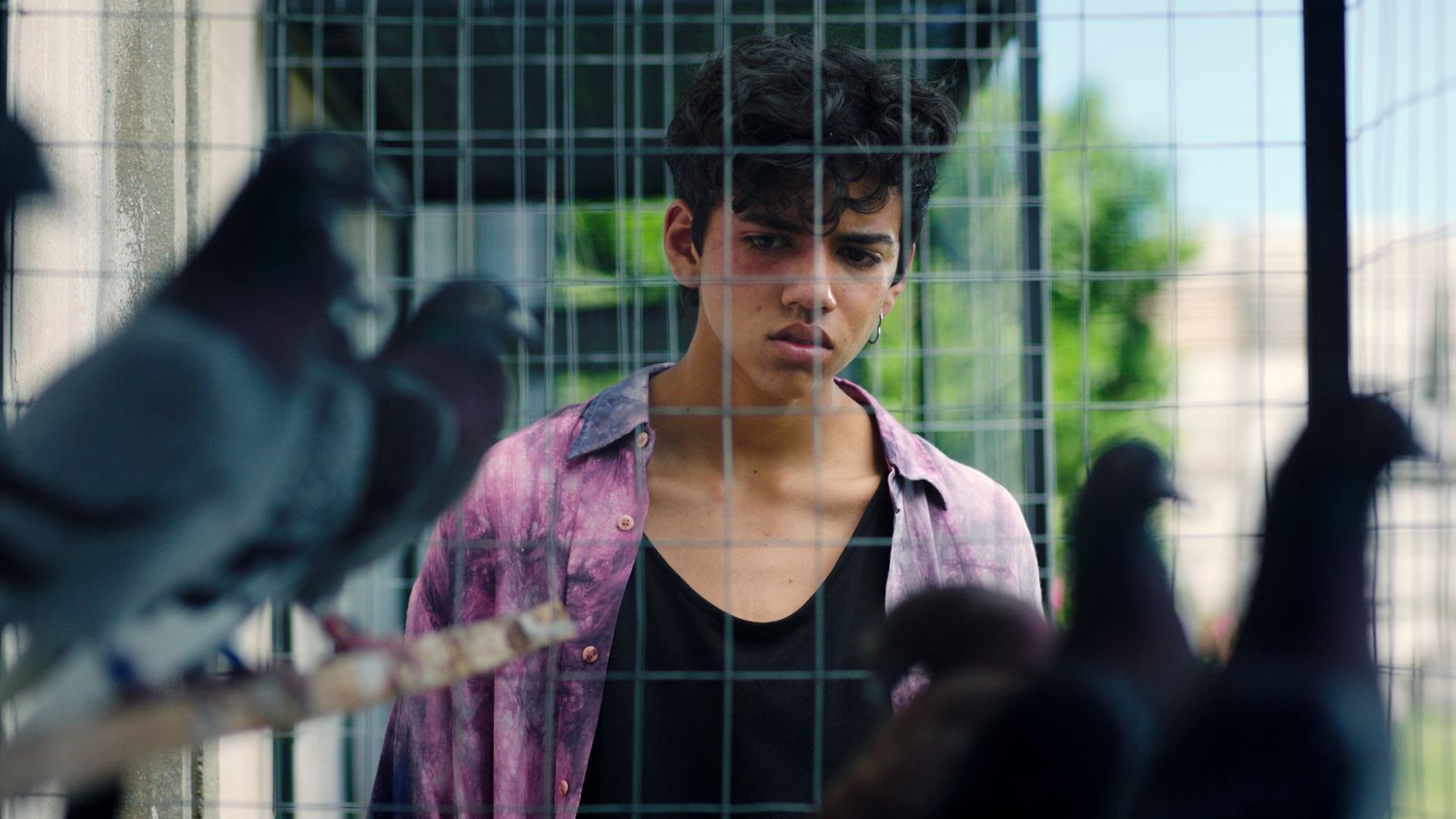
  • Keep Coming Back: In his first feature, director Sergio de León sends up the conventions of the underdog drama with deadpan drollery. In rural Uruguay, 18-year-old Emilio’s mother dies, leaving with a pile of debts and a collection of pigeons. The only way he can keep the family house is to win the great pigeon race. Staggered by grief, confounded by financial stress and with his hormones raging toward a sexual awakening, Emilio (Bruce Pintos) plunges ahead earnestly. Absurd hilarity ensues, including a very funny I’m sorry about your mom and the robust retelling of the story of Winkie, the historical hero pigeon. US Premiere.
  • Beautiful Evening, Beautiful Day: Croatia’s official submission for the 2025 Academy Award for Best International Feature, this is an aspirational film with an epic sweep, passionate sex and profound tragedy, all the way to unexpected redemption. This searing critique of the Tito regime pits a man of principle and ideas against the repression of the small-minded. The heroic bravery that helps overthrow Nazi puppets is revealed to be no match for the homophobia and mindless adherence to the party line of post-war apparatchiks. Frameline hosts the International Premiere.
  • Silent Sparks: In this Taiwanese neo-noir, small time hood Pua is released from prison and checks in with the swaggering, exuberant local crime lord. The boss assigns him to a lieutenant, Mi-Ji, who happens to be Pua’s former cell-mate. But when Pua and Mi-Ji meet again, the encounter is a study in social awkwardness. Pua just wants to start earning money and working his way up in the syndicate, but Mi-Ji is surprisingly unhelpful. What explains Mi-Ji’s behavior toward Pua? As Silent Sparks smolders on, the risks escalate. Promising first feature for writer-director Ping Chu.

You can buy tickets for these films and peruse the entire program at Frameline. Here’s the trailer for Drone.

LA CAGE AUX FOLLES: groundbreaking, humane and funny

Ugo Tognazzi and Michel Serrault in LA CAGE AUX FOLLES

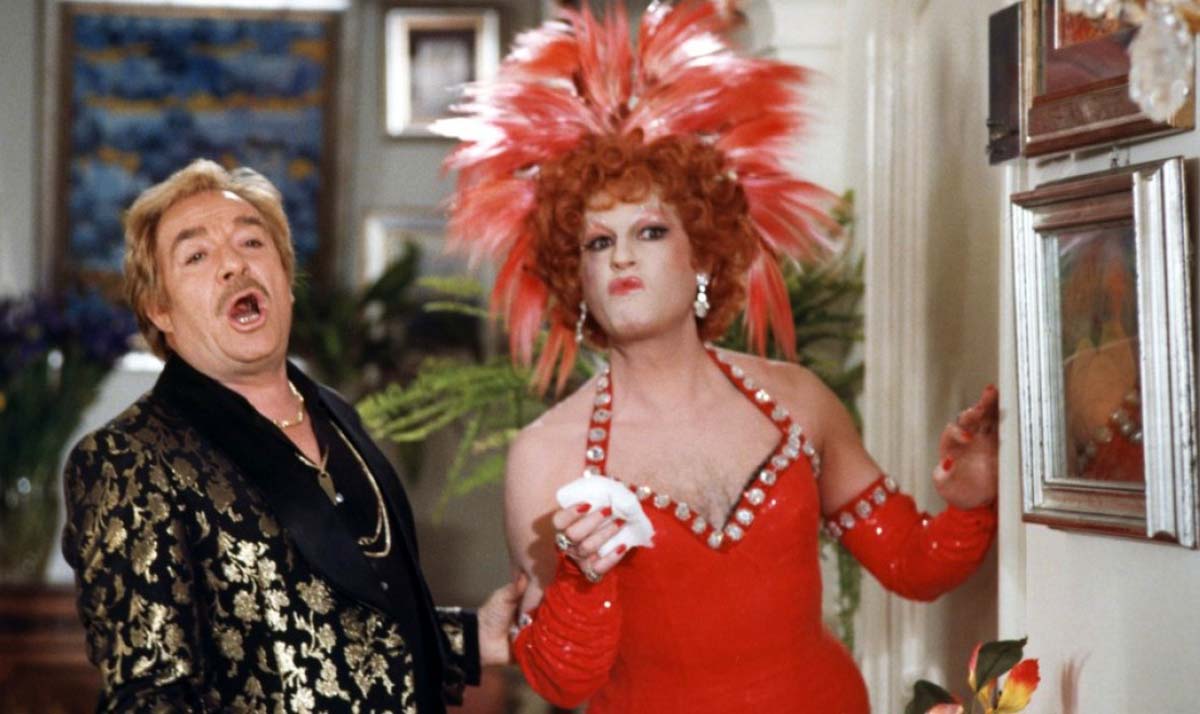
On June 13, Turner Classic Movies will present the groundbreaking French comedy La Cage Aux Folles – a daring film in 1978, when few were thinking publicly about same-sex marriage. A gay guy runs a nightclub on the Riviera, and his partner is the star drag queen. The nightclub owner’s beloved son wants him to meet the parents of his intended.  But the bride-to-be’s father is a conservative politician who practices the most severe and judgmental version of Roman Catholicism, so father and son decide to conceal aspects of dad’s lifestyle. Madcap comedy ensues, and La Cage proves that broad farce can be heartfelt. Michel Serrault is unforgettable as Albin/Zaza – one of the all-time great comic performances. (La Cage was tepidly remade in 1996 as The Birdcage with Robin Williams, but you want to see the French original.)

I’m currently watching my way through the program of this year’s Frameline LGBTQ film fest, which I just previewed. I don’t think you can overestimate the cultural impact of La Cage Aux Folles, which charmed straight audiences into relating to sympathetic portrayals of LGBTQ people.

Get ready for Frameline

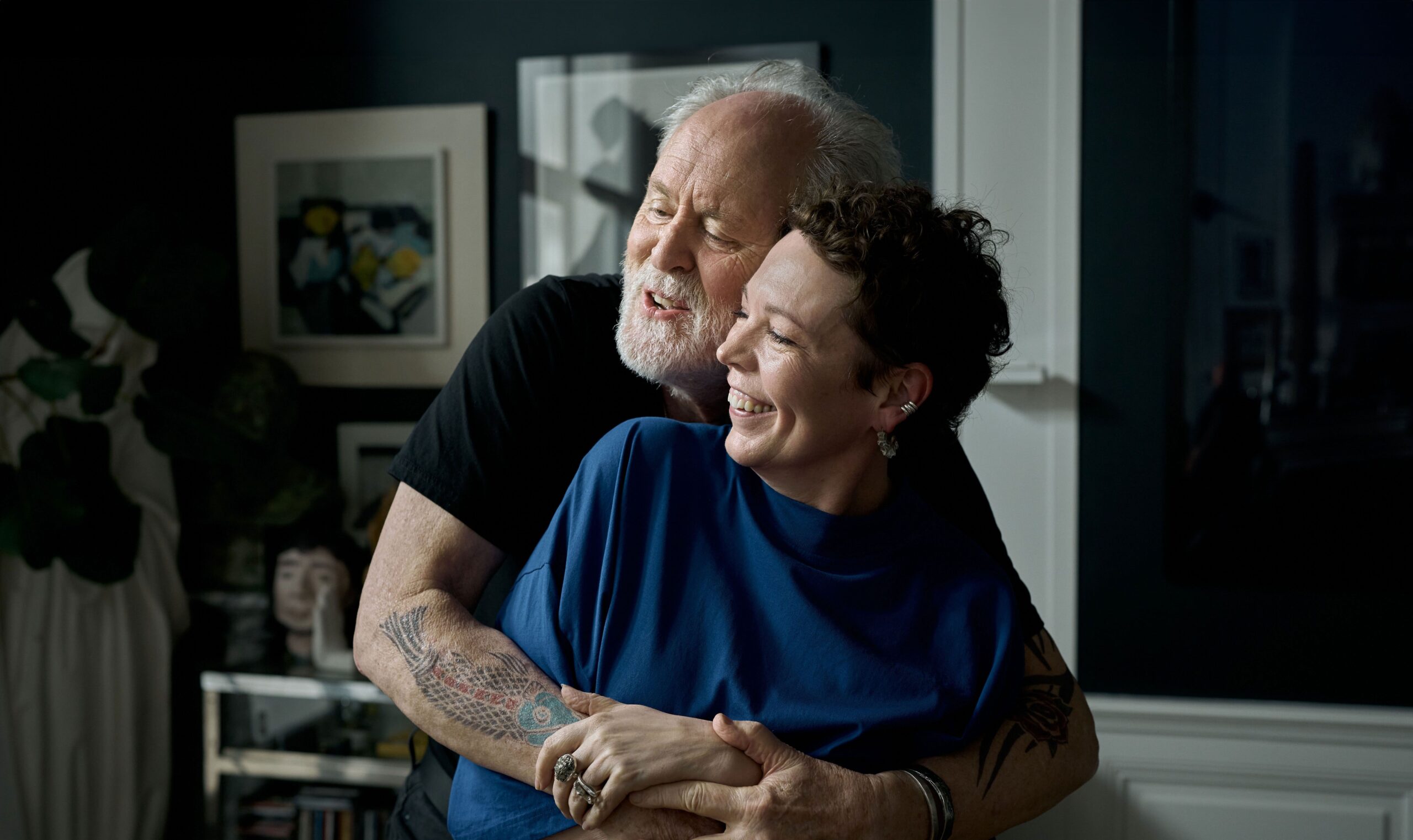
Photo caption: Olivia Coleman and John Lithgow in Sophie Hyde’s JIMPA, an official selection of the 2025 Sundance Film Festival. Photo by Mark De Blok. Courtesy of Sundance Institute.

Frameline, the oldest and longest-running LGBTQ+ film festival in the world, opens June 18 and runs through June 28. The 49th(!) Frameline brings us festival award-winners from Sundance to the Berlinale, with 150 films from 40 countries, including 42 world, North American and US premieres.

Films will screen at the Herbst Theatre and the ACT’s Toni Rembe Theater, as well as familiar arthouses like the Roxie, the Vogue, the New Parkway and, this year for the first time, the Rafael. Select films will be streamable after the in-person fest; (I’ll have more about that when I learn which films will be available online).

Here are some Frameline49 highlights:

  • The fest opens with John Lithgow and Olivia Colman starring in the Sundance indie Jimpa, about the Amsterdam reunion of a multigenerational queer Australian family. The HIV-positive patriarch (Lithgow) is visited by his daughter (Colman) and her non-binary child (Aud Mason-Hyde). Described as “funny and heartfelt”.
  • The closing night film is the dramedy Twinless. Two guys meet at a support group for people who have lost their twin – straight Roman (Dylan O-Brien) and gay Dennis (James Sweeney) – and form an unlikely connection. O’Brien won the best acting award at Sundance and the film, written and directed by Sweeney, won the best drama award. See it now, before its September release.
  • The program includes a whopping 25 documentary features. Given the strength of the docs in past Framelines (Loving Highsmith, Making Montgomery Clift), this looks like a rich slate of docs.

Some of the screenings are already selling fast and, although Frameline may add some screenings, it would be wise to get your tickets now. You can peruse the program and get passes and tickets at Frameline.

As in my Frameline coverage last year, I’ll be focusing on international cinema, especially directorial debuts. The Frameline programmers have a gift for finding the promising first films of new directors. In recent years, Frameline has presented Marion Desseigne-Ravel’s French coming-of-age story Besties, Marius Olteanu‘s innovative Romanian drama Monsters.(sic), Leon Le’s groundbreaking Vietnamese romance Song Lang, and Arantxa Echevarria’s Spanish sexual awakening tale Carmen y Lola. Last year, Frameline hosted the North American premiere of the third feature by Brazilian auteur Juliana Rojas, Cidade; Campo.

In this year’s program, I’ve already found some gems from Croatia and Taiwan – and a wowzer from France. Just before the fest opens, I’ll be coming back with specific recommendations.

Dylan O’Brien and James Sweeney in James Sweeney’s TWINLESS. Photo by Greg Cotten. Courtesy of Sundance Institute.

EGGHEAD & TWINKIE: funny, sweet and genuine

Photo caption: Sabrina Jie-A-Fa and Louis Tomeo in EGGHEAD & TWINKIE. Credit: Olivia Wilson, Courtesy of CanBeDone Films and Orange Cat Films.

In the funny, sweet and genuine coming of age film Egghead & Twinkie, Twinkie (Sabrina Jie-A-Fa) is finishing high school and trying to navigate her sexual awakening as aa lesbian – and it’s not easy. Her lifelong bestie is the neighbor boy Egghead (Louis Tomei), and he’s now sweet on her; (Egghead and Twinkie are their nicknames for each other), Twinkie impulsively commandeers her dad’s car and heads out on a cross country road trip to join her Internet object of desire (Tik Tok star Ayden Lee). Egghead is so loyal, smitten and cluelessly hopeful that he comes along.

Along the way, they have their share of zany road trip experiences. Twinkie meets the girl (Asahi Hirano) who REALLY is perfect for her, but Twinkie is first destined to learn a cruel lesson about being infatuated with a player. It’s a hoot, and there’s not one false note. For all their kooky antics, the kids’ feelings are remarkably authentic.

The entire cast is very good. Sabrina Jie-A-Fa is a charming force of nature as Twinkie. She’s in every scene, and she’s a real talent.

Asahi Hirano and Sabrina Jie-A-Fa in EGGHEAD & TWINKIE. Credit: Olivia Wilson, Courtesy of CanBeDone Films and Orange Cat Films.

Egghead & Twinkie is the first feature for writer-director Sarah Kambe Holland, and it’s an impressive calling card. Egghead & Twinkie is perfectly paced, and Kambe Holland sprinkles in just enough animation to help leaven the angst with the whimsical. Kambe Holland says,

The kernel of an idea that turned into EGGHEAD & TWINKIE was
more of a question: Can I find humor in the coming out process? I
was nineteen years old at the time, and I had just come out to my
own parents a few months before. The stress of coming out was
fresh in my mind, but so was the hilarious awkwardness of it all. I
challenged myself to write a short film script about a teenage girl
who comes out to her parents, but I was adamant that it wouldn’t be
a drama. It would be a comedy, and the message would be one of
hope and friendship.

Of course, given Kambe Holland’s inspiration for the story, Twinkie just doesn’t HAPPEN to be gay or HAPPEN to be Asian-American, but the themes are universal, and Egghead & Twinkie is one of the best coming-of-age films of the decade.

I screened Egghead & Twinkie for its premiere at Cinequest.. After  a strong festival run, Egghead & Twinkie is available on VOD, including Amazon, AppleTV and YouTube, beginning today.

SILENT SPARKS: but weren’t they cellmates?

Photo caption: Guan-Zhi Huang and Ming-Shuai Shih in SILENT SPARKS. Courtesy of Cinequest.

In the Taiwanese neo-noir Silent Sparks, small time hood Pua (Guan-Zhi Huang) is released from prison and checks in with the local crime lord (Chih-Wei Cheng). The boss assigns him to a lieutenant, Mi-Ji (Ming-Shuai Shih), who happens to be Pua’s former cell-mate. But when Pua and Mi-Ji meet again, the encounter is a study in social awkwardness. Pua just wants to start earning money and working his way up in the syndicate, but Mi-Ji is surprisingly unhelpful.

Pua finally gets the chance to do some crime, and we wonder, will Pua get caught, or worse? And what explains Mi-Ji’s behavior toward Pua? As Silent Sparks smolders on, the risks escalate.

The lead actors are very good. Chih-Wei Cheng is very funny as the crusty, vulgar crime boss, who is full of joie de vivre. Jui-Chun Fan is exceptional as Pua’s mom.

Chih-Wei Cheng in SILENT SPARKS. Courtesy of Cinequest.
Jui-Chun Fan and Guan-Zhi Huang in SILENT SPARKS. Courtesy of Cinequest.

Silent Sparks is the first feature for writer-director Ping Chu, and it’s a promising debut. I screened Silent Sparks for its US premiere at Cinequest.