
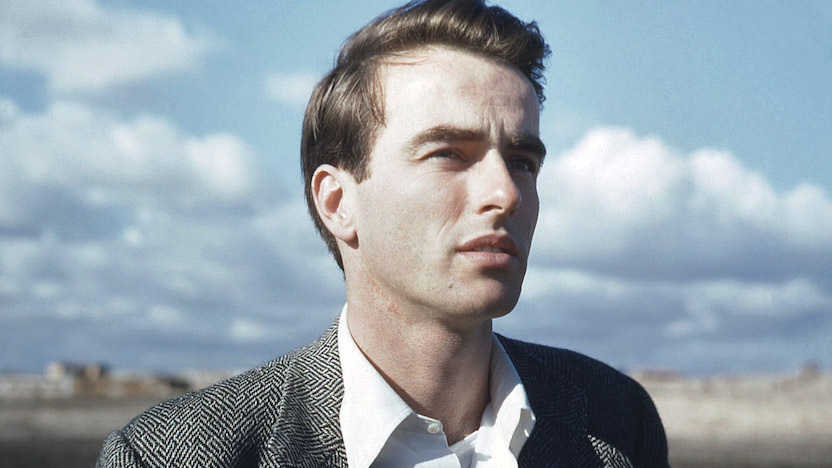
MAKING MONTGOMERY CLIFT: exploding the myths

MAKING MONTGOMERY CLIFT

The best documentary in this year’s Frameline festival may be Making Montgomery Clift, from directors Robert Anderson Clift and Hilary Demmon. It’s an unexpectedly insightful and nuanced probe into the life of Clift’s uncle, the movie star Montgomery Clift. And it explodes some of the lore that has shaped popular understanding of Montogomery Clift.

Clift is the son of Brooks Clift, Montogmery Clift’s brother and archivist. The younger Clift never met his uncle Monty, but had access to his father’s vast collection of Monty memorabilia and to the memories of family, friends and previous biographers.

Many of us think we know the arc of Montgomery Clift’s life: success as a 1950s movie heartthrob is torpedoed by the inner torment of his closeted homosexuality; then alcoholic self-medication and disfigurement from an auto accident propel him into drunken despair and an early death. It turns out to be a much, much more nuanced story.

It turns out that some in the Clift family indulged in secret audio taping to a jaw-dropping degree. Directors Clift and Demmon take full advantage of the actual conversations of Monty and others. Their gift is to drop in the most startling revelations without lingering or even emphasizing them. To watch Making Montgomery Clift is a constant exercise in “wait…WHAT?” Demmon’s brisk editing helps, too.

How tormented was Monty by his sexuality (which we learn was a robust bisexuality)? Witnesses – who would know – let us know that Monty was comfortable in his own skin and fairly open – for the times – about his sexuality. This wasn’t Rock Hudson or Tab Hunter.

We learn that Montgomery Clift’s refusal to sign a studio contract was to preserve BOTH his artistic independence and his sexual independence (avoiding being forced into faux marriage and the like).

Making Montgomery Clift also discredits the view that Monty sank into depression after the accident changed his looks. His personally most satisfying performances came AFTER the accident.

The insights into Monty’s artistic process are unique and significant. We hear the actual conversation between Montgomery Clift and director Stanley Kramer about Clift’s riveting cameo in Judgment at Nuremberg. Monty’s intentionality in shaping the scene dispels the myth that, instead of giving a performance, he had an actual breakdown before the camera. Yes, he was acting it, and it was spectacular.

There has been a handful of recent showbiz biodocs made by younger relatives of the famous artists. Usually, these films add some personal family anecdotes, but are so fond of their subjects that they’re not especially insightful. Making Montgomery Clift is not that – it ascends above the pack – and should change how all of us understand Monty Clift.
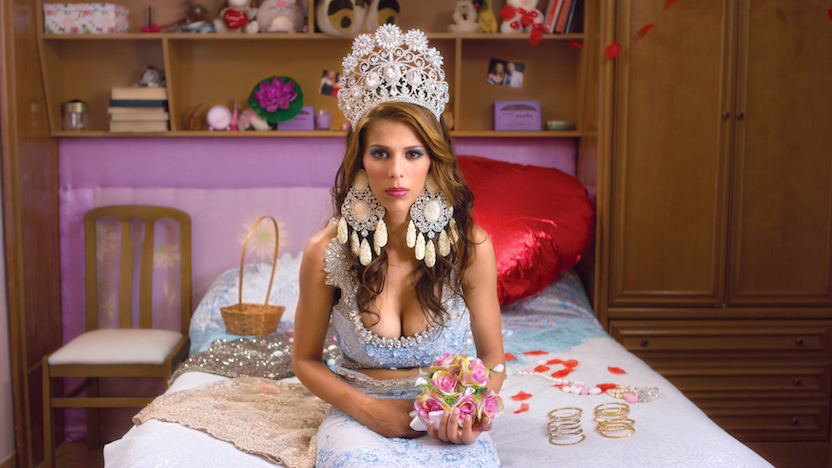
CARMEN Y LOLA: sexual awakening and a glimpse into the urban Romani

CARMEN Y LOLA

Carmen y Lola is a sexual coming of age story set among urban Romani people in contemporary Spain. 16-year-old Lola (Zaira Romero) is a smart, talented and feisty kid; she knows that she likes girls and wants a career; how she can do either within her traditional Romani culture is a dilemma. Buoyant 17-year-old Carmen (Rosy Rodriguez) embraces her future – being married off to a handsome young Roma man – but meeting Lola awakens her to other choices – and to her own sexual preference.

I’ve seen movies about the Romani people (widely known as Gypsies) before – usually historical period pieces and always with itinerant Romani. There are no wagons or RVs in Carmen y Lola; these characters live in the hardscrabble suburbs of Madrid. (Almost 2% of Spain’s population is Romani.)

We also get to see the ugly face of anti-Romani prejudice (which I’ve just learned is called antiziganism). Carmen y Lola is unsparing in its point of view that the Romani are held down by both external racism and some of their own patriarchal and anti-education Roma traditions.

There’s also a welcome element of cultural tourism here. We get to watch a Romani betrothal ritual, a Romani evangelical church service and an all-female flamenco party.

Carmen y Lola is the directorial debut of Arantxa Echevarria. It’s one of the successful first features showcased in this year’s Frameline film festival.

FRAMELINE: the documentaries

MAKING MONTGOMERY CLIFT, directed by Robert Anderson Clift and Hilary Demmon

Frameline, the San Francisco International LGBTQ+ Film Festival, is underway and offers a rich selection of documentaries.

  • Frameline’s closing night film, the emotionally powerful documentary, Gay Chorus Deep South. It tracks the San Francisco Gay Men’s Chorus concert tour through the Deep South in the aftermath of the Trump election. This will be an audience-pleaser; bring hankies.
  • The best doc in the fest may be Making Montgomery Clift, from directors Robert Anderson Clift and Hilary Demmon. It’s an unexpectedly insightful and nuanced probe into the life of Clift’s uncle, the movie star Montgomery Clift.
  • Anybody who attends Frameline (or SFFILM or Noir City, for that matter) knows the Twin Peaks bar at the corner of Castro and Market. Through the Windows tells the story of the first San Francisco gay bar set up to let patrons and passers-by observe each other directly.
  • The documentary short that plays before Through the Windows, Dressing Up Like Mrs. Doubtfire, explores the history of cross-dressing in the movies and the impact of the Robin Williams performance in Mrs. Doubtfire. There are several intriguing threads in this short, which could be expanded into a future doc feature.

Stream of the Week: VENUS – meeting your kid for the first time while transitioning

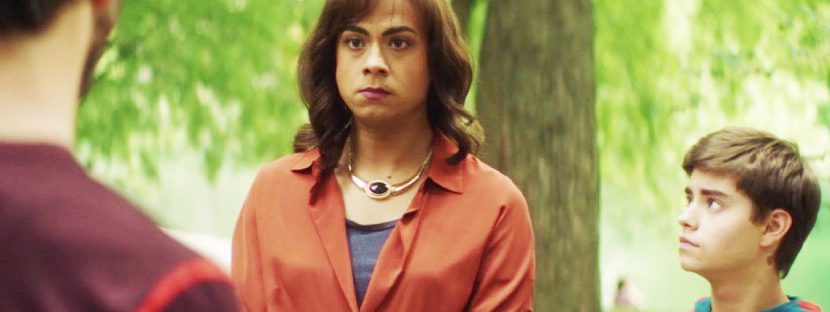
Debargo Sanyal (center) in VENUS

In the appealing Canadian transgender dramedy Venus, Sid (Debargo Sanyal) is at a personal crossroads. Single after things didn’t work out with his closeted boyfriend Daniel (Pierre-Yves Cardinal), Sid has just begun to dress like a woman in public and to take hormones for his transition. Then, he is shocked to learn that he has a 14-year-old son Ralph (Jamie Myers). The boy thinks that having a transgender dad with Indian heritage is very cool and, unbeknownst to his mom, starts spending more and more time with Sid. Sid has to deal with this, along with the reactions of his more traditional Indian parents and a chance meeting with Daniel.

In her first narrative feature, writer-director Eisha Marjara has crafted a funny, touching and genuine story. Venus is successful largely because of Debargo Sanyal’s performance. Eschewing flamboyance, Sanyal’s Sid is a man driven to keep his dignity in the most inescapably awkward situations. It helps that Sanyal is a master of the comic take; Sid’s reactions to his mother’s and Ralph’s intrusiveness are very funny.

I predicted that Venus, at its US premiere at Cinequest, would become one of the most popular indies at the festival; indeed, it won the Cinequest award for best narrative feature. Venus is available for streaming from Amazon and iTunes.