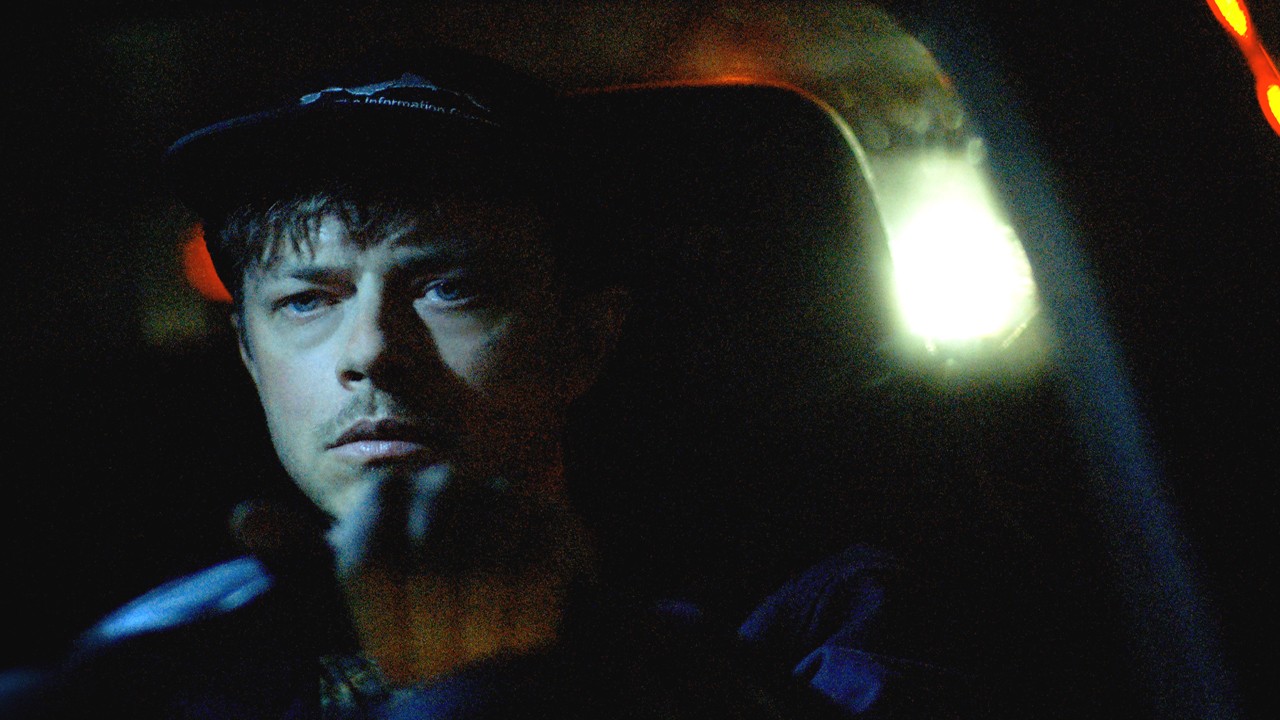
THE ODYSSEY: epic filmmaking at its best

Photo caption: Matt Damon in THE ODYSSEY. Courtesy of Universal Pictures.

It’s not surprising that The Odyssey is a superb film. After all, this is the work of a great filmmaker, Christopher Nolan (Oppenheimer, Interstellar, Dunkirk, Inception, The Dark Knight, Memento), making full use of his considerable skill and imagination. The source material has been unsurpassed as a melding of adventure, romance and trials of human character for 2700 years.

Odysseus (Matt Damon) is the smartest and most devious of Greece’s warrior kings, the strategist who devised the famous ruse of the Trojan Horse, and facilitated the Greek victory at Troy after ten years of stalemate. Now Odysseus, with his fleet of ships, can sail back to his home island of Ithaca. Unfortunately, gods and monsters await.

For all of his courage and resourcefulness, Odysseus has the ability to annoy, and even enrage, enough of the gods to turn his return voyage into a ten-year ordeal. He will need to get by a 60-foot tall Cyclops, an island of man-eating giants, supernatural songstresses who lure mariners into shipwrecks, a giant whirlpool, a six-headed monster who snacks on sailors, and a witch who casts horrible spells. And then there’s the seven years as the sex slave to another witch. Fortunately, has the goddess Athena (Zendaya) on his side; she admires his intelligence, and helps him out of the worst jams.

Anne Hathaway and Tom Holland in THE ODYSSEY. Courtesy of Universal Pictures.

Back home in Ithaca, there’s another story thread. Odysseus’ queen Penelope (Anne Hathaway) has been running Ithaca in his absence, but he’s been gone for twenty years, and a hundred opportunists are sponging off Odysseus’ wealth while they pressure Penelope to marry one of them. Odysseus also left a baby son, but Telemachus (Tom Holland) is now only twenty, and he’s too callow to take on so many ruthless, grown-ass men. Will Odysseus return in time? Will anyone, especially Penelope, recognize him after 20 years? Can Odysseus battle the suitors to reclaim what is his and Penelope’s? Will Penelope take him back?

In The Odyssey, Nolan shows what a great Hollywood epic can look and feel like – in the best sense. Filmed in IMAX, The Odyssey looks and sounds great. Amazingly, Nolan did not use CGI or green screens – instead, he employed old-fashioned practical effects, forced perspective, animatronic puppetry and plenty of hoists, rigging, and stunt performers. The set pieces are wondrous, even for the monsters – Polyphemus, Scylla and the Laestrygonians. The sack of Troy was exactly like what I imagine the razing of a Bronze Age city would look and feel like. And it all looks better and more convincing than it would have with CGI.

Because of the genius of Nolan and his editor Jennifer Lame, who won an Oscar for editing Nolan’s Oppenheimer, the audience does not have the sensation of sitting through a three hour movie.

Matt Damon and Zendaya in THE ODYSSEY. Courtesy of Universal Pictures.

Nolan is pretty faithful to the source material, and, although he compresses some the parts of the tale , he captures Homer’s key elements. Nolan’s re-imagining of the ending is actually less of a slaughter than Homer’s, and Nolan plays down the sexual aspect of Odysseus’ sojourn with Calypso (Charlize Theron). Nolan does add some New Agey hokum about the “Code of Zeus”, but it’s harmless.

Nolan’s version is more nuanced than the 1954 Ulysses with Kirk Douglas, which emphasized the adventure aspect. Last year’s The Return, which covered the return to Ithaca, is a fine movie, but doesn’t have the epic scale of The Odyssey (not to mention the monsters). Similarly, the scale of Nolan’s The Odyssey overwhelms the star-studded, Emmy-winning 1998 mini-series.

Nolan, Damon and Zendaya show us the relationship between Odysseus and Athena particularly well.

John Leguizamo in THE ODYSSEY. Courtesy of Universal Pictures.

Hathaway is excellent as the resolute yet vulnerable Penelope, a woman whose wits could match up with even those of Odysseus. I like Tom Holland’s performance as a well-meaning kid who just isn’t ready for prime time. Everyone in the cast is good, including Robert Pattinson and Corey Hawkins as two of the scariest and most odious suitors. An unrecognizable John Leguizamo is outstanding as Odysseus’ one remaining ally, a blind swineherd.

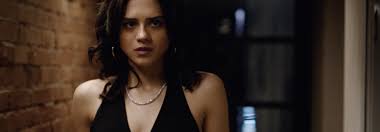
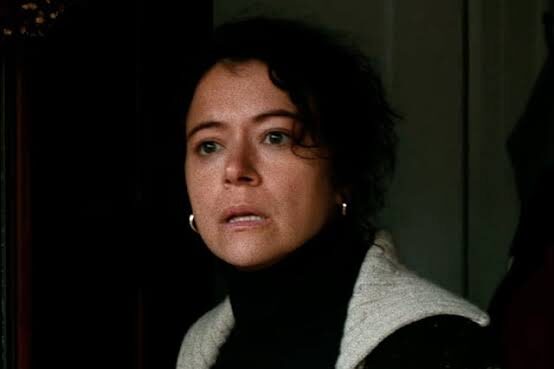
Samantha Morton in THE ODYSSEY. Courtesy of Universal Pictures.

If there’s a best performance in this movie, it may be Samantha Morton as the witch Circe, filled with grievance, creepiness and craftiness.

The Odyssey is both a great barn-burner,and a great love story, and Nolan has made it into this summer’s Must See .

POWWOW HIGHWAY: a groundbreaking Indigenous road trip

Photo caption: A Martinez and Gary Farmer in POWWOW HIGHWAY.

Powwow Highway is a groundbreaking indie from 1988. It’s very hard to find, but it’s airing July 24 on Turner Classic Movies. Powwow Highway is a droll, offbeat road trip comedy, significant for being one of the first movies with a contemporary Indigenous lens.

Buddy (A Martinez) is an activist on the Northern Cheyenne Reservation in Montana, leading opposition to a strip-mining project. To get him out of their way, the big money interests conspire to have his sister Bonnie (Joanelle Romero) framed and arrested in New Mexico. Buddy is desperate to go to her relief, but has no transportation. His childhood acquaintance Philbert (Gary Farmer), having dreamed of a mystical pony, has purchased a decrepit 1964 Buick that he unironically names Protector. Although it is dubious whether Protector can get them off the reservation, let alone all the way to Santa Fe, they begin their quest, and adventures and misadventures follow.

Gary Farmer in POWWOW HIGHWAY.

Much of the humor stems from the Odd Couple on the road trip. Buddy is political and Philbert is spiritual. Buddy is in a hurry, and Philbert doesn’t recognize the concept of hurrying. Gary Farmer has become one of my favorite character actors, and his performance here is indelible.

The renowned Indigenous actors Wes Studi (Dances with Wolves, The Last of the Mohicans, Heat and 2020 honorary Academy Award) and Graham Greene (The Green Mile, Wind River and Oscar-nominated for Dances with Wolves) also appear in supporting roles.

Powwow Highway also takes us inside daily life on the impoverished reservation with striking verisimilitude. Powwow Highway was produced by George Harrison (yes, THAT George Harrison), and directed by South African Jonathan Wacks from David Seals’ 1979 novel.

Powwow Highway won the Sundance Film Festival Filmmaker’s Trophy, was nominated for four Independent Spirit Awards, and has been selected for inclusion in the Library of Congress Film Registry.

Powwow Highway can be streamed on the Criterion Channel, but is otherwise unavailable. Make sure you DVR this week’s TCM broadcast.

If you like Powwow Highway, you’ll also appreciate another early indie with an Indigenous lens, Smoke Signals from 1998. It’s another wry road trip comedy, starring Adam Beach, Evan Adams and Irene Bedard, with another turn from Gary Farmer. Smoke Signals is available to stream from Amazon, Apple, YouTube and Fandango.

Gary Farmer in POWWOW HIGHWAY.

KING CREOLE: the good Elvis movie

Photo caption: Elvis Presley and Carolyn Jones in KING CREOLE.

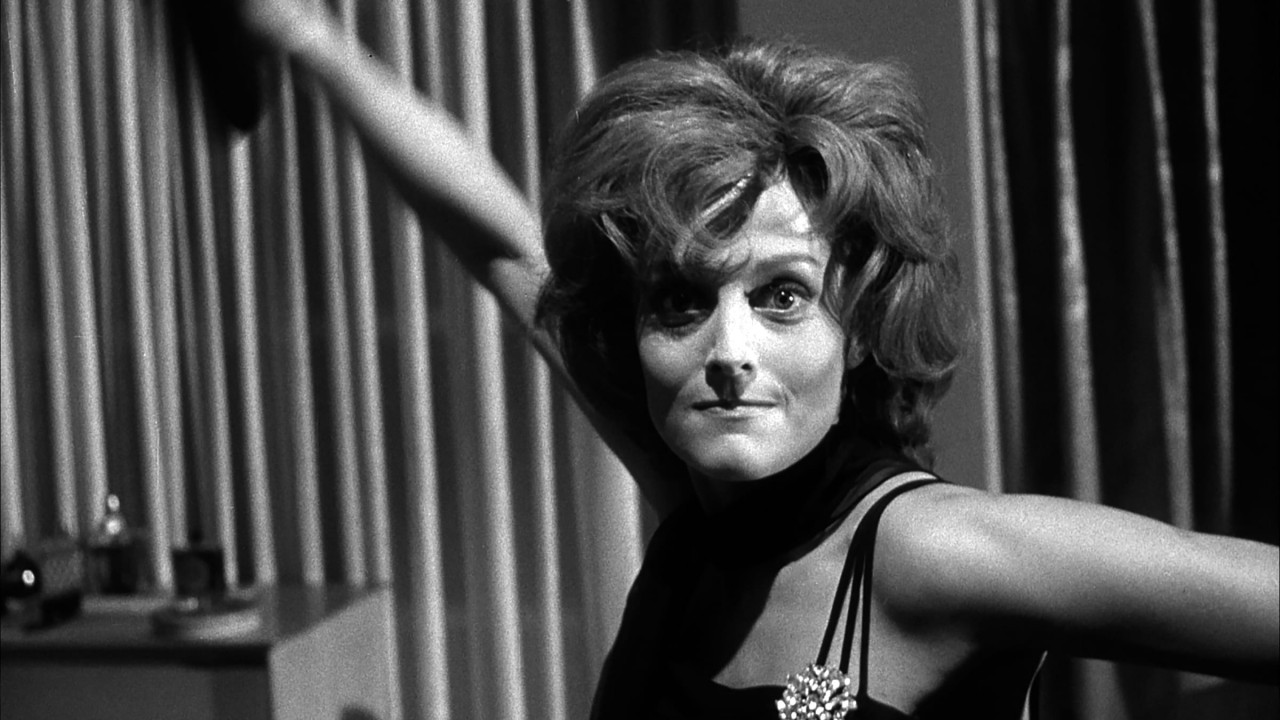
If you think that Elvis Presley never made a good movie, you haven’t seen the outstanding MIchael Curtiz crime drama King Creole (1958). Elvis plays Danny, an impoverished wannabe singer who becomes entangled in the New Orleans underworld when he attracts the romantic interest of a sultry Bad Girl (Carolyn Jones), whose boyfriend is the local gangster kingpin (Walter Matthau).

There’s a lot of story packed in King Creole:

  • Will Danny survive his run-ins with Matthau’s menacing crime lord and with the street thug Shark (Vic Morrow)?
  • Will Danny will choose Jones’ Bad Girl over Dolores Hart’s Good Girl?
  • Can Danny repair the difficult relationship with his father (Dean Jagger)?
  • Will Danny make it as a professional singer? (Okay – not much suspense in that one.).

King Creole was shot when Elvis had just turned 22. Having just gotten his draft notice; it was his last film before his military service. This was way, way before Elvis was known for karate kicks, spangles and massive belt buckles. At 22. has only his voice, looks, energy and magnetism – and that’s plenty.

This was Elvis’ favorite of his movie performances, and his charisma, deployed in a grown-up story, makes us wonder what might have been had he returned to well-written screenplays.

Elvis Presley in KING CREOLE.

Of course, Elvis sings in the movie, which resulted in a pretty strong soundtrack album. The film opens with Elvis and Kitty White’s call-and-response duet of Crawfish. Then we hear Danny’s nightclub numbers, including Trouble, As Long As I Have You, King Creole and Hard Hearted Woman.

Elvis Presley and Dolores Hart in KING CREOLE.

Jones, now best remembered for her campy Morticia in The Addams Family, had 44 previous screen credits, but only one as the female lead in a feature film. Besides future stars Matthau and Vic Morrow, the cast features past Oscar-winner Dean Jagger and the reliable noir stalwart Paul Stewart. Dolores Hart was the only Elvis co-star to become a nun in real life.

I got to see King Creole on the big screen at the 2026 Noir City in Oakland, and I featured it in my festival preview. At the screening, guest host Alan K. Rode explained that Elvis was fearful that rock and roll was just a fad, and that he would need to pivot his career. Aspiring to become the next James Dean, he signed with veteran producer Hal Wallis with the request that, after Presley’s Army service, Wallis would help get Elvis into the Actor’s Studio for training.

Until Rode’s introductory remarks, I didn’t know that most of the film was shot in Hollywood. Curtiz made the most of the nine filming days in New Orleans, resulting in a NOLA-drenched effect.

I first discovered King Creole by reading one of Sheila O’Malley’s essays in her blog The Sheila Variations, well before she became one of the film critics on Ebert.com. O’Malley is the best writer about King Creole, and along with Peter Guralnick and Adam Gopnik, among the very best writers on Elvis. Here’s a sample: King Creole (1958): The Dreamspace of New Orleans.

King Creole plays occasionally on Turner Classic Movies and can be streamed from Amazon, AppleTV, YouTube and Fandango.
Elvis Presley and Vic Morrow in KING CREOLE.

EPiC: ELVIS PRESLEY IN CONCERT: pure Elvis

Photo caption: Elvis Presley in EPiC: Elvis Presley in Concert, Courtesy of NEON.

The appeal of the documentary EPiC: Elvis Presley in Concert is that it’s pretty much just Elvis, and that’s both entertaining and insightful. The film focuses on Elvis’ ten-year residency in Las Vegas, where he performed 1100 shows, sometimes as many three in an evening. All we see is archival film (some never-before-seen) of Elvis performing, rehearsing, getting to and from shows and being interviewed. Other than the voices of interviewers, we only hear the words of Elvis himself.

There are bits where he reflects on his mother, his army service and Colonel Parker. The most revealing elements of EPiC: Elvis Presley in Concert are:

  • His unfilled aspirations to make better movies and to perform in Europe and Japan.
  • His patience and generosity to the fans who want to inavde his personal space by touching and kissing him. Asked about the frenzy of crazed adulation, he says he accepts it as part of the job and that it doesn’t bother him. He reflects for a moment and then says that he thinks he would miss it. Wow.
  • Despite his reputation for being both simple and mercurial, his calm discipline when being asked the most ridiculous and provocative questions, and his refusal to take the bait and be trapped into controversy.
  • Elvis’ playfulness, both behind the scenes and on-stage, often referencing his own image. He seemed to deal with the grind with jokiness.
  • The unusual continuity in his band over a decade, which indicates that the musicians must have liked him as a person and found him easy to work with. His corny gags and goofiness seem to keep the work fun for the band.

EPiC: Elvis Presley in Concert is the first documentary feature directed by the famed Baz Luhrmann, whose work over the past twenty-five years I have despised as shallow eye-candy. After starting with the sweet little Strictly Ballroom and the visually spectacular Moulin Rouge, Luhrmann has made garish, hackneyed crap like Australia and The Great Gatsby. Here’s my rant on his recent biographical narrative Elvis.

But Luhrmann really can’t add an excess of glitz to somebody who is karate-kicking in white bellbottoms, with his fringe swishing and his massive belt buckle gleaming.

So, what we have hear is pure unfiltered Elvis, not interpreted by someone else, except, of course, for Luhrman’s choices in what to put in and what to leave out. One of Luhrmann’s best choices is an extended segment near the end of the film – an epic performance of Suspicious Minds with Elvis teasing out one faux finale after another. This clip brings together many of the themes in EPiC – Elvis’s charisma and magnetism, his showmanship and relationship to a live audience, his command of performance and his playfulness.

EPiC: Elvis Presley in Concert is streaming on Amazon, AppleTV, YouTube and Fandango.
IN THE HAND OF DANTE: the heist and the impenetrable

Photo caption: Oscar Isaac in IN THE HAND OF DANTE. Courtesy of Netflix.

In the Hand of Dante is director and co-writer Julian Schnabel’s film adaptation of the Nick Tosches novel; I haven’t read the book, but it’s likely one of those impossible-to-make-into-a-movie novels – and it’s got to be better than this film.

The movie braids together two parallel stories – one that begins in 21st century New York and the other set in early 14th century Italy. The modern story is in back-and-white; the period story is in color.

The modern story follows the arc of a heist film. Oscar Isaac plays a fictionalized Nick Tosches, a contemporary writer who is enthralled with the work and life of the pre-Rennaisance Florentine poet Dante Alighieri. The movie Tosches knows that an original manuscript written by Dante himself would be invaluable on the antiquities market and thinks he knows where a previously unknown specimen exists. A criminal kingpin (John Malkovich), with his vile enforcer (Gerard Butler) and weaselly sidekick (Louis Cancelmi), bankrolls two heists – one to steal the Dante original and a second to swipe contemporaneous works that can be used to authenticate the Dante work.

Oscar Isaac in IN THE HAND OF DANTE. Courtesy of Netflix.

The period piece takes us to the early 1300s and the life of Dante himself (also played by Oscar Isaac). Butler and Cancelmi also play medieval figures. Gal Gadot plays Dante’s wife – not his idealized muse – in the period piece and Tosches’ fantasy love in the modern story. Most of the Dante story centers around the politics of Florence and the papacy, with a bizarre piece with Martin Scorsese, under a massive tangle of white long hair and beard, as a sage who guides Dante’s thinking.

The heist story is procedural and features the off couple pairing of the intellectual Tosches and the sadistic philistine hitman (Butler). This is the most accessible thread of the film, and there’s really nothing exceptional about it except for the profound indecency of the hitman. The modern story tries to mirror the themes of artistic freedom and obsessive love of the Dante story, and even throws in 9/11. On the whole, everything except the heist story is impenetrable.

None of this is the fault of the cast, which is uniformly good – except for the artificial-seeming chemistry between Isaac and Gadot. It’s always great to see Louis Cancelmi, and Duke Nicholson is exceptional as the hitman’s first terrorized and degraded victim. Besides Scorsese, Al Pacino, Jason Momoa and the iconic Franco Nero show up in cameos.

Julian Schnabel is one of the great contemporary painters, and branched into filmmaking with the arthouse hit Basquiat in 1994. This is only Schnabel’s sixth narrative feature in thirty-two years, including the wonderful The Diving Bell and the Butterfly. Schnabel is a gifted artist in every medium, but In the Hand of Dante is a rare misfire.

At the outset, there’s a scene involving the boy Tosches being guided past a traumatic experience by his uncle Carmine, played by Al Pacino – and Pacino is magnificent. It’s by far the best-acted and most compelling scene in In The Hand of Dante. Unfortunately, another two hours and twenty minutes follow.

In the Hand of Dante is streaming on Netflix.

MADDIE’S SECRET: a bracingly inventive comic melodrama

Photo caption: Kate Berlant and John Early in MADDIE’S SECRET. Courtesy of Magnolia Pictures.

Writer-director John Early’s comic melodrama Maddie’s Secret is inventive, sometimes bracingly so. Early also stars as the kind and modest Maddie, who lives with her adoring husband Jake (Eric Rahill). Maddie is a passionate foodie who doesn’t get to show off her culinary genius in her job as a dishwasher at a content mill, churning out celebrity cooking shows for social media’s unquenchable appetite. A personal video goes viral, and Maddie’s company propels her into celebrity chefdom.

Thing is, Maddie has been hiding her light under a bushel because she has an eating disorder with hurtful body image issues. Now, she is trapped into the role of a public-facing Internet sensation who is expected to spend her life celebrating food. All the time, she is desperately hiding her disorder from everyone, including Jake and her best friend Deena (Kate Berlant). That’s a conflict-laden situation that could launch a comedy, a drama, or, in the case of Maddie’s Secret, both.

Here’s the comedy – Maddie’s Secret is an homage to the television disease-of-the-week movies of the late 20th Century, with all the tropes of melodrama, including the overwrought line readings. It also savagely sends up LA’s content creation industry. This aspect of Maddie’s Secret is broadly funny; after all, Maddie’s Secret was written by a comic, almost all of the cast are comedians and the protagonist is played by an actor in drag.

John Early and Eric Rahill in MADDIE’S SECRET. Courtesy of Magnolia Pictures.

But Early mocks the over-earnestness of the issue movie genre while taking the issue itself seriously. Maddie really is suffering from a real disorder. Maddie’s Secret never soft-pedals the physical and emotional consequences of Maddie’s bulimia. Just as heart-breaking are the impacts to Maddie’s closest relationships as she lies to cover it all up. (Indeed, in a panic, she tells Jake the worst possible lie to mask her purging.) There are moments in Maddie’s Secret that are as funny as a heart attack – literally.

Early’s real triumph here is in balancing the tones of the movie – somehow the silliness of the send-up doesn’t interfere with the melodrama.

Early is also excellent in portraying Maddie’s decent soul and damaged psyche, her hidden pain and self-loathing. Berlant and Rahill are especially good as Deena and Jake. So is Kristen Johnson as Maddie’s nightmarish mother Beverlee.

Maddie’s Secret opens this weekend at theaters including the Landmark Opera Plaza in San Francisco, Alamo Drafthouse in Mountain View, and, in LA, Laemmle’s Monica Film Center, Town Center 5, Glendale and Tasveer Film Center.

MEMORIZU: a cinematic essay on memories

Photo caption: Issei Ogata, Tasuku Emoto, Shiki Inoue and Moeka Hoshi in MEMORIZU. Courtesy of Tribeca.

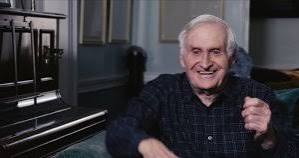
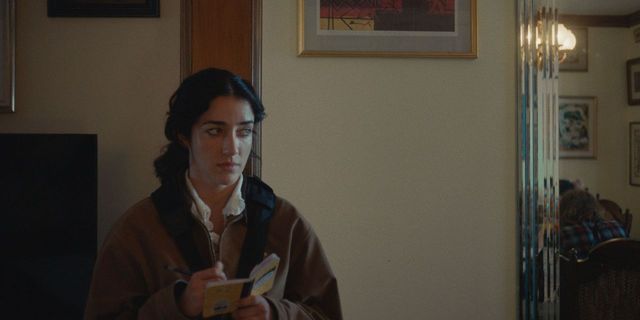
The mesmerizing Memorizu begins with Yuta (Tasuku Emoto) traveling hours away to a rural town on Japan’s southernmost major island. He’s planning to spend two months caring for his elderly father-in-law, incapacitated by a broken leg. The widowed father-in-law, Makoto (Issei Ogata), is grouchy and maddeningly particular, but Yuta dutifully carries on, looking forward to video calls from his wife Yuki (Moeka Hoshi) and their young daughter Hana (Shiki Inoue). This area is unfamiliar to Yuta, but he soon settles into a routine – walking the dog, eating his lunch on a bench with a view of a farm horse, and minding Makoto’s portrait photography shop.

Memorizu is the impressively confident debut feature by writer-director Miiku Sakanishi, who shows us that even the littlest moments add up to define a life. As these moments are documented by images – snapshots, photographic portraits, videos – Sakanishi forms Memorizu into a cinematic essay on memory. The editing by veteran editor Shinichi Fushima is impeccable, and Sakanishi’s pacing keeps us engrossed even with little movie action.

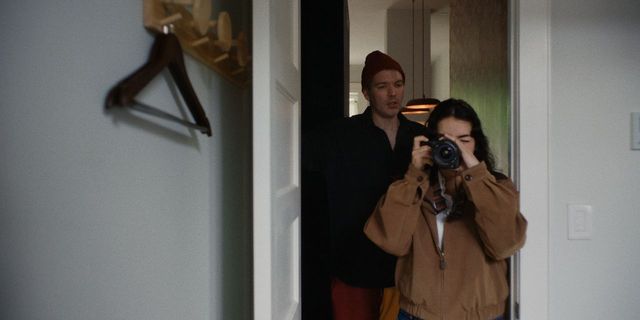
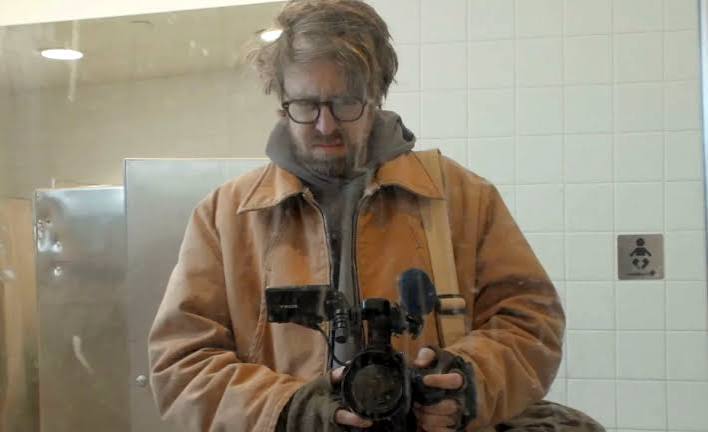
Many images, like selfies and even class photos, seem disposable, but they evoke memories that are re-experienced forever. Yuta himself begins taking photos on his daily rounds. It seems that his corporate job gives Yuta the flexibility to get away, while Yuki has to stay to care for Hana and for her job as a tour guide/translator for Chinese tourists; the video calls between them become increasingly important..

Eventually, we see more emotionally charged images: a flashback video from Yuta at the time of Hana’s birth, Makoto’s portrait of his best friend; and, most affecting, a recorded voicemail. Memorizu is authentically heartfelt without sinking into sentimentality.

Memorizu introduces us to Sakanishi as a gifted new auteur. I screened Memorizu for its world premiere at Tribeca, where it won the Best New Narrative Director Award.

CORONER TO THE STARS: too transparent?

Photo caption: Dr. Thomas Noguchi in CORONER TO THE STARS. Courtesy of Journeyman Pictures..

The absorbing biodoc Coroner to the Stars tells the story of Dr. Thomas Noguchi, the former Los Angeles County Chief Medical Examiner and his bouts with fame (or infamy). His LA County jurisdiction meant that he was responsible for conducting the autopsies of a striking collection of celebrities, including Marilyn Monroe, William Holden, Natalie Wood, John Belushi and the Manson Family’s murder victims. Noguchi was also responsible for making his reports public – and therein lies the rub.

The public is fascinated by the details of celebrity deaths, and the news media eagerly panders to that need, however prurient or ghoulish. Official records in California, including coroner’s reports, are public. Noguchi did not shy away from the media spotlight, which triggered controversy. He was clearly fulfilling his legal duty, but did he enjoy it too much? Was he a publicity hound? Can an official be transparent without being unseemly? Indeed, Coroner to the Star’s tag line is Fame kills.

Writer-director Ben Hethcoat and Keita Ideno, in the first feature for both, present an extraordinarily well-sourced, credible and insightful documentary. Noguchi is still alive at age 98 and appears in the film to speak for himself.

Dr. Thomas Noguchi (right) in CORONER TO THE STARS. Courtesy of Journeyman Pictures.

Noguchi’s work (and style) stepped on some influential toes – the families and friends of the deceased, the major Hollywood studios and bureaucratic/political foes. Whenever he came under attack, the subtext was his race and the public perception and acceptance of Asian-Americans. Noguchi was a post-war immigrant who didn’t experience the Japanese-American internment during WW II, but Japanese-Americans traumatized by the camps would organize to defend LA’s highest ranking Japanese-American official.

Noguchi was also an internationally recognized pioneer in forensic science. Coroner to the Stars reveals his determination, in the RFK autopsy, to avoid the mistakes that resulted in the continuing, unresolved contention about the JFK assassination. Coroner to the Stars, without sensationalizing it, also touches on a key finding of the RFK forensic evidence.

Rock-solid in its exploration of race, science and history, Coroner to the Stars thoughtfully considers the challenge of acting professionally with what is sensational. I screened Coroner to the Stars for its world premiere at the 2025 Slamdance. It’s opening at the Laemmle theatwrs in LA: the Royal on June 23, the NoHo on June 24, and the Glendale on June 25-26.

UNIDENTIFIED: a slow burn whodunit – until the shocker ending

Photo caption: Mila Al Zahrani in UNIDENTIFIED. Courtesy of Sony Pictures Classics.

In the Saudi mystery thriller Unidentified, we meet Nawal (Mila Al Zahrani), a recent divorcee, who is restarting her life with an entry-level job scanning files at a Riyadh police station. Addicted to a true crime podcast with makeup tips, Nawal is intrigued – and ultimately obsessed – by the discovery of a high school girl’s body in the desert. The girl has been killed, and nobody knows who she is. Because no one has reported a missing teenager, the cops assume that her family doesn’t want the case publicized, and so they don’t upset people by asking around. The mystery looks headed for the cold case files, but that’s not acceptable to Nawal, who embarks on an unauthorized investigation of her own.

Unidentified is the work of Saudi Arabia’s first female filmmaker, Haifaa Al Mansour, and Nawal is an nontraditional woman who has left her husband, lives by herself, drives a car, and refuses to kowtow to male authority. Nawal blows by male disapproval in a society where arranged marriages remain the norm and honor killings are not uncommon. Her investigation takes her inside the exclusive schools and gated compounds of the rich, to a hookah bar disco and across the endless sand dunes of the Saudi desert. Otherwise as uncovered as possible, Nawal dons a burqa for its advantages in tailing a possible witness.

Unidentified is a slow burn whodunit, until a shocker ending that I sure didn’t anticipate. The final twist is an utter gobsmacker.

Mila Al Zahrani in UNIDENTIFIED. Courtesy of Sony Pictures Classics.

Al Mansour previously directed Wadjda (2012), the Elle Fanning Mary Shelley (2018) and The Perfect Candidate (2019), also starring Al Zahrani. She’s also directed plenty of TV episodes, including Florida Man, City on Fire, Fear the Walking Dead and Bosch: Legacy. In Nawal, Al Mansour has constructed a character whose intimate familiarity with Saudi culture, much of which she rejects, helps her navigate rings around the police.

Unidentified opens in select theaters this weekend, including in LA at Laemmle’s Town Center 5, Royal, and Glendale.

EXIT 8: nightmare on a loop

Photo caption: Kazunari Ninomiya in EXIT 8. Courtesy of NEON.

In the Japanese psychological thriller Exit 8, a workaday Everyman (Kazunari Ninomiya) is unenthusiastically heading to his temp job on Tokyo’s subway. But when he exits the train, he can’t find the way out of the station. As he walks past the gleaming white-tiled walls, he follows the signage toward Exit 8, which never emerges. He’s caught in a nightmarish loop, and he gets increasingly desperate. Will the guy, named “Lost Man”, be trapped forever?

This is a movie about endless repetition, so how does director and co-writer Genki Kawamura keep us engaged for an hour-and-thirty-five minutes? First, Lost Man encounters other solitary, and seemingly random characters in the station corridors The most vivid is the rigidly-postured, pony-tailed Walking Man (Yamato Kochi) – who is he, and why isn’t he panicking about being lost, too? Later, there’s a boy, a high school girl and the apparition of someone the Lost Man knows. To make the Lost Man’s escape even more frantic, he learns he has to deal with a life-changing development outside the subway system.

Although it’s not obvious, Exit 8 is based on a labyrinth game, and there’s a subway information placard with the instructions to keep going as long as there are no anomalies, but to turn back if an anomaly is spotted. Kawamura gets us to follow Lost Man as he essentially plays the game by trying to spot the anomalies

Kazunari Ninomiya in EXIT 8. Courtesy of NEON.

Finally, Kawamura deploys some horror movie techniques. There are jump scares and disturbing images and sounds. While I was watching Exit 8, The Wife was in a different room, but she still got scared by the soundtrack. There is no gory body horror.

96% of the story is in a maze comprised of the same three or four corridors of a subway station, filmed on a set. The rest was shot in three actual Tokyo subway stations.

This is a film unlike any we’ve seen, and it’s pretty entertaining. Exit 8 is streaming on Amazon, AppleTV, YouTube and Fandango.