FACKHAM HALL: silly, low-brow, and that’s okay

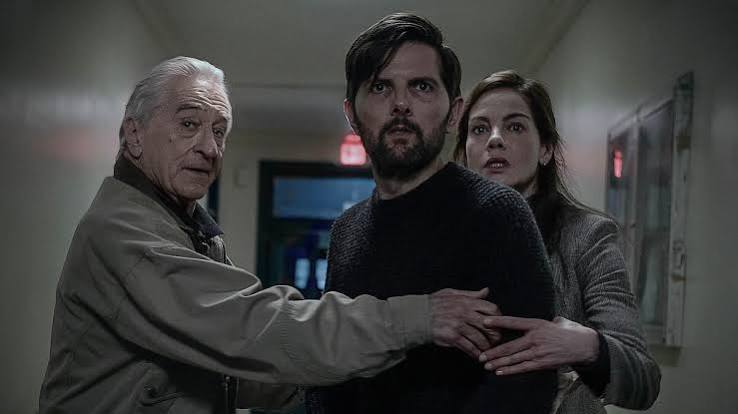
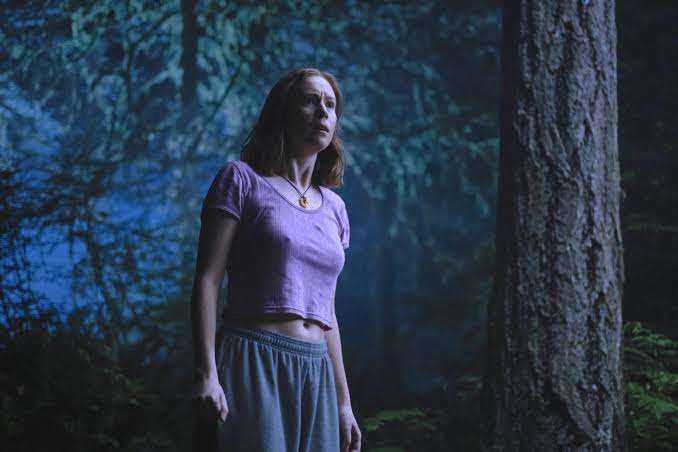
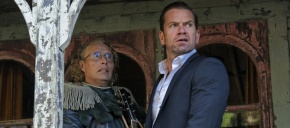
Photo caption: Thomasin McKenzie, Katherin Waterston, Damian Lewis and Emma Laird in FACKHAM HALL. Courtesy of Bleecker Street.

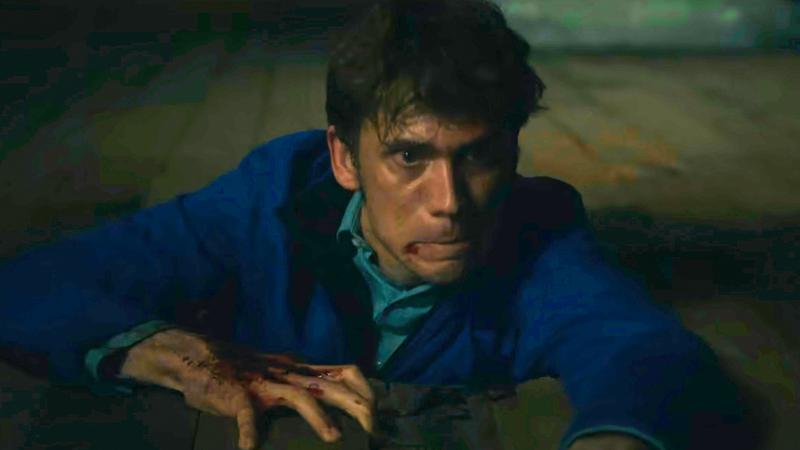
Fackham Hall is a parody of the beloved Downton Abbey franchise, which has many aspects which can be mocked. The humor is generally low-brow, as you can see from the photo below. At its silliest, it’s still mostly funny, and the jokes are rapid-fire. Look away from the screen for even a a second, and you risk missing a sight gag in the background. Think Airplane!.

Ben Radcliffe (with erection) and Thomasin McKenzie in FACKHAM HALL. Courtesy of Bleecker Street.

Fackham Hall does a good job of mocking Downton Abbey’s fundamental premises, that the owners are preoccupied with keeping the estate in the family, even with the tangles of 800-year-old inheritance law, and with an obsolete business model – and, of course, the ridiculous privilege bestowed upon rich twits by meritless birthright.

Damian Lewis, Katharine Waterston and Thomasin McKenzie are very good as the aristocratic owners and Ben Radcliffe is very good as the new Downstairs hall boy.

I usually don’t write about a movie’s publicity campaign, but it included a blurb from Fackham Hall’s own screenwriter Jimmy Carr, “The funniest film I have written”, and the declaration, “From the producers who watched the first two seasons of Downton Abbey“.

After seeing the trailer, I decided that I could wait to stream Fackham Hall at home. But, now that I have, I think it’s actually a BETTER movie than Downton Abbey: The Grand Finale. Fackham Hall is free on HBO Max and rentable from other VOD platforms.

THE BRIDE!: a funnier Bonnie and Clyde, with monsters

Photo caption: Jessie Buckley in THE BRIDE!. Courtesy of Warner Bros.

Director Maggie Gyllenhaal’s The Bride! is both a pedal-to-the-metal spectacle and an intellectual exercise, but not a great movie for the ages. But it is most certainly a showcase for the unique and awesome talents of Jessie Buckley.

The Bride! is set in the America of the early 1930s, that time of speakeasies, flappers, gangsters, hobos hopping trains and popular fascination with Talking Pictures. Having been re-animated 100 years before in Europe, the very sensitive Frankenstein’s monster (Christian Bale) longs for female companionship, and gets it when a Chicago mad scientist (Annette Bening) reanimates the corpse of a gangland escort (Jessie Buckley).

She doesn’t remember who she is or any specific experiences in her previous life. But, unlike the traditional Frankenstein’s monster, she immediately behaves like a fully formed woman, who is already acquainted with 1930s America, and speaks English with an impressive vocabulary. And she already knows how some men mistreat women, and, boy, is she pissed off.

The original male monster in The Bride! is named Frankenstein, unlike in Guillermo Del Toro’s and other Frankenstein movies, where the mad scientist is Viktor Frankenstein and the monster is “the Creature”.

The two take to each other, but Frankenstein has been comfortable living on the down low, and his bride has the ability and compulsion to ignite every social situation into an uproar and to escalate every commotion into a volcanic riot. They must flee Chicago and embark on a road trip to Manhattan, Niagara Falls and back to Chicago, leaving carnage in their wake.

Let’s talk about what The Bride! is NOT. It’s not anything like Guillermo Del Toro’s operatic Frankenstein epic. It’s not anything like the campy 1935 Bride of Frankenstein starring Elsa Lanchester. And, although there’s violence, it is not a gore fest like many contemporary horror movies.

The movie that The Bride! most resembles – and it’s intentional – is Bonnie and Clyde (and there’s at least one identical shot, where Buckley mirrors Faye Dunaway). There’s plenty of subversive humor in Bonnie and Clyde, but The Bride! is much more generally funny.

Jessie Buckley and Christian Bale in THE BRIDE!. Courtesy of Warner Bros.

Whether happy or angry, the Bride herself is absolutely explosive, and Jessie Buckley, with untethered physicality, makes her into a human detonator. Whether she enters a speakeasy or a cinema or a fancy hotel ballroom, there’s gonna be a riot very soon.

Christian Bale’s monster character is the most textured in The Bride! – in turns yearning, lovelorn, socially fearful, pathetic, disciplined, and joyous. Bale is really, really good in the role.

The Bride!’s cast is very rich; besides Bening, there’s Penelope Cruz, Peter Sarsgard and John Magaro. They’re all good, although all of the complexity is in Buckley’s and Bale’s roles. Jeannie Berlin, Oscar-nominated for 1973’s The Heartbreak Kid, is very good as the mad scientist’s grotesque assistant. I always sit up and take notice of Louis Cancelmi (Billions) when he shows up in a supporting role, and he’s just as good here as in The Eyes of Tammy Faye and Killers of the Flower Moon. The director’s brother, Jake Gyllenhaal, is very good as a song-and-dance movie star revered by Frankenstein.

The Bride’s volatility stems from her rage against misogyny, and that is the most persistent theme within The Bride!. I found myself more often thinking about the message and the cinematic references in The Bride! than being emotionally involved in it. Since Jessie Buckley is the most soulful actor in today’s cinema, I was expecting more soulfulness in the movie, and I think that’s a miss. Nevertheless, The Bride! is smart, funny and entertaining.

HUMAN RESOURCES: Iago with a sick sense of humor

Pedro De Tavira (center) in HUMAN RESOURCES. Courtesy of Cinequest.

In the dark, dark Argentinian comedy Human Resources, Gabriel Lynch (Pedro De Tavira) is an alienated office worker, in an absurdly alienating workplace. Gabriel is a low-level supervisor on an anonymous lower floor of a corporate hive with too many layers of management and an oppressive, top-down culture. It’s also oversexed, with a carousel of Inappropriate office liaisons. And, we’ll soon see, is shockingly tolerant of what we would see as the most horrifying workplace violence.

Gabriel, an Iago with a sick sense of humor, begins a ruthless, unhinged campaign against those who offend him. Alienation leaks out in how her treats everyone. Mischievous, mean-spirited and completely unashamed, he’s very fun to watch. And, as venal as Gabriel is, he is matched, step-for-step, by Veronica from Finance (Juana Viale).

Around the 41-minute mark, Gabriel makes his grievance explicit (followed by a great drone shot)

“I’ve lived like the secret son of a king for a long time, waiting for a courtier to rescue me. Of course, nobody rescued me. Nobody rescues anybody.”

Human Resources is the creation of writer-director Jesús Magaña Vázquez. I’ve rarely seen a more cynical comedy.

Last year’s Cinequest hosted the US premiere of Human Resources, which I highlighted in my Best of Cinequest. Human Resources is now streaming on Hulu. There are many recent movies with a similar title; make sure you’re watching the 2023 Recursos Humanos directed by Magana and starring Pedro De Tavira.

I love the Spanish language trailer, even without English subtitles:

OUT OF THE BLUE: when there is no redemption

Photo caption: Linda Manz in OUT OF THE BLUE. Courtesy of Discovery Productions, Inc..

Newly restored for re-release, Dennis Hopper’s 1980 Out of the Blue is an anti-redemptive parable of alienation. It features both an unforgettable performance and an unforgettable ending.

The spirited teenager Cebe (Linda Manz) has the worst parents in her British Columbia town, maybe in the entire province. Her dad (Dennis Hopper), is a drunk, deservedly in prison for an act of irreparable harm. (Cebe bears a facial scar from this incident – and lots of emotional damage as well).

Her chirpy mom (Sharon Farrell) can’t keep a needle out of her arm or guys out of her pants. Ever impulsive, she ruefully observes that there are two kinds of men – the sexy, adventuresome types and the good providers; it’s evident that she hasn’t bet her life on the good providers.

After five years in prison, the dad is released and gets a job operating heavy machinery at a garbage dump overrun by sea gulls. But he’s still sucking on his ever-present pint bottle, and the town won’t forget why he was incarcerated.

Cebe is full of life and has a gum-chewing swagger. She’s comfortable leading her teen peers in some rowdiness, but she also has a rich imagination and she spends a lot of time in her room alone, acting out her interests in Elvis and punk music.

But Cebe doesn’t know in what direction to channel her exuberance; she can’t tell her sympathetic, court-appointed psychologist (Raymond Burr) what she wants.

The one thing that Cebe doesn’t want is what’s best for her – to be separated from her parents. As is common with neglected and abused children, she clings to the bad situation that she is familiar with.

Cebe acts out in mildly rebellious mischief at school, and she runs away for a night of adventure in Vancouver, somehow emerging unscathed from risky situations.

Back home, she hides from her parent’s arguing in her room. Suddenly, the audience is shocked by something the father says (what??!!), and it is revealed that the parents’ dysfunction is MUCH darker, more twisted than previously apparent.

Cebe erupts, and Out of the Blue ends with a stunning, utterly unpredictable climax. Hopper follows Billie Wilder’s screenwriting advice – “don’t hang around”; the ending is not even one second too long.

Dennis Hopper wrote and directed Out of the Blue, pacing the film well and delivering verisimilitude from the Vancouver-area setting. The camera swirls around the actors at times, and Hopper makes good use of the thousands of seagulls populating a garbage dump.

Out of the Blue is really all about Linda Manz’s singular performance as Cebe. Often improvised, her performance is naturalistic and unpredictable. When she is in her room or walking through a Vancouver night, she acts like no one is watching her, and it’s riveting.

By the time she was 19 in 1980, Linda Manz had acted in and narrated a masterpiece (Terence Malick’s Days of Heaven) and appeared in two cult films (Philip Kaufman’s The Wanderers and Dennis Hopper’s Out of the Blue). Then she retired to raise a family. Manz died at 59 in 2020.

Don Gordon (left) and Dennis Hopper (center) in OUT OF THE BLUE. Courtesy of Discovery Productions, Inc.

As the dad, Hopper is able to demonstrate the charm that attracted the mom and the playfulness that endears him to Cebe. In a scene where the dad dramatically gets himself fired, Hopper shows a man so enjoying his ballsy action, and then, his visage changes as the consequences of his impulsivity sink in, reflecting on his helplessness when he is once again done in by his own impulses.

As the mom, prolific television actress Sharon Farrell excels in a rare movie role.

Don Gordon plays Charlie, the dad’s marginally more functional pal. Gordon had key supporting roles in Bullitt and Papillon and over a hundred appearances in the episodic TV of the 60s and 70s.In Out of the Blue, Gordon displays his gift for playing drunk convincingly. Gordon really understood the essence of drunk thinking and behavior, and has an even more compelling drunk scene in Hopper’s The Last Movie).

Out of the Blue premiered at Cannes and enjoyed praise from Roger Ebert (“Bitter, unforgettable. An unsung treasure.“) and other critics. But the ending is so shocking and emotionally desolate, that it wasn’t released in the US; no distributor wanted to bet on its acceptance by a US audience. John Alan Simon acquired the distribution rights for a 17-week art house tour in 1982 with Hopper. Now Simon and Elizabeth Karr have digitally restored Out of the Blue from the only two 35mm prints in existence.

Out of the Blue has only recently become available to stream; (I own the DVD.) In late 2021, the 4K restoration opened at a New York City screening presented by Chloë Sevigny and Natasha Lyonne. Now you can find Out of the Blue on the Criterion Channel, AppleTV, YouTube and Fandango.

A PRIVATE LIFE: a shrink and her own issues

Photo caption: Jodie Foster in A PRIVATE LIFE. Courtesy of Sony Pictures Classics.

In the dark comedy A Private Life, Jodie Foster plays Lilian Steiner, a prickly, disagreeable Paris psychiatrist, so self-absorbed that she often fails to listen to her own patients. One of her patients dies, and Lilian is stung to be blamed by the family for their loved one’s suicide. More out of personal pique than any sense of justice, Lilian sets out to prove that the woman was murdered.

It’s very funny as Lilian blusters off, imagining potential suspects and projecting motive and opportunity. When Lilian reports a real crime, a burglary of her apartment, she’s so high strunf that the cops suspect that she’s a crank.

What’s even funnier is that Lilian presents the same compulsive behavior, lack of boundaries, and attachment issues that she is paid to treat in her patients. After all, what woman declines an opportunity to hold her first baby grandchild? Indeed, the whodunit is merely the vehicle for Lilian’s journey to personal connection.

Jodie Foster is very good as the ever-aggrieved Lilian, a role that must have been fun for her to play. Liliane is an American who has lived for decades in Paris, mirroring Foster’s own lifelong embrace of French language and culture. The movie’s biggest laugh comes when Lilian is stymied by what Americans see as the French over-vacationing.

Daniel Auteil, who has been nominated 14 times for a Best Actor César, is wonderful as Lilian’s adorable ex-husband. The rest of the cast is filled with French A-listers in minor roles (Mathieu Amalric, Virginie Efira, Irene Jacob). Vincent Lacoste is quite good as the son who expects his mom tp behave badly, but still can be surprised by a new outrage. The great 95-year-old documentarian Fredrick Wiseman sparkles in a cameo playing Lilian’s stern mentor, who calls her on her shit.

A Private Life was written and directed by Rebecca Zlotowski (Grand Central). It’s a well-made diversion that you can wait to stream at home.

THE SECRET AGENT: we’re all back in 1977, and he’s running for his life

Photo caption: Wagner Moura in THE SECRET AGENT. Courtesy of NEON.

The Secret Agent is both a superb movie and an unexpectedly original immersive experience. Writer-director Kleber Mendonça Filho embeds his slow burn thriller into 1977 Brazil, and Mendonça creates an unsurpassed sense of time and place, which is absolutely absorbing.

Wagner Moura plays a man traveling under an assumed name, making his way across the country in a VW Beetle. Eventually, we learn that his name is Armando, and he’s returning to his home city of Recife. He’s on the down low now, on the run from something, but when he later learns the particulars of the threat against him, his flight becomes increasingly urgent and cloak-and-dagger.

In the first scene, at a rural gas station, Mendonça tells us three things about the setting. Disorder reigns. Life is cheap. The police are unabashedly corrupt.

Mendonça doesn’t paint a picture of a regime like Pinochet’s Chile, where th state itself is hunting down its perceived dissenters and eliminating them by imprisonment, torture and extra-judicial execution. Rather, Mendonça’s 1977 Brazil is chaotic, where the government, casually and without much organization, tolerates or even perpetrates murder at the private whims of the rich. While the rich and their henchmen call their targets “communists”, this isn’t ideological, it’s for the most personal of interests, such as revenge and greed. Indeed, Armando isn’t a dissident activist; he’s a technology professor whose success at his job has become inconvenient for a crooked industrialist.

The cops are portrayed, often comically, as vulgar louts; the ongoing feeling of menace in The Secret Agent stems from their unaccountability. The Secret Agent simmers with tension until Mendonça brings the story to a boil with Hitchcockian suspense in a humdrum government office and an explosively thrilling chase through the sidewalks and alleys of Recife.

In juxtaposition to the life-and-death stakes of Armando’s story, it is Carnival time, and the population at large is embracing boisterous partying and carefree sensuality. The local media has created a fantastic bogeyman to sell newspapers, which Mendonça hilariously brings to life. There are recurring themes of sharks, dismembered legs and movies.

One of the movies (also shark-themed) is Jaws. Besides the movies and popular music, Mendonça brings us the cars and the dress of 1977, down to details like a Nadia Comaneci poster in the background. I have no idea how he filled the street of Recife with hundreds of extras, all dressed as in 1977 fashion. It’s very, very hot, and the men wear their shirts open, or not at all.

We’re jarred when we see an iPhone on a tabletop, Mendonça’s clever tipoff that he has jumped the story 48 years into the future.

The plot is about what will happen to Armando, and Mendonça reveals the answer in a surprisingly non-exploitative way. It’s underplayed, and it’s really perfect.

Wagner Moura carries the film, emanating Armando’s unusual decency, intelligence, and determination (and maybe too much stubborness for his own good).

As good as is Moura, The Secret Agent astounds with its amazingly deep cast and pitch-perfect performances. We come to know even the most minor characters as distinct individuals without tereotypes, and there are over 20 indelible performances. In particular, the child actor Enzo Nunes, playing Armando’s six-year-old son, gives a strongly textured performance reacting to Armando’s explanation of his mother’s death. Their are eight villains, each loathsome in entirely singular ways. This is the first year that the Academy Awards are granting an Oscar for casting, and The Secret Agent is justifiably nominated.

Mendonça had a US arthouse hit in 2016 with the Sonia Braga showcase Aquarius. That film was critical of the political status quo, and the Brazilian government’s refusal to submit it for the Best Foreign Language Picture Oscar created a controversy, detailed in this New York Times article.

The Secret Agent is nominated for four Oscars: Best Picture, Best International Picture, Best Actor and Best Casting. It should have been nominated for Best Director. You can stream it from Amazon, AppleTV, YouTube and Fandango.

MR. NOBODY AGAINST PUTIN: the first casualty of war is truth

Photo caption: Pavel Talankan in MR. NOBODY AGAINST PUTIN. Courtesy of the SLO Film Fest.

Nothing has changed since Aeschylus observed that the first casualty of war is truth, as revealed in Mr. Nobody Against Putin, the blistering exposé of Putin’s outrageous domestic propaganda about his Ukraine War.

Pavel Talankan is an unassuming, goodhearted guy with a small-time job as the events coordinator at the school in a remote Russian industrial town. That also makes him the school videographer, so no no one notices that, as he films school assemblies, award ceremonies and performances, he is also capturing the blatant Big Lie propaganda. It’s a surreptitious documentary filmed in plain sight.

Pavel is an unlikely muckraker. He is a free-thinking nebbish who loves Russia and loves his hometown of Karabash in the Ural region, putrefied by a noxious copper plant and called “the most toxic place on earth”.

More than anything, Pavel cares about his students, and he is increasingly disgusted as Putin ramps up the propaganda. First, a cadaverous party hack, whose heroes are the most vile Commie hitmen in history, spreads empirically false information about Ukraine being the aggressor in the war. Then, horrifyingly, Wagner mercenaries are brought in as classroom guest speakers. Silently, Pavel continues to film, letting the propagandists defile themselves for history.

Pavel is a hero, albeit a non-violent one, who risked his life to gather this material. David Borenstein exquisitely formed Pavel’s footage into a searing exposé of Putin’s soul-crushing impact on Russia. The secret audio from the funeral of a former student killed in Ukraine is heart-rending. The film begins with video of Pavel’s midnight escape from Russia,

Mr. Nobody Against Putin has been Oscar-nominated as Best Documentary Feature. I saw it at the SLO Film Fest; it’s now available to stream from Amazon and AppleTV.

THE TESTAMENT OF ANN LEE: dreary, self-important and very, very odd

Photo caption: Amanda Seyfried in THE TESTAMENT OF ANN LEE. Courtesy of Searchlight Pictures.

Let’s get this out of the way at the outset – I don’t care for movie musicals, and, beforehand,  I didn’t know that The Testament of Ann Lee was a musical.  But I did not walk out on The Testament of Ann Lee because it is a musical – I walked out because it is a dreary, self-important musical.

This is a biopic of the woman who came to lead the Shaker religious sect in 18th century England, seen by followers as a female Christ, and founded the utopian Shaker settlement in America. 

The talented and ever appealing Amanda Seyfried stars as Ann Lee, and this is the third feature for Mona Fastvold as a director. Fastvold co-wrote Brady Corbet’s Vox Lux and The Brutalist, and Corbet co-wrote The Testament of Ann Lee. with Fastvold.  In trying to make a compelling portrait of spiritual zeal, the filmmakers had to address two challenges – the life  of Ann Lee itself and the Shakers themselves – and they failed.

First, Ann Lee grew up in Manchester, England, in the mud-1700s, where even the families of artisans lived in what we would see as squalor.  Already a religious non-conformist, Ann kept getting impregnated by her husband’s inconsiderate rutting, resultng in the birth of four babies, each of whom died before the age of one.  Then, she was committed to an asylum.  It’s no wonder that this experience would prompt Ann to lead her sect into celibacy.  All this (sexual abuse, grief, depression, renouncement of sex) is not fun to watch.

Second, the Shakers were so named because they moved their bodies during worship to express ecstasy (“shaking”).  These movements are depicted by the filmmkaers, well, oddly.  The film opens with a group of women dressed like Pilgrims doing what looks like spastic Tai Chi.  Later, it becomes clear that  the Shaker’s  movements are choreographed like Broadway numbers.  The Shakers make up for their celibacy by rhythmically thrusting their arms instead of their hips.  I am familiar with how spiritually euphoric Pentacostals act and even recently experienced Whirling Dervishes in Turkey.  But Fastvold and Corbet’s Shaker “shaking” begins as offputtingly contrived before it lapses into the unintentionally funny.

The music, by Daniel Blumberg, who justifiably won an Oscar for The Brutalist’s score, is throbbing.  Most of The Testament of Ann Lee was filmed in Hungary with mostly Hungarian technical crew.  This is a technically well-crafted film, and the verisimilitude of the 18th century settings is excellent.

In a courageous and fully committed  performance, Amanda Seyfried captures both Ann Lee’s suffering and her charismatic self-confidence.  And Seyfried sings very well.

Nevertheless, unless you are convinced that you are Christ, stay away.

A LITTLE PRAYER: comfortable, then bewildered

Photo caption: David Straithern and Jane Levy in A LITTLE PRAYER. Courtesy of Music Box Films.

In the exquisitely-acted family drama A Little Prayer, Bill (David Straithern) seems to be an unlikely candidate for a life crisis. He owns a successful Winston-Salem, North Carolina business, which he runs with his son David (Will Pullan). Bill is popular in the community, and his employees appreciate his fairness and generosity. He shares a spacious home and a longtime. comfortable marriage with his wife Venida (Celia Weston). David and his incredibly sweet wife Tammy (Jane Levy) live in a smaller house on their property, and both Bill and Venida adore Tammy.

But Bill is upset when he suspects that David may be having affair with one of their employees. Protective of Tammy, Bill dithers about what to do. As he tries to intervene, he finds that David’s extramarital fling might be the only tip of the iceberg.

Bill and Venida know what it’s like to disappointed by an adult child. Their daughter Patti (Anna Camp) is the hottest of hot messes, a nightmare of selfishness, entitlement, irresponsibility and self-created drama. In every respect, she is the worst possible role model for her daughter Hadley (Billie Roy), and Bill and Venida are sickened when they see Hadley acting out. I am not a violent person, but I wanted to reach through the screen to slap Patti.

It’s one thing to be disappointed by your child’s lack of achievement or romantic choice or even to suffer embarrassment from their legal trouble. But it’s entirely another level of horror to recognize profound character failings in your child. Could I have raised a sociopath, a victimizer? Why can’t I fix him?-

BIll has always known that Patti is a mess (and he has enabled her behavior). But, the deeper he probes into David’s life, the more shattered he becomes.

Bill is a Vietnam vet and enjoys the camaraderie of other old vets at the VFW hall. David is a veteran of the conflicts in the Middle East, and, although he is affable and fun-loving and seemingly functional, he may have unresolved issues from his service. Venida intuits that something is wrong in David and Tammy’s marriage, but Bill is gobsmacked to learn what it is.

David Straithern’s performance as Bill is one of his best. Bill is a decent, well-intentioned guy who is in control of his life, until he becomes absolutely bewildered by what is wrong and his own inability to fix it. I’ve loved Straithern’s work since his early John Sayles films, and he is now recognized as one of America’s most reliable screen actors.

Bill is the protagonist, but the story is centered on Tammy’s arc. Jane Levy (Zoey’s Extraordinary Playlist) is exceptional as Tammy, a seemingly perfect woman who masks her vulnerabilities. Levy has two scenes – one at a clinic and one after a museum visit with Bill, that are among the most emotionally powerful of the year.

The character played by Dascha Polanco (Daya in Orange Is the New Black) also has two extraordinary scenes with Bill, one where he is in control and one where he is powerless I always enjoy Celia West in a movie, and she’s also very good as Venida. This cast is one of the strongest ensembles in recent movies.

This is only the fourth feature film that writer-director Angus MacLachlan has directed since 2005, but one of them was the wonderful family dramedy Junebug. Junebug became an indie hit, and Amy Adams’ Oscar nominated performance launched her career.. A Little Prayer deserved to be a hit, too, but its release seemed to be delayed and it somehow got overlooked.

Junebug was also set in North Carolina. A Little Prayer was produced by a stalwart of North Carolina indie cinema, Ramin Bahrani, director of Goodbye Solo, At Any Price, 99 Homes, Fahrenheit 451.

A Little Prayer is one of the Best Movies of 2025 and can be streamed from Amazon, AppleTV and YouTube.

NO OTHER CHOICE: keeping up with the Parks

Photo caption: Lee Byung-hun in NO OTHER CHOICE. Courtesy of NEON.

In the brilliantly dark comedy No Other Choice, master filmmaker Park Chan-wook serves up social satire in delicious perversity. Man-su (Lee Byung-hun) and his family live a privileged life, financed by his job as a manager in a paper mill. But he loses his job, putting the big house, the tennis club, the cello lessons, and the all rest at risk. Man-su looks for another job – but there are other candidates. Man-su decides to eliminate the competition by murdering the other guys.

Remember that Man-su is a paper mill manager, not a skilled hit man, so his efforts to murder guys, dispose of their bodies and keep it all secret from the police and his family are very funny. His wife Miri (Son Yejin) is not exactly Lady Macbeth, but, when she catches a whiff of what is going on, she demonstrates some moral flexibility.

The recent great Korean satire Parasite was about the desperation of the disadvantaged in a society exploited by the rich. No Other Choice is about the desperation of the affluent to hang on to their material comforts and amenities. Man-su could, of course, choose to downsize his family’s lifestyle instead of becoming a serial killer.

No Other Choice works because, Park Chan-wook is fully committed to his pretty simple, but transgressive, premise and because he is a superb storyteller, just like in his stellar Decision to Leave and The Handmaiden. Of course, No Other Choice is also a pointed scritique of materialism and status-seeking, particularly in Korea, but also in the rest of the capitalist world.

No Other Choice is one of the Best Movies of 2025, and it opens widely this weekend.