YOU GOT GOLD: why John Prine is admired and beloved

John Prine in YOU GOT GOLD: A CELEBRATION OF JOHN PRINE. Courtesy of Abramarama.

The experience of watching You Got Gold is better than the movie itself. After all, it’s just a paint-by-the-numbers concert film – documenting a Nashville tribute concert with musical artists performing John Prine songs and telling stories about him. But the film, aptly subtitled A Celebration of John Prine, is elevated by Prine himself, his relentless playfulness and his concise, searing lyrics, so venerated by his peers, beloved by fans and acquaintances.

Prine’s song lyrics were poetry of the highest order, as in the unsurpassed fundamental truths and ultra-real humanity of Sam Stone, Souvenirs and Hello in There, Lyle Lovett recalls being stunned by the Prine lyric “naked as the eyes of a clown”. I remember being frozen by “There’s a hole in Daddy’s arm where the money goes.”

A great song can be performed in many genres. The deeply soulful War and Treaty bring a new dimension to Prine’s Knockin’ on your Screen Door. Rocker Bob Weir shreds on Great Rain.

Jason Isbell, Brandi Carlile and Dwight Yoakum all perform. Prine’s longtime friend and collaborator Bonnie Raitt tells of how she thought of them as Tom Sawyer and Becky-style playmates and performs the iconic Angel from Montgomery.

Lucinda Williams performs her own song about working with Prine, the hilarious but wistful Working On a Song (what could go wrong?).

John Prine was a great American humorist. Think Mark Twain and Will Rogers. One of his funniest songs, In Spite of Ourselves, is featured, and another, Illegal Smile, is referenced. (His funniest, Let’s Talk Dirty in Hawaiian, isn’t in the movie.)

This is ultimate Feel Good movie. If you know John Prine, You Got Gold is a Must See. If you don’t, you won’t regret watching it, either. Here’s a link to the trailer.

MY NEIGHBOR ADOLF: more than a match of wits

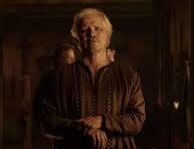
Photo caption: Bill Hayman and Udo Kier in MY NEIGHBOR ADOLF. Courtesy of Cohen Media Group.

In the wry fable My Neighbor Adolf, the chess master Polsky (David Hayman) has lost all his family in the Holocaust. Consumed by grief and bitterness, he lives the life of a misanthropic recluse in a remote South American countryside. Polsky is rocked when the long-vacant house next door becomes occupied by a mysterious German (the piercing-eyed Ugo Kier). Polsky becomes convinced that the new neighbor is Adolf Hitler himself. To convince skeptical authorities of his theory, Polsky must get past his terror and loathing to personally engage with the neighbor. A battle of wits between two strong-willed men ensues.

The 75-year-old Scottish actor Bill Hayman is excellent as Polsky, capturing both his vulnerability from residual trauma and the determination summoned to overcome it.

My Neighbor Adolf is the career finale for 81-year-old German actor Ugo Kier, who died in November. Kier proved that one can have a prolific career (275 IMDb credits) as a character actor in both art films and cult movies. He worked with directors like Werner Rainier Fassbinder, Werner Herzog, Wim Wenders and Lars Von Trier, and in Hollywood films like Johnny Mneumonic, My Own Private Idaho, Armageddon, Halloween and Ace Venture: Pet Detective. His visage, scarier as he aged, worked well in horror movies. and he did many, beginning with Jim Morrisey’s Andy Warhol’s Frankenstein and Blood for Dracula.

My Neighbor Adolf, the work of Russian-born Israeli filmmaker Leon Prudovsky, was my favorite film at the 2023 San Francisco Jewish Film Festival. It opens theatrically in the US this weekend.

MY DEAD FRIEND ZOE: getting to resilience

Photo caption: Natalie Morales and Sonequa Martin-Green in MY DEAD FRIEND ZOE. Courtesy of Briarcliff Entertainment.

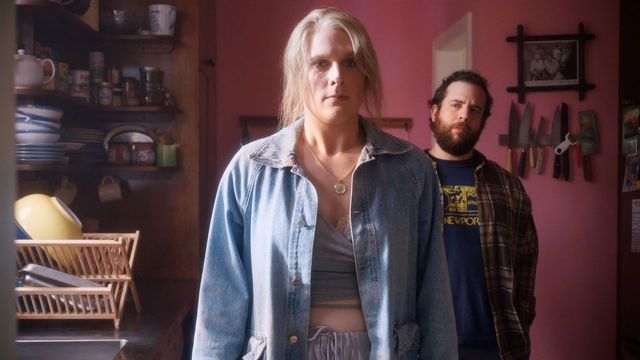
In the deeply affecting dramedy My Dead Friend Zoe, Merit (Sonequa Martin-Green) is a US Army veteran back from her deployment in Afghanistan. Merit is talented, disciplined and highly focused, but there’s something unresolved from her military service that is obstructing her transition to civilian life. We know that Merit has issues because she is often accompanied by her sassy BFF from the Army, Zoe (Natalie Morales), or rather by Zoe’s ghost, because Zoe is dead.

Zoe is high-spirited, playful and sarcastic, and usually a lot of fun. But Zoe detests sitting-in-a-circle support groups, so she isn’t encouraging Merit to complete a a mandatory program led by a psychologist specializing in combat PTSD (Morgan Freeman). Meanwhile, Merit’s military role model, her crusty Vietnam vet grandfather (Ed Harris), is becoming unable to live by himself at the family’s legacy lake house; Merit’s mom has tasked her to move him, against his will, into a safer setting.

We get the back story of Merit and Zoe’s deployment in flashback. We’re well into the movie before we learn how Zoe died, which I’m not going to spoil, because it’s central to the meaning of the film. I can say that the movie touches on PTSD, the veteran experience and the path to resilience.

Ed Harris, Natalie Morales and Sonequa Martin-Green in MY DEAD FRIEND ZOE. Courtesy of Briarcliff Entertainment.

My Dead Friend Zoe is an impressive first feature for writer-director Kyle Hausmann-Stokes, himself a decorated Army paratrooper who served in Iraq. The screenplay is brilliant, especially because the ingenious device of the very funny Zoe lightens what could have otherwise unwatchably bleak. Hausmann-Stokes wants us to appreciate a grim fact – what has killed more more members of the US military in the era of Middle Eastern wars than combat. He has succeeded in achieving a remarkably engaging movie with a satisfying ending.

Martin-Green carries the film with a very strong performance as Meit, and Morales is brightly charismatic as Zoe.

This might be the best film on the transition from wartime military service to civilian society since The Best Years of Our Lives., and it’s one of the Best Movies of 2025. My Dead Friend Zoe can be streamed from Amazon, AppleTV, YouTube and Fandango.

COVER-UP: muckraking back in the day

Photo caption: Seymour Hersh in COVER-UP. Courtesy of Netflix.

Cover-Up is a biodoc of the hard-charging investigative journalist Seymour Hersh, who uncovered the My Lai massacre and the Abu Ghraib abuses, and reported on the Nixon-Kissinger secret war in Cambodia and Watergate. These were important stories, and Hersh demonstrated remarkable resourcefulness and determination in his work.

He was a hyper-competitive practitioner of gotcha journalism, who himself was once gotten when duped by a salacious forgery

In Cover-Up, we hear about Hersh’s life and career, chiefly from Hersh himself, so we get a flavor of the man. I thought I was familiar with the My Lai massacre, but we hear about details that emerged after the initial sensation – details that I wish that I still didn’t know.

Today, we have a 24-hour news cycle, publication of gossip and fabrications, facts denied as fake news, media empires that are essentially propaganda, infotainment and so-called news obsession with celebrity. Seymour Hersh is an important figure in an era of journalism – the Woodward and Bernstein Era – that we have have moved past., IMO for the worst So, his story, while a notable episode in US political history during the Vietnam War, just isn’t that relevant today.

Cover-Up, which may interest some Baby Boomers, is streaming on Netflix.

MARTY SUPREME: a portrait of chutzpah

Photo caption: Timothee Chalamet in MARTY SUPREME. Courtesy of A24.

In the superficially entertaining Marty Supreme, Timothee Chalamet plays Marty Mauser, a young 1950s New Yorker obsessed by an imagined future that everyone else finds most unlikely. Marty sees his path to fame and fortune as becoming a world ping pong champion, elevating the sport and monetizing his competitive success. This is not a delusion, because Marty is good enough to compete at the highest level, ping pong was a rising sport, and world champs can garner money from sponsorships and merchandising. All Marty has to do is to bend everyone else to his will – and, ay, there’s the rub.

(In the 1950s, ping pong was generally thought of as a game one played at summer camp, so no other character thinks that Marty’s dream is possible. But, the Marty Mauser character is based on a real guy, Marty Reisman.)

Narcissism and irascibility is a bad combination. Marty sees every human interaction in light of how it can advance his dream, and he’s always ready to embrace mendacity and disloyalty to hurdle an obstacle. Accordingly, he leaves a wake of burned bridges in his wake. The humor in Marty Supreme stems from his ridiculous entitlement and the outrageous lengths to which he will go.

Marty lives life at a frenetic pace, and director Josh Safdie, as he did in Uncut Gems, has the audience frantically keeping pace. It’s a two-and-a-half hour movie, but it feels substantially shorter.

Chalamet is very good at playing monomania, as he showed in A Complete Unknown, and he’s fun to watch here. Gwyneth Paltrow is excellent as a jaded former movie star. So is Odessa A’zion as Marty’s childhood friend, who at first seems like a victim, but turns out to equal Marty in moxie and resourcefulness.

I’ve read that Chalamet trained in ping pong for four years, and his ping pong skills are impressive. The ping pong scenes are mostly shown in long sot, with both players’ full bodies visible, so Chalamet is performing the sport without a double. It’s high level ping pong, and one scene where Marty and a partner are showing off with trick shots is especially cool. (BTW I know my ping pong, having once been a serious player, and even having played a match against someone from the US team’s 1971 ping pong diplomacy trip to China.)

Marty Supreme enjoys a very high Metacritic rating and some Oscar buzz. It is certainly well-crafted, but I didn’t like it that much. MILD SPOILER: I think the problem is, after watching Marty think of no one but himself and treat everyone else badly for two hours plus, I didn’t buy the final 90 seconds,in which Marty finally cares about another human.

WE SHALL NOT BE MOVED: trauma, bitterness, catharsis

Photo caption: Luisa Huertas in WE SHALL NOT BE MOVED. Courtesy of Varios Lobos Produccions.

Pierre Saint Martin’s brilliant debut feature We Shall Not Be Moved (No nos moverán) is about a lifelong obsession and an unexpected catharsis.

The salty, grumpy Socorro is an elderly Mexico City attorney with a decidedly downscale clientele. She lives with family members in an apartment stacked with decades of case files. Her life has been defined by the traumatic loss of her brother, killed in 1968 in the police repression of student demonstrations just before the 1968 Olympic Games known as the Tlatelolco massacre. Shortly after, she secured a photo of the soldier who killed her brother, but his identification eluded her.

For over five decades, Socorro has been consumed by the thirst for unfulfilled, and apparently impossible, vengeance. Her bitterness has resulted in deeply dysfunctional relationships with her roommates – her doddering sister and her floundering middle-aged son.

Just when it looks like Socorro’s health will end her quest for revenge, she is surprised by new information. Ever resourceful, she enlists a network of shady associates to launch a man hunt. It doesn’t turn out as she, or we, would expect.

Of course, an old lady is an unlikely assassin, especially one who can barely climb the stairs to her apartment, and most of her crew is just as decrepit, so there’s an underlying absurdity to her quest. There’s plenty of humor here, stemming from Socorro’s unrepentant irascibility and clever resourcefulness, and the foibles of the quirky folks in her life.

She may be a lawyer, but Socorro navigates an informal legal system and an informal economy, where every transaction seems to be off-the-books. We Shall Overcome is filled with the cynicism with which Mexicans regard their national institutions.

We Shall Overcome is an impressive first feature for director and co-writer Pierre Saint Martin. Despite the griminess of the settings, it’s a beautiful, sometimes magical-looking, black-and-white film. Saint Martin is also able to bring uncommon depth to the supporting characters, especially Socorro’s depressed and defeated son Jorge (Pedro Hernández), her zany gofer Sidarta (Jose Antonio Patiño), her dying old colleague Candiani (Juan Carlos Colombo), and her Argentine daughter-in-law Lucia (Agustino Quinci), who finds herself way too normal for this family.

We Shall Not Be Moved won four Ariels (the Mexican Oscar) for Best First Feature, Best Actress, Best Original Screenplay, and Best Breakthrough Performance, and is Mexico’s submission for the Best International Film Oscar. We Shall Not Be Moved is rolling out in American theaters, including San Francisco’s Roxie this week.

PADDY CHAYEFSKY: COLLECTOR OF WORDS: “X-raying us all the time”

Photo caption: Paddy Chayefsky in PADDY CHAYEFSKY: COLLECTOR OF WORDS. Courtesy of HBO Max.

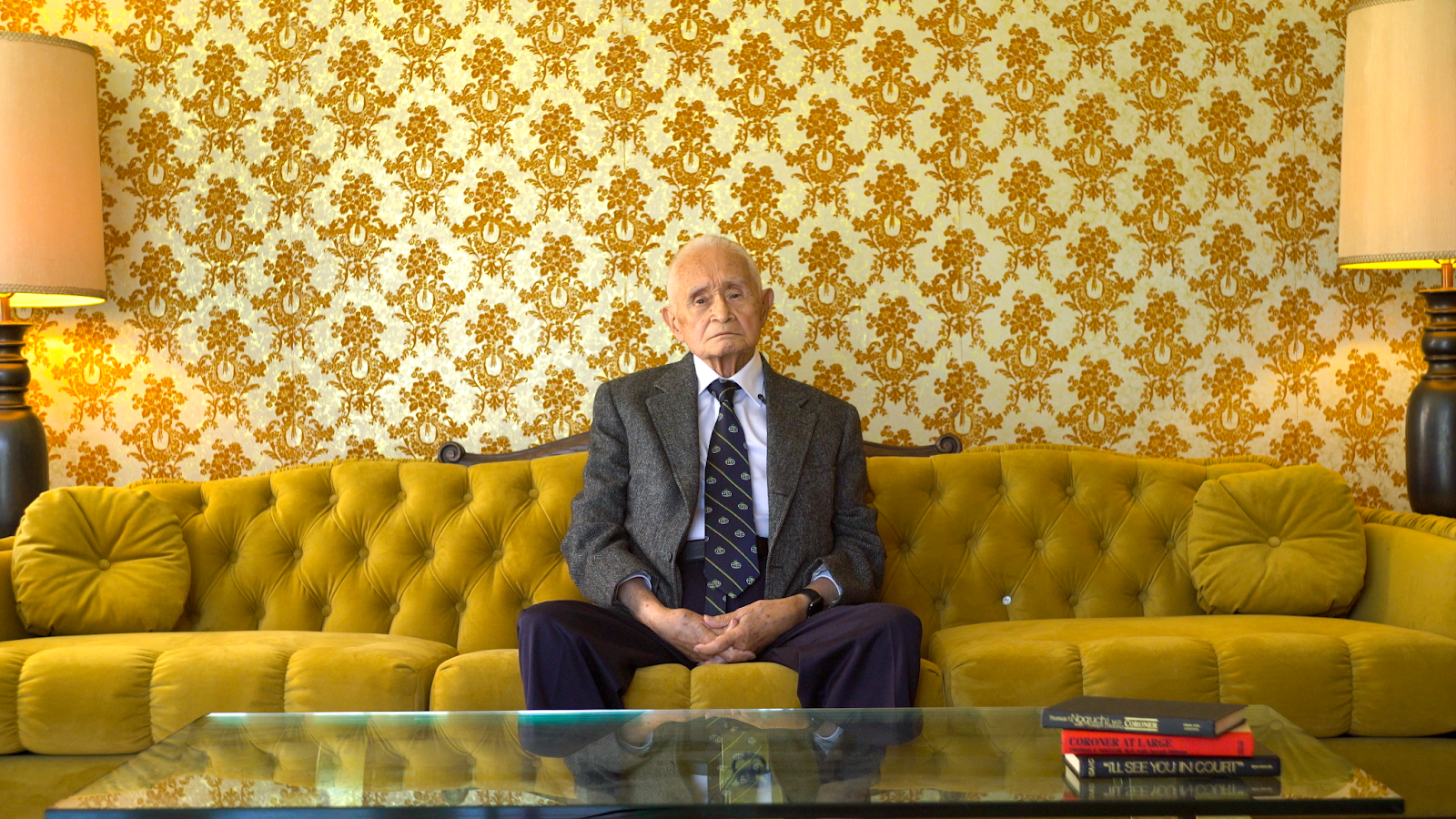
Paddy Chayefsky: Collector of Words brings thought-provoking insights into the life and work of the great screenwriter Paddy Chayefsky. Chayefsky is the only person to win three solo Oscars for Best Original Screenplay, for Marty, The Hospital and Network.

Those three films, along with the grievously overlooked The Americanization of Emily, the biting satire Wall Street (“Greed is good“) and the very trippy Altered States make up an essential body of work.

It’s hard to think of a film with more aching humanity than Marty. The titular character in Marty is a guy who no one notices, but Chayefsky shows us his yearnings, disappointments and inner pain in a searing and heartbreaking portrait. To bring that empathy to Marty and to spotlight the human foibles satirized in The Americanization of Emily, The Hospital, Network and Wall Street, Chayefsky had to be an uncommonly penetrating observer of human behavior. In Paddy Chayefsky: Collector of Words, one of Chayefsky’s colleagues says that he was “X-raying us all the time.”

Most folks see Network as Chayefsky’s masterpiece. Paddy Chayefsky: Collector of Words reminds that, as well as poking at the greed and cowardice of TV networks and the slide of television journalism into infotainment, Network probed the midlife crisis rocking the character played by William Holden and the impact on his wife, played by the Oscar-winning Beatrice Straight.

And, most of all, Paddy Chayefsky: Collector of Words shows us Network as a work of prophecy. The cynical executive played by Faye Dunaway directs her team to chase demographic research thusly:

Well, in a nutshell, it said: “The American people are turning sullen. They’ve been clobbered on all sides by Vietnam, Watergate, the inflation, the depression; they’ve turned off, shot up, and they’ve fucked themselves limp, and nothing helps.” So, this concept analysis report concludes, “The American people want somebody to articulate their rage for them.” I’ve been telling you people since I took this job six months ago that I want angry shows.

Guess who comes to mind? And when the exec makes a pitch to the network CEO (Robert Duvall), he responds with:

For God’s sake Diana, we’re talking about putting a manifest irresponsible man on national television.

Paddy Chayefsky: Collector of Words also brings us some nuggets: how the son of Russian Jews got and adopted the nickname Paddy, about his longstanding lunches with Bob Fosse at the Carnegie Deli, and about a mistaken line reading of one of the most iconic lines of dialogue in cinema history,

The director of Paddy Chayefsky: Collector of Words is Michael Miele, who also directed this year’s Bob Mackie: Naked Illusion. Miele lets us know in the opening titles that he agreed not to include discussion of Chayefsky’s family and personal life. No matter – it what Chayefsky put on the screen that counts.

Paddy Chayefsky: Collector of Words is streaming on HBO Max and on the HBO Max YouTube channel.

HAMNET: a grieving couple finally aligns

Photo caption: Jessie Buckley in HAMNET. Courtesy of Focus Features.

In Chloe Zhao’s glorious Hamnet, based on the Maggie O’Farrell novel, a couple must deal with the death of a child. That couple is none other than William Shakespeare (Paul Mescal) and his wife Agnes (Jessie Buckley).

Will is an aspiring writer with ambitions too big for their provinical hometown of Stratford. Agnes is just the kind of woman that we imagine would attract Shakespeare – smart, spirited, earthy and a determined non-conformist. The two fall in love and start a family, settling into an affectionate relationship and comfortable parenting partnership.

As someone who runs a London theater company, Will is necessarily away on business in London much of the time. To Agnes, who stays raising the kids in Stratford, where there is no theater, Will’s world is only theoretical. Although, he sends money for the family and even buys the biggest house in town, she just has no way of comprehending what he really does in London.

No European family in the late 1500s could hope to avoid pestilence, and tragedy strikes the Shakespeares – unfortunately while Will is away from home.

People do not experience grief the same way nor on the same timeline. Heartbroken parents may not feel like they are sharing the suffering together. Often, marriages do not survive the death of a child.

Hamnet is framed in a very 21st Century perspective – about using one’s art to process grief and express one’s feelings. In Hamnet, Will works out his grief by penning Hamlet, and Agnes can only align her grief with Will’s by experiencing his play.

Jessie Buckley’s performance as Agnes is wondrous. She perfectly captures Agnes’ freethinking independence, lusty passion and nurturing motherhood. When Agnes suffers her loss, Buckley shows her in the deepest despair and in her profound resentment of Will. Her personal catharsis makes for the most emotionally powerful movie ending of the year.

From her movie debut in the disturbing Beast, followed by acclaimed performances in Wild Rose and The Lost Daughter, Buckley has demonstrated that she is unsurpassed as a screen actor. Her work in Hamnet is a tour de force, and she will be nominated for a Best Actress Oscar.

Paul Mescal in HAMNET. Courtesy of Focus Features.

This is Jessie Buckley’s movie, but Paul Mescal is very good as William Shakespeare, even if he doesn’t have as much to do in the first two acts. Mescal blossoms in the third act as Shakespeare writes, directs and then acts in Hamlet. In particular, Mescal’s Shakespeare recites the To Be. Or not to be. speech as he contemplates taking his life, and it’s never been so raw and powerful. And I have never see the King’s Ghost played as compellingly as does Mescal in the play-within-the-movie.

There are also fine supporting performances by the esteemed Emily Watson as Agnes’ mother-in-law and and Joe Alwyn as Agnes’ brother.

I loved how director Chloe Zhao presents the Globe Theater – as the site of the most spectacular entertainment that the audience would have ever seen or imagined. The crowd enters with the anticipation of a throng entering an NFL stadium on game day. When the play begins, there’s a hush as the audience is enthralled at the wonder of it all – the backdrop, the costumes, the swordplay, and even the primitive special effects.

Zhao, of course, won Best Director and Best Picture Oscars for Nomadland. That indie triumph earned her the payday of a Marvel franchise movie with big stars, The Eternals. Her early film, The Rider, with a nonprofessional actor as the protagonist, made me into a huge Chloé Zhao fan.

The play Hamlet ends with Fortinbras of Norway striding on stage amid the corpses to summarize things, and Zhao doesn’t go there. She avoids the anti-climax by following Billy Wilder’s screenwriting advice – Don’t stick around. I’m very impressed with any filmmaker who ends their film not even one second too late. After all, even Alfred Hitchcock made the mistake of ending Psycho with a psychological expert played by Simon Oakland explaining that Norman Bates’ psychological disorder really does exist and blah blah blah. So, I would say that Chloe Zhao ends Hamlet better than Shakespeare did.

Hamnet is one of the Best Movies of 2025.

THE MASTERMIND: when selfishness exceeds talent

Photo caption: Josh O’Connor in THE MASTERMIND. Courtesy of MUBI.

In Kelly Reichardt’s dark comedy The Mastermind, a slacker steals valuable paintings from a museum in suburban New England in 1970. But The Mastermind is less of a heist film than a character study of a man with little character.

James Blaine Mooney (Josh O’Connor) is James to his wife and parents and J.B. to his friends. His guiding value is selfishness. With a degree in the arts, he is an occasional cabinet-maker who lets his hardworking wife (Alana Haim) support his family with a real job, while he sponges off his mom (Hope Davis). Instead of working, J.B. spends his time fantasizing how to make money without working. He lands on a scheme to rob the local art museum and fence the paintings.

He is smart enough to get the paintings out of the museum and hide the loot. But then his own character flaws begin to betray him. Having watched many crime movies, we all know that any criminal conspiracy is only as strong as its weakest link. But J.B. has employed three untrustworthy low lifes as crime partners. Of course, J.B. is too unreliable himself to recognize reliability in anyone else. And then The Mastermind follows J.B. as he tries to avoid the consequences of his choices – and his flight becomes a consequence in and of itself.

What makes this a comedy? The running joke is that J.B. never makes the responsible, prudent choice throughout the movie, always taking what he sees as the easy path, regardless of morality or loyalty.

Usually, a movie audience roots for the heist to be successful. Here, we don’t sympathize with the museum, which doesn’t value its collection enough to invest in even the most basic security. But we don’t care about J.B. either, because he is a shit who only needs the money so he doesn’t have to get a job. We do care about other people in J.B.s life, and he ruins the lives of his wife and family, puts at risk his dear friends and his own sons, fleeces his mother, and surely humiliates his father.

Josh O’Connor is very good as a man who never misses a chance to think only of himself. I would recommend another film with a heist element, La Chimera, where O’Connor plays a more complex character.

Fine actors all, Davis, Haim, Bill Camp, Gaby Hoffman and John Magaro are perfect in supporting roles. Hoffman is especially strong as an old friend who recognizes how dangerous J.B.’s affable charm really is. Davis has an inspired moment when she breaks a corn cob in half – and then quickly assesses which half has moire kernels,

Writer-director Reichardt is an acclaimed indie filmmaker who usually makes languorous, observational movies and gets excellent performances out of actors like Michele Williams, Lily Gladstone and Jared Harris. Her Wendy and Lucy is a masterpiece. There is more humor (the quiet, sly kind) and much, much more plot in The Mastermind than in Reichardt’s other works. I keep waiting for Reichardt to make another Wendy and Lucy, which is probably as unfair as waiting for Orson Welles to make another Citizen Kane.

Reichardt, who was only six years old in 1970, completely nails the verisimilitude of the time and place.

The very best thing about The Mastermind is the original music by Rob Mazurek, usually a solitary jazzy cornet or drums. The Mastermind is Mazurek’s first feature film score, but his Wikipedia page details an impressive and varied career as a musical artist.

Bottom line: The Mastermind is an exceptionally well-made film about a guy who we wouldn’t like to know in real life, but who ultimately gets his just desserts.

ORWELL: 2+2=5: we didn’t get the message

Photo caption: ORWELL: 2+2=5. Courtesy of NEON.

The impassioned and innovative documentary Orwell: 2+2=5 is less a biopic of the author George Orwell than a cry of alarm, imploring us to heed Orwell’s message about resisting totalitarianism and its tools of propaganda and repressive violence. It’s a distress signal – and an urgent one.

Primarily through clips from movie versions of 1984 and Animal Farm, we are reminded of Orwell’s revulsion at those who deny objective fact and try to pervert public opinion. War is Peace. Freedom is Slavery. Ignorance is Strength. Big Brother. Thought Police. Newspeak.

Historical clips illustrate figures like Hitler, Stalin, Franco and Pinochet employing these methods. And contemporary news clips focus on the evil deeds of today’s authoritarian nationalists in Russia, China, Myanmar, Hungary, Italy, France and, notably, in the US.

Orwell: 2+2=5 takes us from Orwell’s work to instances of book burning from the Nazis through to today, including a jarring list of books banned in American libraries. Orwell found goosestepping particularly offensive, and Orwell: 2+2=5 shows us plenty of contemporary examples of that, too.

When Orwell wrote Animal Farm and 1984, he had seen Goebbels’s Big Lies in action and experienced Stalinist thought-oppression. But, although he hadn’t seen AI, election deniers or corporate hegemony of television news, Orwell: 2+2=5 makes it clear that his guiding principles still apply.

We do get just enough content about Orwell’s life to help understand what shaped him. He spent five years in his early twenties as a colonial policeman in Burma, which caused him to understand (before his peers) that European colonization was exploitation based on white supremacy and that he himself had been an instrument of repression. He fought against fascism in the Spanish Civil War, where his leftist unit was purged by communists. Physically disabled from wounds in Spain, he got another chance to fight fascism in World War II by working for the BBC, ironically, as a propagandist.

Orwell: 2+2=5 is the work of Oscar-nominated documentarian Raoul Peck. His James Baldwin biopic I Am Not Your Negro was also innovative; Peck chose to present Baldwin’s thinking through only his own words, in archival recordings or voiced from Baldwin’s writings, unadorned by talking heads. As in I Am Not Your Negro, the editing in Orwell: 2+2=5 is brisk.

Orwell: 2+2=5 is a fine film and an important piece of advocacy. It’s playing in arthouse theaters, but difficult to find.