LA GRAZIA: it’s time to get past his malaise

Photo caption: Toni Servillo in LA GRAZIA. Courtesy of MUBI.

When we talk of “coming of age” movies, we usually mean those about kids or young adults experiencing life lessons for the first time. But, the more mature among us also face new realities as we age into new phases of our lives. That’s the case with Paolo Sorrentino’s lyrical La Grazia.

La Grazia is an insightful and empathetic portrait of a fictional president of Italy (Toni Servillo) in the final months of his term. He is a man of quiet and resolute competence, a jurist admired for guiding the country through six political crises. He is also staid and taciturn, a man of boring countenance (except for an his fondness of the most current pop music, including rap).

He is a lame duck and in a malaise from the loss of wife of fifty years. He’s just running out the clock. Fortunately, his daughter Dorotea (Anna Ferzeti), an impressive jurist in her own right, is nudging him through his daily duties. To her frustration, he is refusing to make his final three official decisions, about whether to sign euthanasia legislation and whether to grant two pardons.

He believes that his beloved wife had an affair forty years before, and now, instead of working, he’s stewing over who was her lover.

His lethargy contrasts with the vibrant, over-the-top baroque art covering every surface of the Quirinale Palazzo, the former papal palace now the headquarters of Italy’s President. The only sparks of life come from Anna’s prodding and from dinners with the art critic Coco, his friend from grade school and his wife’s bestie (played in a charismatic performance by Milvia Marigliano).

As doggedly as the president drags his feet, we know that he will need to find a catharsis and reset his life. As he figures things out, there is a remarkable scene involving, of all things, an astronaut shedding a zero gravity tear.

Toni Servillo is excellent here as a much more decent and much less flamboyant politician than the ones he played in Sorrentino’s Il Divo and Loro. La Grazia matches up well with his Youth, another contemplation of the end of a career. As usual, Sorrentino takes full advantage of the palace interiors and Roman exteriors; visually and otherwise, Sorrentino’s masterpiece remains The Great Beauty.

La Grazia is streaming on Amazon and AppleTV.

THELMA: too proud to be taken

Photo caption: June Squibb and Fred Hechinger in THELMA. Courtesy of Magnolia Pictures | photo by David Bolen.

Thelma stars 93-year-old June Squibb (Oscar-nominated for Nebraska) in an action picture. Squibb plays a scammed senior who goes on a quest to recover her money from the scammers. To accomplish that, she’s got to go on the run from her frantic family, bust her friend (Richard Roundtree) out of his rest home and master some 21st century technology.

Thelma is much more than a geezer comedy, and has something to say about every generation. She has a very sweet relationship with her grandson (Fred Hechinger), who may not find himself by age thirty, much to his self-loathing and the angst of his parents (Parker Posey and Clark Gregg). Those parents have found them in the sandwich generation, leading very busy lives, from which they are sometimes distracted to worry about their elderly parents and their floundering offspring. Thelma herself is one tough cookie, who lives independently and knows how to ask for help, unless she happens to be too proud or too embarrassed.

Richard Roundtree and June Squibb in THELMA. Courtesy of Magnolia Pictures | photo by David Bolen.

June Squibb is wonderful as Thelma. This was the final performance of Richard Roundtree (Shaft), and it’s a very sweet one. Hechinger is very, very good. Even a small dose of Parker Posey is delightful. There’s even a cameo by Malcom McDowell, 53 years after A Clockwork Orange.

Writer-director Josh Margolin was inspired by an incident in his own family.

I screened Thelma for the SFFILM; it was the closing night film of both the San Luis Obispo International Film Festival and SFFILM. It’s an absolute hoot, and it opens in theaters this weekend.

GOLDEN YEARS: when dreams diverge

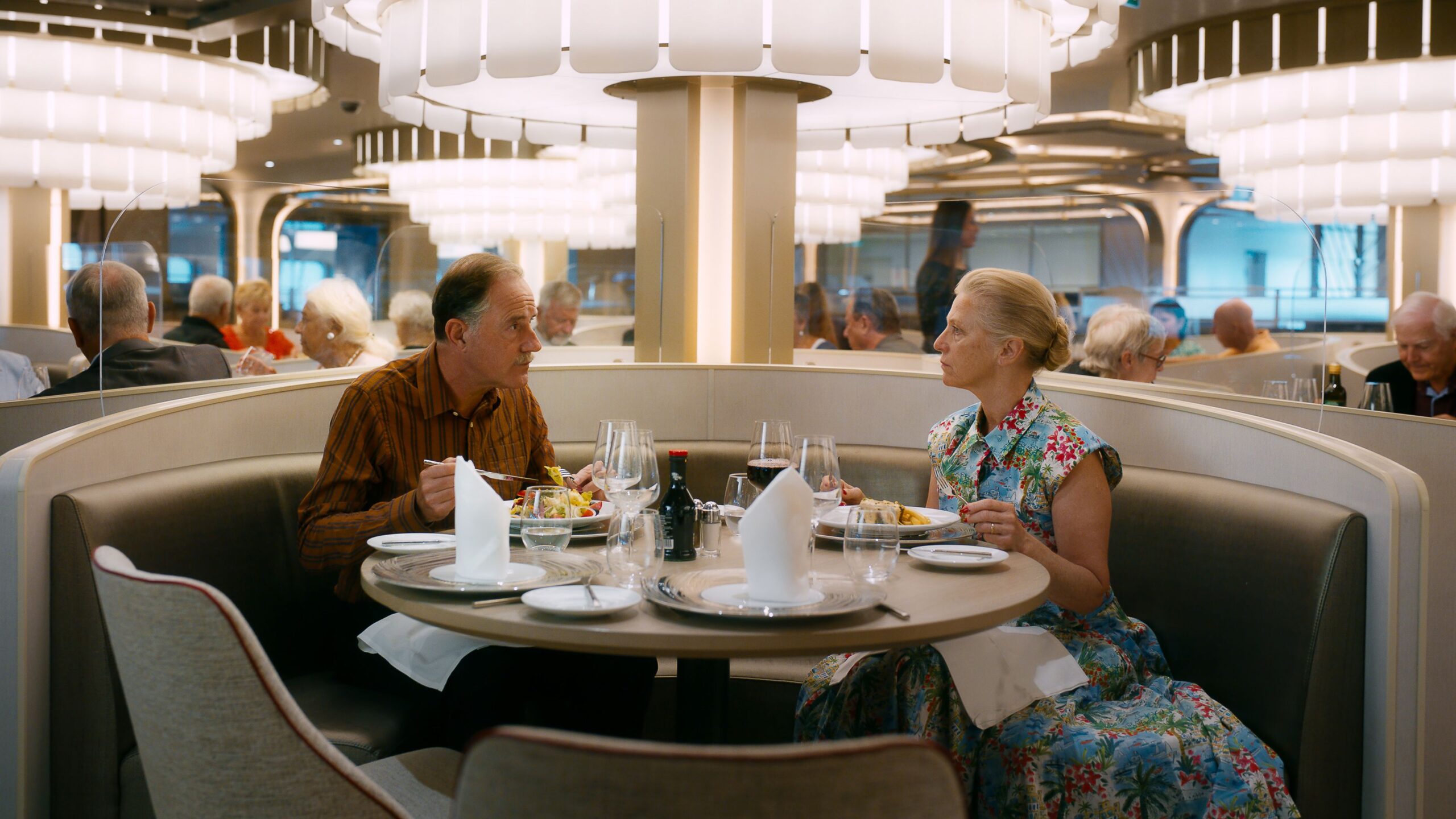
Photo caption: Stefan Kurt and Esther Gemsch in GOLDEN YEARS. Courtesy of Music Box Films.

The Swiss dramedy Golden Years begins as Peter (Stefan Kurt) turns 65 and retires. His wife Alice (Esther Gemsch) has been eagerly awaiting this day, which she sees as an opportunity for travel and to rekindle intimacy with Peter. In contrast, Peter doesn’t seem to have been thinking about it at all, but he begins to be consumed with his physical health and suddenly transforms himself into a mountain biking, vegan workout king. Alice wants to downsize, but he wants to stay in their house. Travel doesn’t interest Peter, but he feels trapped into joining Alice on a Mediterranean cruise that their adult children have gifted them.

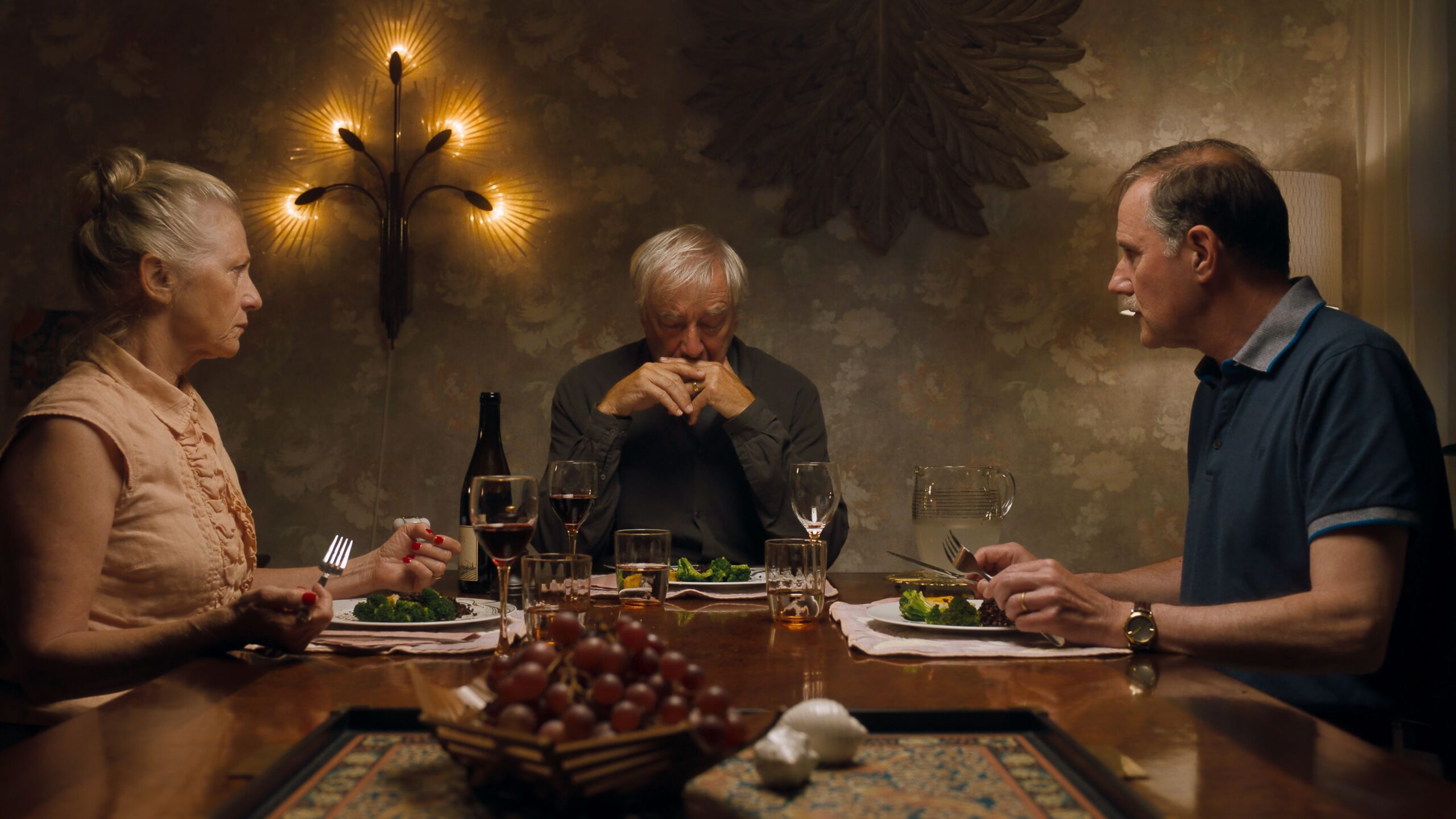
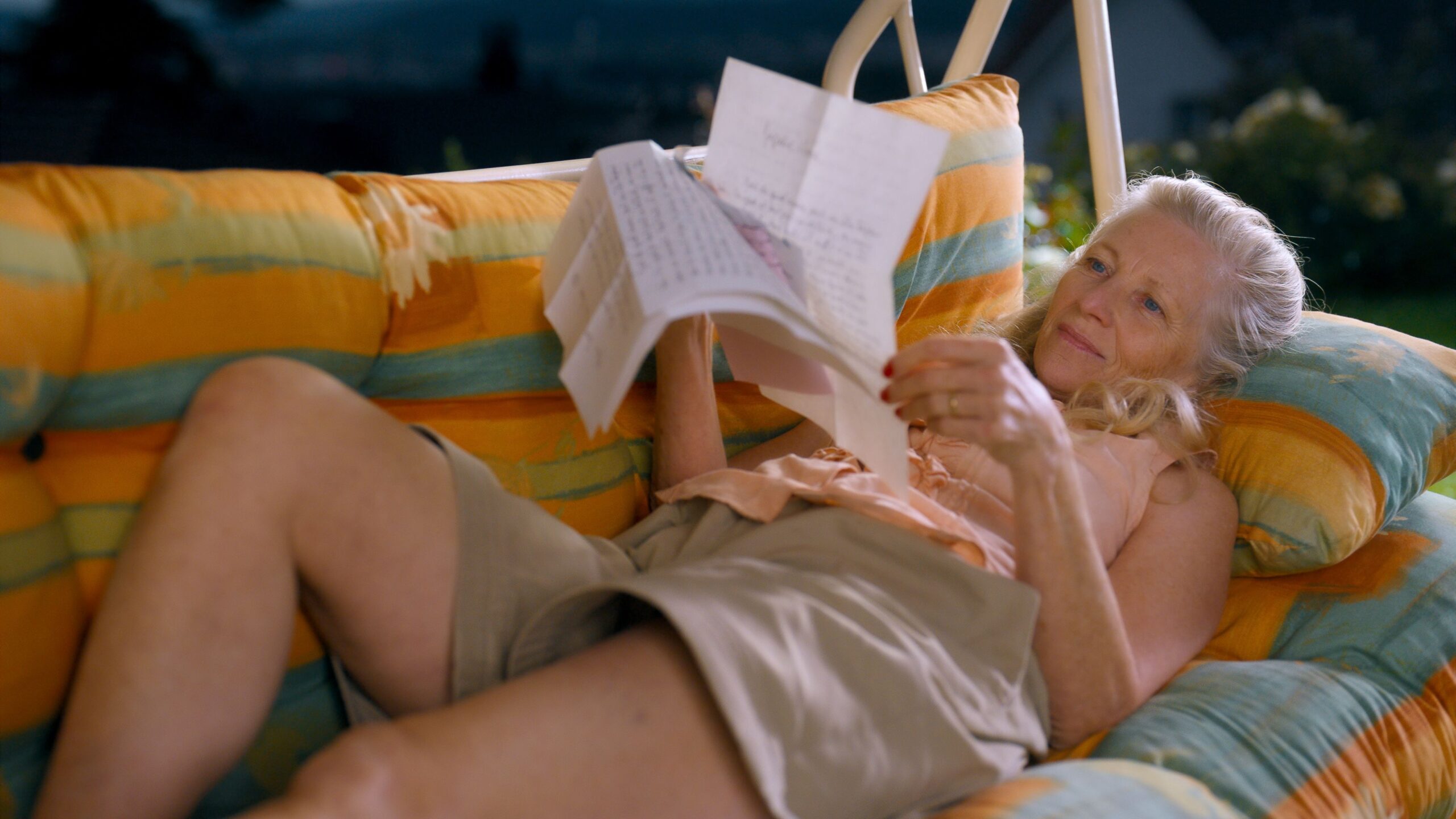
Esther’s best friend unexpectedly dies, and Peter impulsively invites her heartbroken husband to join them on the cruise, which appalls Esther, who wants Peter to herself on the cruise. Esther has read her late friend’s hidden cache of letters and has stumbled on an explosive secret. Esther’s annoyance from Peter’s inattention simmers until it boils over into she staggers Peter by embarking on her own adventure.

Esther Gemsch, Ueli Jaggi and Stefan Kurt in GOLDEN YEARS. Courtesy of Music Box Films.

At this point, Golden Years departs from a comedy of manners into an exploration of dual self-discoveries. Indeed, there are Men-are-from-Mars moments when Peter is a clueless dunderhead about Esther’s expectations. But Peter’s needs have evolved, too, and Esther has also mistakenly assumed that he will want to do want she wants to do.

We all know couples who drift totally apart after decades of marriage, and there must be some couples who age with identical interests. Many couple have different, but complementary aspirations, or can build a new life together around some core commonality. The question that Alice and Peter face is, where are they on this continuum?

Will Alice and Peter compromise? Will they be able to accommodate each others’ needs? Will they live separate lives? Is there a Win Win?

Screenwriter Petra Volpe (The Divine Order) probes these questions in a consistently funny and engaging movie with a minimum of senior citizen tropes or cheap geezer cheap jokes. (It is very funny, though, when Peter’s Gen X co-worker brightly tells him that his old office will become a server room.)

Esther Gemsch in GOLDEN YEARS. Courtesy of Music Box Films.

Director Barbara Kulcsar keeps the story sprightly paced and maintains just the right balance between comedy and the more serious issues. Alice is the primary focus of the story, and the performance of actress Esther Gemsch is especially strong.

Golden Years opens in select theaters, including the Laemmle Town Center in LA, on February 23.  I’ll remind you when the film arrives nationwide on digital on March 26.