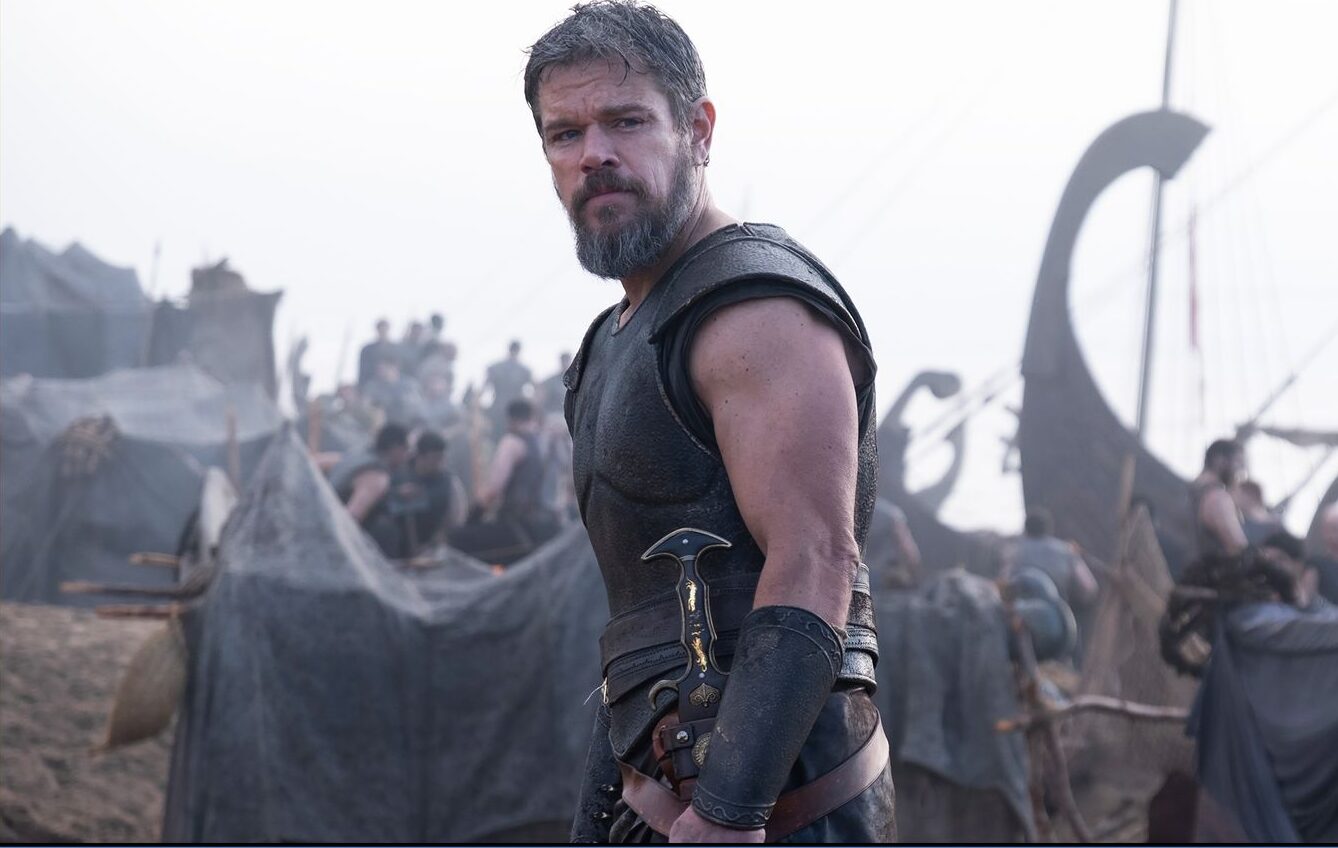
It’s not surprising that The Odyssey is a superb film. After all, this is the work of a great filmmaker, Christopher Nolan (Oppenheimer, Interstellar, Dunkirk, Inception, The Dark Knight, Memento), making full use of his considerable skill and imagination. The source material has been unsurpassed as a melding of adventure, romance and trials of human character for 2700 years.
Odysseus (Matt Damon) is the smartest and most devious of Greece’s warrior kings, the strategist who devised the famous ruse of the Trojan Horse, and facilitated the Greek victory at Troy after ten years of stalemate. Now Odysseus, with his fleet of ships, can sail back to his home island of Ithaca. Unfortunately, gods and monsters await.
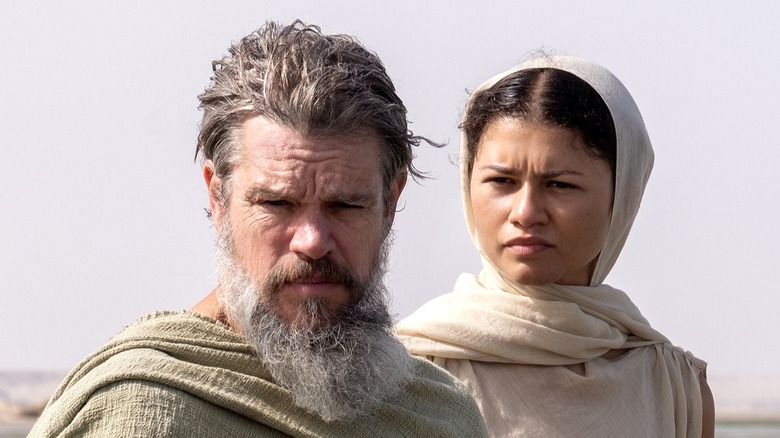
For all of his courage and resourcefulness, Odysseus has the ability to annoy, and even enrage, enough of the gods to turn his return voyage into a ten-year ordeal. He will need to get by a 60-foot tall Cyclops, an island of man-eating giants, supernatural songstresses who lure mariners into shipwrecks, a giant whirlpool, a six-headed monster who snacks on sailors, and a witch who casts horrible spells. And then there’s the seven years as the sex slave to another witch. Fortunately, has the goddess Athena (Zendaya) on his side; she admires his intelligence, and helps him out of the worst jams.
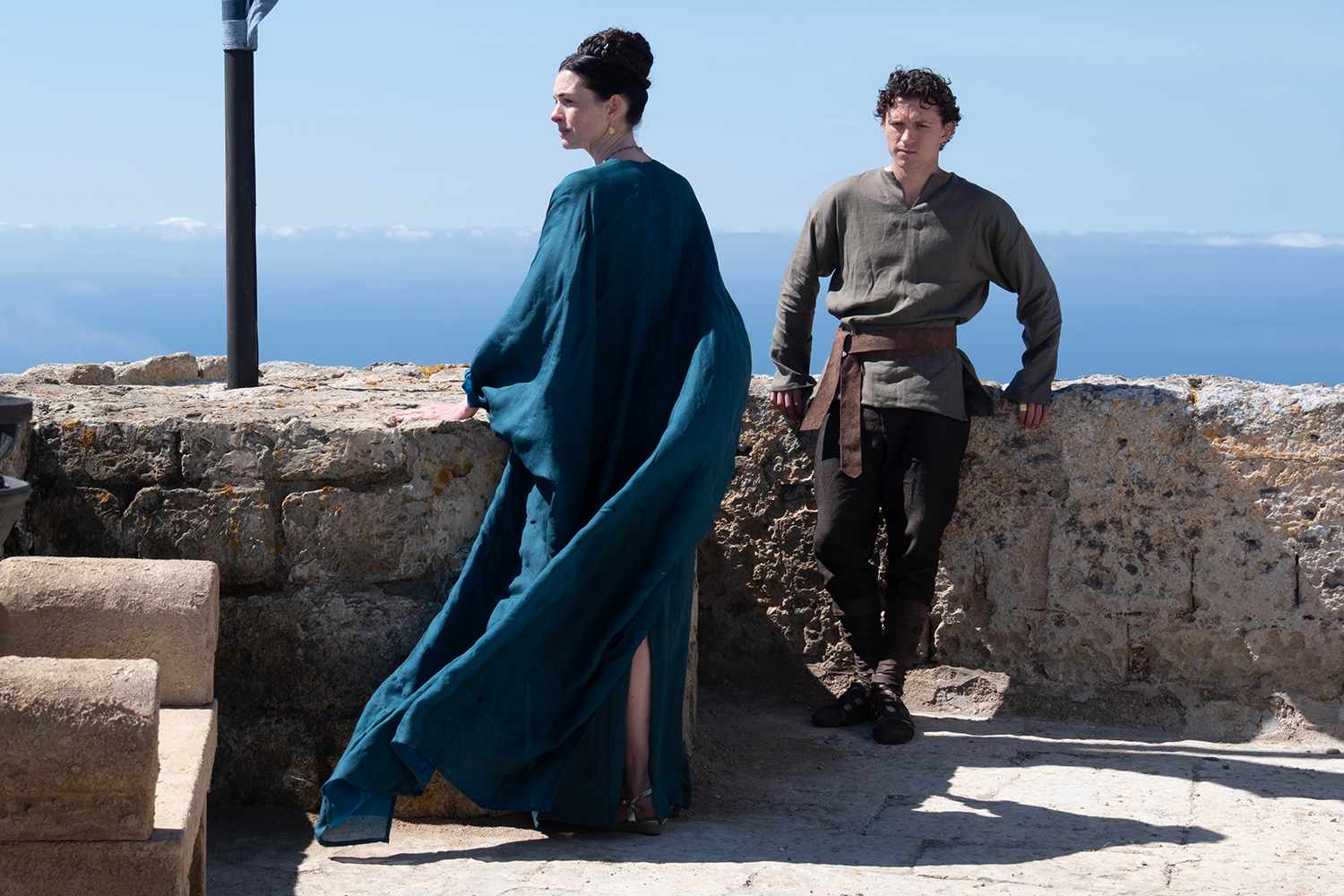
Back home in Ithaca, there’s another story thread. Odysseus’ queen Penelope (Anne Hathaway) has been running Ithaca in his absence, but he’s been gone for twenty years, and a hundred opportunists are sponging off Odysseus’ wealth while they pressure Penelope to marry one of them. Odysseus also left a baby son, but Telemachus (Tom Holland) is now only twenty, and he’s too callow to take on so many ruthless, grown-ass men. Will Odysseus return in time? Will anyone, especially Penelope, recognize him after 20 years? Can Odysseus battle the suitors to reclaim what is his and Penelope’s? Will Penelope take him back?
In The Odyssey, Nolan shows what a great Hollywood epic can look and feel like – in the best sense. Filmed in IMAX, The Odyssey looks and sounds great. Amazingly, Nolan did not use CGI or green screens – instead, he employed old-fashioned practical effects, forced perspective, animatronic puppetry and plenty of hoists, rigging, and stunt performers. The set pieces are wondrous, even for the monsters – Polyphemus, Scylla and the Laestrygonians. The sack of Troy was exactly like what I imagine the razing of a Bronze Age city would look and feel like. And it all looks better and more convincing than it would have with CGI.
Because of the genius of Nolan and his editor Jennifer Lame, who won an Oscar for editing Nolan’s Oppenheimer, the audience does not have the sensation of sitting through a three hour movie.
Nolan is pretty faithful to the source material, and, although he compresses some the parts of the tale , he captures Homer’s key elements. Nolan’s re-imagining of the ending is actually less of a slaughter than Homer’s, and Nolan plays down the sexual aspect of Odysseus’ sojourn with Calypso (Charlize Theron). Nolan does add some New Agey hokum about the “Code of Zeus”, but it’s harmless.
Nolan’s version is more nuanced than the 1954 Ulysses with Kirk Douglas, which emphasized the adventure aspect. Last year’s The Return, which covered the return to Ithaca, is a fine movie, but doesn’t have the epic scale of The Odyssey (not to mention the monsters). Similarly, the scale of Nolan’s The Odyssey overwhelms the star-studded, Emmy-winning 1998 mini-series.
Nolan, Damon and Zendaya show us the relationship between Odysseus and Athena particularly well.
Hathaway is excellent as the resolute yet vulnerable Penelope, a woman whose wits could match up with even those of Odysseus. I like Tom Holland’s performance as a well-meaning kid who just isn’t ready for prime time. Everyone in the cast is good, including Robert Pattinson and Corey Hawkins as two of the scariest and most odious suitors. An unrecognizable John Leguizamo is outstanding as Odysseus’ one remaining ally, a blind swineherd.
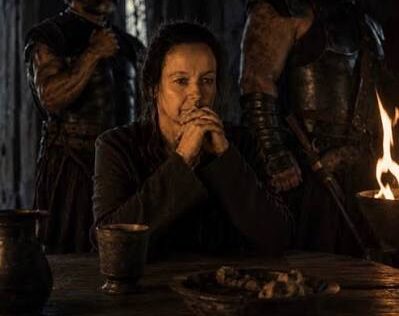
If there’s a best performance in this movie, it may be Samantha Morton as the witch Circe, filled with grievance, creepiness and craftiness.
The Odyssey is both a great barn-burner,and a great love story, and Nolan has made it into this summer’s Must See .