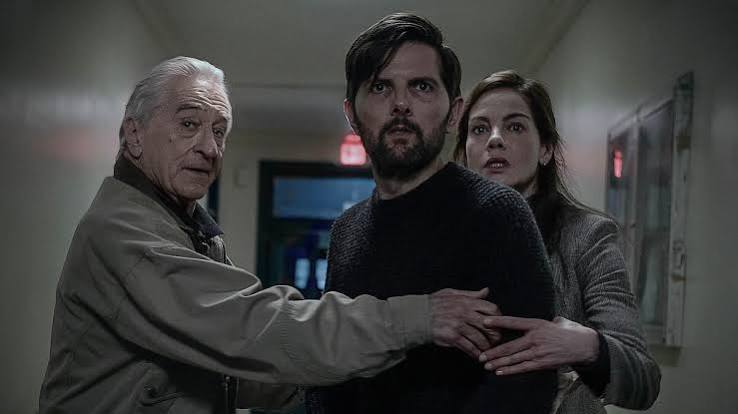
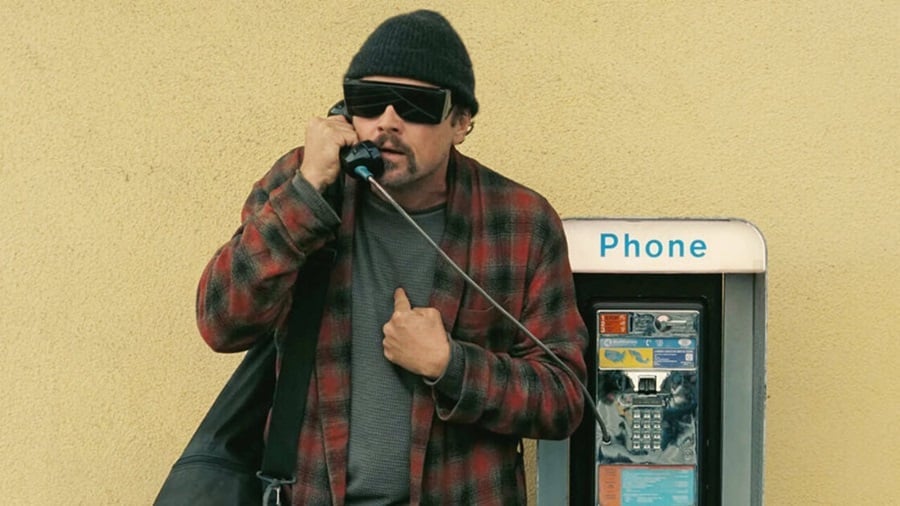
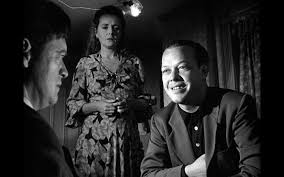
Photo caption: Robert De Niro, Adam Scott and Michelle Monagan in THE WHISPER MAN. Courtesy of Netflix.
The Whisper Man is even more disturbing than your average serial killer thriller because of three creepy villains with even creepier habits. Amanda (Michelle Monagan) is a police detective in a race against time to solve child abductions before they become child murders. Her suburban community in northern New Jersey experienced a spree of child killings a generation ago; these new crimes have exactly the same modus operandi, even though the original serial killer has been locked away for 25 years. She seeks the advice of Peter (Robert De Niro), the long-retired cop who caught the original killer, but he resists re-engaging. But then, Jake (Acston Luke Porto), the young son of Peter’s estranged son Tom (Adam Scott), is kidnapped, and Peter joins the manhunt.
The investigation takes Michelle and Peter behind bars to interview the original murderer Frank (Michael Keaton), who eagerly relishes the attention and who is just dripping with unhinged evil. Next, Michelle tracks down the wealthy weirdo Norman (Hamish Linklater), a fetishist proud of his transgressive collection. As they get closer to a solution, The Whisper Man becomes almost unbearably harrowing.
Ben Jacoby and Chase Palmer adapted the screenplay from the Alex North novel. The writers have added some intriguing twists to a serial killer story – one about fingernails, another about collecting, and a third, horrific one involving cassette tapes.
As the good guys, often in conflict with each other, De Niro, Monagan and Scott all give strong performances. But it is the intense creepiness of villains played by Michael Keaton, Hamish Linklater and Owen Teague that makes The Whisper Man so unsettling.
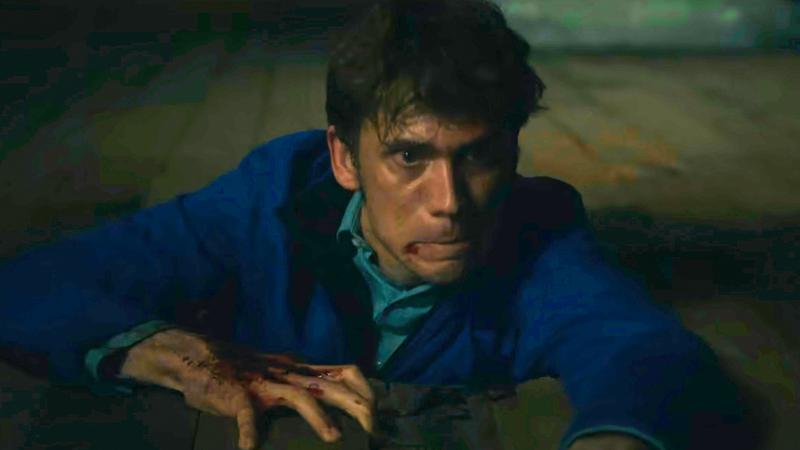
Owen Teague in THE WHISPER MAN. Courtesy of Netflix.
I first noticed Owen Teague in the little indie family drama Montana Story, which I admired as one of the best movies of 2022. I wrote that Teague’s “quiet performance is exquisite. This is a melodrama, and the performance as Cal could easily have been overwrought. Instead, he perfectly captures this dutiful and seemingly passive man, with a hidden, festering guilt.” In The Whisper Man, Teague gets to go full-out maniac, and it makes the end of the movie even more gripping.
Photo caption: Simone Ashley in THIS TEMPTING MADNESS, Courtesy of Vertical Entertainment.
In the briskly-paced thriller This Tempting Madness, Mia (Simone Ashley) emerges from a coma, and can’t remember the fall that caused her critical injuries. She learns that her husband has been jailed for trying to kill her, but she can’t accept that explanation. She embarks on an investigation to find out what really happened, and begins to unspool the mystery, uncovering ever darker discoveries.
Is she being gaslighted? Does her family have a grudge? And what is she herself capable of? There are plenty of surprises in the story.
Simone Ashley (Bridgerton) is believable as Mia yo-yos between theories of what has occurred, and she has a magnetic presence onscreen.
This is the first feature for director Jennifer E. Montgomery, who co-wrote the screenplay with her husband Andrew M. Davis. Both the hoppin’ pace of the movie and the twisty screenplay are strong work,
This Tempting Madness is a neo-noir, and there is so much amnesia in classic film noir that it constitutes the sub-genre of Amnesia Noir – High Wall, Somewhere in the Night, Crack-Up, Spellbound, Deadline at Dawn, The Snake Pit, The Clay Pigeon, The Long Wait and many more. But the screenplay for This Tempting Madness was inspired (surprisingly) by a true story.
I screened This Tempting Madness for the 2026 SLO Film Fest, where I highlighted it in my best of fest post, . This Tempting Madness opens June 12, including at some Laemmle theaters in LA.
Photo caption: Rebecca Ferguson in MERCY. Courtesy of Amazon MGM Studios.
Here’s the interesting premise of the distopian AI thriller Mercy: in the near future, Los Angeles adopts a new AI-driven criminal justice system whereby a murder suspect is restrained in front of a screen, where an AI “judge” gives him the chance to prove his innocence; he is presumed guilty, and will be executed within ninety minutes unless he can lower his likelihood of guilt percentage under a numeric threshold that represents reasonable doubt. The object is to reach a fact-based conclusion quickly and with certainty, protecting the community and providing closure for victims’ loved ones. The Orwellian name for the new system is Mercy.
One of the biggest advocates of this new system is the police detective Chris (Chris Pratt), who wakes up from a blackout drunk to find himself strapped to the Mercy chair, charged with the murder of his wife. An initial review of facts demonstrate that he had the motive, means and opportunity – and things look really bad for Chris. He is being judged by an AI bot, played by Rebecca Ferguson. The bad news is that she/it is completely devoid of intuition and emotion, rigidly adhering to the programmed procedure.
The good news is that the court is a supercomputer which is able to provide Chris with INSTANT access to video from traffic cameras and security cams and police body cams, to everyone’s history of movements from cell phone tracking, al financial records, every call and text, and forensic evidence – blood, fingerprint, fiber and DNA. The key word is instant because it allows an investigation that would take days or weeks to be compressed in to just over an hour. That device also allows a whodunit story to be told in real time, which is always a plus in a movie.
Chris Pratt in MERCY. Courtesy of Amazon MGM Studios.
So, essentially, the plot of Mercy is a detective procedural, but one with very high stakes (summary execution) and under extreme time pressure. That all works to heighten the thrills in this thriller.
So far, so good, but it wasn’t enough for the filmmakers who, IMO, jump the shark with some silly add-ons, which I discuss in the spoiler paragraph below.
SPOILER: The problem I have with Mercy is that Chris, beside saving himself to solve the crime, ALSO saves his daughter from a hostage situation, saves downtown LA from being blown up in a terrorist strike, solves a previously closed case and forces the discredited AI justuce system to shut itself down. As well-crafted and exciting as the movie is, that’s really excessive plot. The story got so silly that it lost me in the final 20 or so minutes.
Mercy is streaming on Amazon (included with Prime) and AppleTV.
Liana Wright-Mark in AMERICAN MUSCLE. Courtesy of Cinequest.
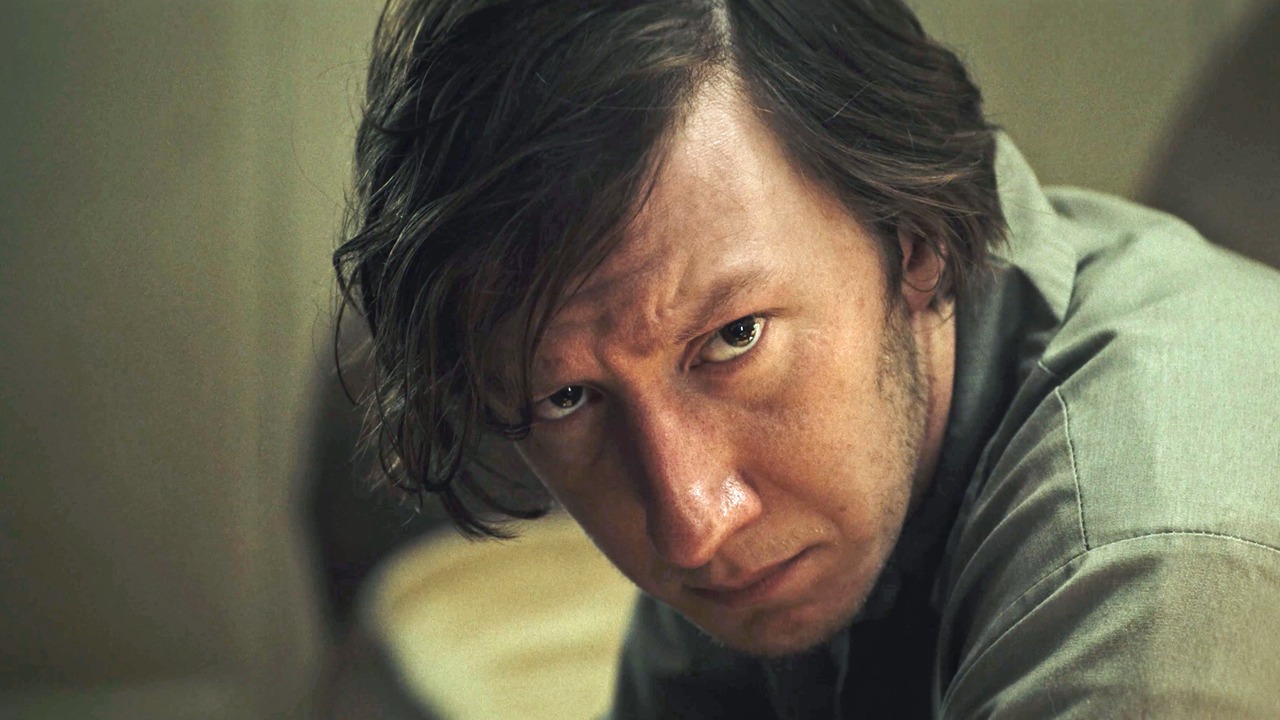
In the taut, 80-minute neo-noir American Muscle, Ray (David Thompson) is the mechanic at an isolated auto shop in rural Kern County. Ray is in serious debt to a very serious man, but he has a scheme for raising the payoff. Trouble is, his lender’s two very scary enforcers arrive to collect the money now, and Ray doesn’t have it. Just then, Ray’s long-estranged sister Maggie (Liana Wright-Mark) shows up unexpectedly. Ray’s financial deadline is accelerated, and he is plunged into a desperate and apparently hopeless race against the clock.
The out-of-town enforcers (Gbenga Akinnabe and Brendan Sexton III), with their chattiness and intellectual curiosity, are a welcome homage to the hit men Vincent and Jules in Pulp Fiction. (And I love that they wear bolo ties with their suits!)
Thompson and Wright-Mark are excellent as siblings who have survived a grim upbringing that will either make one strong and resilient or break one into weakness. American Muscle reveals that childhood’s impact on both Ray and Maggie.
David Thompson in AMERICAN MUSCLE. Courtesy of Cinequest.
In his first feature, writer-director Joel Veach creates a vivid milieu and delivers a perfect ending. Veach understands a great truth that is also a tenet of film noir: if you’re a loser, you can always find a way to make yourself a bigger loser.
The dry emptiness of American Muscle’s Kern County (it was actually shot in Santa Clarita) makes the Bakersfield of Honey Don’t look like Mumbai.
I screened American Muscle for its world premiere at the 2026 Cinequest. A perfectly-seasoned mixture of humor, menace and cynicism, it’s ever entertaining and a first class neo-noir.
David Thompson and Liana Wright-Mark in AMERICAN MUSCLE. Courtesy of Cinequest.
Photo caption: Rebecca Ferguson in A HOUSE OF DYNAMITE. Courtesy of Netflix.
In Kathryn Bigelow’s thoughtful nail-biter A House of Dynamite, a ballistic missile armed with a nuclear warhead is on its way to annihilate an American city. American military and national security officials have only minutes to act. That’s a terrifying scenario, and Bigelow knows that portraying it in exacting, realistic detail is very, very scary. She also forces the audience to undertake an intellectual exercise, thinking through What would I do?
All of us Americans – and all the Russian people – understand that if Russia were to launch a nuclear strike on the US, that the US would then automatically retaliate and destroy the military and economic capacity of Russia, along with most of its residents. And vice-versa. In that case, all the decision-makers know the procedures to implement, already carefully thought out in advance.
But what happens if we don’t know WHO has fired a nuclear warhead at us? That very central ambiguity would make decisions very much NOT automatic.
Most of us know that the US President is shadowed by a military officer carrying a briefcase (“the football”) that contains the codes authorizing nuclear warfare. Some of us know that select officials would be evacuated to nuke-proof bunkers. And that, in the event our top 36 leaders are wiped out at once, there’s a 37th person designated to take command. Here, Bigelow takes us inside to show us what all this would actually look like.
Most of the national security chain of command is highly trained to dal with the situations that the rest of see only as vague contingencies. These folks know exactly what their responsibilities are and what to do. Of course, they are human, and they recognize the consequences of the actions that they are trained to take and the impacts those situations will have on their loved ones. I’m talking here about the National Security staff in the situation room, the top military commanders, the folks tasked with launching defensive missiles from their silos and that young guy carrying “the football”,
But the President and Defense Secretary (try for a moment to forget the current occupants of those offices), press aides and others in the government probably don’t have that background, and must deal with a broadband of topics. With just an orientation briefing when they took office, they would essentially be thinking all this through for the first time, like the rest of us.
Bigelow also reminds us that a crisis may occur when we’re on vacation, running late to work, at some forgettable photo op, or when our spouse is taking the feverish kid to the doctor. Civil War re-enactments have their value, but juxtaposed with an impending nuclear holocaust… Time waits for no one, as they say.
Idris Elba in A HOUSE OF DYNAMITE. Courtesy of Netflix.
Idris Elba and Jared Harris are superb as the President and Defense Secretary, plunged into a crisis they would never, never have chosen to address. As the national security and military pros, Rebecca Ferguson, Jason Clarke, Tracey Letts and Anthony Ramos are similarly excellent.
We see so many national security thrillers with ridiculously implausible plots (The Diplomat and Hostage are recent examples) that it’s both welcome and bracing to see a screenplay so realistic. Bigelow gets everything right, down to how female decision-makers in DC wear comfy shoes to the office and change into dress shoes after passing though the metal detector.
I love movies that tell their stories in real time. Here, the key part of the story is only seven minutes long, so Bigelow tells it again and again from the perspective of different characters.
Along with being the first woman to win the Best Director Oscar, Kathryn Bigelow (K-19: The Widowmaker, The Hurt Locker, Zero Dark Thirty) may be our greatest national security filmmaker ever. A House of Dynamite is thoughtful, chilling and one of the Best Movies of 2025 – So Far.
A House of Dynamite is in theaters and begins streaming on Netflix this Friday. The immersive experience of a movie theater was great for A House of Dynamite; if you’re streaming it at home on Netflix at home, turn off the lights in the room, crank up the volume on the TV and silence the notifications on your phone.
Photo caption: Leonardo DiCaprio in ONE BATTLE AFTER ANOTHER. Courtesy of Warner Bros.
It’s been a while since I’ve seen a movie so over-the-top as Paul Thomas Anderson’s broad satire One Battle After Another. It’s sometimes hilarious, sometimes thrilling and always outrageous.
Leonardo DiCaprio stars as Bob, the tinkering bomb-maker in French 75, a group of far-left revolutionaries led by Perfidia (Teyana Taylor), charismatic and oversexed and too in love with her own badass flamboyance. Sure enough, once they piss off the nation’s repressive law enforcement establishment, French 75 is destined to go the way of the Weather Underground and the Symbionese Liberation Army. In a shock-and-awe campaign led by Colonel Stephen J. Lockjaw (Sean Penn), the revolutionaries are all neutralized or driven underground. Bob is able to get away and hide out under a new identity with Perfidia’s newborn daughter Willa.
The story resumes sixteen years later, with Bob and Willa living in a Northern California forest cabin. Bob is still a stoner underachiever, but he’s a devoted dad, and Willa (Chase Infiniti) has blossomed into a young woman of uncommon intelligence and curiosity. Suddenly, Lockjaw leads a military assault team to capture them, and the two are off on a two-hour race for their lives. When they become separated, Bob, despite his sparse hero skills, tenaciously tries to find her. Why has Lockjaw reappeared after sixteen years? He has his reasons, which I won’t spoil.
Paul Thomas Anderson, whose best movies are Boogie Nights and There Will Be Blood, has a body of work that ranges from the super-serious (The Master) to the silly (Inherent Vice). But his movies are always character-driven and always centered in empathy – we understand what makes his characters tick. In this case, he celebrates the resilience of his protagonists.
What I haven’t seen before from Anderson are the violent attacks and white-knuckle chases that we see in more conventional Hollywood thrillers. Anderson delivers here, with a movie that’s chock-filled with exciting set pieces. The final chase on an up-and-down road called the Texas Dip outside Borrego Springs, California, is spectacular. Is this a political satire embedded in a thriller, or the other way around?
And about that broad satire – principal photography took place in the first seven months of 2024, before Trump’s election and before his second-term weaponization of ICE and attempt to inflict martial law upon American cities. It’s chilling that reality is now mirroring what Anderson, as he was writing the screenplay, must have thought was far-fetched.
From the get-go, Anderson paints the government forces as fascist and white supremacist. But he skewers the wacko far-left as well. One of the scenes with the revolutionaries is as funny as the Liberation Front/Splinter scene in Monty Python’s Life of Brian.
Leonardo DiCaprio is a huge movie star who can carry a romantic drama (Titanic) or an action adventure (The Revenant) and, hell, play Jay Gatsby or Romeo. Here, his Bob shambles along, often terrified and klutzy, and none too strategic. It’s to DiCaprio’s credit that he turned down what became the righteous Jesse Plemons role in Killers of the Flower Moon to play a dumbass. And, again in One Battle After Another, he is racing for survival, always seemingly one step too slowly. It’s a fantastic, anti-Tom Cruise performance.
Sean Penn in ONE BATTLE AFTER ANOTHER. Courtesy of Warner Bros.
Penn’s Lockjaw is the most demented military character in the movies since Brigadier General Jack D. Ripper (Sterling Hayden) in Dr. Strangelove. As perverse and perverted as he is, you have to acknowledge his epic relentlessness. Penn is able to humanize the awful Lockjaw with his vulnerabilities – sexual and social-climbing yearnings that control him.
Chase Infiniti, in her first feature film, gives us a Willa with the latent ferocity of her mom, but with more grounding, discipline and self-awareness. More of Chase Inifiniti, please.
Chase Infiniti in ONE BATTLE AFTER ANOTHER. Courtesy of Warner Bros.
Teyana Taylor dominates the first chapter of One Battle After Another, with Perfidia’s stunning charisma and power. Benicio Del Toro and Regina King are excellent as two of Bob’s rescuers. Eric Schweig, an actor I’ve admired since The Last of the Mohicans (1992), shows up in a small but key role.
One Battle After Another has a Metacritic rating of 95. Although I’ve been singing its praises here, I initially found it a little too long for something so bombastic. Since then, I’ve thought about it more, and have placed it higher on my list of the Best Movies of 2025. Anyway, it’s so well-crafted and unusually outrageous that it’s a Must See.
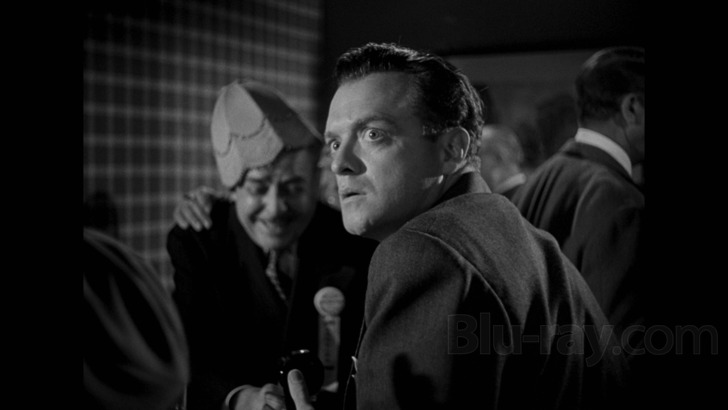
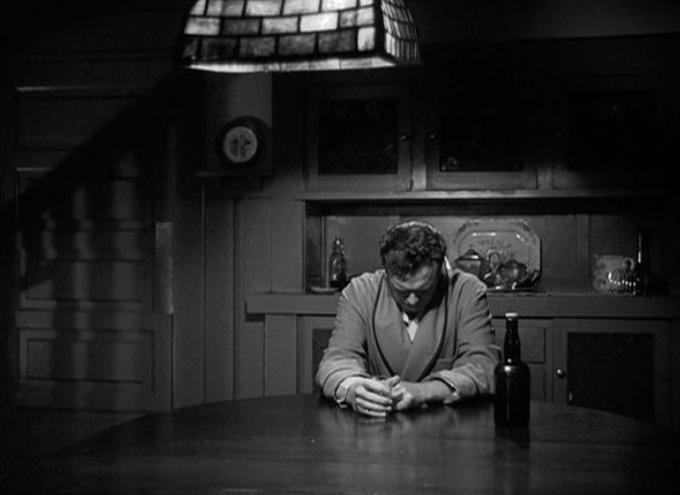
You could argue that Act of Violence is the single most underrated film noir, because a story of moral relativity and situational ethics is told as a thrilling man hunt, with two career-topping performances and a starkly photographed nighttime chase through Los Angeles’ seamy Bunker Hill. Just like the top tier films in the film noir canon, Act of Violence has it all. I’m writing about it today because it’s playing on on Turner Classic Movies on Friday night, and it’s not available to stream.
WW II vet Frank Enley (Van Heflin) is a successful developer with a new bride and baby, popular and prominent in his community. Then, the sunny prosperity of the postwar boom – and Frank Enley’s life – is shattered by the arrival of Joe Parker (Robert Ryan), a guy with a trench coat, a limp and an obsession. Parker’s limp is only the physical manifestation of a psychological wound from the war. While in the same Nazi prisoner of war camp, Frank took an action that Parker believes cost the lives of their buddies. Parker has come to town to kill Frank as retribution.
In the extremity of a Nazi prisoner of war camp, Frank was faced by a situation with no good choices; he knows (correctly) that few in 1949 America will be able to see his action in that context. Because he would instantly lose his standing in the community, he can’t call the police. Now Frank is plunged into both the terror of being killed and self-loathing because he thinks he deserves it,
Frank flees in a panic, going underground in Bunker Hill, a far cry from Frank’s bright, well-tended suburb. Dazed by the position he finds himself in, Frank tries drinking, but there isn’t enough booze in LA to quell his terror. He encounters the world-weary prostitute Pat (Mary Astor), who hides him in her apartment while she figures out how to bleed some money from him; she connects him with a couple predatory bottom-feeders (Barry Kroeger and Taylor Holmes) who may be more heartless and lethal than Joe. All the time, Joe Parker is closing in, right up to the unpredictable climax.
There’s no question that Ryan’s Joe Parker is the villain here, but you can make the case that it’s Frank Enley who committed the unforgiveable and that Joe is the avenging angel, here to deliver justice.
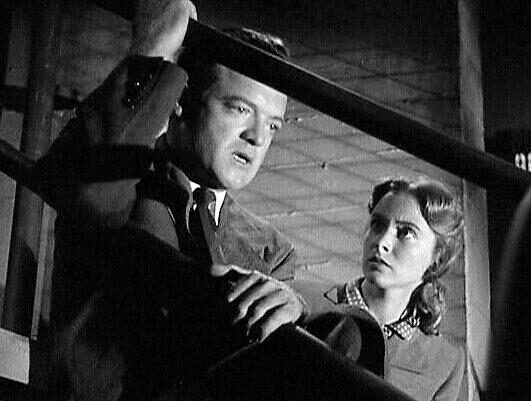
Remarkably versatile for a leading man, Van Heflin was so good in war movies (Battle Cry) and westerns (Shane, 3:10 to Yuma) and corporate drama (Patterns). He may have been his best in classic film noir (Johnny Eager, The Kid Glove Killer, The Strange Love of Martha Ivers, Possessed, The Prowler and East Side, West Side) and the neo-noir Once a Thief. Underrated in his lifetime and overlooked today, Heflin was naturally relatable (but very scary in The Prowler and Once a Thief). Topped by his staircase scene with Janet Leigh and his wild stumble to Pat’s apartment, Heflin captures all of Frank’s stunned desperation and self loathing despair; in my book, Heflin never surpassed his performance in Act of Violence.
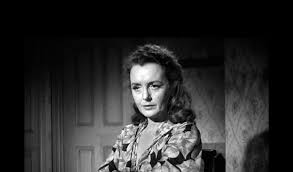
Mary Astor in ACT OF VIOLENCE
Mary Astor was one of the very most beautiful humans as a teenager, and was 35 when she played the alluring Brigid O’Shaughnnessy in The Maltese Falcon. Astor was 42 when she made Act of Violence, and she looked the part Pat, with all of the mileage on her, without any vanity, . Capturing all of Pat’s exhaustion, cynicism and ambivalence, Act of Violence rates with The Maltese Falcon as Astor’s finest performance.
Pat’s sordid apartment and the grimy joint where she drinks and picks up customers seem so much farther from Frank’s well-trimmed suburb than the actual distance of a few miles. It’s a milieu that has worn out Pat, and she knows it; she’s about to move and try another town.
Pat’s sense of morality is flexible. What she does for a living is illegal although it’s a victimless crime. She tries to milk as much money out of each man she meets. But she has her limits; she’s ok with bleeding some money from a rich guy like Frank, but, while she might tolerate fraud or blackmail, she won’t countenance murder.
Ryan’s single-minded, relentless and cruel Joe Parker would be the best thing in most movies, but the performances by Heflin and Astor are for the ages. Ryan is off-screen for the most chilling moment in the film, when Pat, holding the telephone receiver, relays Joe’s reaction to Frank’s buyoff offer.
Van Heflin and Janet Leigh in ACT OF VIOLENCE
Frank’s wife is played by a 21-year-old Janet Leigh, in only her second year of screen acting. Leigh is excellent as a fresh-faced, naive young woman who could never have imagined the situation she faces now.
Barry Kroeger and Taylor Holmes really elevate Act of Violence with their supporting turns. Kroeger’s shark-like grin is very scary, and Holmes is an even more venal lawyer (disbarred this time) than the one he played in Kiss of Death.
Van Heflin, Mary Astor and Barry Kroeger in ACT OF VIOLENCE
Act of Violence came early in the career of director Fred Zinnemann, who had debuted impressively with The Kid Glove Killer and was only four years away from his masterpiece, High Noon. As an A-lister, he went on to direct iconic films like From Here to Eternity, Oklahoma! and A Man for All Seasons, garnering seven Best Director Oscar nominations and winning for The Sundowners. Another thriller, The Day of the Jackal, is my personal favorite Zinnemann film.
Cinematographer Robert Surtees’ remarkably varied body of work included Oklahoma!, Ben-Hur, PT 109, Mutiny on the Bounty, The Collector, The Graduate and The Last Picture Show. Surtees was not known as a noir DP, but he brought out all the obsession, desperation and shabbiness of this story. No one ever lit and photographed Bunker Hill any better.
Van Heflin in ACT OF VIOLENCE
Robert L. Richards (Winchester ’73) adapted the screenplay from a story by Collier Young.
Remember, you can’t stream Act of Violence, so make sure to DVR it this Friday on Turner Class Movies.
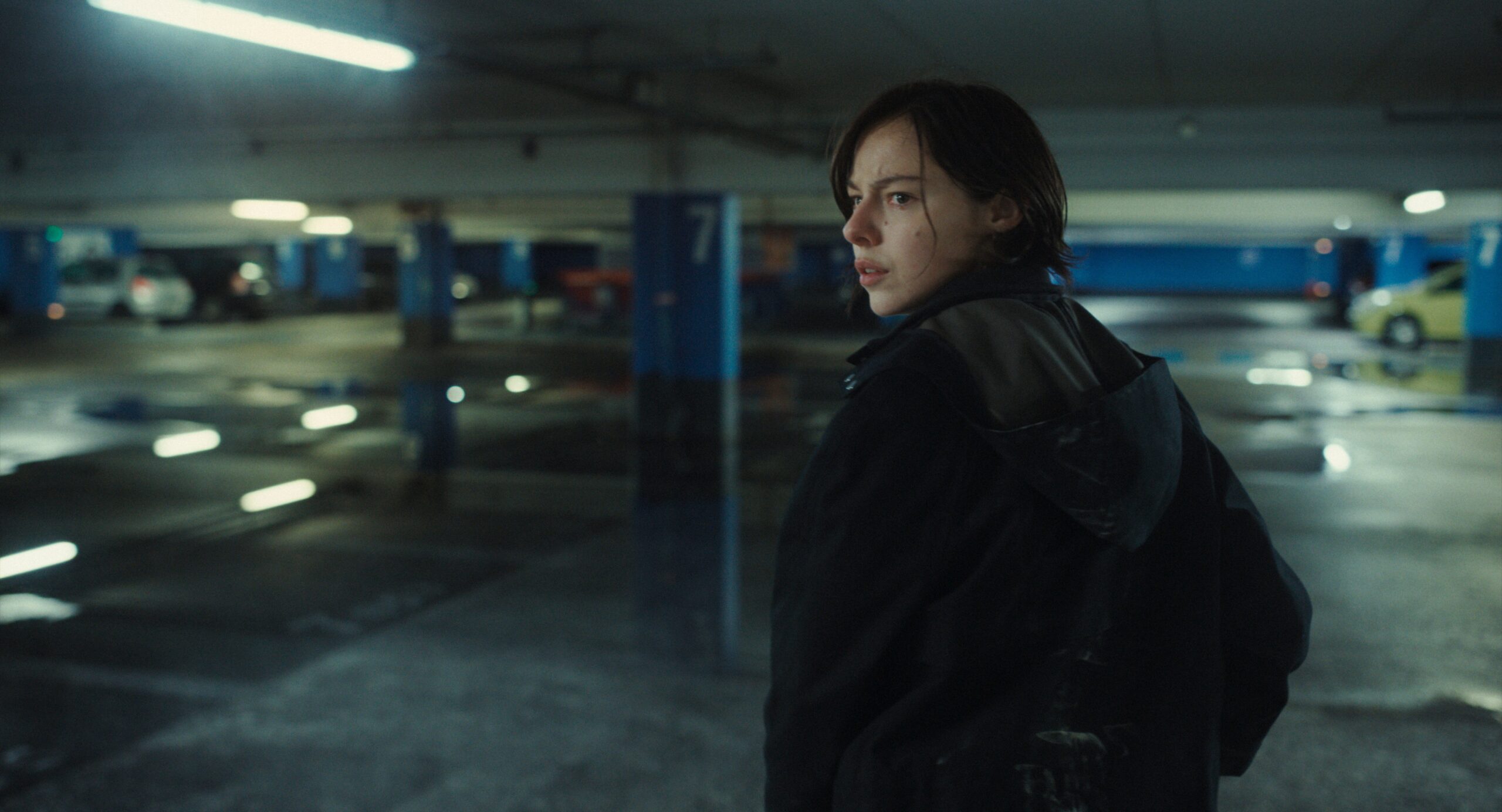
Photo caption: Marion Barbeau in DRONE. Courtesy of Frameline.
Émilie (Marion Barbeau) is stalked through Paris by a mysterious drone, in Drone, a thriller that explores issues of privacy and the male gaze. A magnificent 4-minute opening sequence, introduces us to the vulnerability caused by the voyeur drone. Émilie is funding her architecture studies by working as a cam girl, a situation where she is physically detached and in control of her male customers. But there is no detachment or control whenever the paranoia-inducing drone suddenly appears.
There are exhilarating set pieces in a parking garage, a motorcycle chase and an abandoned factory, as writer-director Simon Bouisson and cinematographer Ludovic Zulli keep their drone camera in pursuit of the story’s stalker drone. In his first theatrical feature, Bouisson keeps the tension pounding, all the way to the ingenious ending.
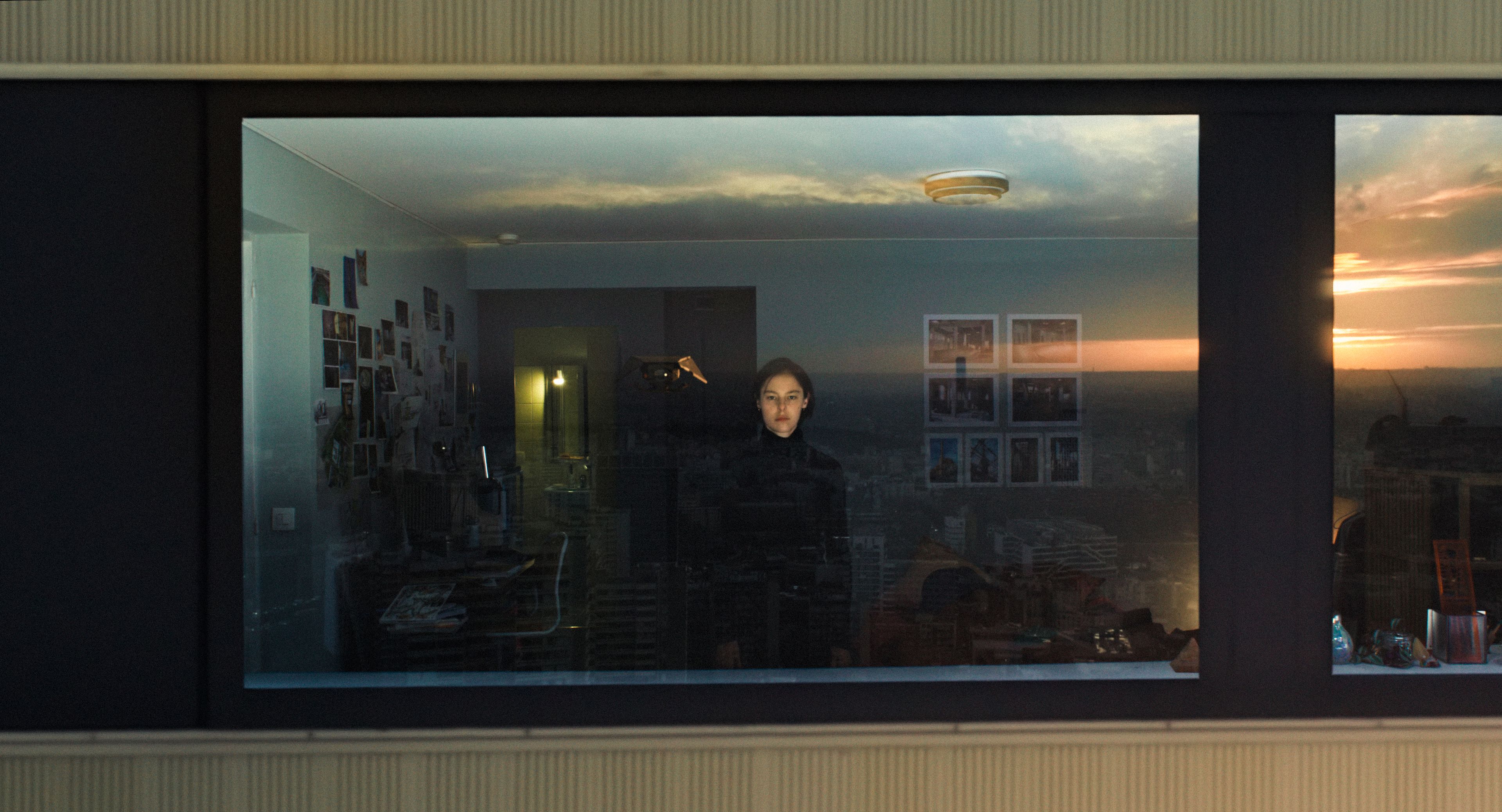
Marion Barbeau in DRONE. Courtesy of Frameline.
Émilie is a recent architecture graduate from Lilles who has earned a high-powered fellowship in Paris. As her fellowship project, she chooses an adaptive reuse of an abandoned factory. Of course, even without the drone, we would fear for Émilie’s safety as she wanders around the dark, creepy, abandoned factory and takes long solo jogs through the city at night.
Who is flying the drone? Is it a camgirl customer who has hacked the firewall? Is it her toxic male classmate? Or her swaggering, entitled boss? Or, perhaps most terrifying, nobody at all?
Émilie is relationship-shy, but reluctantly intrigued by a DJ. Will the budding romance put both women in drone-jeopardy?
Marion Barbeau, a former ballet dancer, is superb as Émilie. Émilie, so vulnerable throughout the movie, is remarkably strong and determined, which lifts Drone above the ordinary woman-in-peril genre. Barbeau is able to project Émilie’s fundamental badassness.
I’ve listed Drone in the special Festival Films category of my Best Movies of 2025 – So Far. I screened Drone for Frameline (where it was my favorite film), and I’ll let you know when it has a theatrical or VOD release in the US.
Photo caption: Eve Connolly in SEW TORN. Courtesy of Vertigo Releasing.
Sew Torn is the first thriller (or movie) I’ve seen where the main character’s day job isn’t detective or writer or architect, but mobile seamstress. Barbara (Eve Connolly) is a seamstress and her super power is rigging Rube Goldberg solutions with needle and thread to face any emergency situation. It doesn’t take long before she’s entangled in a fight to the death between two gangs of crooks, and we’re asking just what are we watching here?
We’re watching a compelling thriller, a genre film with a gimmick, albeit a sui generis gimmick, and it’s the calling card of its talented auteur. Writer-director Freddy MacDonald made the first version of Sew Torn as a 6-minute short while in high school, which led him to being accepted as the youngest ever Directing Fellow at the AFI Conservatory. After winning a student academy award, he and his father Fred MacDonald worked the screenplay of Sew Torn into a feature. Freddy MacDonald has yet to turn 25.
Both Barbara and Joshua (Caleb Worthy), a young hood embroiled in the gangland shootout, need to escape from the domination of their parents. Barbara’s mother is dead, but Barbara, struggling with depression, is trapped living her mother’s life. Joshua’s father (a bloodcurdling John Lynch) is very much alive and threatening the survival of everyone he encounters.
Barbara is glum and passive, and sure doesn’t look like the hero of a thriller, until she whips out a spool and a thimble to MacGyver herself out of a lethal jam.
There’s a surprise in the construction of the story, which I won’t spoil, except to say that it involves the reimagining of outcomes. You’ve certainly never seen this movie before.
I saw Sew Torn at the SLO Film Fest, where it won the Best Narrative Feature. After a successful festival run that began with a debut at SXSW, Sew Torn is available to stream on Amazon, AppleTV and YouTube.
Photo caption: Jean Rochefort and Johnny Hallyday in MAN ON THE TRAIN.
The engrossing 2002 French drama Man on the Train centers on portraits of two very different men, and, ultimately, an unexpected male bonding. There’s a thriller ending because each man has been moving to his separate pivotal, life-or-death moment.
The titular character (Johnny Hallyday), whose name we come to learn is Milan, arrives in a small provincial town, and his accommodations fall through. The local literature teacher Manesquier (Jean Rochefort) insists on putting him up for the night. Milan, a very private man of fewer than few words, accepts the favor only reluctantly. He’s a solitary guy anyway, and he’s keeping a low profile because his local business matter is illegal. Manesquier, who lives a lonely bachelor existence, has a lot to say and no one to say it to. He is delighted to have someone to share company, and he is even more fascinated when he discovers that Milan is a career criminal.
Driven by Manesquier’s curiosity, and against Milan’s initial wishes, the two get to know each other. We know that the clock is ticking for one man, but we don’t appreciate that it my be ticking for both.
Man on the Train works so well because of the casting and the performances.
Jean Rochefort was a chameleonic fixture in French cinema. Man on the Train was Rochefort’s 130th movie at age 72, and he would go on to make 36 more. I recently wrote of Rochefort’s performance forty years before as a particularly amoral character with a reptilian smugness in Symphony for a Massacre.
Johnny Hallyday, in contrast, was not most well-known as a screen actor, but as a pop singer, the French Elvis. Ironically, Hallyday’s first film was as a child in the suspense classic Diabolique, which also was his best film; like Elvis Presley, Hallyday dabbled in an indifferent movie career. Halliday made 78 music videos with Johnny Hallyday in the title. He was known as a hard-living tabloid celebrity. When he made Man on the Train, Hallyday was 59 and had some serious mileage on him. Yet, his magnetism is compelling in Man on the Train.
Man on the Train was directed by Patrice Leconte (Monsieur Hire, The Widow of St. Pierre, The Suicide Shop).
Man on a Train can be streamed from Amazon, AppleTV, Fandango and YouTube.