ONLY THE ANIMALS: surprise after surprise

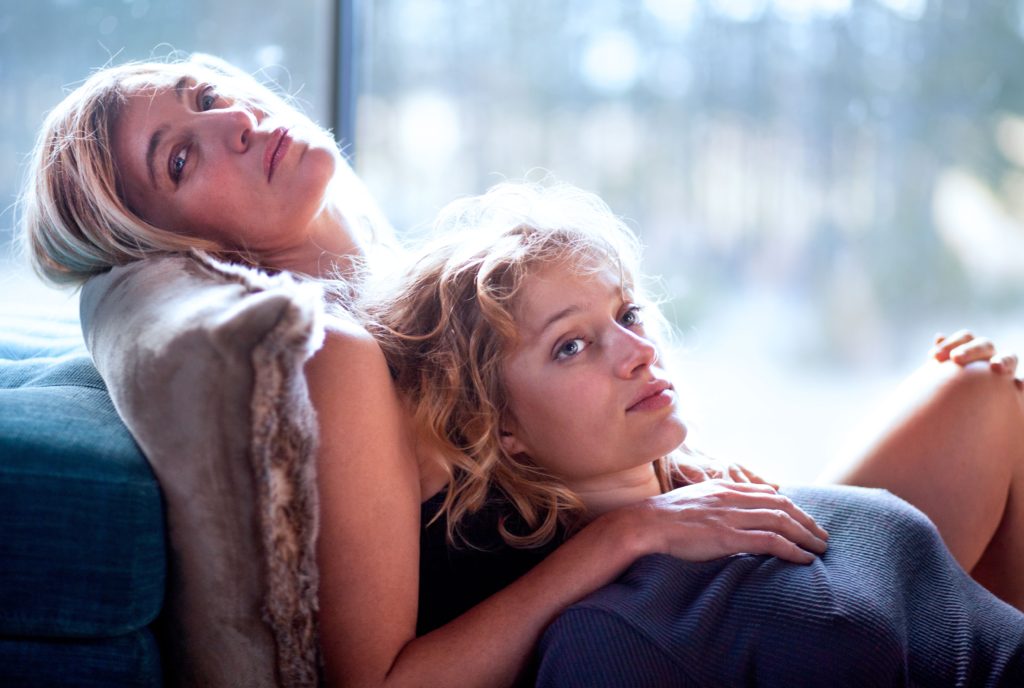
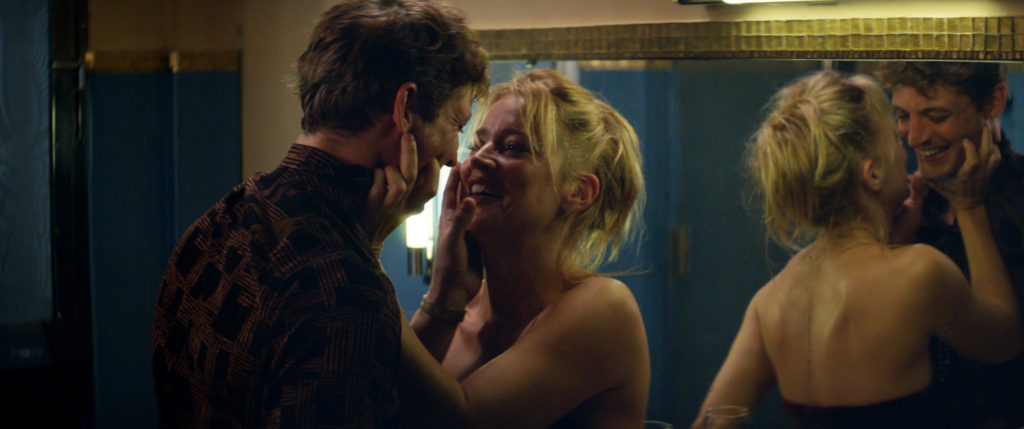
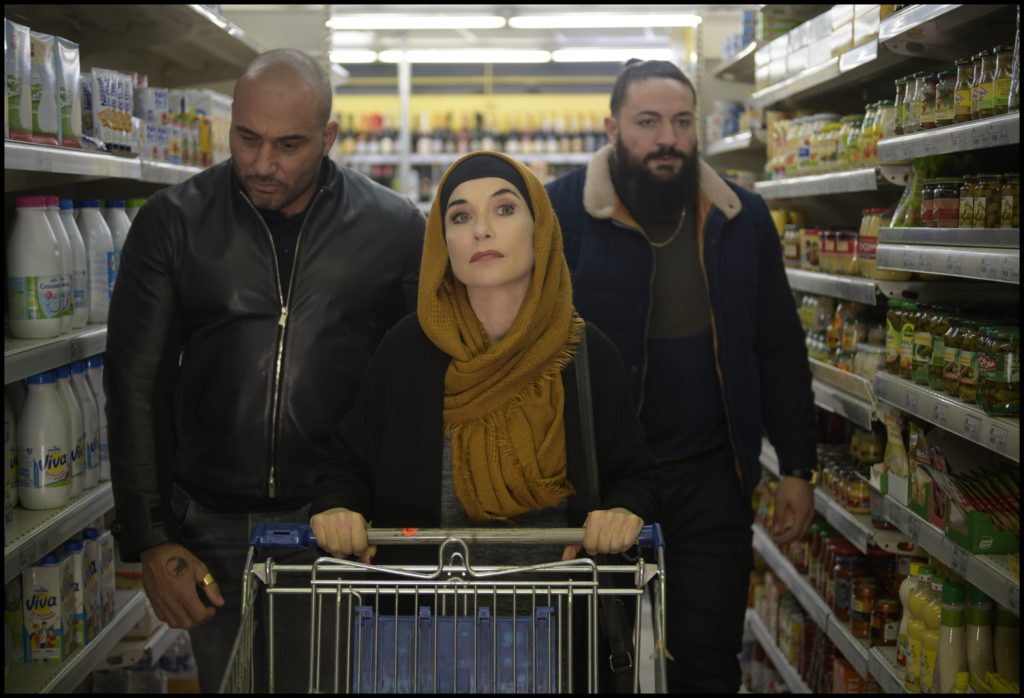
Valeria Bruni Tedeschi and Nadia Tereszkiewicz in ONLY THE ANIMALS. Courtesy of Cohen Media Group.

The ever-surprising Only the Animals is no ordinary mystery. After an opening sequence with a most unusual piggy-back ride, a wealthy woman (Valeria Bruni Tedeschi) disappears among the wintry cattle farms in France’s mountainous and sparsely inhabited Lozere highlands. We meet a series of local characters, each of whom may hold the key to the puzzle, as may the young hustler Armand (Guy Roger ‘Bibisse’ N’Drin), a world away in Côte d’Ivoire.

The intricately constructed story reveals elements of the mystery, from each character’s perspective in sequence. The first French character we meet is Alice (Laure Calamy) – cheery, good-hearted and goofy, with atrocious taste in men; Alice’s neediness leads her to make a poor decision. Then the others, whose behavior is motivated variously by obsessive infatuation, misdirected passion and psychotic delusion, plunge completely off the rails. Their individually random acts collect into a pool of perversion.

By the time we reach the satisfying conclusion, the audience has learned the what and the why (which the investigating police will never uncover), and the most seemingly disparate story lines have intersected.

The story comes from a novel by Colin Niel, adapted by Only the Animals’ director Dominik Moll, with Gilles Marchand. Moll and Marchand were nominated for the César (France’s Oscar equivalent) for adapted screenplay. (Niel himself has a cameo at the agricultural coop’s store counter.)

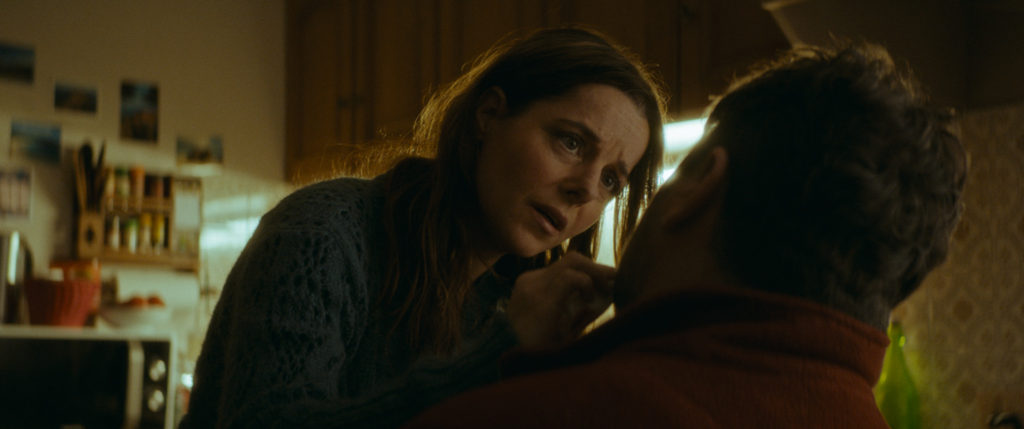
Laure Calamy and Denis Ménochet in ONLY THE ANIMALS. Courtesy of Cohen Media Group.

The story is the real star of Only the Animals, but the cast is superb. Tedeschi is marvelous as the worldly woman with a private reason to get away to her husband’s rural getaway, especially when she flashes the briefest instant of anger. Calamy, recently in Sibyl and My Donkey My Lover and I, is one of my favorite international comic actresses. Denis Ménochet, César-nominated for Custody, perhaps the best ever domestic violence drama, plays Alice’s boorish and secretive husband Michel. Damien Bonnard plays Joseph, a damaged loner with an underestimated psychosis.

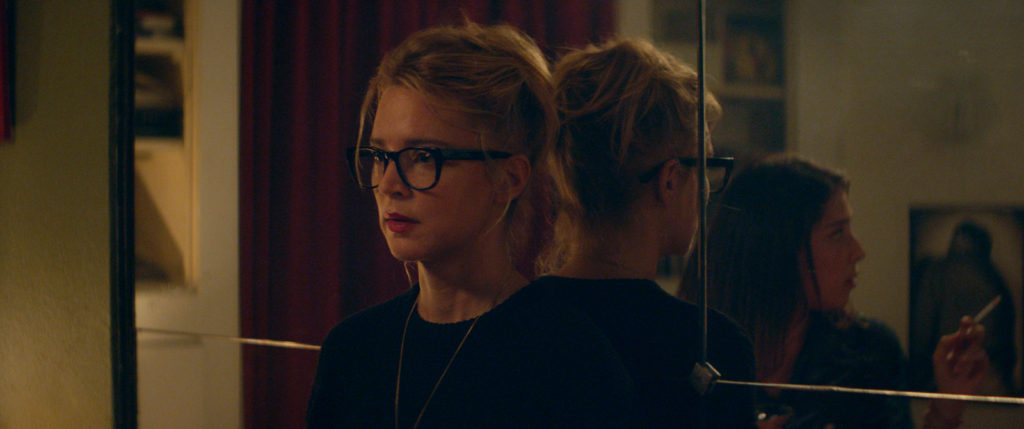
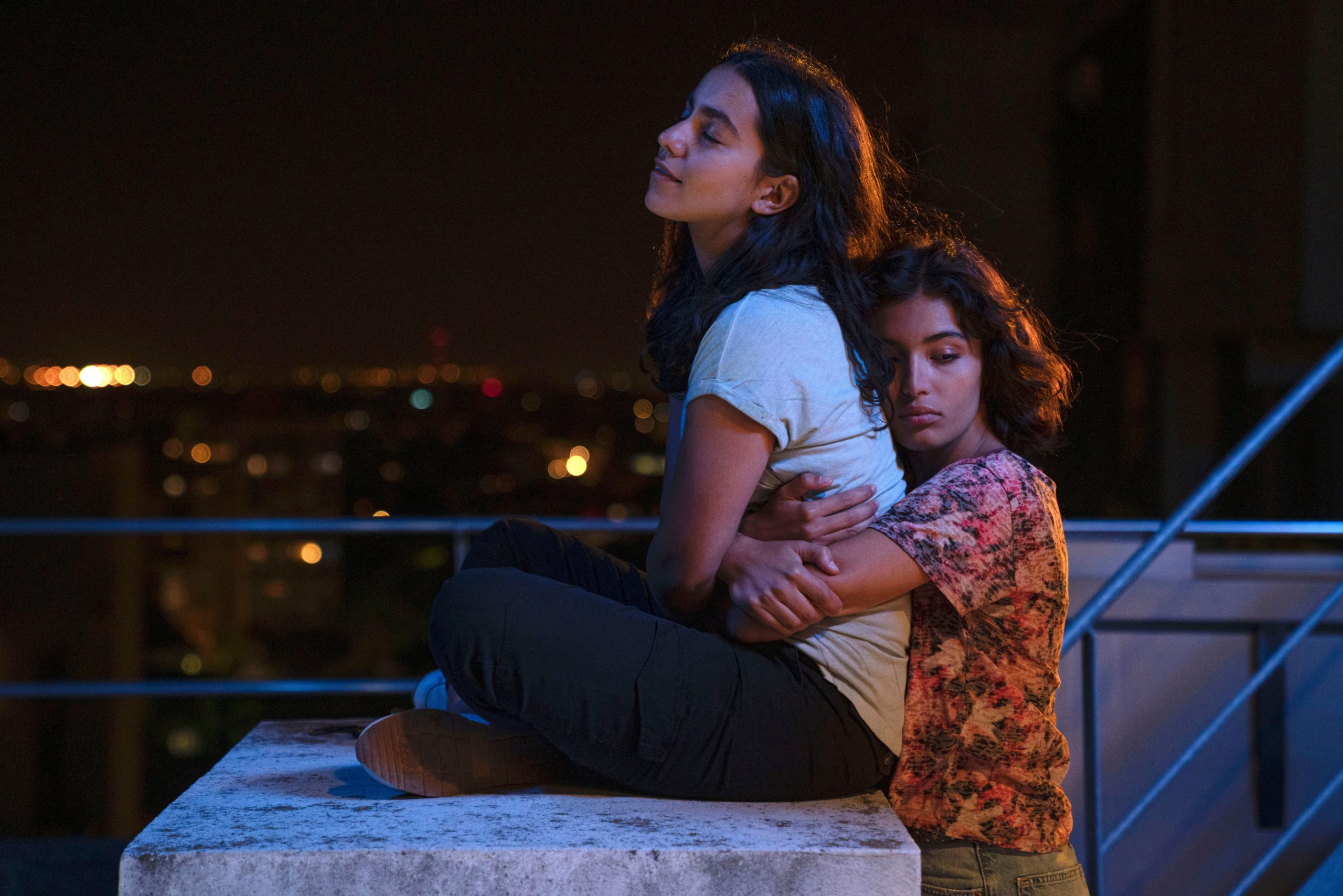
Nadia Tereszkiewicz plays the young waitress Marion, who turns a one night stand into a disturbing infatuation. This is only the fifth feature and third significant movie role for 25-year-old Tereszkiewicz. She now has four films in production or pre-production, including one directed by Tedeschi.

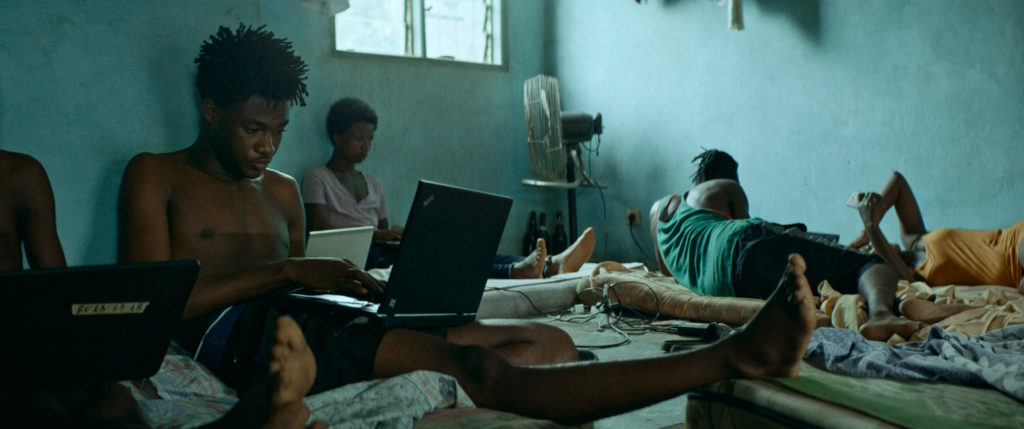
Guy Roger ‘Bibisse’N’Drin (left) in ONLY THE ANIMALS. Courtesy of Cohen Media Group.

N’Drin and the other key Ivorian players – Perline Eyombwan, and Christian Ezan – are also excellent.

The surprises keep popping up until the final shot. Only the Animals opens this weekend in a limited theatrical release, which will soon include the Bay Area’s Landmark Shattuck.

SIBYL: masking its trashiness with expert filmmaking

Virginie Efira and Laure Calamy in SIBYL

In director Justine Triet’s sex-filled (and sometimes darkly funny) melodrama Sibyl, the psychotherapist Sibyl (Virginie Efira) decides to phase out her practice and return to her primary obsession – novel writing. Sibyl is changing the trajectory of her own life, and she reflects on the one true love in her past (Niels Schneider), her sobriety, her parenting and the family of her sister (Laure Calamy).

While off-loading most of her patients, Sibyl picks up a new one – a needy young actress (Adèle Exarchopoulos from Blue Is the Warmest Color). The actress is about to jump start her movie career, but she’s having an affair with the other lead actor (Gaspar Ulliel), who is inconveniently married to the director Sandra Hüller (Toni Erdmann).

Each of these threads is its own melodrama, and Triet braids them together into an always entertaining story. We are our choices – and we can be our impulses.

Sibyl may be a psychotherapist, but she hasn’t mastered the concept of boundaries. Most egregiously, she doesn’t hesitate to use the personal secrets of her patients as fodder for her novels. Yikes! And she doesn’t resist rampant boundary-crossing by the actress, the actor and the director, either, and she’s used by all of them.

The characters, especially Sibyl, fill the camera lens with passionate sex – on the floor, up against a door, on the beach, on an apartment bathroom’s sink, on the deck of a boat, but not, to the best of my recollection, on a bed.

Niels Schneider and Virginie Efira in SIBYL

There’s lots of sly, dark humor, beginning with the over-intellectualized mansplaining in the very first scene. The sister is hilarious, especially when she coaches her niece on how to manipulate her mother. At one point, the director of the film-within-the-film responds to a lover’s meltdown on the set: “Guys, let’s keep the drama fictional if you don’t mind.

The scene where the director first meets the actress who has just been impregnated by the director’s husband is another comic masterpiece from Hüller.

Many of us so revere French cinema that we forget that one of the things French filmmakers do well is trashy. And Sibyl is every bit as trashy as Fifty Shades of Grey. However, the editing (Laurent Sénéchal) and the acting are so exquisite that it masks the trashiness of the story.

I originally streamed Sibyl on Virtual Cinema at Laemmle. It’s now available on Amazon, AppleTV, Vudu, YouTube and DVD.

TITANE: demented, excessive and icky

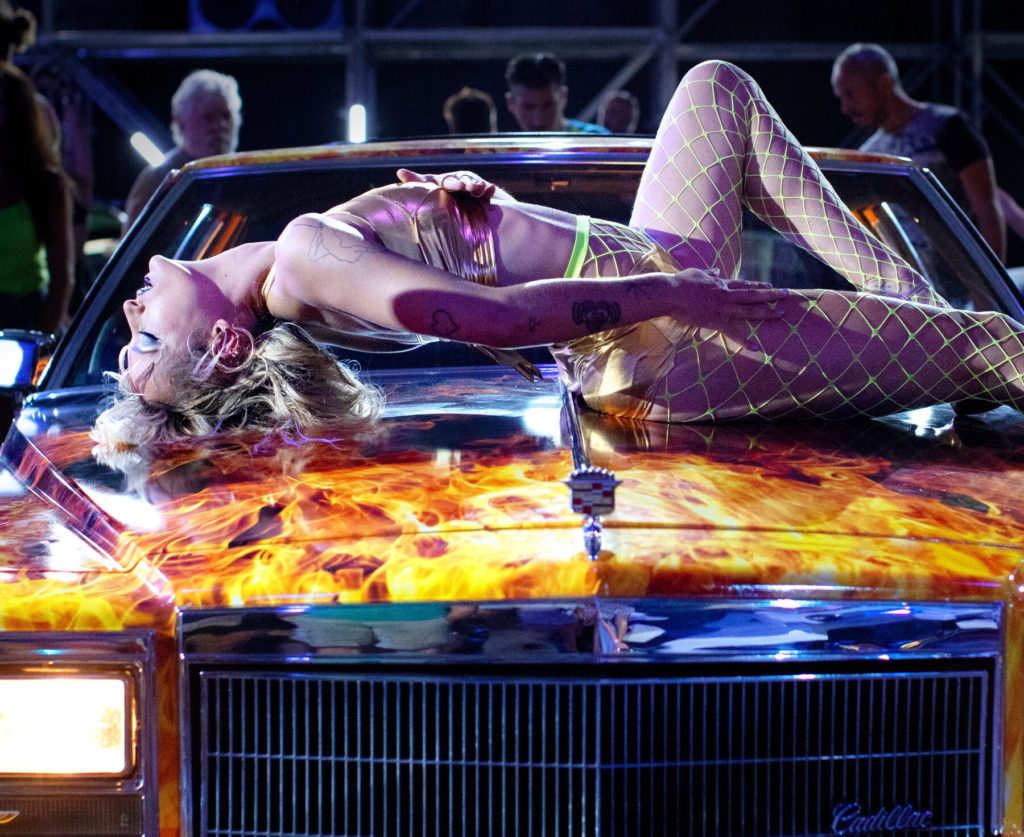
Photo caption: Agathe Rousselle and Caddy in TITANE. Courtesy of NEON.

I don’t think I’ve ever before described a movie-going experience as “punishing”, but here goes.  After being assaulted by the French sci fi horror film Titane, which purports to be two portraits of abnormal psychology, I felt beaten, even tortured.

The headstrong child Alexia causes an auto accident and gets a platinum plate in her skull.  She grows into a stripper at car shows (Agathe Rousselle), and has a serious automobile fetish.  In Titanes most notorious scene, Alexia gives a new meaning to auto-eroticism by having sex with, and becoming impregnated by, a Cadillac.  

Alexia is also a serial killer, and her second signature fetish is impaling her victims.  She keeps a spike in her hair for this purpose, but a bar stool will suffice, too. One victim gets away and indemnified her, so Alexia changed her appearance and goes underground as a young man. Here, she happens on a beefy fire captain (Vincent Lindon), who is grieving for a son who disappeared ten years ago, and adopts Alexia as his long lost, now recovered, son.

Through much of Titane, we are asking WTF is going on? Writer-diretor Julia Ducournau keeps surprising us by piling on segments that are SO twisted and bizarre, that most of us could not imagine them.

Most of Titane is intentionally unpleasant to watch.  Characters bleed blood, unless they bleed motor oil.  Bones crunch, mouths froth and bellies are picked open. The murders are gory, and Alexia self mutilates as her pregnancy progresses, right up to an excruciating birth scene.

Oh, and let me be very clear about this, Titane is NOT a date movie.

The character of Alexia is just a bad seed, a feral maniac. The character of the troubled fire captain is also bizarre, but he’s more psychologically interesting.  He insists that everyone else accept what is clearly a delusion.  Does he understand that this is not his son?

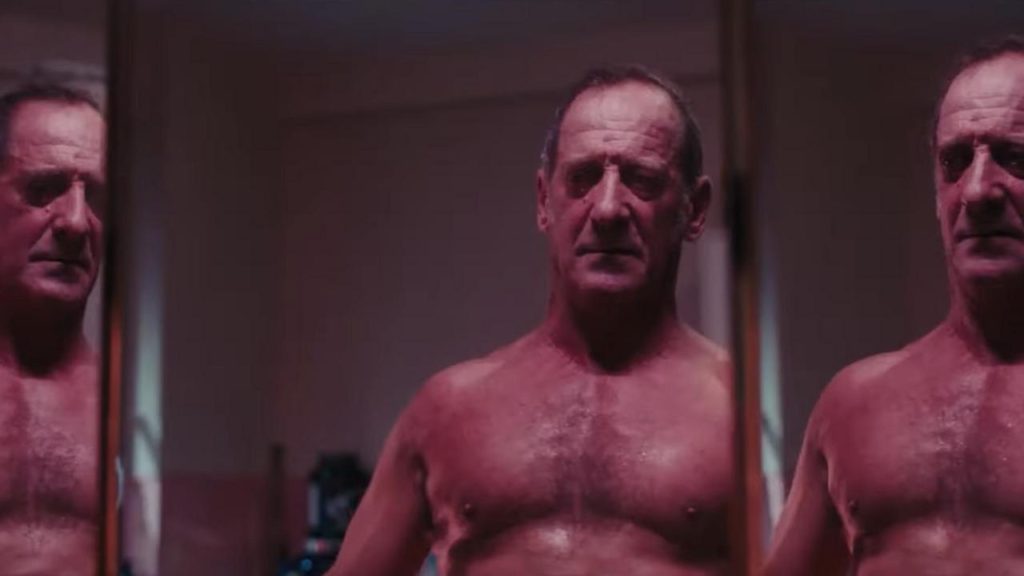
Vincent Lindon in TITANE. Courtesy of NEON.

Lindon (who muscled up for the role) is superb in this crazy role, which requires him to exude command authority and also the deepest vulnerability. It’s a very brave performance, and it works, for example, in his solo dance to She’s Not There

Myriem Akheddiou is also excellent in a brief scene as the mother of the fire captain’s missing child.

I know my share of American firefighters.  They would be surprised by Titane’s French firefighters, who let off steam by getting high and holding raves in the firehouse, all hypnotically dancing to electronica.

Notably, Titane won the Palme d’Or at the 2021 Cannes Film Festival. While one of the two most prestigious prizes in cinema (along with the Best Picture Oscar), the Palme d’Or is no guarantee that a movie is great – or even watchable. On the positive side, recent winners have included the superb Parasite, Shoplifters, Amour, Blue Is the Warmest Color and 4 Months, 3 Weeks and 2 Days. On the unfathomably bad side, cinematic excrement like The White Ribbon, The Tree of Life, Dancer in the Dark, and now Titane – has also won.

The critical consensus is far too kind to Titane.  Many critics correctly label what had come out of  Julia Ducournau’s mind as “demented” and then credit her for the visual excess in telling an unbearably icky story.  It’s just demented, excessive and icky.

MA BELLE, MY BEAUTY: a simmering romantic reunion

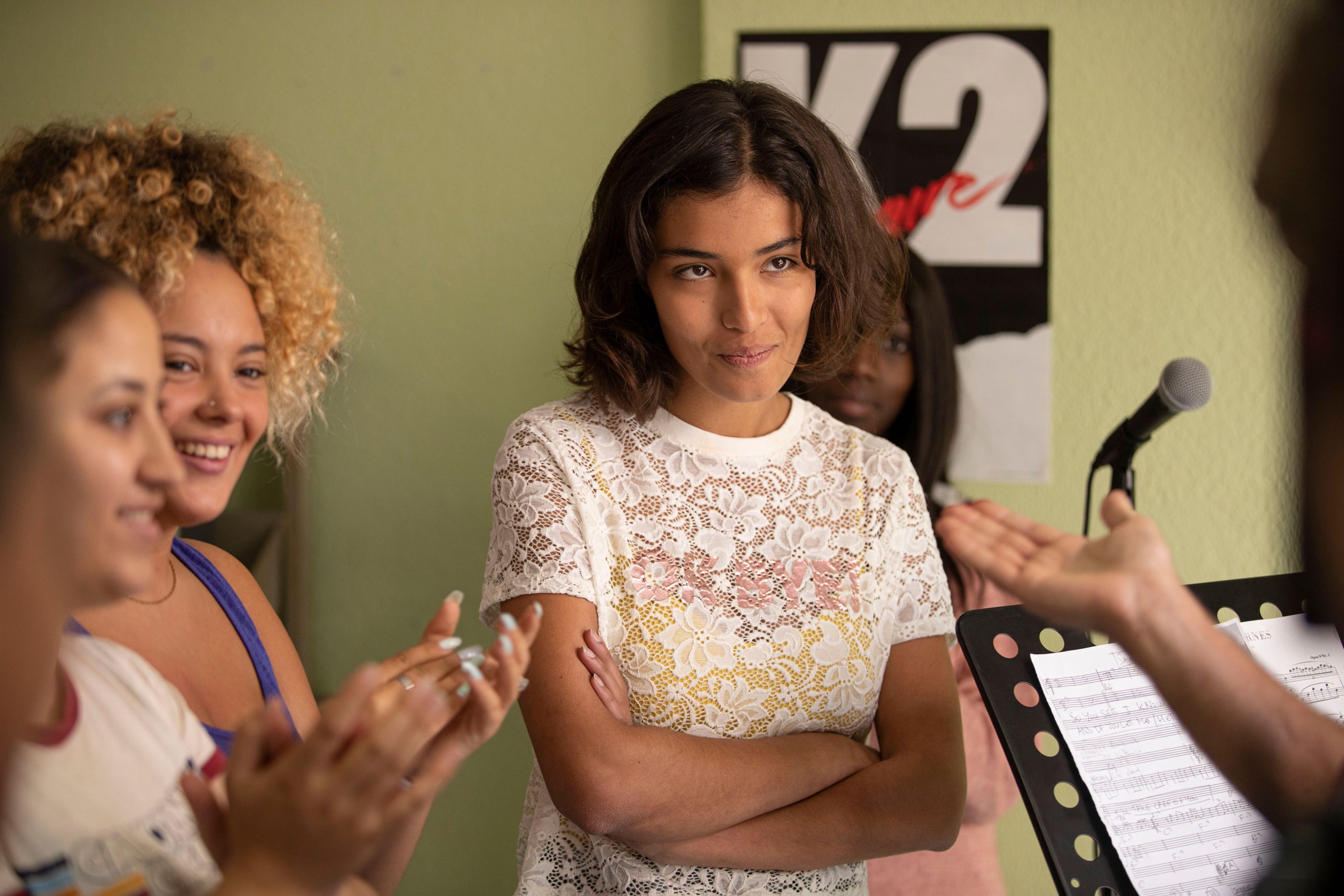
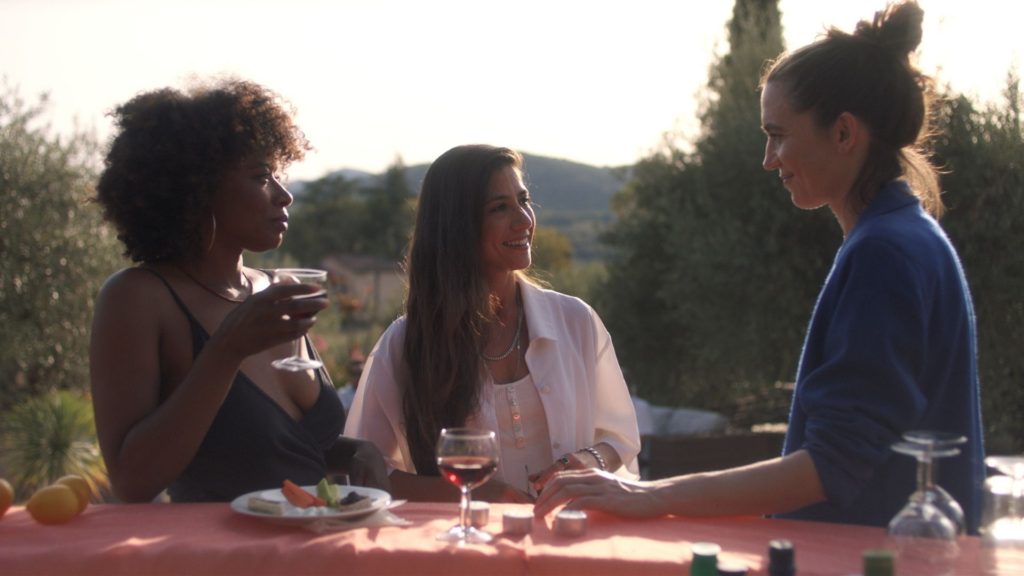
Idella Johnson, Sivan Noam Shimon and Hannah Pepper in Marion Hill’s film MA BELLE, MY BEAUTY. Courtesy of SFILM.

In the beginning of the simmering romantic drama Ma Belle, My Beauty, the New Orleans musicians Bertie (Idella Johnson) and Fred (Lucien Guignard) receive a surprise visitor. Fred, the band leader and Bertie, the vocalist, have married and relocated their jazz band to a rambling French farmhouse owned by Fred’s parents. Both the marriage and the move were Bertie’s idea, but now she’s depressed and no longer working with the band.

We learn that Bertie, while involved with Fred, had a simultaneous relationship with Lane (Hannah Pepper), until Lane starting dating another woman. Now Lane is single again, and Fred, hoping to shake Bertie out of her depression, has invited Lane to visit and surprise Bertie.

A surprise it is, and not altogether welcome. Bertie tells Hannah that Bertie’s happiness does not depend on either Fred or Lane – but is that true? And is Lane really willing to accept a non-exclusive relationship? And who is whose creative muse?

Bertie and Hannah spar, Hannah has a noisy fling with another guest, sexual tensions simmer, and before you know it, somebody is harnessing on the strap-on.

Almost all the action takes place at the farmhouse and the setting is sumptuous – Grade A Travel Porn. The farm is located in Anduze, France, at the very edge of the Rhone Valley, nestled in the foothills of the Cévennes.

Ma Belle, My Beauty is the first feature by writer-director Marion Hill, and it won an audience award at Sundance. I screened Ma Belle, My Beauty at SFFILM, and, in the Q&A, Marion Hill said that she was seeking to shoot a film in this idyllic French location, along with aspiring to explore the post-breakup dynamics of polyamorous women.

There’s a touch of jazz in Ma Belle, My Beauty, and Idella Johnson’s vocal performance shine.

The setting may be languid, but we know that Hill’s characters may erupt in passion at any moment. Ma Belle, My Beauty is a gorgeous, sexy, character-driven film. I screened Ma Belle, My Beauty at the 2021 SFFILM.

CURIOSA: erotic, but do we care?

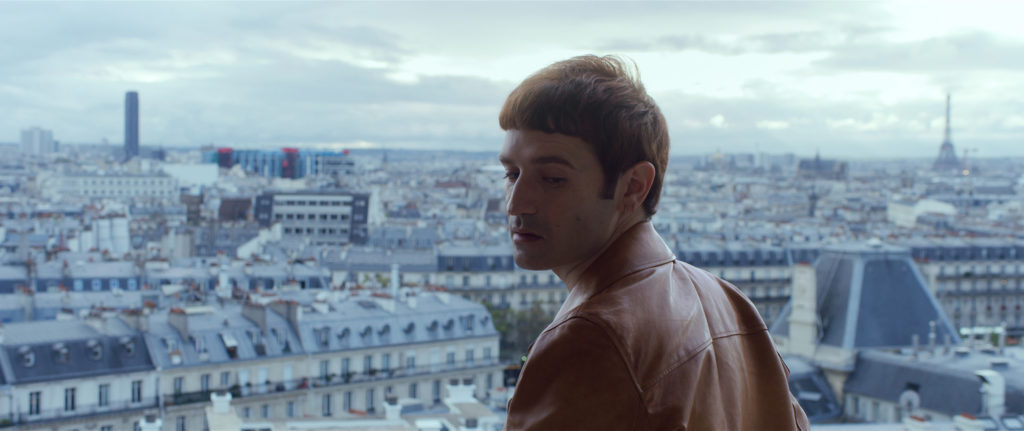
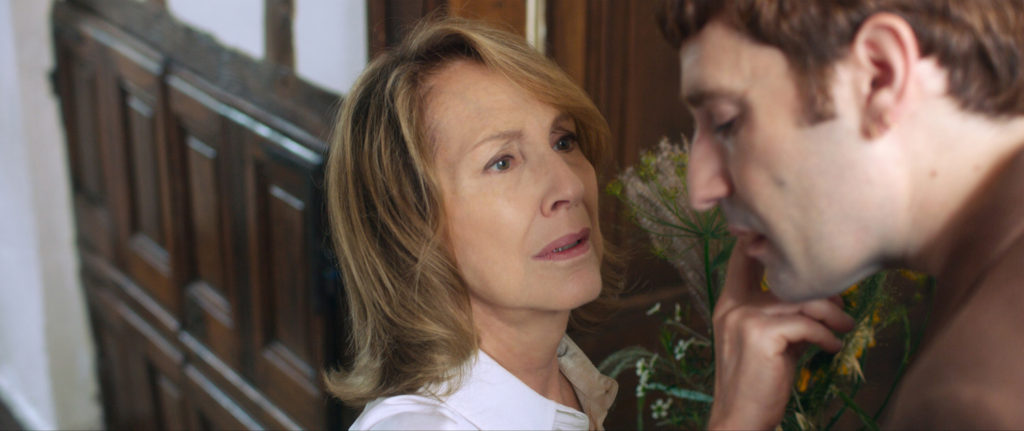
Noémie Merlant and Niels Schneider in CURIOSA. Photo courtesy of Memento Films.

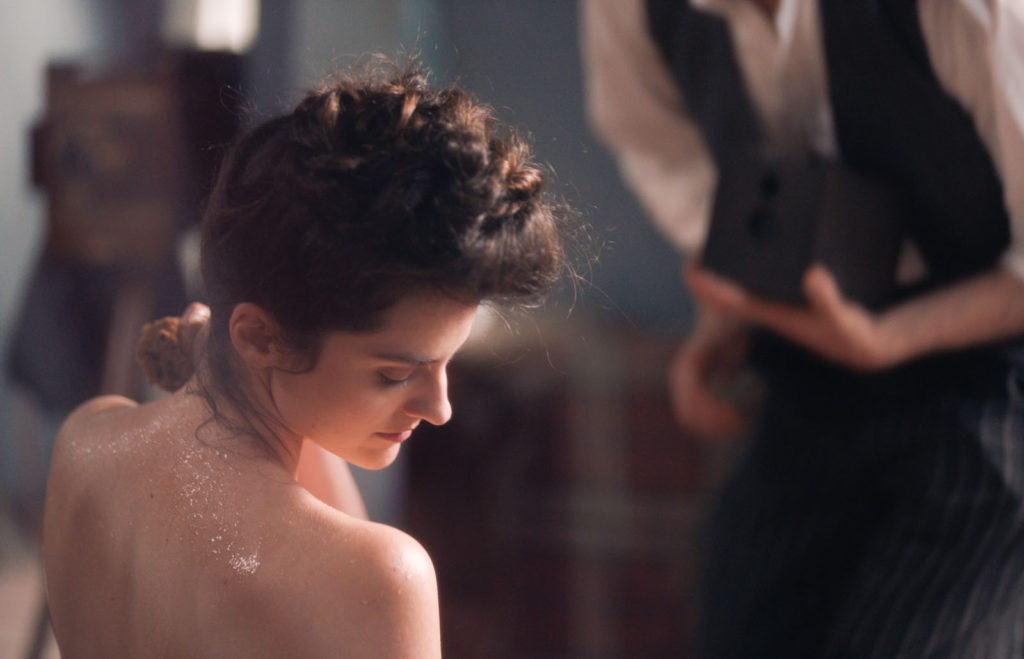
The French romantic drama Curiosa is set in the Belle Epoque, when the Eiffel Tower was new and sexual liberation was burgeoning among literati.

The saucy Marie (Noémie Merlant) is in love with Pierre (Niels Schneider), but marries the more financially established Henri (Benjamin Lavernhe). Pierre is a libertine (and, if British, would have been called a “rake”). Pierre returns to Paris from Algeria with a girlfriend unencumbered with inhibitions and an obsession with erotic photography. Marie instantly begins an affair with Pierre, and, boy, does she start losing her inhibitions, too.

Merlant and others spend much of Curiosa in various states of undress, so much so that teenage boys will have difficulty fast forwarding between them. Impressively, the distributor was able to find and cobble together 1 minute and 38 seconds worth of mostly clothed action. for the trailer below. It bears mention that Curiosa was co-written and directed by a female filmmaker, Lou Jeunet.

The characters are “based loosely” on the writings and photographs of real literary figures. We do know that Marie de Heredia married Henri de Régnier, had an affair with Pierre Louÿs and posed for his erotic photographs.

The cinematography by Simon Roca is beautiful, and this movie filled with attractive, naked people should be more engaging. The problem is that it is difficult to relate to or care about any of the characters.

I streamed Curiosa from Laemmle.

CASANOVA, LAST LOVE: the seducer seduced

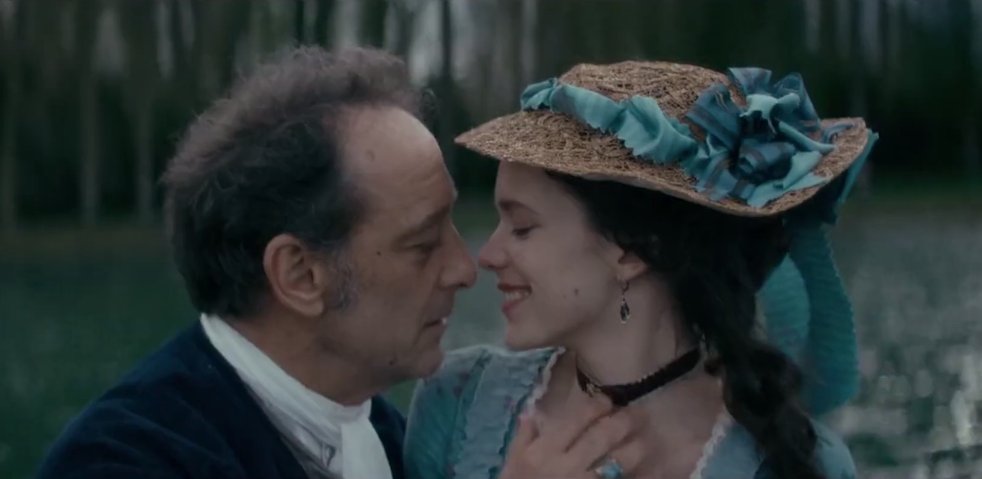
Photo caption: Vincent Lindon and Stacy Martin in CASANOVA, LAST LOVE.

In Casanova, Last Love, a middle-aged Casanova (Vincent Lindon) visits London and meets an entrepreneurial sexpot (Stacy Martin). It’s an age-old story – playing hard to get, a young woman captures the heart and soul of an older man – but we REALLY don’t expect this from Casanova himself. The seducer is seduced and it’s well, pathetic.

“Casanova” is a synonym for “womanizer”.  Indeed, sex sells and the historical Casanova’s remarkable fuck-and-tell memoir does detail a record of sexual encounters perhaps unmatched until Wilt Chamberlain.

This was an era where, even more than today, men of privilege could get away with any exploitation of women. Casanova reflected and projected the power of his powerful patrons – and took full advantage.

The historical Casanova was also a hustler, who sponged off a series of aristocratic patrons and pitched lottery schemes to crowned heads of Europe (France was a Yes, England and Russia were Nos).  In Casanova, Last Love, he easily rebuffs the opportunity to invest into a magic elixir scheme.

In his four decades cavorting across Europe, spinning schemes and seducing? women, Casanova saw himself as a professional gambler. He suffered the expected cyclical busts of a gambler, a harsh circumstance in the era of debtors prisons. That roller coaster life would have taken a toll on anyone of Casanova’s age at this point.  Indeed, Casanova, Last Love’s Casanova is starting to lose something off his fastball.

Vincent Lindon is an actor well-equipped to play conflicted characters (Mademoiselle ChambonAugustine), and he’s played defeated characters before. Here, as Casanova’s confidence unravels, Lindon’s performance becomes ever more poignant.

Stacy Martin, very good as Jean-Luc Godard’s girlfriend Anne Wiazemsky in Godard, Mon Amour, is a capable web-spinner, but doesn’t project the nuclear-level sexual allure that I imagined necessary to ensnare Casanova.

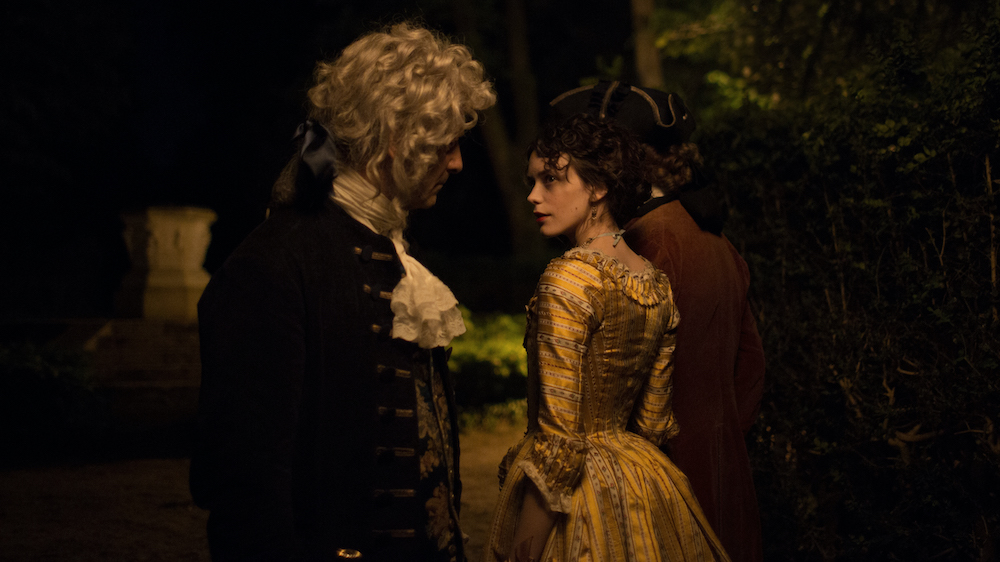
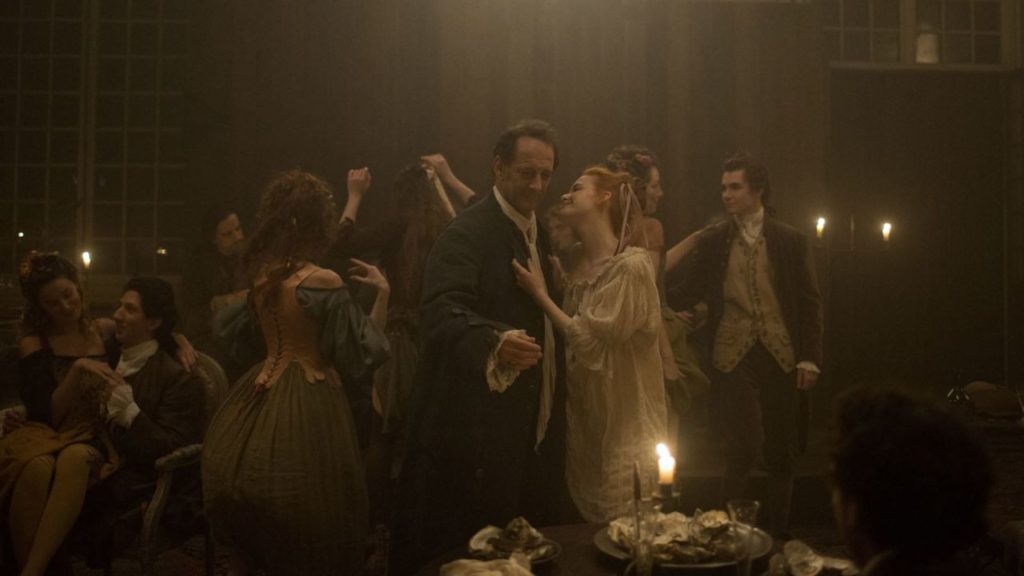
Director Benoît Jacquot (Diary of a Chambermaid, Farewell, My Queen) specializes in sumptuous period tales.  If you want powdered wigs, candlelight and harpsichord music, then Jacquot is your guy.  Jacquot and cinematographer Christophe Beaucarne have made a visual delight. Many frames is this film could have been paintings from the period.

Jacquot has some sport with us when he shows Casanova taking friends on a 20th Century-style castle tour of Hever Castle complete with English speaking docent (He treated his servants very well). And the great yew maze in Castle Hever’s garden wasn’t constructed until 100 years later.

Note: Early in his London visit, Casanova is taken aback by a well-dressed Brit in Hyde Park who defecates in public. Does movie shitting constitute acting or a stunt? In Casanova, Last Love, there are actors credited for performances as Man in Hyde Park ,and there are stunt performers credited as well. But there are no additional crew listed as shit wranglers. Who is the shitter here? Just wondering.

Casanova, Last Love posits that everyone can act like a romantic fool, even a cynic like Casanova. There is palace porn here, like a 17th Century HGTV would offer, plus a little sex. And a wretched womanizer teased into despair.

MAMA WEED: it’s always fun when Huppert gets outrageous

Photo caption: Isabelle Huppert in MAMA WEED. Photo courtesy of Music Box Films, ©Photo Credit Guy Ferrandis

In the French comic thriller Mama Weed, Isabelle Huppert plays Patience, a woman beset by money troubles stemming from the care of her aged mother.  She embraces an increasingly bizarre and risky solution.  Mama Weed starts out droll and blossoms into madcap.

Patience, having been born in colonial Algeria, is fluent in Arabic.  Her day job is as the translator for a French police unit that wiretaps Arabic-speaking drug dealers.  She learns that the cop are about to take down the son of her mom’s beloved caregiver, and she tips the kid off. That results in her gaining the possession of a ton and a half of somebody else’s hashish.  Patience disguises herself, enlists some dimwitted street dealers and seeks to monetize her haul.   Did I mention that she is dating her boss on the Narc Squad?

Her own employers are now throwing all their resources toward catching this mysterious new dealer, whom they don’t know is sitting in their midst.  The original owners of the hash, a murderous lot, are also hunting her down.

She’s more and more at risk, but the story gets commensurately funnier.  She adopts a retired drug-detecting police dog.  One of her client drug dealers is ravaged by the Munchies in a kabob shop.   Much of the humor is centered on the experience of Arabs and Chinese in contemporary France.  One central theme is the cynical principle that money makes world go round.

Mama Weed also recognizes how we value the caregivers who take loving care of our elderly parents; those folks can become more dear than family.

I’ll watch anything with Huppert in it, although it’s hard to top her electrifying performance in Elle. Of course she’s a great actress, having been nominated 16 times for an acting César (France’s Oscar).  But here’s her sweet spot – no other actor can portray such outrageous behavior with such implacability as Huppert.  She is probably the least hysterical actor in cinema. 

Mama Weed opens in theaters in July 16 and on digital on July 23.

SUMMER OF 85: how we remember teen love

Photo caption: Félix Lefebvre and Benjamin Voisin in SUMMER OF 85

In Summer of 85, writer-director François Ozon pours on the romance and nostalgia. This is a dreamy tale of first love leading to obsession and, finally, a tragedy. Ozon tricks us into thinking that this story is much, much darker than it turns out to be.

In a Northern French beach town. two teen boys meet cute via a capsized watercraft. Alexis (Félix Lefebvre) doesn’t know his way around the locale (or a lot of things), and is fascinated by David (Benjamin Voisin). whose mom (Valeria Bruni Tedeschi) runs the local fishing supply store. Alexis is utterly captivated, and the two become inseparable…until one of them is distracted by a bright shiny thing.

Ozon (Swimming Pool, Potiche) adapted the screenplay from an Aidan Chambers novel. Summer of 85 is a teen coming of age story embedded in Ozon’s reflection on how we remember our youth. Remember that teenagers tend to look at everything on their lives as momentous, and they magnify the drama.

Summer of 85 has garnered an astonishing 12 César nominations (the French Oscar equivalent). Some viewers will not be satisfied by the ending of this well-crafted film.

Summer of 85 opens tomorrow, June 18, in Bay Area theaters, including the Landmark chain.

SIBYL: masking its trashiness with expert filmmaking

Virginie Efira and Laure Calamy in SIBYL

In director Justine Triet’s sex-filled (and sometimes darkly funny) melodrama Sibyl, the psychotherapist Sibyl (Virginie Efira) decides to phase out her practice and return to her primary obsession – novel writing. Sibyl is changing the trajectory of her own life, and she reflects on the one true love in her past (Niels Schneider), her sobriety, her parenting and the family of her sister (Laure Calamy).

While off-loading most of her patients, Sibyl picks up a new one – a needy young actress (Adèle Exarchopoulos from Blue Is the Warmest Color). The actress is about to jump start her movie career, but she’s having an affair with the other lead actor (Gaspar Ulliel), who is inconveniently married to the director Sandra Hüller (Toni Erdmann).

Each of these threads is its own melodrama, and Triet braids them together into an always entertaining story. We are our choices – and we can be our impulses.

Sibyl may be a psychotherapist, but she hasn’t mastered the concept of boundaries. Most egregiously, she doesn’t hesitate to use the personal secrets of her patients as fodder for her novels. Yikes! And she doesn’t resist rampant boundary-crossing by the actress, the actor and the director, either, and she’s used by all of them.

The characters, especially Sibyl, fill the camera lens with passionate sex – on the floor, up against a door, on the beach, on an apartment bathroom’s sink, on the deck of a boat, but not, to the best of my recollection, on a bed.

Niels Schneider and Virginie Efira in SIBYL

There’s lots of sly, dark humor, beginning with the over-intellectualized mansplaining in the very first scene. The sister is hilarious, especially when she coaches her niece on how to manipulate her mother. At one point, the director of the film-within-the-film responds to a lover’s meltdown on the set: “Guys, let’s keep the drama fictional if you don’t mind.

The scene where the director first meets the actress who has just been impregnated by the director’s husband is another comic masterpiece from Hüller.

Many of us so revere French cinema that we forget that one of the things French filmmakers do well is trashy. And Sibyl is every bit as trashy as Fifty Shades of Grey. However, the editing (Laurent Sénéchal) and the acting are so exquisite that it masks the trashiness of the story.

Sibyl is streaming on Virtual Cinema; I watched it at the Laemmle.

THE TRUTH: reconciling your truth with another’s

Catherine Denueve in THE TRUTH. Photo courtesy of IFC Films.

In The Truth, writer-director Hirozaki Koreeda’s latest wry and authentic exploration of human behavior, Catherine Deneuve plays Fabienne, one of France’s most iconic living actresses. Her daughter Lumir (Juliette Binoche), a screenwriter living in New York, brings her family to Paris for a visit to celebrate the publication of Fabienne’s memoir.

As the film opens, an imperious Fabienne is being interviewed by a journalist so mediocre that he’s not ashamed of plagiarizing his questions – and Fabienne doesn’t suffer fools.

Fabienne is a diva who demands to be doted upon, and she is a Real Piece of Work. Fabienne has been so career-focused that she sacrificed an emotional attachment to Lumir, who received maternal nurturing from Sarah, a now-deceased peer of Fabienne’s who Fabienne had screwed out of a career-making role.

Her self-worshipful memoir is ridiculously also entitled The Truth. The book falsely paints Fabienne as an attentive, model mother, doesn’t even mention her longtime assistant and inaccurately claims that Lumir’s father is dead.

Lumir’s resentments quickly bubble to the surface, the two probe and spar throughout he movie. Each sees her own experience as a “truth”. The Truth is about their journeys to accept the other’s point of view and on what terms. It’s very funny, and, thanks to Hirokeeda’s touch, remarkably genuine.

Juliette Binoche, Ethan Hawke, Catherine Deneuve and Clémentine Grenier in THE TRUTH. Photo courtesy of IFC Films.

Fabienne is now shooting a movie where she plays the mother of a much younger French film star (Manon Clavel), and the ever-competitive Fabienne has manufactured a one-sided rivalry with her, as she had with Sarah. (The film-within-a-film is a sci fi exploration of mother-daughter angst which I think I would hate if it were a real movie).

I’ve seen four of Koreeda’s movies and they’re all brilliant: Still Walking, Our Little Sister, The Third Murder and The Shoplifters. I rated The Shoplifters among the four best movies of 2018. The Truth is Koreeda’s first film made outside Japan and in languages (French and English) other than Japanese.

Deneuve and Binoche are superb. All of the cast is excellent, including Ethan Hawke, who is a good enough sport to play Lumir’s tag-along husband, a good-hearted but modestly talented American TV actor. The firecracker child actress Clémentine Grenier, in her first film, soars as Lumir and Hank’s daughter Charlotte; Charlotte wants to become an actress like her grandma, and Clémentine just might attain that herself.

The Truth also benefits from the beautiful work of cinematographer Eric Gautier (Ash Is Purest White, The Motorcycle Diaries, Summer Hours).

The Truth may not be Koreeda’s very best, but it’s plenty good. Hirokeeda, such an insightful observer of behavior, can cut to the core his characters’ profound humanity. The Truth is streaming on Amazon, Vudu, YouTube and Google Play.