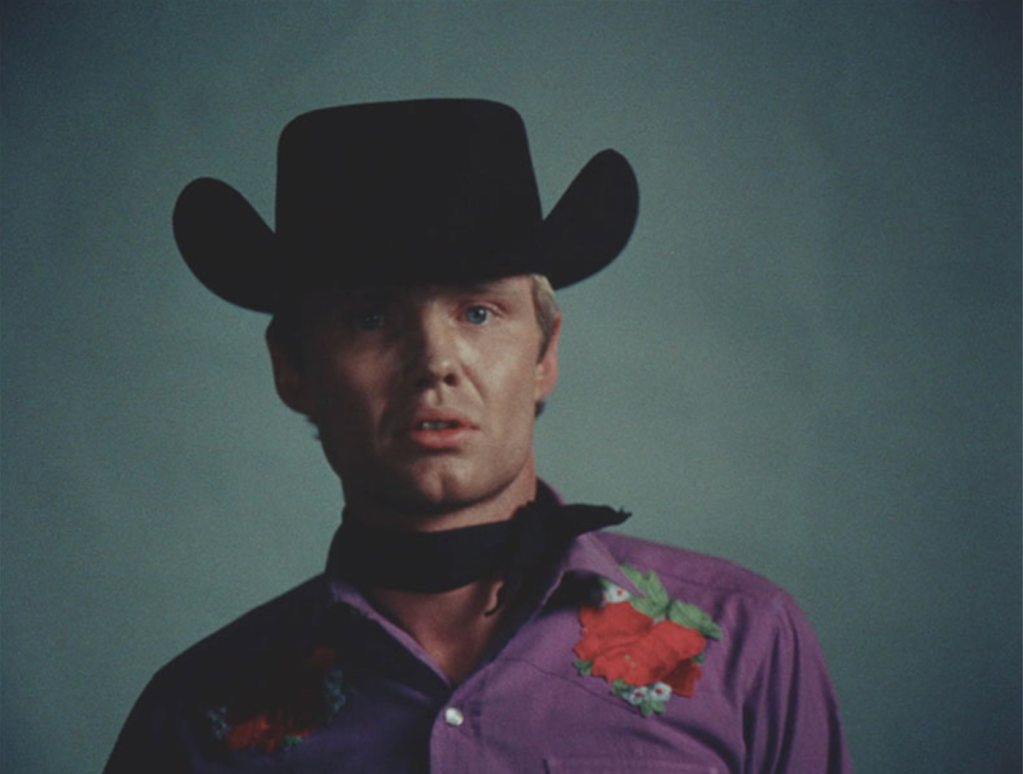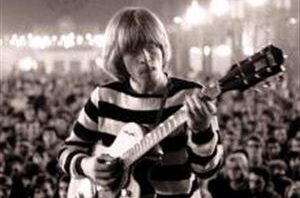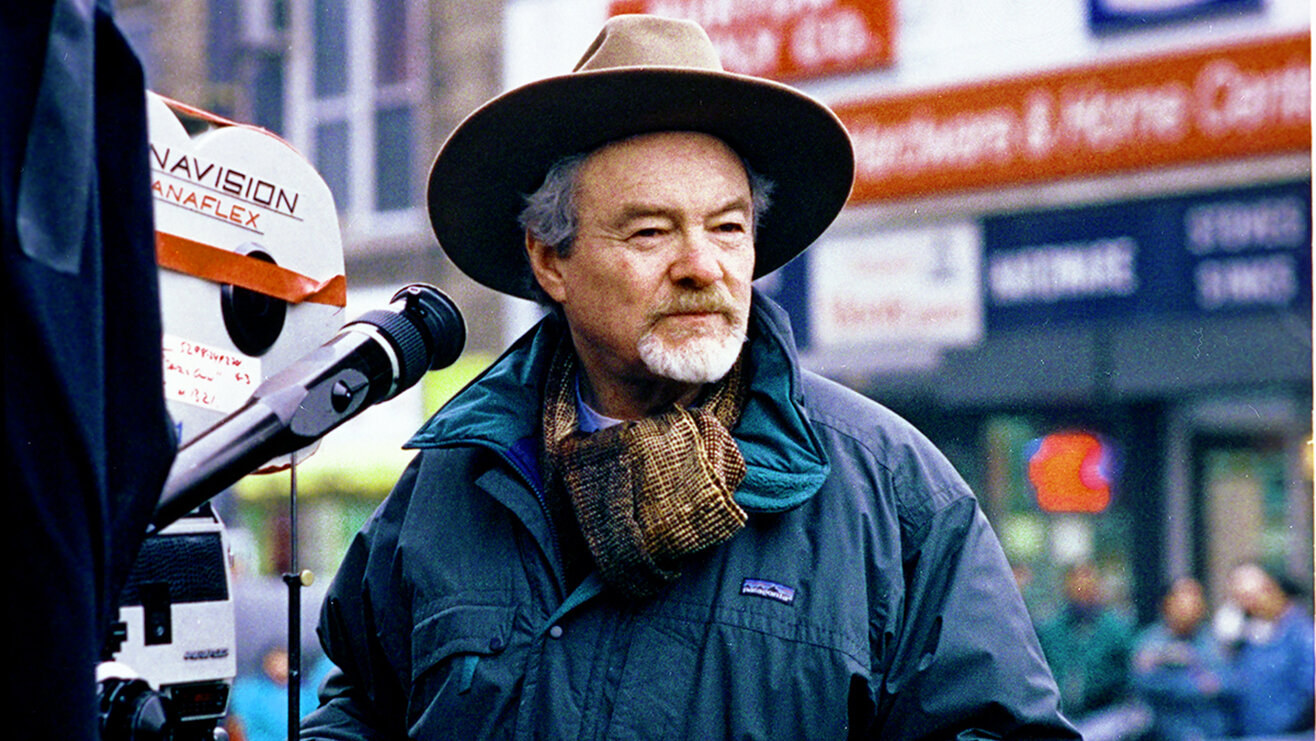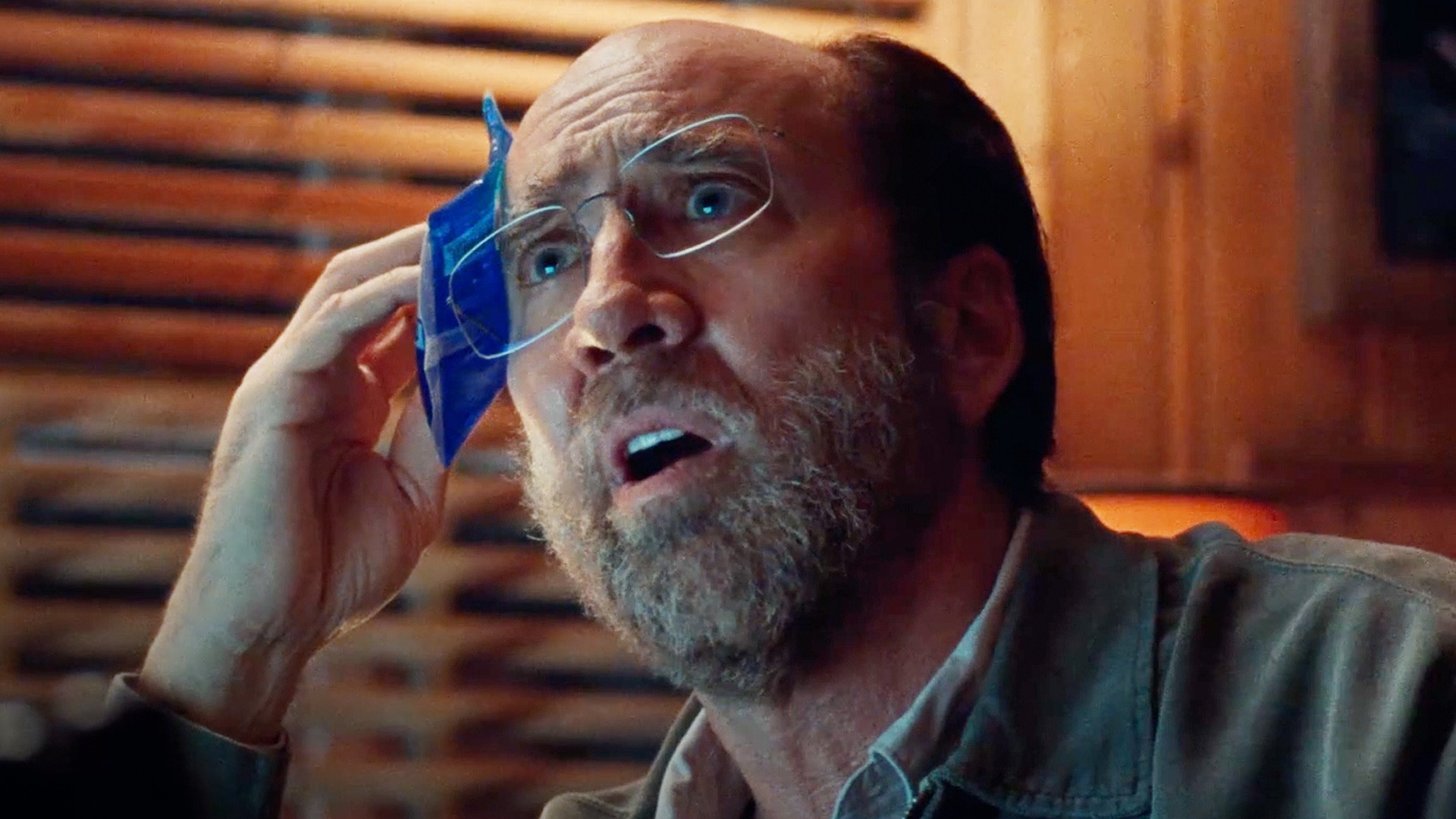
Photo caption: John le Carré in THE PIGEON TUNNEL. Courtesy of AppleTV.
The espionage novelist John le Carré was one of our greatest storytellers over the past sixty years, and, in The Pigeon Tunnel, the great documentarian Errol Morris cajoles le Carré (real name David Cromwell) to tell his own life story – and what a story it is.
I love the twists and turns in le Carré’s stories, which are set in the world which le Carré himself experienced in his youth as a Cold War British spy. But the underlying theme of le Carré’s work is that his characters are engaged in the highest stakes when it really doesn’t matter who wins;. The comic strip character Pogo wisely told us: We have met the enemy and he is us. The spymasters are incented by their own bureaucratic imperatives and the gamesmanship itself, not by righteousness or utility. His credo seems to be, rage against the machine, with futility.
Indeed, the title of the film stems from a most unsettling and revelatory image from the young le Carré’s trip with his father to Monaco – a grim analogy about the hopeless position of those who are pawns in the games of others.
What formed the cynical rage behind the cultured and ever so pleasant le Carré? As Morris probes le Carré’s childhood, we learn of his father, a sociopath and career con artist, a man so psychotically selfish that his mother abandoned her sons as the only way to escape their father.
Le Carré also explains the impact on him of the British traitor Kim Philby, the pivotal moment of his time in British espionage, which cemented Le Carrie’s own fascination with betrayal.
It is important for le Carré to take the measure of Morris as interviewer/interrogator. It is so interesting that le Carré/Cromwell’s storytelling (the means? the depth? the very content?) depends on whom he is engaged with.
Erroll Morris has created some of the best ever American documentary films, including Gates of Heaven and The Thin Blue Line. He is the master of the interview doc, where he uses a gizmo to photograph his subjects while they maintain direct eye contact with him; he has employed the technique to let Robert McNamara (The Fog of War) and Donald Rumsfeld (The Unknown Known) reveal more of themselves than they intended and to introduce us to the woman who kidnapped a Mormon missionary as a sex slave and later cloned her pet dogs (Tabloid) and the designer of execution techniques who denied the Holocaust (Mr. Death: The Rise and Fall of Fred A Leuchter, Jr.).
Many le Carré novels and stories have been made into excellent films, which are available to stream, including
Photo caption: Lily Gladstone, and Leonardo DiCaprio in KILLERS OF THE FLOWER MOON. Courtesy of AppleTV.
Martin Scorsese’s three-and-a-half-hour Killers of the Flower Moon is an absorbing epic of betrayal, betrayal on many levels.
In the 1920s, the Osage people, having been cast into the apparently worthless dry prairie of northern Oklahoma, have the good fortune to discover oil on their land. Suddenly, tribe members become instant, Pierce Arrow-driving oil millionaires. It doesn’t take long for tribe members to start dying mysterious deaths, with their oil rights passing to local Whites. Despite the entreaties of the Osage, local and state law enforcement is, at best, indifferent, and the bodies pile up.
This a true story that was essentially little known before a 2017 bestseller by David Grann. Osage country in the 1920s is an unfamiliar setting for us, the audience. Scorsese takes the time to bring this society alive for us. Bejewelled Native Americans are consuming luxuries while White men scurry around in menial jobs and hucksterish scams. Lazy nogoodniks are looking for gold-digger marriages to rich Osage women. We’re not that far along from an Old West of saloons, gunfights and Indian Wars, and, despite the new fangled automobiles, there are plenty of working cowboys.
A recent WW I vet, Ernest Burkhart (Leonardo DiCaprio) arrives with few prospects. His uncle William King Hale (Robert De Niro) is an established bigshot, and takes Ernest under his wing. The uncle, who likes to be called King, is a major cattle rancher with a unique and longstanding relationship with the Osage, even speaking the Osage language and having an Osage drinking buddy. King enjoys being a Big Fish in a Little Pond, and is a very wily Big Fish.
Ernest on the other hand, is not at all smart, but he’s amiable and ambitious, and he’s lucky enough to meet Mollie (Lily Gladstone), an Osage woman, and marry up.
Mollie is very smart, a keen and clear-eyed observer of human behavior. She is strong willed and knows what she wants. She only has two vulnerabilities – her diabetes and a (temporary) inability to imagine the depth of someone’s worthlessness.
Gladstone’s performance is especially brilliant as she sizes up Ernest. Mollie is under no illusions about Ernest’s qualities, and she knows that he is attracted to her money. But he’s more good-hearted and less lazy than the other available White men, and he’s much better looking. She knows what she wants, and she knows what she’s getting. Near the end of the film, Mollie asks Ernest a question, and, upon his answer, Gladstone’s eyes silently sum up the entire story, with all its themes. It’s a superb, highly nuanced performance and certainly award-worthy.
DiCaprio ably portrays Ernest Burkhart, a protagonist who is a spineless dimwit. The centrality of Killers of the Flower Moon becomes the story of the weak-willed Ernest, pulled between his much smarter and strong-willed uncle and wife.
Robert DeNiro and Leonardo DiCaprio in KILLERS OF THE FLOWER MOON. Courtesy of AppleTV.
The story starts as a whodunit, but then it’s revealed who is responsible, and we are immersed into the portraits of the three main characters, with the story is framed against the greater themes. One of those themes is the racism that devalues the lives and welfare of Native Americans, and the even more universal human history of the powerful unapologetically taking from the less strong. And then there’s the exploration of trust – just whom can you trust and to what degree?
Heeding the plight of the Osage, the federal government finally dispatches an FBI team, headed by the pleasant but implacable former Texas Ranger Tom White (an excellent Jesse Plemons). The agency is so young that it isn’t yet known as the “FBI” but as the “Bureau of Investigation”. Solving the Osage Murders was an important early benchmark in FBI history (which is emphasized in Grann’s book but not explicit in the movie).
In this case, the villain is a sociopath who can hide in plain sight with audacity, and who recognizes, and is able to leverage, the racism in the environment. Tom White, however, is immune to bullshit, and hones in on the crimes, regardless of who the victims may be. And the villain’s soft underbelly is his reliance on some very dumb henchmen.
Again, this story really happened, and the characters played by De Niro, DiCaprio, Gladstone and Plemmons are actual historical figures. Another writer has noted that’s it’s interesting that, although this is a serial killer movie, Scorsese chose not to focus on either the murderous mastermind nor on the detective trying to corner him. Indeed, I’ve also read that DiCaprio was originally slated for the FBI role, but advocated to make the role of Ernest central enough for him to play.
The cast is impossibly rich, including Oscar winners and nominees De Niro, DiCaprio, Plemmons, John Lithgow, and Brendan Fraser, plus Tantoo Cardinal, who SHOULD have been nominated for Dancing with Wolves, among other work. Scorsese gets memorable performances from Cara Jade Myers, Louis Cancelmi (Billions, The Eyes of Tammy Faye) and Ty Mitchell. One of the most vivid performance is from Tommy Schultz, a guy with no previous screen credits.
One of my favorite musicians, Jason Isbell, plays a key character, and he’s excellent. There’s one scene where Isbell’s and DiCaprio’s characters are isolated in a parlor and have a verbal confrontation. Although DiCaprio’s character has the best lines, it’s an acting standoff, and you really can’t tell that one of these guys is a movie star and the other is just learning the business. Very impressive.
Speaking of musicians, this was the last time Robbie Robertson composed music for a film, and his score is magnificent. Robertson, of course, had been a close friend and collaborator of Scorsese’s since The Last Waltz (and was also a Canadian of Cayuga and Mohawk heritage). Blues harmonica great Charlie Musselwhite and rock star Jack White also have acting cameos.
I rarely mention a movie’s sound mixing, but the extraordinary sound mix when Ernest, in a panic, buttonholes King at a boisterous town street party, strongly contributes to the storytelling.
What of the three hour, twenty-six minute running time? I agree with the critical consensus that Killers is long, but never slow. After all, it is an epic, even several epics braided together.
Killers of the Flower Moon is an excellent movie, and will receive lots of recognition. I’m sure that it will be nominated for a Best Picture Academy Award (although it’s not nearly as good as Oppenheimer IMO) and will garner Oscar nominations for Lily Gladstone and Robbie Robertson, who will be favorites in their categories. Other Oscar nods are likely.
Killers of the Flower Moon is in theaters, and will stream on AppleTV sometime after December 4, perhaps as late as January.
Photo caption: Benicio del Toro in REPTILE. Courtesy of Netflix.
I really enjoyed the Netflix neo-noir mystery Reptile, starring Benicio del Toro as Tom, a veteran Philadelphia detective who finds himself the new man on the police force of an affluent town in Maine. Tom and his wife Judy (Alicia Silverstone) have left the big city because Tom’s partner was sent up for corruption, and now the other Philly cops don’t trust Tom. They landed in Maine because Judy’s uncle (Eric Bogosian) is a captain on the local force. The girlfriend of a shady Realtor (Justin Timberlake) is murdered, and the local cops are happy that they can put a seasoned pro like Tom on the case.
The boyfriend is a suspect, of course, as is the victim’s tweaked-out ex-husband (whom she’s been seing on the side)(Karl Glusman). A stringy-haired local psycho (Michael Pitt – where’s he been since I Origins and Seven Psychopaths?) pops up, but this quasi-Manson just might be too obvious.
DNA evidence comes in, there’s a shootout, and it looks like the case is solved. Tom is recognized as a literal hero, but he has a lingering doubt and keeps poking around, which is when the police procedural become a paranoid thriller – all the way to its bloody, and deeply satisfying, finale.
Reptile is a showcase for the sublime performance by Benicio del Toro. Using del Toro’s hulking physicality, Tom moves imposingly but silently. Oozing street cred, he keeps his own counsel. Tom busts balls with the other cops, but you can tell that he’s always holding something back. A very smart guy, Tom spots things right away, but mulls them over before sharing them with others. Del Toro is an Oscar-winning actor with a substantial body of work, but this is his most vivid work in years. Even critics who don’t like the movie Reptile have raved about del Toro’s performance. (Here’s some del Toro trivia – he had the good fortune to break in with a part in a James Bond film; unfortunately, it was the one starring Timothy Dalton.)
Alicia Silverstone is perfect as the spunky cop’s wife Judy – a Howard Hawkes-type wife if there ever was one. One of the most agreeable aspects of Reptile is the trust and partnership between Tom and Judy. She’s got real balls, and he wouldn’t confide in her if she didn’t. If Reptile had been made in the classic Hollywood era, Judy would have ben played by Ella Raines, Katharine Hepburn or Lauren Bacall.
Ato Essandoh is very good as Tom’s less experienced partner. Frances Fisher is remarkable as the frosty matriarch of the shady real estate business, and the reason that the Timberlake character never grew his own spine.
Timberlake and Bogosian are very good. So are Domenick Lombardozzi and Mike Pniewski as police commanders.
Reptile was directed by Grant Singer, who has chiefly directed music videos before; Singer co-wrote the screenplay with del Toro and Benjamin Brewer.
The critical reception for Reptile has been mixed. I really don’t understand criticism of the pacing, the plot twists and of Timberlake’s performance (his character is SUPPOSED to be weak and slimy). I see a lot of neo-noir crime mysteries, and, trust me, this is a good one.
Photo caption: Eve Hewson and Orén Kinlan in FLORA AND SON. Courtesy of AppleTV.
In John Carney’s delightful Flora and Son, Flora (Eve Hewson) is a boisterous, messy and mouthy Dubliner with a bad attitude. Her life sucks, and she knows exactly why – she dropped out of school at 17 to have a baby. As an unskilled single mom, she is barely scraping by on babysitter gigs, and her motherhood status is scaring away potential boyfriends. And the baby has grown into Max (Orén Kinlan), a teenager with a tongue as sharp as his mom’s, and he’s smart and sensitive enough to appreciate his mom’s resentment of him. Max has been acting out, understandably, and already has a probation officer.
Flora dumpster-dives for a discarded guitar, intending it as a free and belated birthday gift for Max. He sees thru her thoughtlessness and rejects the gift. Flora, on a whim, decides to take guitar lessons from a guy on YouTube, chiefly because he is laid back and looks like a movie star. Jeff (Joseph Gordon-Levitt), an unsuccessful musician in Topanga Canyon, connects with Flora on Zoom and somehow unlocks music as a way to express herself.
Will Jeff become more than a fantasy figure to Flora. Will Max stay out of jail? Most importantly, will Flora redeem herself as a mother?
Flora is a force of nature, and Eve Hewson’s performance carries the film. It takes a lot for an audience to root for an unashamedly bad mom, but Hewson wins us over with the depth of her passions, both misplaced and well-placed ones.
Gordon-Levitt is excellent as always and gets to show off his impressive musical chops.
Flora and Son’s themes of songwriting and romance remind us of Carney’s 2007 film Once, starring Glen Hansard and Markéta Irglová, who won the Best Song Oscar for their Falling Slowly. Once is even a better film than Flora and Son and has better music; it can be streamed from Amazon, AppleTV, Vudu and YouTube.
But Flora and Son itself is good-hearted and entertaining. Flora and Son is playing some theaters and is streaming on AppleTV.
Photo caption: Anaita Wali Zada in FREMONT. Courtesy of Music Box Films.
Good news – one of the year’s best and most overlooked movies is now valuable to watch at home. Fremont is the absorbing and frequently droll portrait of a woman, having landed in a new place, who has paused her life and needs to find her path to self-discovery. Donya (Anaita Wali Zada), having worked as a translator for the US military in her native Afghanistan, has fled Kabul for her life. She is living in a stucco-box apartment in the Bay Area suburb of Fremont and is working for a San Francisco manufacturer of, absurdly, Chinese fortune cookies.
Her life is lonely and boring, and her social life is anything but what one would expect for an attractive Bay Area. single woman in her mid-20s. What’s holding her back? It’s not fear, shyness, the bounds of traditional Afghan culture or PTSD from the war. She could have landed an entry level job in Fremont and saved herself the 45-minute commute, but she has intentionally left the insular enclave of Afghan refugees for a job that exposes her to folks with other backgrounds. That clues us in to Donya’s curiosity and fearlessness.
Donya is quiet without being shy, engaging in conversations with her benevolently goofy boss, her know-it-all co-worker and her oddball psychiatrist, and indulging their need to explain things to her. It’s clear to us that she knows more than all of them except for the old owner of an Afghan café, whose life experience tells him what she needs to do with her life.
Donya is the only member of her family in the US precisely because she is the only one whose life has been expressly threatened by the Taliban. That presents her with a form of survivor’s guilt that she needs to confront.
Donya needs to pivot, and the spark is a fortune in a fortune cookie – a fortune written by Donya herself.
Fremont and the character of Donya are the creations of Iranian-born and Belgium-based director and co-writer Babak Jalali, a master of deadpan, absurdist humor. (I love his even more droll Radio Dreams, also set in a Bay Area immigrant community.) After all, what is more disposable or trivial than the fortune in a fortune cookie? I especially enjoyed the scenes where Donya listens implacably as her shrink earnestly (and, he thinks, therapeutically) reads her passages from Jack London’s White Fang.
Donya borrows her friend’s beater of a car for a quest to, of all places, Bakersfield. At a remote gas station along the way, she meets Daniel (Jeremy Allen White of The Bear), a kind and lonely mechanic, and very, tentatively and more than a bit awkwardly, a connection forms.
Jalali captures and distills the profound attraction between mutual soul mates. Donya’s and Daniel’s encounters are so spare, you wonder how much of our courtship rituals are superfluous.
In her screen debut, Anaita Wali Zada effectively inhabits the fresh and original character of Donya, whose reserve masks her strong will. Essentially all of the cast (including his leading lady) are first-time actors, except for Jeremy Allen White and Gregg Turkington, who plays the shrink. You gotta wonder what Jalali could do with trained actors.
Fremont is now streaming on Amazon and Vudu. The more I think about Fremont, the more I like it.
Photo caption: Ashley Judd and Michael Shannon in BUG. Courtesy of Lionsgate.
It’s William Friedkin Week at The Movie Gourmet, and we’re looking at three of the director’s more overlooked films. We’ve examined the neo-noir thriller To Live and to Die in L.A., and today’s choice is the psychological horror movie Bug. We could also describe Bug as a psychotic horror movie.
Ashley Judd plays Agnes, a woman who seems well-balanced but has been made vulnerable by circumstance. She has been shattered by the most profound family tragedy. She’s justifiably terrified of her monstrous estranged husband Jerry (Harry Connick Jr.), and she’s unsettled by being on the run from him and in an unfamiliar environment; there are signs that Jerry is closing in on finding her. She’s found herself living so far from a regular, stable life that’s she’s become profoundly alienated.
Ashley Judd and Lynn Collins in BUG. Courtesy of Lionsgate.
Agnes is street-wise and, in normal times, she could handle herself, but she’s just being overwhelmed by too much shit. She needs some comfort and acceptance, some of which she finds in a new pal R.C. (Lynn Collins), although R.C. enables Agnes’ tendency to get too wasted.
But Agnes could also use some male companionship and physical security and protection. She meets Peter, who, in contrast with Jerry, is civil, kind and not abusive. He’s socially awkward, but he seems really safe and non-threatening.
As soon as they bond and start sharing the same motel room, Peter believes that he has found, first one aphid, and then a slew of them. More alarmingly, Peter is attaching the bugs to a conspiracy theory. Is Peter paranoid, delusional, hallucinating, or is it really a conspiracy? Friedkin and the Tracy Letts screenplay start to play with movie genre conventions.
Agnes is in a place where she is inclined to join Team Peter, and she starts seeing thing Peter’s way. Unfortunately, the two become ever more unhinged, begin deploying vast quantities of aluminum foil and, finally, go to EXTREME LENGTHS.
Ashley Judd and Michael Shannon in BUG. Courtesy of Lionsgate.
Friedkin’s final shot messes with us one last time. Memorably.
What happens in this story is a real thing, called folie à deux, shared psychosis or shared delusional disorder. The person whose delusions become shared by the second person is called the inducer, which gives a new, chilling meaning to the phrase “he drove her crazy“.
Michael Shannon is an actor with an uncommon gift for projecting creepiness. He shot Bug just a year before he broke through in Jeff Nichols’ brilliant indie Shotgun Stories and five years before Nichols’ Take Shelter. Writing about Take Shelter, I described Shannon’s character’s behavior “which starts out quirky, becomes troublesome and spirals down to GET ME OUT OF HERE.”
Ashley Judd in BUG. Courtesy of Lionsgate.
But Bug really depends on Ashley Judd’s performance as Agnes. After all, we can accept that Shannon’s Peter is just balls-out wacko, but Judd has to make us believe that an absolutely sane person can become completely insane on 48 hours. She’s dazzling here. I also recommend Mick LaSalle’s fine review of Bug, focusing on Ashley Judd’s performance
Bug can be streamed from Amazon, AppleTV, Vudu, YouTube.
Photo caption: William L. Petersen in TO LIVE AND TO DIE IN L.A. Courtesy of Kino Lorber.
It’s William Friedkin Week at The Movie Gourmet, and we’re looking at three of the director’s more overlooked films. First up is his 1985 neo-noir To Live and Die in L.A., now a cult fave of noir fans. It’s a study of amoral obsession without any iota of redemption. Along with directing, Friedkin co-wrote the screenplay.
The secret service agent Chance (William L. Petersen) is consumed with tracking down the counterfeiter Masters (Willem Dafoe). Both are very dangerous men, and it’s pretty clear that no more than one of them is going to survive. Chance’s new partner Vuckovich (John Pankow) has to go along for the ride – and it’s a doozy.
Friedkin begins To Live and Die in L.A. with a thrilling set piece, involving terrorism in a highrise, that introduces Chance as a nervy stud. Then we meet Masters, and learn that he is anything but an ordinary criminal. Just when we have caught our breath, Friedkin toys with us in a scene that establishes that Chance is a reckless adrenaline freak.
The stage is now set for a manhunt, and Chance unleashes all his ruthlessness. Poor Vuckovich stands in for the audience as he and we are repeatedly shocked by Chance’s amorality, even corruption.
The car chase in Friedkin’s The French Connection remains the gold standard, but the one in To Live and Die in L.A. is also extraordinary. This one careens through LA’s freeways (including wrong way on the freeway), industrial areas and the cement channel of the Los Angeles River. The LA River has since been the site of countless movie chases, but it first was prominently featured in Point Blank and To Live and Die in L.A. may have been the river’s first car chase in a mainstream movie. All of the action is photographed by master cinematographer Robby Mueller.
Of course, along with the thrills of the chase and Chance’s astonishing behavior, we also get a counterfeiter procedural as Masters combines art, craft and greed as he prints his own faux money.
Willem Dafoe in TO LIVE AND TO DIE IN L.A. Courtesy of Kino Lorber.
This was Willem Dafoe’s first major film role, just before Platoon and The Last Temptation of Christ. Dafoe, in an understated performance, oozes menace as the smooth, but very lethal, Masters.
William Petersen inhabits Chance with none of the gruff lovability he would show on CSI. It’s a balls-to-the-wall performance. Interestingly, Petersen didn’t get high profile jobs for the next fifteen years until CSI.
Dean Stockwell is perfect as a shady lawyer. Debra Feuer, John Tuturro and the renegade filmmaker Robert Downey, Sr., also appear in supporting roles.
William L. Petersen and John Pankow in TO LIVE AND TO DIE IN L.A. Courtesy of Kino Lorber.
The ending is so dark that the studio insisted that Friedkin shoot an alternative ending, in which a main character improbably survives. Fortunately, that alternative ending was not affixed to the final cut of the film. You can view the alternative ending on YouTube, with the comments of Friedkin, Petersen and Pankow.
To Live and to Die in L.A. is available on Blu-Ray from Shout! Factory and in 4K from Kino Lorber. I’ll let you know when you can stream it or if it shows up again on TV.
Photo caption: Joel Edgerton in MASTER GARDENER. Courtesy of Magnolia Pictures.
Paul Schrader’s deeply engrossing Master Gardener came out in late May, when my life was rich and complicated, so I’m just getting around to writing about it. Better late than never, because it’s a worthwhile watch.
Joel Edgerton plays Narvel, the titular manager of a grand estate’s extraordinary formal garden. Norma (Sigourney Weaver), the proprietor of the estate, has the means to keep Narval’s operation well-resourced and well-staffed. Narvel combines an encyclopedic knowledge of plants with a meticulous attention to detail. His team of year-round assistants respect him and buy into his leadership. It’s well-ordered, above all, and then Norma asks a “favor” of Narvel that he cannot refuse – to take on her troubled grandniece as an intern.
The grandniece, Maya (Quintessa Swindell), is a puddle of Gen X attitude, but she’s smart enough to know that she needs to put in the time, if not commit fully. Interestingly, Norma hasn’t had a conversation with Maya since she’s grown into adulthood, and puts off their first conversation until well into the internship. Norma is judgy, and didn’t approve of Maya’s late mother. Norma also relishes her power over Maya, Narvel and everyone- and chooses the time and place of each social engagement.
But, back to Narvel – why is he so exacting in his standards, work ethic and expectations of his team? Is he a martinet, a petty tyrant of flowers and mulch? Does he lack perspective, like The Caine Mutiny’s Captain Queeg consumed by the missing strawberries?
It turns out that Narvel has a past.. A shocking past. And running an estate’s formal garden is the last place you would have expected him to be. There were consequences for the bad decisions in Narvel’s previous life, and those consequences are irreversible. Narvel, far more than others, understands how circumstances and events can change lives forever. That’s why he faces every situation so deliberately. He is anything but careless.
Maya, however, has lived a careless life, and her past threatens all of them. In his bad past, Narvel developed skills that equip him face violence now. And now, facing Maya’s problems, he finds a long-denied chance for redemption.
Quintessa Swindell and Joel Edgerton in MASTER GARDENER. Courtesy of Magnolia Pictures.
The cast is excellent. Edgerton is prefect as a contained man whose regrets power his discipline and determination – and harnesses his determination so as not to lose a second chance. Sigourney Weaver also wonderfully nails the emotional remoteness of Norma, who is also very contained – until she lapses into a Queen of Hearts caprice. Quintessa Swindell, who I hadn’t seen before, is charismatic, and takes her Maya from an apathetic insouciance to someone who has learned, for the first time, what being fully committed really is.
Master Gardener is a Paul Schrader film. Schrader wrote Taxi Driver and Raging Bull., adapted The Last Temptation of Christ, wrote and directed American Gigolo and Affliction. All very good. All very dark.
Master Gardener is the third movie in Schrader’s late-career, self-described ‘Man In A Room’ trilogy, following First Reformed and The Card Counter. I would name it the “Man with a Code Seeks Redemption” trilogy. When I wrote about The Card Counter, my subtitle was “a loner, his code and his past” – and that would work for Master Gardener, too.
Master Gardener is now available to stream on Amazon, AppleTV, Vudu, YouTube and redbox. As readers have come to expect, I’ve included the trailer below, but I recommend that you don’t watch it because of spoilers; the story is much more impactful when the plot elements unspool as Schrader intended.
Raya Burstein and Uri Burstein in CHARM CIRCLE. Photo courtesy of Cinequest.
Inthe superbly structured documentary Charm Circle, writer-director Nira Burstein exquisitely unspools the story of her own bizarre family. At first, we meet Burstein’s father, a sour character who inexplicably is about to lose his rented house, which has become unkempt, even filthy. He is mean to Burstein’s apparently sweet and extraordinarily passive mother, and the scene just seems unpleasant.
But then, Nira Burstein brings out twenty-year-old videos that show her dad as witty, talented and functional. We learn a key fact about the mom, and then about each of the director’s two sisters.
Some of the publicity about Charm Circle describes the family as eccentric, but only one daughter is a little odd – three family members are clinically diagnosable. Charm Circle is a cautionary story of untreated mental illness and the consequences of failing to reach out for help.
This is Nira Burstein’s first feature, and she has two things going for her: unlimited access to the subjects and a remarkable gift for storytelling. Charm Circle works so well because of how Burstein sequences the rollout of each family member’s story.
The Nashville Film Festival returns in a few days, and I attended a screening of Charm Circle, with a Nira Burstein Q&A at NashFilm two years ago. It went on to play both the San Francisco Jewish Film Festival and Cinequest, and can now be streamed on the Criterion Channel.
Photo caption: Kang-Ho Song and Kim Sang-kyung in MEMORIES OF MURDER, Courtesy of NEON.
I’ve just completed a major reworking of my list of Overlooked neo-noir, and added twelve movies.
The best of these is probably Memories of Murder, a true crime story from Joon-ho Bong, Oscar-winning director of Parasite and Broker. It just might be the best serial killer movie ever, and the haunting ending is unforgettable. A bonus: there was a breakthrough in the real-life case 16 years after the movie, but don’t read about it until you’ve screened the film.
Another Oscar-winning director (and a great raconteur), William Friedkin, had huge hits with The French Connection and The Exorcist, but his To Live and Die in L.A. bombed. Today, it’s become a neo-noir cult favorite. It stars William Petersen without any of the gruff lovability he became known for years later in CSI. And it was the first showcase for the creepy charisma of Willem Dafoe.
Some of these unexpectedly stretch our notion of neo-noir: All Night Long is a Shakespearean play set in the London jazz world of the early 60’s, A Colt Is My Passport is a Japanese yakuza movie that is essentially a spaghetti western and A Dark, Dark Man is a 2019 film from Kazakhstan.