
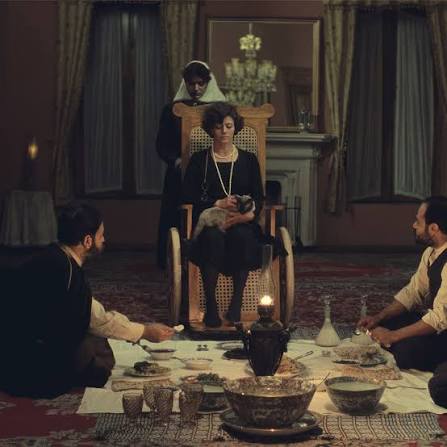
The Iranian thriller Chess of the Wind is a newly rediscovered lost film, a masterpiece of craven family intrigue, with a singular look and feel.
Chess of the Wind was screened at the Tehran Film Festival in 1976 and immediately banned for objectionable content. Things got worse with the Iranian Revolution in 1979, and the negative ad all prints were supposed to have been destroyed. Decades passed, and,i n 2014, the director’s son was browsing in a Tehran junk shop and miraculously happened upon film cans that contained the negative Martin Scorsese’s The Film Foundation’s World Cinema Project and Cineteca di Bologna worked to restore the film, which was released in 4K in 2020.
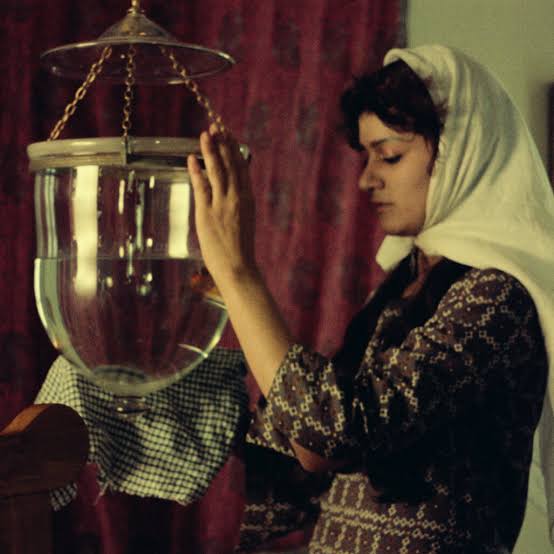
Chess of the Wind is all about a wealthy family’s mansion, where almost all the action takes place. The family matriarch having just died, leaving her willful, forty-something daughter Aghdas (Fakhri Khorvash) as the nominal head of the family. Unmarried and childless, Agdas’ health confines her to a wheelchair, dependent on her young maid Kanizak (Shohreh Aghdashloo).
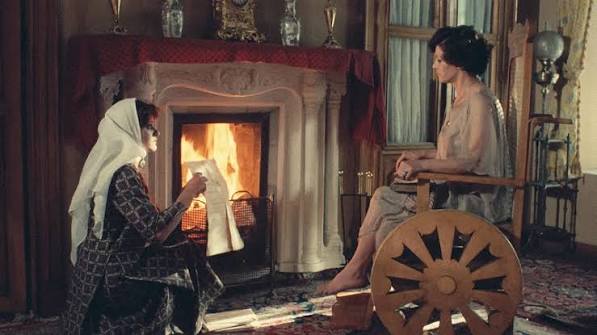
Aghdas assumes that she now owns her family’s ancestral home, but her mother’s second husband Hadji Amoo (Mohamad Ali Keshavarz) claims the inheritance for himself ans prepared to bully Aghdas and Kanizak out on the street. Hadji is despicable, a thuggish deadbeat who treats everyone badly, including his own adult nephews Ramazan (Akbar Zan Janpour) and Shaman (Shahram Golchin). Ramazan has his own designs on marrying Aghdas for her property, and Kanizak allies herself with Shaman.
Hadji, a horrible person, is now a danger to everyone, and his death would be universally convenient. Fortunately, the mansion’s decor features Ottoman antiques including a flail, a traditional Persian weapon, and an antique pistol. Hadji is indeed murdered, and the plan is for his body to be stashed in the cellar and dissolved in acid.
But Aghdas hears from the local authority, the police commissar, that Hadji, whom we know to be dead, has been recently seen in pubic. Aghdas becomes more unsettled when that report is echoed by some street musicians. The police commissar shows up with two of Hadji’s creditors, who are allowed to search for him. (A modern audience may not immediately grasp that the guys who bring back the commissar are creditors, who have been stiffed by Hadji.) As their search leads to the cellar, the plots hints of Clouzot’s Diabolique.
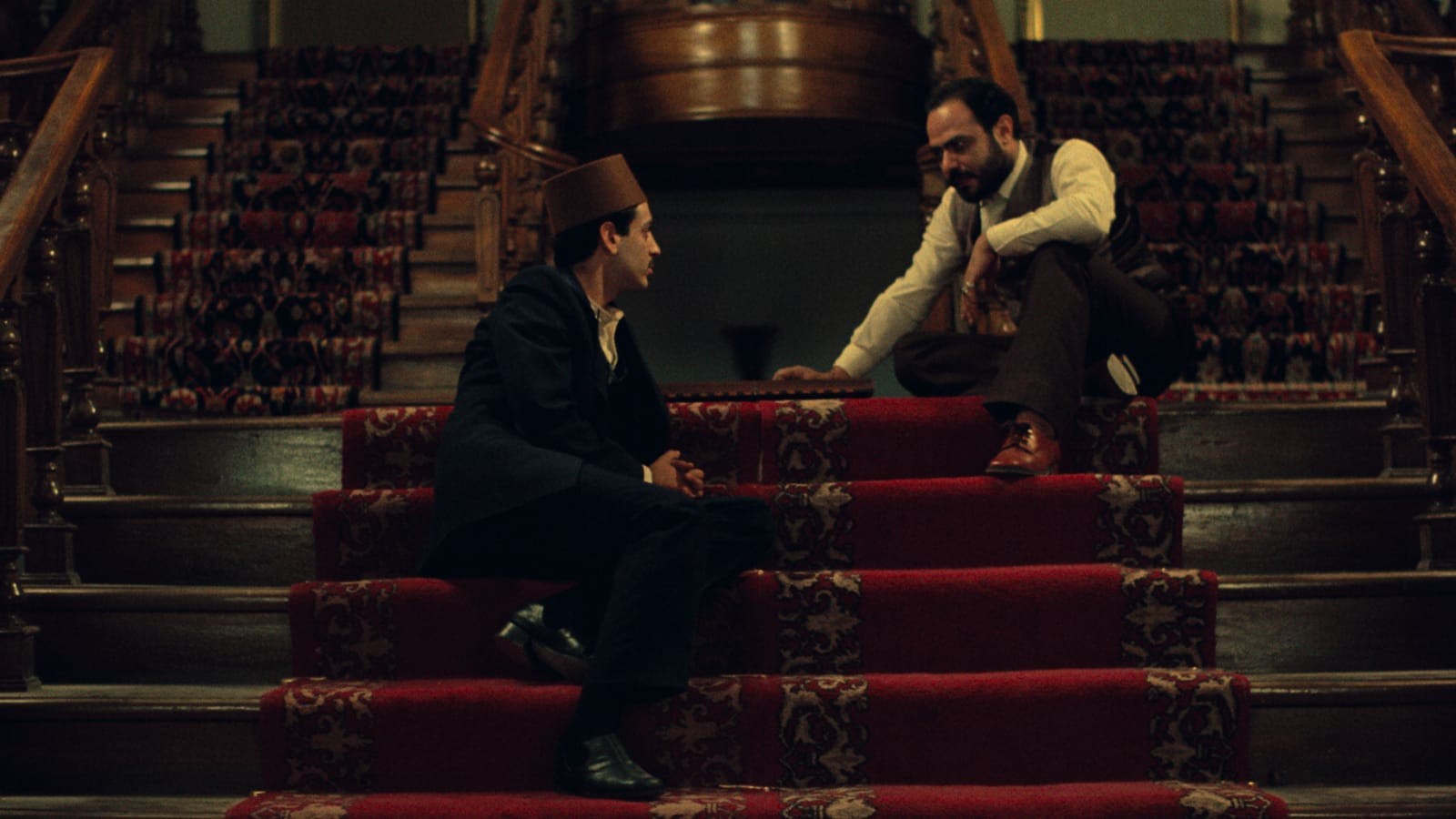
Chess of the Wind takes a cynical view of human nature, reminiscent of Claude Chabrol. Everyone acts out of the most venal self-interest. There is forgery, destruction of documents, murder and cover-up. Even the family physician and the police official may have their own scams going. The last twenty minutes is Shakespearean – every sinner gets his or her due.
It’s hard to imagine what offended the Iranian authorities the most – the immoral scheming, the female agency, or a startling moment of woman-on-woman intimacy.
The darkness of the story is mirrored by brooding music and a dark visual palette. The darkness of the house and its inhabitants is contrasted by a Greek Chorus of gossiping washerwomen outside in the bright light. Director Mohammad Reza Aslanisaid that the look of Chess of the Wind was inspired by the paintings of Vermeer and de La Tour.
It’s hard to fathom, but Chess of the Wind, with its astonishing originality and quality, was the first film directed and written by Mohammad Reza Aslani. Aslani was a poet, who made this film at age 33. He devoted his career to a literary magazine, and his only other feature film came 30 years later.
The performances are uniformly excellent, led by the internationally acclaimed Fakhri Khorvash, who plays the central character of Agdhas.
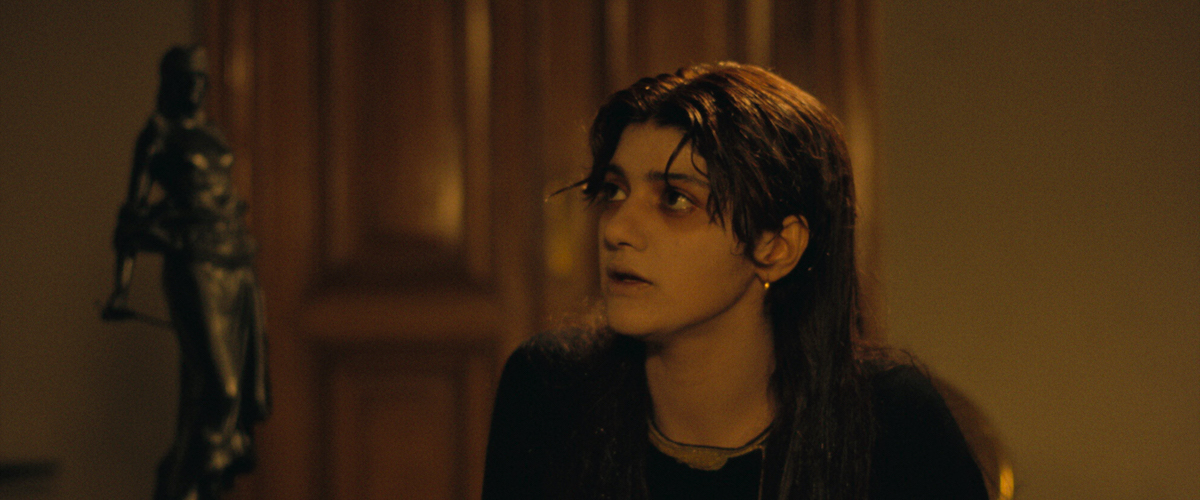
Chess of the Wind was debut film for actress Shohreh Aghdashloo, who plays the maid. She left Iran after the Revolution and built a career in Hollywood, amassing 91 screen credits. Aghdashloo was nominated for the Supporting Actress Oscar for her performance in House of Sand and Fog.
Chess of the Wind is now streaming on Criterion (included), Amazon and AppleTV. Here’s the trailer, courtesy of Film Forum.