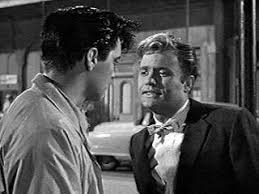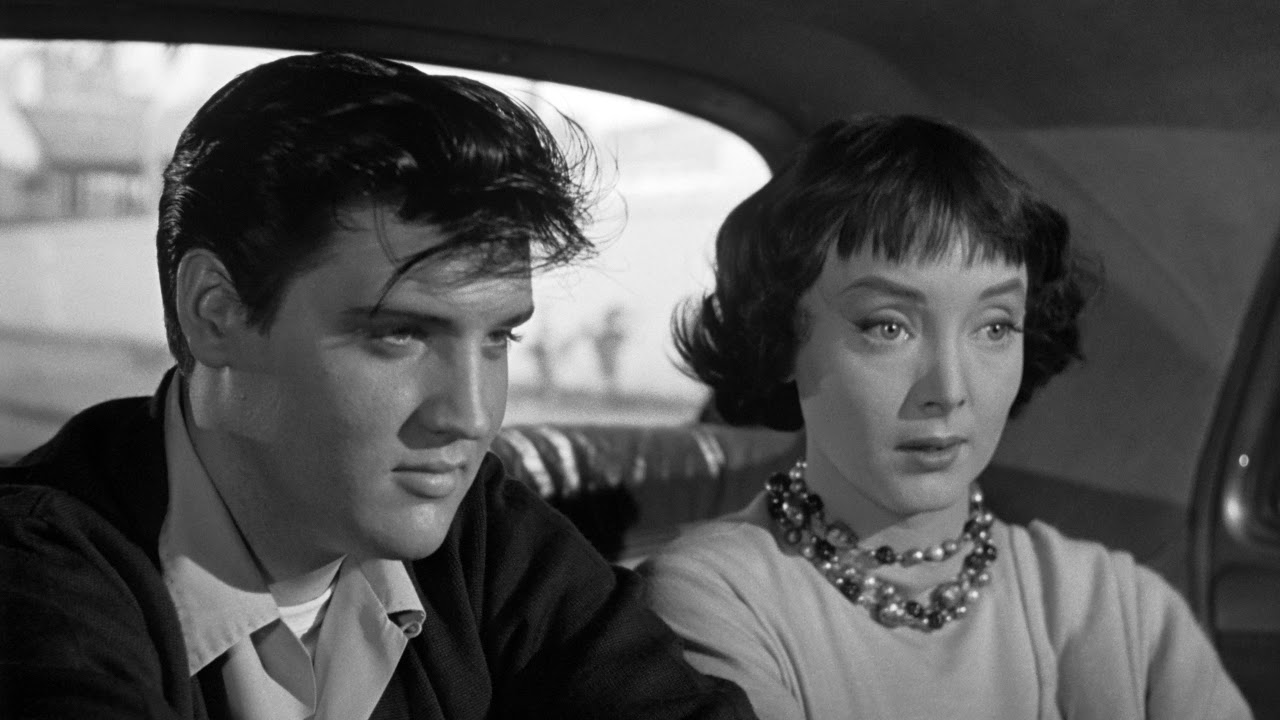
If you think that Elvis Presley never made a good movie, you haven’t seen the outstanding MIchael Curtiz crime drama King Creole (1958). Elvis plays Danny, an impoverished wannabe singer who becomes entangled in the New Orleans underworld when he attracts the romantic interest of a sultry Bad Girl (Carolyn Jones), whose boyfriend is the local gangster kingpin (Walter Matthau).
There’s a lot of story packed in King Creole:
- Will Danny survive his run-ins with Matthau’s menacing crime lord and with the street thug Shark (Vic Morrow)?
- Will Danny will choose Jones’ Bad Girl over Dolores Hart’s Good Girl?
- Can Danny repair the difficult relationship with his father (Dean Jagger)?
- Will Danny make it as a professional singer? (Okay – not much suspense in that one.).
King Creole was shot when Elvis had just turned 22. Having just gotten his draft notice; it was his last film before his military service. This was way, way before Elvis was known for karate kicks, spangles and massive belt buckles. At 22. has only his voice, looks, energy and magnetism – and that’s plenty.
This was Elvis’ favorite of his movie performances, and his charisma, deployed in a grown-up story, makes us wonder what might have been had he returned to well-written screenplays.
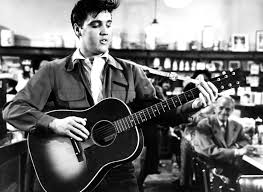
Of course, Elvis sings in the movie, which resulted in a pretty strong soundtrack album. The film opens with Elvis and Kitty White’s call-and-response duet of Crawfish. Then we hear Danny’s nightclub numbers, including Trouble, As Long As I Have You, King Creole and Hard Hearted Woman.
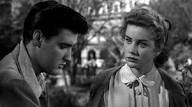
Jones, now best remembered for her campy Morticia in The Addams Family, had 44 previous screen credits, but only one as the female lead in a feature film. Besides future stars Matthau and Vic Morrow, the cast features past Oscar-winner Dean Jagger and the reliable noir stalwart Paul Stewart. Dolores Hart was the only Elvis co-star to become a nun in real life.
I got to see King Creole on the big screen at the 2026 Noir City in Oakland, and I featured it in my festival preview. At the screening, guest host Alan K. Rode explained that Elvis was fearful that rock and roll was just a fad, and that he would need to pivot his career. Aspiring to become the next James Dean, he signed with veteran producer Hal Wallis with the request that, after Presley’s Army service, Wallis would help get Elvis into the Actor’s Studio for training.
Until Rode’s introductory remarks, I didn’t know that most of the film was shot in Hollywood. Curtiz made the most of the nine filming days in New Orleans, resulting in a NOLA-drenched effect.
I first discovered King Creole by reading one of Sheila O’Malley’s essays in her blog The Sheila Variations, well before she became one of the film critics on Ebert.com. O’Malley is the best writer about King Creole, and along with Peter Guralnick and Adam Gopnik, among the very best writers on Elvis. Here’s a sample: King Creole (1958): The Dreamspace of New Orleans.
King Creole plays occasionally on Turner Classic Movies and can be streamed from Amazon, AppleTV, YouTube and Fandango.