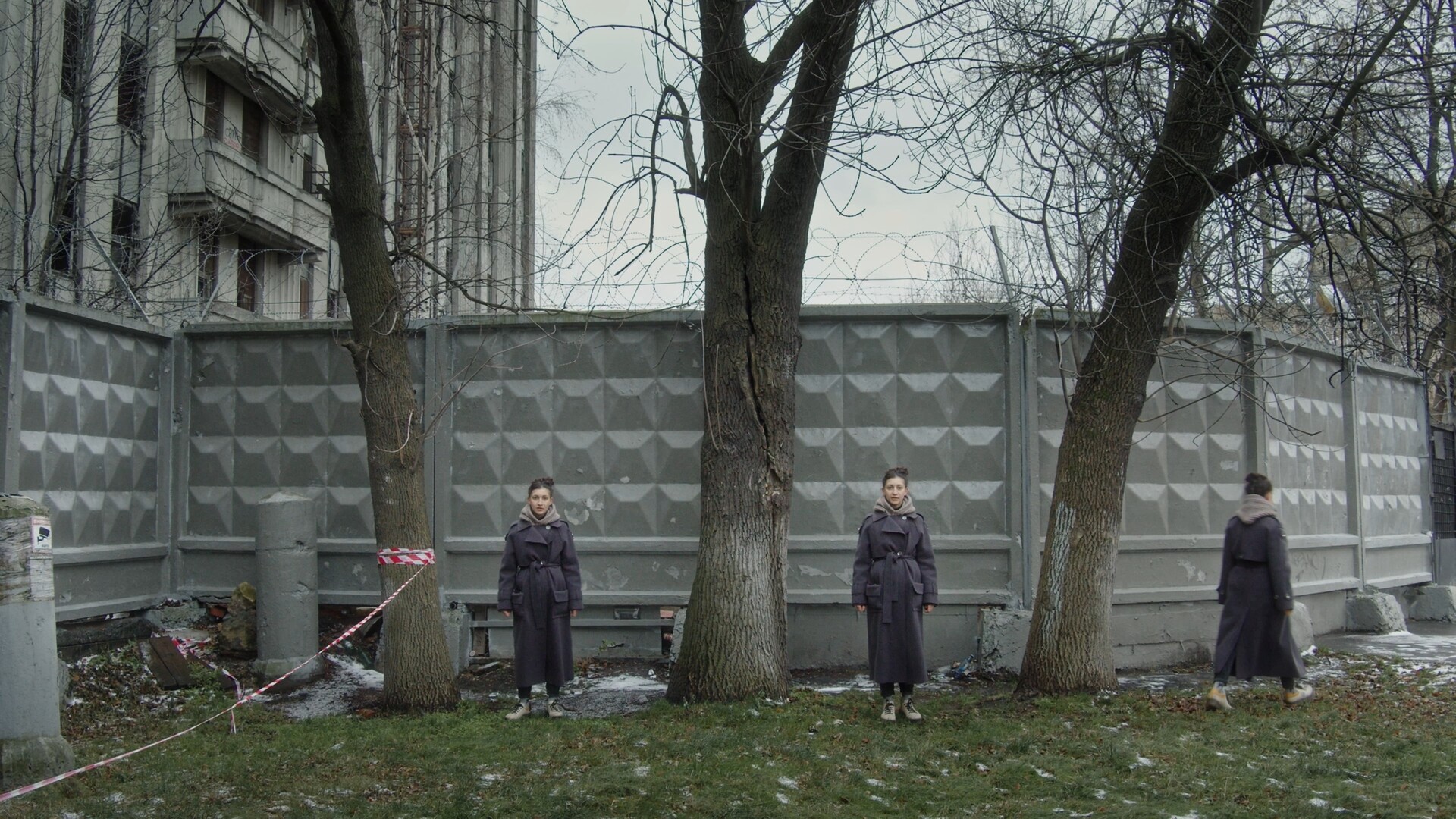
Yana Osman (right) in her TWIN FENCES. Courtesy of Slamdance.
In her quirky, and finally profound, documentary Twin Fences, writer-director Yana Osman starts us off with what seems like a a droll, absurdist film about a ridiculously obscure subject, a prefab concrete fence design replicated thru the USSR. Osman stands, hands down at her side, facing the camera, spouting random facts. It may be off-putting at first, but the approach grows to be intoxicating. When she finds talking heads who are actually experts on the fences, we wonder if we’re watching a parody of a talking head expert documentary. We even hear about a Soviet who returned from Chicago in the 1920s, inspired to improve public health with a proprietary sausage.
Osman’s story takes us through Russia, Afghanistan and Ukraine, until there’s a pivotal tragedy in her family. The ending, with her grandfather, is sweet and heartbreaking. Only then do we realize that we’ve just watched a clear-eyed comment on contemporary Russia.
TWIN FENCES. Courtesy of Slamdance.
I’ve never seen a film that wanders across such disparate topics over 99 minutes, seemingly randomly, but which turns out to get somewhere unexpected and worth arriving at. This is Osman’s first feature; Twin Fences is very well-edited, and unsettling tones on the soundtrack help tell the story. Osman is an idiosyncratic, and, I think, pretty brilliant filmmaker.
Audiences who hang withTwin Fences will be rewarded. I screened Twin Fences for its North American premiere at Slamdance.
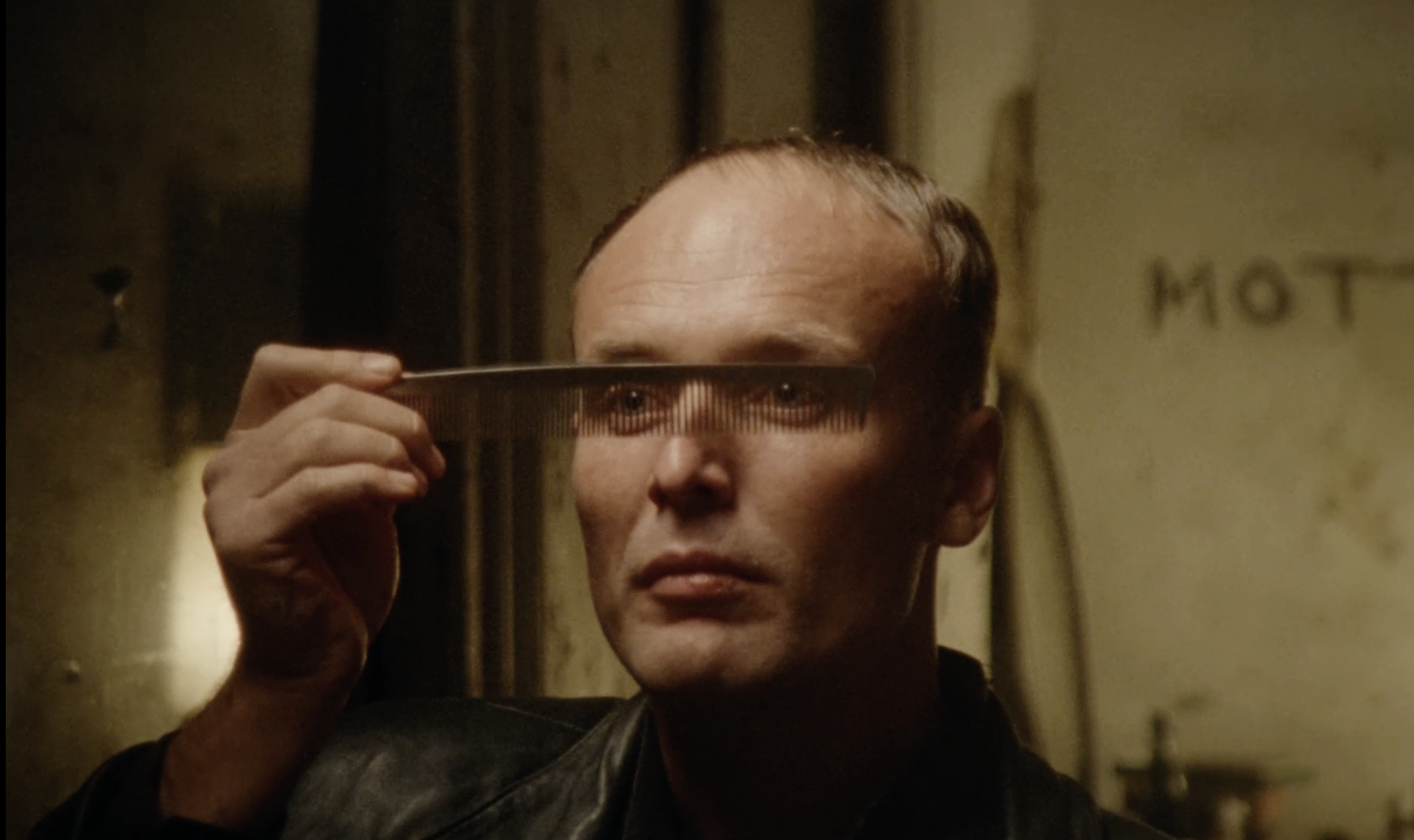
Photo caption: Giacomo Gex in Richard Melkonian’s UNIVERSE 25. Courtesy of Slamdance.
The thoughtful, ever-surprising and mysterious Universe25 embeds a fable of self-discovery in a dystopian sci-fi framework. Mott the Angel (Giacomo Gex) is sent to Earth, essentially on a cleanup mission, by a Creator (Andre Flynn) who is ready to pull the plug on our world. Mott dutifully searches urban Britain for the planet’s sole remaining saint until he happens upon an unlikely Everyman, the hardscrabble Romanian immigrant Andrei (Dan Socio). As Mott careens from Britain to Romania, he questions just what/who he aspires to be.
The gritty, noirish contemporary world is juxtaposed with Biblical references and imagery.
Photo caption: Giacomo Gex in Richard Melkonian’s UNIVERSE 25. Courtesy of Slamdance.
Hilariously, the story is revealed when the scroll that Mott writes for the Creator ends up in the lost mail bin, where it is read by a bitter postal clerk.
In a singular and impressive feature debut, writer-director Richard Melkonian has imagined a look at humanity from an space alien’s point of view. It’s an imaginative and witty blend of themes and genres.
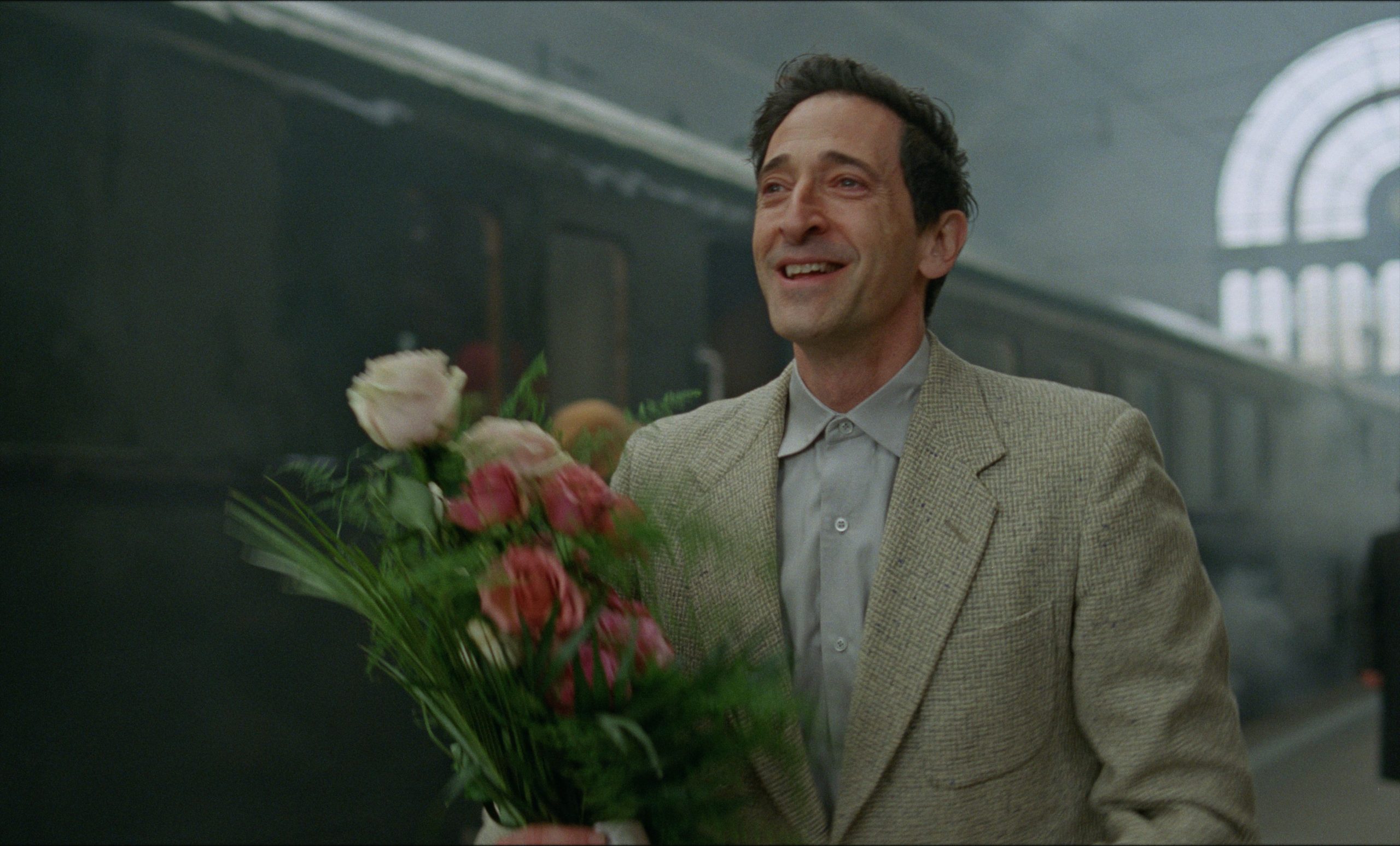
Photo caption: Adrien Brody in THE BRUTALIST. Courtesy of A24.
The Brutalist opens with László (Adrien Brody) arriving in New York Harbor as a refugee. Emma Lazarus could have been thinking of László when she wrote her immortal poem; having survived Buchenwald, he is tired, poor, huddled, homeless and tempest-tossed.
He makes his way to Philadelphia, where his cousin Attila (Alessandro Nivola), has gone native, Americanizing his name, marrying a Catholic New Englander, and opening a small furniture store that he intends to build into a bigger enterprise. László, who was a architect of accomplishment and renown in prewar Hungary, has no such aspirations. László is grateful merely to be alive and away from war- and Holocaust-ravaged Europe and is content with even the least comfortable accommodations and the most menial employment. He does yearn for reunification with his wife Erzsébet and niece Zsófia, from whom he was separated years before in the Holocaust; they are alive, but in Soviet-controlled territory, and getting them to America will be difficult and complicated.
Just when László gets a taste of a promising situation, things don’t work out with Attila, and László finds himself homeless again. But then fortune smiles upon him – to an incredible, unpredictable and life-changing degree. Harrison Lee Van Buren (Guy Pearce), a local zillionaire, learns of László’s international reputation and commissions a monumental vanity project – one that will bring fame and wealth to László. The only downside is that Van Buren is extremely capricious, and László owes all of his new found comfort to him. Van Buren giveth, and Van Buren can taketh away.
Adrien Brody and Guy Pearce in THE BRUTALIST. Courtesy of A24.
It is an asymmetrical relationship. László is all about expressing himself through his architecture. Van Buren is a collector, and, like any of his collectible objects, Van Buren enjoys László as an amusement and as a marker of prestige. Van Buren’s dominance manifests in countless micro-aggressions, and, finally, in the most degrading way.
László rides this roller coaster alone until Erzsébet arrives with Zsófia. László can be prickly and his confidence is always teetering, but Erzsébet is smooth and comfortable in her skin. Erzsébet is stronger than László, and many times as resilient. She has been able to survive a Nazi death camp, escape from behind the Iron Curtain and make her way to the New World, all while protecting her vulnerable niece. Although physically wrecked by her ordeal, she is eager to resume her career as a writer and her role as László’s coach and cheerleader. Erzsébet intends to make her own destiny, and refuses to be buffeted by the whims of fortune.
No matter how highly valued is his talent, László gets the message that he is too foreign, too Jewish, and, ultimately, is unwanted by America. While that weighs on him, his experience with Van Buren becomes soul-crushing. How much is too much for the human spirit to endure? Can Erzsébet help László find peace and dignity?
Feliity Jones in THE BRUTALIST. Courtesy of A24.
The Brutalist is a sweeping story, told in three hours thirty-five minutes (with an intermission), and every second brims with artistic ambition. Director and co-writer Brady Corbet has acted in movies by Gregg Araki, Michael Haneke, Lars Von Trier, Ruben Ostland and Olivier Assayas, and he is aspiring for his own individualistic masterpiece. Corbet makes every shot visually impactful, and the score juxtaposes period pop standards with throbbing, droning musical cues, and even begins with an overture. Corbet risked making The Brutalist pretentious and self-important, but it never is. Almost everything Corbet throws at the screen works to tell the story and to enhance our experience.
The one thing that doesn’t work is the epilogue, set in 1980, when an adult Zsófia (Ariane Labed) gives a speech at an architectural conference that honors László with a retrospective. Zsófia explicitly connects the dots between László’s artistic themes with the horrors of experience. After such a momentous and vivid story, told with so much artistry and innovation, the epilogue is both unnecessary and a buzz kill. It reminded me of the finale of another great movie, Psycho, in which Simon Oakland plays a psychiatric expert who explains to us that, indeed, Norman Bates was suffering from a recognized mental disorder. But, if you swing for the fences, you are allowed the occasional foul ball.
Adrien Brody in THE BRUTALIST. Courtesy of A24.
The acting is exceptional, especially the three leads, who are each justifiably Oscar-nominated. Adrien Brody brilliantly takes us through László’s remarkably up-and-down journey, with its very high highs and very low lows. (BTW Nikki Glaser’s best joke at the Golden Globes was “Adrien Brody – two-time Holocaust survivor.“)
Similarly, the battle between Van Buren and László (or the one between the good Van Buren and the bad Van Buren) wouldn’t be enough without Erzsébet being so appealing and such a badass. Felicity Jones captures her grace and ferocity.
Much of the film relies on Guy Pearce’ Van Buren, whose appetites, prejudices, emotional needs and entitlement drives the plot, as they buffet poor László. If Van Buren isn’t complicated and unpredictable, there’s no story here. I find Pearce to remarkably resemble classic film star Brian Donlevy here.
The wonderful Ivory Coast-born, French actor Isaach de Bankole is as good as always as László’s American friend Gordon. Gordon often represents the moral center of the story, solidly grounded while László flutters about. Joe Alwyn is appropriately malignant as Van Buren’s rangy snake of a son, Harry Lee, to whom Harrison has not passed on any of his better qualities.
The Brutalist is an epic in several senses of that descriptor, and one of the Best Movies of 2024.
Photo caption: Marianne Jean-Baptiste in HARD TRUTHS. Courtesy of Bleecker Street Media.
Hard Truths is the searing (but sometimes funny) portrait of a woman who lives without ever experiencing a moment of contentment. Pansy (Marianne Jean-Baptiste) overreacts to every situation, usually with rage, but sometimes with terror. In a state of perpetual grievance, even when she needs to manufacture one, every encounter is toxic.
Pansy is offended even by the ribbon that a neighbor puts on her baby, and by the affrontery of a retail clerk whose job it is to ask her is needs any assistance. Pansy’s husband Curtley (David Webber) and son Moses (Tuwaine Barrett) tiptoe around their own house, bracing for Pansy’s next explosion. The 22-year-okd Moses either slacks in his room or wanders randomly around the city.
In contrast, Pansy’s sister Chantelle (Michelle Austin) enjoys her life and other people; the mood in her more modest apartment is relaxed and playful, and her daughters (Ani Nelson and Sophia Brown) are spirited achievers.
So, why is Pansy so unhappy? Curtley is an inoffensive man with a plumbing company, and he provides well for Pansy. She doesn’t have to work, and the family lives in a leafy neighborhood, in a comfortable house. She says that she is tired and lonely, and claims to have migraine headaches, but we don’t see any of those. I’m not a mental health professional (although I’m married to a licensed therapist), but Pansy is suffering from something more than a sour outlook on life; we see anxiety, depression and paranoia. We learn that she may be damaged from adult burdens prematurely forced on her in childhood by her mother, but she’s going to need some chemicals before she can sit long enough for talk therapy. Unfortunately, she lashes out at family members and doctors who could help, pushing them away. Poor Curtley is mystified and utterly unequipped to see any solution.
Hard Truths is a film by Mike Leigh (Secrets & Lies, Vera Drake, Another Year), who collaborates with hs actors so an usual degree, so Pansy is Leigh and Jean-Baptiste’s joint creation. 28 years ago, Jean-Baptiste played a wholly different character in Leigh’s masterpiece Secrets & Lies, a story in which Brenda Blethyn played the hot mess.
Jean-Baptiste’s singular performance is a tour de force. Everyone in the cast is excellent, and I especially admired David Webber’s for playing a decent man trapped in a hellish situation that he doesn’t understand, with no good choices.
Many of Pansy’s explosions are so absurdly ungrounded as to be funny, but the bottom line is that we’re watching the most unpleasant person imaginable for 97 minutes. Overall, I was saddened by the realization that 1) Pansy can’t help herself and that 2) there is no foreseeable path for relieving her disorder. Still, I’m glad I saw Hard Truths because of Marianne Jean-Baptiste’s sui generis performance.
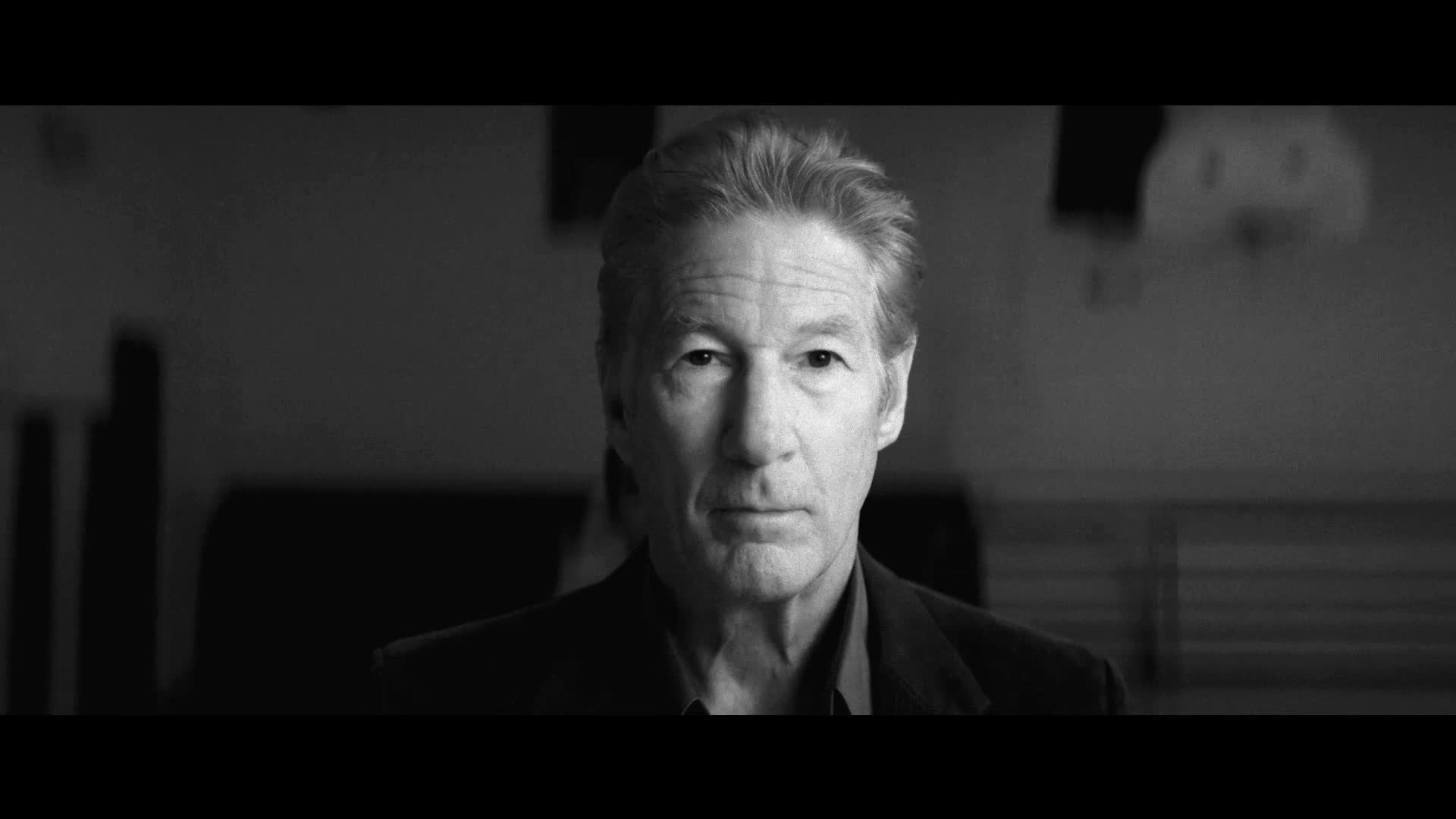
Photo caption: Richard Gere in OH, CANADA, Courtesy of Kino Lorber.
In Oh, Canada, Leonard Fife (Richard Gere) is a prominent documentarian who is dying, and one of his most successful former students (Michael Imperioli) is honoring him with a biodoc. When he is seated before an Errol Morris Interrotron, Fife demands that his wife Emma (Uma Thurman) take the position behind the camera so he can speak directly to her, and then takes over the filming with an unrestrained, blurted life story. It’s really a confession, and Leo has a lot to confess.
As Leo tells his life story, the young Leo is portrayed (mostly) by Jacob Elordi (Priscilla, Saltburn). Sometimes the older Gere shows up as the young Leo instead of Elordi, which reflects the muddling of Leo’s memory at this final stage of his life.
Besides his achievements as a filmmaker, Leo Fife has been revered as a principled American draft resister who fled to Canada to protest the Vietnam War. Leo reveals that his re-invention in Canada was anything but principled (and that Oh, Canada is a very ironic title). In fact, Leo’s adult life has been that of a weak and selfish man, a man who always takes the easy way, even if that means betrayal or thievery. It would be the life of a sociopath, except that sociopaths don’t feel guilt and the need to confess.
Oh, Canada is a Paul Schrader film. Schrader wrote Taxi Driver and Raging Bull., adapted The Last Temptation of Christ, wrote and directed American Gigolo and Affliction. All very good. All very dark.
Oh, Canada follows Schrader’s late-career, self-described ‘Man In A Room’ trilogy, following First Reformed and The Card Counter and Master Gardener I would name it the “Man with a Code Seeks Redemption” trilogy. Likewise, Oh, Canada is about a man’s assessment of his life, but it’s not as good as the previous three, perhaps because Leo Fife never lived by a code, and it’s too late for redemption.
Oh, Canada is a searing portrait of a man confessing his sins, but too late to help anyone else, including those he has hurt. He might feel cleansed on his deathbed, but, so what?
In a nice touch, Fife’s protege shows himself to b just as vile as his mentor and visits one final indecency on Leo.
Gere and Thurman are solid. The Wife thought Jacob Elordi was appropriately smarmy, but I didn’t detect any hint of the self-loathing that the young Fife must have felt. Penelope Mitchell sparkles in a small role as an ambitious production assistant.
There’s one brilliant performance in Oh, Canada – that of Zach Shaffer as Leo’s long-abandoned adult son. Shaffer keeps his character contained in a highly charged situation, registering his emotional reaction only with his eyes. It’s a highly nuanced portrayal of a shattering experience.
I was constantly absorbed by Oh, Canada, as I learned who Leo Fife really was, but left the theater feeling indifferent.
Photocaption: Rene Perez Joglar (center) in IN THE SUMMERS. Courtesy of NashFilm and Music Box Films.
In the remarkably authentic and evocative In the Summers, two sisters fly to Las Cruces, New Mexico, for annual summer visits with their divorced dad. The father, Vincente, played by Rene Perez Joglar (AKA the rapper Residente) is a spirited and talented underachiever who tries to show them a Disney Dad experience; the girls soak up the fun, but also absorb lessons about Vincente’s less reliable characteristics. Each summer, the girls return to Las Cruces with additional savvy and sponge up real world lessons from Vincente’s changing behavior.
The girls arrive expecting last year’s Vincente, but they get a new model, shaped by his changing circumstances and emotional needs, and reflecting how he sees himself. From year to year, Vincente bounces between unearned swagger to self-loathing distraction to an uneasy humility. It’s a compelling coming of age for the daughters.
Carmen (Emma Ramos), the bartender at the local pool hall, is the one consistent sounding board who can validate what the girls are experiencing with their dad.
Joglar’s performance, only his second acting role in a narrative feature and first lead, is remarkable. He is able to portray a character who is the same man at the core, but whose behavior each year is formed by the cumulative slings and arrows of his life.
The three sets of actors playing Violeta and Eva as they mature (Dreya Castillo and Luciana Eva Quinonez, Kimaya Thais and Allison Salinas, Sasha Calle and Lio Meliel) are excellent. So is Emma Ramos (New Amsterdam) as Carmen.
Writer-director Alessandra Lacorazza Samudio is able to convey so much narrative without spoon-feeding the audience. She positions the audience in the point of view of the watchful daughters, as they they to assess what is going on with their own father. She also gets fine performances out of actors with little or no movie experience. In the Summers is a triumphant debut feature for Lacorazza and marks the emergence of very promising filmmaker,
In the Summers made my list of Best Movies of 2024 after being my favorite film at last month’s Nashville Film Festival, and it’s streaming now on Amazon, AppleTV, YouTube and Fandango.
Photo caption: Tilda Swinton and Juianne Moore in THE ROOM NEXT DOOR. Courtesy of Sony Pictures Classics.
Pedro Almodóvar’s The Room Next Door is about the reconnection of two friends at a highly charged moment. Decades before, Martha (Tilda Swinton) and Ingrid (Julianne Moore) were running and gunning together in Manhattan, even dating the same guy (not at the same time). Each moved on to a successful career elsewhere – Ingrid as an author based in Europe and Martha as a war correspondent in the Balkans and Middle East. Ingrid returns to NYC on a book tour, and finds that Martha is hospitalized with stage 3 cervical cancer.
Martha undergoes an experimental treatment which seems to work, until it doesn’t. Martha has faced death many times in wars. She accepts her own mortality, but wants to avoid the indignity and suffering of her final weeks, and she wants to go out before experiencing happiness becomes impossible. But Martha doesn’t want to be alone, and her adult daughter is estranged.
Martha asks Ingrid to join her at a rented house in the woods, knowing that, on one night, Martha will end he own life. Not incidentally, Ingrid’s latest bestseller is about her own fear of death. Nevertheless, Ingrid agrees.
Remarkably, given the situation, The Room Next Door is not depressing. It’s absorbing, and even funny in places. The old boyfriend (a very funny John Tuturro), who both women remember as particularly zesty, is now a climate disaster Gloomy Gus, now essentially a public scold. Inrgid and Martha curl up on the couch to enjoy Buster Keaton’s hilarious Seven Chances.
We learn the back story about the father of Martha’s daughter, and more about Martha and Ingrid. Ingrid (and we the audience) wait on tenterhooks for Martha to implement her plan.
Of course, Moore and Swinton are two of cinema’s most talented actresses, and their performances are exquisite. Swinton even plays a second character.
We expect any Pedro Almodóvar film to be visually lush, with stellar performances from actresses, and The Room Next Door is certainly that. I never lost interest, but the work doesn’t rise to the level of Almodóvar’s masterpieces Talk to Her and Broken Embraces. .
This is Almodóvar’s first film in English, and he wrote the screenplay in English, evidently without enough collaboration. Hence, the dialogue is not as natural as if two native English speakers were conversing – sometimes a little stilted.
Although the core story about Martha and Ingrid is compelling, there are some extraneous distractions. I understood that a flashback from Martha’s wartime experiences is designed to tell us something about her, but it isn’t worth the time away from the main story. The same holds true when a cop tries to make some trouble for Ingrid; although very well acted by Allessandro Nivola, that thread doesn’t go anywhere (as it wouldn’t have in real life).
The Room Next Door is ever visually beautiful, with lots of Almodóvar’s favorite color of red. Almodovar takes full advantage of his leading ladies’ striking hair and graces them with vivid lipstick and fashion. He even gets to set ablaze a house on the prairie, just like the one in Terence Malick’s Days of Heaven
The Room Next Door, although not an essential film, still offers the mastery of Tilda Swinton and Julianne Moore, in a story of life and death.
Photo caption: Pamela Anderson in THE LAST SHOWGIRL. Courtesy of RoadsideFlix.
Pam Anderson shines in The Last Showgirl, Gia Coppola’s singular study of personal identity. Anderson plays Shelly, who has spent the past thirty years onstage in an old fashioned, Las Vegas showgirl revue, showcasing rhinestones, plumage and bare breasts. The show has enjoyed a 38-year run and is the last one in town; as tastes have moved on, the audience has diminished. As The Last Showgirl begins, the owners have decided to permanently close the show.
All the dancers in the company are unsettled by the need to find new employment, but it’s clear that Shelley, no matter how well-preserved at age 57, is not going to be competitive in the Las Vegas female dancer job market. But Shelley is even more jarred by the end of her job than one might think. After all, she should be able to make the same money in another job; her income from the show wasn’t enough to care for her now college-age daughter Hannah (Billie Lourd), who was fostered by family friends.
As Shelley flounders, we begin to understand that Shelley’s entire personal identity is invested in her stage persona. And we understand why she prioritized this job over even raising her own child. I feel so good about myself in the show…bathed in that light…I’M the one on the POSTER.
Shelley’s choice to get what she needs emotionally from the show, has left Hannah with a sense of emptiness, and Shelly now has that same emptiness about both her lost self-worth and the damage to the relationship with Hannah.
Pamela Anderson has not been known for her range as an actress, but she has enough to play Shelley with power and nuance. She is exceptional in this heartbreaking role. Anderson, whose body is still remarkable, has no vanity about the age on her face.
The rest of the cast is also outstanding. Kienran Shipka (Don Draper’s daughter in Mad Men) and Brenda Song play Shelley’s younger mentees in the troupe. Jamie Lee Curtis also eschews movie star glamor in playing Shelley’s former dance colleague, who has aged out of dancing and into cocktailing, and who suffers addictions to both alcohol and gambling; Curtis has one jaw dropping solo dance near the end of the film.
Jason Schwartzman is excellent as a guy casting live entertainment who resists being cruel, but finally must share the cruel truth with Shelley.
One of the best performances is that of Dave Bautista as the show’s stage manager. Bautista, the former pro wrestler who plays Drax in the Guardians of the Galaxy franchise and Beast in the Dune movies, is usually cast in action fare. Here, he proves that he can really act in a character-driven drama. His gentle, decent, socially awkward character is often the moral center of the story.
Coppola ends the film with a superb montage. The Last Showgirl is a searing portrait of a completely original character; it’s one of the Best Movies of 2024.
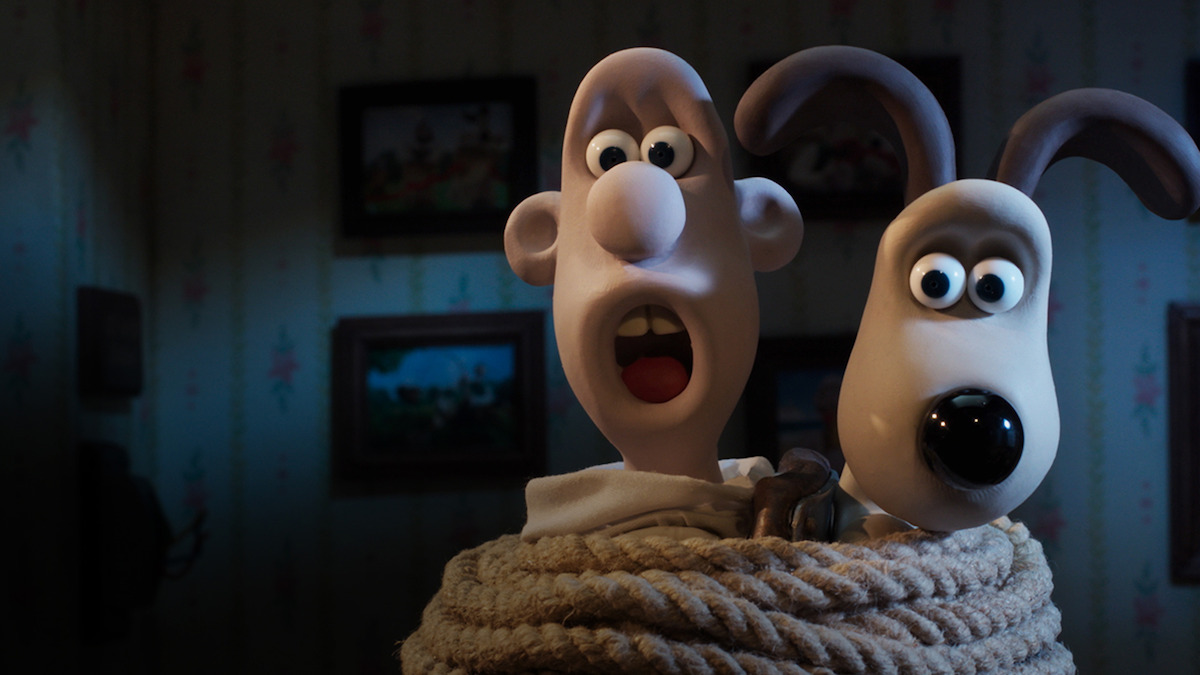
Photo caption: Wallace and Gromit in WALLACE & GROMIT: VENGEANCE MOST FOWL. Courtesy of Netflix.
The Claymation romp Wallace & Gromit: Vengeance Most Fowl is another smart and charming winner from Aardman Studio. If you haven’t met them yet, Wallace is a cheese-loving and socially clueless English inventor. Gromit is his longsuffering dog, who is the one with common sense. Their house is filled with Wallace’s Rube Goldbergesque contraptions.
Wallace often invents gadgets that are totally unnecessary. This time, Wallace, oblivious to how lovingly Gromit tends his English garden, invents a robotic gardening gnome. As they are coping with the inevitable resulting mayhem, they are targeted for revenge by an old nemesis, and things get really out of hand.
Years earlier, they had nabbed the chicken mastercriminal Feathers McGraw for a jewel heist. Now Feathers has escaped from prison and wants to get even. What happens in the fastmoving 82 minutes of Vengeance Most Fowl is very funny and very entertaining.
I’ve loved all the Aardman Studio films (except for Pirates! Band of Misfits, which was merely amusing). Vengeance Most Fowl is even funnier than the usual Aardman fare.
Netflix labels this as “for Kids”, and kids will enjoy it, but adults; will find it very funny, too; like any good children’s content, there are loads of references that will swoop over the heads of kids while the adults are cracking up.
Wallace & Gromit: Vengeance Most Fowl is streaming on Netflix.
Photo caption: Kani Kusruti in ALL WE IMAGINE AS LIGHT. Courtesy of Janus Films.
All We Imagine as Light, writer-director Payal Kapadia’s highly-praised first narrative feature, is the story of three women and their need to find fulfillment by casting off societal expectations. Kapadia introduces us to that society by immersing us in a contemporary Mumbai that is teeming with people who don’t each other, who speak a variety of languages, and who have come from some home village elsewhere.
Prabha (Kani Kusruti) is the highly proficient and respected supervising nurse at a Mumbai hospital. Prabha has a husband from an arranged marriage, who moved to Germany for work shortly after their wedding. Prabha doesn’t really know him, and she’s more in love with the idea of having a soul mate and life partner than she could possibly be with the guy himself, who has become more of an abstraction. He hasn’t called her in more than a year.
Still, she considers herself a married woman, and she comports herself as though her hubbie were putting on his slippers back at her apartment. . A gentle doctor at the hospital is sweet on her, but she won’t entertain the opportunity for a love match. A Western movie audience is thinking, “Move on, girl!“.
Prabha has taken a roommate, Anu (Divya Prabha), a peppy but immature and irresponsible student nurse. Anu spends every free moment sneaking around with her sweet boyfriend, in the mistaken belief that she is successfully hiding the relationship. Hher parents are insisting on an arranged marriage, and she knows that they would never accept her Muslim beau.
Prabha is friends with the hospital’s cook, Parvaty (Chhaya Kadam). Parvaty is a middle-aged widow who is being forced out of her shanty by high-rise developers. The most fun character in All We Imagine as Light, Parvaty is full of piss and vinegar. Seeking to finally secure a life, however impecunious, that she is in control of, Parvaty decides to move back to her seaside home village.
Prabha and Anu help Parvaty move her stuff. At the village, Prabha helps with an emergency on the beach and has a revelatory hallucination. How deeply you accept Prabha’s catharsis depends on how easily you accept magical realism in a movie.
The core of All We Imagine as Light is Prabha’s profound loneliness, even as she is living amid 22 million other people. Kapadia is also spotlighting and criticizing both traditional Indian society, where women don’t even control who they are married to, and the inequities of untempered capitalism.
All We Imagine as Light won the second prize at Cannes and is universally acclaimed by critics. The Indian film authorities failed to submit All We Imagine as Light for the Best International Film Oscar – which, given the reaction of the American film community, was a huge misfire.
The NYT’s Manohla Dargis, who picked All We Imagine as Light as her number one movie of 2024, wrote, “It’s the kind of modestly scaled and lightly plotted international movie — with characters who look and sound like real people, and whose waking hours are set to the pulse of life — that can get lost amid the year-end glut of Oscar-grubbing titles. ” That is undeniably true, and, although it’s a fine film, All We Imagine as Light didn’t make my list of Best Movies of 2024 (although six indies by other emerging female directors did).
I think that there’s a lot to Howard Hawks’s definition of a great movie – three great scenes and no bad ones“. There’s one great scene here, where Prabha is alone with a rice cooker her husband has sent her as a gift (without a note). Most people would also count the scene where she imagines her husband is present as a great scene. But, that’s it for me, and I really didn’t embrace the magical realism or the Anu character. And, at times, my mind wandered.
As much as I was underwhelmed by All We Imagine as Light, it is a authentic exploration of women seeking dignity and love where society stacks the deck against them.