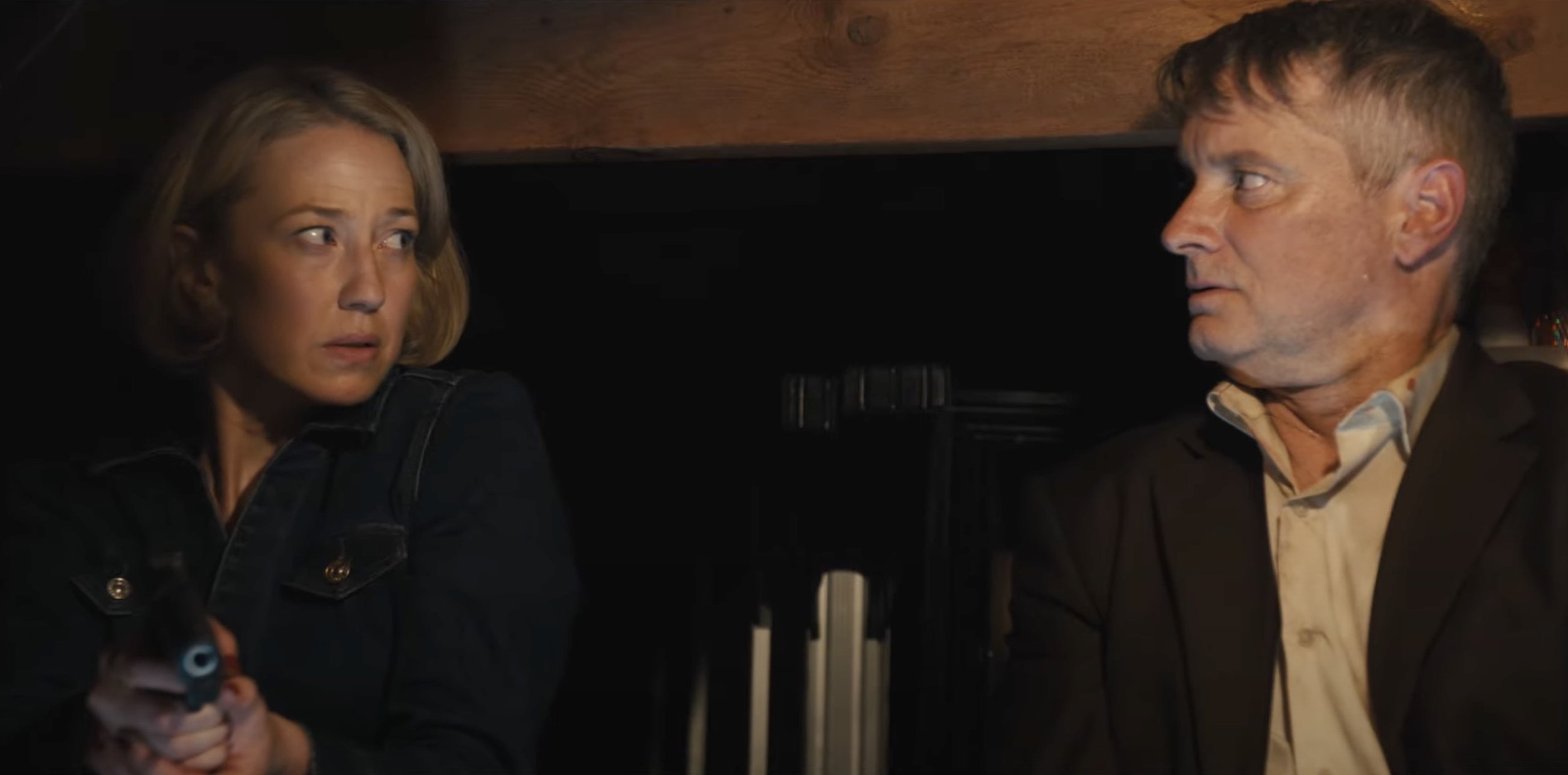
Photo caption: Carrie Coon and Shea Whigham in LAKE GEORGE. Courtesy of Magnolia Pictures & Magnolia Releasing.
As the comic neo-noir Lake George opens, the hangdog Don (Shea Whigham) has just been released from a ten-year stint in prison. He has no prospects and is coerced by the fearsome crime lord Armen (Glenn Fleshler) into taking a job he doesn’t want. Having done his stretch for a white collar crime, Don is decidedly non-violent (and unlucky). He would be the first to agree that he is the worst possible choice to pull off a murder-for-hire, but Armen and his henchman Hanout (Max Casella) insists, on pain of Don’s own life, that Don whack the boss’ girlfriend and business associate, Phyllis (Carrie Coon).
Don tracks down Phyllis, and, of course, things do not go according to plan. She convinces him to join her in stealing stashes of loot from Armen, and the two are off on an odd couple road trip.
Phyllis is much, much smarter and quicker-thinking than any of the men in this story. And she’s just as ruthless, too. She has an impressive gift of persuasion and can apparently manipulate anyone into anything. Imagine if Brigid O’Shaughnessy were a lot smarter than Sam Spade. Femme fatale, sociopath – that’s Phyllis.
Don, on the other hand, kno ws that he has been a loser and that he ain’t gonna win this time either. Even if he is not quickest, Don is by no means stupid. Don is smart enough to know that doing Phyllis’ bidding is unlikely to work out and that Phyllis is only out for herself and has zero loyalty to Don. That’s the core of Lake George – Don trudging along at Phyllis’ side because he can’t figure out any alternative.
Lake George is a character study, and it’s an acting showcase for Shea Whigham. Ever dazed by the Phyllis’ increasingly outrageous acts, Whigham’s Don seems to be squinting into a bright light as he ponders how he can possibly escape each situation with his life.
Whigham is one of those character actors who works a lot and is always memorable (The Gray Man, A Country Called Home, Boardwalk Empire, True Detective, The Wolf of Wall Street, American Hustle, Take Shelter). It’s great to see him get a lead role.
Coon has fun with Phyllis’ ever-bubbling self-interest and almost manic charm. It’s an interesting take on the femme fatale because she doesn’t sexually seduce Don. Her smarts and gift of gab are so effective that she doesn’t need to use her gams.
There is a massive plot twist near the end. Lake George was written and directed by prolific TV director Jeffrey Reiner, his first theatrical feature in 29 years.
My personal preference would be to make Lake George more noir by cutting the last minute. But it’s a mildly entertaining lark, and the wonderful character study by Whigham is the most compelling reason to watch it.
Lake George is now streaming on Amazon, AppleTV, YouTube and Fandango.
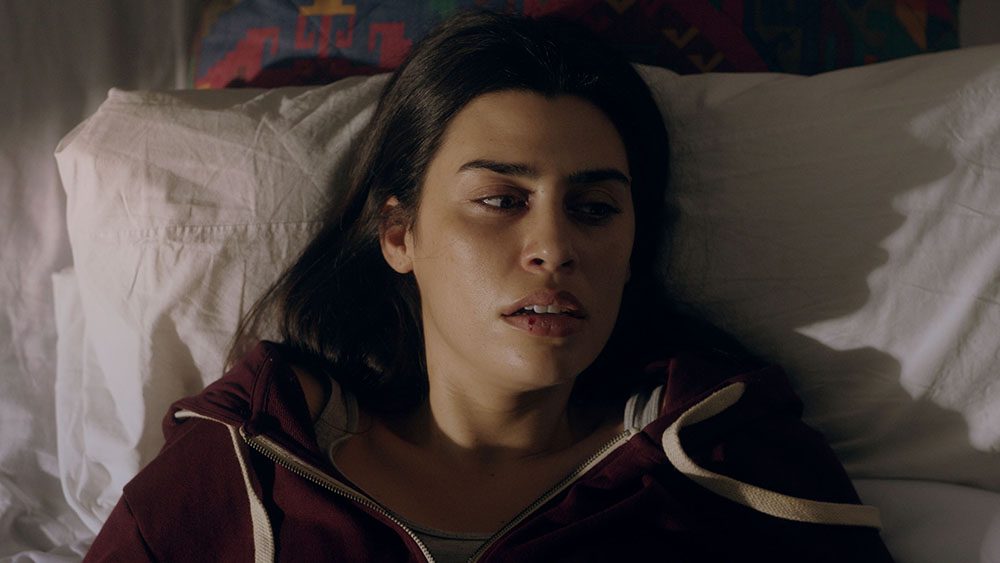
Photo caption: Roser Tapias in YOU ARE NOT ME. Courtesy of Music Box Films.
In the Spanish psychological horror film You Are Not Me, Aitana (Roser Tapias) and her Brazilian partner Gabi (Yapoena Silva), with their adopted infant, show up early for Christmas at the Catalan home of Aitana’s affluent parents (Pilar Almeria and Alfred Pico). And Aitana seems to step into a nightmare. Or is it?
The first thing that rocks Aitana is her parents’ reaction. They don’t seem happy to see Aitana after many years, nor to meet her partner or their own first grandchild. They’re especially displeased that Aitana’s family has arrived on the eve of a dinner party they’ve planned, a special party that is not the usual family holiday get-together.
Why are the parents acting so inappropriately? Are they homophobic? Are they racist (the baby is black)? Are they still pissed off at Aitana? Aitana is headstrong and often tactless, and we learn that there’s some baggage; years before, the parents were hosting Aitana’s wedding to their ideal son-in-law, when Aitana, realizing she was a lesbian, suddenly ran away, leaving everyone in the lurch.
Aitana is also upset by the condition of her wheelchair-bound younger brother, Saul (Jorge Motos), whose degenerative disease is apparently getting worse.
But, what really sends Aitana over the edge is that her parents are fawning over a Romanian woman Aitana’s age, Nadia (Anna Kurikka). They have awarded Aitana’s room to Nadia, along with their affection and even Aitana’s wedding dress. When Aitana discovers evidence of Nadia’s dishonesty and even behavior that threatens Saul, the parents refuse to listen.
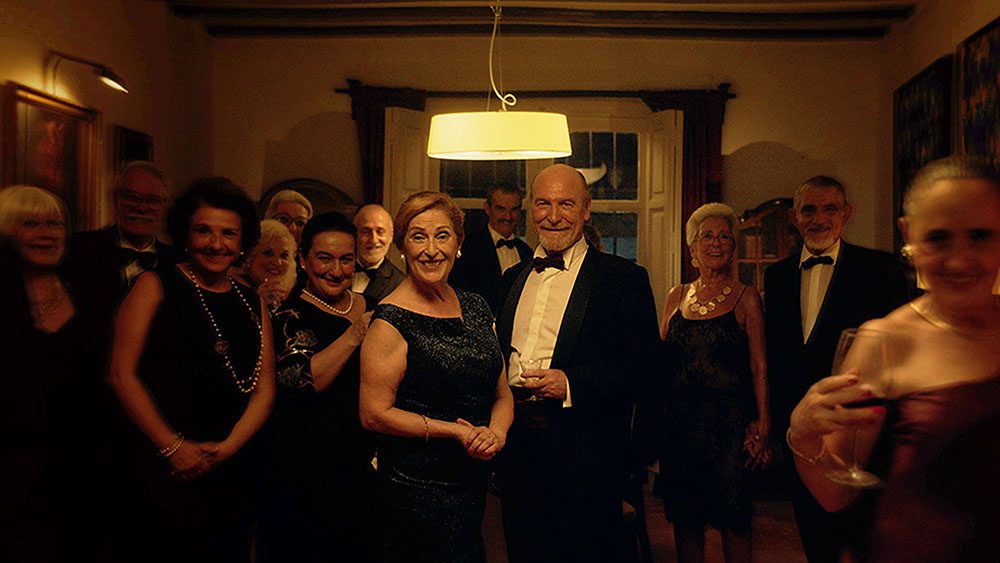
A scene from in YOU ARE NOT ME. Courtesy of Music Box Films.
Finally, there’s the parents’ formal dinner party, hosting several couples their age. The parents are meeting many of the guests, from several European countries, for the first time. The guests are unusually convivial (and horny). Although the guests are outwardly very traditional, they make what is a decidedly a creepy assemblage. Everything is conventional, but Aitana and the audience feel that something must be amiss.
You Are Not Me was co-written and co-directed by Marisa Crespo and Moisés Romera in their second feature film. It’s a well-directed film that benefits from a clever story that keeps the audience off-balance. Are these things really happening, or is Aitana imagining or dreaming them, or even hallucinating? Is Aitana just easily offended or is she paranoid or even schizophrenic? Her well-balanced partner Gabi is rolling with the punches and unintentionally gaslighting Aitana. By making Aitana so prickly, having her jet-lagged and then drunk, Crespo and Romera keep us wondering. And just when we think that the ending is outrageously cheesy, Crespo and Romera creep us out again.
You Are Not Me is streaming on Amazon and Fandango.
Photo caption: Ralph Fiennes in THE RETURN. Courtesy of Bleecker Street Media.
The Return brings 21st Century sensibilities to The Odyssey, a story that the ancient Homer told of an even more ancient time.
Odysseus is the king of of the island of Ithaca, and is known as the smartest of the great warrior kings who left their Greek homes for ten years to fight the Trojan War (Homer’s The Iliad). The Odyssey spans the ten years it takes Odysseus to return home, in which he pleases and displeases various Olympian gods, blinds and slaughters an assortment of monsters and shacks up with a witch-goddess and then a nymph. Most tellings of The Odyssey focus on those rip-roaring adventures. That’s the case with the delightful 1954 Kirk Douglas version, Ulysses, and the really bad 1997 miniseries with Armand Assante and Greta Scacchi. (Christopher Nolan, in his first film after Oppenheimer, will release his version of The Odyssey later this year.)
The Returnis based on the very end of The Odyssey, when a shipwrecked Odysseus (Ralph Fiennes) is finally cast upon the beach at Ithaca, and doesn’t like what he finds. His kingdom is overrun with suitors for his wife Penelope (Juliette Binoche). The suitors are demanding that Penelope, with Odysseus presumed dead after twenty years, marry one of them (and make the guy king).. They are a scummy lot, and Penelope is resisting with delaying tactics, but the pressure is overwhelming. The suitors are enjoying one big frat party, whoring and stripping the island’s economy of food and wine. Her son Telemachus (Charlie Plummer) is now a callow twenty-year-old, old enough to hate the situation, but too young to do anything about it. Can Odysseus set things right? Will he be accepted by his people? By the wife he hasn’t seen him for twenty years? By the son who doesn’t know him?
There’s no Poseidon and Athena, cyclops or sea monster in The Return. Director and co-writer Uberto Pasolini has stripped the mythology and supernatural out of the story to focus on human reactions to the consequences of our choices, to war and to abandonment.
What was not well-understood in Homer’s time is that even the glory of victory does not wash away away the emotional impacts of having experienced war. The Return’s Odysseus suffers from PTSD, no longer reveling in winning a war that slaughtered the civilians of Troy. He is feeling guilt for the war, for leading his Ithacan comrades to their deaths, and for abandoning Penelope, Telemachus and Ithaca for so many years. Sure, Penelope’s suitors are the direct cause of the current chaos, but the root is in Odysseus’ original decision to leave.
Similarly, Penelope has feelings that are intense and ambivalent. She doesn’t know whether to grieve the loss of her husband. She’s been single parenting for twenty years, running both a household and a kingdom. She’s worried about her son’s survival, given that his existence is inconvenient for the suitors. She’s stressed and weary, and the pressure from the suitors is pushing her over the edge. On the one hand, she yearns for the man she loves and wants Odysseus to come back and fix this mess. On the other, she resents whatever he’s been doing these past ten years (and with whom), and she feels the hurt of his original decision to go off to war.
I appreciated seeing Odysseus and Penelope through a 21st Century lens. The first encounter between the two is electrifying and emotionally rich. I did find their dialogue in the final scene to be stilted.
The Return is an acting showcase for Ralph Fiennes. This Odysseus, besides being emotionally tortured, must show the effects of two decades of suffering on a middle-aged man and also retain the combat skills of an ancient Special Ops warrior. In a remarkable performance, Fiennes pulls it off in spades.
I have to also mention that, at age 62, Fiennes is a remarkable physical specimen. He is so ripped that his extreme exploits at the film’s climax are entirely believable.
Juliette Binoche is similarly excellent as her Penelope feels determination, hopelessness, longing, resentment, anger and disgust, often at the same time.
Marwan Kenzari is really good as Antinous, by far the smartest and most manipulative of the suitors, the lone slick conniver amid a gang of thugs.
The Return is only the fourth film that Uberto Pasolini has directed in a quarter century. Hw was Oscar-nominated for the massive 1997 arthouse hit The Full Monty. He is not related to the groundbreaking filmmaker Pier Paolo Pasolini, but he is the nephew of iconic director Luchino Visconti.
The Return is now streaming on Amazon, AppleTV and Fandango.
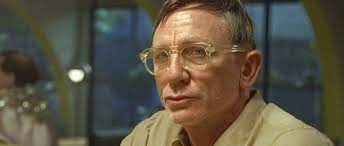
Photo caption: Daniel Craig in QUEER. Courtesy of A24.
The first thing I need to tell you about Luca Guadagnino’s Queer is something that I knew beforehand but failed to internalize – it is based on a William S. Burroughs story, an autobiographical one at that. Had I been thinking about that, I wouldn’t have been so jarred when the film veered into the super trippy.
Queer starts off coloring within the lines of a character study and romantic drama. William Lee (Daniel Craig) is an American expat in 1950s Mexico City; a man of independent means, he is continually drinking and prowling for sex with younger men. He glimpses Eugene Allerton (Drew Starkey), a gorgeous American of ambiguous sexuality and is instantly infatuated; Lee begins a pursuit, and Eugene is hard to get, until he isn’t.
That’s the first act, which absorbed me. But it didn’t prepare me for the turgid second act, which is about opiate addiction nor the third act, which is about a search for psychedelics. That third act is bizarre, with some ripping moments.
Luca Guadagnino is known for visually striking, even delectable, movies; he and cinematographer Sayombhu Mukdeeprom (also Call Me By Your Name and Challengers) oblige with plenty of Mexico City and Ecuadorian jungle eye candy, mostly shot in an Italian studio. There’s an especially wonderful dream sequence after Lee’s most extreme drunk night. This is the first Guadagnino movie I’ve seen with special effects, which are necessary in the hallucinatory third act.
But Queer is too long overall, especially the hallucination scene. The entire second act drags.
Daniel Craig’s acting ability was justifiably admired before he became such an iconic James Bond. Here, his Lee is so fascinated and yet mystified by Eugene. Lee is always off-balance when he can win Eugene’s company, but he can’t control him. Lee has attained a relationship, but it’s an asymmetric one.
If there’s any doubt that he is very comfortable putting James Bond behind him, that doubt is erased when we see Daniel Craig playing a character with semen glistening on his lips.
Craig also plays drunk very well – which many actors fail to do convincingly. He nails the various degrees, starting at the point where Lee fails to read the room correctly and acts cutesy when it isn’t funny. As Lee becomes more tipsy, Craig perfectly adds a slight sway to his gait, then a bigger one.
We have known Craig can act since The Mother (2003) and Layer Cake (2004), so Drew Starkey, who hadn’t yet had a memorable performance, is the real discovery here. Eugene is anything but demonstrative, and Starkey communicates all of Eugene’s interest in Lee and resistance to Lee, with his eyes and body.
Lesley Manville jumps off the screen in what must be the most bizarre portrayal in her storied career; at some point, she must have played one of the witches from Macbeth, but she looks more the part here, with greasy hair, darkened teeth and unhinged eyes, than she could have in any other production. Her performance is very, very strong.
Jason Schwartzman, playing one of Lee’s Mexico City expat buddies, is very funny every time he’s on the screen.
So, what do I think about Queer? Luca Guadagnino and his team are interesting and accomplished artists, Daniel Craig is an actor worthy of his stardom and it’s great to have a non-heterosexual romantic drama – BUT, the choice to hew so closely to Burroughs’ source material, along with some self-indulgent editing, condemns the second half of Queer to lose the audience (me, at least).
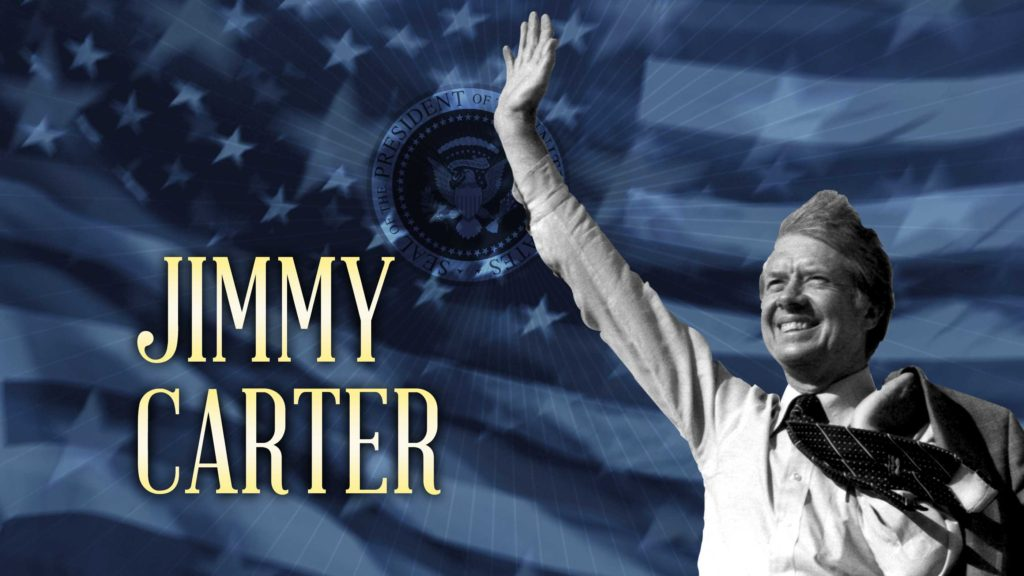
In PBS’ American Experience documentary Jimmy Carter, The New Yorker writer and former Carter speechwriter Henrik Hertzberg says:
Jimmy Carter was what the American people always SAY they want – above politics, determined to do the right thing regardless of political consequences, a simple person who doesn’t lie, a modest man, not someone with a lot of imperial pretenses. That’s what people say they want. And that’s what they got with Jimmy Carter.
And herein lies the rub.
In 1976, Americans were reacting to Watergate and wanted a President the LEAST like Richard Nixon. We got him, in the form of Jimmy Carter; it turned out that Carter could deliver non-Nixonian decency, but not the leadership that the era required.
In Jimmy Carter, we hear from those who know Carter best – including his wife Rosalynn Carter, his vice-president Walter Mondale, and right-from-the-start Carter insiders Jody Powell, Pat Caddell and Bert Lance. How the times made this man, then propelled him to such improbable electoral success and then finally doomed his Administration, is a great and cautionary story.
Jimmy Carter is in two parts, which combine for two hours and 39 minutes. It’s available to stream from Amazon and AppleTV (I can find it on my app, but not on the website).
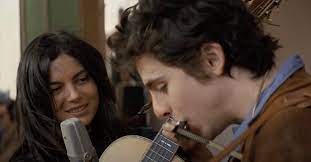
Timothée Chalamet in A COMPLETE UNKNOWN. Courtesy of Searchlight Pictures.
A Complete Unknown, James Mangold’s brilliant biopic of Bob Dylan, is a film about genius. If you need to understand why Dylan is the only songwriter to win the Nobel Prize for Literature, here is why. It’s a fascinating story, and Mangold’s telling of it is insightful and entertaining.
The story begins with 19-year-old Bob Dylan showing up in New York City. No one knows who he is (a complete unknown), because he hasn’t done anything, but he wants to meet his hero, the now hospitalized folksinger Woody Guthrie. Dylan can’t pretend to be anything but another homeless musician wannabe, but legendary folksinger Pete Seeger (Edward Norton) takes Dylan under his wing. Starting with open mic nights, Dylan starts playing around the Greenwich Village folk scene.
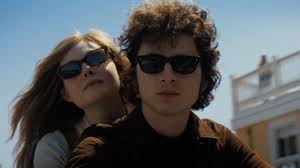
Dylan meets Sylvie Russo (Elle Fanning) a student activist Dylan whom appreciates because she is pretty, smart, opinionated and has an apartment. Sylvie is a barely fictionalized Suze Rutolo, Dylan’s girlfriend of the period, who appears on the cover of his The Freewheelin’ Bob Dylan album.
Dylan meets another woman his age, Joan Baez (Monica Barbaro), who is already a big deal. Baez had played the Newport Folk Festival at age eighteen and had already recorded three albums. Bob is excited by Baez’s stardom, and Joan admires Bob’s still undiscovered song writing. Without falling in love exactly, they begin an affair. Bob takes advantage of Joan’s connections and credibility (and apartment); he lets her cover Don’t Think Twice, It’s All Right before he released his own version. You get the impression that Joan could have fallen in love with Bob if he would treat her with decency and affection, but Bob is only in love with himself.
Seeger, Baez and others in Greenwich Village’s music world soon recognize the extraordinary, generational genus of Dylan’s songwriting. He finally gets to record his own material in 1963 with The Freewheelin’ Bob Dylan; it was an auspicious and transformative collection of original songs from a 22-year-old: Blowin’ in the Wind, Masters of War, A Hard Rain’s Gonna Fall and Don’t Think Twice, It’s All Right.
In what I found to be the most thrilling moment in A Complete Unknown, Dylan debuts The Times They Are a-Changin‘ to a live audience, and all the listeners, including Seeger and Baez, are captivated, by each new groundbreaking verse. Come mothers and fathers…Throughout the land…And don’t criticize…What you can’t understand…Your sons and your daughters…Are beyond your command. The song – and this scene in A Complete Unknown – completely capture the zeitgeist of the time.
Dylan becomes a huge star and cultural icon – a symbol of a generation. And he immediately is alienated by the accompanying trappings of celebrity.
Dylan also evolves musically from his roots in acoustic folk music. His mentors in the Folk Music movement have a tough time with that, and it all explodes at the 1965 Newport Folk Festival when Dylan defiantly shows up with an electric rock band, the climax of A Complete Unknown.
The folk purists, like Pete Seeger and the musicologist Alan Lomax, saw folk music as politically significant and rock and roll music as politically inconsequential – history soon proved them very wrong about this. The old folkies had also suffered for their movement by being victimized in the McCarthy Era, earning some of their self-righteousness. What the old folkies could not comprehend – and would find abhorrent if they did – is that Bob Dylan was bigger than the genre of Folk Music itself.
Elle Fanning and Timothee Chalamet in A COMPLETE UNKNOWN. Courtesy of Searchlight Pictures.
So, just who IS Bob Dylan? We expect any biopic to reveal, but Mangold has targeted one of our culture’s most notorious enigmas. Mangold and Chalamet give us a Dylan perhaps less complicated than his image. Here, Dylan is ambitious and absolutely committed to his art. He will not prioritize any relationship or behavioral norm above his songwriting or his career.
He wants the recognition, fame and money that comes from having an audience and fans but, in person, he doesn’t want to experience the fandom or even respect the audience. In pursuit of his own vision, Dylan is not afraid to disappoint (or enrage) anyone else, nor does he feel constrained by loyalty. (Although, if consistent with his vision, he can be kind to his hero Woody Guthrie.)
There’s more than a touch of narcissism there, too. A Complete Unknown depicts Dylan between the ages of 19 to 24, when he was only as mature as most of us were at that age; after all, one can be important while still very immature. He can be a brat, but he isn’t a bad person; he just isn’t capable of a reciprocal relationship. Sylvie Russo and Joan Baez both come to understand that, whoever he really is, he’s not interested in giving them what they want.
The older generation of folksingers certainly don’t GET Dylan, His manager Albert Grossman (Dan Fogler) doesn’t get him, but is fiercely devoted, anyway. In A Complete Unknown, the only people who get Bob are Bobby Neuwirth (Will Harrison), the singer-songwriter who became his road manager, and another icon, Johnny Cash (Boyd Harrison).
As far as I can tell, A Complete Unknown is remarkable for its historical accuracy. There are a few tiny factual quibbles (Dylan actually changed his name from Zimmerman just AFTER he arrived in New York), but none of them are important or detract from the essential truth.
A Complete Unknown is also a time capsule of the early 1960s, and will be especially evocative for Baby Boomers like me, right down to the institutional green paint on Woody Guthrie’s hospital walls. LBJ hadn’t yet escalated the Viet Nam War, so peaceniks were campaigning against the threat of nuclear annihilation and white college kids were flocking to the Civil Rights Movement. Mangold perfectly captures the instant terror and helplessness that Americans felt during The Cuban Missile Crisis – and the suddenness of relief when it was over.
If you know the story, there are lots of delicious tidbits. For example, in the recording session for Like a Rolling Stone, Al Kooper (Charlie Tahan of Ozark), whose services were not needed on guitar, switches instruments so he can get paid for the session and invents the 1960s’ most iconic organ riff.
Monica Barbaro and Timothee Chalamet in A COMPLETE UNKNOWN. Courtesy of Searchlight Pictures.
Chalamet, whom I’ve always seen as a little kittenish, finally gets to be a little dangerous and is appropriately prickly as Bob Dylan. Chalamet portrays Dylan’s aching and yearning for artistic achievement, which allows us to root for a guy who often behaves badly.
Barbaro’s Joan Baez is especially vivid, especially as she sizes up Dylan’s talent and assesses his behavior. Bob, you’re kind of an asshole.
Scoot McNairy’s performance as Woody Guthrie is especially haunting. Guthrie had been suffering from the then little understood Huntington’s disease; because of the disabling neurological effects and the behavioral symptoms, he spent his final years confined in psychiatric hospitals.
Big Bill Morganfield’s performance as a fictional blues artist named Jesse Moffette, who clearly stands in for Muddy Waters, is especially charismatic. Morganfield happens to be the son of Muddy Waters.
Chalamet, Norton, Barbaro and Boyd Harrison do their own singing in A Complete Unknown, which has been much ballyhooed, but I don’t find that important to a successful biopic. Their singing in character is all very good, and I was impressed by how perfectly Barbaro nails Baez’s unique voice. Norton, BTW, plays his own banjo, which is also impressive.
The editing by Andrew Buckland and Scott Morris is exceptional – none of the shots or scenes linger even a half-second too long. This is a two hour, twenty minute film that never lags.
A Complete Unknown is the best biopic, showbiz or otherwise, since Walk the Line (also a James Mangold film) and it’s one of the Best Movies of 2024.
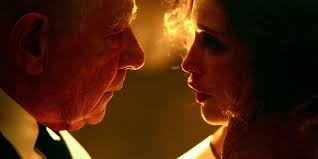
Photo caption: Ian McKellen and Gemma Arterton in THE CRITIC. Courtesy of Greenwich Entertainment.
The cynical thriller The Critic is set a hundred years ago, when print media was king. Jimmy (Ian McKellen) is the chief drama critic for a low-brow, mass circulation London newspaper. He’s had the job for forty years, and he sees his job as entertaining the readership with his savage reviews, using a vast vocabulary he knows is above the readers’ grasp. Jimmy’s longevity and prominence has made his voice powerful; he could be expected to sometimes act with mercy and responsibility, but he never does.
Protected by his longtime publisher, Jimmy has become very entitled, and he enjoys perks that exceed the station of a newspaper writer, however erudite. He doesn’t appreciate that others may be put off by his day-drinking, capricious cruelty and general arrogance. His boss’ authority as an aristocrat has also protected Jimmy from the police persecution of homosexuals and from blackmail.
Then the boss dies, and his straitlaced, sexually repressed son (Jeremy Strong) inherits his title and his newspaper. Jimmy’s invulnerability evaporates. Desperate to regain what he stands to lose, Jimmy resorts to blackmail himself. Unpredicted life and death consequences unfold.
Ian McKellen in THE CRITIC. Courtesy of Greenwich Entertainment.
Is Jimmy really an unredeemable prick? Will he get his due? The Critic is all about the character of Jimmy, which Ian McKellen plays with gusto and nuance. Watching McKellen is a delicious treat.
The other characters exist to move the plot along for Jimmy, but Strong and the other actors (Gemma Arterton, Aldred Enoch) are very good, and Lesley Manville is perfect, once again.
The Critic is streaming on Amazon, AppleTV, YouTube and Fandango.
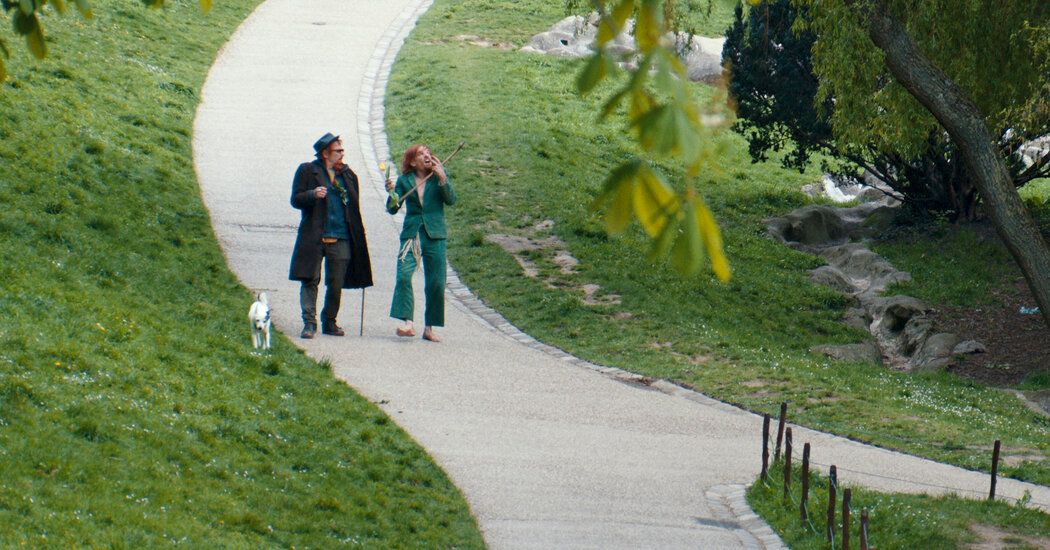
Photo caption: Leos Carax and Denis Lavant in IT’S NOT ME. Courtesy of Janus Films.
I generally only write about feature-length films, but there’s a lot of interest among cinephiles for the mid-length It’s Not Me. A European museum asked the artistic renegade filmmaker Leos Carax for a project that answers the question, Who are you? Although the title of this film is cheeky, It’s Not Me is Carax’s reflection on what has formed him – cinema, the 20th century, his Jewishness – and who he is – an artist, a parent, a moral critic.
It’s Not Me is rapidly-paced montage of bits from classic cinema, Carax’s own films (augmented by some new footage) and historical stills and clips. There’s even cell phone footage of his daughter as a child and now playing the piano as an adult. It is a curated mush mash, decidedly not as random as it sometimes seems. The clips are interspersed with bold color titles a la Jean-Luc Goddard. Movies can be LIKE fever dreams; this one may BE an actual fever dream.
Carax is known for Holy Motors, which I mostly liked, and Annette, which I didn’t. One thing is for sure – each Carax movie will be like nothing you’ve seen before.
Carax isn’t usually very political, but here he explicitly vents his hatred for haters like Hitler and current right wing, nationalist leaders. There’s a very creepy scene where a mother reads her kids a bedtime story that applauds Hitler’s Final Solution. There’s footage of the 1939 pro-Nazi rally at Madison Square Garden, and of the corpses of contemporary would-be immigrant children sloshing on a European beach. Tough stuff.
It’s Not Me runs only 42 minutes, but there’s almost two minutes of opening credits, and then the closing credits start at the 37-minute mark. After the closing credits, there’s a a final 2-minute puppet performance that is brilliant, even if I have no idea why Carax included it.
Denis Lavant reprises his role as Monsieur merde, the outré character in Holy Motors and other Carax films. If you want to know just how outré, read my post on Holy Motors.
Clips of the 27-year-old Juliette Binoche from the 1991 Carax film The Lovers on the Bridge remind us what a breath-taking beauty Binoche has been in every stage of her career.
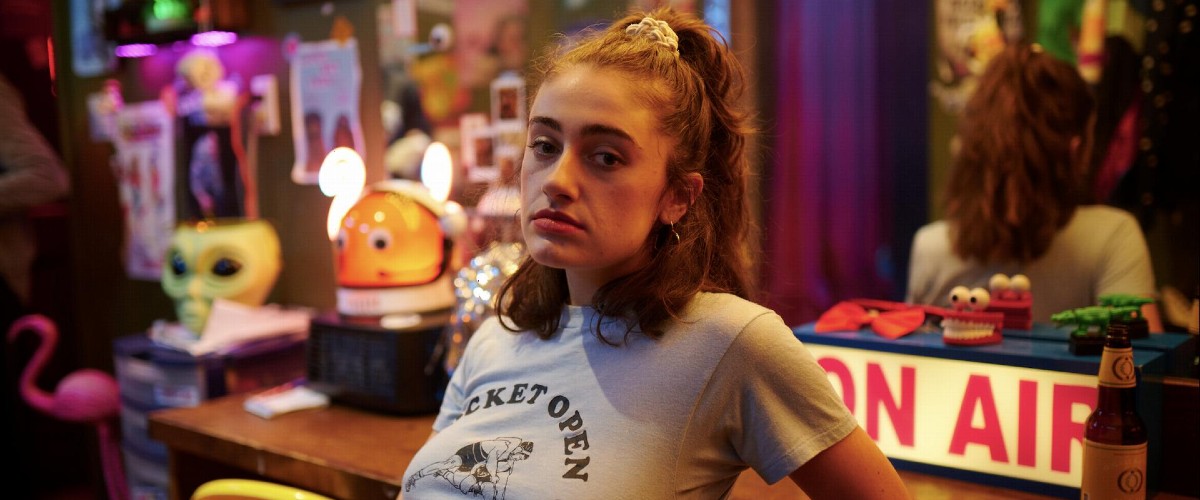
Photo caption: Rachel Sennott in I USED TO BE FUNNY. Courtesy of Utopia.
In the Canadian indie I Used to Be Funny, Sam is a standup comedian (played by Rachel Sennott, a real life standup comedian). Sam has been suffering the effects of PTSD for a year, and is existing with the kindness of her two comedian roommates. She’s been unable to work, write or leave the house, and it’s a major achievement to take a shower.
Through flashbacks, we learn how she got to her present condition. Sam had taken a day job as a nanny for a 13-year-old girl, Brooke (Olga Petsa). Brooke is a pistol anyway, but her mom is on her deathbed and her father is stricken with both grief and the bewilderment as to how to meet the needs of his teenage daughter, who is already troubled by the mom’s illness and soon to go off the rails completely. At first Brooke responds encouragingly to the hip young Sam. But then, everyone’s life is upended by the traumatic event. (That event is depicted over an hour into the film, but the audience has surely guessed what it is by then. )
Will Sam work through her PTSD and become functional again? Will Brooke be lost to her self-destructiveness?
I Used to Be Funny is the first feature for television writer-director Ally Pankiw. Pankiw accurately portrays the disabling pain of a PTSD sufferer and the helplessness of adults dealing with an out-of-control teenager. Pankiw finally gets us to a redemptive ending, but there’s a lots of emotional pain and drama on the way.
In case you forget that this is a Canadian film, you’ll notice that the comedian roommates, the estranged boyfriend, Brooke’s aunt and the folks at the comedy club are exceedingly nice. Even the troubled teen, a punk drug dealer and sexist cops are very nice for their types.
I watched I Used to Be Funny because I so enjoyed Sennott’s performance in Saturday Night. Now we know that Sennott has the emotional range to play the extremes of the spectrum – a depressive here and a sexy and masterful creative in Saturday Night. Both of those characters are quick-witted, and Sennott is very believable, of course, as a head comedy writer and as a standup comic.
I Used to Be Funny is streaming on Netflix, Amazon, AppleTV, YouTube and Fandango.
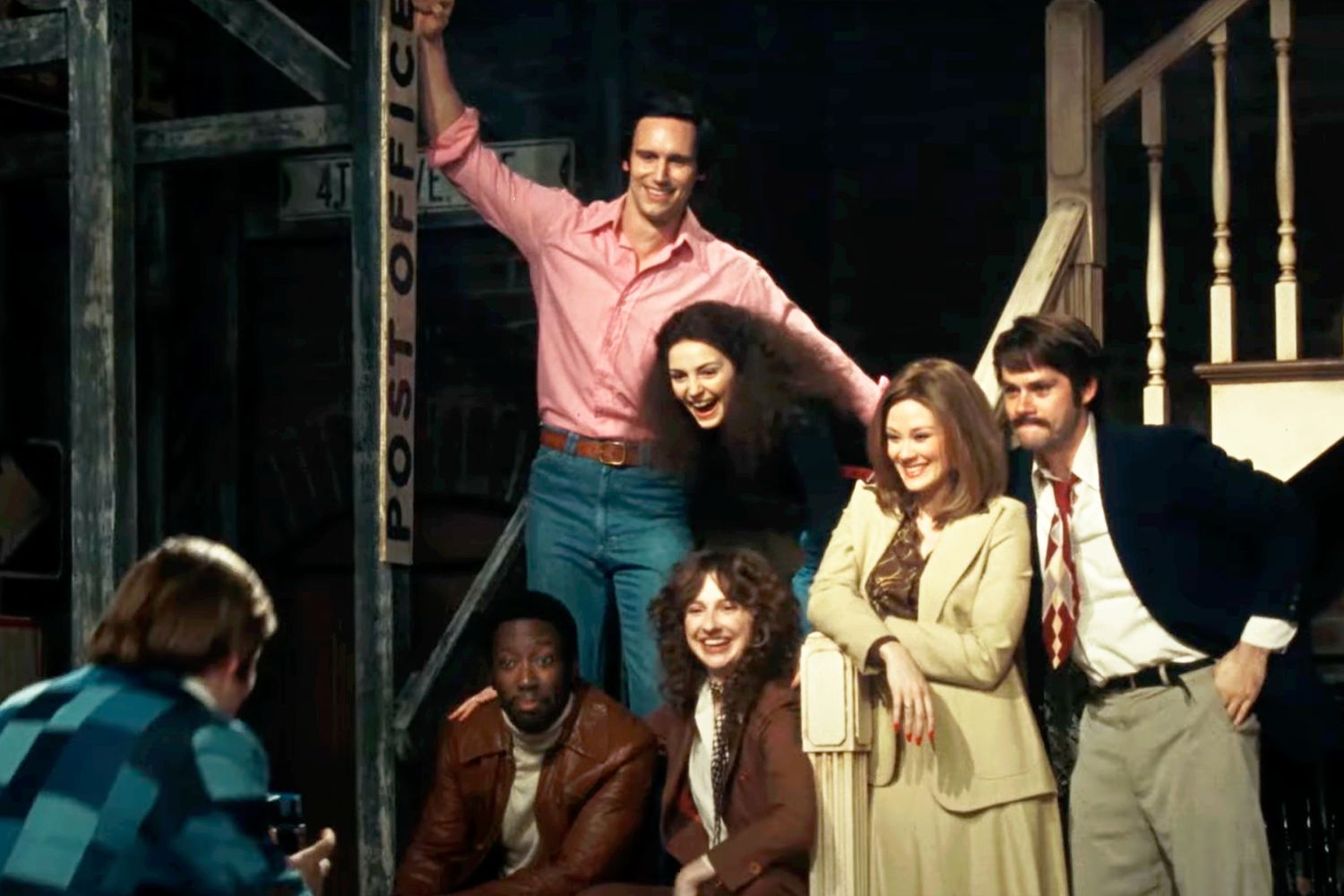
Photo caption: Cooper Hoffman (kneeling), Lamorne Morris, Cory Michael Scott. Ella Hunt, Emily Fairn, Kim Matula and Dylan O’Brien in SATURDAY NIGHY. Courtesy of Columbia Pictures and Sony Pictures Entertainment.
It’s hard to imagine, but fifty years ago there was no Saturday Night Live. There wasn’t much edginess on TV – All in the Family and M.A.S.H. were controversial -and a live performance telecast was unthinkable. Saturday Night depicts the first telecast of Saturday Night Live on October 11, 1975, and it’s quite a story.
Television network executives, always trying not to upset sponsors and affiliate stations, constricted creativity. By 1975, American music, movies, literature and fashion, had all moved on to reflect the turbulence and societal revolution of the 1960s and the Vietnam/Watergate Era of the early 70s. TV was still too square for the culture. There was nothing on TV like Portnoy’s Complaint, Midnight Cowboy, Frank Zappa or The National Lampoon. There was an opening for edgier content that would appeal to then twenty-something Baby Boomers.
As Saturday Night tells it, the timeslot was only available because NBC was in a contract dispute with Johnny Carson and needed a temporary replacement, a show that would be disposable when The Tonight Show with Johnny Carson returned. Into the breach stepped twenty-something showrunner Lorne Michaels (Gabriel Labelle) with an idea for a sketch-comedy show with musical guest performances, to be broadcast live, which the NBC’s Radio City complex was not set up for.
Saturday Night captures the chaos and risks of SNL’s debut. There were staggering technical issues with live television broadcast. The human challenges were more imposing – network suits were ready to pull the plug, the blue collar crew was in revolt and the network censor had never seen a script so transgressive. And Michaels had to wrangle a a group of artists, many whose egos and drug use were out of control.
Saturday Night’s cast members have the challenge of playing figures with whom the audience is extremely familiar – John Belushi, Dan Ackroyd, Chevy Chase, Gilda Radner, Jane Curtin, Garrett Morris and Laraine Newman. They’re all good. Dylan O’Brian kept making me me think I was watching the real 1970s version of Dan Ackroyd. Nicholas Braun captures the off-kilter talent of Andy Kaufman, and also plays a comically earnest Jim Henson.
Two performances stand out. Sennott is a revelation as SNL co-creator and head writer Rosie Shuster. Sennott’s Shuster is bright, sexy and charismatic; her command of situations, leavened with playfulness, is exactly what Lorne Michaels needs, as he is ever more confounded by unexpected crises.
J.K. Simmons is brilliant as Milton Berle, still feeling the entitlement of his TV superstardom, which, in 1975, was over 15 years in the past. Simmons dominates two of the greatest scenes in Saturday Night, the first as Berle cruelly dispenses a deserved comeuppance to Chevy Chase. In my personally favorite scene, Berle is taping an insipid variety show and mailing in his performance; just watch how Simmons’ Berle knows precisely how little effort he needs to put into a dance number.
Director Jason Reitman has delivered some the best movie comedies of the century. Saturday Night doesn’t have the depth of Reitman’s best (Juno, Up in the Air, Young Adult), but it’s entertaining. Saturday Night, a pretty good movie about a pivotal moment in our culture, is streaming on Amazon, AppleTV, YouTube and Fandango.