Under the Radar at SFJFF

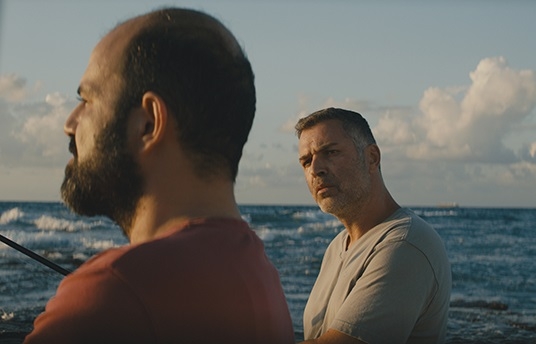
Photo caption: Neta Riskin in NANDAURI, Courtesy of SFJFF.

One of the Bay Area’s top cinema events is back – the San Francisco Jewish Film Festival (SFJFF), running from July 16 to August 2. The program offers 65 films from Austria, Belgium, Canada, Denmark, France, Georgia, Germany, Hungary, Israel, Italy, Malaysia, the Netherlands, Palestine, Qatar, Spain, the United Kingdom, and the United States. Here’s my festival preview.

Don’t miss these three films, especially two directorial debuts – one from from Georgia and and the other a low budget US indie. Hollywood Does Abortion, is a festival center[piece, so it isn’t exactly under the radar, but I wouldn’t want anyone to overlook this eyeopening documentary. Here are my recommendations from this year’s program:

  • Nandauri: In this simmering drama, Marina (Neta Riskin) is an Israeli lawyer who returns to her native Georgia on a mission to retrieve a child. Her client is also a Georgian emigre who, as a teen, abandoned her son, now 11-years-old, to be brought up by her brother; her situation now stabilized, she wants the son back. Marina must travel to rural northern Georgia, finagle the paperwork from the Georgian bureaucracy and persuade the brother to cooperate. That’s not going to be easy because the brother, Dato (Roland Okrapiridze) has sacrificed his own life to shoulder all the responsibilities for raising his nephew and caring for his elderly parents – and Dato is resentful. But Marina is a determined and resourceful badass, who has no patience for the sexism of traditional Georgians, especially arranged marriages, and she resolutely deals with men only on on her terms. Neta Riskin is brilliant as Marina, who is in a constant state of critical observation and is fierce when she needs to be. This is the first feature for Israeli writer-director Eti Tsicko; she uses a static camera in an uninterrupted nine-and-a-half minute shot that is a masterpiece of sexual tension. Nandauri was nominated for nine Ophir awards (the Israeli Oscar), including for best picture, director, screenplay and actress. Bay Area premiere.
  • Human Theories: This smart and sharply funny film is a compendium of snapshots of educated, thirtyish New Yorkers as they navigate regular life. In her debut feature, writer-director Jess Zeidman deploys a cast of fifty to create a 105-minute triumph of observational humor. Sketch comedy a la SNL tends to milk the joke, lingering too long, but Zeidman and editor Ryan Martin Brown time each vignette impeccably. West Coast premiere.
  • Hollywood Does Abortion: The political, legal and ethical aspects of abortion get plenty of attention, but this eyeopening documentary probes the impact of screen depictions of abortion upon the popular culture. We may think of the groundbreaking 1972 episode of Maude, but, this film documents movies and television shows since, finding that they disproportionately depict legal abortion as dangerous, traumatizing, shameful and even lethal. Extraordinarily well-sourced, Hollywood Does Abortion is surprisingly revealing and an essential addition to the public discourse. West Coast premiere.

The fest starts this week and runs through August 2. Check out the entire program and buy tickets at SFJFF.
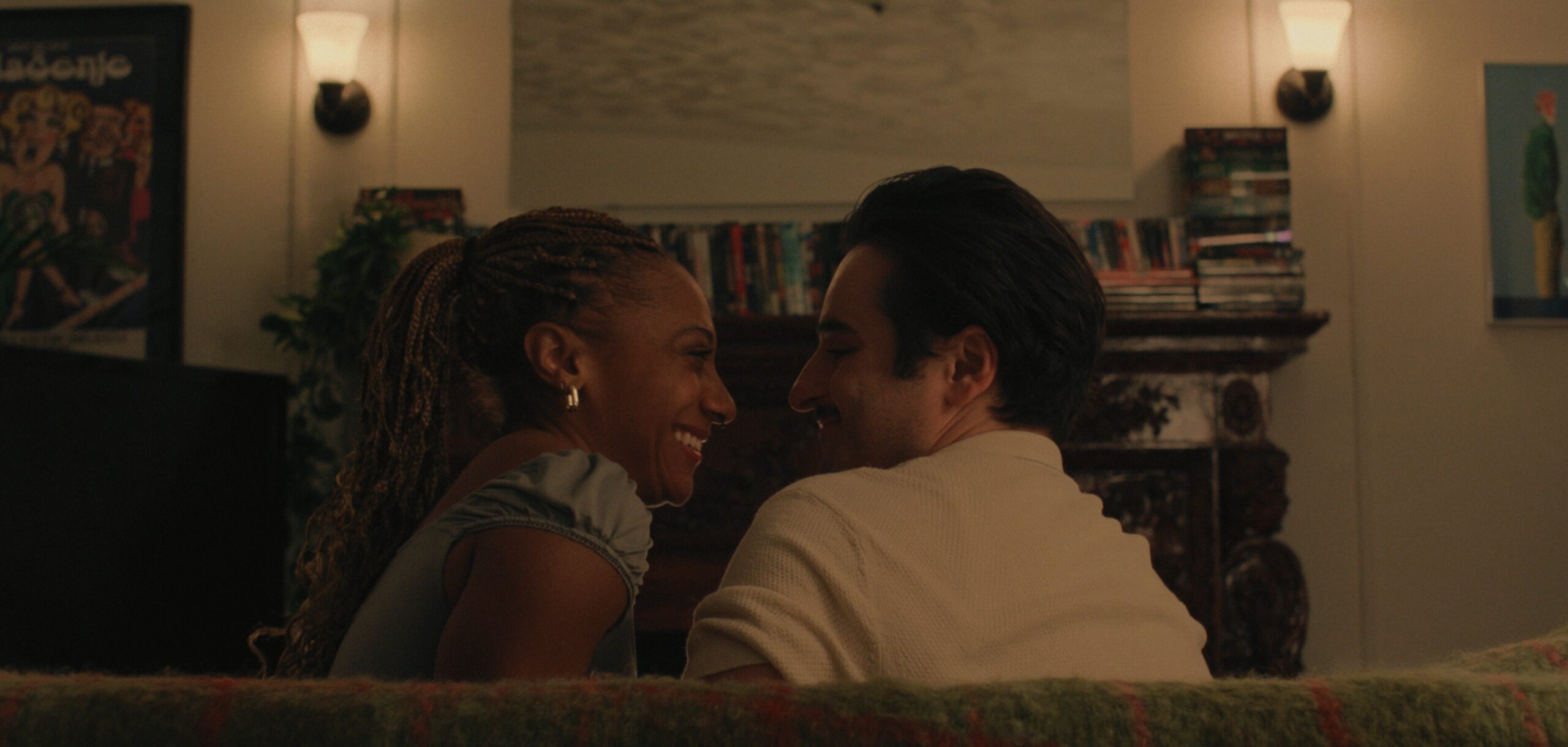
A scene from Jess Zeidman’s HUMAN THEORIES. Courtesy of SFJFF.

The SFJFF Is Back in July

Photo caption: A scene from Moshe Rosenthal’s TELL ME EVERYTHING. Photo credit: Ziv Berkovich. Courtesy of SFJFF.

One of the Bay Area’s top cinema events is back – the San Francisco Jewish Film Festival (SFJFF), running from July 16 to August 2. The SFJFF is the world’s oldest and largest Jewish film festival – this year’s festival is the 46th! The program offers 65 films from Austria, Belgium, Canada, Denmark, France, Georgia, Germany, Hungary, Israel, Italy, Malaysia, the Netherlands, Palestine, Qatar, Spain, the United Kingdom, and the United States.

After opening night at the Herbst Theatre, films will screen at the Castro Theatre (for the first time since 2022) , the Herbst, the Roxie, the Jewish Community Center of San Francisco and Landmark’s Piedmont.

Highlights include:

  • The lineup brings many notable premieres to the Bay Area, including 8 World Premieres, 2 International Premieres, 2 North American Premieres, 5 United States Premieres, and numerous West Coast, California, and Bay Area Premieres. Many, perhaps most, of the feature filmmakers are expected to attend.
  • Opening night with the California Premiere of Tell Me Everything, the second feature from Israeli director Moshe Rosenthal, fresh off its premiere at Sundance.
  • Centerpiece program with include US Premiere of Assaf Machnes’ Where To? with its mixed Israeli, Palestinian, and European cast and crew and a story set in Berlin.
  • Closing night with Paula Eiselt’s We Met at Grossinger’s about the iconic Catskills resort.
  • Nationally acclaimed actress and writer Rachel Bloom will appear to receive the Freedom of Expression Award.

Just before the fest, I’ll be publishing some recommendations. I’ve already screened a sample of the program, and I’ve seen some good ones. Check out the program and buy tickets at SFJFF.
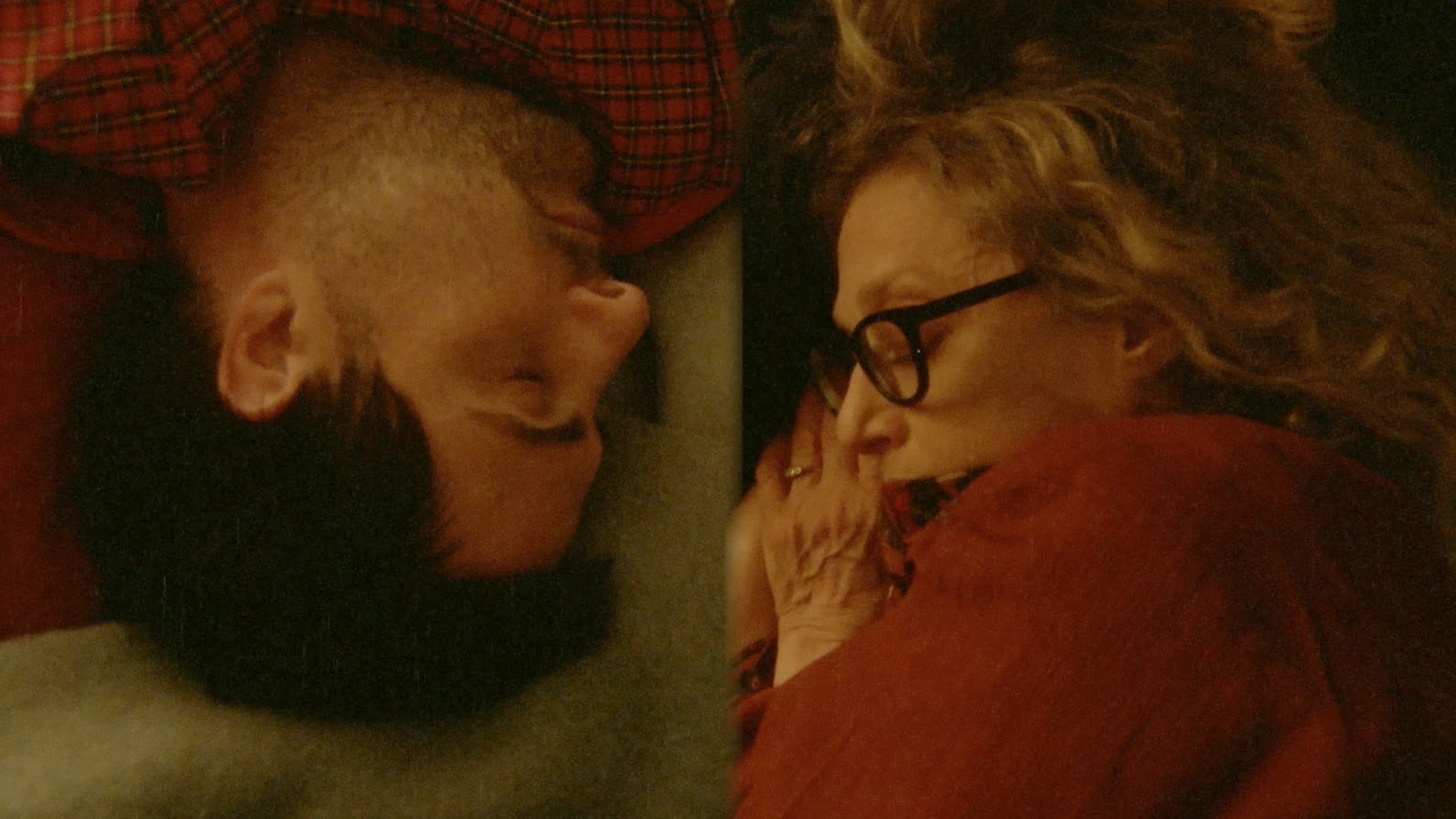
Neta Riskin in NANDAURI, Courtesy of SFJFF.

OH, HI!: romantic disappointment becomes absurdly unhinged

Photo caption: Logan Lerman as Isaac and Molly Gordon as Iris in OH, HI!. Courtesy of Sony Pictures Classics.

The dark romantic comedy Oh, Hi! begins with Iris (Molly Gordon of Booksmart, Theater Camp, The Bear) and Isaac (Logan Lerman of The Perks of Being a Wallflower) heading off to a countryside vacation rental for their first romantic getaway. All is lustful fun until they discover that each has a different perception of what their relationship is and where it is headed. What could have been a merely awkward or hurtful moment precipitates an extreme reaction, and escalates into an absurdly funny situation.

Oh, Hi! is the sophomore feature for writer-director Sophie Brooks. Commitment-averse guys and overthinking gals are common fodder for rom com humor, but Brooks is sharply observant about relationships tending to evolve at different speeds for the participants. Although she has created a broadly funny, over-the-top situation, much of the comedy is character-driven. Brooks has mined the first act and later flashbacks with clever hints about each character’s level of commitment to the relationship and their emotional stability. It’s a smart screenplay.

The success of Oh, Hi! depends on Molly Gordon’s fine performance as a woman whose increasingly unhinged and transgressive behavior is vulnerability-based. Logan Lerman is very good as a guy thinking his way through through a surreal experience with complete helplessness.

Polly Draper (Thirtysomething) is very funny as Iris’ mother, dispensing supportive yet unhelpful advice. Josh Reynolds is hilarious as an uxorious goof who has become entangled in a No Win state of affairs.

I screened Oh, Hi!, which premiered at this year’s Sundance, for the San Francisco Jewish Film Festival. It releases in theaters this weekend.

Two Nuggets at this year’s SFJFF

Photo caption: Logan Lerman as Isaac and Molly Gordon as Iris in OH, HI!. Courtesy of Sony Pictures Classics.

The San Francisco Jewish Film Festival (SFJFF), always a major event for Bay Area cinephiles, opens tomorrow. The program offers 70 films from Belgium, Canada, France, Germany, Israel, Italy, Switzerland, the US and the UK and Uzbekistan. Here’s my festival preview.

This year, I’m recommending two nuggets:

Oh, Hi!: This dark romantic comedy begins with a couple heading off to a countryside vacation rental for their first romantic getaway. All is lustful fun until they discover that each has a different perception of what their relationship is and where it is headed. What could have been a merely awkward or hurtful moment precipitates an extreme reaction, and escalates into an absurdly funny situation. Oh, Hi! is the sophomore feature for writer-director Sophie Brooks, who has created a broadly funny, over-the-top situation that is sharply observant about relationships tending to evolve at different speeds for the participants. It’s a very smart screenplay. Oh, Hi!, which premiered at Sundance, is releasing into theaters soon; see it early at the SFJFF. (Full review to be published on July 23.)

THE STAMP THIEF. Courtesy of the San Francisco Jewish Film Festival.

The Stamp Thief: We don’t expect a Holocaust-related documentary to get wacky, but The Stamp Thief combines a historical whodunit and a real-life comic heist. It begins with tracking down a fourth-hand oral account of Nazi-stolen valuable stamps hidden in Poland: Is it true, who was the Nazi, where did he stash the loot and is it still there? And here’s where The Stamp Thief gets zany. Because the Polish authorities have not been supportive of the restitution of Nazi loot, our heroes decide to find and recover the stamps with a ruse. The team masquerades as a film crew shooting a romantic drama; they plan to dig around Polish basements until they find the stamps, under the noses of the Poles. What could possibly go wrong? How does the team navigate the moral ambiguity of lying for a good cause? Do they find the stamps? Do they get caught? What follows is Sherlock Holmes meets The Gang That Couldn’t Shoot Straight, an unusually colorful documentary. Full review.

The SFJFF runs through August 3 in select San Francisco and Oakland venues. Check out the program and buy tickets at SFJFF.
Here’s the trailer for Oh, My!.

THE STAMP THIEF: amateur detectives running amuck

Photo caption: THE STAMP THIEF. Courtesy of the San Francisco Jewish Film Festival.

We don’t expect a Holocaust-related documentary to get wacky, but The Stamp Thief combines a historical whodunit and a real-life comic heist.

The Stamp Thief’s shaky premise is based on what is at least a fourth-hand oral account: As Nazis looted the possessions of Jews heading to the death camps, one German officer pocketed highly valuable, easy-to-hide stamp collections. As he fled after the war with his family, he buried the stamps in the basement of the apartment building, intending to return and retrieve his booty. But, because the location was now behind the Iron Curtain in Poland, he was never able to go back.

Naturally, this story raises some fundamental questions, starting with whether it is true. If so, who was the Nazi and where did he stash the stamps? Has someone else found the stamps, or is the treasure still buried?

Gary Gilbert, after a distinguished career as a movie producer (Garden State, The Kids Are Alright, Margaret, La La Land) aspires to track down the truth, hoping to recover the stamps and to restore them, if possible, to the heirs of the original owners. The story comes from a series of potentially unreliable narrators, so Gilbert and colleagues must first undertake an impressive detective investigation, armed at first with not much more than a possibly tall tale and an old photo of two girls in front of a house.

And here’s where The Stamp Thief gets zany. Gilbert is both a man with a sacred mission and a bit of an adventurer. Because the Polish authorities have not been supportive of the restitution of Nazi loot, Gilbert decides to find and recover the stamps in secret. His plan is to take a faux film crew to Poland on the false pretense of shooting a romantic drama, and digging around until he finds the stamps, under the noses of the Poles. His team includes documentarian Dan Sturman, the The Stamp Thief’s director, who films their escapades. What could possibly go wrong? Gilbert’s cause is righteous, but he may not even be able to operate a metal detector competently.

How does the team navigate the moral ambiguity of lying for a good cause? Do they find the stamps? Do they get caught? What follows is Sherlock Holmes meets The Gang That Couldn’t Shoot Straight.

And was the distrust of Polish attitudes justified? There is one local fixer whose behavior is heroic, but the Polish government and the apartment dwellers do not cover themselves with glory here. Gilbert also happens upon a breathtakingly offensive tchotchke common in Polish households.

With its historical whodunit, an operation of deception, generational antisemitism and buried treasure, The Stamp Thief is an unusually colorful documentary.

The SFJFF is back in 2025

Photo caption: Logan Lerman as Isaac and Molly Gordon as Iris in OH, HI!. Courtesy of Sony Pictures Classics.

One of the Bay Area’s top cinema events is back – the San Francisco Jewish Film Festival (SFJFF), running from July 17 to August 3. The SFJFF is the world’s oldest and largest Jewish film festival – this year’s festival is the 45th! The program offers 70 films from Belgium, Canada, France, Germany, Israel, Italy, Switzerland, the US and the UK and Uzbekistan.

After opening night at the Herbst Theatre, films will screen at the AMC Kabuki 8, the Vogue, the Roxie, and Oakland’s Landmark Piedmont Theater, as well as additional programming at the Jewish Community Center of San Francisco.

Highlights include:

  • Opening Night: Amber Fares’s Coexistence, My Ass! won the World Cinema Documentary Special Jury Award for Freedom of Expression at this year’s Sundance. the film follows Israeli comedian Noam Shuster-Eliassi (who will perform live in a separate event on the SFJFFF’s first weekend) as she develops an act tackling inequality and taboo amidst the Israeli-Palestinian conflict.
  • Centerpiece Narrative: In Fantasy Life, writer-director Matthew Shear stars as a laid-off, thirty-something paralegal who begins nannying for his psychiatrist’s grandkids and falls for their mother.  Co-stars Amanda Peet and Judd Hirsch.
  • Next Wave Spotlight: The dark rom com Oh, Hi! stars Molly Gordon and Logan Lerman as a couple heading off to a countryside vacation rental for their first romantic getaway, which gets completely unhinged. It’s the sophomore feature for writer-director Sophie Brooks (The Boy Downstairs, SFJFF 2017).
  • Closing Night: The Floaters, an indie comedy about misfits at a Jewish summer camp.

Just before the fest, I’ll be publishing some recommendations. I’ve already screened an absurdly dark rom com and an unexpectedly wacky documentary. Check out the program and buy tickets at SFJFF. Here’s the trailer for Oh, My!.

BETWEEN THE TEMPLES: prodded out of his funk

In Nathan Silver’s comedy Between the Temples:, Jason Schwartzman plays a cantor whose wife’s death the year before has plunged him into despair; he is so paralyzed by depression, he has even lost his ability to sing. He has a chance meeting with his childhood music teacher (Carol Kane), now a retired widow.

Despite her age and his resistance, she insists on joining the bat mitzvah class he teaches at the temple. She’s a force of nature and may have enough gusto to overcome his angst. As their friendship evolves, will it bring him out of his funk?

Between the Temples is co-written by C. Mason Wells and director Nathan Silver. There are plenty of chuckles arising from Schwartzman’s character trying to neutralize his former teacher’s tsunami of will. And there are LOL moments from Madeleine Weinstein’s hilarious turn as as the rabbi’s lovelorn daughter Gabby.

Kane is excellent, and so is Dolly De Leon, who stole Triangle of Sadness, sparkles as a relentlessly determined Jewish mother. The prolific comedy writer Robert Smigel appears as the rabbi.

I screened Between the Temples for this year’s San Francisco Jewish Film Festival; Between the Temples opens in Northern California theaters this weekend.

The SFJFF is here

Photo caption: Amer Hlehel and Ashraf Farah in Maha Haj’s MEDITERRANEAN FEVER at the SLO Film Fest Courtesy of San Francisco Jewish Film Festival.

The San Francisco Jewish Film Festival (SFJFF) always a major event for Bay Area cinephiles, opens today. The SFJFF is the world’s oldest and largest Jewish film festival, and the program offers over 60 films from Israel, Palestine, Australia, Canada, Colombia, Cyprus, Ethiopia, France, Germany, Hungary, Italy, Poland, Ukraine, the US and the UK. Here’s my festival preview.

This year, I’m recommending three comedies.

  • Mediterranean Fever: A depressive writer becomes friends with his shady neighbor and the two embark on a dark journey. Second feature for Israeli Arab director Maha Haj. Although it’s dark and funny, I don’t want to describe Mediterranean Fever, like I do many films, as “darkly funny” because the tone is singular. Haj has written a story about that unfunniest of topics, depression, and keeps us watching with subtle, observational humor.  In Mediterranean Fever, we glimpse into the day-to-day life of Israeli Arabs – and middle-class Israeli Arabs at that. Won the Un Certain Regard screenplay prize at Cannes. Here’s my full review.
  • The Monkey House: This witty, twisty comedy is the latest from popular and prolific Israeli writer-director Avi Nesher. Set in pre-Internet 1989, novelist Amitay (Adir Miller) has gone a long time without a best seller, and sees his literary legacy fading. His ego is uplifted by an American grad student who plans to publish about his body of work; but, when that falls through, Amitay plans an elaborate ruse – he hires the flighty, wannabe actress Margo (Suzanna Papian) to impersonate the grad student. Plenty of unanticipated complications threaten to derail the scheme and humiliate Amitay, especially to his recently-widowed, longtime crush Tamar (Shani Cohen). Nesher, evidently a gimlet-eyed observer of human behavior, delivers lots of plot twists in this smart and funny movie. Nominated for 11 Israeli Academy Awards.
  • Between the Temples: In Nathan Silver’s comedy, Jason Schwartzman plays a cantor whose wife’s death the year before has plunged him into despair; he is so paralyzed by depression, he has even lost his ability to sing. He has a chance meeting with his childhood music teacher (Carol Kane), now a retired widow. Despite her age and his resistance, she insists on joining the bat mitzvah class he teaches at the temple. She’s a force of nature and may have enough gusto to overcome his angst. As their friendship evolves, will it bring him out of his funk? There are plenty of LOL moments. Kane is excellent, and so is Madeleine Weinstein as the rabbi’s lovelorn daughter. Dolly De Leon, who stole Triangle of Sadness, sparkles as a relentlessly determined Jewish mother.

The SFJFF runs through August 4 in select San Francisco and Oakland venues. Peruse the program and purchase tickets at SFJFFHere’s the trailer for Between the Temples.

CHARM CIRCLE: you think YOUR family has issues?

Raya Burstein and Uri Burstein in CHARM CIRCLE. Photo courtesy of Cinequest.

In the superbly structured documentary Charm Circle, writer-director Nira Burstein exquisitely unspools the story of her own bizarre family. At first, we meet Burstein’s father, a sour character who inexplicably is about to lose his rented house, which has become unkempt, even filthy. He is mean to Burstein’s apparently sweet and extraordinarily passive mother, and the scene just seems unpleasant.

But then, Nira Burstein brings out twenty-year-old videos that show her dad as witty, talented and functional. We learn a key fact about the mom, and then about each of the director’s two sisters.

Some of the publicity about Charm Circle describes the family as eccentric, but only one daughter is a little odd – three family members are clinically diagnosable. Charm Circle is a cautionary story of untreated mental illness and the consequences of failing to reach out for help.

This is Nira Burstein’s first feature, and she has two things going for her: unlimited access to the subjects and a remarkable gift for storytelling. Charm Circle works so well because of how Burstein sequences the rollout of each family member’s story.

The Nashville Film Festival returns in a few days, and I attended a screening of Charm Circle, with a Nira Burstein Q&A at NashFilm two years ago. It went on to play both the San Francisco Jewish Film Festival and Cinequest, and can now be streamed on the Criterion Channel.

CHARM CIRCLE: you think YOUR family has issues?

Raya Burstein and Uri Burstein in CHARM CIRCLE. Photo courtesy of Cinequest.

In the superbly structured documentary Charm Circle, writer-director Nira Burstein exquisitely unspools the story of her own bizarre family. At first, we meet Burstein’s father, a sour character who inexplicably is about to lose his rented house, which has become unkempt, even filthy. He is mean to Burstein’s apparently sweet and extraordinarily passive mother, and the scene just seems unpleasant.

But then, Nira Burstein brings out twenty-year-old videos that show her dad as witty, talented and functional. We learn a key fact about the mom, and then about each of the director’s two sisters.

Some of the publicity about Charm Circle describes the family as eccentric, but only one daughter is a little odd – three family members are clinically diagnosable. Charm Circle is a cautionary story of untreated mental illness and the consequences of failing to reach out for help.

This is Nira Burstein’s first feature, and she has two things going for her: unlimited access to the subjects and a remarkable gift for storytelling. Charm Circle works so well because of how Burstein sequences the rollout of each family member’s story.

I attended a screening of Charm Circle, with a Nira Burstein Q&A at the Nashville Film Festival. In July and August, it will play both the San Francisco Jewish Film Festival and Cinequest.