SAN FRANCISCO JEWISH FILM FESTIVAL is back with a rich slate of docs

Raya Burstein and Uri Burstein in CHARM CIRCLE. Photo courtesy of Cinequest.

One of the Bay Area’s top cinema events is back – the San Francisco Jewish Film Festival (SFJFF). This year’s festival is a hybrid, with in-person screenings at San Francisco’s Castro Theatre and the Albany Twin in Albany through July 31, with some films streaming from the SFJFF digital screening room August 1-7. The SFJFF is the world’s oldest and largest Jewish film festival, and the program offers over 71 films from over 14 countries (but mostly from the US and Israel), plus 4 programs of short films (Jews in Shorts).

The SFJFF always presents an impressive slate of documentaries, in recent years including What She Said: The Art of Pauline Kael, Satan & Adam, Bombshell: The Hedy Lamarr Story, The Mossad and Levinsky Park.

The Must Sees from this year’s documentary program are:

  • Charm Circle: You think YOUR family has issues? In this superbly structured film, writer-director Nira Burstein exquisitely unspools the story of her own bizarre family, a cautionary and ever-surprising chronicle of mental illness.
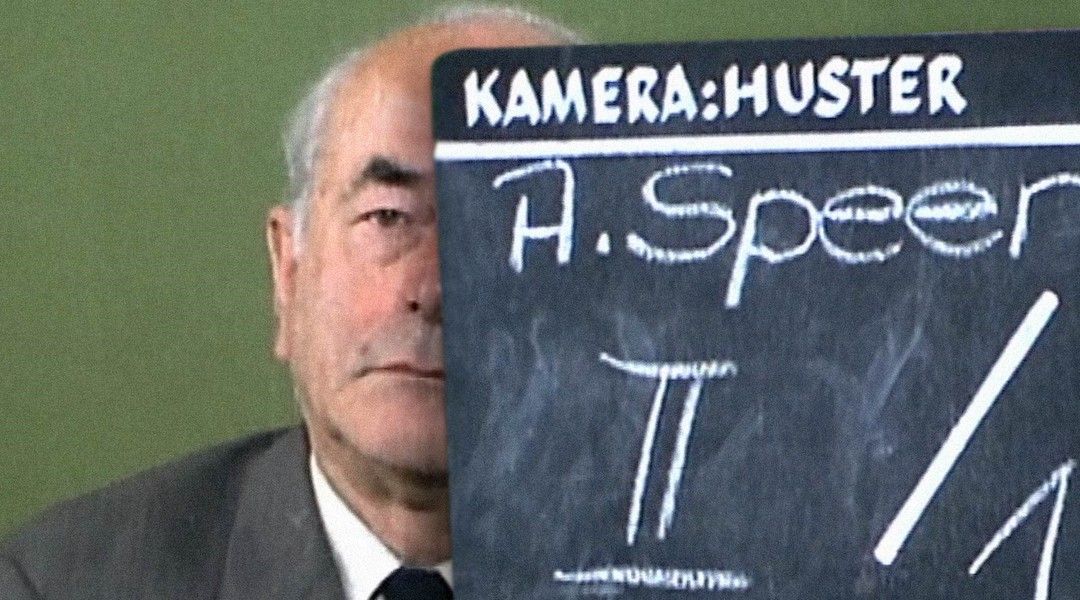
  • Speer Goes to Hollywood: In this absorbing documentary, filmmaker Vanessa Lapa takes us inside a Nazi war criminal’s brazen attempt to rehabilitate his image into “the Good Nazi”. Previously unheard private audio recordings of Albert Speer himself reveal him to be one of history’s most audacious spin doctors.
  • The Faithful: The King, the Pope, the Princess: Filmmaker Annie Berman follows the people who are devoted to iconic celebrities, both dead (Elvis Presley and Princess Diana) and alive (the Pope du jour). I don’t mean “fans”, I mean “devoted”, as in those who make annual pilgrimages and who decorate shrines. Who are these faithful, and how did someone they never met “touch their lives”? The journey is sometimes amusing, sometimes appalling, but fundamentally meditative.

You can peruse the festival’s program and schedule at SFJFF.

THE FAITHFUL: THE KING, THE POPE, THE PRINCESS: are there limits to devotion?

Photo caption: THE FAITHFUL: THE KING, THE POPE, THE PRINCESS. Courtesy of Annie Berman.

In the documentary The Faithful: The King The Pope The Princess, filmmaker Annie Berman follows the people who are devoted to iconic celebrities, both dead (Elvis Presley and Princess Diana) and alive (the Pope du jour). I don’t mean “fans”, I mean “devoted”, as in those who make annual pilgrimages and who decorate shrines.

At first, Berman wryly observes the endless variety of cheesy Elvis souvenirs, and the possibly cheesier panoply of Pope souvenirs. She archly interviews a Papal spokesman about the Vatican’s commercial licensing of the Pope’s image. We see what are purported to be Pope lollipops, but when they are unwrapped, the Pope’s image turns out to be on a paper cover, so no tongues actually commit the sacrilege of licking the papal face.

But Berman – herself returning yearly to Graceland and Elvis’ Tupelo birthplace, a London Princess Di shrine and the Vatican – focuses on the faithful. She lets them talk about their obsessions, and how someone they never met “touched their lives”. Berman is remarkably nonjudgmental with these people and their sincere devotion and chooses not to mock them.

THE FAITHFUL: THE KING, THE POPE, THE PRINCESS. Courtesy of Annie Berman.

Finally, Berman has to ask herself whether she herself is too obsessed with this project on obsession.

Berman’s narration takes us on a journey that sometimes amusing, sometimes appalling, but fundamentally meditative.

SPEER GOES TO HOLLYWOOD: immune from shame

SPEER GOES TO HOLLYWOOD. Courtesy of Vanessa Lapa.

In her absorbing documentary Speer Goes to Hollywood, filmmaker Vanessa Lapa takes us inside a Nazi war criminal’s brazen attempt to rehabilitate his image into “the Good Nazi”. Previously unheard private audio recordings of Albert Speer himself reveal him to be one of history’s most audacious spin doctors.

Speer, the highest ranking Nazi to escape execution at the Nuremberg Trials, was the master of the Nazis’ wartime production efforts. A trained architect, any ability Speer had to design structures was surpassed by his genius in logistics. In Speer Goes to Hollywood, Speer displays an ever greater gift for dissembling.

After being released from prison in the mid 1960’s, Speer published a bestselling (and self-serving) memoir, Inside the Third Reich, to perpetuate what is known as The Speer Myth. Speer would have us believe that the worst crimes in history occurred – right under his nose and to his benefit – without any participation on his part. Speer’s defense was essentially, “Hey, it was the OTHER Nazis“.

(Note: not even a liar as bald-faced as Speer denied that the Holocaust happened.)

To supply the German war machine, Speer exploited the nearly limitless pool of those conquered, persecuted and to be exterminated by the Nazis. Powering his production with forced labor, Speer enslaved 12.5 million victims and worked many of them to death, all to perpetrate a war of aggression.

In the tapes, we hear Speer collaborating with Andrew Birkin, a Stanley Kubrick protege, on the script for a film to further Speer’s version of history. In the face of damning evidence, Speer never wavered in his deflections, dodges and denials. Speer Goes to Hollywood reveals Albert Speer to stay on message with unmatched relentlessness, discipline and audacity.

Andrew Birkin was trying to cash in on the popularity of Inside the Thrd Reich. The tapes show Birkin to be stunningly enabling in the attempted whitewash. Once Birkin slips and blames a kerfuffle on “the Jewish machine”.

Another Birkin mentor, Carol Reed is the truth teller. Reed, the director of The Third Man, gives Birkin a reality check – this IS a whitewash, pure and simple.

A prime example of the banality of evil, Speer doesn’t seem to be a fanatic hater, but an amoral grasper/climber, willing to swallow even genocide as an acceptable price for getting ahead. He does display an ingrained antisemitism, once tossing off “Of course, we resented the Jews“, as if, who wouldn’t?

Here’s a tantalizing nugget from Speer Goes to Hollywood. We hear Speer claim to have written the top Nuremberg prosecutor, American Robert Jackson, to claim important knowledge of Germany’s neurological warfare research, using it as leverage to avoid being turned over to the Soviets. Speer hints at an implied quid pro quo, but given Speer’s credibility, who knows if any of it is true.

The ever-watchable Speer Going to Hollywood chronicles unashamedness on a mass scale.

Good news for cinephiles – the SFJFF is back

Photo caption: Nahuel Pérez Biscayart in PERSIAN LESSONS,opening the San Francisco Jewish Film Festival. Photo courtesy of JFI.

One of the Bay Area’s top cinema events is back – the San Francisco Jewish Film Festival (SFJFF) runs from July 22 to August 1. This year’s festival is a hybrid, including both movies to stream-at-home and in-person screenings at San Francisco’s Castro Theatre. The SFJFF is the world’s oldest and largest Jewish film festival, and the program offers over 50 films from over 20 countries.

The opening night film at the Castro, Persian Lessons, is especially strong. A Belgian Jew is sent to a German concentration camp and seeks to avoid death by claiming to be Persian, not anticipating that a Nazi officer will demand to be taught Farsi. To stay alive, the protagonist must invent an entire faux Farsi language, word-by-word, and remember it. All the while he’s sweating out the possibility that his ruse will be discovered. Persian Lessons walks a tightrope, and the ending is very emotionally powerful.

The SFJFF always presents an impressive slate of documentaries, recently including What She Said: The Art of Pauline Kael, Satan & Adam, Bombshell: The Hedy Lamarr Story, The Mossad and Levinsky Park. Among this year’s program, I liked Kings of Capitol Hill, an Israeli’s filmmaker’s insiders’ exposé of AIPAC, the American pro-Israel advocacy group.

One of the strengths of recent SFJFF festivals has been its promotion of films that explore aspects of the Israeli-Palestinian conflict. This year, Kings of Capitol Hill is one of seven films in the SFJFF program, both documentary and narrative, that touch on this topic.

I was also intrigued by the stylish Canadian indie narrative Sin la Habana, which braided together the yearnings of an Afro-Cuban couple and a Jewish-Iranian woman in Montreal.

You can peruse the festival’s program and schedule at SFJFF.

Yonah Acosta Gonzalez in SIN LA HABANA. Photo courtesy of JFI.

coming up on TV: WHAT SHE SAID: THE ART OF PAULINE KAEL – the drive for relevance

Pauline Kael in WHAT SHE SAID: THE ART OF PAULINE KAEL

What She Said: The Art of Pauline Kael is the remarkably thorough and insightful biodoc of the iconic film critic Pauline Kael and her drive for relevance. Set your DVRs for it on Turner Classic Movies on December 12.

Documentarian Rob Garver has sourced What She Said is well-sourced with the memories of Kael’s colleagues, rivals and intimates. Garver’s portrait of Kael helps us understand her refusal to conform to social norms as she basically invented the role of a female film critic and what today we might call a national influencer on cinema.

Of course, one of Kael’s defining characteristics was her all-consuming love of movies, a trait shared by many in this film’s target audience. Fittingly, Garver keeps things lively by illustrating Kael’s story with clips from the movies she loved and hated. Garver’s artistry in composing this mosaic of evocative movie moments sets What She Said apart from the standard talking head biodocs.

Kael was astonishingly confident in her taste (which was not as snooty as many film writers). For the record, I think Kael was right to love Mean Streets, Band of Outsiders, Bonnie and Clyde, and, of course, The Godfather. It meant something to American film culture that she championed those films. She was, however, wrong to love Last Tango in Paris. She was also right to hate Limelight, Hiroshima Mon Amour and The Sound of Music. But Kael was just being a contrarian and off-base to hate Lawrence of Arabia and Shoah.

Kael was by necessity an intrepid self-promoter and filled with shameless contradictions. She famously dismissed the auteur theory but sponsored the bodies of work of auteurs Scorsese, Peckinpah, Coppola and Altman. She loved – even lived – to discover and support new talent.

Most of the people we like and admire possess at least some bit of selfishness and empathy. Kael’s daughter Gina James says that Kael turned her lack of self awareness into triumph. This observation, of course, cuts both ways.

I screened What She Said: The Art of Pauline Kael while covering the 2019 San Francisco Jewish Film Festival. It’s coming up on Turner Classic Movies this Friday.

WHAT SHE SAID: THE ART OF PAULINE KAEL – the drive for relevance

Pauline Kael in WHAT SHE SAID: THE ART OF PAULINE KAEL

What She Said: The Art of Pauline Kael is the remarkably thorough and insightful biodoc of the iconic film critic Pauline Kael and her drive for relevance.

Documentarian Rob Garver has sourced What She Said is well-sourced with the memories of Kael’s colleagues, rivals and intimates. Garver’s portrait of Kael helps us understand her refusal to conform to social norms as she basically invented the role of a female film critic and what today we might call a national influencer on cinema.

Of course, one of Kael’s defining characteristics was her all-consuming love of movies, a trait shared by many in this film’s target audience. Fittingly, Garver keeps things lively by illustrating Kael’s story with clips from the movies she loved and hated. Garver’s artistry in composing this mosaic of evocative movie moments sets What She Said apart from the standard talking head biodocs.

Kael was astonishingly confident in her taste (which was not as snooty as many film writers). For the record, I think Kael was right to love Mean Streets, Band of Outsiders, Bonnie and Clyde, and, of course, The Godfather. It meant something to American film culture that she championed those films. She was, however, wrong to love Last Tango in Paris. She was also right to hate Limelight, Hiroshima Mon Amour and The Sound of Music. But Kael was just being a contrarian and off-base to hate Lawrence of Arabia and Shoah.

Kael was by necessity an intrepid self-promoter and filled with shameless contradictions. She famously dismissed the auteur theory but sponsored the bodies of work of auteurs Scorsese, Peckinpah, Coppola and Altman. She loved – even lived – to discover and support new talent.

Most of the people we like and admire possess at least some bit of selflessness and empathy. Kael’s daughter Gina James says that Kael turned her lack of self awareness into triumph,. This observation, of course, cuts both ways.

I saw What She Said: The Art of Pauline Kael at the 2019 San Francisco Jewish Film Festival. It’s now playing in theaters in San Francisco and Berkeley.

Stream of the Week: SAMMY DAVIS, JR.: I’VE GOTTA BE ME – a needy talent through complicated times

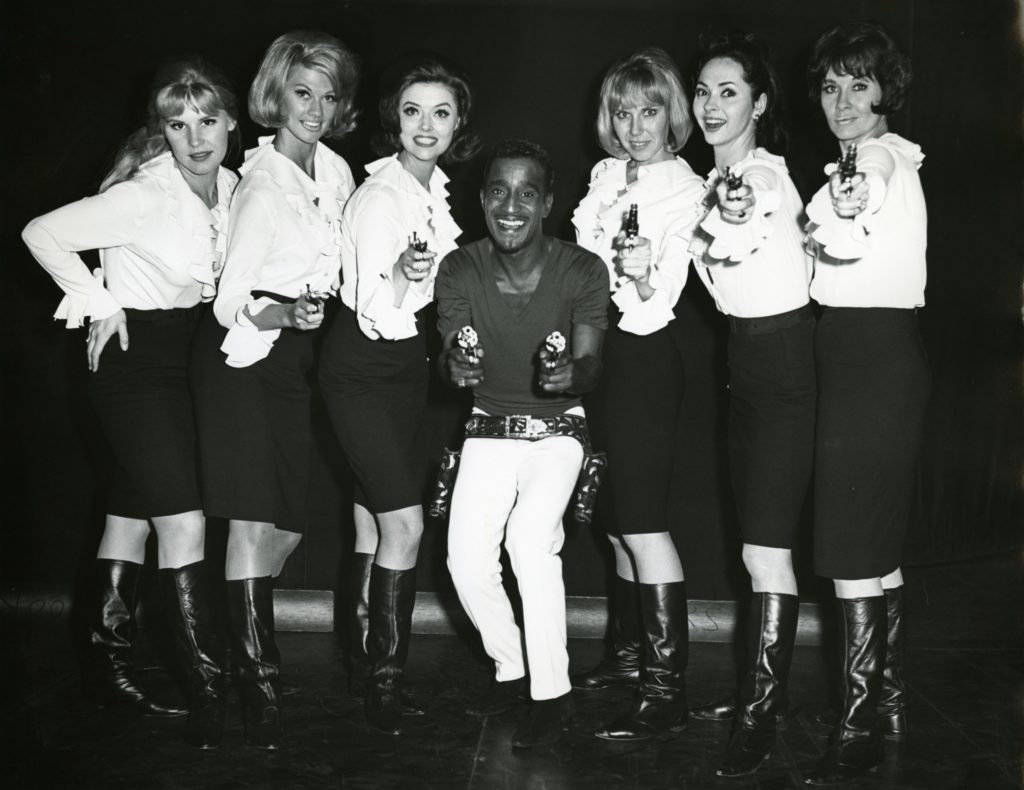
Still from SAMMY DAVIS JR.: I’VE GOTTA BE ME. Photo courtesy JFI.

Sammy Davis Jr.: I’ve Gotta Be Me is now available to stream (and free on Amazon Prime).  As a Baby Boomer who had dismissed Sammy Davis Jr. from the moment he publicly hugged Richard Nixon, I found this to be the most surprising doc (and my favorite) at last year’s San Francisco Jewish Film Festival. I learned that Sammy’s 61-year career as a professional entertainer began at age three (with his first movie credit at age 7), a working childhood that  left emotional needs  It turns out that Sammy was a very, very talented but needy artist,, an uncomplicated man navigating several very complicated times.

Sammy’s life of entertainment began at 3.  We get to see a clip of him in the 1933 Rufus Jones for President.  All that professional work took away his childhood and engraved upon him a need to please.  That and his generation produced the 50s showbiz style that seemed so insincere to us Baby Boomers.  And, of course that embrace of Nixon seemed to be the ultimate sell-out moment.

Sammy Davis Jr.: I’ve Gotta Be Me also poses whether he was demeaned by Rat Pack humor? Were Frank and Dino laughing at Sammy, or with him?

But this was  an immensely talented man, a masterful dancer with a remarkable crooner’s voice and a gift for mimicry.  He was the first American entertainer of color to do impersonations of white celebrities.   BTW there is some unbelievable dancing in Sammy Davis Jr.: I’ve Gotta Be Me.  We get to see Sammy’s 60th anniversary in showbiz celebrated among a host of celebrities – he still had his dancing chops.

Sammy Davis Jr.: I’ve Gotta Be Me is the story of a man whose success condemned him to a career that spanned generations – none of which fit him comfortably.  It’s a fine and insightful film. It can streamed on Amazon (included with Prime, iTunes, Vudu, YouTube and Google Play.

[Random note: This film title may contain the most different punctuation marks of any movie title: a comma, a period, a colon and an apostrophe.]

SATAN & ADAM: more than an odd couple

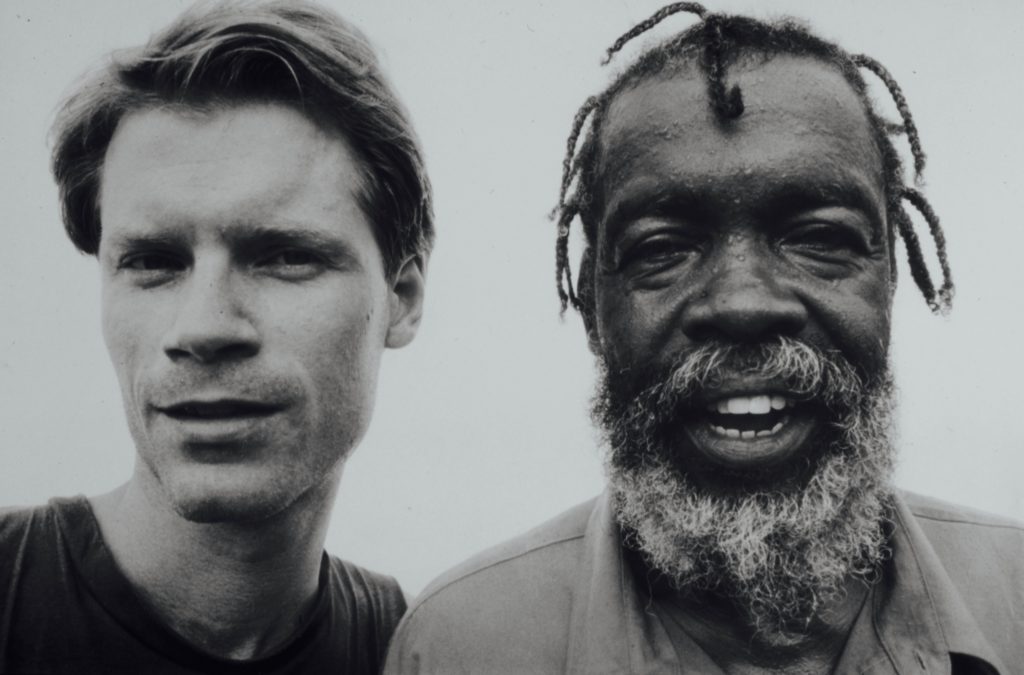
From L:R – Subjects Adam Gussow and Sterling “Mr. Satan” Magee in a still from SATAN & ADAM. Photo courtesy JFI

In the engaging documentary Satan & Adam, Adam, a young white Ivy Leaguer, takes a stroll through Harlem and encounters an older African-American street guitarist, who calls himself Mr. Satan. Adam, a talented amateur blues harmonica player sits in, and soon the odd couple are a busking team, a popular attraction at their regular sidewalk venue in Harlem.

“Mr. Satan” is an alias for an artist of note.  Mr. Satan’s talent and the odd couple novelty allows the act to soar to totally unexpected heights. But Satan has emotional and medical issues, and Adam might be a better fit for a career in academia, so this is a story with plenty of unexpected twists and turns.  Let’s just say that, over the past 23 years, there have been some significant detours on this journey.

The core of the film is about this unusual relationship and the peculiarities of these two guys, but it also traces the evolving race relations in NYC.

Satan & Adam is told primarily from Adam’s point of view, which is understandable because of Mr. Satan’s periodic unavailability and, when we see him unfiltered, his oft puzzling inscrutability.

I saw Satan & Adam at the San Francisco Jewish Film Festival (SFJFF), a fest noted or its especially rich documentaries.  It has finally been released in at least one Bay Area theater.


tonight on TV: SAMMY DAVIS, JR.: I’VE GOTTA BE ME: a needy talent through complicated times

Still from SAMMY DAVIS JR.: I’VE GOTTA BE ME. Photo courtesy JFI.

Tonight, PBS airs Sammy Davis Jr.: I’ve Gotta Be Me on its American Masters series.  As a Baby Boomer who had dismissed Sammy Davis Jr. from the moment he publicly hugged Richard Nixon, I found this to be the most surprising doc (and my favorite) at last year’s San Francisco Jewish Film Festival. I learned that Sammy’s 61-year career as a professional entertainer began at age three (with his first movie credit at age 7), a working childhood that  left emotional needs  It turns out that Sammy was a very, very talented but needy artist,, an uncomplicated man navigating several very complicated times.

Sammy’s life of entertainment began at 3.  We get to see a clip of him in the 1933 Rufus Jones for President.  All that professional work took away his childhood and engraved upon him a need to please.  That and his generation produced the 50s showbiz style that seemed so insincere to us Baby Boomers.  And, of course that embrace of Nixon seemed to be the ultimate sell-out moment.

Sammy Davis Jr.: I’ve Gotta Be Me also poses whether he was demeaned by Rat Pack humor? Were Frank and Dino laughing at Sammy, or with him?

But this was  an immensely talented man, a masterful dancer with a remarkable crooner’s voice and a gift for mimicry.  He was the first American entertainer of color to do impersonations of white celebrities.   BTW there is some unbelievable dancing in Sammy Davis Jr.: I’ve Gotta Be Me.  We get to see Sammy’s 60th anniversary in showbiz celebrated among a host of celebrities – he still had his dancing chops.

Sammy Davis Jr.: I’ve Gotta Be Me is the story of a man whose success condemned him to a career that spanned generations – none of which fit him comfortably.  It’s a fine and insightful film.

[Random note: This film title may contain the most different punctuation marks of any movie: a comma, a period, a colon and an apostrophe.]

Movies to See Right Now

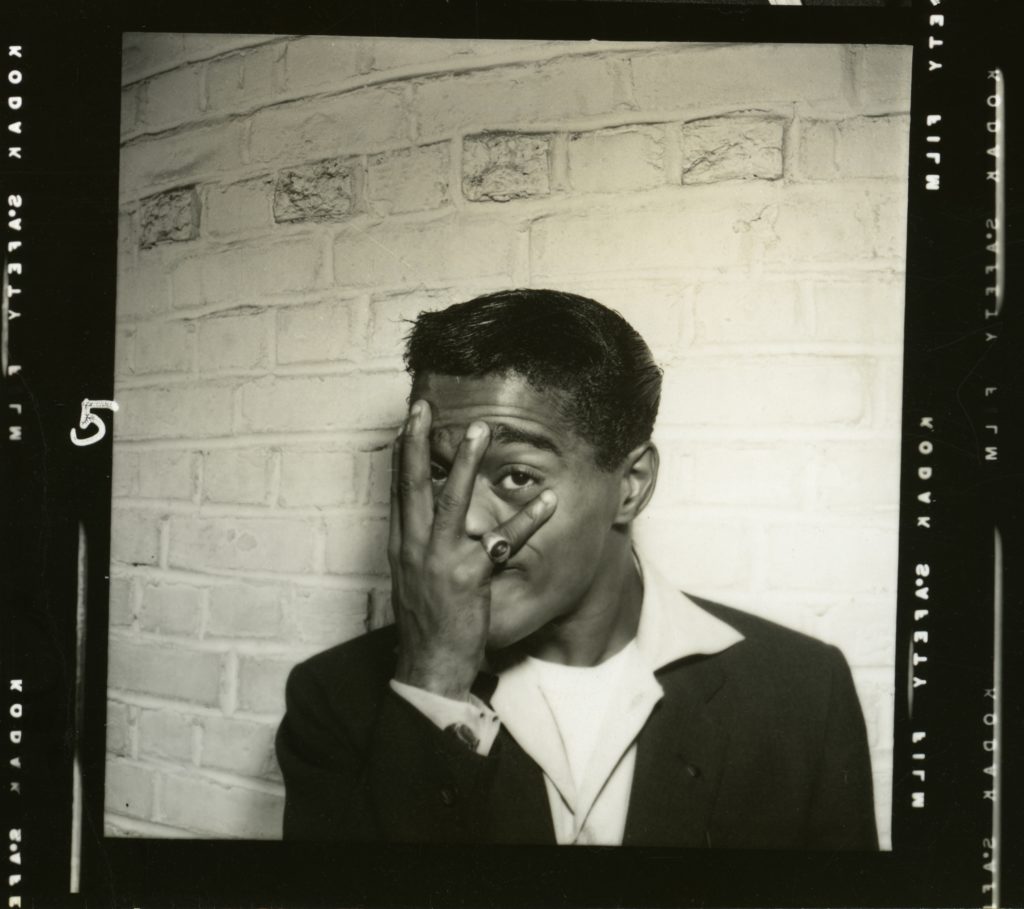
Subject Sammy Davis Jr. in a still from SAMMY DAVIS JR.: I’VE GOTTA BE ME. Photo courtesy Menemsha Films/JFI.
This week, Dark Money and Puzzle have opened in Bay Area theaters.  And one of the Bay Area’s top cinema events: the 38th annual San Francisco Jewish Film Festival (SFJFF38), has opened and runs through August 5 in San Francisco, Palo Alto, San Rafael, Albany and Oakland.  The SFJFF is the world’s oldest Jewish film festival, and, with a 2017 attendance figure of 40,000, still the largest.  As always, there’s an especially strong slate of documentaries, including my recommended Must See docs; I especially liked the closing night film Sammy Davis Jr.: I’ve Gotta Be Me.

OUT NOW

  • Please make every attempt to see the best movie of the year, now in Bay Area theaters: the emotionally powerful coming of age drama Leave No Trace from Debra Granik (Winter’s Bone). Superbly well-crafted, impeccably acted, thoughtful and emotionally powerful, it’s a Must See.
  • The savagely funny social satire Sorry to Bother You carries the message that humans are more than just their commercial value as consumers and labor to be exploited.
  • The political documentary Dark Money exposes the growing threat of unlimited secret money in political campaigns.
  • Puzzle intelligently and authentically traces one woman’s journey of self discovery.
  • The surprisingly emotional biodoc Won’t You Be My Neighbor? is about Fred Rogers’ fierce devotion to the principle that every child is deserving of love and our protection.
  • First Reformed: Ethan Hawke stars in this bleak, bleak psychological thriller with an intense ending.
  • Three Identical Strangers is an astonishing documentary about triplets separated at birth that ranges from the exhuverance of discovering siblings to disturbing questions of social engineering.
  • American Animals is funny documentary/reenactment of a preposterous heist.
  • RBG is the affectionate and humanizing biodoc about that great stoneface, Ruth Bader Ginsburg.

ON VIDEO
In honor of the San Francisco Jewish Film Festival, now underway, my this week’s video pick comes from last year’s festival. Israel was created as a home for refugees. What happens when African refugees overwhelm a neglected Tel Aviv neighborhood is the subject of the topical documentary Levinsky Park. Levinsky Park is available to stream from Amazon, iTunes, YouTube and Google Play.

ON TV

On July 31, Turner Classic Movies brings us two generationally iconic films – one from The Greatest Generation and one for Baby Boomers.

First there’s the WW II melodrama From Here to Eternity. Sure, it’s a soap opera with that much lampooned Burt Lancaster-Debroah Kerr embrace in the crashing surf. But it’s packed with a great cast, and the story threads are expertly braided together by director Fred Zinneman. Besides Lancaster and Kerr, there’s Montgomery Clift, Jack Warden and – resurrecting his career – Frank Sinatra. One of the best performances is by Ernst Borgnine as the hulking bully named Fatso.

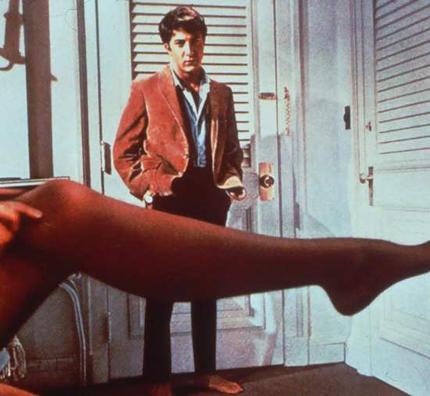
Next, it’s easy to recognize the greatness of The Graduate today, but it’s hard to appreciate how groundbreaking it was – all because of Mike Nichol’s directorial choices. Dustin Hoffman’s performance was central to the success of the film, yet he was a nobody at the time and Nichols had to fight for him – the studio preferred a conventionally handsome leading man. Nichols sure wasn’t copying anybody else when he put the Simon and Garfunkle songs in the soundtrack. And the final shot – where Nichols kept his camera lingering on Hoffman and Katherine Ross until the actors became uncomfortable – is one of cinema’s best.

Dustin Hoffman (and Anne Bancroft’s leg) in THE GRADUATE