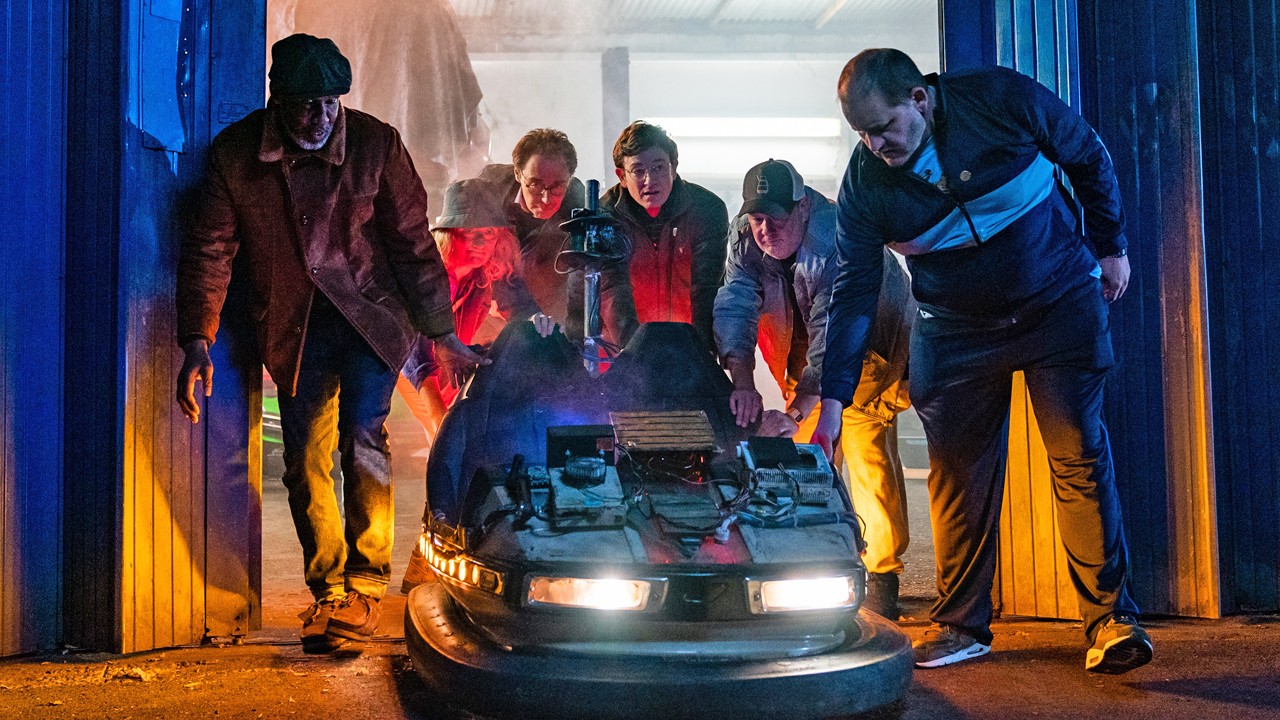
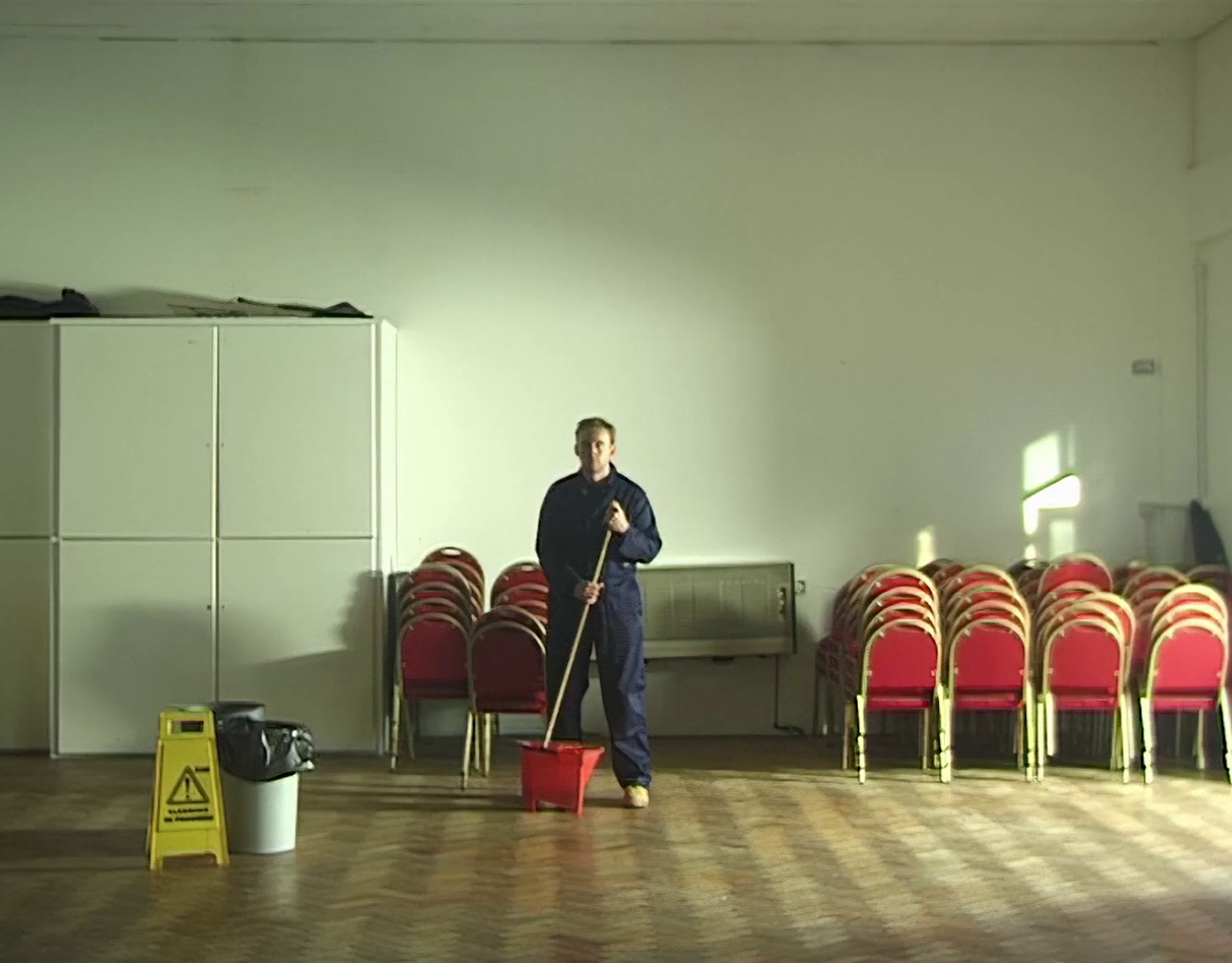
Megan Stevenson and Ruth Syratt in TIME TRAVEL IS DANGEROUS. Courtesy of Cinequest.
In the deadpan British comedy Time Travel Is Dangerous, Megan (Megan Stevenson) and Ruth (Ruth Syratt), two ditzy gals who run a vintage shop discover a discarded gizmo from the early VCR era. Looking suspiciously like a carnival bumper car, it turns out to be an operational time machine, which they use to pilfer objects in the past that they can merchandise in the present. “You can’t put a price on nostalgia. Well, we do.”
It never occurs to them to 1) go back and change history, 2) go back and reveal the answer to a historical mystery or 3) go back and get something crazy valuable, like the Holy Grail, or 4) sneak a peek at the future – they’re just getting stuff for their junk store. “We’re not scientifically-minded“. they’re not ANYTHING-minded,
The two are tracked down by a consortium of inventors, and Time Travel Is Dangerous brilliantly sends up organizational behavior and other human foibles (one becomes stuck in her insufferable teenage years. When they carelessly unlock a dangerous vortex, we’re off to another dimension. The filmmakers don’t take themselves too seriously, and the special effects are the best you can find at the Dollar Store
Jane Horrocks (Little Voice) appears, as does the esteemed Brian Blessed, in his most unrecognizable role. The narrator is Stephen Fry.
If you like Portlandia and Best In Show, but wish they were wackier, you’ll enjoy Time Travel Is Dangerous. I screened Time Travel Is Dangerous for its Bay Area premiere at Cinequest.
Alexander Karim in THE DOG. Courtesy of Cinequest.
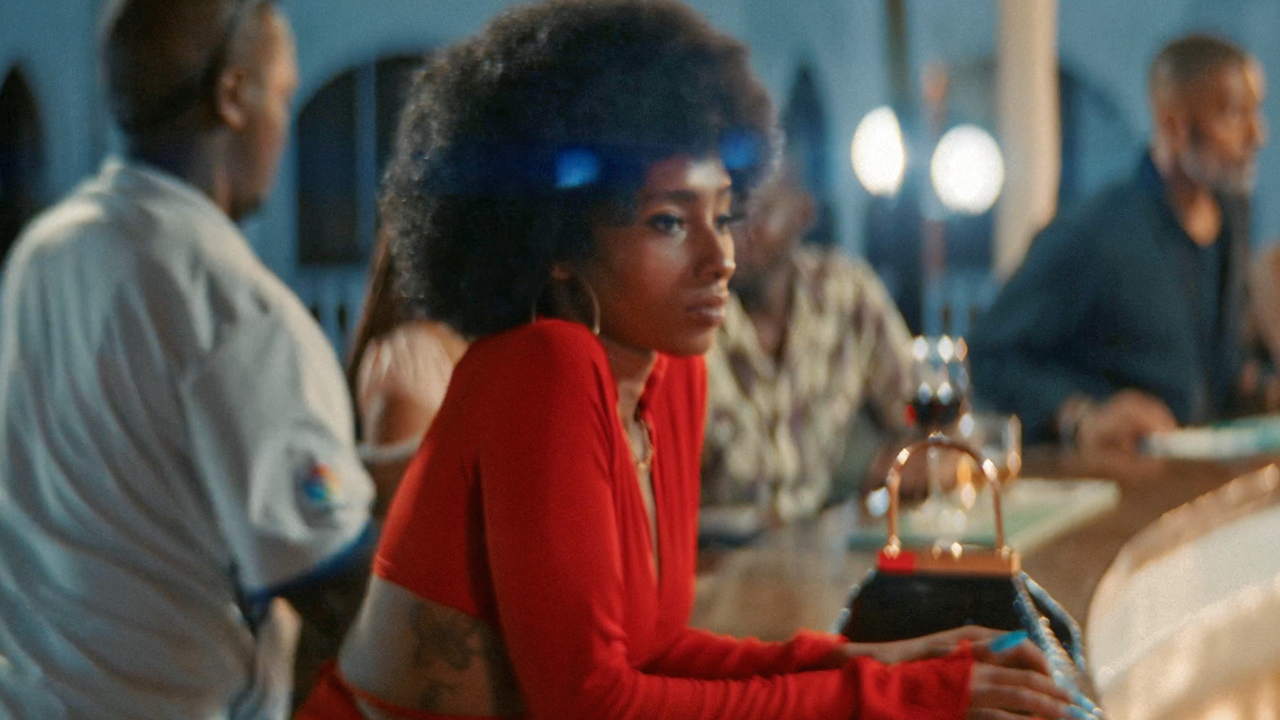
The electrifying thriller The Dog follows a classic neo-noir premise. MZ (Alexander Karim), a low level hood, is assigned to drive the call girl, Kadzo (Catherine Muthoni), and he falls for her – against the explicit instructions of their employer and advice from Kadzo herself. To stake a new start for them in a faraway land, he reaches for the big score. Desperation results. What’s unusual about The Dog is that it’s exceptionally exciting and that it’s set in Mombasa, Kenya.
In his quest to make a quick fortune, MZ tries to cash in on a tip about a drug deal. When that goes awry, he finds himself owing a huge debt to Saddam (Caroline Midimo), one of Mombasa’s crime matriarchs. He then tries working with Saddam’s rival Ainea (Veronica Mwaura). MZ takes more and more risks as he get more deeply entangled with the two godmothers. All the way, he’s just one double cross away from disappointing the last people he’ll ever disappoint.
There’s a wonderful low-speed tuk tuk chase (on three-wheel taxis) through Mombasa’s open air markets, street performers and herds of goats. And there’s another unforgettable scene that will be particularly uncomfortable for male audience members.
The Dog matches up well to Howard Hawks’ definition of a great movie – three great scenes and no bad ones“. My FOUR nominations for the three great scenes:
a big spender who owes MZ money brings him to his home;
Kadzo has MZ film her latest video ad, and he watches her at her sexiest through her cellphone camera.
Kadzo explains that she is not asking anyone to save her;
MZ faces his reckoning,
The Swedish-born Alexander Karim is superb as MZ. MZ works out to maintain a physicality that intimidates johns and debtors, but he knows his place in the crime hierarchy and grovels before the godmothers; when he screws up, he knows the consequences and moves directly into desperate terror. Alexander Karim has worked in lots of Scandanavian films (so he must be familiar with Nordic Noir) and appeared in Gladiator II.
Catherine Muthoni in THE DOG. Courtesy of Cinequest.
Catherine Muthoni is very good as Kadzo. This may be a neo-noir, but Kadzo isn’t a manipulative femme fatale – it’s only MZ who drives himself to his fate. Midimo and Mwaura are wonderful as the two crime bosses. Watch for how matter-of-factly Midimo dons Saddam’s eyeglasses in the most extreme scene.
The Dog is brilliantly directed, and edited. The director is Alexander’s Ugandan-born brother Baker Karim, who is also based in Sweden. That makes The Dog a Swedish movie, although it has every appearance of a Kenyan film.
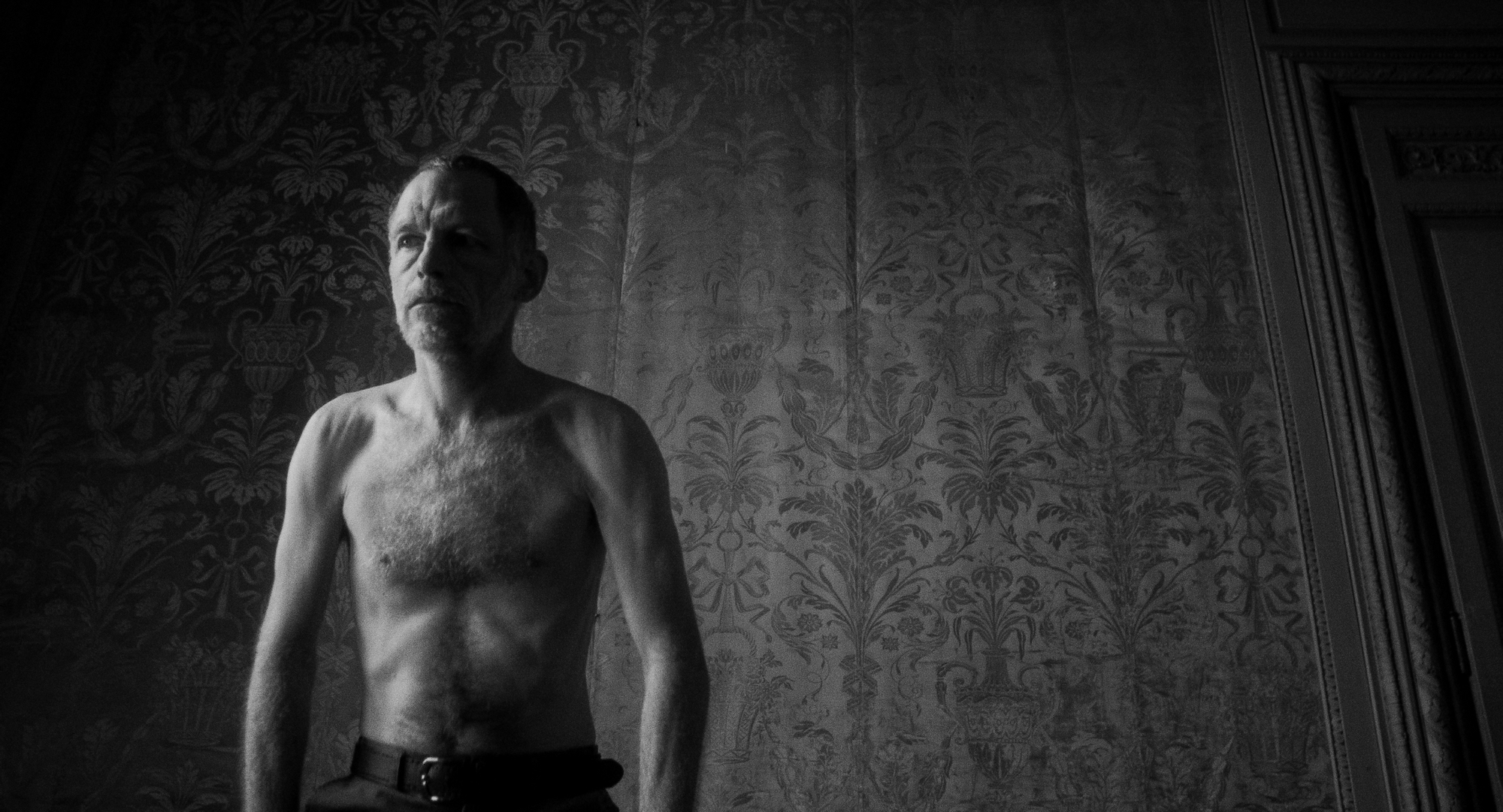
David Allen White in Fabio D’Orta’s THE COMPLEX FORMS. Courtesy of Slamdance.
The visually striking atmospheric The Complex Forms is set in a centuries-old Italian villa, where Christian (David Allen White) and other down-on-their-luck middle-aged men sell their bodies for a period of days to be “possessed”. Possessed how? By who or by what? As the dread builds, Christian resolves to pry the answers from the secretive masters of the villa.
Director Fabio D’Orta unspools the story with remarkably crisp black-and-white cinematography, a brooding soundtrack and impeccable editing. In his astonishingly impressive filmmaking debut, D’Orta wrote, directed, shot and edited The Complex Form.
David Allen White is excellent as Christian, who begins resigned to endure whatever process that he has committed to, but becomes increasingly uneasy as his probing questions are deflected. So are Michael Venni as Christian’s talkative roommate Luh and Cesare Bonomelli as the impassive roommate simply called The Giant.
Like his countrymen Fellini and Leona, D’Orta has a gift for using faces to heighten interest and tell the story. He makes especially effective use of Bonomelli’s Mt. Rushmore-like countenance.
I screened The Complex Forms for its United States premiere at Slamdance. The Complex Forms was my favorite Slamdance film and won the festival’s Honorable Mention for Narrative Feature. The Complex Forms is playing Cinequest on March 12 and 13.
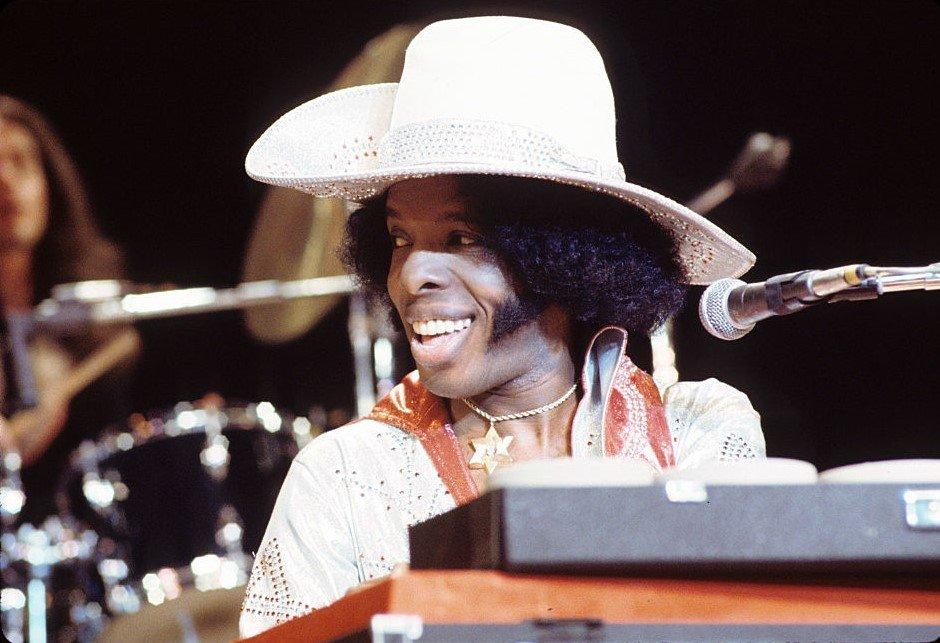
Photo caption: Sly Stone in SLY LIVES! (AKA THE BURDEN OF BLACK GENIUS). Courtesy of Hulu.
Questlove’s insightful documentary Sly Lives! (aka The Burden of Black Genius) traces the rise, fall and legacy of the groundbreaking musician Sly Stone (birth name Sylvester Stewart) of Sly and the Family Stone. It’s the remarkable story of a prodigy
Sly led and wrote the songs for Sly and the Family Stone, startlingly innovative as both a multi-racial and a multi-gender band. It’s too easy to use the label psychedelic soul (although it does fit Sly and the Family Stone’s music); but, Sly was an original and a genre-buster, whose music blurred (or erased) the lines between rock, R&B, funk, soul and pop.
The term prodigy also gets thrown around, but I didn’t know (until I watched Sly Lives!), that Sly was working as a songwriter, producer and D-jay as a TEENAGER, already moving the needle on Bay Area music culture during its most fertile period.
Sly Lives! also gives us file footage showing Sly to be articulate and charming, with the gift of being quick-witted even while stoned. But then came the heavier drugs, sabotaging his career with a pattern of concert no shows and walkouts that have persisted thru at least 2007. His productivity essentially ended in 1974. All members of Sly and the Family Stone were inducted into the Rock and Roll Hall of Fame in 1993. Sly is alive today at age 81.
This is an exceptionally well-sourced fil. Besides lots of previously obscure archival material from before Sly’s stardom, we get plenty of footage of Sly in interviews and performances back in the day. Perspective comes from the band member themselves, Sly’s ex-wife and his former partner, and a slew of experts in the music industry,
Questlove asks his interviewees about black genius (and seems to confound them). There’s no question Sly was a musical genius. I think that Questlove is emphasizing the word burden in his subtitle – suggesting that having to achieve while battling institutional racism finally sapped Sly of his resilience.
Questlove also reminds us that Sly’s creativity peaked during one of our most turbulent periods – the MLK and RFK assassinations, urban riots and the political evolution from Civil Rights to Black Power. The Black Panther Party suggested that Sly bankroll them personally.
Questlove, who was three years old at the time of Sly’s last hit in 1974, is widely known as the band leader of The Roots on The Tonight Show Starring Jimmy Fallon, and the producer for many recording artists, including Common, Jay-Z, John Legend Al Green and Elvis Costello. He is a musicologist and a historian of Black music and Black culture. In his directorial debut as a filmmaker, he won the Best Doc Oscar for Summer of Soul (…Or, When the Revolution Could Not Be Televised). (The Movie Gourmet predicted that Oscar BTW.)
I loved this nugget from the film – band members celebrated their first big paycheck by acquiring signature dogs. Not cars, jewelry or exotic vacations – dogs.
Sly Lives! (aka The Burden of Black Genius) is streaming on Hulu.
Photo caption: Alexander Perkins in Richard Hunter’s FOUL EVIL DEEDS. Courtesy of Slamdance.
The deadpan anthology FOUL EVIL DEEDS depicts a range of aberrant human behavior, most of it darkly funny. The deeds themselves arise from a wide variety of root causes:
a couple’s social clumsiness;
a loner’s inner rage;
some kids’ youthful stupidity;
one guy’s uncommon sexual need;
an otherwise upstanding dog-walker’s entitlement;
and one man filled with deep-seated, sociopathic evil.
The threads are woven together into a wry, clever and very cynical movie that veers to the misanthropic. The segment about a neighbor’s cat could have been written by Larry David about George Costanza.
Writer-director Richard Hunter’s debut feature is consciously an art film; Hunter says he is influenced by the work of Ulrich Seidl, Michael Haneke and Roy Andersson, and it shows. It’s a slow burn, and the audience wonders, why is that guy checking out the remote wooded wetland? (Hint: he’s looking to coverup a future evil deed.)
Hunter seems to be measuring human behavior by its impact on others. Some might still consider an unconventional sexual practice to be a “sin”, but it’s entirely victimless (and isn’t even illegal). In another thread, what is intended as a harmless practical joke becomes tragic.
Alexander Perkins is excellent as a man with anger management issues that he can’t shake. As a consequence, he is grinding his teeth through workaday drudgery, and he’s mad about that, too. Does he have a path out of his situation, or he just going to stew until he explodes? There’s only one person who he can talk to (Oengus MacNamara in an unexpectedly riveting performance).
I think that FOUL EVIL DEEDS is likely to secure US arthouse distribution. FOUL EVIL DEEDS It premiered at Locarno, and I screened FOUL EVIL DEEDS for its North American premiere at Slamdance.
Photo caption: MEMORIES OF LOVE RETURNED. Courtesy of Slamdance.
The fine documentary Memories of Love Returned is the result of an accidental meeting. On a 2002 trip to his native Uganda, actor Ntare Guma Mbaho Mwine (Treme, The Chi, The Lincoln Lawyer) happened upon a rural studio portrait photographer named Kibaate. Over a span of decades, Kibaate had documented everyday people over decades in thousands of portrait, many of them stunningly evocative. Mwine helped Kibaate preserve his body of work, and, after Kibaate’s death 20 years later, organized a public showcase of Kibaate’s collection.
The revelation of the unknown Kibaate as an artistic genius, is a compelling enough story, but the exhibition prompts a complicated and sometimes awkward exploration of Kibaate’s siring a prodigious number of children with a bevy of surviving mothers. The filmmaker’s own health and family story takes Memories of Love Returned seamlessly into another direction, topped off by Kibaate’s documentation of Ugandan LGBTQ culture.
Memories of Love Returned is the second documentary feature directed by Mwine. Executive-produced by Steven Soderberrgh, the film has been piling up awards from film festivals. I screened Memories of Love Returned for Slamdance.
A scene from STOLEN KINGDOM. Courtesy of Slamdance.
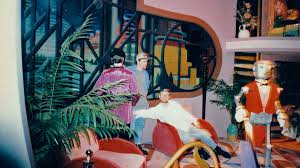
The documentary Stolen Kingdom uncovers a series of offbeat pastimes and their bizarre convergence. Of course, we’re already aware of Disney fans and collectors. Stolen Kingdom also reveals the world of urban explorers, who trespass into closed and abandoned buildings. They’re enjoying the thrill of being where they’re not supposed to be and gawking at what the public isn’t supposed to see.
In Stolen Kingdom, we meet people who sneak into closed theme park attractions and even some daredevils who jump off the rides while operating and mosey around backstage(see photo above). Those folks can be tempted by the black market in Disneyana. As the behavior escalates from pranks to larceny, we know that somebody’s going to get in big trouble, Centering on the theft of an obsolete animatron, Stolen Kingdom takes on the guise of a true crime story, but with the very nerdiest criminals.
A scene from STOLEN KINGDOM. Courtesy of Slamdance.
Stolen Kingdom is one of those documentaries about our fellow humans that make us shake our heads.
Stolen Kingdom is the first feature for director Joshua Bailey. I screened Stolen Kingdom for Slamdance, a week after its world premiere at the Big Sky Documentary Film Festival.
Photo caption: Trey Holland and Romina D’Ugo in Woody Bess’ PORTAL TO HELL. Courtesy of Portal to Hell LLC.
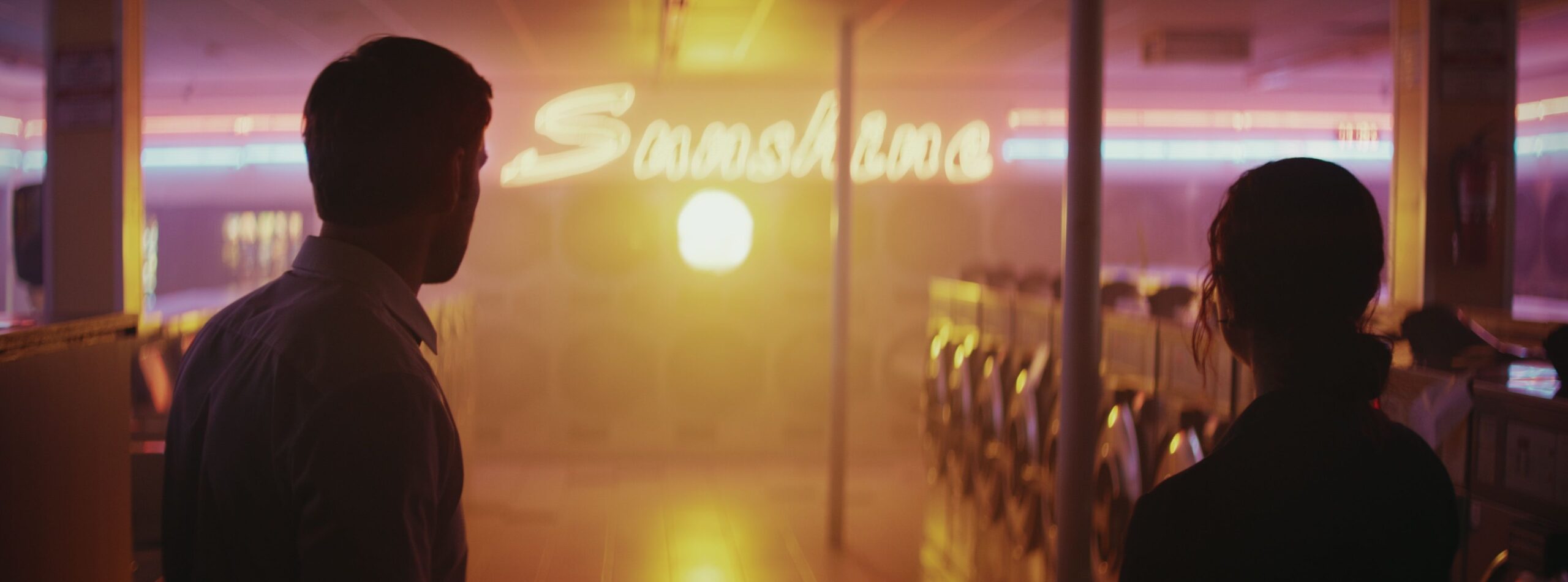
In the witty, dark comedy, Portal to Hell, a hangdog bill collector named Dunn (get it?) discovers a portal to hell, replete with hellfire and brimstone, in his local laundromat. Dunn, with best of intentions, strikes a bargain with its proprietor. Dunn is too nice for his wretched job, but just what is he capable of? And how about the insipid pop band who sings your least favorite earworm – who wouldn’t want to consign THEM to hell?
Portal to Hell considers the question, what is a good person? but never too seriously. This is an imaginative, comic triumph for writer/director/cinematographer Woody Bess. Bess has a gift for the deadpan and the absurd.
Trey Holland is excellent as the continually perplexed Dunn, sapped of resilience by a personal loss. So is Romina D’Ugo as the reluctant authority figure at the laundromat. Lauded actor Keith David is perfect as Dunn’s cranky neighbor, ever assessing the younger generation with a critical eye. The great Richard Kind soars as a workaday (but crafty) demon.
Sui Li and Baoqing Li in BANR. Courtesy of ShangJia Picture Film Culture.
The star in Banr is writer/director/editor Erica Xia-Hou’s innovative storytelling – in her first feature film. An elderly husband (Sui Li) is struggling to hold on to his wife (Baoqing Li) as she sinks into Alzheimer’s, with the support of their adult daughter (Xia-Hou herself). That main story is told in a cinéma vérité documentary style, but that’s just what the husband and daughter see in their lucidity. Those segments are interwoven with fragments of the wife’s memory and her delusions and dreams. In depicting the most ordinary daily activities, Xia-Hou keeps us continually off-guard by shifting the points of view between the clear-eyed and the muddled.
With the exception of herself, Xia-Hou used all non-professional actors. Like Sean Baker at his best, she’s directed exemplary performances from her leads, both first-timers. As the wife, Baoqing Li becomes ever more confused, but is radiant when a cherished memory pops up.
Baoqing Li in BANR. Courtesy of ShangJia Picture Film Culture.
As the husband, Sui Li throws all his deep-seated love and his stubbornness into fighting his wife’s memory loss, and then in caregiving. We know, and his daughter wisely advises him, that his efforts are unsustainable, but he obstinately muddles on, until the progression of her condition gives him no other choice. His performance is fully committed and heartbreaking.
This may be Erica Xia-Hou’s directorial debut, but she has a substantial body of work as an actress, screenwriter, editor and art director in the Chinese film industry, after studying dance, broadcasting and acting at three Chinese universities. She co-wrote and acted in the Jackie Chan sci-fi action film Bleeding Steel. She will co-star with Tony Leung and Olga Kurylenko in the upcoming action thriller Fox Hunt, which she also co-wrote and edited.
What’s with the film’s title? Banr is companion in Mandarin, and many older Chinese couples affectionately refer to each other as Lao Banr, meaning old companion.
Banr is an immersive film, filled with humanity, and an important directorial debut. I screened Banr for its world premiere at Slamdance, where it was one of my Must See picks.
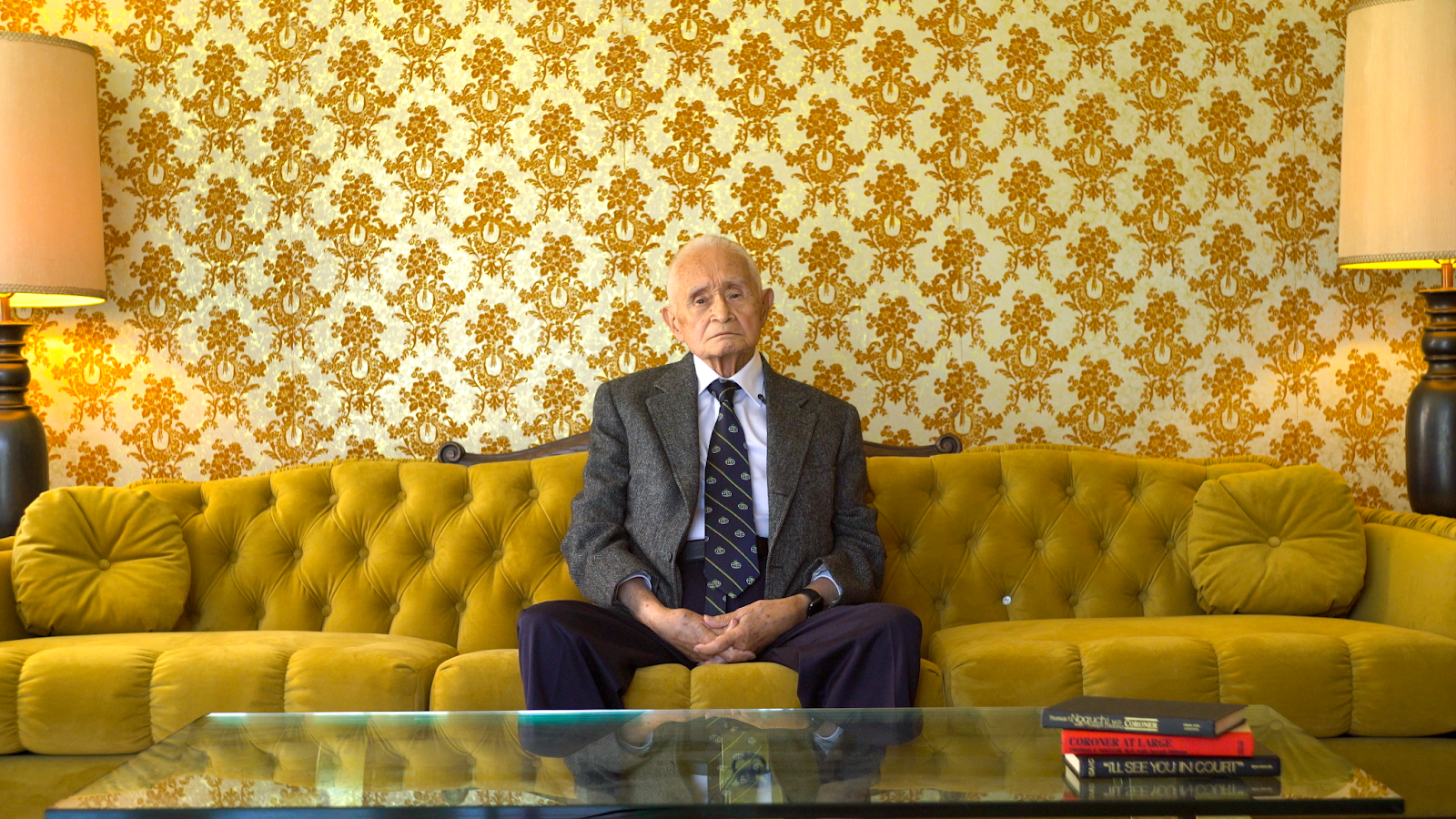
Photo caption: Dr. Thomas Noguchi in CORONER TO THE STARS. Courtesy of Slamdance.
The absorbing biodoc Coroner to the Stars tells the story of Dr. Thomas Noguchi, the former Los Angeles County Chief Medical Examiner and his bouts with fame (or infamy). His LA County jurisdiction meant that he was responsible for conducting the autopsies of a striking collection of celebrities, including Marilyn Monroe, William Holden, Natalie Wood, John Belushi and the Manson Family’s murder victims. Noguchi was also responsible for making his reports public – and therein lies the rub.
The public is fascinated by the details of celebrity deaths, and the news media eagerly panders to that need, however prurient or ghoulish. Official records in California, including coroner’s reports, are public. Noguchi did not shy away from the media spotlight, which triggered controversy. He was clearly fulfilling his legal duty, but did he enjoy it too much? Was he a publicity hound? Can an official be transparent without being unseemly? Indeed, Coroner to the Star’s tag line is Fame kills.
Writer-director Ben Hethcoat and Keita Ideno, in the first feature for both, present an extraordinarily well-sourced, credible and insightful documentary. Noguchi is still alive at age 98 and appears in the film to speak for himself.
Noguchi’s work (and style) stepped on some influential toes – the families and friends of the deceased, the major Hollywood studios and bureaucratic/political foes. Whenever he came under attack, the subtext was his race and the public perception and acceptance of Asian-Americans. Noguchi was a post-war immigrant who didn’t experience the Japanese-American internment during WW II, but Japanese-Americans traumatized by the camps would organize to defend LA’s highest ranking Japanese-American official.
Noguchi was also an internationally recognized pioneer in forensic science. Coroner to the Stars reveals his determination, in the RFK autopsy, to avoid the mistakes that resulted in the continuing, unresolved contention about the JFK assassination. Coroner to the Stars, without sensationalizing it, also touches on a key finding of the RFK forensic evidence.
Rock-solid in its exploration of race, science and history, Coroner to the Stars thoughtfully considers the challenge of acting professionally with what is sensational. I screened Coroner to the Stars for its world premiere at Slamdance.