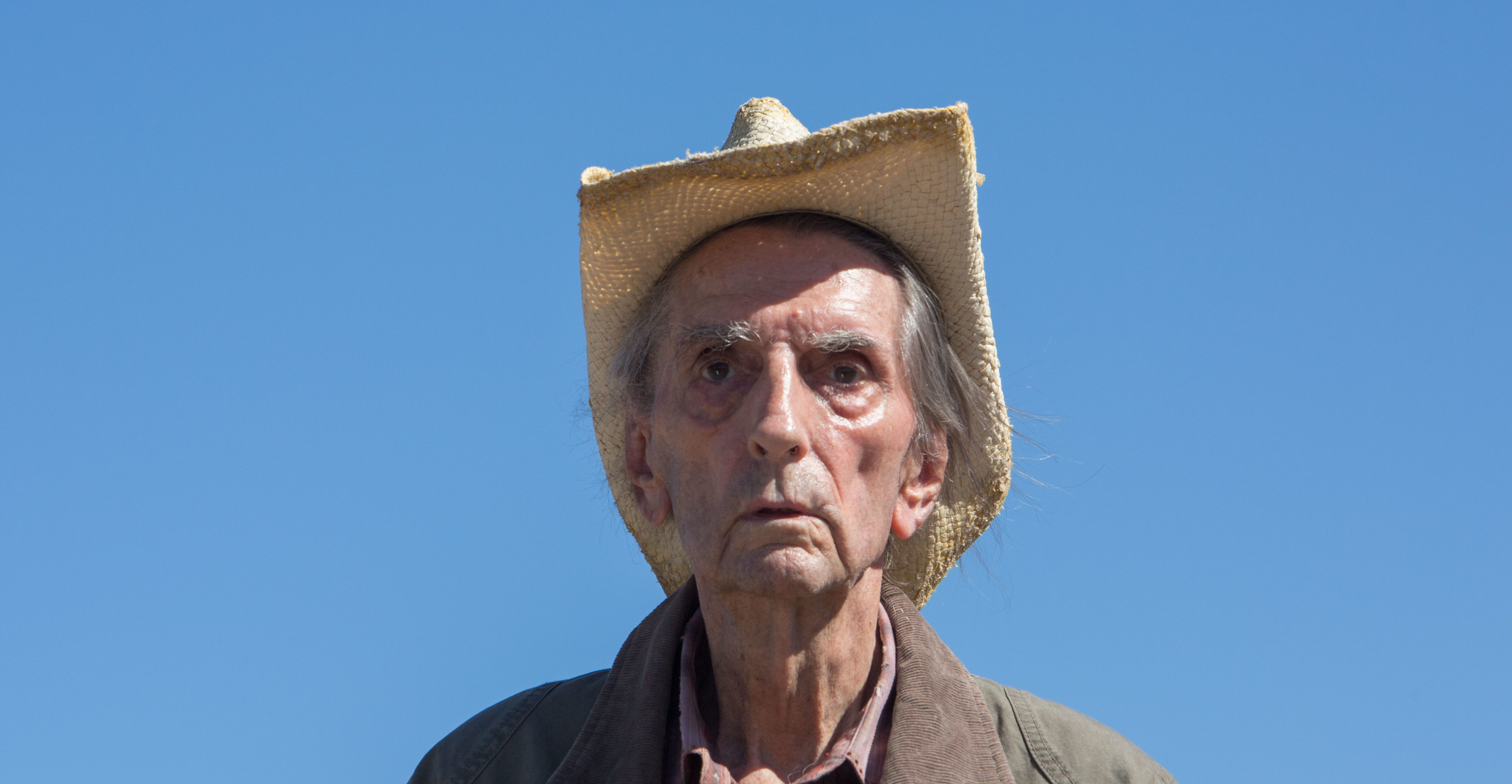
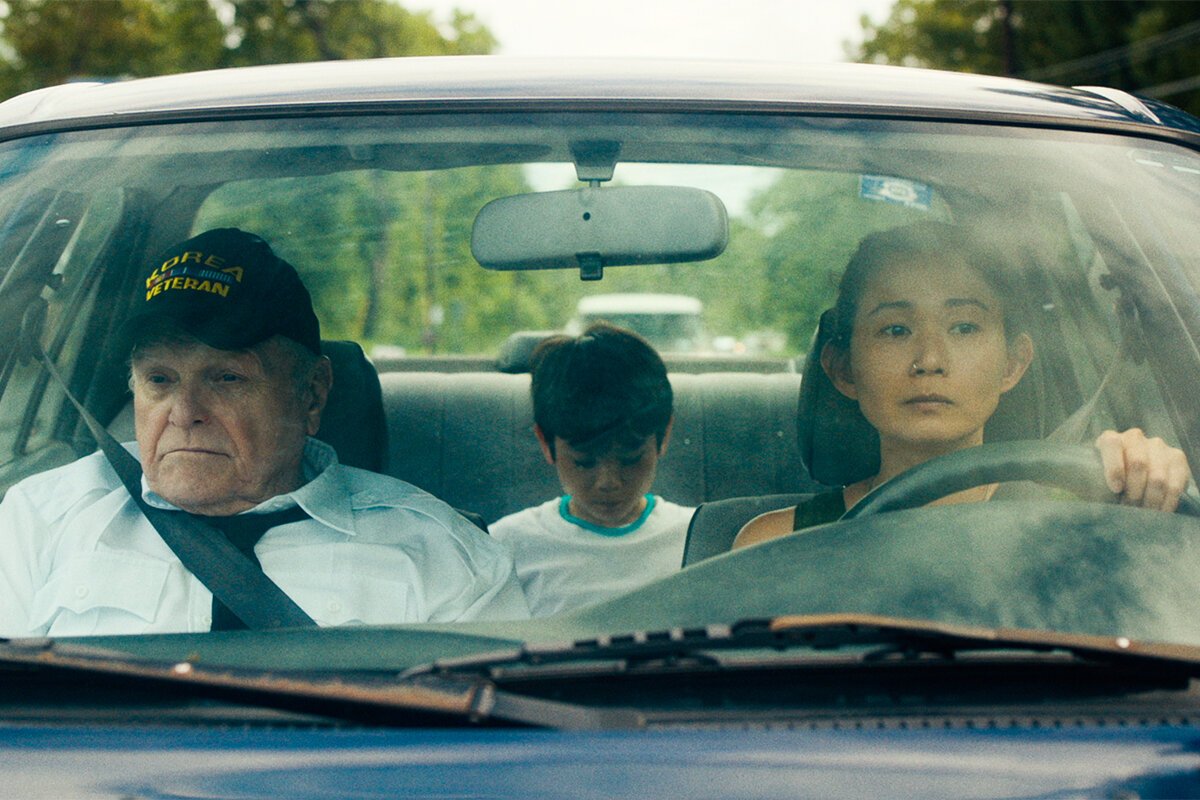
Locke: a thriller about responsibility. Amazon, AppleTV, Vudu, YouTube.
ON TV
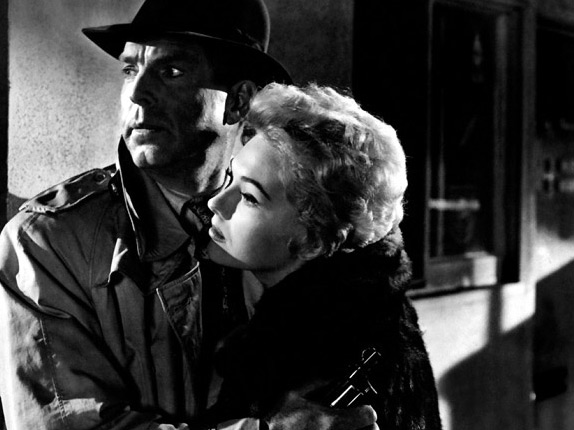
KILLER’S KISS
On April 18, Turner Classic Movies will present one my Overlooked Noir, a young Stanley Kubrick’s Killer’s Kiss; it will be on Noir Alley with an intro and outro by Eddie Muller. It doesn’t take long to realize that Killer’s Kiss is not a typical film noir – there’s Kubrick’s own bracing visual style, an interracial relationship and a comically absurd fight to the death. The cast matched a couple one-hit wonders with the pioneering African-American actor and civil rights activist Frank Silvera.
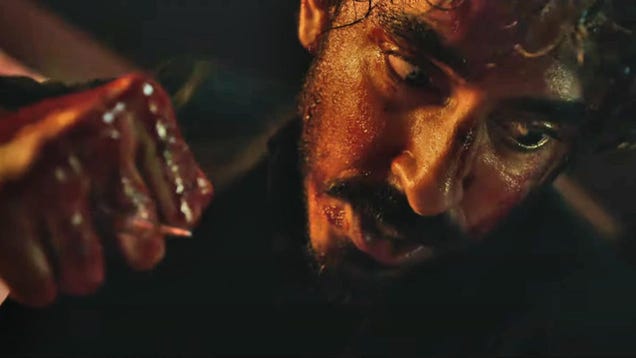
Photo caption: Dev Patel in MONKEY MAN, Courtesy of Universal Pictures.
Monkey Man is a vividly colored and kinetic revenge thriller staring its director and co-writer, the ever sympathetic Dev Patel. It’s also relentlessly violent and, ultimately, empty.
The story is simple, Kid (Patel) is driven to exact vengeance for an atrocity by killing the head bad guy, and so must first kill his way through scores, perhaps hundreds, of the minor bad guys, one or two at a time. I like seeing bad guys get violently chewed up as much as the next guy, but the vastness of the bad guy fodder in Money Man became tiresome.
Now, I love watching Dev Patel, so good in Slumdog Millionaire, The Second Best Exotic Marigold Hotel, Lion, The Green Knight and The Personal History of David Copperfield. He is magnetic and equipped with what Manohla Dargis calls his “melting eyes that he can light up or expressively dim to create a sense of vulnerability”.
Monkey Man is clearly an homage to Bruce Lee, amplified by the filmmaking advances of the 50 years since Enter the Dragon. Indeed, Patel has studied Taekwando since childhood (not apparent when he’s playing a Dickensian character, for example).
We’ve always known that Dev Patel can act. Monkey Man proves that Dev Patel can carry an action picture. And Monkey Man, with its clever action sequences, speedy pacing and blazing color palette, proves that Dev Patel can direct, too.
When you have dispatch this many bad guys with one’s bare hands, some imagination is required. One instance, with a knife in the throat, will be talked about for decades.
Patel takes a shot at Hindu nationalism in India and a thinly-veiled swipe at prime minister Modi. I noted that Patel is a Brit of Gujarati Indian heritage, some generations removed from India itself. But the need to take on racism and intolerance is universal, so good for him.
Nevertheless, I left Monkey Man unsatisfied. The only unpredictability was whether Kid would kill the next bad guy with a kitchen utensil or the glass door of an oven. The next day, however, I thought about the kind of crap that teenage boys watch, and Monkey Man’s artsy filmmaking, the hint of a political message, and the Indian setting would constitute an elevated alternative. I just can’t think of why an adult cinephile would need to see it.
Photo caption. Isa and Veronica Garcia-Hayes in MATTER OF MIND: MY PARKINSON. Courtesy of PBS Independent Lens.
The surprisingly uplifting documentary Matter of Mind: My Parkinson’s shines a light on Parkinson’s disease, and what we need to know about it. An estimated one million Americans are living with Parkinson’s, and the key to Matter of Mind’s success is in introducing us to three of them – a Brooklyn optician, a San Francisco fitness trainer and an Alaskan cartoonist – and their families. On April 8, Matter of Mind: My Parkinson’s becomes available on PBS’ Independent Lens and the PBS App..
Parkinson’s is incurable and degenerative, and attacks motor abilities. Matter of Mind does not sugar coat the symptoms, ranging from from tremors, falling and speech impairment to dementia and depression. Nevertheless, there are now medicines and surgeries ((including deep brain stimulation)) that can impact the symptoms.
We watch the three subjects and their families, all engaging and relatable, explore the medical treatments, with their risks and tradeoffs, and adapt to getting the most out of their lives, even with Parkinson’s. Matter of Mind emphasizes the impacts on family members and the importance of family in supporting each sufferer’s response.
The 54-minute format of Independent Lens fits this subject matter exceptionally well – long enough to explain the science without becoming an eat-your-broccoli slog.
This is the second in a series of three documentaries on neurodegenerative diseases from co-writers and co-directors Anna Moot-Levin and Laura Green; the others are on ALS and Alzheimer’s. I’m usually not keen on disease movies, but Matter of Mind: My Parkinson’s is so good, and Parkinson’s so prevalent and inadequately understood, that this is essential viewing.
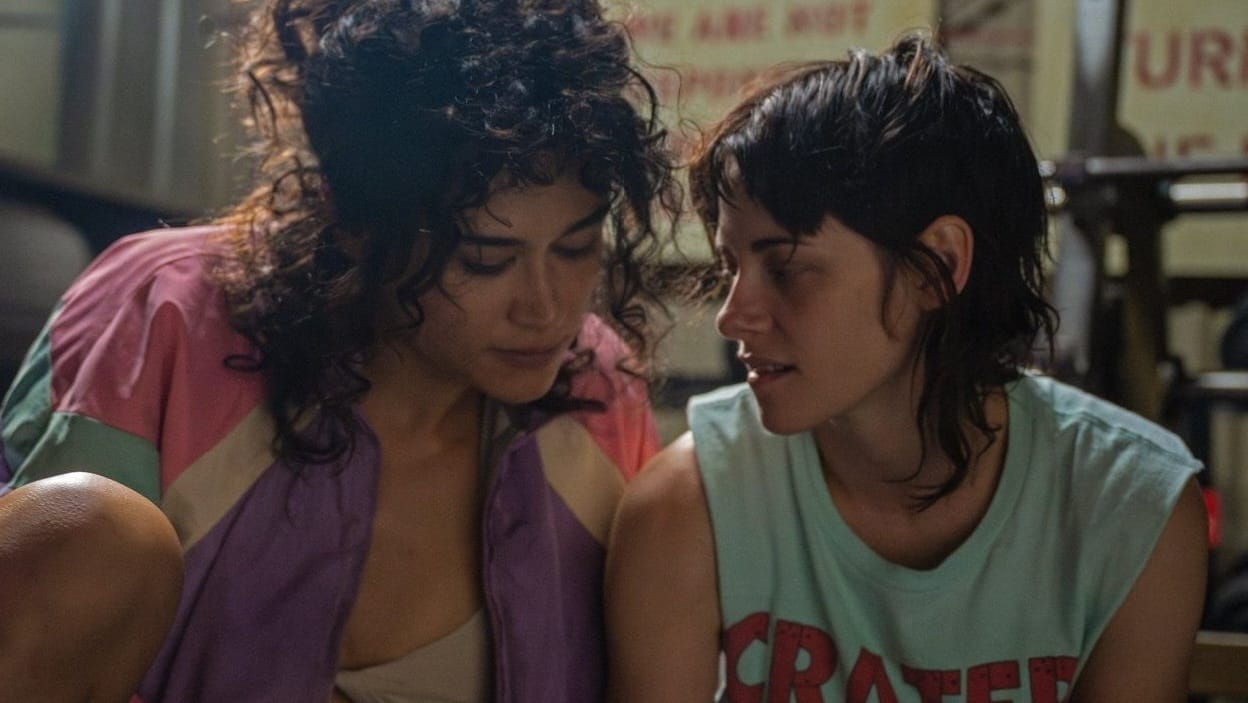
Photo caption: Katy O’Brian and Kristen Stewart in LOVE LIES BLEEDING. Courtesy of A24.
This week on The Movie Gourmet – I’ll soon be posting on Monkey Man, which I will NOT be recommending, and Matter of Mind: My Parkinson’s, which you should DVR on PBS Monday. Love Lies Bleeding is still the best choice in theaters.
REMEMBRANCE
Louis Gossett, Jr., won an Oscar for his drill sergeant in An Officer and a Gentleman. He also played Fiddler in Roots, amid 198 other screen appearances.
Locke: a thriller about responsibility. Amazon, AppleTV, Vudu, YouTube.
ON TV
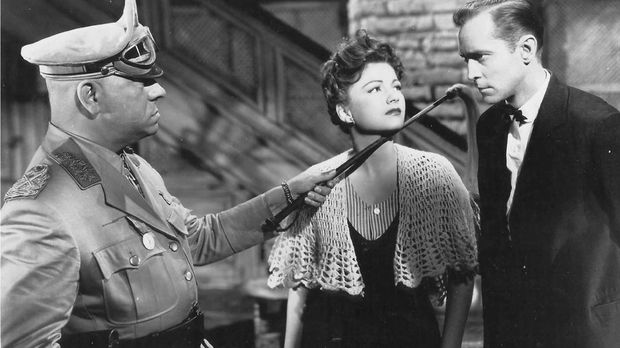
Erich von Stroheim, Anne Baxter and Franchot Tone in FIVE GRAVES TO CAIRO.
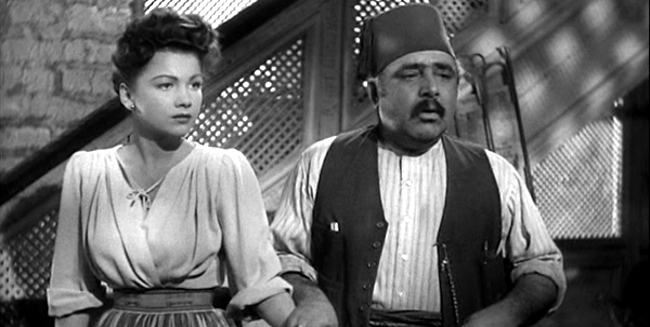
On April 6, Turner Classic Movies will present an underseen Billy Wilder wartime noir, Five Graves to Cairo. It’s th movie Wilder made immediately before Double Indemnity, and it’s not a masterpiece like that or Stalag 17, Sunset Blvd., Ace in the Hole or Some Like It Hot, but it’s a pretty good suspense thriller with a great cast. The film was released just thirteen months after Rommel’s victory over the British in Tobruk, Egypt. British Corporal Bramble (Franchot Tone) has survived the battle and wandered, alone, into an isolated desert hotel run by Farid (Akim Tamiroff) and his French maid Mouche (Anne Baxter). Suddenly, the German Army move in, led by Rommel himself (the great director Erich Stroheim). To survive, Bramble impersonates the hotel’s recently deceased waiter, who unbeknownst to Farid and Mouche, was a German spy. The tension comes from Bramble, Farid and Mouche walking on egg shells as they perpetuate the deception while Bramble tries to elicit critical military intelligence from the Germans. Tone and Baxter, reliable movie leads of the 1940s, are very good. The wonder character Tamiroff is vivid as always here, fifteen years before his greatest performance as Uncle Joe Grandi in Touch of Evil. Von Stroheim, in no way impersonating the real Rommel, gives a bravura performance as the German commander.
Anne Baxter and Akim Tamiroff in FIVE GRAVES TO CAIRO.
Locke: a thriller about responsibility. Amazon, AppleTV, Vudu, YouTube.
ON TV
Fred MacMurray and Kim Novak in PUSHOVER
On March 31, TCM plays Pushover, one of my Overlooked Noir. Tracking a notorious criminal, the cop (Fred MacMurray) follows – and then dates – the gangster’s girlfriend (“Introducing Kim Novak”). It starts out as part of the job, but then he falls for her himself. He decides that, if he can double cross BOTH the cops and the criminal, he can wind up with the loot AND Kim Novak. (This is a film noir, so we know he’s not destined for a tropical beach with an umbrella drink.)
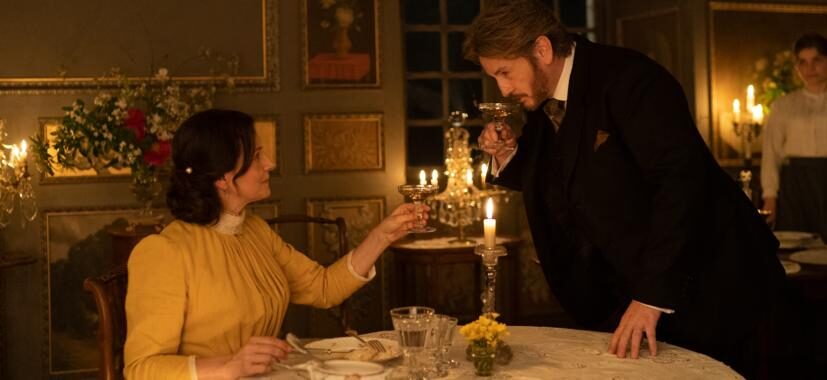
Photo caption: Juliette Binoche and Benoit Magimel in THE TASTE OF THINGS. Courtesy of IFC Films.
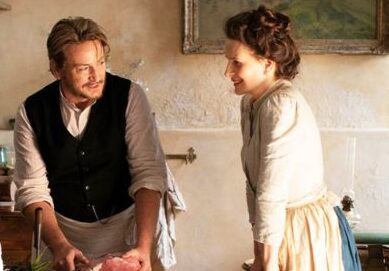
The French romantic drama The Taste of Things is the story of a man consumed by two passions – an obsession with gastronomy and a profound love for a woman. It’s also one of the mouthwatering movies in the history of cinema.
The man is Dodin (Benoit Magimel), a famous gourmand in 1884 France, a key moment in the history of the culinary arts, when the master French chef Escoffier was still in his 30s. The woman adored by Dodin is Eugenie (Juliette Binoche), not coincidentally his live-in cook.
The Taste of Things begins with a long scene (15+ minutes) as Eugenie leads a team in producing an elaborate garden to table meal, with every ingredient prepared old school, the long and hard way. Fish quenelles are formed by hand, shrimp shells are boiled into a stock, and the quenelles are pached in the shrimp stock. It takes hours for a rack of veal turned into an OMG marvel. It turns out that this is a multi-course feast prepared for Dodin and his chatty four buddies. The guys all fall SILENT when the consommé appears, and then, as the courses pile up, don’t say anything more that isn’t about the meal itself or the history of gastronomy.
The fruit of Eugenie’s labor, exquisitely photographed, are the height of food porn. One highlight is a spectacular vol-au-vent. When Eugenue shows up with a giant croissant-like thing (a giant bioche?) that she and the four buddies dig into with their hands, there were audible gasps from the audience at the screening.
There’s even a scene with a culinary Holy Grail, now illegal in the US, fabled ortolans devoured as per tradition, with the diners’ heads under their napkins. Of course gastronomy, as any human endeavor, can be taken to silly extremes, which is illustrated by a dinner for Dodin and his friends, hosted by a prince under the mistaken impression that more is always better.
Eugenie prepares masterpiece after masterpiece for Dodin until her health falters, giving him the opportunity to express his love by preparing and serving her an even more formidable dinner.
The Taste of Things is a film by writer-director Anh Hung Tran, who certainly knows his way around movie passion and movie foods (The Scent of Green Papaya).
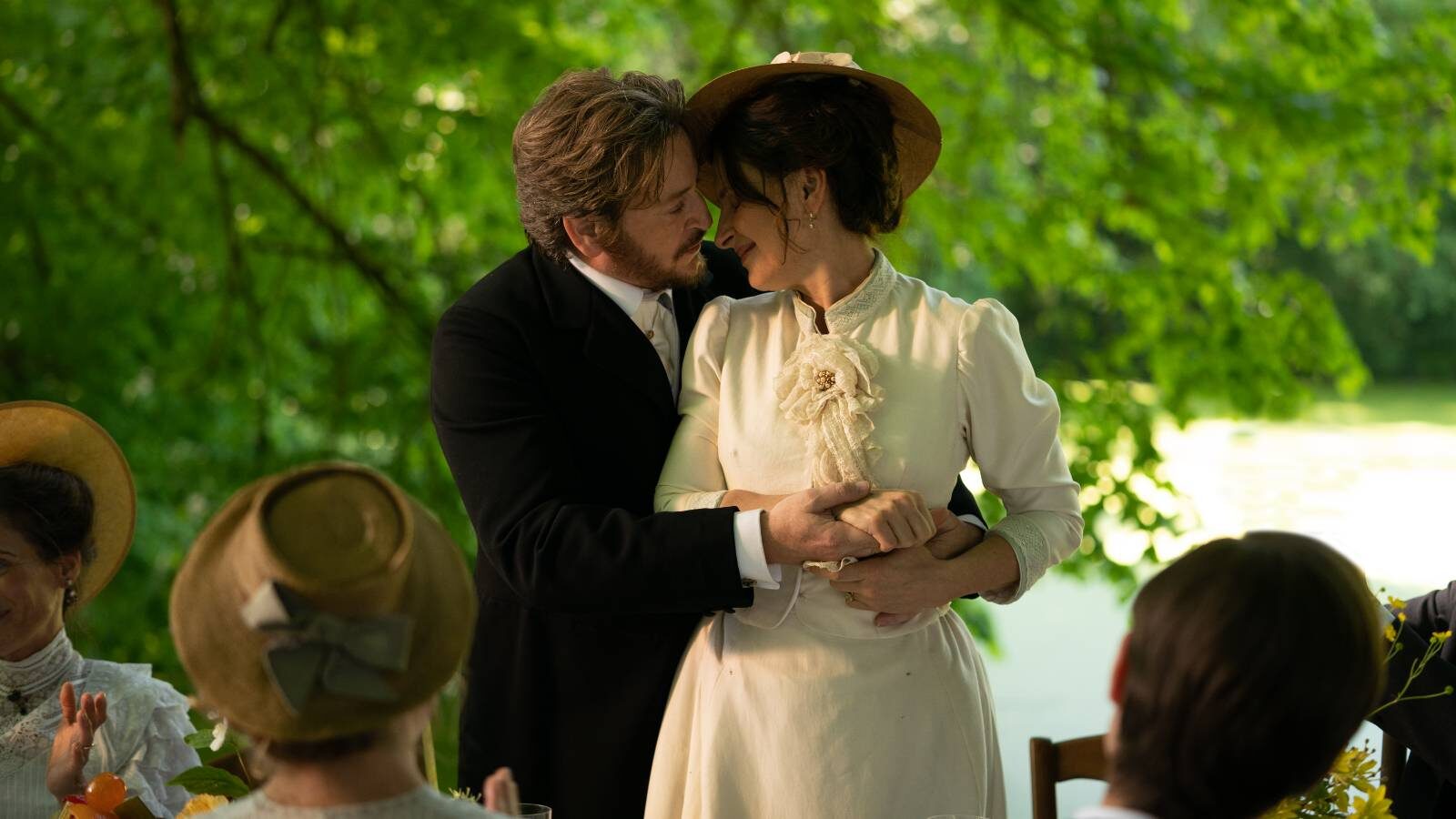
Benoit Magimel and Juliette Binoche in THE TASTE OF THINGS. Courtesy of IFC Films.
It’s always a pleasure to watch the radiant Juliette Binoche, especially when she’s playing an endearing character like Eugenie, who keeps resisting Dodin’s offers of marriage even as she values his culinary partnership and welcomes him into her bed. Their relationship is perfectly summed up in the epilogue when Eugenie asks Dodin a question and receives his answer with bliss. She feels loved – and on her terms.
The Wife liked The Taste of Things less than I did, in part because she was less entertained by the long scenes of meal preparation, which captivated me. (I am The Movie Gourmet, after all.)
We both, however, thoroughly enjoyed the character of the culinary child prodigy Pauline (Bonnie Chagneau-Ravoire), especially her reaction to her first Baked Alaska and her growing into a peer of Dodin’s.
The Taste of Things was France’s submission to the Academy Awards. It’s going on my list of Best Foodie Movies. It’s now available to stream from Amazon and AppleTV..
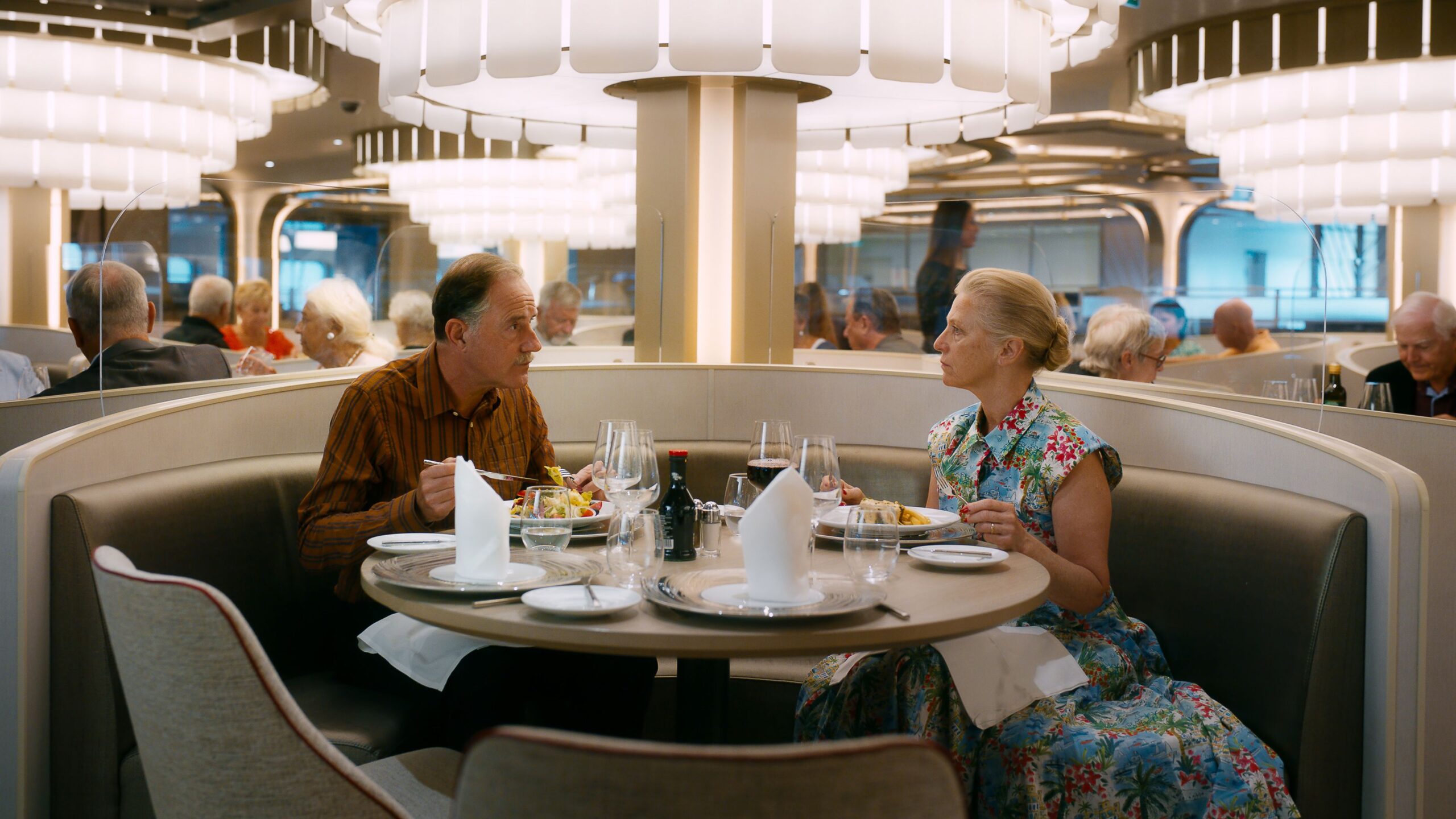
Photo caption: Stefan Kurt and Esther Gemsch in GOLDEN YEARS. Courtesy of Music Box Films.
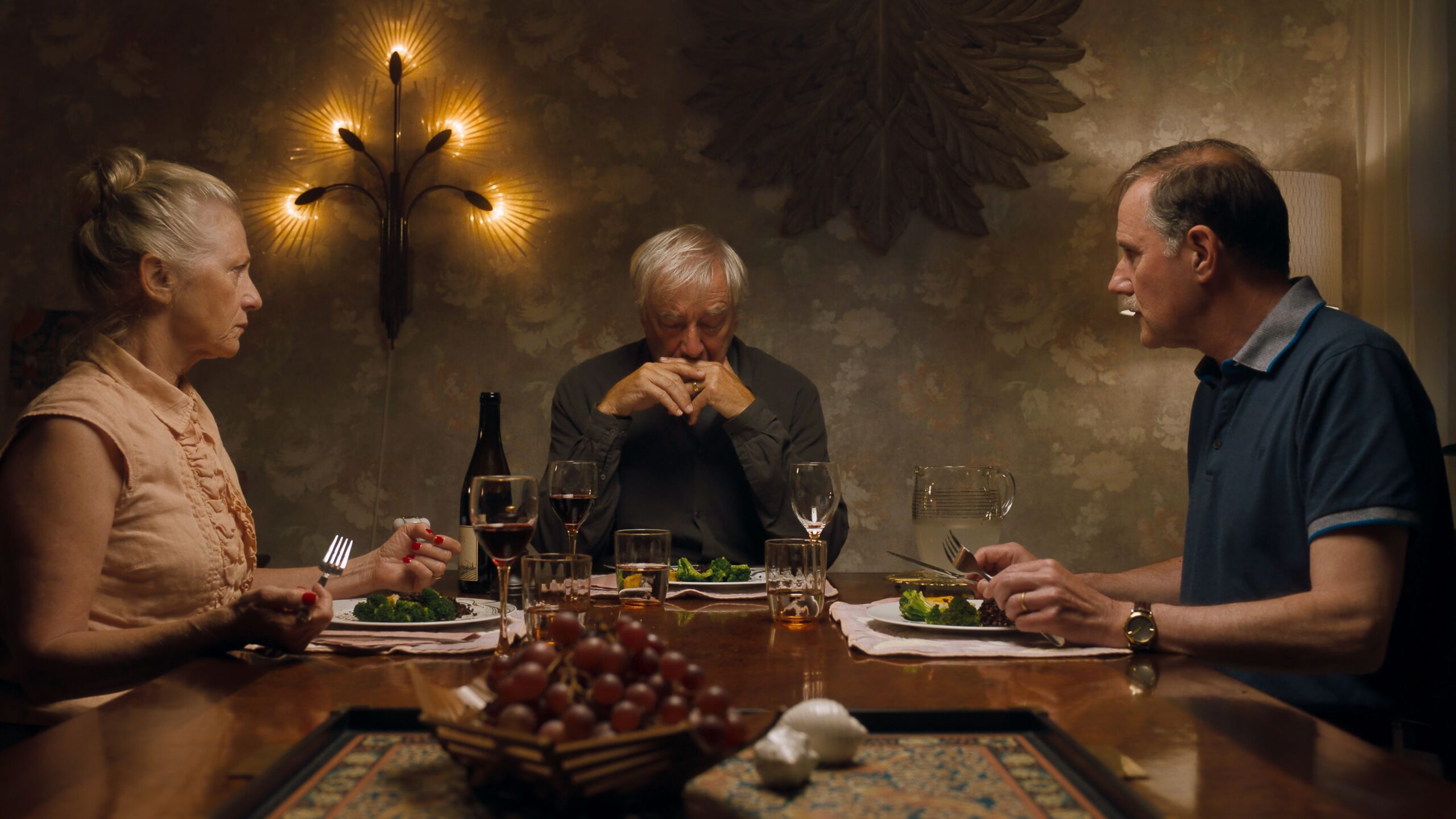
The Swiss dramedy Golden Years begins as Peter (Stefan Kurt) turns 65 and retires. His wife Alice (Esther Gemsch) has been eagerly awaiting this day, which she sees as an opportunity for travel and to rekindle intimacy with Peter. In contrast, Peter doesn’t seem to have been thinking about it at all, but he begins to be consumed with his physical health and suddenly transforms himself into a mountain biking, vegan workout king. Alice wants to downsize, but he wants to stay in their house. Travel doesn’t interest Peter, but he feels trapped into joining Alice on a Mediterranean cruise that their adult children have gifted them.
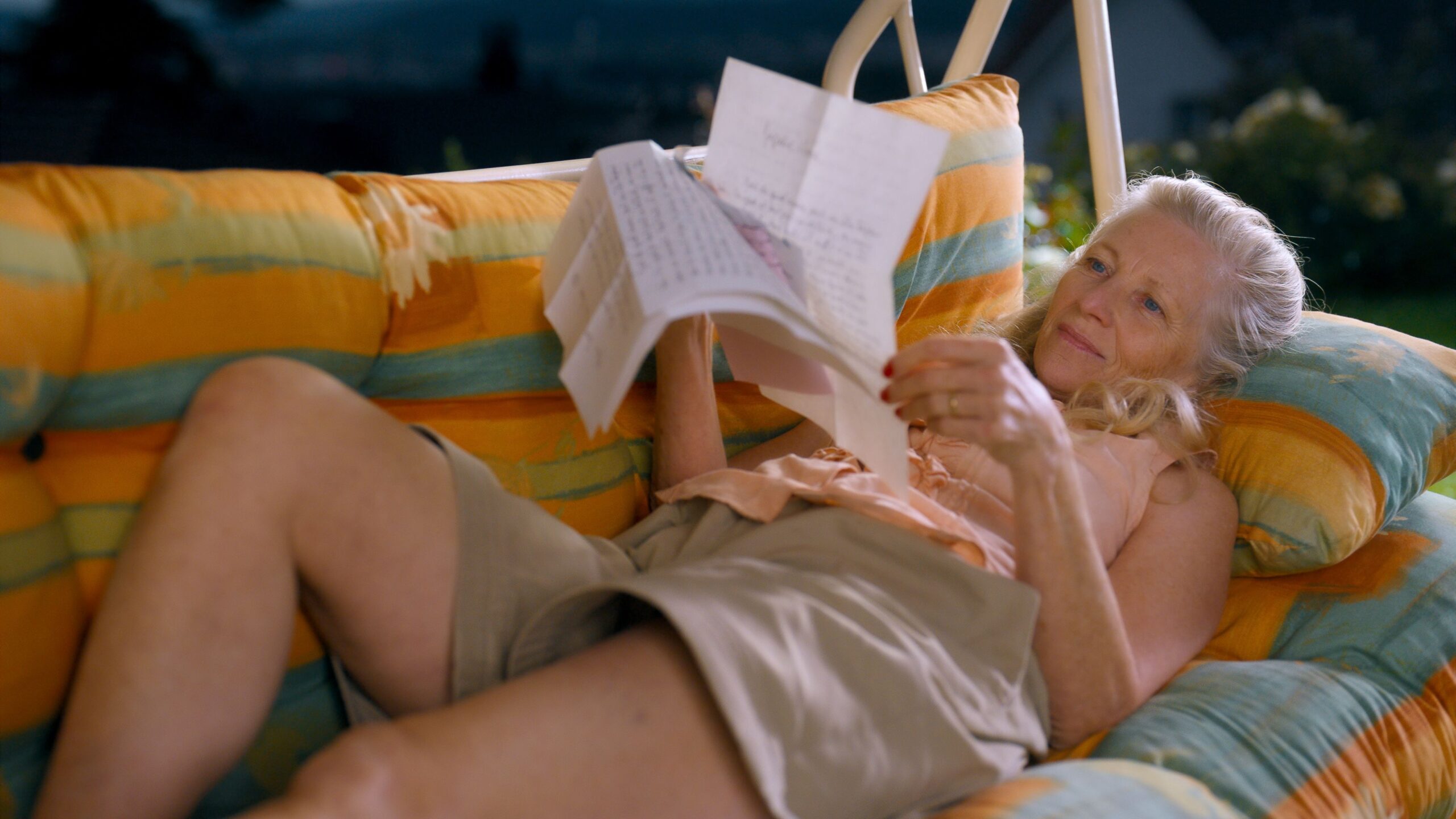
Esther’s best friend unexpectedly dies, and Peter impulsively invites her heartbroken husband to join them on the cruise, which appalls Esther, who wants Peter to herself on the cruise. Esther has read her late friend’s hidden cache of letters and has stumbled on an explosive secret. Esther’s annoyance from Peter’s inattention simmers until it boils over into she staggers Peter by embarking on her own adventure.
Esther Gemsch, Ueli Jaggi and Stefan Kurt in GOLDEN YEARS. Courtesy of Music Box Films.
At this point, Golden Years departs from a comedy of manners into an exploration of dual self-discoveries. Indeed, there are Men-are-from-Mars moments when Peter is a clueless dunderhead about Esther’s expectations. But Peter’s needs have evolved, too, and Esther has also mistakenly assumed that he will want to do want she wants to do.
We all know couples who drift totally apart after decades of marriage, and there must be some couples who age with identical interests. Many couple have different, but complementary aspirations, or can build a new life together around some core commonality. The question that Alice and Peter face is, where are they on this continuum?
Will Alice and Peter compromise? Will they be able to accommodate each others’ needs? Will they live separate lives? Is there a Win Win?
Screenwriter Petra Volpe (The Divine Order) probes these questions in a consistently funny and engaging movie with a minimum of senior citizen tropes or cheap geezer cheap jokes. (It is very funny, though, when Peter’s Gen X co-worker brightly tells him that his old office will become a server room.)
Esther Gemsch in GOLDEN YEARS. Courtesy of Music Box Films.
Director Barbara Kulcsar keeps the story sprightly paced and maintains just the right balance between comedy and the more serious issues. Alice is the primary focus of the story, and the performance of actress Esther Gemsch is especially strong.
Golden Years can now be streamed from Amazon, Vudu and YouTube.
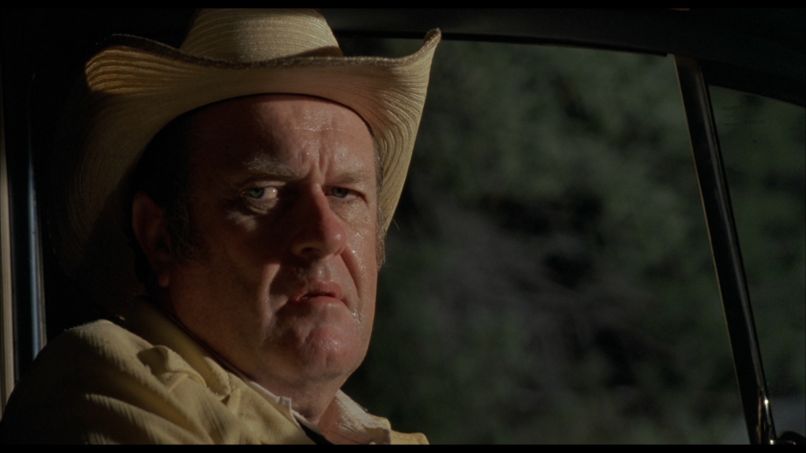
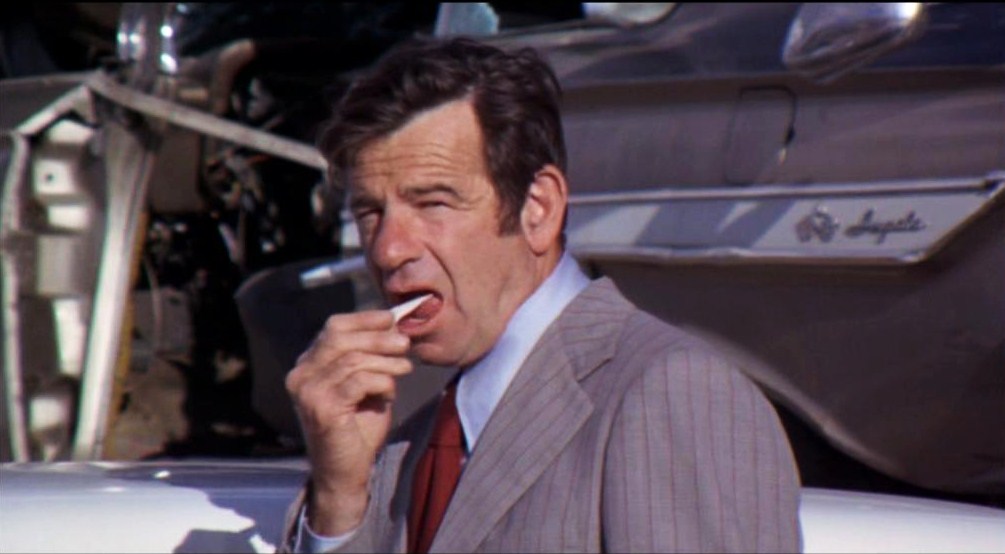
M. Emmet Walsh was one of cinema’s most stories, prolific (233 screen credits) and welcome character actors. Walsh was unforgettable as the murderous private detective Loren Visser in Blood Simple, a scary (and funny) concoction of amorality, sleaze and tenacity. He also elevated Midnight Cowboy, Little Big Man, What’s Up Doc?, Serpico, Blade Runner, Ordinary People, Slap Shot, Straight Time, Reds, Cavalry and Knives Out. There was only one T in Emmet, and the M stood for Michael.
Photo caption: Katy O’Brian and Kristen Stewart in LOVE LIES BLEEDING. Courtesy of A24.
Love Lies Bleeding is a title that legendary film noir director Sam Fuller would have loved, and this highly original neo-noir is a knockout. Kristen Stewart plays Lou, the reluctant manager of a downscale fitness gym in a hardscrabble New Mexico town that is flat, arid and devoid of culture. Love Lies Bleeding may be set in and shot in New Mexico, but this town is not anybody’s Land of Enchantment.
Lou is wallowing through the drudgery of her job, when she eyes Jackie (Katy O’Brian), an aspiring bodybuilder who has just drifted into town. This moment evokes the one in which John Garfield first sees Lana Turner in The Postman Always Rings Twice. The two plunge into a passionate affair, and Jackie, who has snagged a job on her first day in town but is still homeless, moves in with Lou.
But soon, the two find out that Jackie has already become entangled with two folks who are important in Lou’s life – and not in a good way. There’s an impetuous homicide and a “perfect crime” cover-up. Unfortunately, an inconvenient witness, a steroid binge, and more impulsiveness threaten to unravel their lives. Love Lies Bleeding hurtles down an alley filled with robust sex, sudden violence and witty observation.
I will not spoil the ending except to say that, just as I was thinking, “this could go one of three ways”, it went in a totally unexpected direction. And, as I was thinking that writer-director Rose Glass was pivoting completely away from noir conventions, she ends the film with one of the most noirish lightings of a cigarette ever. This is only Glass’s second feature, co-written with Weronika Tofiska. Glass’ 2019 debut feature, St. Maud, earned some buzz.
Like many noirs, this is a tale of obsessions, and it’s a character-driven one, contrasting Lou and Jackie. Lous is measured and intentional, and we learn that her prioritization of loyalty has kept her in this place. Loyalty, and pretty much everything else, is situational for Jackie, whose unfocused wanderlust is another symptom of her captivity to her impulses. Lou is obsessed with Jackie. Jackie is obsessed with reinventing her life, through bodybuilding, through sex, through the next shiny thing.
Kristen Stewart is just so watchable, as she was when I first saw the 17-year-old Stewart in as Tracy in 2007’s Into the Wild. Stewart then bit her lower lip through the Twilight franchise, and, now about to turn 34, is at the top of her game. Stewart is fearless in her choice of scripts and likes to bet on interesting directors. She’s just perfect as Lou in Love Lies Bleeding.
This is the first time I’ve seen Katy O’Brian, and there’s just no getting around that she doesn’t look like most other movie actresses. She’s a martial arts instructor who doesn’t rely on her physicality alone, but uses it to great advantage. O’Brian captures Jackie’s supreme confidence (except when her family rejection bubbles to the surface, and how she is capable of one of the epic steroidal rages. She’s already amassed 27 IMDb credits, including a recurring role on The Mandalorian.
If you’re casting a villain with steely and contained determination, who better than four-time Oscar nominee Ed Harris? Harris comes through as expected, and Glass wittily puts him in a bald-on-top stringy wig that evokes Riff Raff in The Rocky Horror Picture Show. She also gives the character a disgusting interest in bugs.
The rest of the cast is very good, too, including Dave Franco, Jena Malone and Anna Barishnikov, who must be pretty intelligent to play such a profoundly dumb character with such intricacy.
Their obsessions drive Lou and Jackie together in Love Lies Bleeding, and it’s a volatile mix with a wowzer ending.
Photo caption: Tim Blake Nelson in THE INVISIBLES. Courtesy of Cinequest.
Cinequest’s live, in-person film festival ended this week, but you now you can stream some of the program through Cinequest’s virtual platform, Cinejoyfrom March 21-31.
The offerings include the two Must See films in my Best of Cinequest: