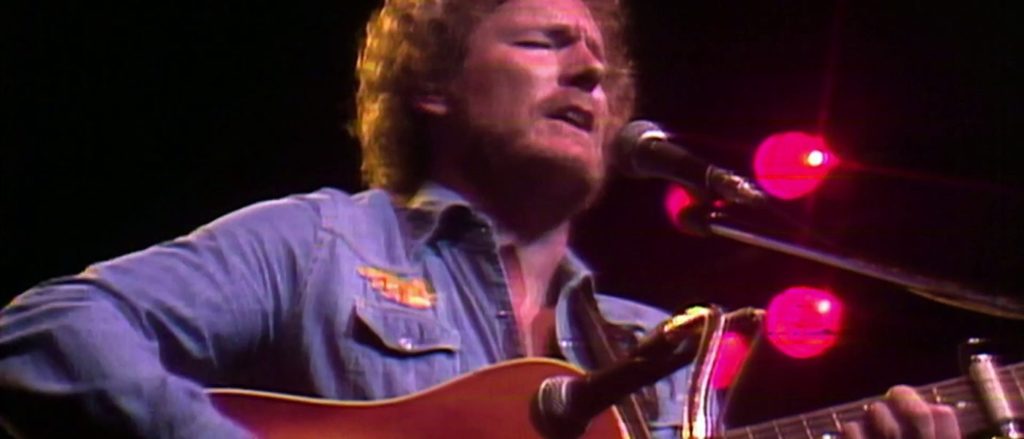
Gordon Lightfoot in GORDON LIGHTFOOT: IF YOU COULD READ MY MIND
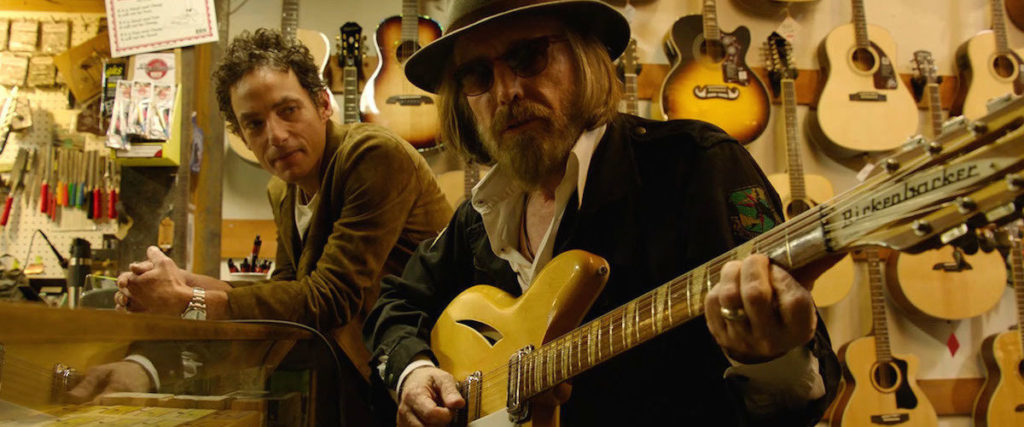
Gordon Lightfoot: If You Could Read My Mindis a surprisingly interesting documentary about a now genial singer-songwriter that I hadn’t thought of for decades.
The biodoc emphasizes Lightfoot’s talent as a songwriter and his importance to Canadian music scene. Just when it starts getting too reverential, the more lively tidbits from his career and personal life start rolling out.
Notably, the inspiration for the lyrics of Sundown is revealed:
I can see her lyin’ back in her satin dress
In a room where ya do what ya don’t confess
Sundown you better take care
If I find you been creepin’ ’round my back stairs
Amazingly, The Wreck of the Edmund Fitzgerald was recorded not only on the first TAKE, but the on first time Lightfoot’s band had ever PLAYED the song.
Gordon Lightfoot in GORDON LIGHTFOOT: IF YOU COULD READ MY MIND
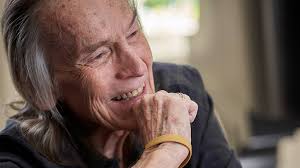
Physically unrecognizable from his hey day, the 81-year-old version of Lightfoot is pretty likeable. He is modest and irreverent about his own work (I hate that fuckin’ song). He is also grateful for his blessings, sober, open and regretful about the mistakes in his personal life.
Heck, I enjoyed spending an hour-and-a-half with the guy. Gordon Lightfoot: If You Could Read My Mind is available on Virtual Cinema; I watched it at the Laemmle.
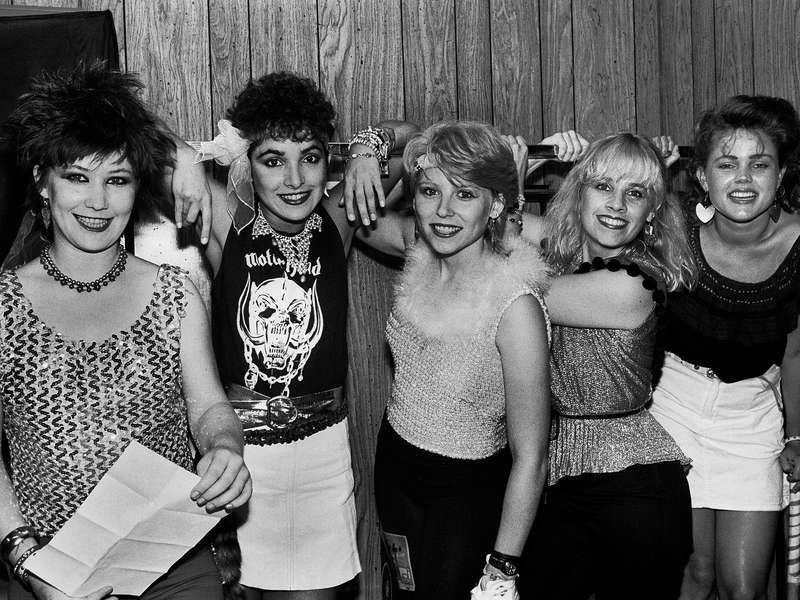
The infectious We Got the Beat by the Go-Go’s is fun itself, distilled into a song. The documentary The Go-Go’s tells the story of the all-female band.
There is a familiar arc to every documentary about a rock band. Scrappy and hungry musicians perform the music they love in obscurity, before being suddenly thrust into worldwide fame and more cash than they could have imagined. Then the bubble is burst by some combination of drug abuse, internal jealousy, creative differences, personality conflicts and fights over money. Usually the survivors look back with pride in the music, nostalgia about the good times and regrets that they didn’t handle it all with more maturity.
The Go-Go’s fits in that framework, to be sure, but it’s about women. The Go-Go’s have been the only all-female band to write their own music and play their own instruments ever to have a number one Billboard record. They achieved that in 1982, and it hasn’t been duplicated since.
All five Go-Go’s thankfully have survived and each shares her experiences in The Go-Go’s. They are an open, engaging and likeable lot.
There’s a tidbit about the gentlemanly class shown by The Police. And we learn why none of the Go-Go’s is proud of their appearance on Saturday Night Live.
This is a modest film about a singular moment in popular music. The Go-Go’s is available on Showtime.
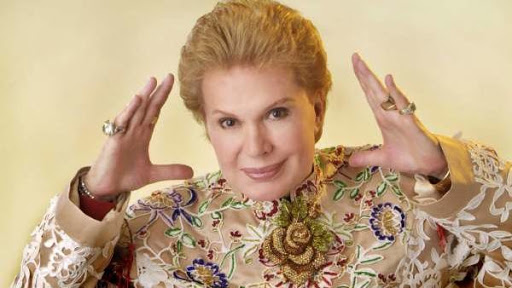
Walter Mercado in MUCHO MUCHO AMOR: THE LEGEND OF WALTER MERCADO
Just about every Spanish speaker knows who Walter Mercado is – and almost no non-Spanish speaker has heard of him. To describe him as a TV astrologer is profoundly inadequate.
Decades ago, I was flipping through TV channels and happened upon Walter’s astrology show and found him mesmerizing. He was so UNUSUAL, that, late at night, I just couldn’t change the station. The documentaryMucho Mucho Amor: The Legend of Walter Mercado will explain the phenomenon better than I can describe it.
For one thing, 99% of the show’s production value must have been in costume cost. Walter just stood in front of the camera and recited horoscopes, but he was always clad in capes that Liberace and Elvis would have considered WAY over the top. And Walter, for all the machismo in traditional Latino culture, was what we call today non-binary; Walter emanated a singular combination of androgyny and asexuality.
In Mucho Mucho Amor: The Legend of Walter Mercado, we get to meet the elderly Mercado, and find out about his life before and after his 25-year reign as the Spanish language TV ratings king. And why he suddenly disappeared from television.
While often jaw-droppingly flamboyant, Walter possessed a serene gentleness and warm-hearted demeanor that makes this documentary a Feel Good experience. Mucho Mucho Amor: The Legend of Walter Mercado is streaming on Netflix.
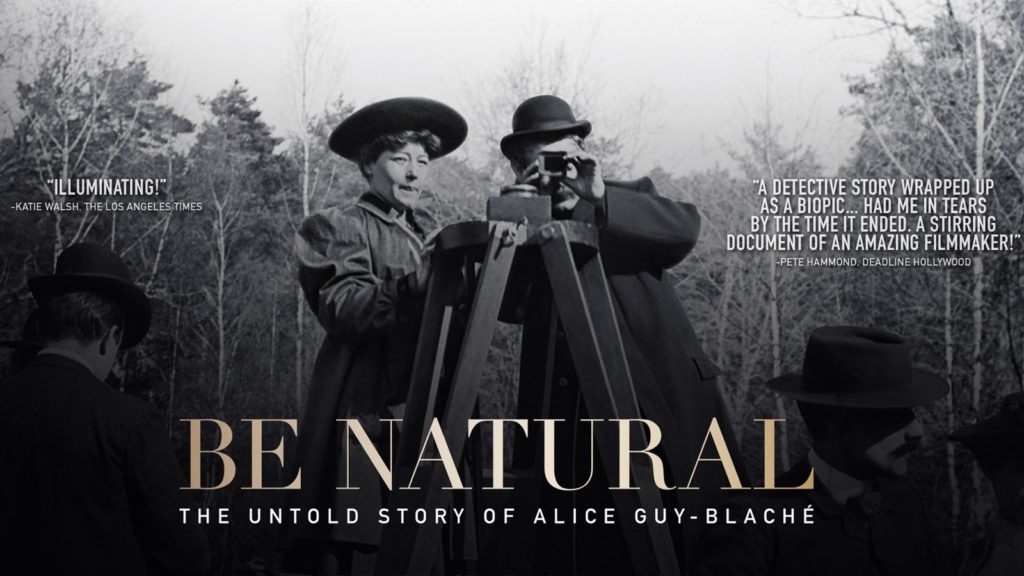
The documentary Be Natural: The Untold Story of Alice Guy-Blache pulls us out of ignorance about one of the most important pioneers of cinema. Alice Guy was one of the first movie directors, one of the first producers and one of the first studio heads. She was one of the inventors of movie comedy, use of color, special effects and a host of other aspects of filmmaking that we take for granted today. She worked in all three centers of early filmmaking – Paris, Fort Lee, New Jersey and Hollywood. And she was a woman.
Alice Guy had been almost erased from history precisely because – and only because – she was a woman. But if we don’t know about Alice Guy, we are as ignorant as if we didn’t know about the Lumieres and D.W. Griffith. This is essential movie history.
Fortunately, more and more of her films are being rediscovered – found, properly credited and preserved. At the bottom of this post, you can watch one of her films, The Consequences of Feminism. I didn’t even know that the word “feminism” was extant 114 years ago, but the film still has #MeToo topicality. It’s a withering parody of gender roles and male entitlement. In the film, men and women have taken each others’ conventional gender roles. Men perform the thankless household drudgery while the women smoke, drink and play pool. Throughout, the women are outrageously sexually harassing the men, kind of like Mad Men in reverse. Of course, the men finally rebel at all the mistreatment.
Be Natural: The Untold Story of Alice Guy-Blache is currently free on WATCH TCM and can be streamed from Amazon, iTunes, Vudu, YouTube and Google Play.
Here’s the entire seven minute film from 1906: The Consequences of Feminism:
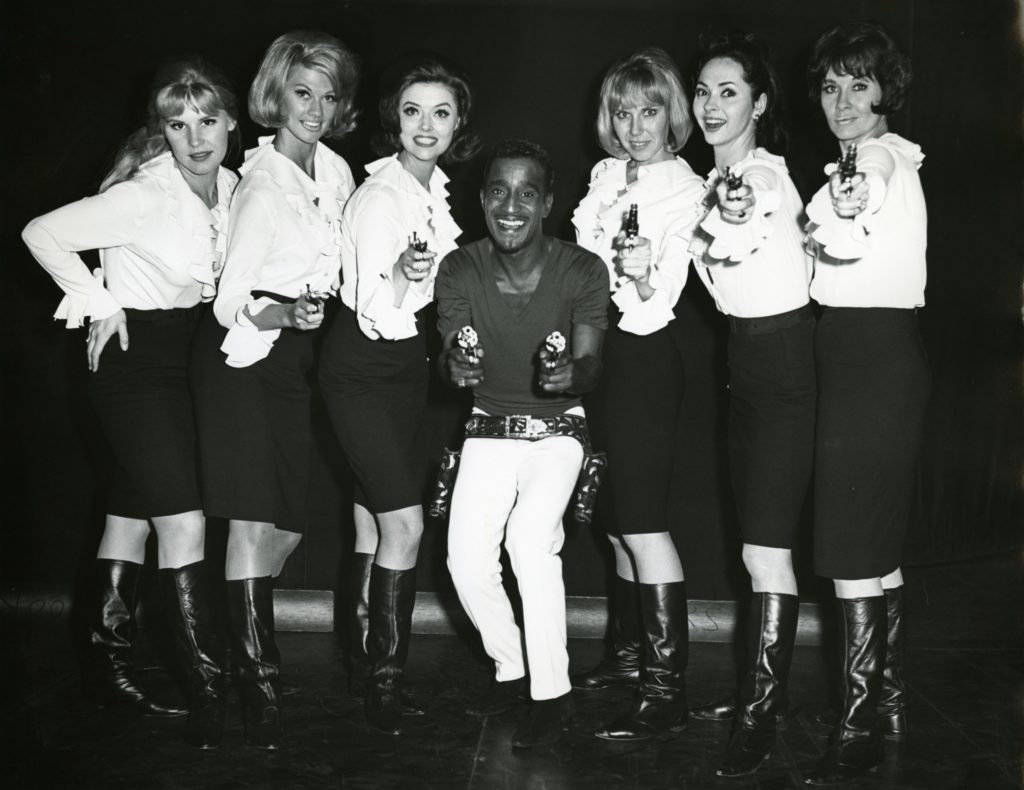
Still from SAMMY DAVIS JR.: I’VE GOTTA BE ME. Photo courtesy JFI.
Sammy Davis Jr.: I’ve Gotta Be Me is now available to stream (and free on Amazon Prime). As a Baby Boomer who had dismissed Sammy Davis Jr. from the moment he publicly hugged Richard Nixon, I found this to be the most surprising doc (and my favorite) at last year’s San Francisco Jewish Film Festival. I learned that Sammy’s 61-year career as a professional entertainer began at age three (with his first movie credit at age 7), a working childhood that left emotional needs It turns out that Sammy was a very, very talented but needy artist,, an uncomplicated man navigating several very complicated times.
Sammy’s life of entertainment began at 3. We get to see a clip of him in the 1933 Rufus Jones for President. All that professional work took away his childhood and engraved upon him a need to please. That and his generation produced the 50s showbiz style that seemed so insincere to us Baby Boomers. And, of course that embrace of Nixon seemed to be the ultimate sell-out moment.
Sammy Davis Jr.: I’ve Gotta Be Me also poses whether he was demeaned by Rat Pack humor? Were Frank and Dino laughing at Sammy, or with him?
But this was an immensely talented man, a masterful dancer with a remarkable crooner’s voice and a gift for mimicry. He was the first American entertainer of color to do impersonations of white celebrities. BTW there is some unbelievable dancing in Sammy Davis Jr.: I’ve Gotta Be Me. We get to see Sammy’s 60th anniversary in showbiz celebrated among a host of celebrities – he still had his dancing chops.
Sammy Davis Jr.: I’ve Gotta Be Me is the story of a man whose success condemned him to a career that spanned generations – none of which fit him comfortably. It’s a fine and insightful film. It can streamed on Amazon (included with Prime, iTunes, Vudu, YouTube and Google Play.
[Random note: This film title may contain the most different punctuation marks of any movie title: a comma, a period, a colon and an apostrophe.]
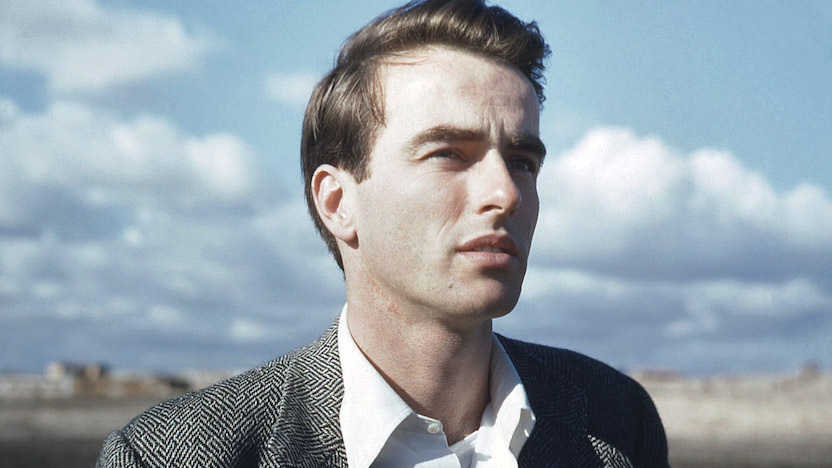
MAKING MONTGOMERY CLIFT, directed by Robert Anderson Clift and Hilary Demmon
The best documentary in this year’s Frameline festival was Making Montgomery Clift, from directors Robert Anderson Clift and Hilary Demmon. It’s an unexpectedly insightful and nuanced probe into the life of Clift’s uncle, the movie star Montgomery Clift. And it explodes some of the lore that has shaped popular understanding of Montogomery Clift.
Clift is the son of Brooks Clift, Montgomery Clift’s brother and archivist. The younger Clift never met his uncle Monty, but had access to his father’s vast collection of Monty memorabilia and to the memories of family, friends and previous biographers.
Many of us think we know the arc of Montgomery Clift’s life: success as a 1950s movie heartthrob is torpedoed by the inner torment of his closeted homosexuality; then alcoholic self-medication and disfigurement from an auto accident propel him into drunken despair and an early death. It turns out to be a much, much more nuanced story.
It turns out that some in the Clift family indulged in secret audio taping to a jaw-dropping degree. Directors Clift and Demmon take full advantage of the actual conversations of Monty and others. Their gift is to drop in the most startling revelations without lingering or even emphasizing them. To watch Making Montgomery Clift is a constant exercise in “wait…WHAT?” Demmon’s brisk editing helps, too.
How tormented was Monty by his sexuality (which we learn was a robust bisexuality)? Witnesses – who would know – let us know that Monty was comfortable in his own skin and fairly open – for the times – about his sexuality. This wasn’t Rock Hudson or Tab Hunter.
We learn that Montgomery Clift’s refusal to sign a studio contract was to preserve BOTH his artistic independence and his sexual independence (avoiding being forced into faux marriage and the like).
Making Montgomery Clift also discredits the view that Monty sank into depression after the accident changed his looks. His personally most satisfying performances came AFTER the accident.
The insights into Monty’s artistic process are unique and significant. We hear the actual conversation between Montgomery Clift and director Stanley Kramer about Clift’s riveting cameo in Judgment at Nuremberg. Monty’s intentionality in shaping the scene dispels the myth that, instead of giving a performance, he had an actual breakdown before the camera. Yes, he was acting it, and it was spectacular.
There has been a handful of recent showbiz biodocs made by younger relatives of the famous artists. Usually, these films add some personal family anecdotes, but are so fond of their subjects that they’re not especially insightful. Making Montgomery Clift is not that – it ascends above the pack – and should change how all of us understand Monty Clift.
Making Montgomery Clift is available to stream on Amazon.
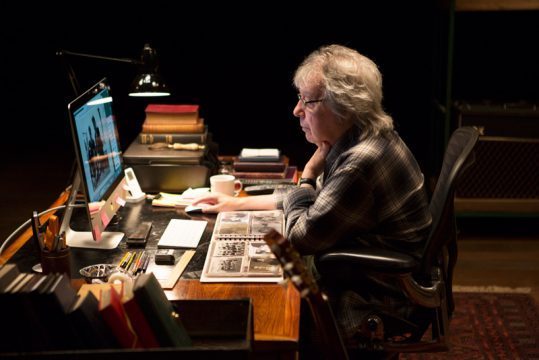
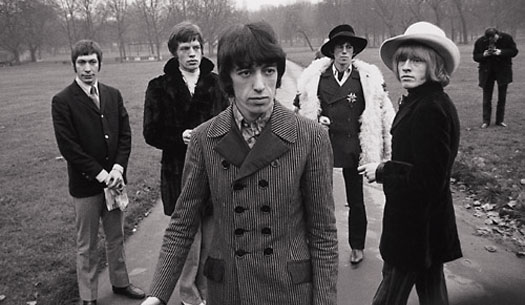
The title character in the documentary The Quiet One is the Rolling Stones bass player Bill Wyman. Wyman is an anti-flamboyant person at the very core of a circus of hedonistic excess and self-promotion.
Wyman is also an obsessive collector of memorabilia, and, at age 83, he now burrows into his irreplaceable archive of home movies and concert posters. What’s especially interesting in The Quiet One is the history of the Rolling Stones from his sober and humble perspective.
One famous associate says, “Bill never started acting like he’s famous”. Wyman himself says, “I suppose if you looked at my bookshelves you would understand me better.” What we do see is an astonishingly down-to-earth person, seemingly barely changed by stardom. He is honest about two marriage mistakes, one of them fairly appalling.
In the sweetest scene, we get to see today’s Wyman as a devoted fan, choking up while recalling an encounter with Ray Charles.
The Quiet One is a low key movie about a low key guy, and I recommend it to those interested in rock and roll history. The Quiet One is available to stream on Amazon, iTunes, Vudu, YouTube and Google Play.
The documentary Echo in the Canyon explores a moment in music history – the beginnings of folk rock in LA’s Laurel Canyon in the mid-1960s. Think the Byrds, Buffalo Springfield, the Mamas and the Papas, all influenced by the Beach Boys and the Beatles.
There are some, but not a zillion, nuggets in the interviews with Roger McGuinn, David Crosby, Michelle Phillips, Eric Clapton, Graham Nash and Brian Wilson.
Jakob Dylan leads a band with Regina Spektor, Beck, Fiona Apple and Cat Power that plays some of the hits from the era. This is an excuse for a soundtrack album, but hardly a significant value add. The exception is singer Jade Castrinos, who seems born to sing the Mamas and Papas songbook, both the Michelle Phillips and Denny Doherty parts.
Echo in the Canyon is moderately interesting to fans of 1960s rock and roll and is available to stream on Netflix, Amazon, iTunes, Vudu, YouTube and Google Play.
In his Pain and Glory, master filmmaker Pedro Almodovar invites us into the most personal aspects of his own life, illuminated by Antonio Banderas’ career-topping performance. Almodovar calls Pain and Glory “auto-fiction”, and Banderas’ central character is a filmmaker clearly modeled after Almodovar himself.
Although Almodovar is known for a fun personality and makes the most exuberant films, we learn that this filmmaker is shy and introverted. He is suffering privately from an assortment of maladies, most importantly with chronic back pain, migraine headaches and depression. Because of the chronic pain and the depression, he has isolated himself in his apartment, blocked from his work and avoiding all social engagement.
The restoration of an early film prods him into planning a public appearance with the film’s star, an actor that he has been estranged from for thirty years; that encounter plunges him into an entirely new strategy of pain management. Almodovar inserts vignettes from his childhood which illuminate his respect and adoration of women and his artistic and sexual awakenings. These flashbacks are brilliant.
Pain and Glory is as beautiful as any Almodovar film. The color palette is far less lushly vibrant than usual for Almodovar, but the more somber look is just as rich.
Banderas has never been better. His longtime close friendship with Almodovar clearly informed this searing performance, both with his close observation of his friend and because he cares for him. This performance will certainly earn Banderas an Oscar nomination.
Pain and Glory is an exquisite film. Some audiences may not want to invest in such a sometimes painful story, deliberately paced as it is. But those who settle in will be rewarded.
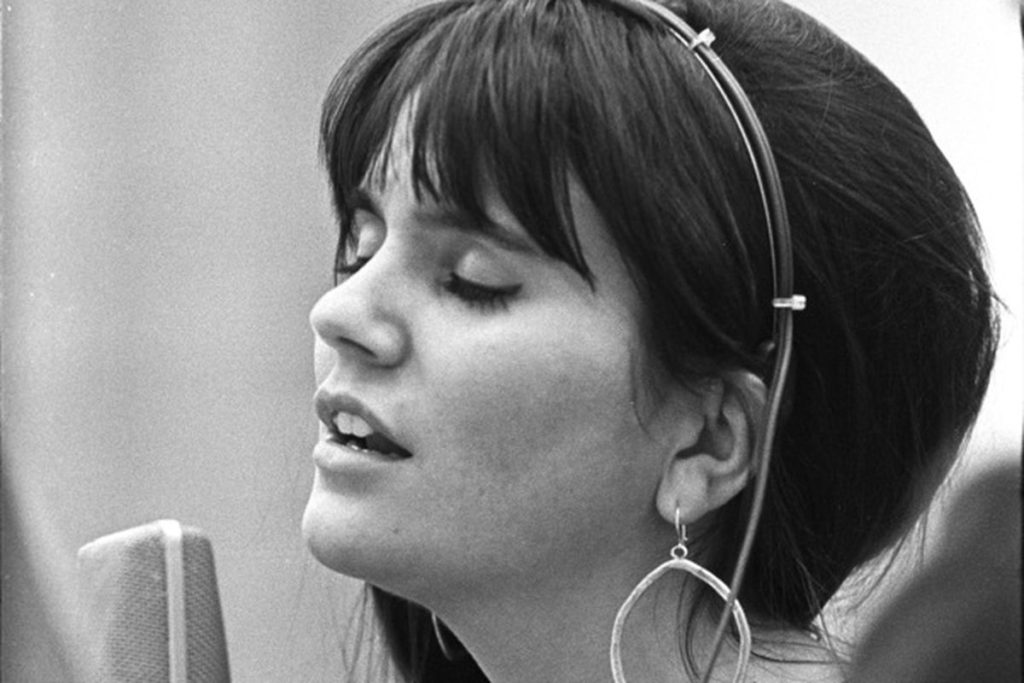
Linda Ronstadt: The Sound of My Voice is the insightful biodoc, based on Ronstadt’s own memoir, and narrated by Ronstadt herself. Ronstadt was the first female mega-rock star, and her story touches on feminism, the Counterculture and pivotal changes in the music industry. The film is comprehensive, tracing her upbringing and her romances with songwriter JD Souther and Governor/Presidential candidate Jerry Brown. The story is also poignant – her Parkinson’s disease has kept her from singing since 2007.
Ronstadt has been the auteur who is able to take someone else’s song and make it into her own art. She’s not a mere cover singer. I recommend listening to the Everly Brothers’ When Will I Be Loved, the Eagles’ Desperado, Dee Dee Warwick’s You’re No Good, Buddy Holly’s It’s So Easy and Little Feat’s Willin’ – and then matching them with Ronstadt’s versions.
Ronstadt is also unusual in that her interests and talent span the genres of pop and rock and country, various subgenres of Mexican music (earning Grammies across musical types) and even Gilbert and Sullivan (Tony nomination).
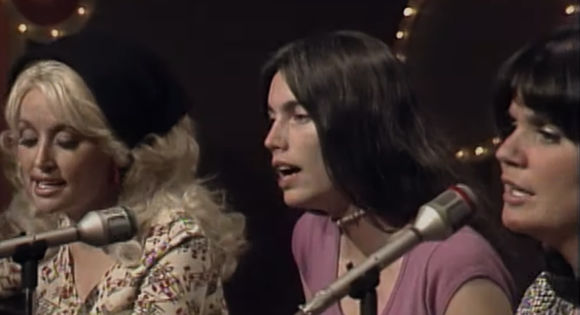
Dolly Parton, Emmylou Harris and Linda Ronstadt in LINDA RONSTADT: THE SOUND OF MY VOICE
Linda Ronstadt: The Sound of My Voice brings us a deep reservoir of witnesses: Ronstadt family members, Souther, former bandmates Don Henley and Waddy Wachtel, friends and collaborators Emmylou Harris and Dolly Parton. Both Emmylou and Dolly credit Ronstadt with helping them in critical career moments, Emmylou when she was paralyzed by grief and shock from the death of Gram Parsons.
Here’s a wonderful nugget from the film: Ronstadt had grown up in a family that sang Mexican music together, but her interest was rekindled by listening to the late night canciones of Harry Dean Stanton who was living in the garage behind Ronstadt and Souther.
It’s hard to imagine someone who wouldn’t enjoy Linda Ronstadt: The Sound of My Voice. And about that final scene of Linda with her nephew and cousin in the living room – just try to hold back the tears.