John Boorman and the Devil tells the true story of an all-time movie-making fiasco – and it’s more entertaining than the original film could have ever hoped to be. That 1977 bomb was The Exorcist II: The Heretic, which I correctly judged at the time to unfathomably bad. In John Boorman and the Devil, Boorman and his collaborators explain, in their own words, what happened.
The Exorcist became a monster hit in 1973, making an unexpected fortune for Warner Bros. The studio, seeing others profit with Exorcist ripoffs, wanted to cash in with a genuine Exorcist sequel. Trouble was, both The Exorcist’s director William Friedkin and writer Peter Blatty felt cheated by Warners and were embroiled in bitter litigation.
The studio courted director John Boorman, who was at his height of marketability, having just made Point Blank and Deliverance, two great films that have since been added to the National Film Registry. Boorman, however, was bored by the idea of making a horror movie; instead, he wanted to make a trippy art movie, as he had with Zardoz. Unfortunately, Boorman’s vision, as reflected in the continually rewritten screenplay by Rospo Pallenburg, manifested itself as incoherent cinema. (I remember being completely puzzled as I watched Max Von Stdow wandering through an Ethiopian desert,)
Of course, the target audience for the film was the folks who had enjoyed The Exorcist. Because The Exorcist was a horror movie, they were understandably expecting Exorcist II would be another horror movie. Disappointed by the lack of horror, confused and bored, Exorcist II: The Heretic was greeted with hostility. and then ridicule, and finally laughed off the nation’s movie screens.
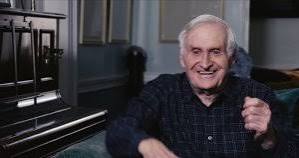
In John Boorman and the Devil, director David Kittredge brings us interviews with Boorman himself, stars Linda Blair and Louise Fletcher, the screenwriter, the assistant directors, a camera operator and the script supervisor. We even hear from the biologist in charge of wrangling the thousands of locusts. Boorman is a good sport and reflects on his biggest personal disaster with a minimum of defensiveness or self-pity. Blair and Fletcher are delightful raconteurs.
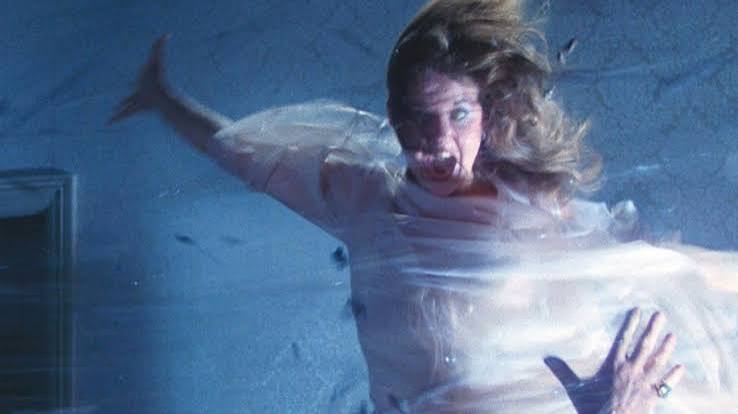
It didn’t help that Exorcist II: The Heretic is filled with unintentionally funny moments. At one point, Linda Blair tap dances. Wearing an African tribal headdress, James Earl Jones spits out a whole tomato. Even today, Blair and Fletcher burst out laughing at the name of the movie’s demon – Pazuzu.
Boorman dryly recounts advice he received from the great director David Lean: “Everybody makes failures. Just don’t make a famous one.”
I had heard William Friedkin taking delight in a hilarious anecdote about a disastrous Pasadena test screening of Exorcist II. Because Friedkin wished the sequel and its studio ill, I had presumed that he had embellished the incident – but John Boorman and the Devil brings an eyewitness who corroborates Friedkin’s version.
And here’s another tidbit – Boorman wanted to cast then emerging star Christopher Walken, but the studio insisted on big name Richard Burton. Burton turned in a one-dimensional performance, relying on his majestic voice and gravitas and little else.
John Boorman and the Devil is streaming on Amazon, AppleTV and Fandango. On October 9, Turner Classic Movies is showing John Boorman and the Devil in a double feature with Exorcist II: The Heretic; watch the first and skip thr second.