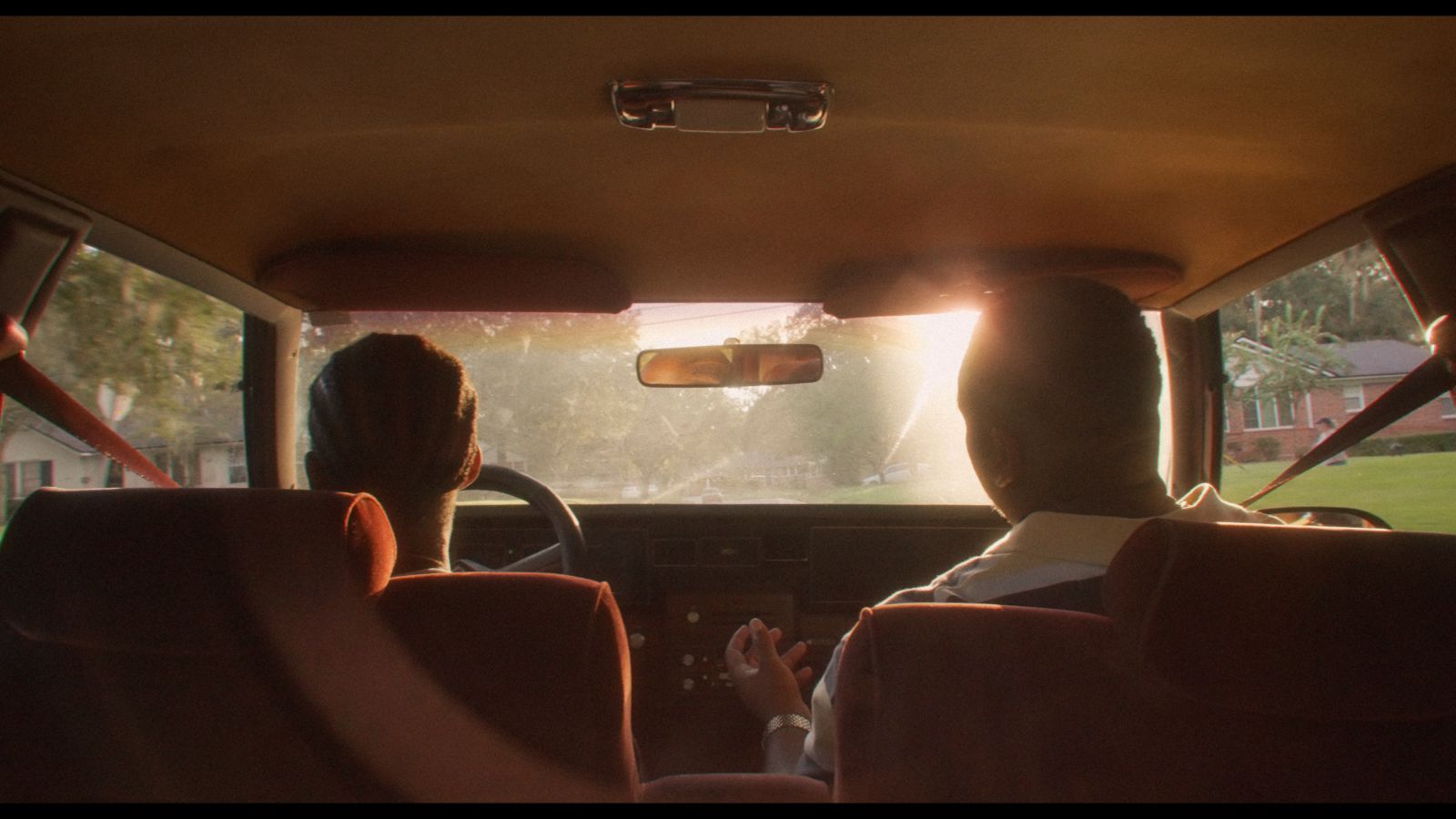
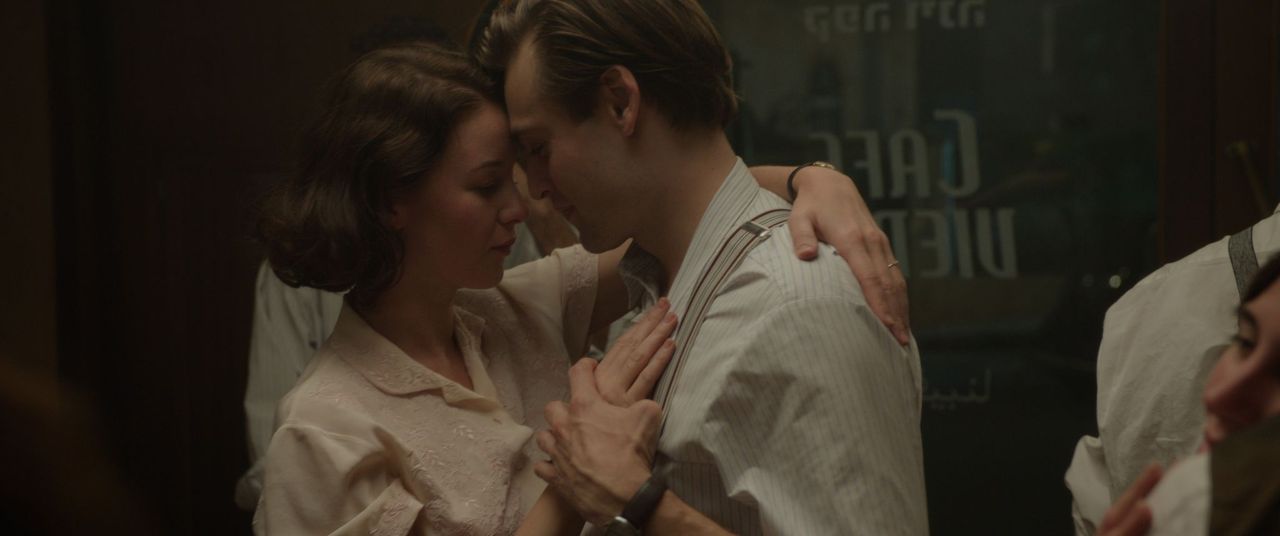
SHOSHANA: two lovers amid a deepening conflict

Photo caption: Irina Starshenbaum and Douglas Booth in SHOSHANA. Courtesy of Greenwich Entertainment.

The thriller Shoshana is a historical drama set in pre-Israel Palestine that revolves around a love story between two people on different sides. The Jewish journalist Shoshana Borochov (Irina Starshenbaum) is a committed Zionist and a supporter of the paramilitary group Haganah. Thomas Wilkin (Douglas Booth) is the Assistant Superintendent of Criminal Investigation for the British authorities.

All of the significant characters in Shoshana were real people, and the story takes place from 1933 to 1944. We don’t see many movies set in this time and place. The Ottoman Empire had ruled Palestine for 400 years, until the Ottomans were expelled by the British in WW I. The British then took over governing Palestine, with its majority Arab population and small Jewish community, under an international agreement – the British Mandate – and with a policy that there should be a Jewish homeland in Palestine. The Arab residents have been living with a few Jews, but are horrified by the specter of mass Jewish immigration, and they revolt. Tit for tat murders begin between Arabs and Jews, which the British try to suppress. Soon there are rival Jewish paramilitary organizations, each with a different take on how to deal with the British, with the Arabs and with each other. When the British sharply limit Jewish immigration and frustrate the efforts to form a Jewish-majority state, the Jews react with anger against the British.

It becomes a lethal gam of three-dimensional chess. Shoshana does a pretty good job in helping the audience track who is who – and who wants to kill who. Shoshana was directed by the veteran Michael Winterbottom (Welcome to Sarajevo, Jude, The Claim, A Mighty Heart and The Trip movies).

Thomas Wilkin and Shoshana Borochov forge an 11-year relationship in an environment that becomes more stressful every year. But Thomas is unwilling to stop being a British policeman, and Shoshana is unwilling to put aside her Zionist beliefs. They love each other, but not enough for either to abandon deeply-held values or their personal identities.

What could doom their relationship is not just arguing politics at the dinner table, but something more ominous – there are plenty of players who want each of them dead. The situation is explosive – often literally. And neither can hide in a Tel Aviv still small enough that everybody knows each other.

The British are trying to cope with what we now know as asymmetrical warfare. A British officer sneeringly asks a Zionist terrorist why he is blowing up women and children, and gets the reply “Because we don’t have the resources that you do“. Ironically, the British in Shoshana are themselves employing mass reprisals, extrajudicial executions and torture that would clearly be considered war crimes today.

Of course, British colonial rule was known for arrogant, racist, and culturally tone-deaf twits, and they are represented by Shoshana‘s villain, police official Geoffrey Morton (the fine actor Harry Melling).

Arabs and their cause may not be depicted in depth in Shoshana, but are shown as victims of both Jewish terrorism and British atrocities.

The historical events constitute the origin stories for both the nation of Israel and the Israeli-Palestinian conflict. The British throw up their hands and fal to provide for Palestinian self-determination within the borders of Palestine. The Jewish organizations in Shoshana later evolved into the two major Israeli political parties of the past 75 years, and the Haganah morphed into the Israeli Defense Forces. Israel has since become a military power and now faces its own asymmetrical warfare.

Given the impact of this history upon the current day, we might have expected more films about this period. After all, there are a zillion films about the Holocaust and a lot set in post-1948 Israel. In 1960, Otto Preminger made the blockbuster film Exodus from the 1958 Leon Uris novel which was the biggest best seller in US since Gone With the Wind. Exodus was set in the period between 1946 and 1948. (My parents saw Exodus at a drive-in with me as a small boy in the back seat.) No less than the pioneering Zionist leader and Israeli prime minister David Ben-Gurion said of the novel, “as a piece of propaganda, it’s the greatest thing ever written about Israel“.

Shoshana is far more clear-eyed and nuanced than Exodus. Shoshana reflects a historical setting that was complicated, and tells the story of lovers’ inner conflicts amid a dynamic and perilous external conflict. Shoshana releases into theaters this weekend.


Movies to See Right Now

Photo caption: Eve Connolly in SEW TORN. Courtesy of Vertigo Releasing.

This week on The Movie Gourmet – a new review of No Sleep Till, the sensational debut of indie director Alexandra Sampson, No Sleep Till – I’ll let you know when it releases more widely. I also have recommendations for the San Francisco Jewish Film Festival, currently underway, including The Stamp Thief. And the scintillating documentary Made in Ethiopia is now playing on PBS’ POV series.

REMEMBRANCE

Rebekah Del Rio’s rendition of Llorando, the Spanish language version of Roy Orbison’s Crying, was one of the most transfixing scenes in Mulholland Drive.

CURRENT MOVIES

Ursula Corbero and Nahuel Perez Biscayart in KILL THE JOCKEY. Courtesy of Music Box Pictures.

MADE IN ETHIOPIA: it’s just like China used to be

Photo caption: MADE IN ETHIOPIA. Courtesy of POV.

In the scintillating documentry Made in Ethiopia, businesswoman Motto is the face of a huge, new Chinese industrial park in Ethiopia. How huge? A factory with 3,000 workers is just one of its 130 businesses – and Motto is working on an 18,000-acre expansion.

Motto is smart, zealous, charismatic and utterly non-ironic. Along with the other Chinese, she has drunk the Koo-Aid and sees the park as entirely benevolent – bringing large scale employment and investment to a poor and neglected society. A visiting Chinese official exclaims, “it’s just like China used to be!“.

All of the workers are Ethiopian, who earn $50 per month in what is essentially a clean and gleaming sweatshop. All of the supervisors are Chinese who have left their families behind in China. The local farmers feel ripped off by their government, and an armed rebellion may be brewing. Apart from a global pandemic, what could possibly go wrong? In their first feature, directors Xinyan Yu and Max Duncan have created a brilliant exploration of clashing cultures and economic imperialism.

I screened Made in Ethiopia for the SLO Film Fest, where it made my Best of the SLO Film Fest. Now it’s on PBS’ POV. You can stream Made in Ethiopia on the PBS app or directly at the POV website.

Two Nuggets at this year’s SFJFF

Photo caption: Logan Lerman as Isaac and Molly Gordon as Iris in OH, HI!. Courtesy of Sony Pictures Classics.

The San Francisco Jewish Film Festival (SFJFF), always a major event for Bay Area cinephiles, opens tomorrow. The program offers 70 films from Belgium, Canada, France, Germany, Israel, Italy, Switzerland, the US and the UK and Uzbekistan. Here’s my festival preview.

This year, I’m recommending two nuggets:

Oh, Hi!: This dark romantic comedy begins with a couple heading off to a countryside vacation rental for their first romantic getaway. All is lustful fun until they discover that each has a different perception of what their relationship is and where it is headed. What could have been a merely awkward or hurtful moment precipitates an extreme reaction, and escalates into an absurdly funny situation. Oh, Hi! is the sophomore feature for writer-director Sophie Brooks, who has created a broadly funny, over-the-top situation that is sharply observant about relationships tending to evolve at different speeds for the participants. It’s a very smart screenplay. Oh, Hi!, which premiered at Sundance, is releasing into theaters soon; see it early at the SFJFF. (Full review to be published on July 23.)

THE STAMP THIEF. Courtesy of the San Francisco Jewish Film Festival.

The Stamp Thief: We don’t expect a Holocaust-related documentary to get wacky, but The Stamp Thief combines a historical whodunit and a real-life comic heist. It begins with tracking down a fourth-hand oral account of Nazi-stolen valuable stamps hidden in Poland: Is it true, who was the Nazi, where did he stash the loot and is it still there? And here’s where The Stamp Thief gets zany. Because the Polish authorities have not been supportive of the restitution of Nazi loot, our heroes decide to find and recover the stamps with a ruse. The team masquerades as a film crew shooting a romantic drama; they plan to dig around Polish basements until they find the stamps, under the noses of the Poles. What could possibly go wrong? How does the team navigate the moral ambiguity of lying for a good cause? Do they find the stamps? Do they get caught? What follows is Sherlock Holmes meets The Gang That Couldn’t Shoot Straight, an unusually colorful documentary. Full review.

The SFJFF runs through August 3 in select San Francisco and Oakland venues. Check out the program and buy tickets at SFJFF.

Here’s the trailer for Oh, My!.

THE STAMP THIEF: amateur detectives running amuck

Photo caption: THE STAMP THIEF. Courtesy of the San Francisco Jewish Film Festival.

We don’t expect a Holocaust-related documentary to get wacky, but The Stamp Thief combines a historical whodunit and a real-life comic heist.

The Stamp Thief’s shaky premise is based on what is at least a fourth-hand oral account: As Nazis looted the possessions of Jews heading to the death camps, one German officer pocketed highly valuable, easy-to-hide stamp collections. As he fled after the war with his family, he buried the stamps in the basement of the apartment building, intending to return and retrieve his booty. But, because the location was now behind the Iron Curtain in Poland, he was never able to go back.

Naturally, this story raises some fundamental questions, starting with whether it is true. If so, who was the Nazi and where did he stash the stamps? Has someone else found the stamps, or is the treasure still buried?

Gary Gilbert, after a distinguished career as a movie producer (Garden State, The Kids Are Alright, Margaret, La La Land) aspires to track down the truth, hoping to recover the stamps and to restore them, if possible, to the heirs of the original owners. The story comes from a series of potentially unreliable narrators, so Gilbert and colleagues must first undertake an impressive detective investigation, armed at first with not much more than a possibly tall tale and an old photo of two girls in front of a house.

And here’s where The Stamp Thief gets zany. Gilbert is both a man with a sacred mission and a bit of an adventurer. Because the Polish authorities have not been supportive of the restitution of Nazi loot, Gilbert decides to find and recover the stamps in secret. His plan is to take a faux film crew to Poland on the false pretense of shooting a romantic drama, and digging around until he finds the stamps, under the noses of the Poles. His team includes documentarian Dan Sturman, the The Stamp Thief’s director, who films their escapades. What could possibly go wrong? Gilbert’s cause is righteous, but he may not even be able to operate a metal detector competently.

How does the team navigate the moral ambiguity of lying for a good cause? Do they find the stamps? Do they get caught? What follows is Sherlock Holmes meets The Gang That Couldn’t Shoot Straight.

And was the distrust of Polish attitudes justified? There is one local fixer whose behavior is heroic, but the Polish government and the apartment dwellers do not cover themselves with glory here. Gilbert also happens upon a breathtakingly offensive tchotchke common in Polish households.

With its historical whodunit, an operation of deception, generational antisemitism and buried treasure, The Stamp Thief is an unusually colorful documentary.

NO SLEEP TILL: turbulent weather, turbulent lives

Photo caption: Jordan Coley and Xavier Brown-Sanders in NO SLEEP TILL. Courtesy of Factory 25.

In Alexandra Simpson’s engrossing art film No Sleep Till, a hurricane is about to hit downscale Florida beach towns; the tourists are already gone, and workaday Floridians prepare to evacuate or hunker down. The storm is merely the setting for a compendium of short stories, as Simpson reveals essential truths about her characters, one or two at a time – a lost crush, a solitary obsession, a resuscitated friendship. Each chapter is so authentic, I had to keep reminding myself that I wasn’t watching a cinema verité documentary.

No Sleep Till is the directorial debut of Alexandra Simpson, who also wrote, edited, produced and collaborated on the sound design. Simpson and cinematographer Sylvain Froidevaux capture the ominous weather, which mirrors the turbulence in the lives of the characters.

Simpson is a writer of uncommon economy. One character is a middle-aged woman, whom we meet when she and her workmates are regretfully let go by their boss. We see her again when she returns to the motel room where is living with an unrelated roommate of convenience. And, finally, when she goes to the motel pool and contemplates her lot in life. She’s probably on screen for less than three minutes, and she doesn’t utter a line, but Simpson still is able to tell us so much about her and make us care about her personal heartbreak.

Another highlight is when one young guy (Jordan Coley) persuades his reluctant buddy (Xavier Brown-Sanders) to join him on an evacuation road trip, in which their friendship evolves. Both Coley and Brown-Sanders are excellent in their first feature film performances.

The characters in No Sleep Till deliver meals, service swimming pools and staff souvenir shops; nobody has a sexy movie job like architect, writer or detective. One guy doesn’t have any job; he devotes his life to storm chasing, living in his truck with meteorologic gear and little food or clothes.

No Sleep Till premiered at the Venice Film Festival Critics Week, where it won two awards including best film. No Sleep Till is starting to roll out into arthouses, beginning July 18 at NYC’s Metrograph. I’ll let you know when it hits California theaters and the internet.

Movies to See Right Now

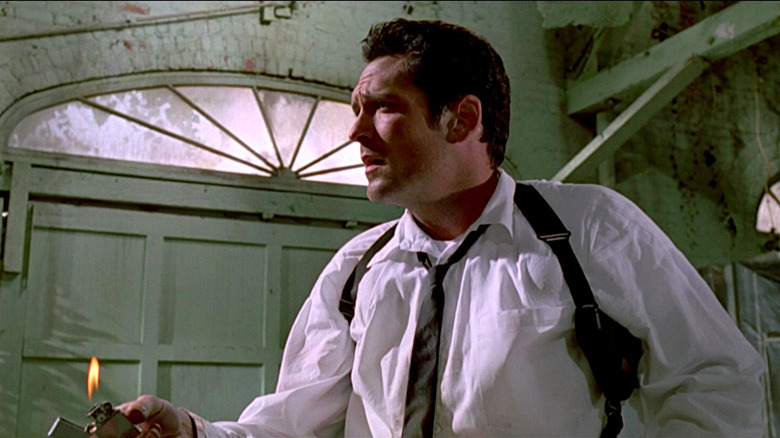
Photo caption: Michael Madsen in RESERVOIR DOGS.

This week on The Movie Gourmet – a new review of Kill the Jockey, Argentina’s submission for the Best International Feature Film Oscar and a preview of the San Francisco Jewish Film Festival. Plus, a review of an almost-lost film about a lost jazz legend Bix Biederbecke: Ain’t None of Them Play Like Him Yet.

And check out my in-depth comments on the New York Times’ The Best 100 Movies of the 21st Century. My critique of the NYT list in in Part 1; Part 2 is my own stab at the 50 best movies of the century.

REMEMBRANCE

Every time I hear Stuck in the Middle with You by the one-hit wonder Stealer’s Wheel, I think of Michael Madsen. Madsen was a fine character actor who was good in all of his work, and he amassed 344 screen credits, often as a physically imposing bad guy. But, for anyone who has seen Reservoir Dogs, Madsen’s performance – especially his torture dance to Stuck in the Middle with You – is indelible.

CURRENT MOVIES

ON TV

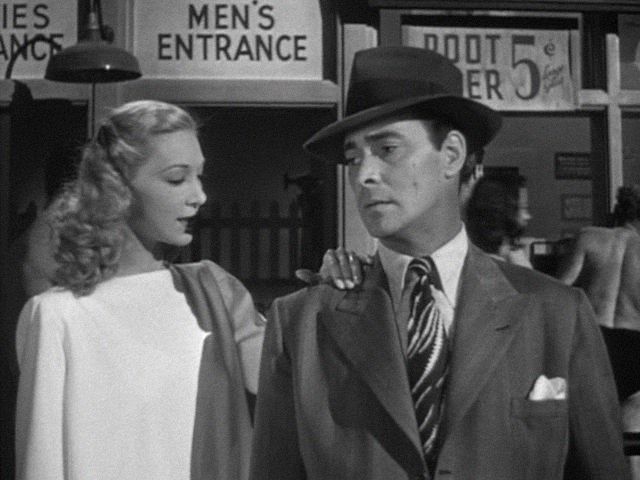
Belita and Barry Sullivan in THE GANGSTER

On July 12 and 13, Turner Classic Movies airs the hard-to-find The Gangster on Noir Alley, one of my Overlooked Noir. The minor crime lord Shubunka (Barry Sullivan) rules Brooklyn’s Neptune Beach, a noir setting if ever there was one – a sketchy beachfront boardwalk area near subway tracks.   It may be a only Coney Island for bottom feeders, but Shubunka enjoys being its master.  Then another gangster (Sheldon Leonard) tries to move in on his territory, and Shubunka makes the mistake of underestimating him. Plus Shubunka is distracted – hung up on his night club singer girlfriend (Belita). Much like Marshall Will Kane in High Noon, Shubunka finds out how few acquaintances will help him in a crunch.  Barry Sullivan is excellent as a guy who is at first blind to his vulnerabilities, and then increasingly desperate. There’s a phenomenal supporting cast of noir all-stars: Harry Morgan, Akim Tamiroff, John Ireland, Charles McGraw, Leif Erickson, Elisha Cook, Jr. and an uncredited Shelly Winters. The Noir Alley screening will be bookended by an intro and an outro from Eddie Muller, the Czar of Noir (who likes the skater-turned-actress Belita far more than I do).

KILL THE JOCKEY: surrealism in the stables

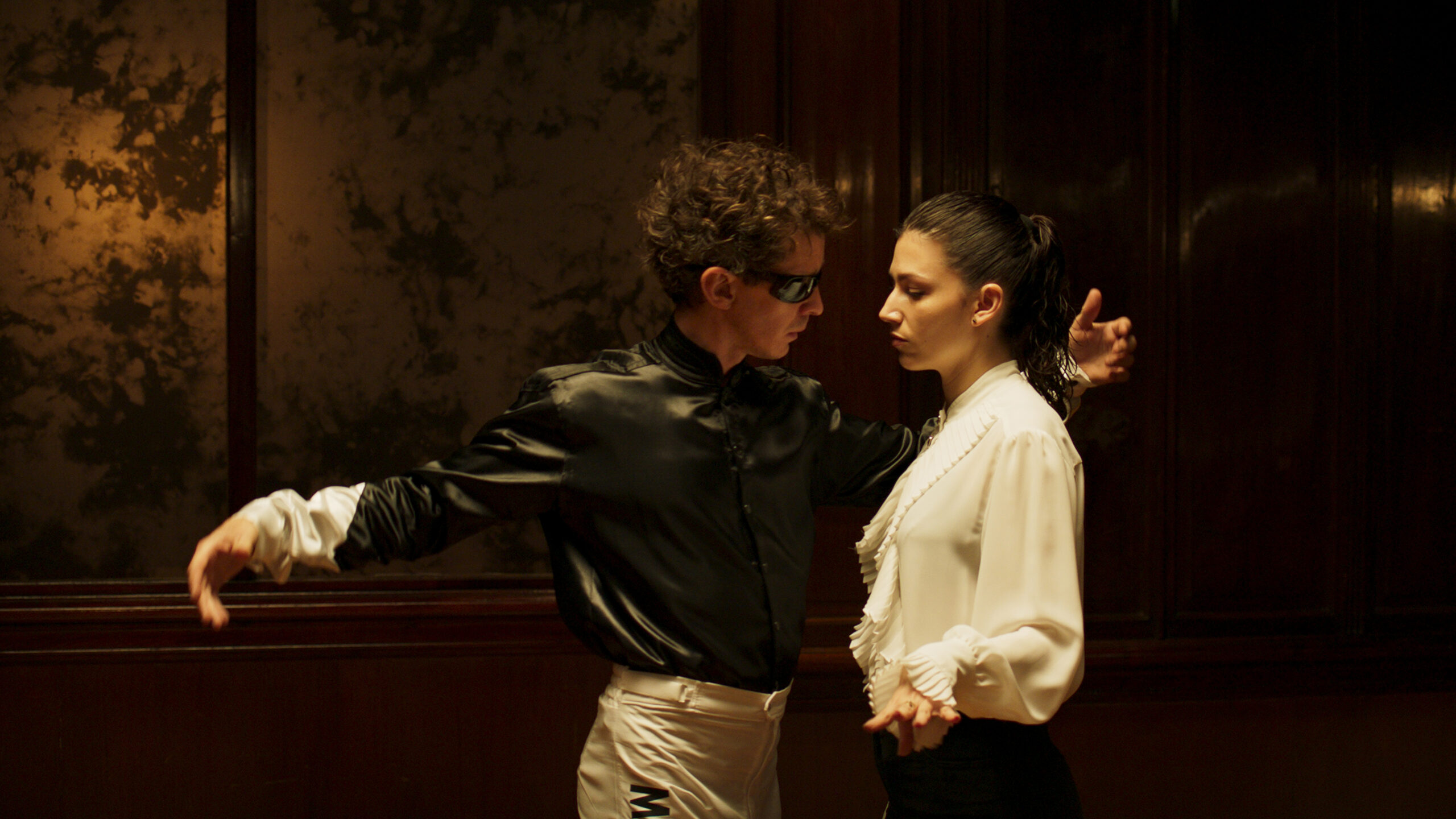
Photo caption: Nahuel Perez Biscayart and Ursula Corbero in KILL THE JOCKEY. Courtesy of Music Box Pictures.

In the surreal Argentine comedy Kill the Jockey, Remo (Nahuel Perez Biscayart) is a once-champion jockey, who is zealously self-sabotaging his career; self-medicating with alcohol and even swiping the racehorses’ drugs and the booze left on a good luck altar, he has become utterly unreliable. Remo can only emerge from his narcosis to demonstrate his passion for his wife Abril (Ursula Corbero). Abril is also a jockey, and her racing career is on the upswing, although she will soon have to pause it to have their baby.

Both Remo and Abril ride for a mobster (Daniel Jimenez Cacho), who, against all available evidence, has concluded that Remo can still win a big race. As a result, Remo suffers a brain injury, which spurs catatonia and, eventually, a major change in his identity. Remo leaves the hospital without being discharged, and wanders the city in a walking stupor, unaware that both a frantic Abril and the mobster’s murderous goons are searching for him. At this point, Remo is not an ideal gunowner, but he gets a pistol, and the lives of Remo, Abril and the mobster take significant twists. Kill the Jockey morphs into a fable of identity.

Nahuel Perez Biscayart in KILL THE JOCKEY. Courtesy of Music Box Pictures.

Director and co-writer Luis Ortega tells this story with plenty of droll absurdism. Inexplicably, the mobster usually carries an infant, a mounted brass band suddenly appears, the possessions of a coat pocket include a live fish, and there’s ceiling-walking. Kill the Jockey has its share of LOL moments in the first half of the film.

Early in the film, Abril launches a celebratory dance, is soon joined by Remo, and the two move together as unhinged marionettes. It’s as if figures in a Dali painting broke into a sensuous dance. This is a spellbinding scene, the best one in Kill the Jockey and, possibly, in any movie this year so far.

Unfortunately, the second half of Kill the Jockey, with more Remo and less Abril, is not as compelling. Ortega keeps throwing in the entertainingly bizarre, but the film loses momentum as Remo transforms.

I first saw Nahuel Perez Biscayart as the star of the psychological Holocaust thriller Persian Lessons. He’s a good choice to play the tragicomic Remo, a broadly funny character that morphs into a heartfelt one. But the most interesting performance in Kill the Jockey is Ursula Corbero’s as Abril – brimming with charisma and vitality; Abril must navigate her life and Remo’s as Remo’s condition keeps changing dramatically.

Kill the Jockey is Argentina’s submission for the Best International Feature Film Oscar and has been nominated for significant awards, including the Goya (best Iberoamericano film) and the best film at Venice Film Festival. It releases into theaters this weekend, including the Laemmle NoHo in LA, the Roxie in San Francisco and the Smith Rafael Film Center in San Rafael.

The SFJFF is back in 2025

Photo caption: Logan Lerman as Isaac and Molly Gordon as Iris in OH, HI!. Courtesy of Sony Pictures Classics.

One of the Bay Area’s top cinema events is back – the San Francisco Jewish Film Festival (SFJFF), running from July 17 to August 3. The SFJFF is the world’s oldest and largest Jewish film festival – this year’s festival is the 45th! The program offers 70 films from Belgium, Canada, France, Germany, Israel, Italy, Switzerland, the US and the UK and Uzbekistan.

After opening night at the Herbst Theatre, films will screen at the AMC Kabuki 8, the Vogue, the Roxie, and Oakland’s Landmark Piedmont Theater, as well as additional programming at the Jewish Community Center of San Francisco.

Highlights include:

  • Opening Night: Amber Fares’s Coexistence, My Ass! won the World Cinema Documentary Special Jury Award for Freedom of Expression at this year’s Sundance. the film follows Israeli comedian Noam Shuster-Eliassi (who will perform live in a separate event on the SFJFFF’s first weekend) as she develops an act tackling inequality and taboo amidst the Israeli-Palestinian conflict.
  • Centerpiece Narrative: In Fantasy Life, writer-director Matthew Shear stars as a laid-off, thirty-something paralegal who begins nannying for his psychiatrist’s grandkids and falls for their mother.  Co-stars Amanda Peet and Judd Hirsch.
  • Next Wave Spotlight: The dark rom com Oh, Hi! stars Molly Gordon and Logan Lerman as a couple heading off to a countryside vacation rental for their first romantic getaway, which gets completely unhinged. It’s the sophomore feature for writer-director Sophie Brooks (The Boy Downstairs, SFJFF 2017).
  • Closing Night: The Floaters, an indie comedy about misfits at a Jewish summer camp.

Just before the fest, I’ll be publishing some recommendations. I’ve already screened an absurdly dark rom com and an unexpectedly wacky documentary. Check out the program and buy tickets at SFJFF. Here’s the trailer for Oh, My!.

BIX BIEDERBECKE: AIN’T NONE OF THEM PLAY LIKE HIM YET: rediscovering a lost jazz legend

Bix Biederbecke in BIX BIEDERBECKE: AIN’T NONE OF THEM PLAY LIKE HIM YET

The thorough documentary Bix Biederbecke: Ain’t None of Them Play Like Him Yet rediscovers a lost jazz legend. Bix Biederbecke was a cornet prodigy and an age peer of Louis Armstrong. His love for and obsession with music was undermined by alcoholism, and he drank himself to death at age 28 in 1931.

Biederbecke was an innovator and soulful performer. One of his bandmates compares the thrill of listening to Bix to hearing a woman say, Yes.

This superbly-sourced documentary was released in 1981 release, and includes interviews filmed in 1978-1980 with fellow musicians and band-mates, including his friend, Hoagy Carmichael. Bix’s sister also appears. There are also recordings of Bix’s performances.

Bix Biederbecke: Ain’t None of Them Play Like Him Yet has made my list of Longest Movie Titles.

This is a bit of a Lost Film, having been very, very hard to find on streaming platforms over the last few years. Bix Biederbecke: Ain’t None of Them Play Like Him Yet can now be streamed on Amazon.