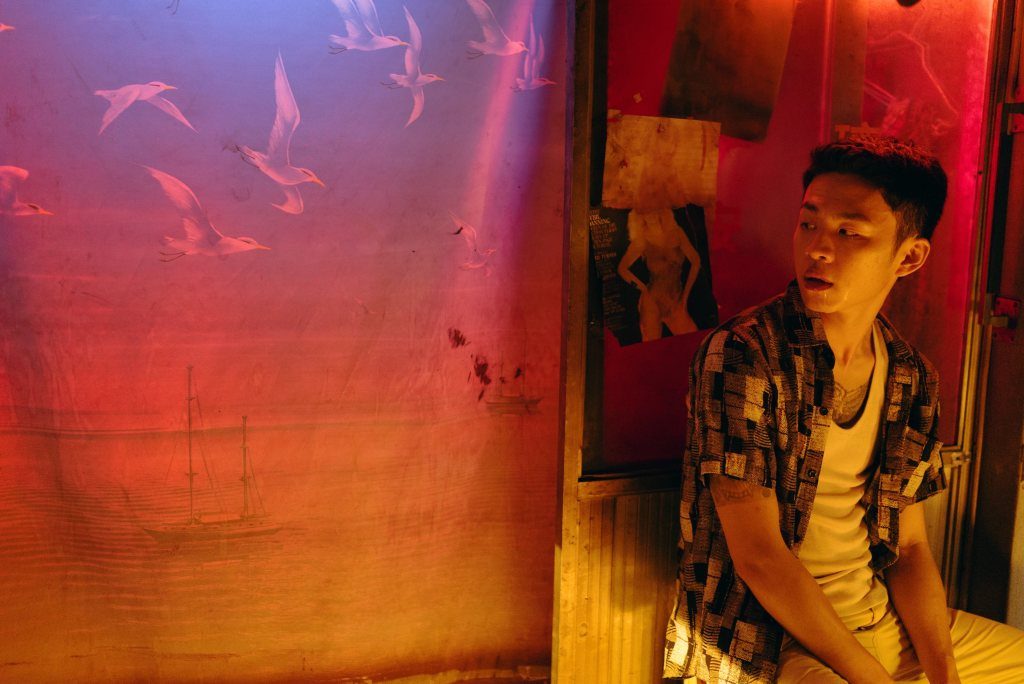
In the scintillating documentry Made in Ethiopia, businesswoman Motto is the face of a huge, new Chinese industrial park in Ethiopia. How huge? A factory with 3,000 workers is just one of its 130 businesses – and Motto is working on an 18,000-acre expansion.
Motto is smart, zealous, charismatic and utterly non-ironic. Along with the other Chinese, she has drunk the Koo-Aid and sees the park as entirely benevolent – bringing large scale employment and investment to a poor and neglected society. A visiting Chinese official exclaims, “it’s just like China used to be!“.
All of the workers are Ethiopian, who earn $50 per month in what is essentially a clean and gleaming sweatshop. All of the supervisors are Chinese who have left their families behind in China. The local farmers feel ripped off by their government, and an armed rebellion may be brewing. Apart from a global pandemic, what could possibly go wrong? In their first feature, directors Xinyan Yu and Max Duncan have created a brilliant exploration of clashing cultures and economic imperialism.
I screened Made in Ethiopia for the SLO Film Fest, where it made my Best of the SLO Film Fest. Now it’s on PBS’ POV. You can stream Made in Ethiopia on the PBS app or directly at the POV website.
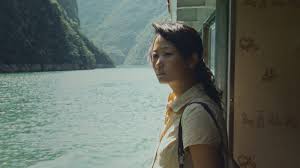
Photo caption: Tao Zhao in CAUGHT BY THE TIDES: Photo courtesy of Janus Films.
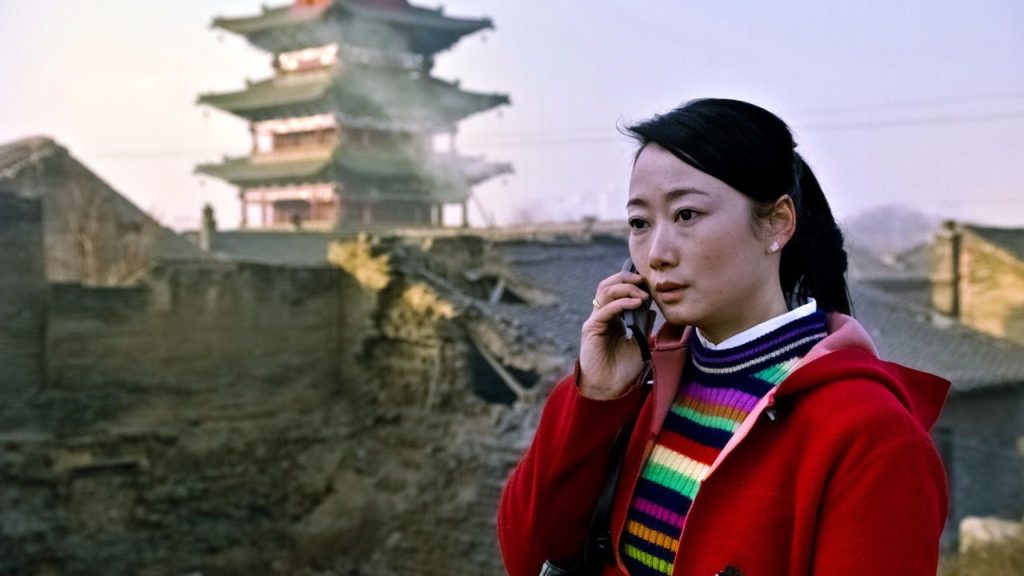
Sweeping over decades of modern Chinese history, the auteur Jia Zhangke’s Caught by the Tides reveals profound changes in Chinese society by implanting a personal story within an epic sweep. Writer-director Jia has built Caught by the Tides from footage shot over the 21 years as he made other movies. In a tour de force, actress Tao Zhao delivers an exquisite portrait of resilience.
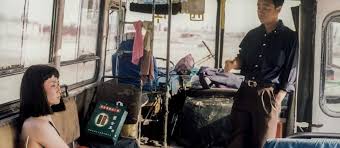
The plot is deceptively straight-forward, tracing the 21-year arc of the relationship between Qiaoqiao (Tao Zhao) and her shady boyfriend Bin (Zhubin Li). He moves away to find a better financial opportunity, promising to send for her when he’s settled. But he ghosts her, and she heads off to track him down. This simple story is embedded in a portrait of a changing China over the 21-years, with Jia’s clear-eyed observation of the changes and their impacts on regular people.
Neither Qiaoqiao or Bin can affect the course of China’s evolution (they are caught by the tides), but both seek to find their place it in.
Tao Zhao and Zhubin Li in CAUGHT BY THE TIDES: Photo courtesy of Janus Films.
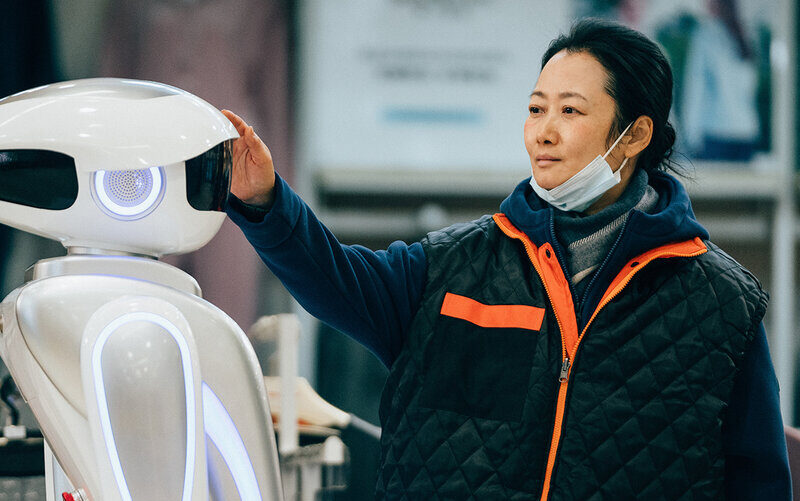
This is a China that we rarely see, real Chinese (and I mean hundreds of non-professional actors) doing their jobs and entertaining themselves, in cities most of us Westerners haven’t heard of. In what amounts to one dreamy 111-minute montage, Jia presents scores of vignettes . We see retired miners tipping female singers, river travel on boats large and small, a small Christian worship service, mass jogging, an adage-spouting supermarket robot, and a most unlikely TikTok star. The stream of scenes never feels disjointed or boring because the continuity of human experience is so authentic and so novel.
The story begins in 2001 in Datong, a dreary coal mining city in Northern China, a gritty place where no building seems to have been repainted for decades. By 2006, when the story moves to Fenjie City, China is ALL IN on economic development, and corruption is rampart, as everybody seeks a slice of the action; the Chinese government relocated 1.1 million people, sacrificing their homes for the economic payoff of the Three Gorges dam. and Jia shows us the human impact. In 2022, the story moves to Zuhai City near Guadong and back to Datong; despite the COVID pandemic, the new widespread prosperity is jarring, and even Datong has become vibrant.
Tao Zhao in CAUGHT BY THE TIDES: Photo courtesy of Janus Films.
Jia is one of the world’s best filmmakers; I rated his Ash Is the Purest White as one of the best films of 2019. In Caught by the Tides, as in most of his films, he benefits from the collaboration with one of the world’s most compelling screen actresses, his wife Tao Zhao. Remarkably, Tao dominates Caught by the Tides without speaking any dialogue. Her character Qiaoqiao isn’t mute or even passive; she has plenty to say but she’s able to communicate, even forcefully, with her face. Qiaoqiao isn’t able to get everything to go her way, but the sound she makes in the final second of Caught by the Tides makes it clear that she’s living life on her terms. It’s an indelible performance.
Caught by the Tides is the best movie of 2025 so far and the best Chinese art film I’ve ever seen.
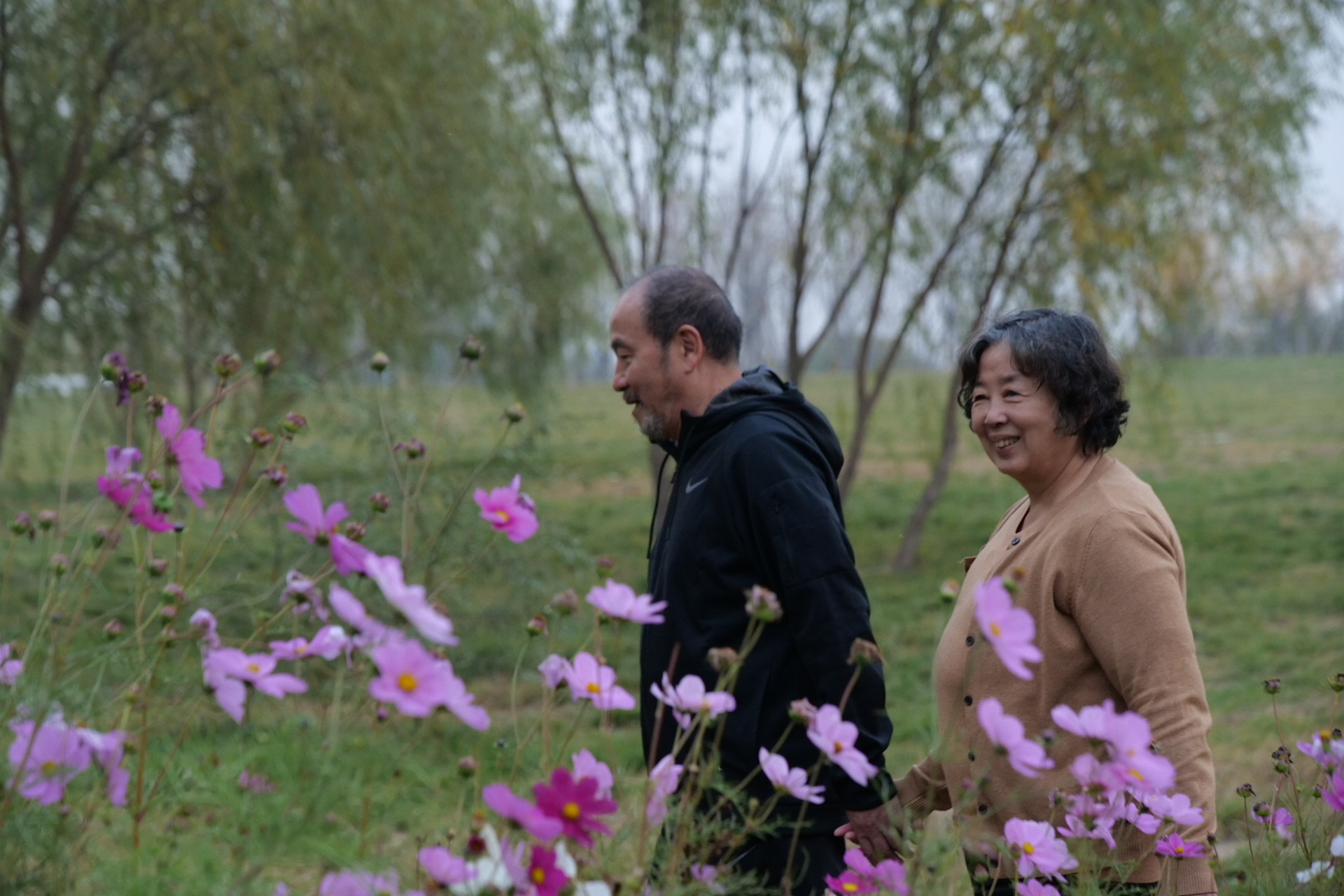
Sui Li and Baoqing Li in BANR. Courtesy of ShangJia Picture Film Culture.
The star in Banr is writer/director/editor Erica Xia-Hou’s innovative storytelling – in her first feature film. An elderly husband (Sui Li) is struggling to hold on to his wife (Baoqing Li) as she sinks into Alzheimer’s, with the support of their adult daughter (Xia-Hou herself). That main story is told in a cinéma vérité documentary style, but that’s just what the husband and daughter see in their lucidity. Those segments are interwoven with fragments of the wife’s memory and her delusions and dreams. In depicting the most ordinary daily activities, Xia-Hou keeps us continually off-guard by shifting the points of view between the clear-eyed and the muddled.
With the exception of herself, Xia-Hou used all non-professional actors. Like Sean Baker at his best, she’s directed exemplary performances from her leads, both first-timers. As the wife, Baoqing Li becomes ever more confused, but is radiant when a cherished memory pops up.
Baoqing Li in BANR. Courtesy of ShangJia Picture Film Culture.
As the husband, Sui Li throws all his deep-seated love and his stubbornness into fighting his wife’s memory loss, and then in caregiving. We know, and his daughter wisely advises him, that his efforts are unsustainable, but he obstinately muddles on, until the progression of her condition gives him no other choice. His performance is fully committed and heartbreaking.
This may be Erica Xia-Hou’s directorial debut, but she has a substantial body of work as an actress, screenwriter, editor and art director in the Chinese film industry, after studying dance, broadcasting and acting at three Chinese universities. She co-wrote and acted in the Jackie Chan sci-fi action film Bleeding Steel. She will co-star with Tony Leung and Olga Kurylenko in the upcoming action thriller Fox Hunt, which she also co-wrote and edited.
What’s with the film’s title? Banr is companion in Mandarin, and many older Chinese couples affectionately refer to each other as Lao Banr, meaning old companion.
Banr is an immersive film, filled with humanity, and an important directorial debut. I screened Banr for its world premiere at Slamdance, where it was one of my Must See picks.
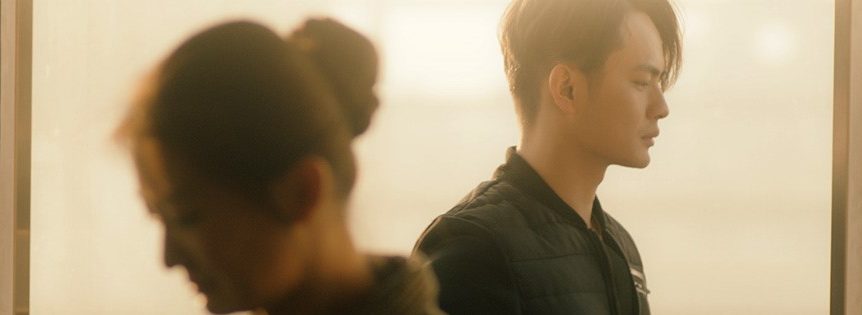
In the gripping Chinese sci-fi thriller Last Sunrise, we’re in a super-hi tech future, powered almost totally by solar energy – which doesn’t look as blissful as it sounds. As befits a dystopian story, there’s a disaster, and this one is just about the worst one conceivable – the death of our Sun.
Wang Sun (Zhang Jue) is very serious astronomy nerd with no apparent non-scientific interests. He doesn’t really know Wu Chen (Zhang Yue), although she lives in a neighboring apartment, and it doesn’t appear that she’s ever thought about anything profound. When the catastrophe happens, the two are forced on the road together in a race for their lives.
Last Sunrise is real science fiction about a plausible (and inevitable) future occurrence, and it’s about real ideas. This isn’t just blowing stuff up in space, which too often passes for sci-fi today.
Losing the sun is pretty bad – it gets dark, the temperature is plunging and humans are running out of oxygen. There may be refuges, but there’s little remaining battery power to fuel people’s escapes. Of course, it doesn’t take long for social order to break down. Last Sunrise becomes a ticking bomb thriller as the couple tries to find a refuge in time.
Of course, with no sun lighting the earth and moon, it is very dark and many more stars are visible. The f/x of the starry skies in Last Sunrise are glorious.
The two leads are appealing, especially Zhang Yue, whose Wu Chen is revealed more and more as film goes on.
The life-and-death thriller is leavened by witty comments on the consumerist, hyper connected culture (pre-disaster). There are very funny ongoing references to instant noodles. And Wang Sun, who is a bit of a hermit, doesn’t appreciate how devoted he is to his digital assistant ILSA (not Ilsa, She Wolf of the SS, just ILSA).
This is the first feature, an impressive debut, for director and co-writer Wen Ren. Cinequest hosted the North American premiere of Last Sunrise, the sci-fi highlight of the festival and is streaming Small Time in CINEJOY through October 14.
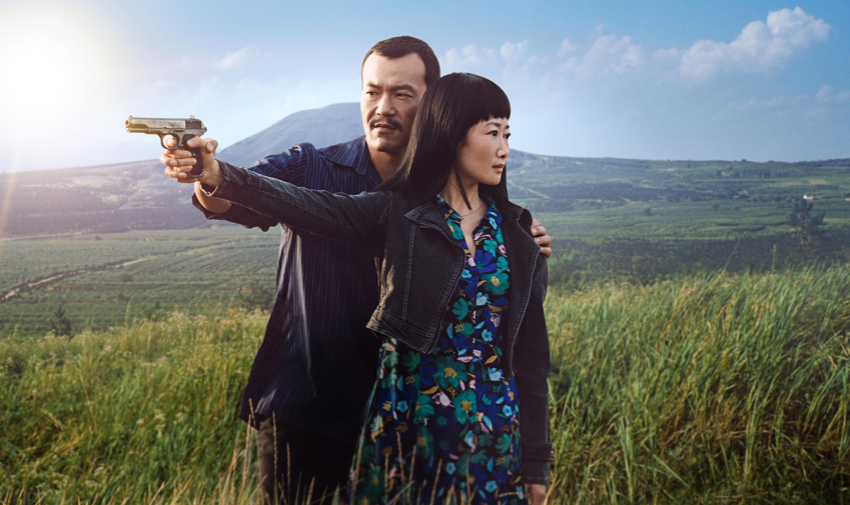
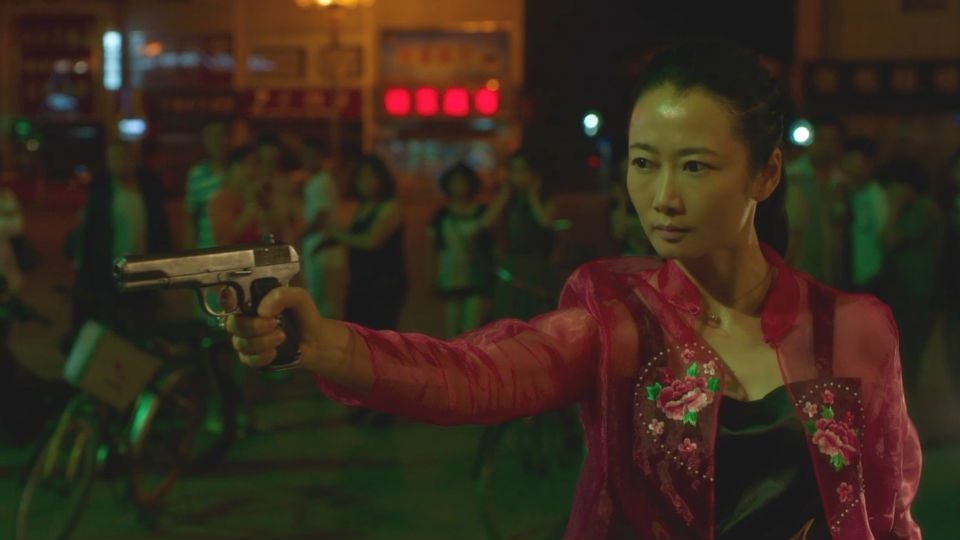
Ash Is Purest White is writer-director Zhangke Jia’s portrait of an unforgettable woman surviving betrayal, the crime world and the tidal waves of change in modern China, all embedded in a gangster neo-noir.
Qiao (Tao Zhao), is the tough and spirited girlfriend of the provincial jianghu gang leader Bin (Fan Liao). They are the big fish in their little pond, and they are relishing life. Then circumstances change – great and unperceived economic forces are enervating their hometown and a younger rival gang emerges. Qiao takes a heroic action with severe consequnces. When she re-emerges, she finds herself personally betrayed and unsupported. The seventeen-year span of Ash Is Purest White follows Qiao as she roams across China to rebuild her life. She is at times devastated but refuses to accept permanent defeat.
Tao Zhao in ASH IS PUREST WHITE
Tao Zhao is Jia’s wife and muse. Ash Is Purest White is a sweeping epic, and it is her movie. Her performance is a tour de force. Watch her portray Qiao’s confidence in the opening scenes, her resourcefulness and ingenious cons when she is dumped out on her own and the resolve that powers her quest. Fan Liao is also excellent as Bin.
As Qiao’s journey spans almost two decades and thousands of miles, we get insights into contemporary China. Jia’s China is a place where, when the coal industry plays out in one city, the government builds a new city for hundreds of thousands of people to movie into the oil industry. Economic forces sweep across China like flash floods that inundate and sudenly recede. Qiao rides these changes like a fishing bobber on the surface of a tsunami.
Tao Zhao in ASH IS PUREST WHITE
We are familiar with movies about the Mafia and yakuza, but Ash Is Purest White is a glimpse into jianghu – their Chinese equivalent.
Ash is Purest White is on my list of Best Movies of 2019, and it’s streaming on Amazon, iTunes, Vudu, YouTube and Google Play.
Ash Is Purest White is writer-director Zhangke Jia’s portrait of an unforgettable woman surviving betrayal, the crime world and the tidal waves of change in modern China, all embedded in a gangster neo-noir.
Qiao (Tao Zhao), is the tough and spirited girlfriend of the provincial jianghu gang leader Bin (Fan Liao). They are the big fish in their little pond, and they are relishing life. Then circumstances change – great and unperceived economic forces are enervating their hometown and a younger rival gang emerges. Qiao takes a heroic action with severe consequnces. When she re-emerges, she finds herself personally betrayed and unsupported. The seventeen-year span of Ash Is Purest White follows Qiao as she roams across China to rebuild her life. She is at times devastated but refuses to accept permanent defeat.
Tao Zhao in ASH IS PUREST WHITE
Tao Zhao is Jia’s wife and muse. Ash Is Purest White is a sweeping epic, and it is her movie. Her performance is a tour de force. Watch her portray Qiao’s confidence in the opening scenes, her resourcefulness and ingenious cons when she is dumped out on her own and the resolve that powers her quest. Fan Liao is also excellent as Bin.
As Qiao’s journey spans almost two decades and thousands of miles, we get insights into contemporary China. Jia’s China is a place where, when the coal industry plays out in one city, the government builds a new city for hundreds of thousands of people to movie into the oil industry. Economic forces sweep across China like flash floods that inundate and sudenly recede. Qiao rides these changes like a fishing bobber on the surface of a tsunami.
Tao Zhao in ASH IS PUREST WHITE
We are familiar with movies about the Mafia and yakuza, but Ash Is Purest White is a glimpse into jianghu – their Chinese equivalent.
Ash is Purest White is on my list of Best Movies of 2019, and it’s streaming on Amazon, iTunes, Vudu, YouTube and Google Play.
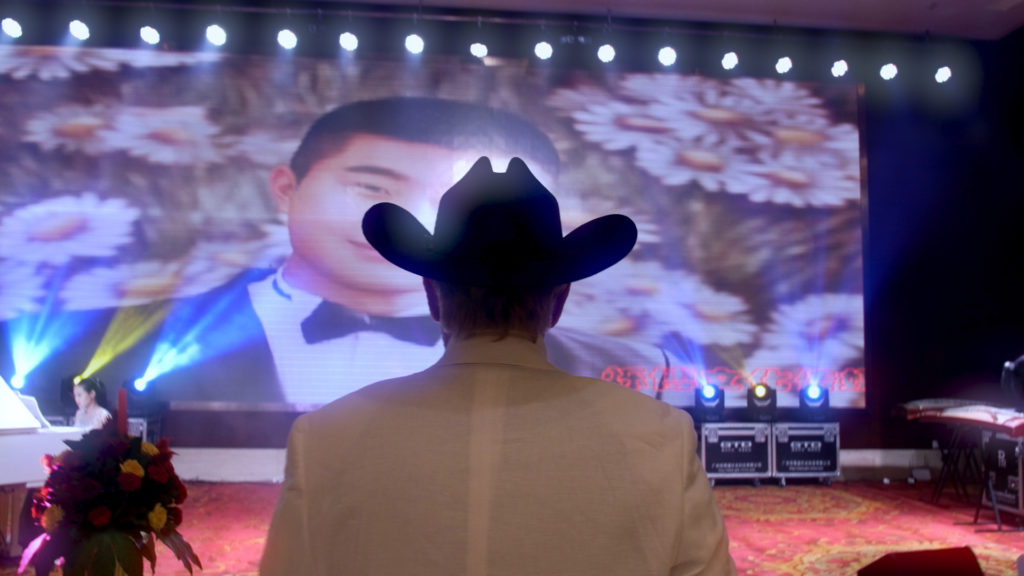
In John Maringouin’s inventive satire Ghostbox Cowboy, we first meet Jimmy (David Zellner) in an American store, gazing at that aisle in every Walgreens or CVS that is filled entirely with crappy plastic gizmos made in China. We later learn that he’s thinking, “somebody is getting rich making this stuff and that person should be me.”
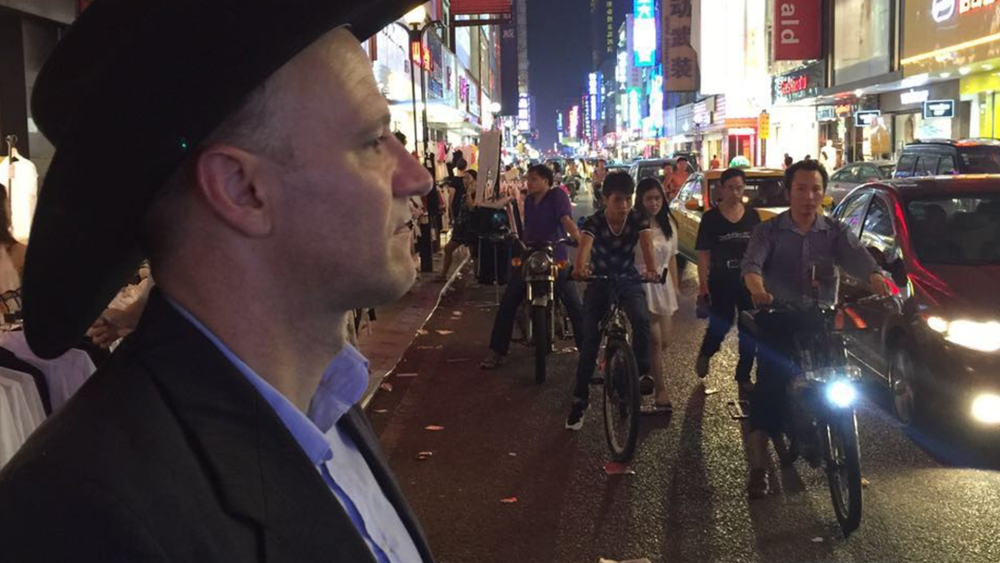
Wearing a cowboy hat for effect, Jimmy takes his small nest egg to the capitalist frontier of China and tries to re-invent himself as an entrepreneur. He has the prototype for an absolutely phony product, which he tries to pitch to young Chinese capitalists. Jimmy thinks that he can outsmart the locals because he is an American, but the joke is on him – he’s now the dumbest guy in China.
Jimmy doesn’t bother to learn any Mandarin, so he leans on or two shady, super-marginal ex-pats (Robert Longstreet – just great – and Specialist) to help him navigate the local scene. One of his “buddies” fleeces him, and Jimmy is hired by contemptuous Chinese when they need a Caucasian stand-in. As Jimmy is stranded near Mongolia, Ghostbox Cowboy gets mystical, and the cringe humor gives way to the surreal.
The filmmaking itself is a remarkable story. Ghostbox Cowboy was shot in the massive boomtowns around Dongguan, Guangzho and Shenzhen (each a city with a population between 8 and 15 million). Because the Chinese government frowns on critique cinema, Maringouin had to shoot on the sly, guerilla style. To photograph the illegal factories that manufacture knock-offs, he pretended to be a potential investor. Maringouin and his two SAG actors spent ten days in China, essentially pretending not to shoot a movie.
David Zellner in GHOSTBOX COWBOY
I saw Ghostbox Cowboy at Cinema Club Silicon Valley, with a Q&A with writer-director-camera operator John Maringouin. Bay Area filmmaker Maringouin wanted to focus on White entitlement, with a protagonist who adds no value of his own but imagines that he should still be “a participant” in China.
Ghostbox Cowboy was selected to play the Tribeca film festival and earned a NY TimesCritic’s Pick. Ghostbox Cowboy can be streamed on Amazon (included with Prime).
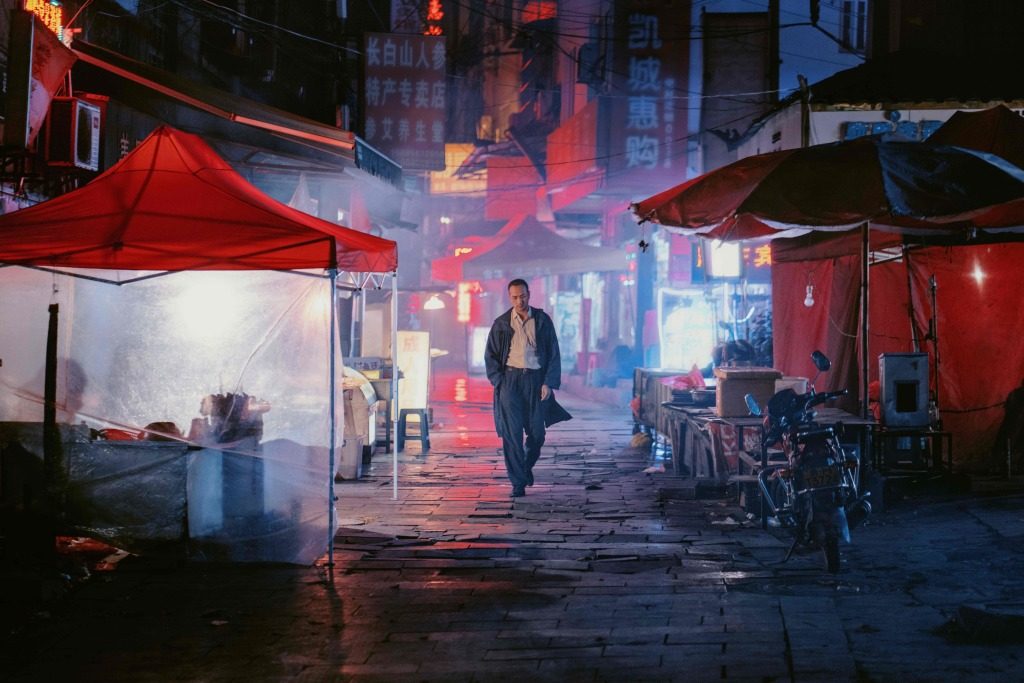
Jue Huang in a scene from Long Day’s Journey Into Night. Photo by Bai Linghai, courtesy Kino Lorber.
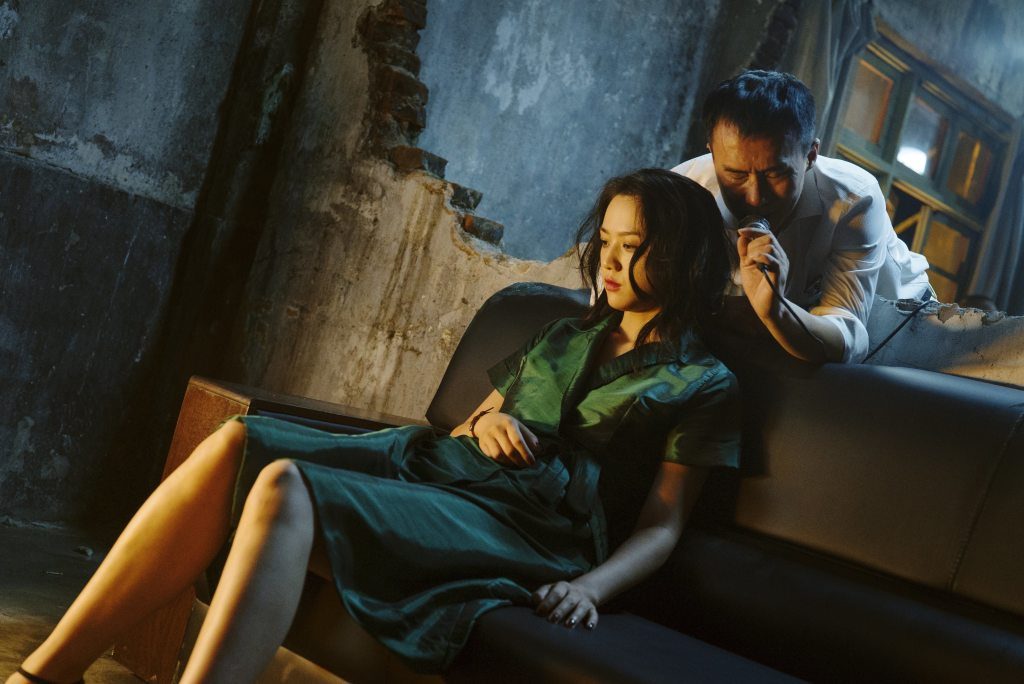
In the singular Chinese neo-noir Long Day’s Journey Into Night, Luo (Jue Huang) embarks on a search to find the mysterious woman he dallied with twenty years before. As he follows the clues, he plunges into an atmospheric underworld of dripping darkness and people who don’t want to talk. Along the way, he encounters the sultry, down-on-her-luck floozy Wan Qiwen (Wei Tang), whose lethal, fedora-adorned boyfriend does not want to relinquish her to Luo’s quest.
After a low burn beginning, Luo’s search reaches its climax in a spectacular ONE-HOUR single shot. It’s nighttime and both the exteriors and interiors are lit to evoke a surreal world stained by noirish danger. The shot requires the camera to follow Luo and Wan Qiwen, together and separately, inside and outside, between various levels and twice past a nervous horse, all while other characters interact with them. It’s right up there with the magnificent shots in Children of Men, Goodfellas, Touch of Evil, The Secret in Their Eyes, Atonement, Gun Crazy and the one-shot film Victoria.
Long Day’s Journey Into Night is the triumph of writer-director Bi Gan, who never forgets that he is telling his story in the medium of cinema. Long Day’s Journey Into Night is so atmospheric that sometime we feel the dankness of his set designs. Repeatedly, the richest of colors stand out against noirish backdrops. Wan Qiwen is unforgettable in her satiny emerald green dress, lit by Luo’s headlights as he tracks her by automobile in a dark tunnel. (Bi Gan has acknowledged his admiration for Wong Kar-wai, and Bi Gan has created a film as visually intoxicating as Wong Kar-wai’s.) Ban Gi used three directors of photography; the second cinematographer prepared the final shot for the third. There are recurring themes of spinning rooms, flooded floors and dripping ceilings, single flames and sparklers. The soundtrack centers on ambient sound, with very few musical cues.
Wei Tang, Yongzhong Chen in a scene from Long Day’s Journey Into Night. Photo by Liu Hongyu, courtesy Kino Lorber.
All of this enhances the story of Luo’s obsession with a doomed romance (and possibly more than one doomed romance). He can’t sure that what he hears is true – or even that what he sees is real. It’s a world filled with dissolute and murderous men and unreliable women. Luo asks a man, “Is that child yours?” and is answered, “She was a master story teller” (not a complement in this instance).
Bi Gan says, “It’s a film about memory”. Indeed, he has Luo say, “The difference between film and memories is that film is always false. They are composed of a series of scenes. But memories mix truth and lies. They appear and vanish before our eyes .”
That final shot is in 3D. Bi Gan says, “After the first part (in 2D), I wanted the film to take on a different texture. But I believe this three-dimensional feeling recalls that of our recollections of the past. Much more than 2D, anyway. 3D images are fake but they resemble our memories much more closely.”
Hong-Chi Lee in a scene from Long Day’s Journey Into Night. Photo by Liu Hongyu, courtesy Kino Lorber.
This film is entirely written by Bi Gan, with no apparent relationship to the identically-titled 1962 film of the Eugene O’Neill play, the famed four-hander with Katharine Hepburn, Ralph Richardson, Jason Robards and Dean Stockwell. The Mandarin title of Bi Gan’s film is literally Last Evenings On Earth, a title which came from a short story by Roberto Bolaño. Bi Gan just liked the title Long Day’s Journey into Night and thought that it fit the spirit of his film.
Long Day’s Journey Into Night is the biggest Chinese art house hit ever, and won an award at Cannes in 2018. It opens this weekend in the Bay Area.
In the gripping Chinese sci-fi thriller Last Sunrise, we’re in a super-hi tech future, powered almost totally by solar energy – which doesn’t look as blissful as it sounds. As befits a dystopian story, there’s a disaster, and this one is just about the worst one conceivable – the death of our Sun.
Wang Sun (Zhang Jue) is very serious astronomy nerd with no apparent non-scientific interests. He doesn’t really know Wu Chen (Zhang Yue), although she lives in a neighboring apartment, and it doesn’t appear that she’s ever thought about anything profound. When the catastrophe happens, the two are forced on the road together in a race for their lives.
Last Sunrise is real science fiction about a plausible (and inevitable) future occurrence, and it’s about real ideas. This isn’t just blowing stuff up in space, which too often passes for sci-fi today.
Losing the sun is pretty bad – it gets dark, the temperature is plunging and humans are running out of oxygen. There may be refuges, but there’s little remaining battery power to fuel people’s escapes. Of course, it doesn’t take long for social order to break down. Last Sunrise becomes a ticking bomb thriller as the couple tries to find a refuge in time.
Of course, with no sun lighting the earth and moon, it is very dark and many more stars are visible. The f/x of the starry skies in Last Sunrise are glorious.
The two leads are appealing, especially Zhang Yue, whose Wu Chen is revealed more and more as film goes on.
The life-and-death thriller is leavened by witty comments on the consumerist, hyper connected culture (pre-disaster). There are very funny ongoing references to instant noodles. And Wang Sun, who is a bit of a hermit, doesn’t appreciate how devoted he is to his digital assistant ILSA (not Ilsa, She Wolf of the SS, just ILSA).
This is the first feature, an impressive debut, for director and co-writer Wen Ren. Cinequest hosts the North American premiere of Last Sunrise, the sci-fi highlight of the festival.