BAD LUCK BANGING OR LOONY PORN: completely different than any movie you’ve seen

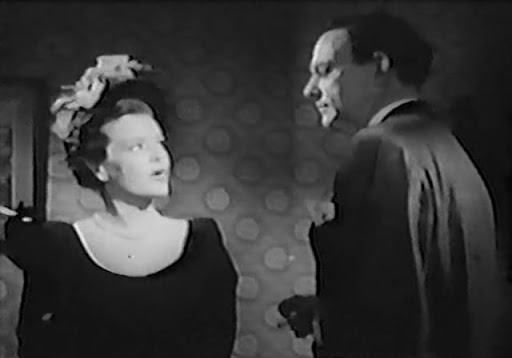
Photo caption: Katia Pascariu in BAD LUCK BANGING OR LOONY PORN. Courtesy of Magnolia Pictures.

The Romanian absurdist comedy Bad Luck Banging or Loony Porn is unlike anything feature film you’ve ever seen. For one thing, it begins with a three-and-a-half minute amateur sex video. The couple is having sex that is playful, enthusiastic and highly verbal. The sex is not simulated.

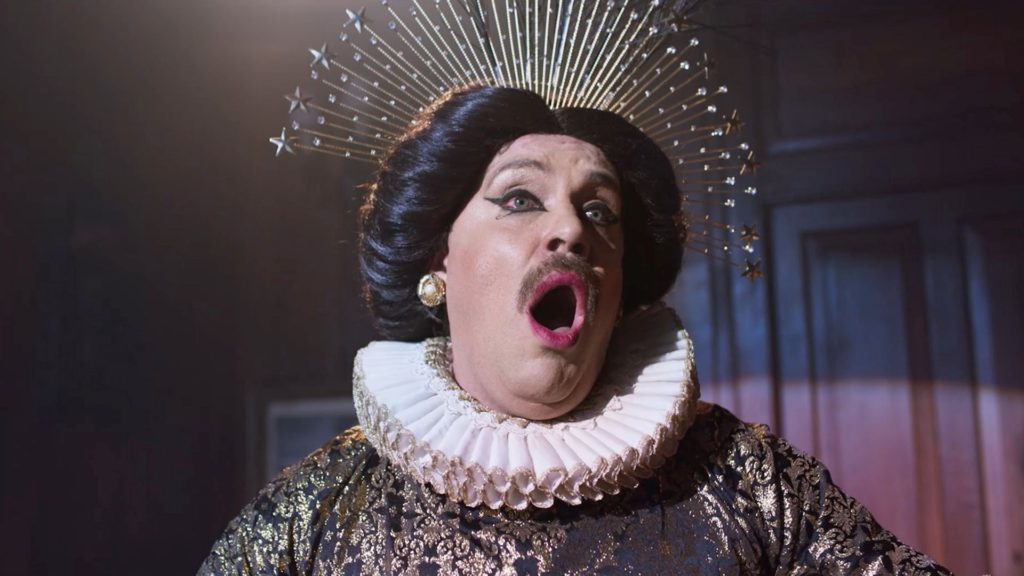
The couple turns out to be married. The wife is Emi (Katia Pascariu), a teacher of Romanian history at an upscale private school in Bucharest. Unfortunately, her husband takes their laptop to a tech shop for service and the sex video appears on the Internet – and goes viral within her school’s community.

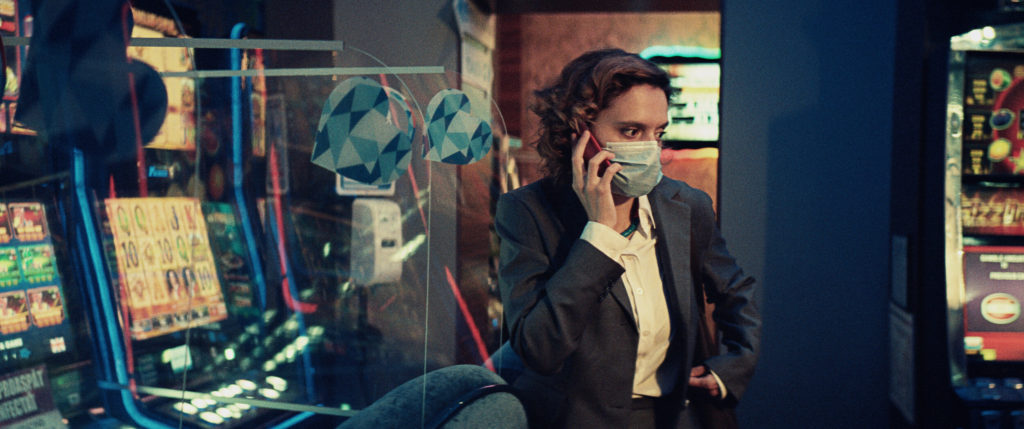
Bad Luck Banging or Loony Porn is divided into three chapters, each approximately 30 minutes. In the first, Emi leaves their crowded apartment and walks, COVID-masked, through Bucharest to her boss’ apartment and then to school, stopping to receive a series of phone calls with ever worsening news about the video.

Beginning with the chaos of daily family life crammed in tight quarters, and spilling out through the city, this is deadpan comedy at its best. Writer-dirctor Radu Jude’s camera wryly points out the mixed martial arts studio Super Kombat Romania next door to a more aspirational Caffe Le Strada.

Jude depicts Bucharest street life as boisterous and earthy, with everyone unleashing torrents of foul invective at the slightest annoyance.  I’m an aficionado of vulgarities, and the best in this film comes from the driver of a vehicle whom Emi points out is illegally parked.

Part 2 takes a break from Emi’s story – it’s a series of brief vignettes highlighting the most ridiculous and outrageous excesses of Romanian history, including Nazi collaboration and the Ceaușescu communist dictatorship. Most of the vignettes are funny, and most are wickedly pointed. Some are just refreshingly silly, like a socially-distanced folk dance and the funniest elevator doors I’ve ever seen. 

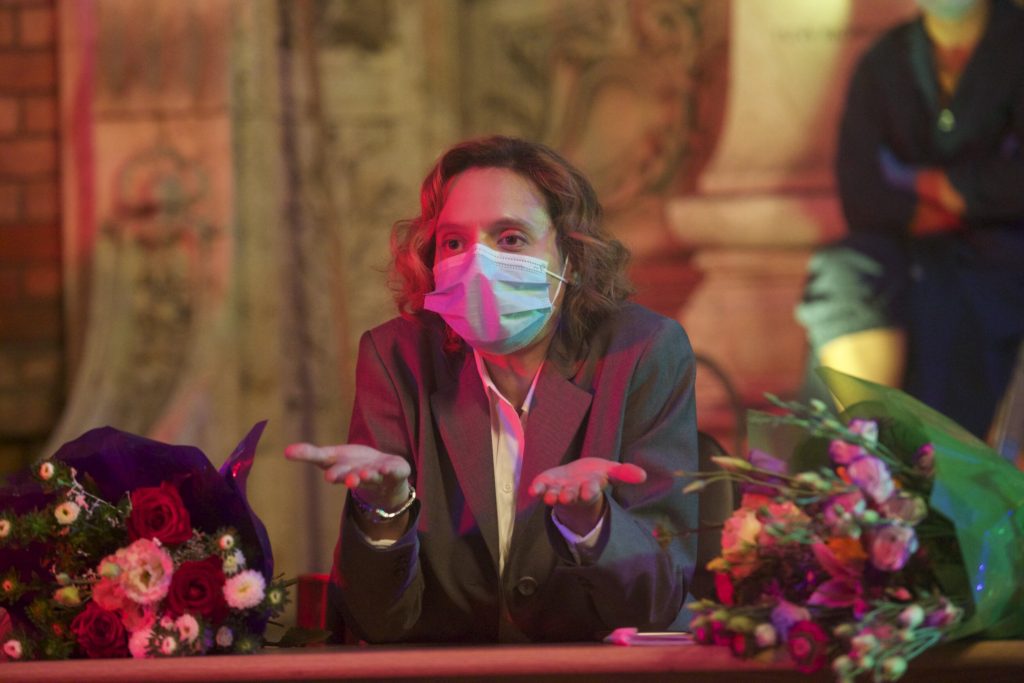
In part 3, the school hosts a meeting of the parents to discuss the sex video – and whether Emi should keep her job. Of course, this is mortifying for Emi.

[MILD SPOILER IN THIS PARAGRAPH] The parents insist on playing the sex video at the meeting, so Emi is subjected to watching them watch her have sex – with a running commentary from the audience. Of course, if the video is offensive, then the parents are offending new viewers or re-offending those who have already seen it. But this is not about reason – it is about slut shaming.

Context completely escapes the parents. Emi’s consensual sex in her home with her husband is entirely her right; she didn’t publish the video, and she is the victim of its publication. Nevertheless, the parents plunge ahead into a witch trial that would have made colonial Salem proud, worsened by a dose of jawdropping antisemitism. That everyone is masked for the pandemic adds another layer of ridiculousness.
Katia Pascariu in BAD LUCK BANGING OR LOONY PORN. Courtesy of Magnolia Pictures.

Through it all, Emi steadfastly tries to salvage her dignity and impose some measure of intellectual consistency on others. She is the last stand of rationality. As Emi, Katia Pascariu is on camera in every scene of the first and third segments of Bad Luck Banging or Loony Porn, and her performance is superb. Pascariu’s Emi is a strong and confident woman thrust into a most humiliating and desperate situation, who keeps her poise…until even she cannot any longer.

What does it all amount to? Writer-director Radu Jude is zeroing in on human foibles, some specific to Romanian society and some universal. Jude has an unsparing, clear-eyed view of human nature, and Bad Luck Banging or Loony Porn nails sexism and misogyny in particular.

Jude’s previous features were the much acclaimed Aferim! (which I didn’t like) and I Do Not Care If We Go Down in HIstory as Barbarians. He was the assistant director of Cristi Pulu’s high brow art house hit The Death of Mr. Lazarescu.

Beyond its title, Bad Luck Banging or Loony Porn is unusual for its hardcore prologue and the mid-movie diversion from the plot. Those aspects may not be enjoyed by everyone; I also recognize that not everybody dials into deadpan absurdism as I do. Nevertheless, Bad Luck Banging or Loony Porn is continuously engaging and very funny.

Bad Luck Banging or Loony Porn is Romania’s submission for the Best Intentional Picture Oscar, and I believe that it will be nominated. It appears on at least 20 critic’s top ten lists, including #1 on J. Hoberman’s and #2 on A.O. Scott’s. I streamed Bad Luck Banging or Loony Porn on Drafthouse On Demand; it is also streaming on AppleTV.


PARALLEL MOTHERS: moms and babies, mostly

Photo caption: Milena Smith, Penélope Cruz and Aitana Sánchez-Gijón in PARALLEL MOTHERS. Photo courtesy of Sony Pictures Classics.

In Parallel Mothers, Pedro Almodóvar gives a lush melodrama, sandwiched between bookended dives into today’s unhealed wounds from the Spanish Civil War.

Two women meet in a Madrid maternity ward, each about to give birth to her first child. Neither is in a relationship and neither pregnancy was planned, although the circumstances differ strongly. Both are haunted – one by a family tragedy and the other by her parents’ dysfunction.

Janis (Penélope Cruz) is in confident middle age, a fashion photographer. She is worldly and independent, with a support system led by her bestie (Almodóvar veteran Rossy de Palma).

Ana (Milena Smit) is a teenager tossed from her throw-up-his-hands father in Granada to her self-absorbed actress mother in Madrid.

Janis and Ana bond with their babies and with each other. It’s difficult to write about their story because there’s a Big Reveal which I will not spoil.

The story of mothers and babies makes for a compelling 100-minute or so movie on its own. But the film begins and ends with segments in which a war crime from the Spanish Civil War touches characters. When Spain suddenly transitioned from the Franco dictatorship to a democracy, the nation addressed accountability for the Civil War’s atrocities differently than did, say, South Africa or North Ireland, and Parallel Mothers is Almodóvar’s comment on the continuing wounds.

And here’s my quandary: although the characters overlap, I just don’t see the unity that Almodovar intends between the mom/baby story and the Civil War legacy story. Sorry, Pedro – this just looks like two different (good) movies cobbled together to me.

Penélope Cruz in PARALLEL MOTHERS. Photo courtesy of Sony Pictures Classics.

Penélope Cruz is entering her fourth decade of Big Screen luminosity. She remains one of the most compelling presences in cinema.

Milena Smit as excellent as the troubled and immature Ana, who grows and changes more than any character in Parallel Mothers. It’s an impressive breakthrough performance, and Smit bears watching.

Penélope Cruz had already made the American art house faves Jamón Jamón and Belle Epoque before she joined the Almodóvar repertory, but it’s worth reflecting on the Spanish actresses, like Smit, that Almodóvar has introduced us to: Carmen Maura, Victoria Abril, Marisa Paredes, Cecilia Roth, Rosario Flores, Assumpta Serna and Chus Lampreave. (Plus Antonio Banderas and Javier Cámara, as well!)

Aitana Sánchez-Gijón is very good as Ana’s mom, who is initially is reflexibly insufferable, but whose role becomes more complicated as we learn about her.

Israel Elejalde is excellent as the one significant male character. It’s always great to see Rossy de Palma, who is unchallenged by her role as sympathetic sidekick. Julieta Serrano, another Almodóvar favorite also appears.

After beginning his career with two decades of subversively hilarious comedies, Almodóvar has made some of the most profound work in recent cinema. Parallel Mothers is well-crafted and engaging, but doesn’t rank with Almodóvar’s best: Talk to Her, Bad Education, Broken Embraces.

DANCE OF THE 41: overreaching while gay

In the rapturously filmed period drama Dance of the 41, Mexican politician Ignacio de la Torre (Alfonso Herrera), a political Icarus if there ever were one, marries President Porfirio Diaz’s daughter Amada (Mabel Cadena). It’s the turn of the 20th Century, and de la Torre starts scheming with breathtaking recklessness.

The risk comes from the fact that de la Torre is in a secret club of gay aristocrats, closeted in plain sight in the most macho and homophobic mainstream culture. He has married Amada so she can be his beard, but his new bride, unaware of her new hubbie’s secret, was expecting her own sexual awakening. Instead, he spurns her for a torrid love affair with Evaristo (Emiliano Zurita).

De la Torre had married the boss’ daughter in a bid for advancement, expecting her to submit to being his pawn. But, hurt at not being desired, she calls on her dad’s capacity as an enforcer. It all culminates in a formal queer bacchanal that turns heartbreaking.

Dance of the 41 is a fictionalized (but very plausible) telling of a historical event, the salacious scandal called the “Dance of the Forty-One” or the “Ball of the Forty-One”.

I found the century-old story of Mexican LGBTQ history and the forbidden love between the men to be less interesting than the story between the husband and the young bride he had wildly underestimated. He is trapped because he’s gay and ambitious, but he is also a dick who is relying on male privilege to dismiss a young woman’s needs and aspirations and to cynically use her.

Director David Pablos and cinematographer Carolina Costa have created a visually extravagant film that makes use of its architecturally stunning locations. Much of Dance of the 41 takes place in gorgeously lit – candlelight.

I screened Dance of the 41 for the 2021 SFFILM. It is now streaming on Netflix.

OUT OF THE BLUE: when there is no redemption

Linda Manz in OUT OF THE BLUE. Courtesy of Discovery Productions, Inc..

Newly restored for re-release, Dennis Hopper’s 1980 Out of the Blue is an anti-redemptive parable of alienation. It features both an unforgettable performance and an unforgettable ending.

The spirited teenager Cebe (Linda Manz) has the worst parents in her British Columbia town, maybe in the entire province. Her dad (Dennis Hopper), is a drunk, deservedly in prison for an act of irreparable harm. (Cebe bears a facial scar from this incident – and lots of emotional damage as well).

Her chirpy mom (Sharon Farrell) can’t keep a needle out of her arm or guys out of her pants. Ever impulsive, she ruefully observes that there are two kinds of men – the sexy, adventuresome types and the good providers; it’s evident that she hasn’t bet her life on the good providers.

After five years in prison, the dad is released and gets a job operating heavy machinery at a garbage dump overrun by sea gulls. But he’s still sucking on his ever-present pint bottle, and the town won’t forget why he was incarcerated.

Cebe is full of life and has a gum-chewing swagger. She’s comfortable leading her teen peers in some rowdiness, but she also has a rich imagination and she spends a lot of time in her room alone, acting out her interests in Elvis and punk music.

But Cebe doesn’t know in what direction to channel her exuberance; she can’t tell her sympathetic, court-appointed psychologist (Raymond Burr) what she wants.

The one thing that Cebe doesn’t want is what’s best for her – to be separated from her parents. As is common with neglected and abused children, she clings to the bad situation that she is familiar with.

Cebe acts out in mildly rebellious mischief at school, and she runs away for a night of adventure in Vancouver, somehow emerging unscathed from risky situations.

Back home, she hides from her parent’s arguing in her room. Suddenly, the audience is shocked by something the father says (what??!!), and it is revealed that the parents’ dysfunction is MUCH darker, more twisted than previously apparent.

Cebe erupts, and Out of the Blue ends with a stunning, utterly unpredictable climax. Hopper follows Billie Wilder’s screenwriting advice – “don’t hang around”; the ending is not even one second too long.

Dennis Hopper wrote and directed Out of the Blue, pacing the film well and delivering verisimilitude from the Vancouver-area setting. The camera swirls around the actors at times, and Hopper makes good use of the thousands of seagulls populating a garbage dump.

Out of the Blue is really all about Linda Manz’s singular performance as Cebe. Often improvised, her performance is naturalistic and unpredictable. When she is in her room or walking through a Vancouver night, she acts like no one is watching her, and it’s riveting.

By the time she was 19 in 1980, Linda Manz had acted in and narrated a masterpiece (Terence Malick’s Days of Heaven) and appeared in two cult films (Philip Kaufman’s The Wanderers and Dennis Hopper’s Out of the Blue). Then she retired to raise a family. Manz died at 59 in 2020.

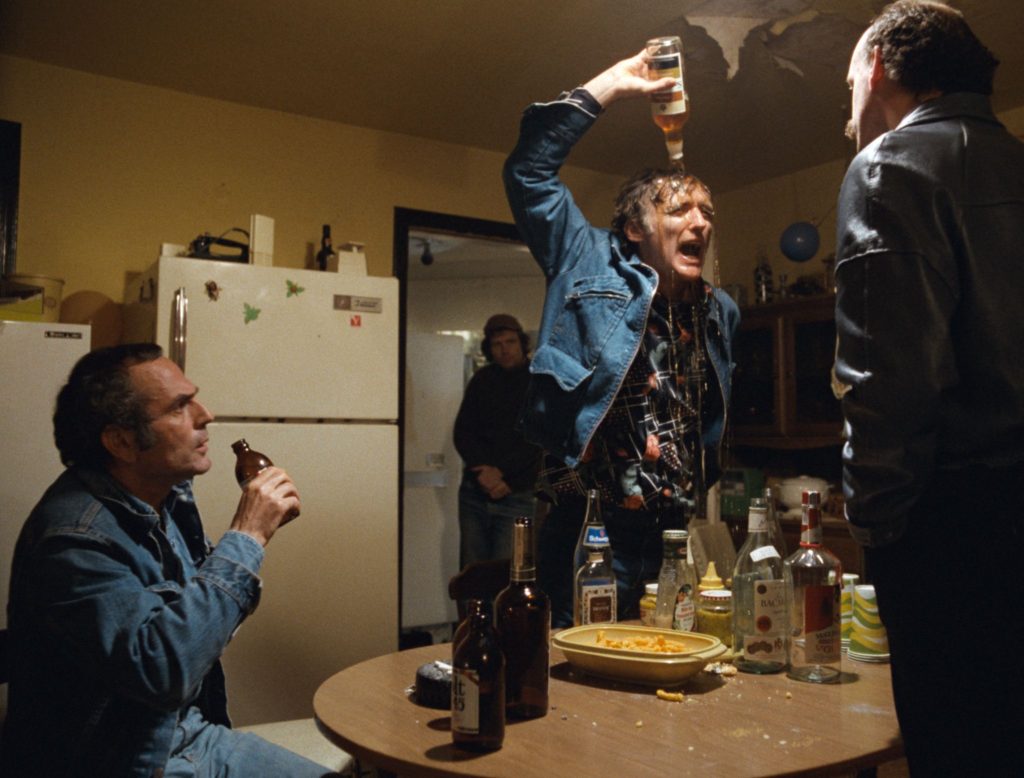
Don Gordon (left) and Dennis Hopper (center) in OUT OF THE BLUE. Courtesy of Discovery Productions, Inc.

As the dad, Hopper is able to demonstrate the charm that attracted the mom and the playfulness that endears him to Cebe. In a scene where the dad dramatically gets himself fired, Hopper shows a man so enjoying his ballsy action, and then, his visage changes as the consequences of his impulsivity sink in, reflecting on his helplessness when he is once again done in by his own impulses.

As the mom, prolific television actress Sharon Farrell excels in a rare movie role.

Don Gordon plays Charlie, the dad’s marginally more functional pal. Gordon had key supporting roles in Bullitt and Papillon and over a hundred appearances in the episodic TV of the 60s and 70s.In Out of the Blue, Gordon displays his gift for playing drunk convincingly. Gordon really understood the essence of drunk thinking and behavior, and has an even more compelling drunk scene in Hopper’s The Last Movie).

Out of the Blue premiered at Cannes and enjoyed praise from Roger Ebert (“Bitter, unforgettable. An unsung treasure.“) and other critics. But the ending is so shocking and emotionally desolate, that it wasn’t released in the US; no distributor wanted to bet on its acceptance by a US audience. John Alan Simon acquired the distribution rights for a 17-week art house tour in 1982 with Hopper. Now Simon and Elizabeth Karr have digitally restored Out of the Blue from the only two 35mm prints in existence.

Out of the Blue has only recently become available to stream; (I own the DVD.) In late 2021, the 4K restoration opened at a New York City screening presented by Chloë Sevigny and Natasha Lyonne. Now you can find Out of the Blue on the Criterion Channel, AppleTV, YouTube and Fandango.

THE TRAGEDY OF MACBETH: driven, then haunted

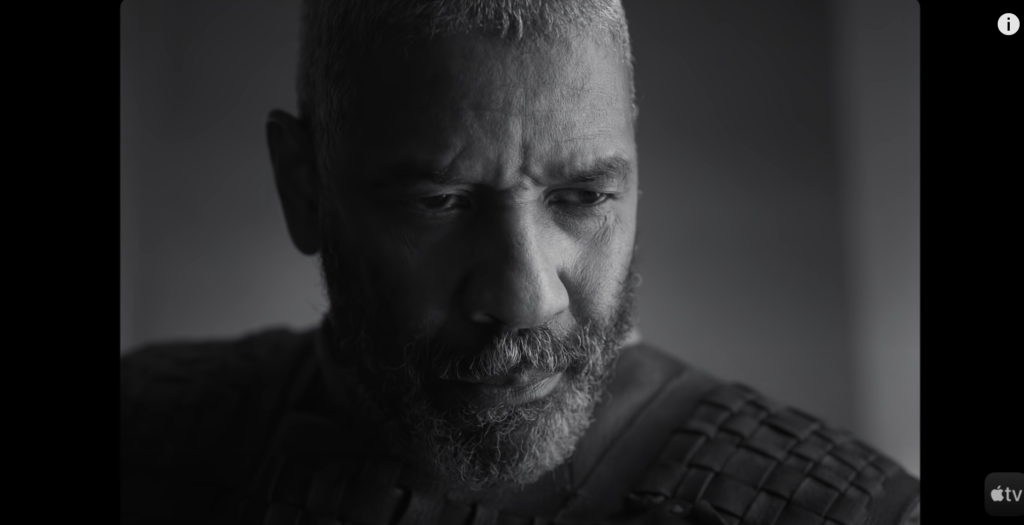
Photo caption: Denzel Washington in THE TRAGEDY OF MACBETH. Photo courtesy of A24.

Director Joel Coen brings us the best of Shakespeare in The Tragedy of Macbeth. Of course, he has two of our finest screen actors as his leads – Denzel Washington as Macbeth and Frances McDormand as Lady Macbeth. They are both great. McDormand has played Lady Macbeth on stage at the Berkely Rep.

Vaulting ambition. Macbeth has always been my favorite Shakespearean play because my own life’s work has been a study of political ambition. Ambition raises one essential question, will you do what it takes? At first, Lady Macbeth worries that Macbeth is too decent to do what it takes, but then…

Coen is very faithful to Shakespeare’s original version, although he compresses some minor characters. Coen tells the story in a brisk one hour, forty-five minutes. The play is usually performed in well over two hours, and Roman Polanski’s fine 1971 Macbeth ran almost two-and-a-half hours.

Coen has chosen to use black-and white to bring out the darkness of the plot, the gloominess of dank medieval Scotland and the supernatural aspects. His staging reflects that the original work is a play.

Frances McDormand in THE TRAGEDY OF MACBETH. Photo courtesy of A24.

Bertie Carvel brings the needed gravitas and decency to Banquo, an accomplished man betrayed. Harry Melling (Dudley Dursley in the Harry Potter franchise) is perfectly cast as Malcom, as is Brendan Gleeson as Duncan.

Coen has enhanced the role of Ross, plugging him in to some situations that add ambiguity to his intentions. Alex Hassell is very good as Ross, maintaining the mystery of whether he is a good guy or a villain.

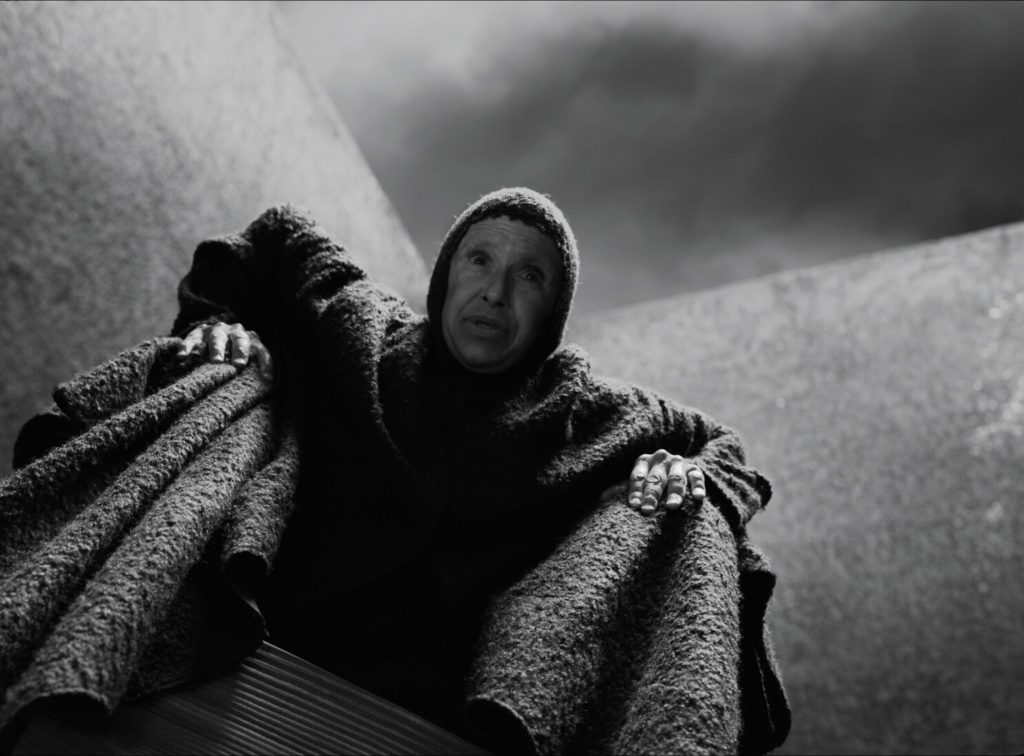
Kathryn Hunter in THE TRAGEDY OF MACBETH. Photo courtesy of A24.

The most extraordinary performance in The Tragedy of Macbeth is that of Kathryn Hunter as the Witches and the Old Man. Hunter’s intensity and the contortions of her body bring a startlingly credible supernatural cast to these characters, which Coen enhances even more with his staging. Look for a Best Supporting Actress Oscar nomination for Hunter.

I’ll be adding The Tragedy of Macbeth to my Best Shakespeare Movies, along with Roman Polanski’s 1971 Macbeth.  Polanski set Shakespeare’s definitive study of vaulting ambition in an especially dank and gloomy medieval Scotland.  Unsurprisingly for a Polanski film, the witches and Macbeth’s visions are nightmarishly trippy.  And Polanski makes Birnam Wood march on film as Shakespeare could not have dreamt of doing on stage. As Lady Macbeth, Francesca Annis played the sleepwalking scene nude.

The Tragedy of Macbeth is brilliant. It is streaming on AppleTV and playing in a few art house theaters.

THE SNIPER: lethal mommy issues

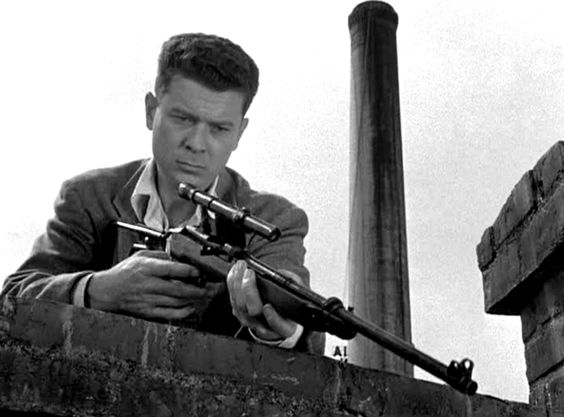
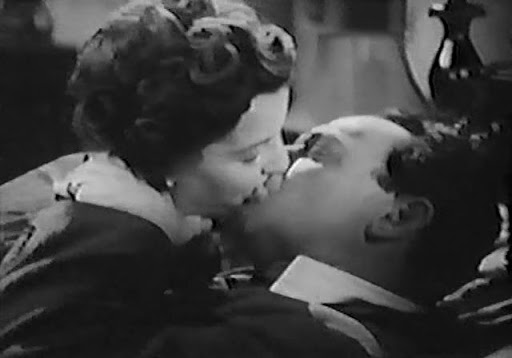
Arthur Franz in THE SNIPER

The Sniper is an unfortunately prescient film noir that tracks the loner Edward Miller (Arthur Franz), whose misogyny drives him to murder a series of San Francisco women in what seem like random shootings.

From the beginning, it’s very clear that 1) every encounter with a woman pushes Miller’s buttons, and 2) he is trying to control a compulsion to shoot them.

When ER doctor treating him for a burn asks, “Can I ask you a question? Were you ever in a mental institution?”, Miller replies, “Only when I was in prison – in the psycho ward.” Uh oh.

Understandable public hysteria triggers a manhunt, led by a seasoned detective lieutenant (Adolphe Menjou) and his snarky assistant (Gerald Mohr), a guy who is never witty but thinks he is. The embattled police chief is played by Frank Faylen (cabbie Ernie in It’s a Wonderful Life). The cops don’t understand who they are looking for or how to track him down.

If The Sniper is any indication, the SFPD’s police methods of communications, investigation and crowd control  were very primitive in 1952.

A police psychologist (Richard Kiley) educates the cops about the killer’s profile, and they finally close in. The weakest part of The Sniper is a talky “message picture” segment where the psychologist tries to convince some civic dinosaurs that the mentally ill need treatment to keep them from killing the rest of us. It’s as lame as the Simon Oakland epilogue lecture in Psycho

It’s notable that The Sniper was released in 1952, before “active shooter” was a thing. This was 14 years before the Texas Tower shootings and 16 years before Peter Bogdanovich’s similarly-themed fictional narrative Targets. The Zodiac Killer, a real life anonymous serial killer who communicated directly with the police, first struck 16 years after The Sniper (and also terrorized the Bay Area).

The Sniper is also an early exploration of misogynistic attitudes and violence. Even the casual remarks from the folks on the street illustrate unconsciously sexist attitudes on gender.

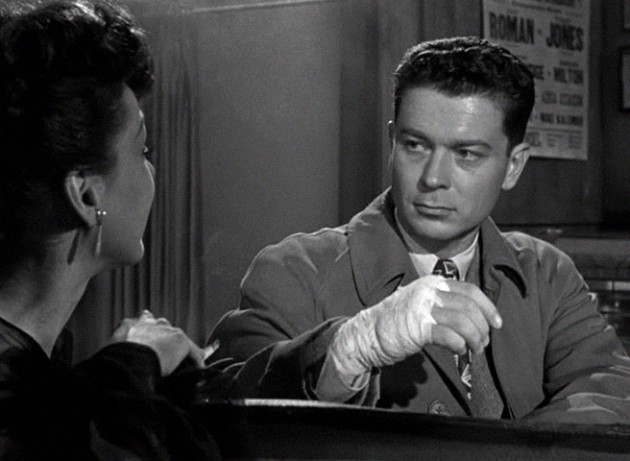
Arthur Franz in THE SNIPER

The Sniper depends on the performance by Arthur Franz, and he is excellent. Of course, he gets to play full psycho, but he is best when he is observing women and silently registering disgust and repulsion. With his countenance otherwise placid, the look in Franz’s eyes changes at the instant that he is triggered into antipathy; you can see him thinking Bitch! Slut! This performance is Franz’s career topper.

I had a vague recollection of Franz, but couldn’t place his other screen work, which was primarily in amiable supporting roles. Franz was the young corporal who narrates The Sands of Iwo Jima, a young ship’s officer in The Caine Mutiny and had a supporting turn in the fine Fritz Lang/Dana Andrews noir Beyond a Reasonable Doubt. But most of his 152 screen credits came in 1950s and 1960s television, including five guest appearances in Perry Mason.

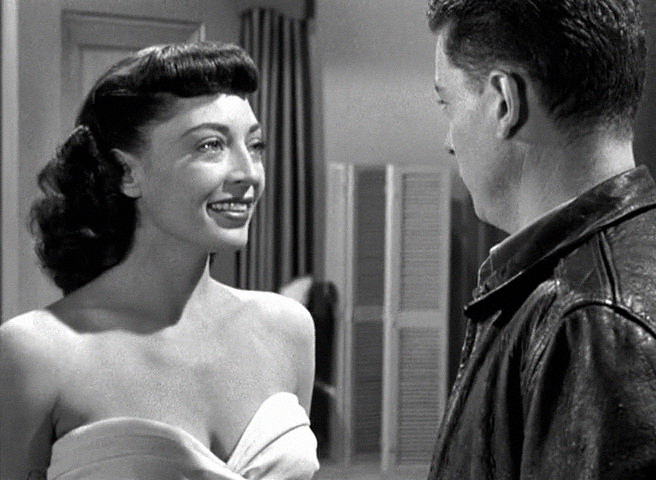
Marie Windsor and Arthur Franz n THE SNIPER

The most dazzling performance in The Sniper is Marie Windsor’s as one of Miller’s laundry delivery customers, the singer in a bar. Windsor is at her most charismatic; her sexy charm, however, is exactly what rubs Miller the wrong way.

Menjou is solid, but these are not Mohr’s or Faylen’s best performances. Jay Novello sparkles in a very small role as the tavern owner who employs Marie Windsor’s songstress.

Arthur Franz in THE SNIPER

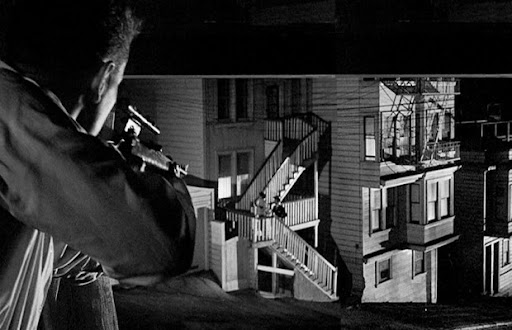
The Sniper is directed by the accomplished Edward Dmytryk (Murder My Sweet, Crossfire, The Hidden Room, The Caine Mutiny). Dmytryk elevates the tension with dramatic shots from the sniper’s and victim’s points of view. Dmytryk even gets a lttle showy when Miller shoots someone and the fatal bullet breaks the glass on her publicity poster.

The San Francisco locations are superbly detailed in the blog ReelSF, an essential for Bay Area cinephiles. (However, the boardwalk carnival was shot in Southern California, not at San Francisco’s Playland-at-the-Beach.)

The Sniper is very hard to find. It is not available to stream, and I needed to buy the French DVD. The Sniper is scheduled to screen at the 2022 Noir City film festival.

Adolphe Menjou and Gerald Mohr in THE SNIPER

THE ARGYLE SECRETS: racing for a politically explosive Macguffin

Marjorie Lord and William Gargan in THE ARGYLE SECRETS

The Argyle Secrets is a fast-paced 63-minute espresso noir, a race to find a politically explosive Macguffin. That Macguffin is the Argyle Album, a list of those Americans playing footsy with the Nazis, just in case Hitler might win the war. This list has obvious value, both as a news media exposé and as blackmail leverage. value.

The Argyle Secrets starts out with voice-over exposition, flashes of the characters to come, and some rapid voice-over exposition from our protagonist, the investigative reporter Harry Mitchell (William Gargan).

Mitchell has the opportunity to meet a visiting national columnist (George Anderson), who tells him about the existence of, but not the content of the Argyle Album. When the columnist suddenly dies amid suspicious circumstances, Mitchell comes under suspicion and goes on the run to solve the case and prove his innocence. Of course, he also wants the Big Scoop for his own newspaper.

George Anderson and William Gargan in THE ARGYLE SECRETS

But Harry Mitchell is not alone in his pursuit of the Argyle Album. Just like in that Macguffin classic The Maltese Falcon, he is racing devious characters with multiple aliases. In pursuit of the Argyle Album themselves, they’re now in pursuit of Harry. There’s even a fat man in a white suit (Jack Reitzen).

The fat man is a solo operator, but there’s also a gang with an accented leader (John Banner, 20 years before his Sgt. Schultz in Hogan’s Heroes) and sunglasses-wearing muscle (Mickey Simpson) – and they’re willing to use a blowtorch on Harry. Plus a shifty fence (Peter Brocco).

There’s also the alluring Marla (Marjorie Lord), a sexy femme fatale who may or may not be loyal to the gang. Fondling Harry’s lapels, she puts on her best Brigid O’Shaughnessy and coos, “You think I’m really rotten, don’t you? I am. I really am.”

The plot transpires over 24 hours. Who will find the Argyle Album? Is Marla playing Harry? Will Harry survive?

William Gargan in THE ARGYLE SECRETS

William Gargan carries the story as Harry. Gargan made a career of playing fictional detectives – Barrie Craig for four years in the popular radio series Barrie Craig, Confidential Investigator, then Ellery Queen in three movies and Martin Kane in 51 television episodes.

Marjorie Lord in THE ARGYLE SECRETS

Marjorie Lord, who considered herself primarily a stage actress, did massive amounts of television, especially 227 episodes playing Danny Thomas’s wife in The Danny Thomas Show (plus another 24 episodes as the same character in in Make Room for Granddaddy).

However, Lord is right at home playing a movie femme fatale in The Argyle Secrets, exuding sexuality and unashamed self-interest.

The Argyle Secrets was written and directed by Cy Endfield, then a 34-year-old Orson Welles protege, in what he called his first film as an auteur. Blacklisted in the US, Endfield went on to direct the fine 1957 British noir Hell Drivers and the 1964 hit Zulu.

The Argyle Secrets has been newly restored by the the Film Noir Foundation. The world premiere 35mm restoration of The Argyle Secrets will be at the 2022 Noir City film festival.

The Argyle Secrets is very hard to find and is not available to stream; I expect that a Film Noir Foundation DVD will become available.

Marjorie Lord and William Gargan in THE ARGYLE SECRETS

LICORICE PIZZA: when nine years is a big age difference

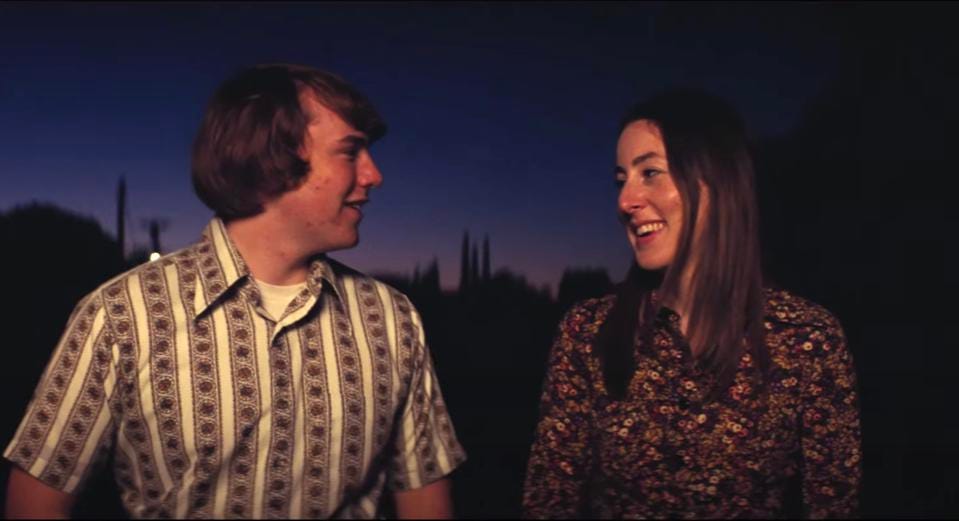
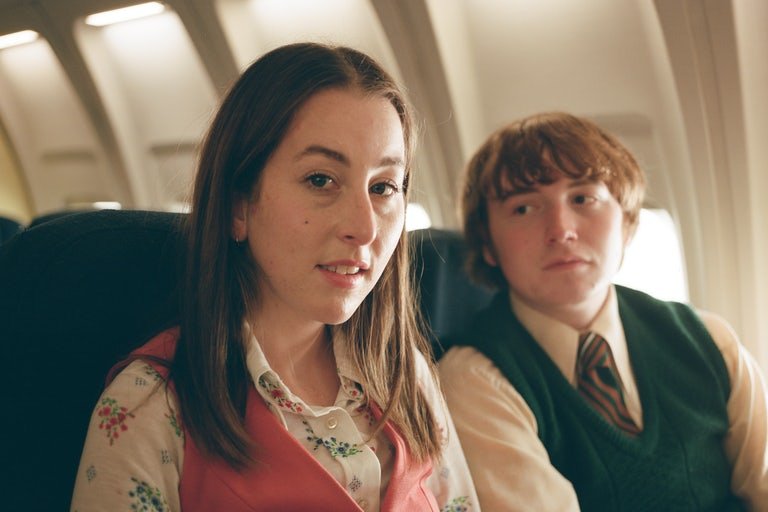
Photo caption: Cooper Hoffman and Alana Haim in LICORICE PIZZA. Courtesy of MGM.

The entertaining coming of age story Licorice Pizza has a lot going for it – the originality of an age mismatch, two fresh and interesting lead actors and a 1973 time capsule of the San Fernando Valley. A little too much length and an odd segment with Bradley Cooper as Jon Peters keep this from being among the best films of the year.

Gary (Cooper Hoffman) is a successful child actor who, at fifteen, is aging out of his marketability; nevertheless, he has stashed his earnings and can’t pass up the chance to build a business mini-empire, whether in waterbeds or pinball machines. Gary is a bundle of showbiz charm and ambition, and he is always “on”.

Gary’s ambition contrasts with the 24-year-old Alana (Alana Haim), who is drifting through deadend jobs. Amused, and then intrigued, by Gary’s chutzpah, she starts driving him around (he’s too young for a driver’s license) and becomes entangled in his schemes, intermittently questioning why “I’m hanging out with Gary and his 15-year-old friends“.

Alana is open to experiences, and flirts with a more age-appropriate actor pal of Gary’s, enjoys meeting much older celebrity in a Ventura Blvd showbiz bar, and moons after a young politician. Still there’s Gary – will he become her friend – or her soulmate?

Licorice Pizza is the creation of accomplished writer-director Paul Thomas Anderson (Hard Eight, Boogie Nights, Magnolia, Punch-Drunk Love, There Will Be Blood, The Master, Inherent Vice). The vibe of Licorice Pizza is so specific to the period and place that I was surprised to learn that Anderson, who did grow up in the San Fernando Valley, was only three years old in 1973.

Alana Haim and Cooper Hoffman in LICORICE PIZZA. Courtesy of MGM.

Licorice Pizza is entirely a character-driven story and its most successful moments rest on the performances of newcomers Haim and Hoffman. Haim excels at portraying Alana’s moxie. Gary is a force of nature, and Hoffman captures his knack for ever acting as the adult hustler, except when his teenage emotional immaturity peeks out.

Cooper Hoffman is the son of Anderson’s frequent collaborator Philip Seymour Hoffman. Philip Seymour Hoffman had an early-career minor part in Hard Eight, broke through with his supporting performance in Boogie Nights, and starred or co-starred in Magnolia, Punch-Drunk Love and The Master.

Alana Haim is a musician in the sister band Haim. Here’s the pretty cool, 3:57 one-shot video of their pop hit Want You Back and a live festival cover of the Peter Green Fleetwood Mac’s Oh Well. Paul Thomas Anderson has directed nine of Haim’s videos (but not that Want You Back video that I just linked). Haim’s real life parents and sisters play her family in Licorice Pizza.

Sean Penn, showing a sense of humor for the first time since Fast Times at Ridgemont High, is very good as a veteran Hollywood celebrity, as is Tom Waits as his drinking buddy.

Indie filmmaker Benny Safdie is excellent as the non-fictional elected official Joel Wachs. (I essentially grew up in campaign offices like the ones perfectly re-created in Licorice Pizza (and the one in Taxi Driver where Cybill Shepherd volunteered).

In one disjointed segment, an over-the-top Bradley Cooper sends up the by-all-counts-scumbag Jon Peters, who washes over Gary and Alana with a tsunami of self-absorbed outrageousness. The tone of the Jon Peters scenes just doesn’t mesh with the rest of the movie and only serves to jar the audience out of the story.

I was expecting Licorice Pizza to be among the very best films of the year, so I was a little disappointed. I still enjoyed it overall, but it failed to engage The Wife, who thought that the oft-repeated motif of characters running didn’t work.

Gary would be 63 today, and Alana 72. I’m pretty sure that they’re not together as a couple, but that they have lived very interesting lives.

THE HEIST OF THE CENTURY: improbable, ingenious and all too human

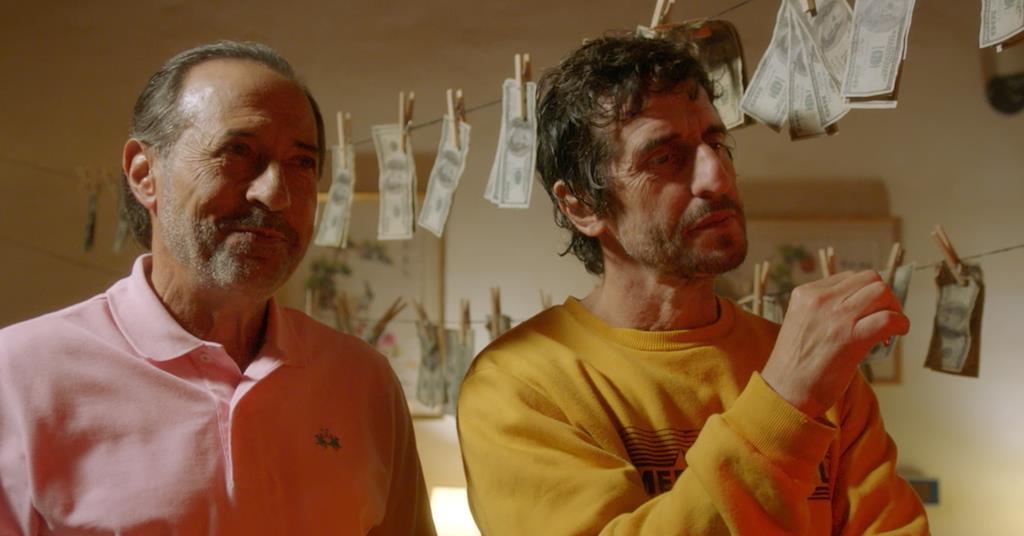
Guillermo Francella and Diego Peretti in THE HEIST OF THE CENTURY. Photo courtesy of Mill Valley Film Festival.

The Heist of the Century, a delightful crime tale from Argentina, tells a story that would be unbelievable – except it all really happened.

Most improbably, one of the masterminds is Fernando (Diego Peretti), a dope-smoking, new agey martial arts instructor. He has an idea for One Big Score – a bank robbery that will take hours, during daylight, in the middle of the city, and is certain to mobilize the entire police force. Fernando enlists a highly disciplined, professional criminal Luis Mario (Guillermo Francella); initially skeptical of and resistant to both Fernando and the job, Luis Mario joins Fernando in planning and assembling a team.

The planning is meticulous, including unexpected elements like studying the SWAT Team manual on hostage negotiations and attending acting class. Three of their solutions to defeating the bank’s security demonstrate undeniable genius.

The heist itself, with the seconds ticking and the bank surrounded by an army of police, is thrilling. The thieves have a formidable opponent in the police negotiator Sileo (an excellent Luis Luque); he is a wise and solid pro surrounded by lesser minds – and he doesn’t appreciate being made to look like Wiley Coyote.

However, what looks like a triumph might come to ruin – because of the most human of foibles. The ending is amazing.  

The Heist of the Century is the true story of the 2006 Banco Rio robbery in Acassuso, Argentina, a seaside suburb of Buenos Aires. Fernando Araujo, the original mastermind, is credited as one of the screenwriters.

The Heist of the Century is directed by Ariel Winograd, who emphasizes the contrasting personalities of Fernando and Luis Mario and creates a perfect balance between the humor and the thrills. Winograd spices the soundtrack with music ranging from The Kinks, spaghetti westerns to Motown and opens with a cheesy James Bondesque tune.

Guillermo Francella, who plays Luis Mario, played Ricardo Darin’s drunk assistant in The Secrets of Their Eyes. In this movie, Francella’s real life daughter Ana plays Mario Luis’ daughter Lu.

I screened The Heist of the Century for the Mill Valley Film Festival in October 2020. Now you can stream it from HBO Max, Amazon, Vudu and YouTube.

Coming up on TV – the hard to find GEORGE WALLACE

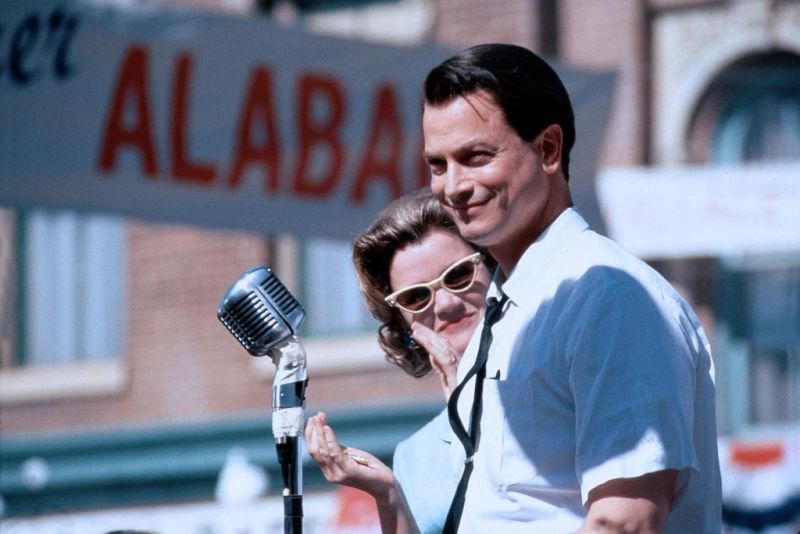
Photo caption: Gary Sinise in WALLACE.

On January 12, Turner Classic Movies brings us George Wallace, with its brilliant performance by Gary Sinise. Sinise captures the character of the driven, morally flexible Alabama Governor, whose political opportunism took him to personify the defense of racial segregation in America. His wild personal journey included presidential campaigns, becoming paralyzed by an assassination attempt, and mellowing in a redemption-seeking epilogue.

Originally a 1997 TV miniseries, this three-hour work was based on the fine Marshall Frady biography and was directed by the legendary John Frankenheimer (The Manchurian Candidate, Seven Days in May).

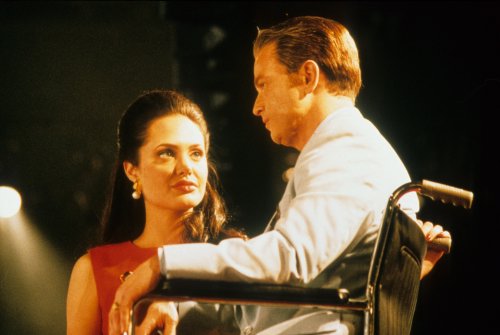
Mare Winningham plays Wallace’s first wife Lurleen, who succeeded him as Alabama’s Governor, and Angelina Joie plays his second wife Cornelia. Sinise, Winningham and Frankenheimer all won Primetime Emmys.

George Wallace is not available to stream and is rarely broadcast, so set your DVR.

Angelina Joie and Gary Sinise in GEORGE WALLACE