JAZZFEST: A NEW ORLEANS STORY: introducing the perfect 8 days of culture

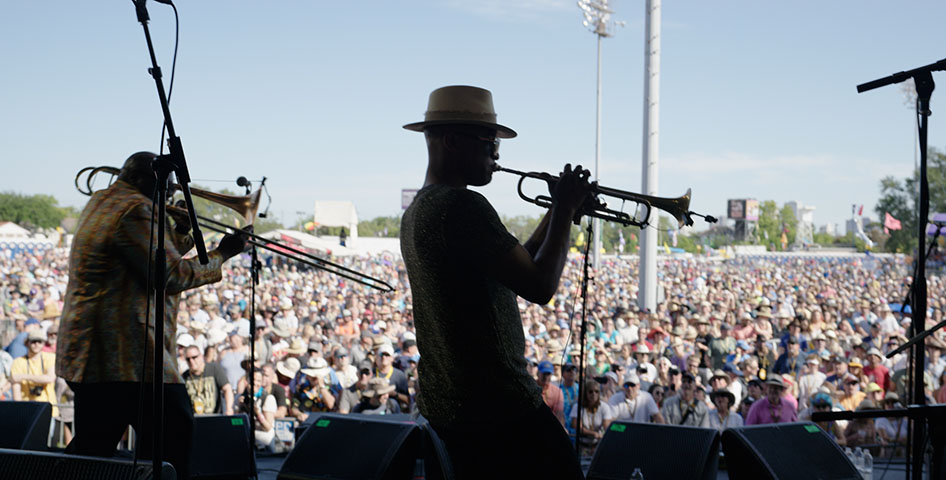
Photo caption: JAZZFEST: A NEW ORLEANS STORY. Courtesy of Sony Pictures Classics.

The endearing documentary Jazzfest: A News Orleans Story celebrates the 51-year-old extravaganza of music, food and good times that is the New Orleans Jazz & Heritage Jazz Festival (always called Jazzfest). Documentarians Frank Marshall and Ryan Suffern introduce us to founder George Wein, longtime festival producer Quint Davis and a host of musicians. They cover the history of the festival, its importance to Louisiana and the city, the impact of Hurricane Katrina, and how Jazzfest celebrates the unique cultures of New Orleans and Louisiana. And of course, they dive deep into the music and the musicians.

The killer moment in Jazzfest: A News Orleans Story is a divine Aaron Neville rendition of Amazing Grace that brings tears to Trombone Shorty, standing behind him on stage.

I had never thought of Jimmy Buffett as a New Orleans musician, but this is where he learned his chops, busking and then fronting a band on Bourbon Street. It turns out that Buffett has a substantial history with the Jazzfest. (Unrelated movie trivia: Jimmy Buffett had a bit part, “Additional Blonde Agent” in the cult movie Repo Man.)

This is Jazzfest 101 – a comprehensive intro course. We don’t dive into the behaviors of Jazzfest veterans, like pouring over The Cubes (festival’s program schedule) in January or procuring an inexpensive festival chair at the Canal Street Walgreen’s.
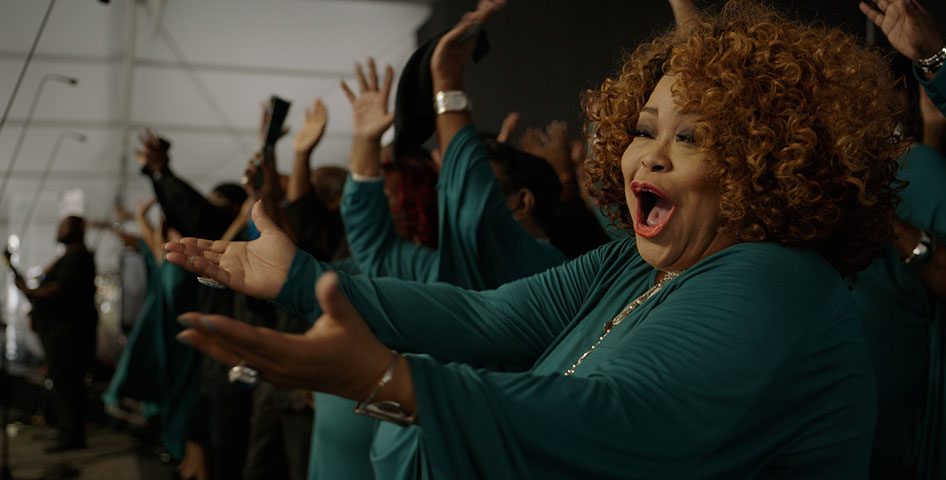
JAZZFEST: A NEW ORLEANS STORY. Courtesy of Sony Pictures Classics.

I love the New Orleans Jazz & Heritage Jazz Festival so much – and I miss it so much – that I resisted seeing this film because the trailer made my heart ache. I’ve missed three trips to the Jazzfest in the past four years because of COVID and other misfortunes, and I really, really miss it. The Wife prevailed, however, because she loves Jazzfest so much that she just couldn’t miss this movie.

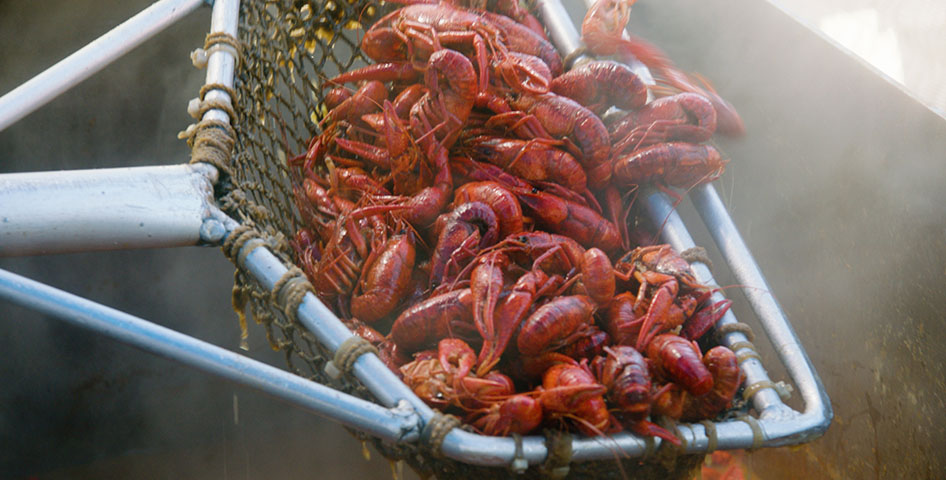
Here’s why. For the Movie Gourmet, the perfect vacation goes like this: sleep late and arise to cafe au lait and beignets, then stroll through the French Quarter to the bus on Canal Street that drops us at the Jazzfest at midday. Spend six hours listening to the world’s best blues musicians, and sample some of the world’s best gospel, cajun and zydeco, too. Sustain ourselves with cochon de lait poboys and alligator nuggets. Cap the day with a big name act (in 2022, for example, The Who, Stevie Nicks, Jason Isbell, Billy Strings, Nelly, The Red Hot Chili Peppers, The Avett Brothers, Lionel Ritchie, Death Cab for Cutie, Luke Combs, Elvis Costello, The Black Crowes, Norah Jones and Buddy Guy). Bus back to the room and shower. Enjoy a late dinner at one of the world’s best restaurants. Have some drinks at a local club listening to live local music. Hit Cafe du Monde for some post-midnight beignets and go to bed. Rinse. Repeat.
JAZZFEST: A NEW ORLEANS STORY. Courtesy of Sony Pictures Classics.

It turned out that, for The Movie Gourmet, Jazzfest: A News Orleans Story wasn’t painful after all, just wistful. I’m looking forward to returning in APril 2023. Trombone Shorty, Big Luther Kent and Trick Bag, Anders Osborne, Sonny Landreth, Jumpin’ Johnny Sansone and The Iguanas await me. So do the sweetbreads at Bayona, the fried green tomatoes at Jacque Imo’s and delicacies at restaurants yet to be discovered.

Jazz Jazzfest: A News Orleans Story is in theaters.
BESTIES: confidence rocked

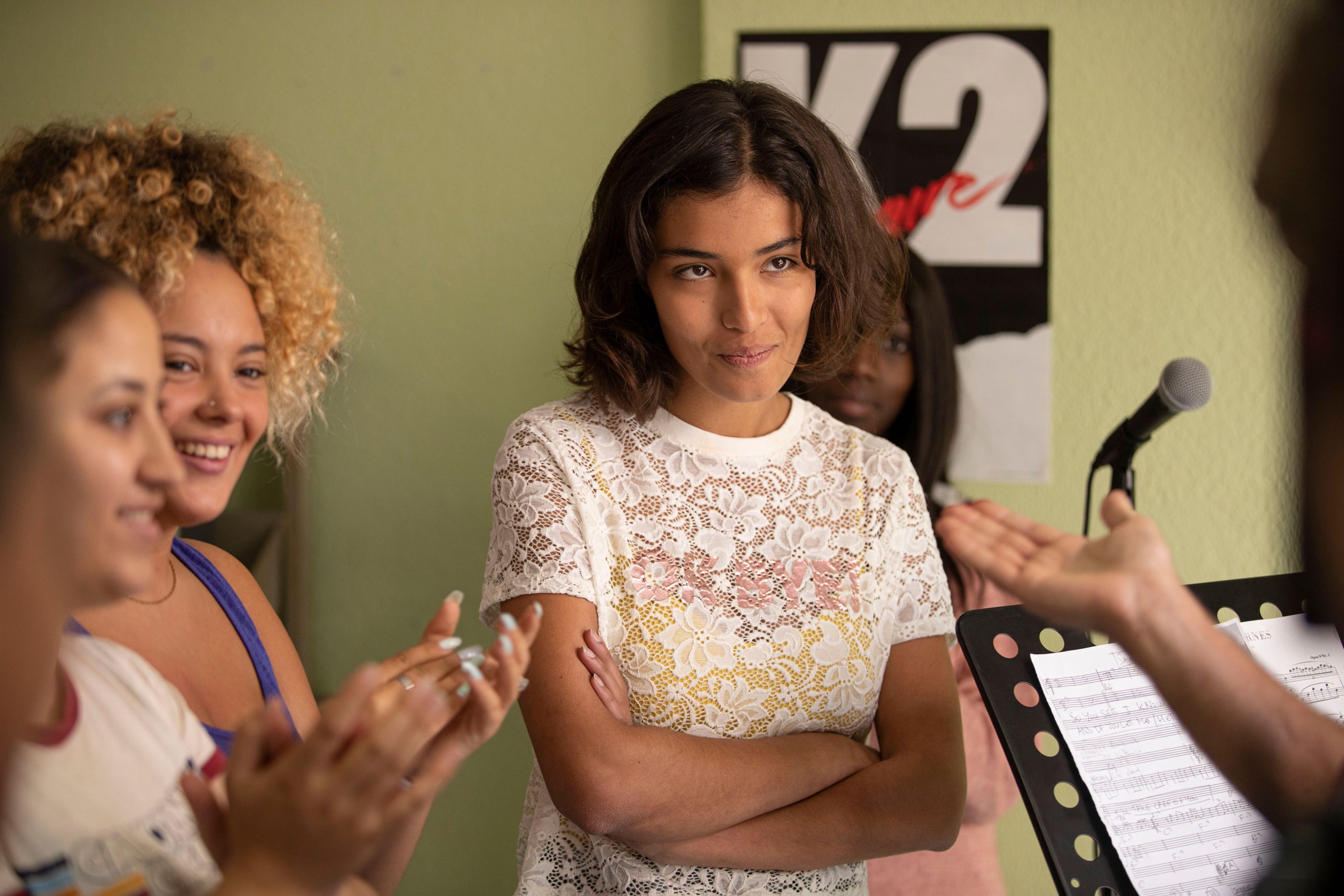
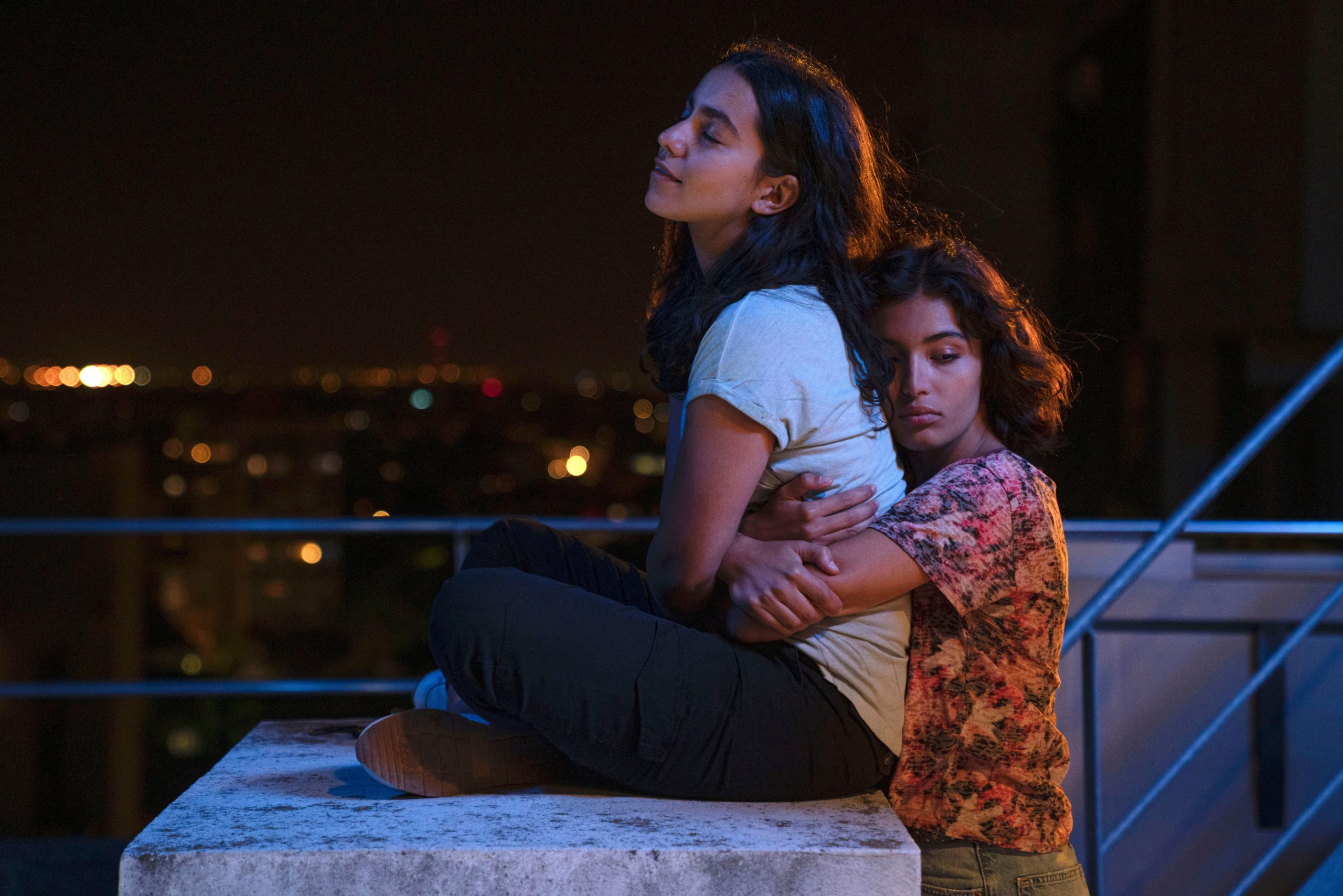
Photo caption: Lina Al Arabi and Esther Esther Bernet-Rollande in BESTIES. Courtesy of Frameline.

The absorbing coming of age drama Besties is set among Algerian teen girls in a hardscrabble immigrant urban French neighborhood. They’re growing up on the streets with minimal supervision by their hard-working single moms, and even their modest aspiration of a day trip to the beach seems beyond their grasp.

Yet, despite her downtrodden circumstances, the spirited Nedjima (Lina Al Arabi) is especially comfortable in her own skin. Supremely confident, she leads her girl squad, athletically matches up with the boys, and can talk trash like an NBA player.

Lina Al Arabi in BESTIES. Courtesy of Frameline.

Nedjima is fascinated by Zina (Esther Bernet-Rollande), a new girl in the hood, with relatives in a rival crew. Although Nedjima and Zina are on different sides (as in Sharks/Jets, Montagues/Capulets), there are attracted to each other and begin a secret romance.

Suddenly, Nedjima’s own identity is rocked – she never imagined that she could be a lesbian. This may be France, but even the kids in this insular immigrant community are homophobic. Suddenly she’s lost her community status and her support group. She reveals to Zina what teens often feel and never say, “I’m afraid of everything.” How is Nedjima going to recover her own agency and navigate being lesbian in her family and neighborhood?

Esther Bernet-Rollande (center) in BESTIES. Courtesy of Frameline.

Besties’ two leads, Al Arabi and Bernet-Rollande are very charismatic. Al Arabi’s performance could be star-making. Her Nedjima registers strength and vulnerability, wilfulness and confusion, and the audience is on her side all the way.

Besties is the first feature for writer-director Marion Desseigne-Ravel, and it’s an impressive debut. The milieu seems absolutely authentic. Besties is briskly paced, and Desseigne-Ravel tells her story economically and powerfully, without a single false moment. The final shot captures the briefest of glances, the perfect culmination of Nedjima’s story.

Besties is a showcase for Al Arabi’s magnetism and Desseigne-Ravel’s storytelling. Besties screens at Frameline on June 19.

LOVING HIGHSMITH: intimate and revelatory

Photo caption: Patricia Highsmith in LOVING HIGHSMITH. Courtesy of Frameline.

In the revelatory biodoc Loving Highsmith, documentarian Eva Vitija reveals intimate perspectives on the iconic author. Patricia Highsmith’s novels were turned into twisted movie thrillers that include Hitchcock’s Strangers on a Train and all the Tom Ripley movies, as well as the queer memoir Carol.

Vitija has sourced Loving Highsmith with the firsthand memories of Highsmith’s last live-in lover Marijean Meaker, her Berlin lover Tabea Blumenshein, her Paris friend Monique Buffet, and members of Highsmith’s rodeo-focused Texas family. The insights include:

  • Highsmith’s Texas roots.
  • Her heartbreakingly one-way relations with her mother.
  • The origin of the Tom Ripley character.
  • Her intentionality in crafting the ending of Carol.
  • Her obsession with her married secret London lover.

Even those who are familiar with Highsmith will be impressed with this 360-degree portrait. Loving Highsmith plays this year’s Frameline on June 21 at the Castro.

THE SIXTH REEL: endearing farce

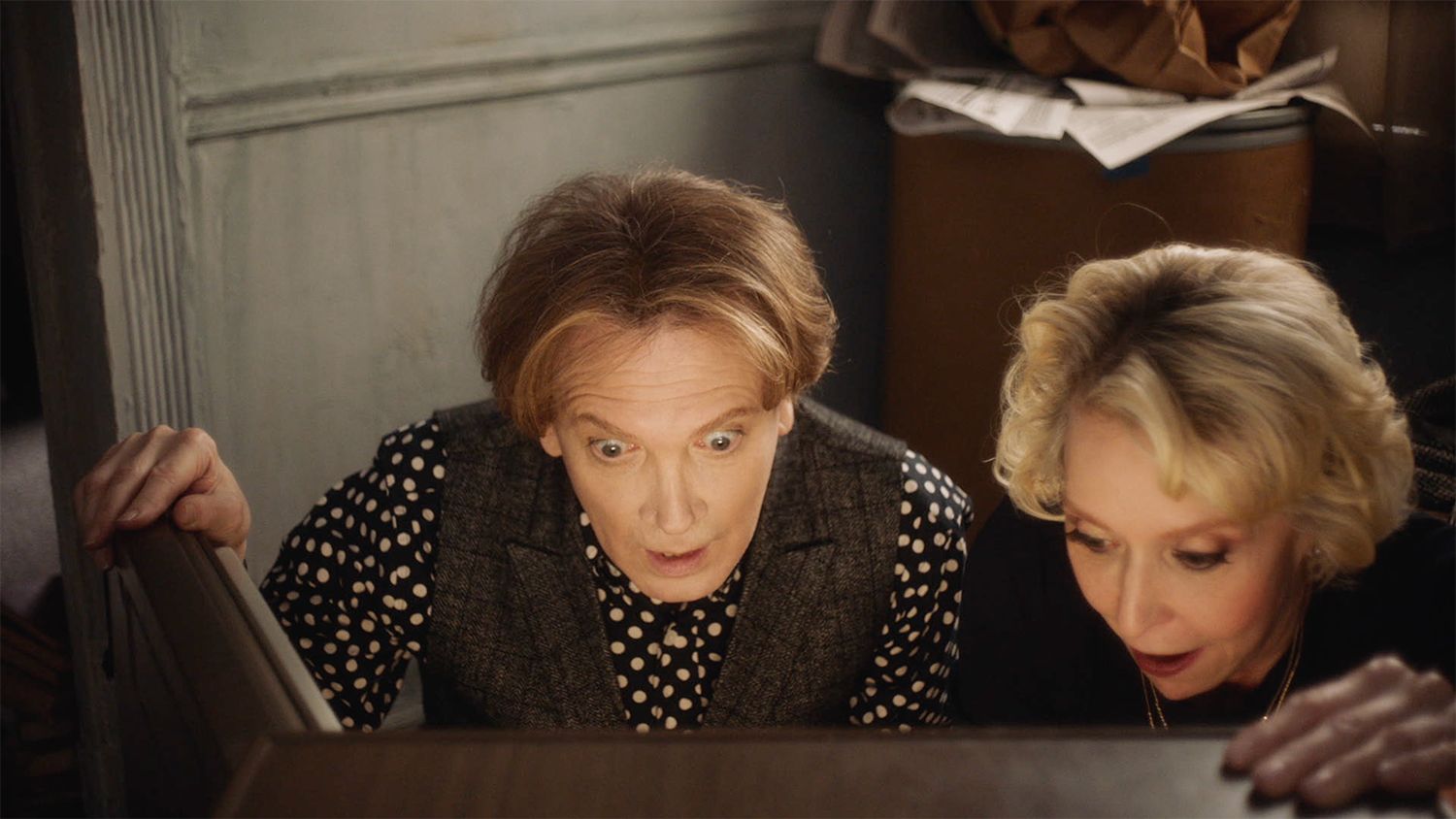
Photo caption: Charles Busch and Julie Halston in THE SIXTH REEL. Courtesy of Frameline.

The endearing madcap comedy The Sixth Reel is set in the insular world of classic movie geeks. I’m not talking about the average Turner Classic Movies devotees; these are folks who would sell their souls for the right lobby card and say things like, “William Powell is sexier with Kay Francis than he is with Myrna Loy.”

Jimmy (Charles Busch) is a down-on-his-luck collector and dealer of movie memorabilia. Jimmy has a history of becoming the companion of aging filmmakers and emerging with their memorabilia collections after their demise. Despite this unsavory business model, Jimmy is broke when stumbles upon a lead – the final reel of an iconic “lost film” is extant after all.

Jimmy and his peers, each shadier than the last, plunge ahead, competing with each other for their Holy Grail. Wackiness ensues.

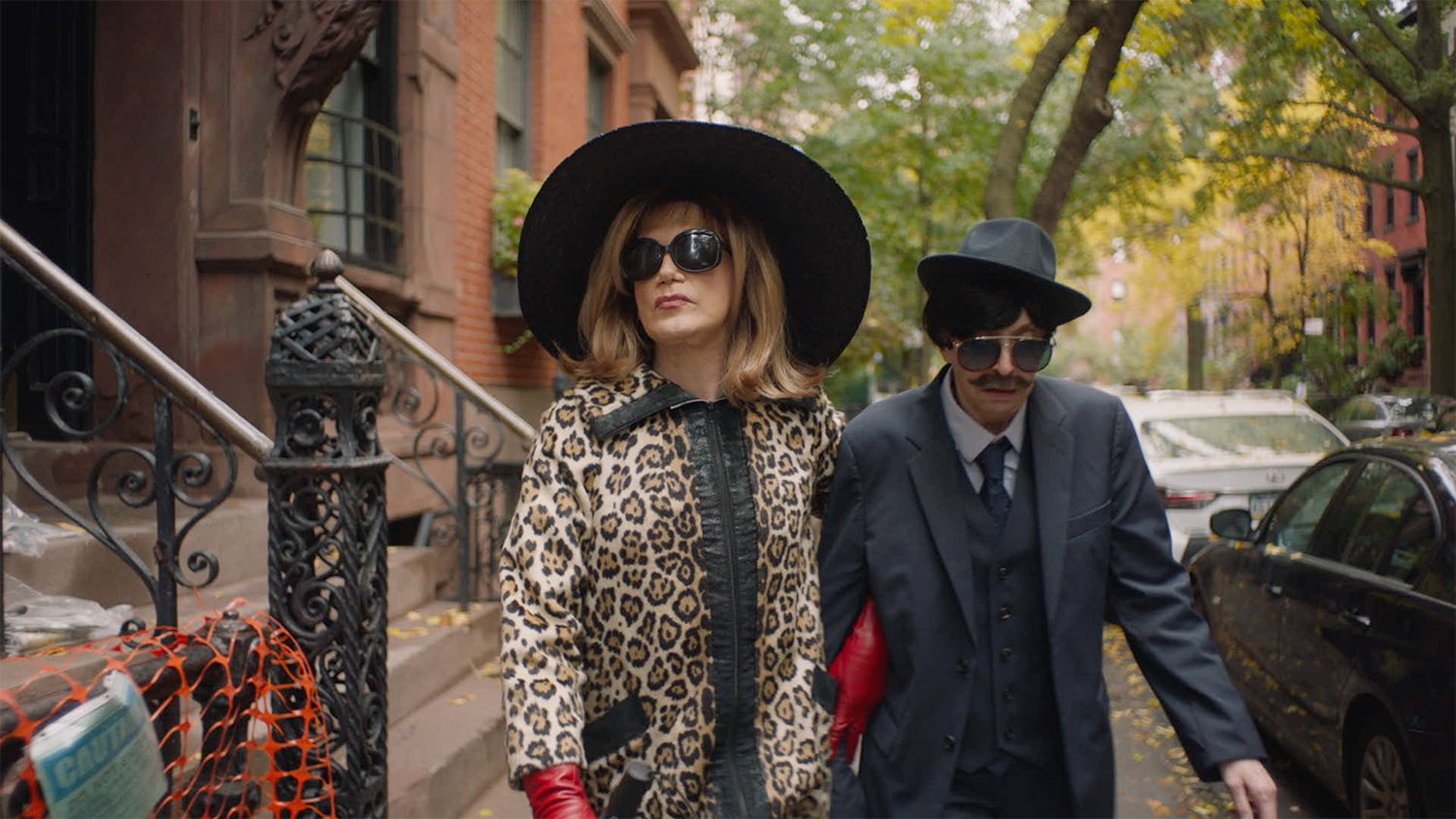
Charles Busch and Julie Halston in THE SIXTH REEL. Courtesy of Frameline.

Busch co-wrote and co-directed The Sixth Reel with Carl Andress. This is my first Charles Busch film, but I understand that his movies, dappled with drag performances, constitute their own comedy sub-genre.

Busch’s committed performance is excellent. The rest of the cast, which includes Tim Daly and Margaret Cho, is fine, too, especially Julie Halston as an assertive widow and Patrick Page as an imperious mogul.

There should always be a place for well-crafted farce like this. The Sixth Reel screens at Frameline on June 25, and can be streamed from Frameline after June 24.

UNIDENTIFIED OBJECTS: offbeat, then surreal, finally redemptive

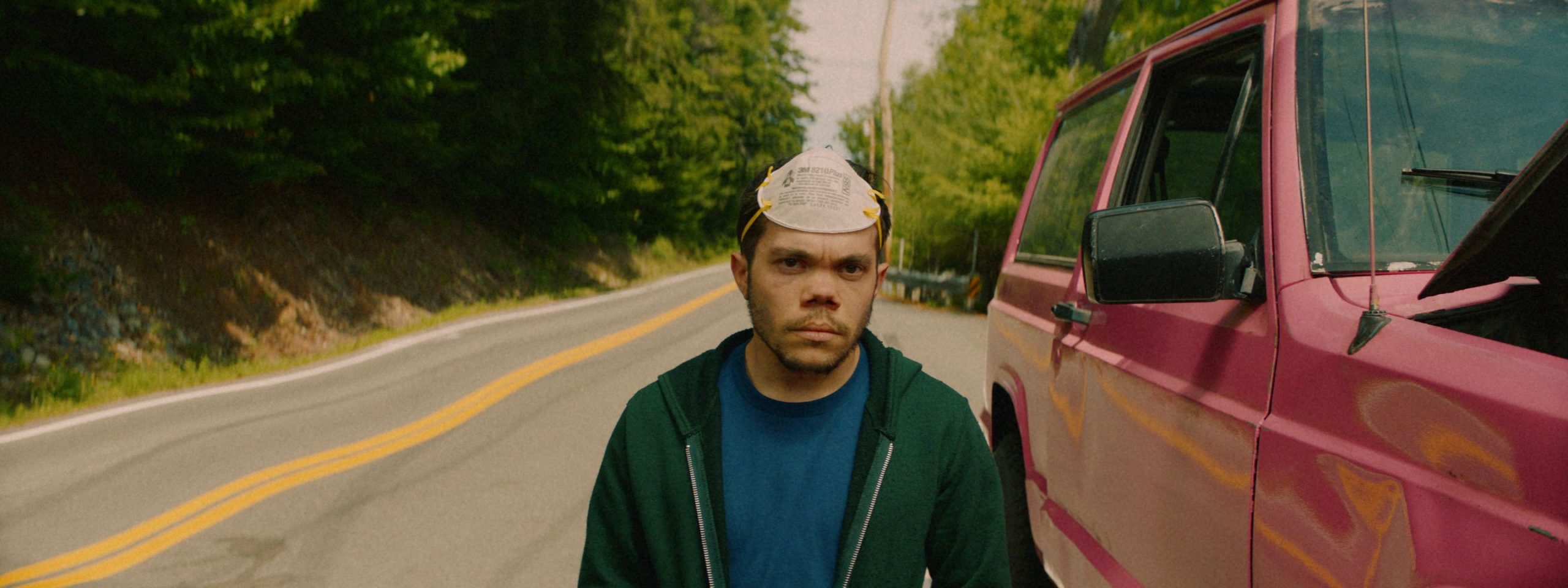
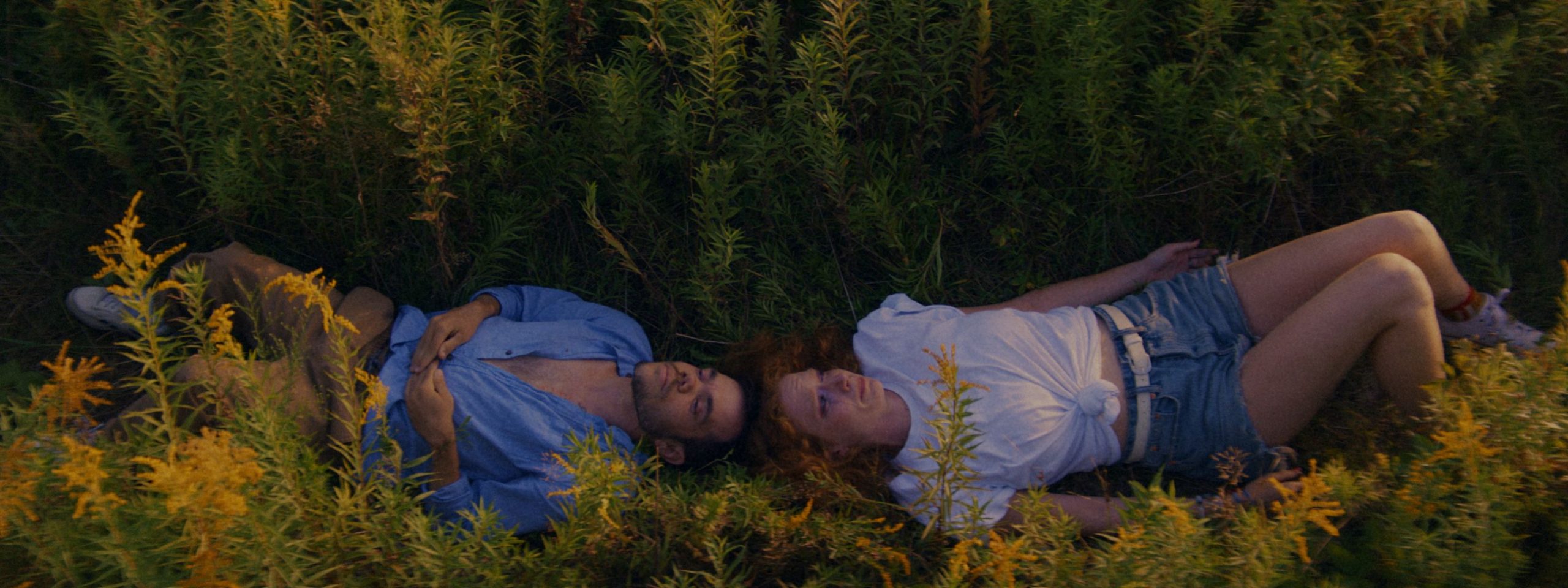
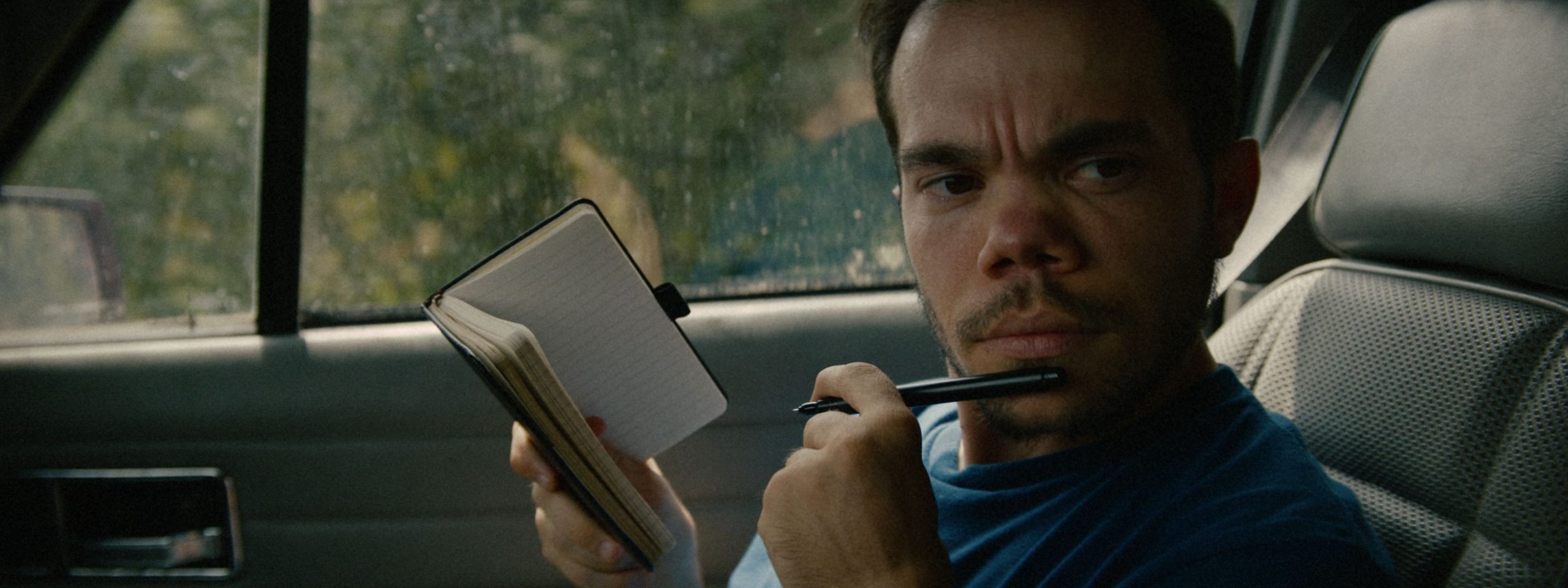
Photo caption: Matthew August Jeffers in UNIDENTIFIED OBJECTS. Courtesy of Unidentified Objects Film, LLC.

The Odd-Couple-On-A-Roadtrip dramedy Unidentified Objects takes us on a singular journey – from the offbeat through the surreal to the redemptive.

The self-isolation of anti-social gay dwarf Peter (Matthew August Jeffers) is disrupted when his neighbor, the chirpy sex worker Winona (Sarah Hay) insists that he provide his car for her drive from New York to Canada. She seeks to keep an appointment there with her space alien abductors. Wanting nothing to do with Winona or any aliens, Peter is nonetheless driven by financial necessity to agree.

In every social situation, Peter is quick to find (or manufacture) a grievance and explode in a torrent of invective; the rest of the time Peter seethes, leaking unpleasantness. It turns out that he is grieving the loss of a close friend – and with an overlay of guilt.

The trip is eventful. The two encounter lesbian cosplayers (one proud to cosplay full time – is that a thing?). Peter has dreams of a traffic stop by an extraterrestrial highway patrolman and of unexpected kindness in Canadian roadhouse.

Matthew August Jeffers (Peter Hobbes) and Sarah Hay (Winona Jordan) in UNIDENTIFIED OBJECTS. Courtesy of Unidentified Objects Film, LLC.

Yet the tone of Unidentified Objects is neither is not zany nor madcap. In his first feature, director and co-writer Juan Felipe Zuleta has created a character-driven story – no matter the odd occurrences, the roots of Peter’s unrest are simmering just beneath the surface. The story is about what Winona finds at the end of her trip, and, more profoundly, what Peter finds at the terminus of his.

Zuleta’s dream sequences are vivid and realistic – and all the more surreal because they seem real (until they don’t).

Through most of the film, Peter’s bitterness becomes grating, but, for those who hang in there, the payoff is worth it.

The US premiere of Unidentified Objects is at Frameline – in person on June 19 and streaming after June 24.

Matthew August Jeffers in UNIDENTIFIED OBJECTS. Courtesy
of Unidentified Objects Film, LLC.

FANNY: THE RIGHT TO ROCK: triple-threat trailblazers

Photo caption: Fanny in FANNY: THE RIGHT TO ROCK. Courtesy of Film Movement.

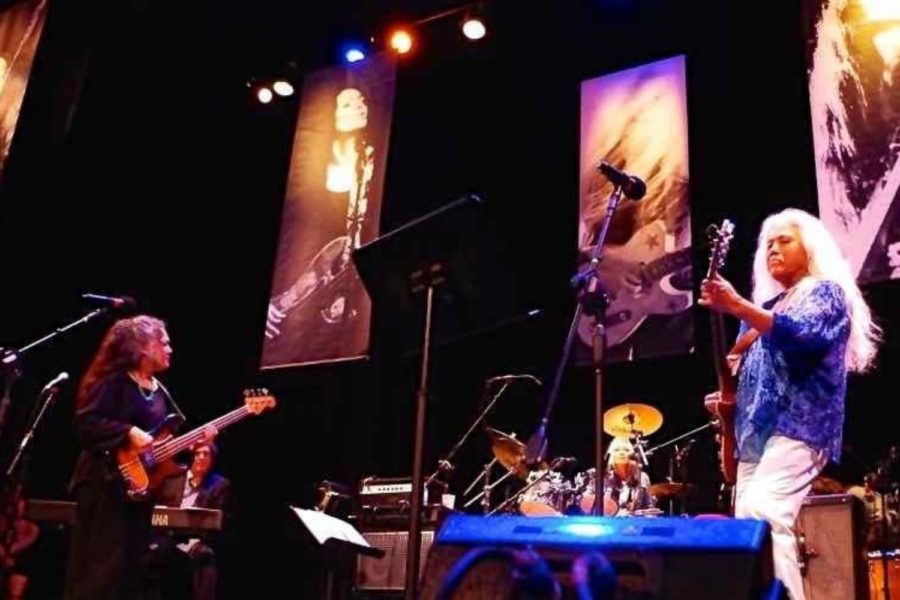
Fanny: The Right to Rock documents the first all-female rock band to get signed by a major record label and churn out five albums. Fifty years ago, the band Fanny was breaking ground for women musicians – and for lesbians and Filipinas. Women rockers were a novelty in the early 1970; imagine layering on LGBTQ identity and Asian-American heritage.

Although you probably haven’t heard of them, this was no garage band. They had a major label record deal, European tours, and hung out with big name peers. Unlike many male bands of the period, Fanny didn’t crash and burn due to drug use or clashing egos. They just never caught on with record-buyers.

It’s pretty clear that music industry and media sexism, combined with maybe being a little ahead of their time to deny Fanny stardom. Too bad – I would have loved to listen to them in their heyday.

Their music fits right into the stuff I was listening to in the 1970s. I’m guessing that the reason why I hadn’t heard of them is that they didn’t get played on FM radio in the Bay Area.

Fanny in FANNY: THE RIGHT TO ROCK. Courtesy of Film Movement.

These women can still really rock in their 70s, and they’re a hoot.

Fanny: The Right to Rock is filled with colorful anecdotes from back in the day. Todd Rundgren, an important early associate of Fanny, and Bonnie Raitt appear as eyewitnesses. Cherie Curry of the Runaways, Cathy Valentine of the Go-Go’s and Kate Pierson of the B-52s testify to Fanny’s trailblazing status.

I screened Fanny: The Right to Rock last year at the Nashville Film Festival. It releases into theaters, albeit very hard to find, this weekend. I’ll let you know when it becomes available on streaming services.

A HERO: Kafka, Iran-style

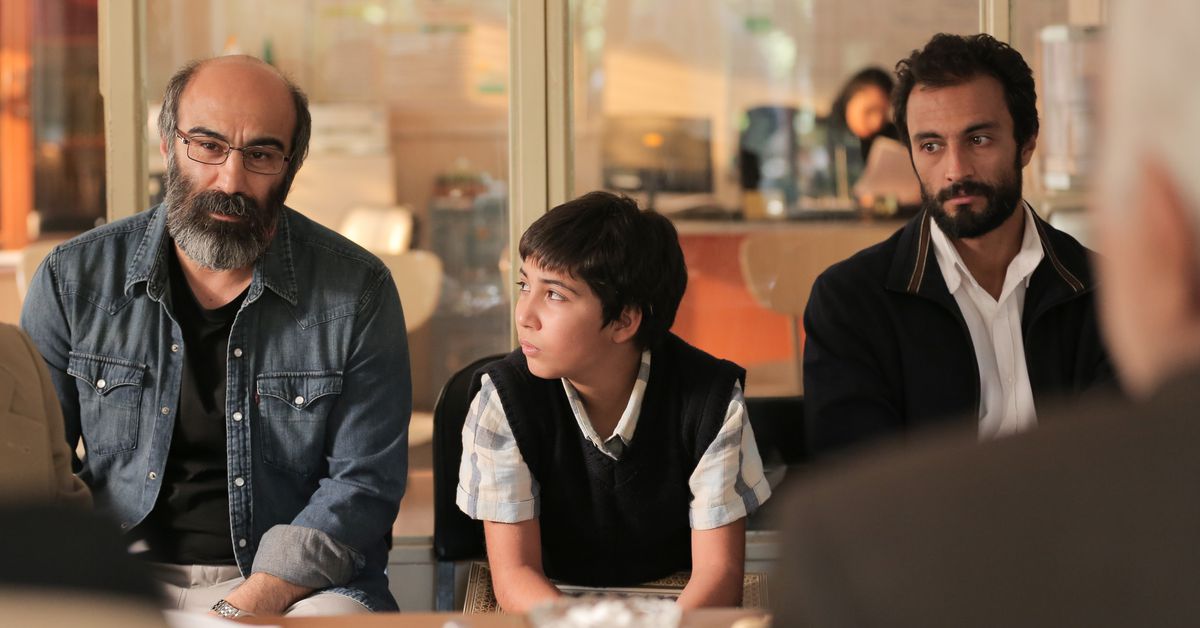
Photo caption: Mohsen Tanabandeh, Saheh Karimai and Amir Jahidi in A HERO. Courtesy of Amazon Studios.

In A Hero, the latest from Iranian auteur Asghar Farhadi, Rahim (Amir Jahidi) finds himself entangled in a Kafkaesque web of Iranian law and social convention. To start with, Rahim is in debtor’s prison. That’s right – Rahim’s creditor has him incarcerated so he can’t work to pay off his debt. Of course, the creditor is Rahim’s ex-brother-in-law (Mohsen Tanabandeh), who seems to prefer ruining Rahim’s life to being repaid.

Rahim gets a two-day pass, so the clock is ticking – Rahim must get his creditor’s sign-off in his 48 hours of freedom, or he goes back to the slammer. Rahim’s secret girlfriend Farkondeh (Sahar Goldust) happens on a lost purse with gold coins, but fluctuations in the gold market mean that the trove isn’t enough to pay off the debt anyway.

[MILD SPOILER IN THIS PARAGRAPH}. In any case, Rahim feels sorry for whoever lost the gold coins, so he finds a way to return them. The absurdity of a guy in debtor’s prison returning some gold that he found fair and square is noted by the prison authorities, who call in the TV news crews for a Feel Good story. In his 15 minutes of celebrity, everything is lining up to help Rahim to collect donations and pay off enough of his debt to avoid reincarceration..

Unfortunately, the creditor ex-brother-in-law is so bitter that he won’t play along. Then Rahim’s luck turns bad and things start spinning out of control. Traditional family honor makes things worse.

Rahim’s young son (Saheh Karimai ) accompanies him throughout much of Rahim’s two-day dash and witnesses his dad’s indignities and desperation – a particularly poignant aspect of A Hero.

Jahidi delivers a fine performance as the lead, and excels at portraying Rahim’s sense of resignation. 

Farhadi, perhaps the world’s leading master of the family psychological drama, does not make Feel Good movies. That’s because he makes the audience care so much about his characters that we ache along with them. The payoff is that Farhadi delivers genuine human behavior and authentic human emotion.

I summarized his Oscar-winning film A Separation, which as “brilliant film/tough to watch”. That movie and his The Past and The Salesman all reflect life at its messiness – especially how life resists our desire to make everything tidy and symmetrical. 

Those previous Farhadi films are more universal than A Hero, which is very specific to Iranian institutions and customs that Farhadi is criticizing. There would be no plot at all if this were set in a Western nation – Rahim would just get an on-line loan to refinance his debt – and he would never see the inside of a prison. I found A Hero two steps down from his other work – the payoff doesn’t justify the squirming.

Farhadi is highly admired by the Academy of Motion Pictures, which loves to jab at the oppressive Iranian government by praising Farhadi, so it is telling that A Hero was NOT nominated for the Best International Picture Oscar.

A Hero is streaming on Amazon (included with Prime).

DOWNTON ABBEY: A NEW ERA: harmless enough

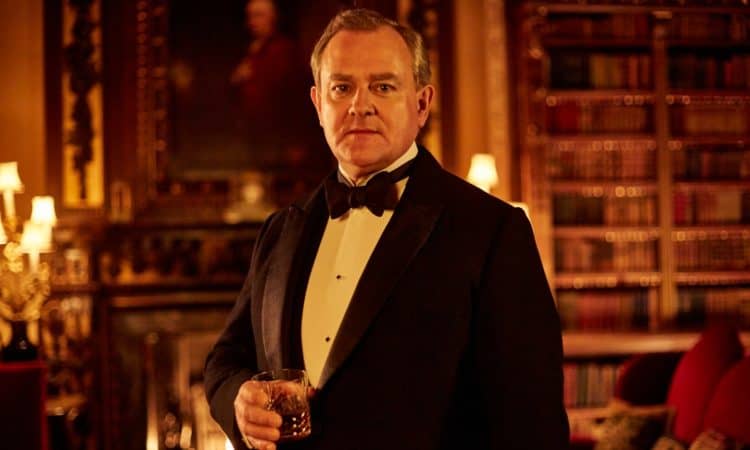
Photo caption: Hugh Bonneville in DOWNTON ABBEY: A NEW ERA. Courtesy of Focus Features.

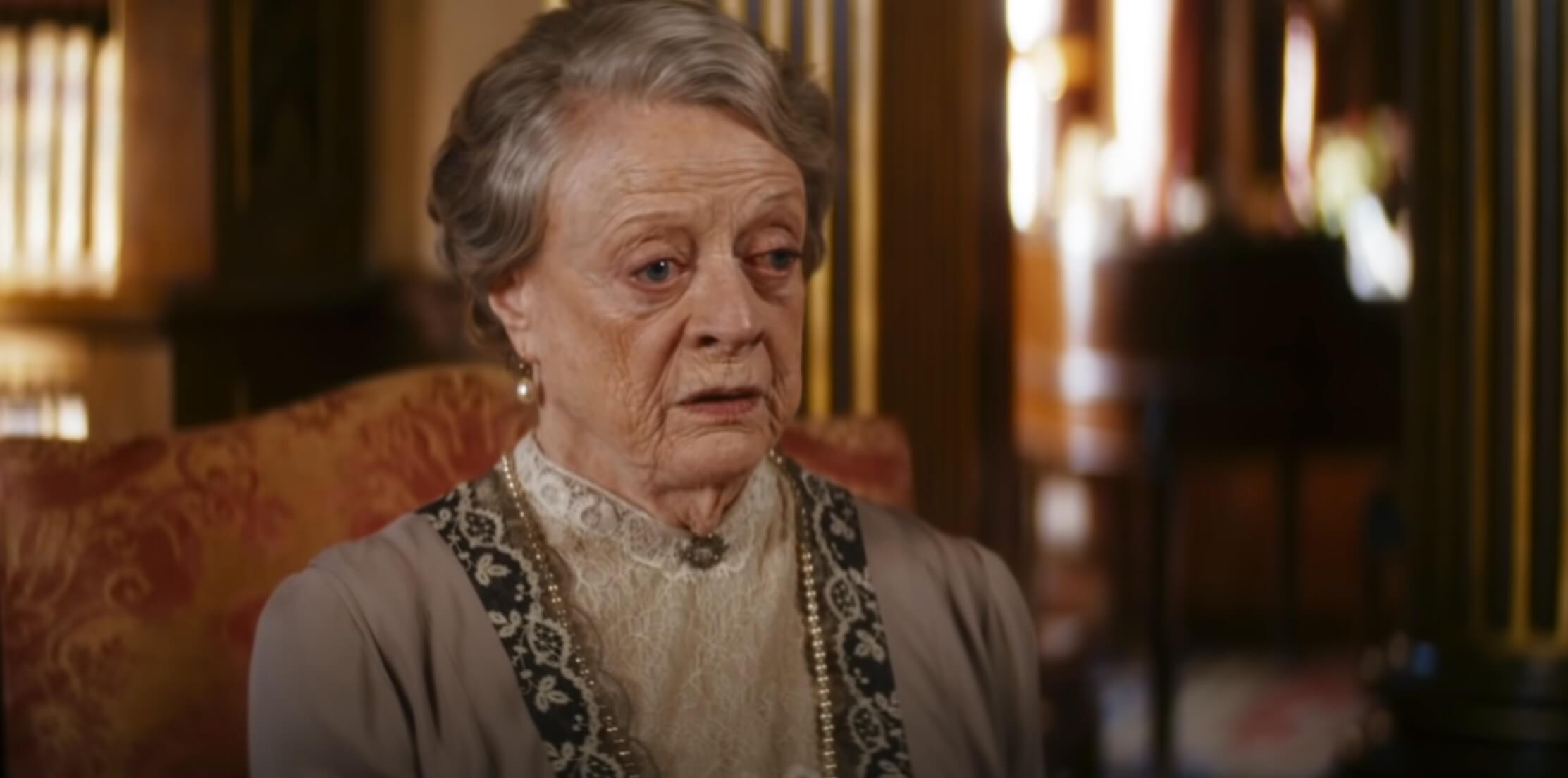
In Downton Abbey: A New Era, writer Julian Fellowes adds a chapter to the saga of the characters he created in the beloved television series. It follows the 2019 movie Downton Abbey which I liked and thought had wrapped up all the story lines. But, apparently, there was more wrapping up to do, and Downton Abbey: A New Era begins with a wedding, ends with a funeral and a birth, and constitutes a fitting farewell to Maggie Smith’s unforgettable Violet Crawley, Dowager Countess of Grantham.

The trailer is misleading, and suggests a fish-out-of-water romp with the most English of aristocrats and servants visiting France. Some characters do go to France, but they uncover a dramatic mystery that goes to the roots of the family’s identity. While they are gone, Lady Mary rents the Great House to a movie studio as a set, just as silent films are being replaced by the talkies; the predictable culture clash ensues.

This time, Hugh Bonneville gets to showcase his acting chops. Usually his Robert Crawley, Earl of Grantham, stands around in stiff correctness, placidly content with the old ways and irritated by any modernity, while smarter female relatives and servants manage up. In Downton Abbey: A New Era, he experiences the strongest emotions, and his fear of loss illuminates what really means the most to him.

To appreciate what his lordship faces in France, it bears remembering that the very first two episodes of Downton Abbey revolved around that most arcane rule of heredity, that of the entailment of estates. As they obsessed over breaking the entail, the characters seemed dressed for the 1900s, but with their feet firmly planted in the 13th century. Here is the best explanation of hereditary property laws and their original rationale.

On a lighter note, I must observe that the inept Molesley (Kevin Doyle), whose innocent earnestness led him into the most spectacular faux pas, has grown into the series’ funniest character not named Violet.

Maggie Smith in DOWNTON ABBEY: A NEW ERA, Courtesy of Focus Features.

We do get to enjoy a dose of Maggie Smith’s wonderful Violet. The cast does well in general, and Dominic West is great fun as silent film star Guy Dexter.

The one thing I disliked in the film is admittedly an Inside Baseball complaint. The character of the French aristocrat’s mother is one-dimensional and never evolves. That doesn’t bother me, but this stiff, underwritten minor character is played by Nathalie Baye, who is France’s greatest screen actress. (think Meryl Streep level). It’s a waste of Baye’s time and talent.

Director Simon Curtis doesn’t waste a second letting the camera linger on something that doesn’t move the plot; some of the transtions are abrupt, but at least the movie doesn’t drag. Curtis is a prolific TV director who has only directed five feature films (one of them being the very good My Week with Marilyn).

If you’re not already a Downton Abbey fan, there isn’t anything much in this movie for you. But if you are a Downton Abbey fan, it will be entertaining. Downton Abbey: A New Era is now in theaters.

LIKE A ROLLING STONE: THE LIFE AND TIMES OF BEN FONG-TORRES: tell me more

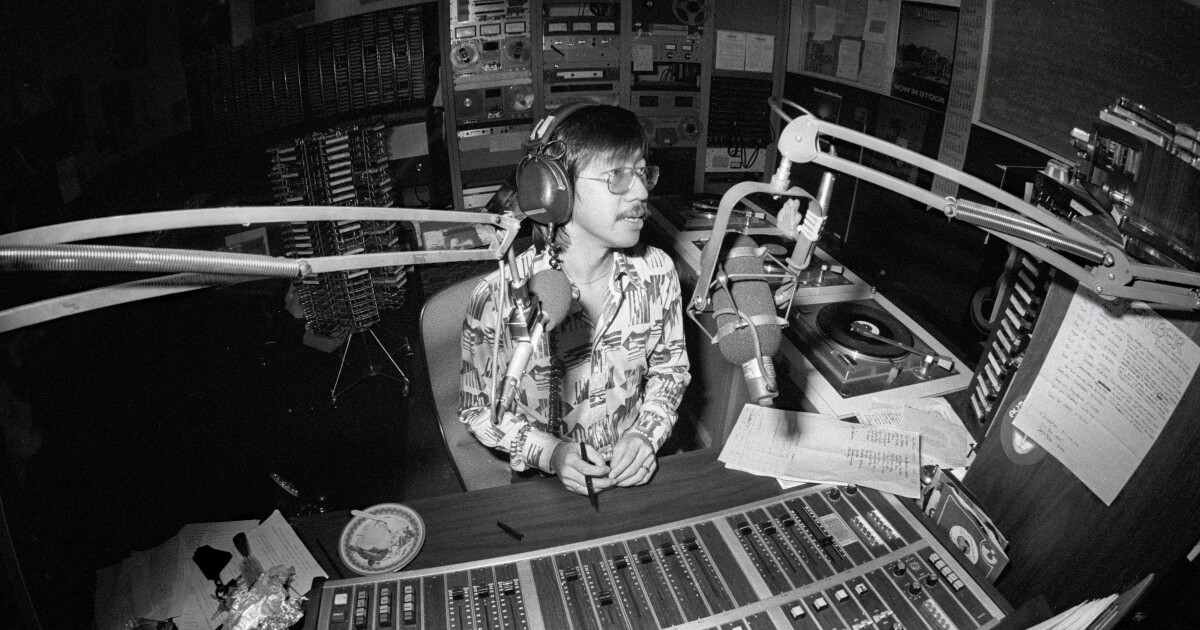
Photo caption: Ben Fong-Torres in LIKE A ROLLING STONE: THE LIFE AND tIMES OF BEN FONG-TORRE. Courtesy of Netflix.

The documentary Like a Rolling Stone: The Life and Times of Ben Fong-Torres lives up to its title, which is a very good thing. Fong-Torres, the longtime music editor of Rolling Stone magazine, is an accomplished man in the most interesting times. Like a Rolling Stone is a satisfying combo of Fong-Torres helping to invent rock music journalism, the history of Rolling Stone magazine, and Fong-Torres’ personal journey growing up the son of Chinese immigrants in baby boom America.

For rock enthusiasts, Like a Rolling Stone: The Life and Times of Ben Fong-Torres is filled with nuggets like:

  • Ray Charles, having been made comfortable by Fong-Torres, unleashing his resentment of racism and the mainstream co-opting of black music.
  • Fong-Torres himself interviewed about his Marvin Gaye interview, the first popular introduction of Gaye and how he thought of his artistry.
  • The audiotape of a candid moment ith Jim Morrison, apparently in a liquor store.

Fong-Torres reminds us that the coolest people are those who are not trying to be hip. A humble man among raging narcissists and ever the consummate professional, Fong-Torres behaved professionally even amid the hardest core rock star partying.

As his rock critic protege and now movie director Cameron Crowe describes him, Fong-Tores projects “a lightness and a gravitas at the same time“.  The best interviewers are, as is Fong-Torres, good listeners; Fong-Torres’s signature technique has been to follow-up the answers to his question with a simple “tell me more“.

The documentary also gives Fong-Torres the chance to reveal the origin of his puzzling name: His Chinese father came to the US under a false Filipino passport as “Ricardo Torres” to evade the Chinese Exclusion Act.

Like a Rolling Stone: The Life and Times of Ben Fong-Torres is streaming on Netflix.

18 1/2: the paranoid thriller meets the darkly silly

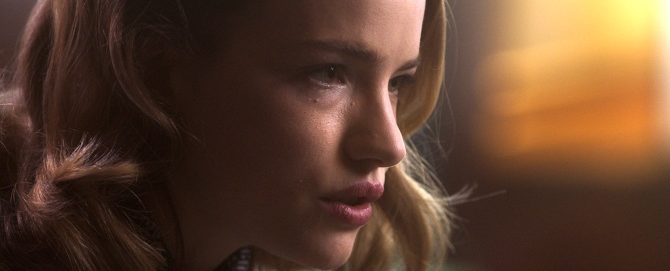
Photo caption: Willa Fitzgerald in 18 1/2. Credit Elle Schneider (c)2021, Waterbug Eater Films, LLC.

In 18 1/2, a dark comedy that sends up the paranoid thriller genre, we’re back in the vortex of the 1973-74 Watergate scandal. A low-level government clerical worker (an excellent Willa Fitzgerald) finds herself in possession of the infamous 18 1/2 minute gap in the Watergate Tapes. She’s trying to find the best way to leak it to the press. Double crosses and red herrings escalate, as does the dark, dark humor. The paranoia finally morphs into over-the-top horror movie silliness and a neo-noir epilogue.

Of course, co-writers Daniel Moya and Dan Mirvish (who directed 18 1/2) had to devise a way to get this notorious MacGuffin into her hands; given the paranoia, deviousness and clumsiness of the Nixon White House, their solution is surprisingly plausible. I am a Watergate buff, and their device passed my smell test.

To review American scandal history, the 18 1/2 minute gap was a national obsession between November 1973 and August 1974. Investigators had subpoenaed the tape recordings of various Oval Office conversations, seeking evidence of White House involvement in the Watergate burglary or its coverup. The tape of a key Nixon conversation showed up with 18 1/2 minutes in the middle ERASED. The presumption was that the content of the gap was highly incriminating, and it was very likely that Nixon himself, or someone acting at his direction, obstructed justice by erasing the tape. The White House explanation, that Nixon’s secretary Rose Mary Woods had contorted her body to accidentally erase the tape, was laughable. When another tape, the “Smoking Gun”, came to light in August 1974, Nixon was forced to resign.

Willa Fitzgerald is very good as the somberly earnest protagonist. Her sudden burst of lust signals 18 1/2‘s shift into pedal-to-the-medal parody

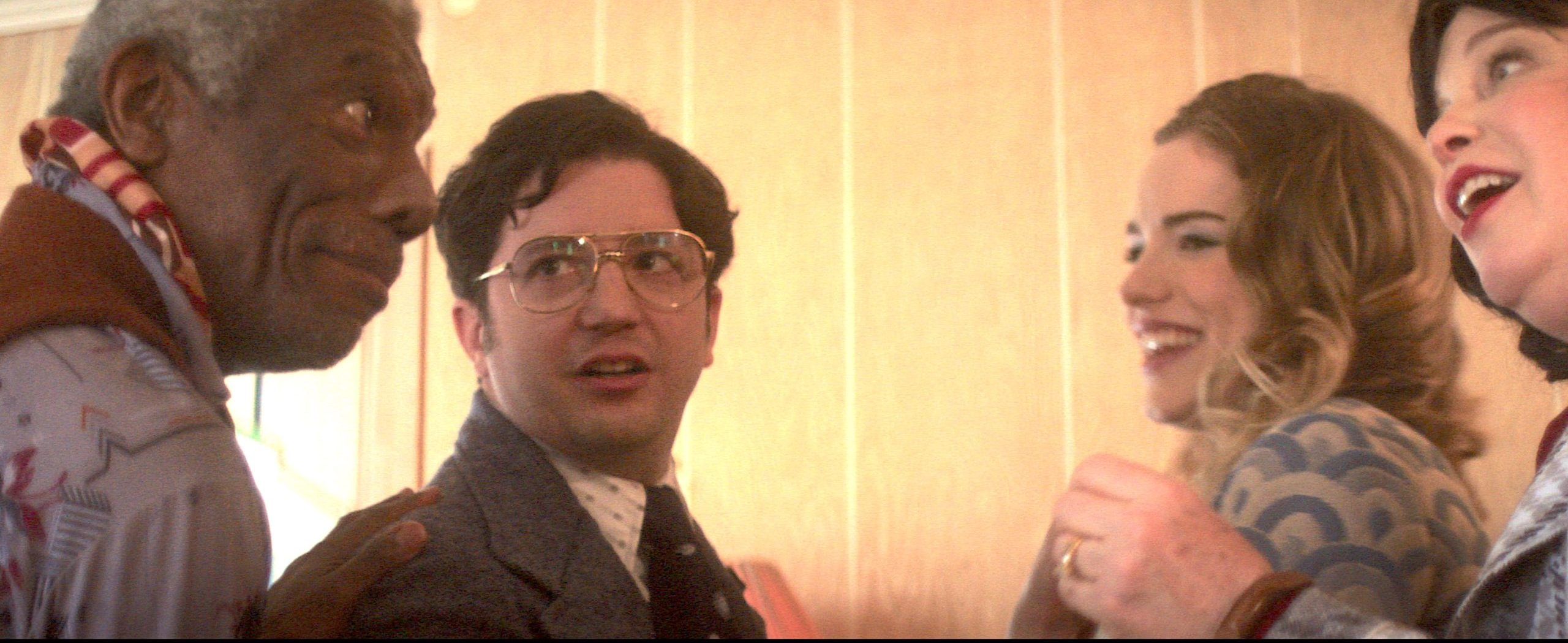
Vondie Curtis-Hall, John Magaro, Willa Fitzgerald and Catharine Curtin in 18 1/2. Credit Elle Schneider (c)2021, Waterbug Eater Films, LLC.xxx

Two of my favorite character actors, Richard Kind and Vondie Curtis-Hall sparkle in supporting roles.

Kind plays the operator of a remote motel, just enough of an eccentric oddball to make the audience think he may be unhinged. You’ll recognize Richard Kind, a reliable character actor and voice artist with 263 screen credits. My favorite Richard Kind performance was the moving portrayal of a man seeking closure after the death of his wife in Clint Eastwood’s Hereafter. I also love his recent lead role in Auggie.

Curtis-Hall gets to bypass unhinged on his way to monstrous. He and Catharine Curtin play an older couple of relentless sociability. The revelation of his true character is the keystone to the parody. BTW not many actors have been in as many good movies as has Curtis-Hall: Mystery Train, Passion Fish, Crooklyn, Gridlock’d, Eve’s Bayou, Honeydripper, Bad Lieutenant: Port of Call New Orleans, Blue Bayou.

I screened 18 1/2 earlier this year at Cinequest, where it was the Opening Night film 18 1/2 opens in theaters this weekend, including at Laemmle’s Monica Film Center and soon the Glendale and the NoHo 7.