NOUVELLE VAGUE: a subversive trickster bets that he is an artist, too

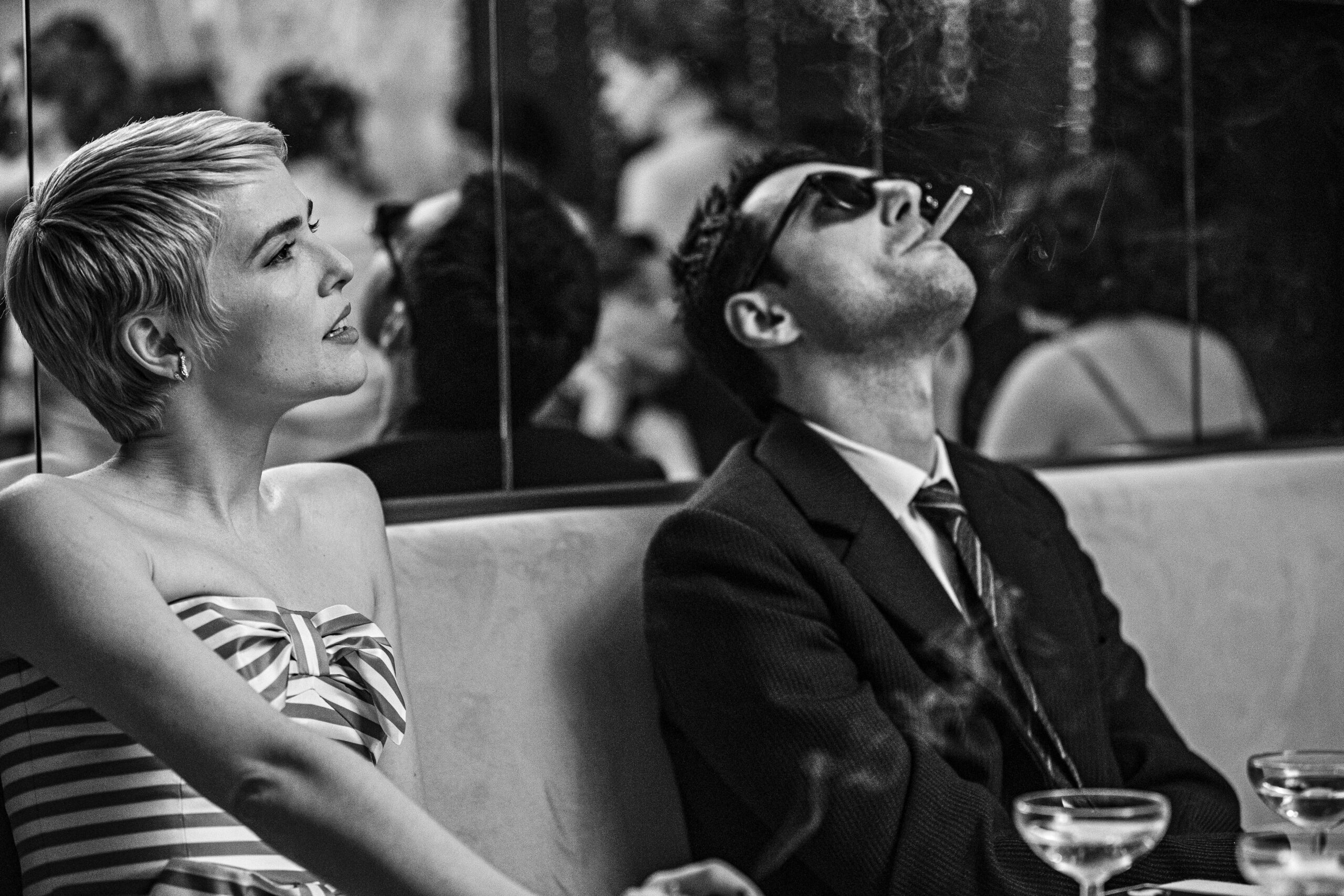
Photo caption: Zoey Deutch and Guillaume Marbeck in NOUVELLE VAGUE. Photo credit. Jean-Louis Fernandez; courtesy of Netflix

With Nouvelle Vague, one of America’s greatest filmmakers, Richard Linklater, pays tribute to the French New Wave, which invigorated global cinema and inspired generations of American indie filmmakers. Nouvelle Vague, Linklater’s first film in French, tells the story of Jean-Luc Godard making his first film, the groundbreaking and influential Breathless. And it’s a hoot.

The French New Wave was a period when the young film writers at a cinema magazine got to direct their own movies. Basically, this was a time in the late 1950s when a bunch of movie nerds got to create their own cinema, resulting in a burst of freshness and originality. Godard’s peers Francois Truffaut and Claude Chabrol had already transitioned from film critic to movie director, but Godard still hadn’t directed his first film, and he was itching to get started.

With all the arrogance of a 29-year-old novice who is certain of his abilities, Godard famously proclaimed that all you need to make a movie is a girl and a gun. This is that film.

In Nouvelle Vague, Godard (Guillaume Marbeck) gets the casting gift of a famous Hollywood starlet, Jean Seberg (Zoey Deutch), to team with his boxer buddy Jean-Paul Belmondo (Aubry Dullin, who is an acting novice. Godard leads his cast and crew on an anarchic 20-day shoot that Godard makes up as he goes along, with no script and no shooting schedule, which challenges the mental health of his producer Georges de Beauregard (Bruno Dreyfurst). No one can tell if the film, if it gets finished, will be any good.

The key here is the character of Godard himself (brilliantly played by Marbeck in his feature debut), who is posing as an important artist even as he tries to become one, wearing sunglasses day and night. A subversive trickster, he is strong-willed and self-confident for sure, but is he just a narcissistic dilettante? Is his artistic vision just a delusion? So, the making of Breathless is a wild ride, one turns out to be interesting because we know that Breathless will turn out to be an artistic success and an important, influential film.

Linklater fills the Nouvelle Vague with a Who’s Who of French New Wave figures and plenty of jokey references to that style of filmmaking. LInklater even shows the last scene of Truffaut’s The 400 Blows, with its indelible freeze-frame, reflected in Godard’s sunglasses.

So, can you enjoy Nouvelle Vague even if you’re unfamiliar with the French New Wave, and haven’t seen any Godard films? Yes. The madcap nature of the shoot, and the other characters all reacting with amusement, frustration and disbelief to Godard’s outsized personality are plenty entertaining.

But, if you a cinephile, then Nouvelle Vague is a Must See. Linklater’s references are delightful. The actors physically look just like the real people they are playing, and Zoey Deutsch looks phenomenal in Seberg’s iconic blonde pixie cut and Breton stripes. Not many faces resemble Belmondo’s but Aubrey Dullin’s does; Dullin perfectly captures Belmondo’s rogueish charm and working class lack of pretension.

This is the Jean-Luc Godard of his early masterpieces (Breathless, Contempt, Band of Outsiders), before his arrogance made him into a tiresome polemicist. That later insufferable Godard is satirized in Godard, Mon Amour by Michel Hazanavicius (The Artist), which would make a fine second feature on the double bill. (I have found all of the Godard films since 1967’s Weekend to range from disappointing to completely unwatchable.) 

Nouvelle Vague is streaming on Netflix.
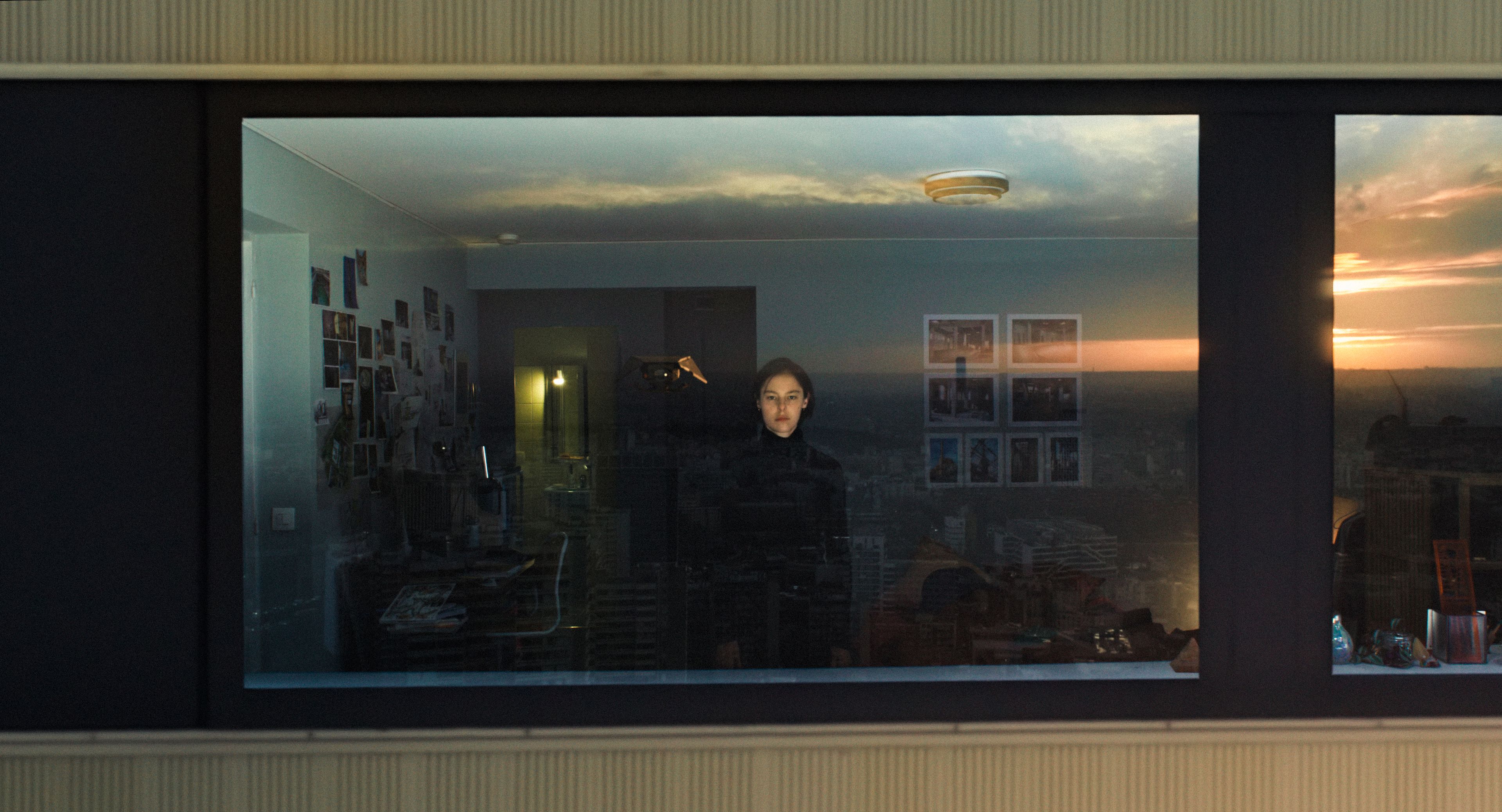
DRONE: stalked by a mystery

Photo caption: Marion Barbeau in DRONE. Courtesy of Frameline.

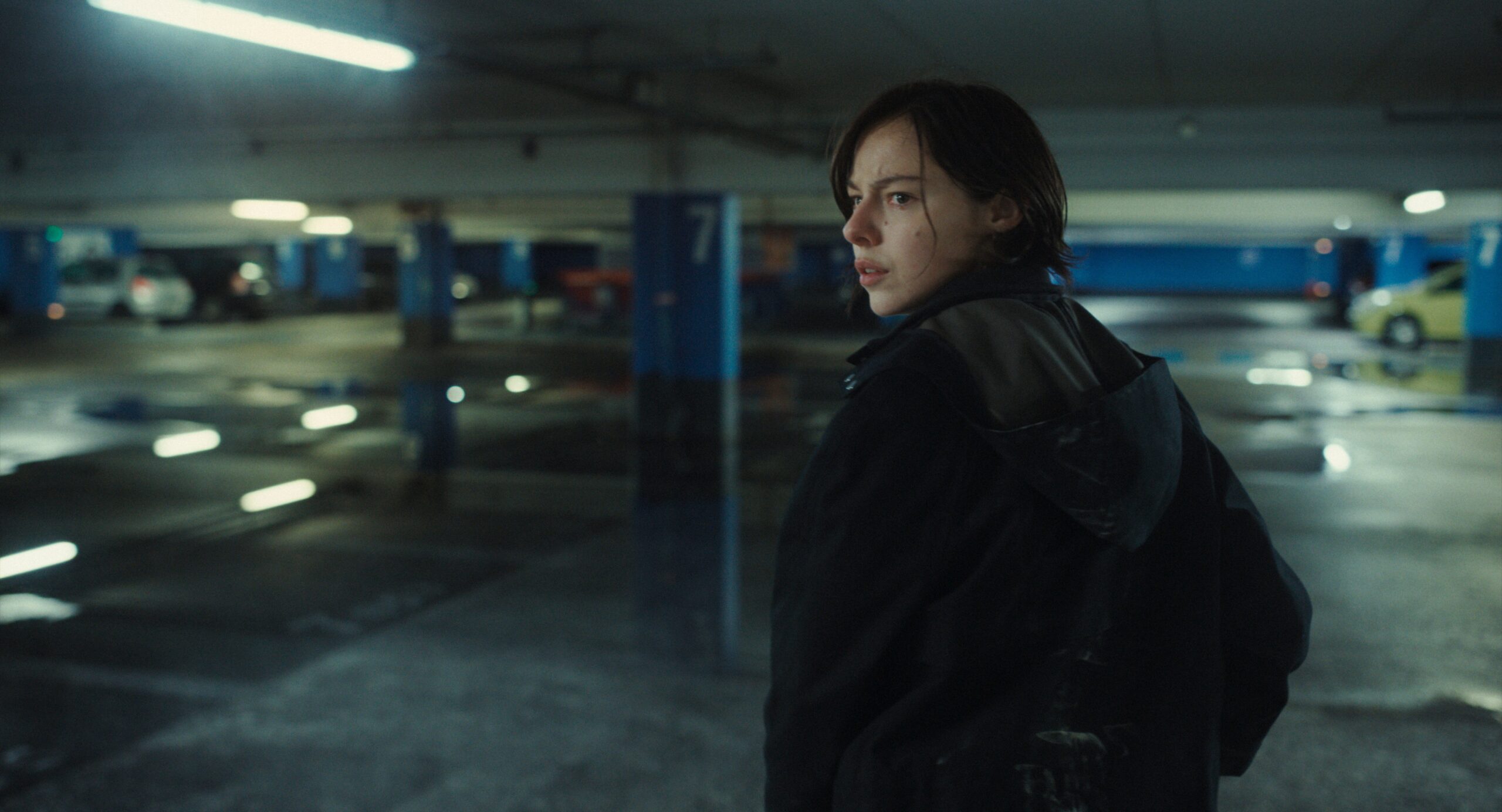
Émilie (Marion Barbeau) is stalked through Paris by a mysterious drone, in Drone, a thriller that explores issues of privacy and the male gaze. A magnificent 4-minute opening sequence, introduces us to the vulnerability caused by the voyeur drone. Émilie is funding her architecture studies by working as a cam girl, a situation where she is physically detached and in control of her male customers. But there is no detachment or control whenever the paranoia-inducing drone suddenly appears.

There are exhilarating set pieces in a parking garage, a motorcycle chase and an abandoned factory, as writer-director Simon Bouisson and cinematographer Ludovic Zulli keep their drone camera in pursuit of the story’s stalker drone. In his first theatrical feature, Bouisson keeps the tension pounding, all the way to the ingenious ending.

Marion Barbeau in DRONE. Courtesy of Frameline.

Émilie is a recent architecture graduate from Lilles who has earned a high-powered fellowship in Paris. As her fellowship project, she chooses an adaptive reuse of an abandoned factory. Of course, even without the drone, we would fear for Émilie’s safety as she wanders around the dark, creepy, abandoned factory and takes long solo jogs through the city at night.

Who is flying the drone? Is it a camgirl customer who has hacked the firewall? Is it her toxic male classmate? Or her swaggering, entitled boss? Or, perhaps most terrifying, nobody at all?

Émilie is relationship-shy, but reluctantly intrigued by a DJ. Will the budding romance put both women in drone-jeopardy?

Marion Barbeau, a former ballet dancer, is superb as Émilie. Émilie, so vulnerable throughout the movie, is remarkably strong and determined, which lifts Drone above the ordinary woman-in-peril genre. Barbeau is able to project Émilie’s fundamental badassness.

I’ve listed Drone in the special Festival Films category of my Best Movies of 2025 – So Far. I screened Drone for Frameline (where it was my favorite film), and I’ll let you know when it has a theatrical or VOD release in the US.

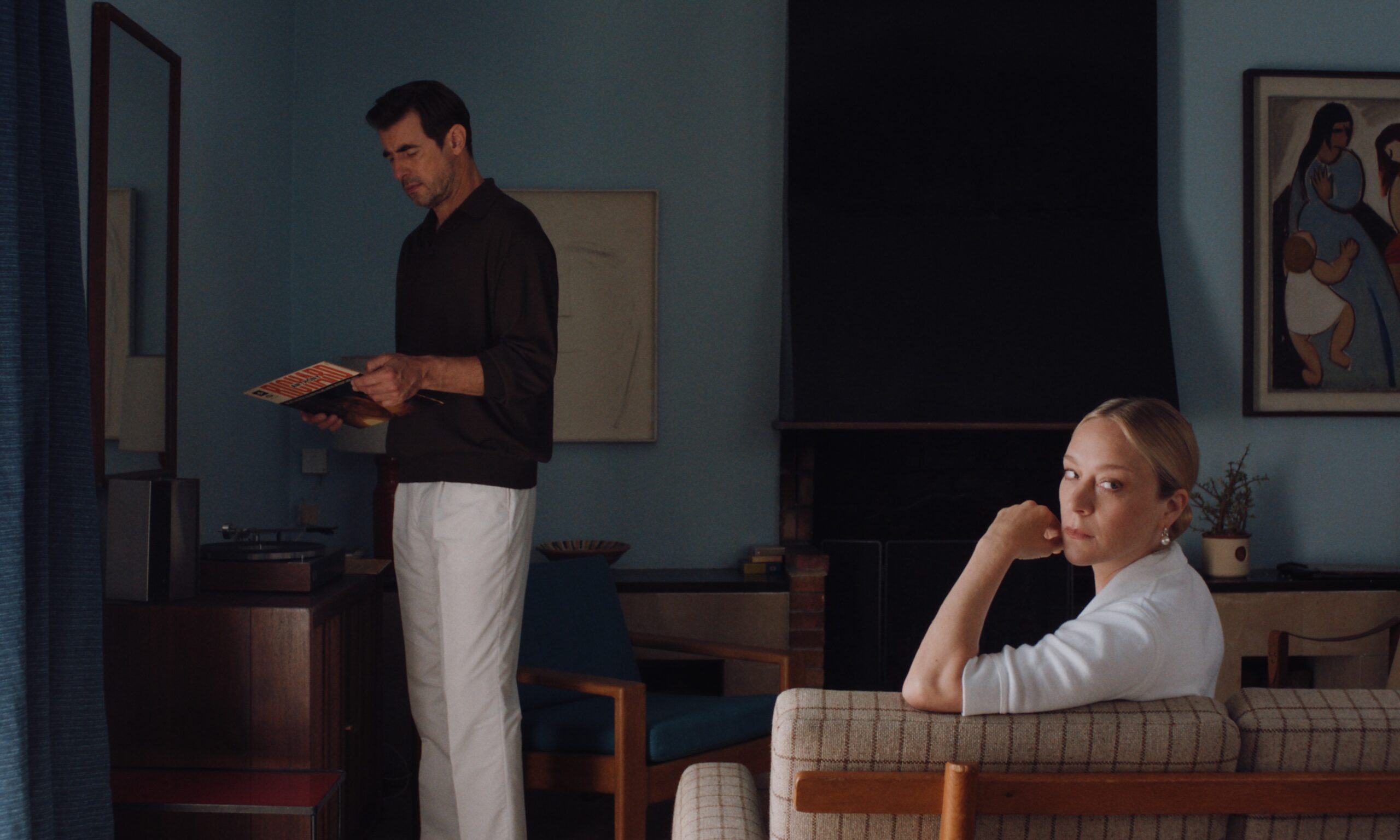
BONJOUR TRISTESSE: not the life lesson she was expecting

Photo caption: Claes Bang and Chloe Sevigny in in BONJOUR TRISTESSE. Courtesy of Greenwich Entertainment.

In the coming-of-age drama Bonjour Tristesse, Cécile (Lily McInerny) is on the cusp of adulthood and enjoying a languid summer holiday in a villa on the French Riviera (Bonjour Tristesse was shot in Cassis). She is accompanying her father Raymond (Claes Bang) and his girlfriend Elsa (Nailia Harzoune), who allow her to sneak off for make-out sessions on the beach with the young guy in the neighboring villa.

Cécile has a comfortable and playful relationship with Raymond, a charming lightweight. To his face, she describes him as often reckless and selfish, which he doesn’t dispute.  At one point, Raymond offer, “I don’t know why luck is so easily dismissed. I’ve always found it dependable.” Raymond’s attractive girlfriend Elsa is also fun-loving, with a healthy libido and unfounded self-confidence.

Cécile’s mother died when she was a young child. So, when Cécile’s mother’s best friend Anne (Chloe Sevigny) shows up at the villa for visit, Cécile wants to learn about her mom. What were her parents like back in the day? Anne has also forged impressive achievements as a designer and is reserved and guarded, with a serious demeanor. The adults that Cécile is used to, Raymond and Elsa, are shallow and hedonistic, so Anne is a fascinating contrast.

Claes Bang, Lily McInerny and Chloe Sevigny in in BONJOUR TRISTESSE. Courtesy of Greenwich Entertainment.

Just as Cécile is glomming on to Anne as a model, Anne does something which upends the household. Soon, Cécile is learning life lessons that she didn’t sign up for. This is a character-driven story, and Cécile is forming her own persona as Raymong and Anne reveal who they are, down deep.

Bonjour Tristesse is the directorial debut for Durga Chew-Bose, who adapted the Francois Sagan novel.

After premiering at Toronto, Bonjour Tristesse became a NYT Critic’s Pick on its theatrical run. Bonjour Tristesse releases digitally this Friday on Amazon, AppleTV, YouTube and Fandango.

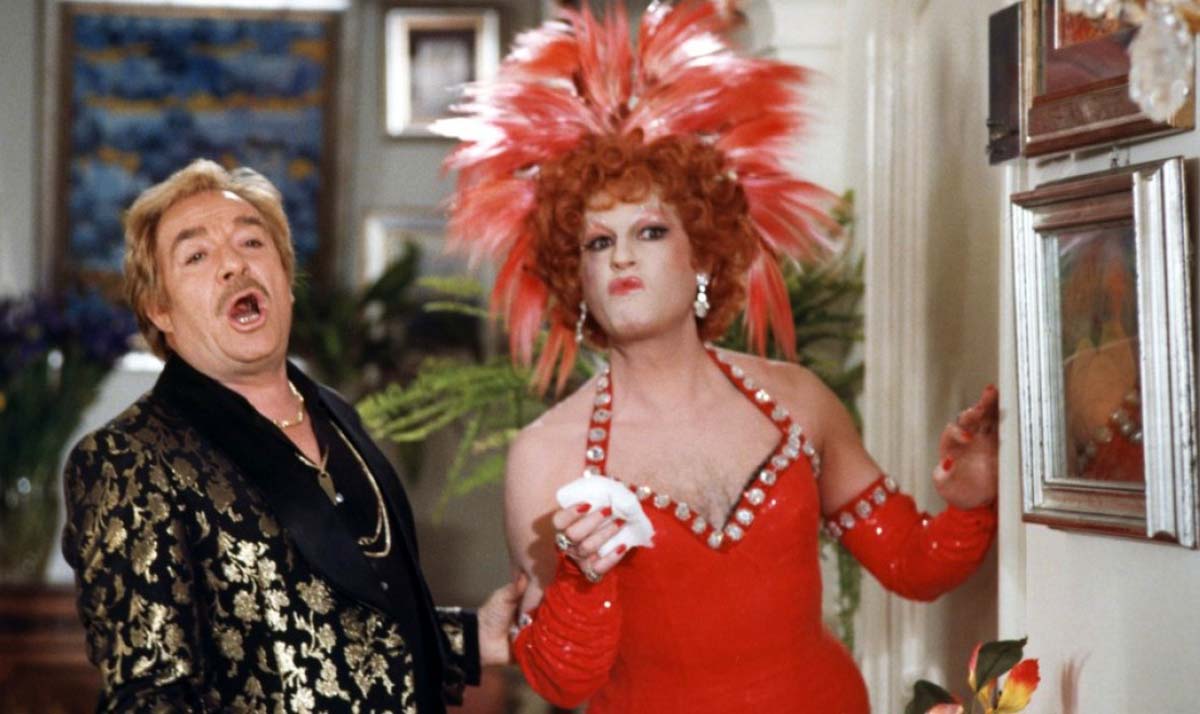
LA CAGE AUX FOLLES: groundbreaking, humane and funny

Ugo Tognazzi and Michel Serrault in LA CAGE AUX FOLLES

On June 13, Turner Classic Movies will present the groundbreaking French comedy La Cage Aux Folles – a daring film in 1978, when few were thinking publicly about same-sex marriage. A gay guy runs a nightclub on the Riviera, and his partner is the star drag queen. The nightclub owner’s beloved son wants him to meet the parents of his intended.  But the bride-to-be’s father is a conservative politician who practices the most severe and judgmental version of Roman Catholicism, so father and son decide to conceal aspects of dad’s lifestyle. Madcap comedy ensues, and La Cage proves that broad farce can be heartfelt. Michel Serrault is unforgettable as Albin/Zaza – one of the all-time great comic performances. (La Cage was tepidly remade in 1996 as The Birdcage with Robin Williams, but you want to see the French original.)

I’m currently watching my way through the program of this year’s Frameline LGBTQ film fest, which I just previewed. I don’t think you can overestimate the cultural impact of La Cage Aux Folles, which charmed straight audiences into relating to sympathetic portrayals of LGBTQ people.

THE COUNT OF MONTE-CRISTO: you think you’ve seen a revenge movie?

Photo caption: Pierre Niney in THE COUNT OF MONTE-CRISTO. Courtesy of Samuel Goldwyn Films.

The French epic The Count of Monte Cristo is a relentlessly entertaining three hour plunge into betrayal, revenge and forgiveness – and some spectacular French real estate. Alexander Dumas published the original adventure novel 185 years ago, and it’s been made into over 100 movies and episodic series. This version, by writer-directors Alexandre de La Patelliere and Matthieu Delaporte, is pretty fun, and gorgeous to look at.

The sweeping story spans 24 years, beginning in 1815 when the protagonist, Edmond Dantes, (Pierre Niney) is nineteen years old and on the verge of a wonderful life. A seafaring prodigy, he has just earned the captaincy of his own ship, which will earn him affluence, and he’s about the marry the stunningly beautiful love of his life. But three other jealous and resentful men manufacture a false charge and railroad into a life sentence of solitary confinement in a remote island dungeon. Before he know what has hit him, Dantes has been suddenly and unjustly stripped of everything he had or could have had.

After languishing in hopeless squalor for six years, he makes contact with another prisoner who has a plan for an escape – but it will take them another eight years to implement. In The Count of Monte-Cristo‘s most thrilling scene, he manages a skin-of-the-teeth escape. He then tracks down an immense medieval fortune and returns to France with a new identity – the Count of Monte-Cristo – and the power and status of great wealth.

He can no take revenge on the three men who betrayed him, but killing them is not enough for Dantes – this is not the kind of revenge movie that we’re used to. Dantes needs to break them completely – he needs to deprive them of their wealth, their status, their families and their own sense of self-worth. To do that, he creates and manipulates an elaborate web of traps.

The base assumptions and societal mores of early 19th century France, of course, are utterly anachronistic to our modern sensibilities , but de La Patelliere and Delaporte make Dantes’ situation relatable. The first two hours of the story is remarkably adherent to the source material. De La Patelliere and Delaporte reworked the some of the revenge devices at the end, but they were true to Dumas’ overall story arc. And, who, these days, has actually read the original? (I’ll admit that I have only read the Classics Illustrated comic book as a boy.)

De La Patelliere and Delaporte, along with cinematographer Nicolas Bolduc make this a visually splendid film, aided by impressive chateaus, period costumes and the attractive cast.

Niney is an able enough actor to carry the film, appearing in 90 percent of the scenes and aging 24 years. The rest of the cast is fine, too, with Patrick Mille sparkling as the ever-grinning, vile speculator Danglers, one of Dantes’ three main targets.

The Count of Monte-Cristo is available to watch for free on kanopy and to rent from Amazon,AppleTV, YouTube and Fandango. There are many similar titles, including a 2025 mini-series,so be sure to get the 2024 French movie with the hyphen in the title.

MAN ON THE TRAIN: an unlikely bonding

Photo caption: Jean Rochefort and Johnny Hallyday in MAN ON THE TRAIN.

The engrossing 2002 French drama Man on the Train centers on portraits of two very different men, and, ultimately, an unexpected male bonding. There’s a thriller ending because each man has been moving to his separate pivotal, life-or-death moment.

The titular character (Johnny Hallyday), whose name we come to learn is Milan, arrives in a small provincial town, and his accommodations fall through. The local literature teacher Manesquier (Jean Rochefort) insists on putting him up for the night. Milan, a very private man of fewer than few words, accepts the favor only reluctantly. He’s a solitary guy anyway, and he’s keeping a low profile because his local business matter is illegal. Manesquier, who lives a lonely bachelor existence, has a lot to say and no one to say it to. He is delighted to have someone to share company, and he is even more fascinated when he discovers that Milan is a career criminal.

Driven by Manesquier’s curiosity, and against Milan’s initial wishes, the two get to know each other. We know that the clock is ticking for one man, but we don’t appreciate that it my be ticking for both.

Man on the Train works so well because of the casting and the performances.

Jean Rochefort was a chameleonic fixture in French cinema. Man on the Train was Rochefort’s 130th movie at age 72, and he would go on to make 36 more. I recently wrote of Rochefort’s performance forty years before as a particularly amoral character with a reptilian smugness in Symphony for a Massacre.

Johnny Hallyday, in contrast, was not most well-known as a screen actor, but as a pop singer, the French Elvis. Ironically, Hallyday’s first film was as a child in the suspense classic Diabolique, which also was his best film; like Elvis Presley, Hallyday dabbled in an indifferent movie career. Halliday made 78 music videos with Johnny Hallyday in the title. He was known as a hard-living tabloid celebrity. When he made Man on the Train, Hallyday was 59 and had some serious mileage on him. Yet, his magnetism is compelling in Man on the Train.

Man on the Train was directed by Patrice Leconte (Monsieur Hire, The Widow of St. Pierre, The Suicide Shop).

Man on a Train can be streamed from Amazon, AppleTV, Fandango and YouTube.

IT’S NOT ME: his life as an art film

Photo caption: Leos Carax and Denis Lavant in IT’S NOT ME. Courtesy of Janus Films.

I generally only write about feature-length films, but there’s a lot of interest among cinephiles for the mid-length It’s Not Me. A European museum asked the artistic renegade filmmaker Leos Carax for a project that answers the question, Who are you? Although the title of this film is cheeky, It’s Not Me is Carax’s reflection on what has formed him – cinema, the 20th century, his Jewishness – and who he is – an artist, a parent, a moral critic.

It’s Not Me is rapidly-paced montage of bits from classic cinema, Carax’s own films (augmented by some new footage) and historical stills and clips. There’s even cell phone footage of his daughter as a child and now playing the piano as an adult.  It is a curated mush mash, decidedly not as random as it sometimes seems. The clips are interspersed with bold color titles a la Jean-Luc Goddard. Movies can be LIKE fever dreams; this one may BE an actual fever dream.

Carax is known for Holy Motors, which I mostly liked, and Annette, which I didn’t. One thing is for sure – each Carax movie will be like nothing you’ve seen before.

Carax isn’t usually very political, but here he explicitly vents his hatred for haters like Hitler and current right wing, nationalist leaders. There’s a very creepy scene where a mother reads her kids a bedtime story that applauds Hitler’s Final Solution. There’s footage of the 1939 pro-Nazi rally at Madison Square Garden, and of the corpses of contemporary would-be immigrant children sloshing on a European beach.  Tough stuff.

It’s Not Me runs only 42 minutes, but there’s almost two minutes of opening credits, and then the closing credits start at the 37-minute mark.  After the closing credits, there’s a a final 2-minute puppet performance that is brilliant, even if I have no idea why Carax included it.

Denis Lavant reprises his role as Monsieur merde, the outré character in Holy Motors and other Carax films. If you want to know just how outré, read my post on Holy Motors.

Clips of the 27-year-old Juliette Binoche from the 1991 Carax film The Lovers on the Bridge remind us what a breath-taking beauty Binoche has been in every stage of her career.

It’s Not Me is streaming on Amazon and Fandango.

ENDLESS SUMMER SYNDROME: there will be hell to pay

Photo caption: Frederika Milano and Gem Deger in ENDLESS SUMMER SYNDROME. Courtesy of NashFilm and Altered Innocence.

In the simmering French drama Endless Summer Syndrome, a professional couple and their two very attractive teenage kids are enjoying August, as upscale Parisians like to do, in a roomy, well-appointed country home. Their idyll is rocked when the mom is tipped off that the dad may be sexually involved with one of the adopted kids. She furtively investigates, trying to find out what is going on with whom. We know that there will be a reckoning once she finds out, but no one in the audience will guess the shattering ending.

First-time director and co-writer Kaveh Daneshmand keeps the tension roiling. All four actors give superb performances: Sophie Colon as the mom, Matheo Capelli as the dad, Frederika Milano as the daughter and Gem Deger as the son. Colon is especially effective, as the audience sees most of the developments (but not all) through her lens. I was surprised to learn that only one of the four actors (Capelli) has substantial film experience.

I screened Endless Summer Syndrome for the Nashville Film Festival. It releases into arthouse theaters this weekend.

THE TASTE OF THINGS: two passions – culinary and romantic

Photo caption: Juliette Binoche and Benoit Magimel in THE TASTE OF THINGS. Courtesy of IFC Films.

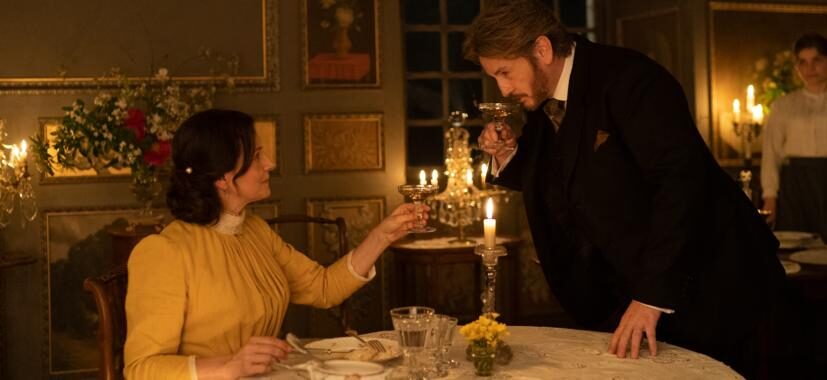
The French romantic drama The Taste of Things is the story of a man consumed by two passions – an obsession with gastronomy and a profound love for a woman. It’s also one of the mouthwatering movies in the history of cinema.

The man is Dodin (Benoit Magimel), a famous gourmand in 1884 France, a key moment in the history of the culinary arts, when the master French chef Escoffier was still in his 30s. The woman adored by Dodin is Eugenie (Juliette Binoche), not coincidentally his live-in cook.

The Taste of Things begins with a long scene (15+ minutes) as Eugenie leads a team in producing an elaborate garden to table meal, with every ingredient prepared old school, the long and hard way. Fish quenelles are formed by hand, shrimp shells are boiled into a stock, and the quenelles are pached in the shrimp stock. It takes hours for a rack of veal turned into an OMG marvel. It turns out that this is a multi-course feast prepared for Dodin and his chatty four buddies. The guys all fall SILENT when the consommé appears, and then, as the courses pile up, don’t say anything more that isn’t about the meal itself or the history of gastronomy.

The fruit of Eugenie’s labor, exquisitely photographed, are the height of food porn. One highlight is a spectacular vol-au-vent. When Eugenue shows up with a giant croissant-like thing (a giant bioche?) that she and the four buddies dig into with their hands, there were audible gasps from the audience at the screening.

There’s even a scene with a culinary Holy Grail, now illegal in the US, fabled ortolans devoured as per tradition, with the diners’ heads under their napkins. Of course gastronomy, as any human endeavor, can be taken to silly extremes, which is illustrated by a dinner for Dodin and his friends, hosted by a prince under the mistaken impression that more is always better.

Eugenie prepares masterpiece after masterpiece for Dodin until her health falters, giving him the opportunity to express his love by preparing and serving her an even more formidable dinner.

The Taste of Things is a film by writer-director Anh Hung Tran, who certainly knows his way around movie passion and movie foods (The Scent of Green Papaya).

Benoit Magimel and Juliette Binoche in THE TASTE OF THINGS. Courtesy of IFC Films.

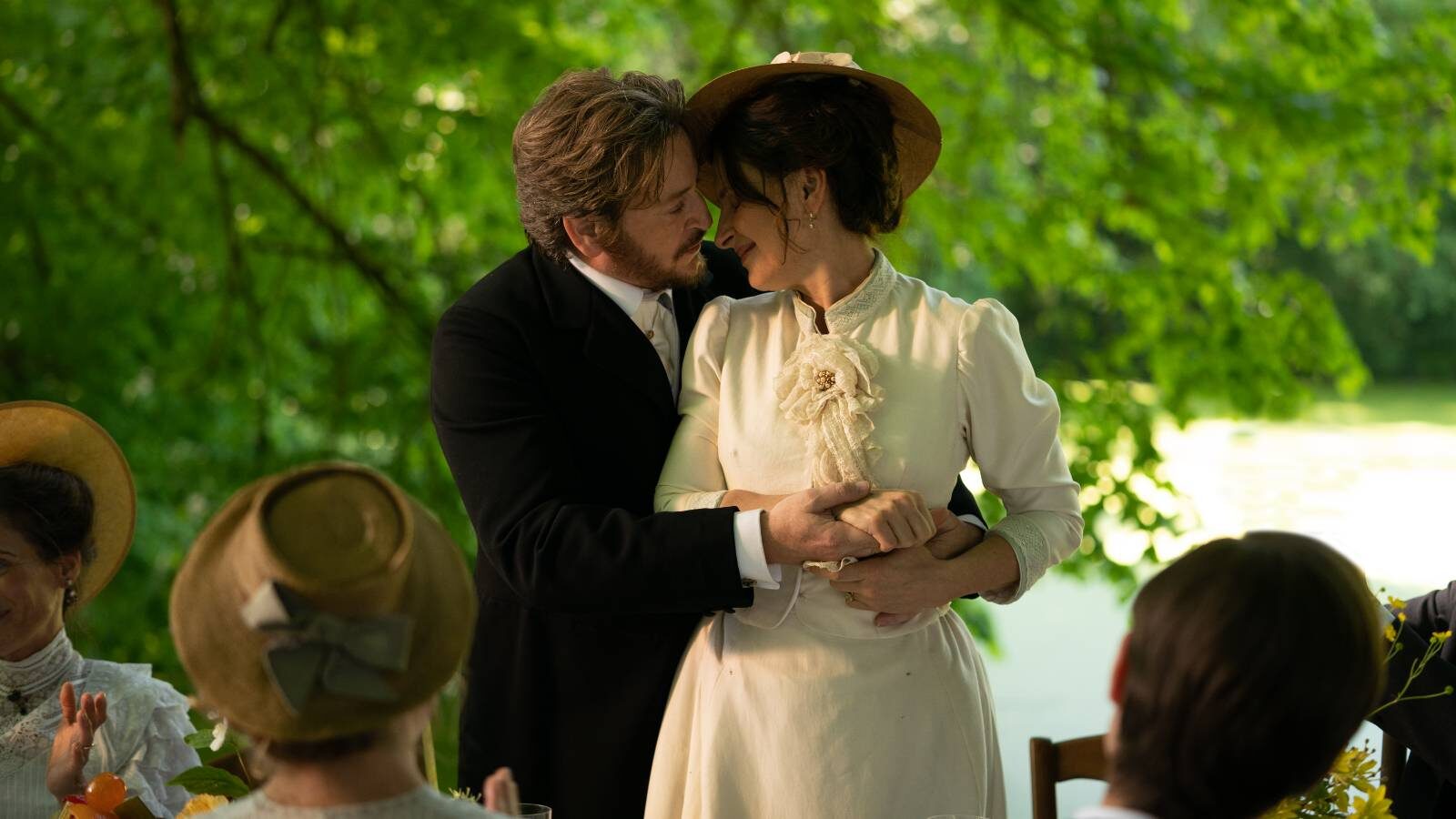
It’s always a pleasure to watch the radiant Juliette Binoche, especially when she’s playing an endearing character like Eugenie, who keeps resisting Dodin’s offers of marriage even as she values his culinary partnership and welcomes him into her bed. Their relationship is perfectly summed up in the epilogue when Eugenie asks Dodin a question and receives his answer with bliss. She feels loved – and on her terms.

The Wife liked The Taste of Things less than I did, in part because she was less entertained by the long scenes of meal preparation, which captivated me. (I am The Movie Gourmet, after all.)

We both, however, thoroughly enjoyed the character of the culinary child prodigy Pauline (Bonnie Chagneau-Ravoire), especially her reaction to her first Baked Alaska and her growing into a peer of Dodin’s.

The Taste of Things was France’s submission to the Academy Awards. It’s going on my list of Best Foodie Movies. It’s now available to stream from Amazon and AppleTV..

THE TASTE OF THINGS: two passions – culinary and romantic

Photo caption: Juliette Binoche and Benoit Magimel in THE TASTE OF THINGS. Courtesy of IFC Films.

The French romantic drama The Taste of Things is the story of a man consumed by two passions – an obsession with gastronomy and a profound love for a woman. It’s also one of the mouthwatering movies in the history of cinema.

The man is Dodin (Benoit Magimel), a famous gourmand in 1884 France, a key moment in the history of the culinary arts, when the master French chef Escoffier was still in his 30s. The woman adored by Dodin is Eugenie (Juliette Binoche), not coincidentally his live-in cook.

The Taste of Things begins with a long scene (15+ minutes) as Eugenie leads a team in producing an elaborate garden to table meal, with every ingredient prepared old school, the long and hard way. Fish quenelles are formed by hand, shrimp shells are boiled into a stock, and the quenelles are pached in the shrimp stock. It takes hours for a rack of veal turned into an OMG marvel. It turns out that this is a multi-course feast prepared for Dodin and his chatty four buddies. The guys all fall SILENT when the consommé appears, and then, as the courses pile up, don’t say anything more that isn’t about the meal itself or the history of gastronomy.

The fruit of Eugenie’s labor, exquisitely photographed, are the height of food porn. One highlight is a spectacular vol-au-vent. When Eugenue shows up with a giant croissant-like thing (a giant bioche?) that she and the four buddies dig into with their hands, there were audible gasps from the audience at the screening.

There’s even a scene with a culinary Holy Grail, now illegal in the US, fabled ortolans devoured as per tradition, with the diners’ heads under their napkins. Of course gastronomy, as any human endeavor, can be taken to silly extremes, which is illustrated by a dinner for Dodin and his friends, hosted by a prince under the mistaken impression that more is always better.

Eugenie prepares masterpiece after masterpiece for Dodin until her health falters, giving him the opportunity to express his love by preparing and serving her an even more formidable dinner.

The Taste of Things is a film by writer-director Anh Hung Tran, who certainly knows his way around movie passion and movie foods (The Scent of Green Papaya).

Benoit Magimel and Juliette Binoche in THE TASTE OF THINGS. Courtesy of IFC Films.

It’s always a pleasure to watch the radiant Juliette Binoche, especially when she’s playing an endearing character like Eugenie, who keeps resisting Dodin’s offers of marriage even as she values his culinary partnership and welcomes him into her bed. Their relationship is perfectly summed up in the epilogue when Eugenie asks Dodin a question and receives his answer with bliss. She feels loved – and on her terms.

The Wife liked The Taste of Things less than I did, in part because she was less entertained by the long scenes of meal preparation, which captivated me. (I am The Movie Gourmet, after all.)

We both, however, thoroughly enjoyed the character of the culinary child prodigy Pauline (Bonnie Chagneau-Ravoire), especially her reaction to her first Baked Alaska and her growing into a peer of Dodin’s.

The Taste of Things was France’s submission to the Academy Awards. It’s going on my list of Best Foodie Movies. It’s playing in a few arthouses now; I’ll let you know when it releases on VOD.