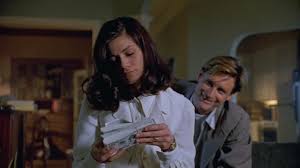
Photo caption: Linda Fiorentino in THE LAST SEDUCTION
There’s just one reason to watch the 1994 neo-noir The Last Seduction, and that’s the delicious performance by Linda Fiorentino as a sociopath more outrageously devious than any character that Barbara Stanwyck, Audrey Trotter, Jane Greer or Claire Trevor ever got to play.
Fiorentino plays Bridget Gregory, who steals her husband Clay’s entire stash of drug deal money and moves away to start a new life under a false identity. Beholden to extremely unpleasant loan sharks, Clay (Bill Pullman) sends a private eye top track her down. Bridget must escape the detective and then enlist a sap to get rid of Clay. She finds her sucker in Mike (Peter Berg), and the tale spins into a web of double-crosses.
Linda Fiorentino and Bill Pullman in THE LAST SEDUCTION
Bridget is fun to watch because she takes the role of femme fatale to unsurpassed heights (or depths?). Her super power is the gift to contrive lies that are both pathological and extraordinarily imaginative. She brazenly employs her sexuality, unmatched audacity and a ruthlessness without any glimmer of empathy. She is just so, so bad.
Both her role and her performance were the best in Fiorentino’s career. However, because The Last Seduction aired on TV before its theatrical release, it didn’t qualify for the Academy Awards. This meant that Fiorentino was denied what would have been a certain Oscar nomination. Some not-so-great movies followed (two with TV heartthrob and movie bust David Caruso), and then her career fizzled out.
The Last Seduction was director John Dahl’s third feature and his third neo-noir after Kill Me Again and Red Rock West (which he had co-written). Since 2009, Dahl has specialized in directing episodes of top tier TV (Breaking Bad, Homeland, The Americans, Californication, Outlander, The Bridge, House of Cards, Justified, Hannibal, Ray Donovan, Yellowstone).
The Last Seduction may not be as good as the apogee of all neo-noirs, Chinatown, but it’s right up there with One False Move as the best neo-noir of the 1990s. The Last Seduction can be streamed from Amazon, AppleTV and Fandango.
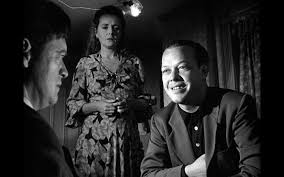
Linda Fiorentino and Peter Berg in THE LAST SEDUCTION
You could argue that Act of Violence is the single most underrated film noir, because a story of moral relativity and situational ethics is told as a thrilling man hunt, with two career-topping performances and a starkly photographed nighttime chase through Los Angeles’ seamy Bunker Hill. Just like the top tier films in the film noir canon, Act of Violence has it all. I’m writing about it today because it’s playing on on Turner Classic Movies on Friday night, and it’s not available to stream.
WW II vet Frank Enley (Van Heflin) is a successful developer with a new bride and baby, popular and prominent in his community. Then, the sunny prosperity of the postwar boom – and Frank Enley’s life – is shattered by the arrival of Joe Parker (Robert Ryan), a guy with a trench coat, a limp and an obsession. Parker’s limp is only the physical manifestation of a psychological wound from the war. While in the same Nazi prisoner of war camp, Frank took an action that Parker believes cost the lives of their buddies. Parker has come to town to kill Frank as retribution.
In the extremity of a Nazi prisoner of war camp, Frank was faced by a situation with no good choices; he knows (correctly) that few in 1949 America will be able to see his action in that context. Because he would instantly lose his standing in the community, he can’t call the police. Now Frank is plunged into both the terror of being killed and self-loathing because he thinks he deserves it,
Frank flees in a panic, going underground in Bunker Hill, a far cry from Frank’s bright, well-tended suburb. Dazed by the position he finds himself in, Frank tries drinking, but there isn’t enough booze in LA to quell his terror. He encounters the world-weary prostitute Pat (Mary Astor), who hides him in her apartment while she figures out how to bleed some money from him; she connects him with a couple predatory bottom-feeders (Barry Kroeger and Taylor Holmes) who may be more heartless and lethal than Joe. All the time, Joe Parker is closing in, right up to the unpredictable climax.
There’s no question that Ryan’s Joe Parker is the villain here, but you can make the case that it’s Frank Enley who committed the unforgiveable and that Joe is the avenging angel, here to deliver justice.
Remarkably versatile for a leading man, Van Heflin was so good in war movies (Battle Cry) and westerns (Shane, 3:10 to Yuma) and corporate drama (Patterns). He may have been his best in classic film noir (Johnny Eager, The Kid Glove Killer, The Strange Love of Martha Ivers, Possessed, The Prowler and East Side, West Side) and the neo-noir Once a Thief. Underrated in his lifetime and overlooked today, Heflin was naturally relatable (but very scary in The Prowler and Once a Thief). Topped by his staircase scene with Janet Leigh and his wild stumble to Pat’s apartment, Heflin captures all of Frank’s stunned desperation and self loathing despair; in my book, Heflin never surpassed his performance in Act of Violence.
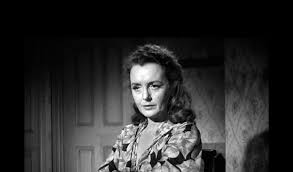
Mary Astor in ACT OF VIOLENCE
Mary Astor was one of the very most beautiful humans as a teenager, and was 35 when she played the alluring Brigid O’Shaughnnessy in The Maltese Falcon. Astor was 42 when she made Act of Violence, and she looked the part Pat, with all of the mileage on her, without any vanity, . Capturing all of Pat’s exhaustion, cynicism and ambivalence, Act of Violence rates with The Maltese Falcon as Astor’s finest performance.
Pat’s sordid apartment and the grimy joint where she drinks and picks up customers seem so much farther from Frank’s well-trimmed suburb than the actual distance of a few miles. It’s a milieu that has worn out Pat, and she knows it; she’s about to move and try another town.
Pat’s sense of morality is flexible. What she does for a living is illegal although it’s a victimless crime. She tries to milk as much money out of each man she meets. But she has her limits; she’s ok with bleeding some money from a rich guy like Frank, but, while she might tolerate fraud or blackmail, she won’t countenance murder.
Ryan’s single-minded, relentless and cruel Joe Parker would be the best thing in most movies, but the performances by Heflin and Astor are for the ages. Ryan is off-screen for the most chilling moment in the film, when Pat, holding the telephone receiver, relays Joe’s reaction to Frank’s buyoff offer.
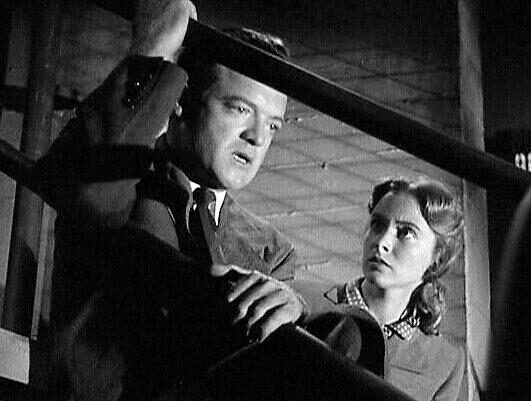
Van Heflin and Janet Leigh in ACT OF VIOLENCE
Frank’s wife is played by a 21-year-old Janet Leigh, in only her second year of screen acting. Leigh is excellent as a fresh-faced, naive young woman who could never have imagined the situation she faces now.
Barry Kroeger and Taylor Holmes really elevate Act of Violence with their supporting turns. Kroeger’s shark-like grin is very scary, and Holmes is an even more venal lawyer (disbarred this time) than the one he played in Kiss of Death.
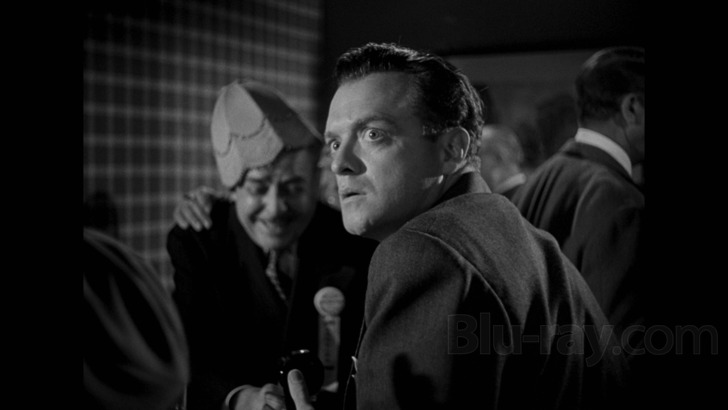
Van Heflin, Mary Astor and Barry Kroeger in ACT OF VIOLENCE
Act of Violence came early in the career of director Fred Zinnemann, who had debuted impressively with The Kid Glove Killer and was only four years away from his masterpiece, High Noon. As an A-lister, he went on to direct iconic films like From Here to Eternity, Oklahoma! and A Man for All Seasons, garnering seven Best Director Oscar nominations and winning for The Sundowners. Another thriller, The Day of the Jackal, is my personal favorite Zinnemann film.
Cinematographer Robert Surtees’ remarkably varied body of work included Oklahoma!, Ben-Hur, PT 109, Mutiny on the Bounty, The Collector, The Graduate and The Last Picture Show. Surtees was not known as a noir DP, but he brought out all the obsession, desperation and shabbiness of this story. No one ever lit and photographed Bunker Hill any better.
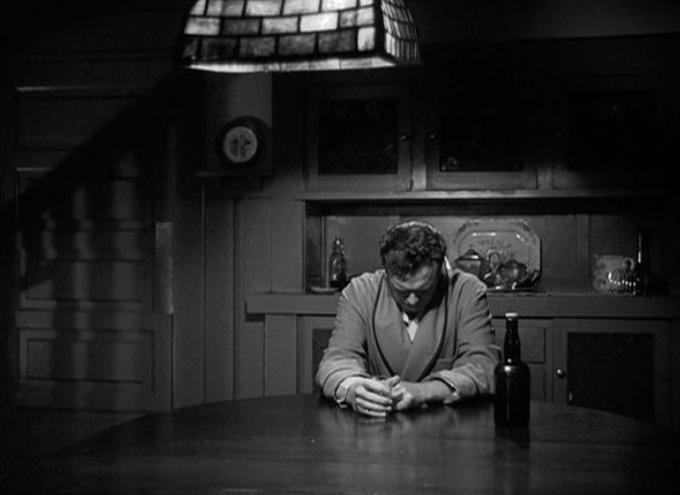
Van Heflin in ACT OF VIOLENCE
Robert L. Richards (Winchester ’73) adapted the screenplay from a story by Collier Young.
Remember, you can’t stream Act of Violence, so make sure to DVR it this Friday on Turner Class Movies.
Photo caption: Jean Rochefort and Johnny Hallyday in MAN ON THE TRAIN.
The engrossing 2002 French drama Man on the Train centers on portraits of two very different men, and, ultimately, an unexpected male bonding. There’s a thriller ending because each man has been moving to his separate pivotal, life-or-death moment.
The titular character (Johnny Hallyday), whose name we come to learn is Milan, arrives in a small provincial town, and his accommodations fall through. The local literature teacher Manesquier (Jean Rochefort) insists on putting him up for the night. Milan, a very private man of fewer than few words, accepts the favor only reluctantly. He’s a solitary guy anyway, and he’s keeping a low profile because his local business matter is illegal. Manesquier, who lives a lonely bachelor existence, has a lot to say and no one to say it to. He is delighted to have someone to share company, and he is even more fascinated when he discovers that Milan is a career criminal.
Driven by Manesquier’s curiosity, and against Milan’s initial wishes, the two get to know each other. We know that the clock is ticking for one man, but we don’t appreciate that it my be ticking for both.
Man on the Train works so well because of the casting and the performances.
Jean Rochefort was a chameleonic fixture in French cinema. Man on the Train was Rochefort’s 130th movie at age 72, and he would go on to make 36 more. I recently wrote of Rochefort’s performance forty years before as a particularly amoral character with a reptilian smugness in Symphony for a Massacre.
Johnny Hallyday, in contrast, was not most well-known as a screen actor, but as a pop singer, the French Elvis. Ironically, Hallyday’s first film was as a child in the suspense classic Diabolique, which also was his best film; like Elvis Presley, Hallyday dabbled in an indifferent movie career. Halliday made 78 music videos with Johnny Hallyday in the title. He was known as a hard-living tabloid celebrity. When he made Man on the Train, Hallyday was 59 and had some serious mileage on him. Yet, his magnetism is compelling in Man on the Train.
Man on the Train was directed by Patrice Leconte (Monsieur Hire, The Widow of St. Pierre, The Suicide Shop).
Man on a Train can be streamed from Amazon, AppleTV, Fandango and YouTube.
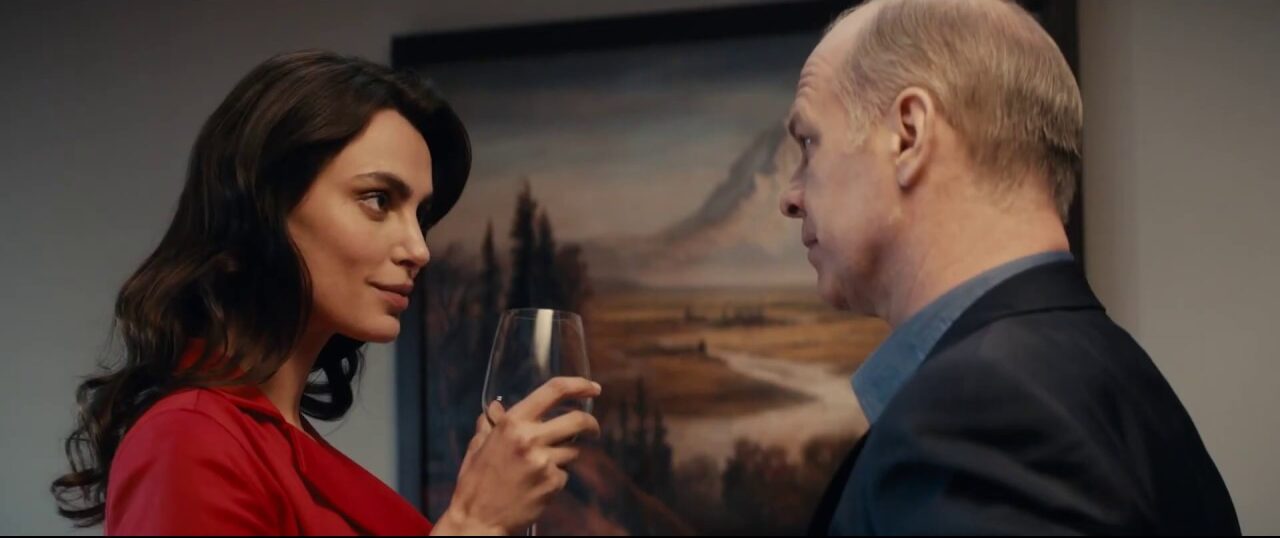
Photo caption: Catrinel Marlon and Vlad Ivanov in THE WHISTLER. Courtesy of Magnolia Pictures.
In the absorbing crime thriller The Whistlers, Cristi (Vlad Ivanov) is a shady Romanian cop who is lured into a dangerous plot by the rapturously sexy Gilda (Catrinel Marlon) and the promise of a fortune. A lethal Spanish mafia is planning a Perfect Crime to recover the loot stolen by Gilda and her Romanian partner, Zsolt. Only Zslot knows where the treasure is, and he’s been jailed by Cristi’s colleagues. To beat the omnipresent surveillance of Romanian state security, Cristi is sent to La Gomera, an island in the Spanish Canary Islands to learn a whistling language.
A whistling language? Indeed, residents of La Gomera can communicate by whistling in code. The language is called Silbo Gomera and it was already being used in ancient Roman times. The whistling can be heard for up to two miles, which allows the locals to communicate across the impassable ravines on the mountainous island.
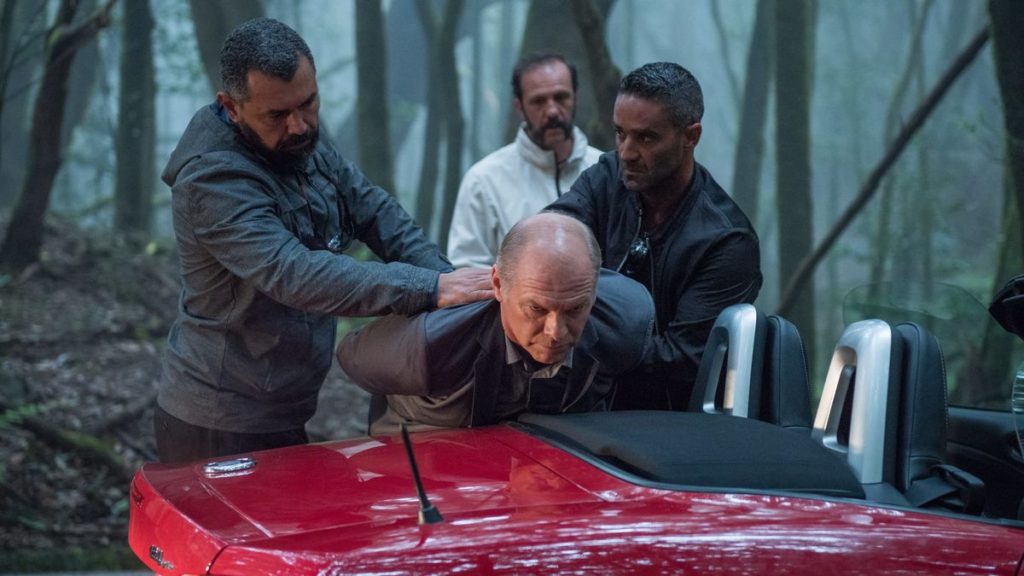
The plan to spring Zsolt depends on Cristi learning Silbo Gomera and then implementing an intricate plan in which nothing can go wrong. Even if the plan goes right, Cristi and Gilda run the very real risk of being killed by the pitiless Spanish mafia or by the corrupt and unaccountable Romanian cops. Cristi and Gilda are walking a tightrope of treachery.
Vlad Ivanov in THE WHISTLERS. Courtesy of Magnolia Pictures.
The Whistlers is written and directed by Corneliu Porumboiu, who is a master of the deadpan. Two of his earlier films became art house hits in the US, 12:08 East of Bucharest and Police, Adjective. Both of those films explored fundamental corruption in Romanian society as a legacy of the communist era..
Cristi is played by Romanian actor Vlad Ivanov. Ivanov is best known for the Romanian masterpiece 4 Days, 3 Weeks and 2 Days, in which he played one of cinema’s most repellent characters – Mr. Bebe, the sexual harassing abortionist. American audiences have also seen Ivanov’s performances in Police, Adjective and Snowpiercer.
Ivanov excels in playing Everyman piñatas, which serves him well in The Whistlers. Ivanov delivered a tour de force in the 2019 Cinequest film Hier, as a man more and more consumed by puzzles, and increasingly perplexed, dogged, battered and exhausted.
For The Whistlers to work, Catrinel Marlon must make Gilda quick-thinking and gutsy, and she pulls it off. She is very good, as is Rodica Lazar as Cristi’s coldly ruthless boss Magda.
This is a Romanian film with dialogue in Romanian, English, Spanish and, of course, whistling. The Whistlers, a top notch crime thriller, can be streamed from Amazon, AppleTV, YouTube and Fandango – and it’s currently included with Max.
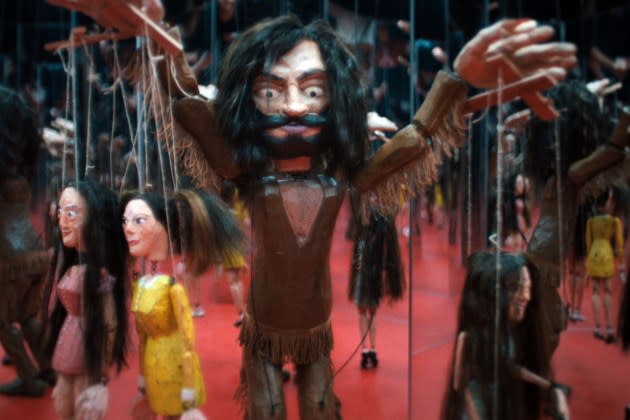
Photo caption: CHAOS: THE MANSON MURDERS. Courtesy of Netflix.
Master documentarian Erroll Morris revisits and updates the Manson Murders in Chaos: The Manson Murders. After over a half-century, it’s still a chilling, unforgettable story – human behavior so bizarre and transgressive that it’s almost incredible.
Morris introduces us to writer Tom O’Neill, who adds a conspiracy theory. .O’Neill accepts that the Manson Family perpetrated the murders at Charlie Manson’s direction,, but he also sees a connection between Manson and a CIA-funded experiment in mind control, although he doesn’t prove a link. It’s clear that Morris doesn’t buy the conspiracy.
What does Chaos: The Manson Murders add to to our understanding, besides the probably bogus conspiracy theory? The passage of time has added sources and perspective that Morris uses to retell the story more completely than in the past. One dispassionate and ultra-credible source is one of the prosecution team, Stephen Kay, an eyewitness to and participant in the trials. Morris has also found archival footage of interviews with members of the Manson Family and, yes, of Charlie himself.
That allows Morris to unspool a chronological narrative that begins with Manson’s release from prison, his assembling his family of misfits in San Francisco and moving them all to LA so he could dabble in the music industry – just enough to develop a grudge. Morris tells the lesser-known stories of the prequel crimes, the murder of Gary Hinman and the attempted murder of Bernard Crowe, who Manson mistook for a Black Panther because of his Afro. And then finally, the horrors on Cielo Drive and Waverly Drive.
For 46 years, Erroll Morris has been one of the greatest documentarians, with a body of work that ranges from the hilarious (Gates of Heaven, Vernon Florida, Fast Cheap and Out of Control, Tabloid) to the unflinching (The Thin Blue Line, Mr. Death, The Fog of War, Standard Operating Procedure),
(BTW a friend of mine on a prison tour was actually introduced to Charlie Manson in the prison yard. He reported that, indeed, Manson creeped him out with a very scary vibe.)
Chaos: The Manson Murders, the ultimate true crime doc, is streaming on Netflix.
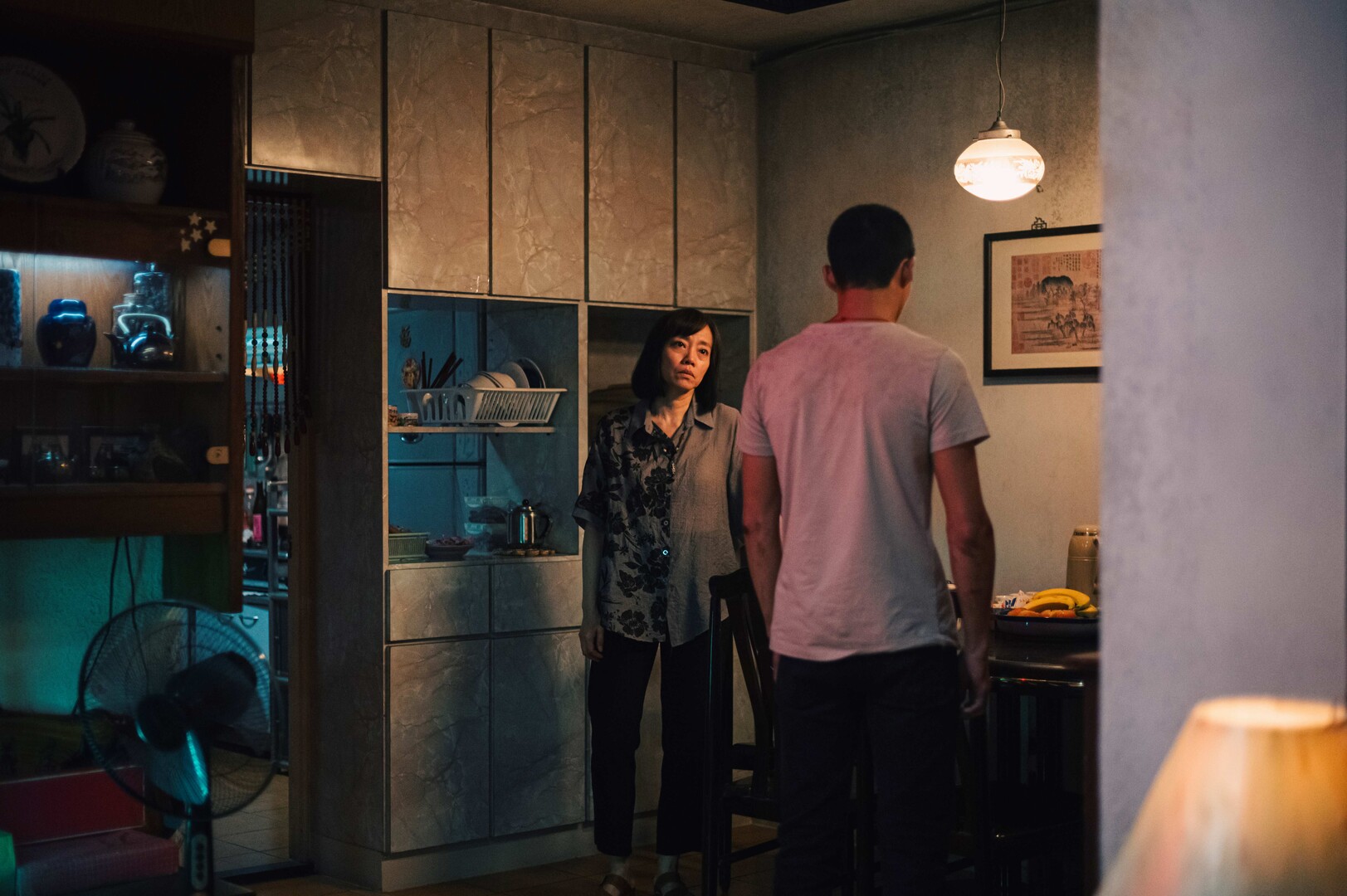
Photo caption: Guan-Zhi Huang and Ming-Shuai Shih in SILENT SPARKS. Courtesy of Cinequest.
In the Taiwanese neo-noir Silent Sparks, small time hood Pua (Guan-Zhi Huang) is released from prison and checks in with the local crime lord (Chih-Wei Cheng). The boss assigns him to a lieutenant, Mi-Ji (Ming-Shuai Shih), who happens to be Pua’s former cell-mate. But when Pua and Mi-Ji meet again, the encounter is a study in social awkwardness. Pua just wants to start earning money and working his way up in the syndicate, but Mi-Ji is surprisingly unhelpful.
Pua finally gets the chance to do some crime, and we wonder, will Pua get caught, or worse? And what explains Mi-Ji’s behavior toward Pua? As Silent Sparks smolders on, the risks escalate.
The lead actors are very good. Chih-Wei Cheng is very funny as the crusty, vulgar crime boss, who is full of joie de vivre. Jui-Chun Fan is exceptional as Pua’s mom.
Chih-Wei Cheng in SILENT SPARKS. Courtesy of Cinequest.Jui-Chun Fan and Guan-Zhi Huang in SILENT SPARKS. Courtesy of Cinequest.
Silent Sparks is the first feature for writer-director Ping Chu, and it’s a promising debut. I screened Silent Sparks for its US premiere at Cinequest.
Photo caption: Denzel Washington in THE LITTLE THINGS. Courtesy of Warner Bro. Pictures.
I finally caught up with caught up with the neo-noir crime procedural The Little Things on Netflix, and it’s much better than I expected. I had skipped it until now because, upon its 2021 release, it disappointed critics who were eagerly awaiting this neo-noir with Oscar-winners Denzel Washington, Rami Malek and Jared Leto. Its Metacritic rating is a middling 54. True, it’s no David Fincher or Martin Scorsese movie (or even a John Dahl movie) but, compared to the other noirish crime procedurals that you could be streaming (and I watch scores of them), it’s pretty good.
Denzel plays Joe Deacon, who is a deputy sheriff in Kern County, not an exalted position in law enforcement. We learn that Deacon used to be a crack detective in Los Angeles County, but something happened that caused him to leave that department. A Kern County departmental errand takes him back to his old stomping grounds in LA, where some old-timers greet him warmly and some warily. There’s a murder that bears resemblance to an unsolved serial killer case that still obsesses Deacon and the young up-and-coming detective Jimmy (Rami Malek) invites him to help.
The two hash through clues, augmented by Deacon’s institutional memory and his hunches. After some wrong turns, the evidence hints at a primary suspect, Albert Sparma (Jared Leto). Yes, it’s a whodunit, but the real story is about how the earlier unsolved case broke Deacon emotionally, and whether this unsolved case will do the same to Jimmy. Late in the film, there is a reveal of the moment that devastated Deacon. I loved the ending, which is about whether Deacon can find a way to save Jimmy.
Denzel Washington elevates any material and that’s the case here. Nobody does a profoundly sad and very masculine man as well as Denzel. There’s a scene where he drops by and greets his ex-wife which is wrenching, all because of the heartbreak in his eyes. Plenty of actors can portray an emotionally tortured character in a showy performance (think Nic Cage), but Denzel, in an utterly contained performance, can make us understand how a man who is doing everything to conceal his pain, is really shattered to the core.
Malek, whom I have never warmed to, is as reptilian as usual, contrasting oddly with his character’s suburban poolside family.
Jared Leto in THE LITTLE THINGS. Courtesy of Warner Bro. Pictures.
Leto does creepy magnificently, and his Albert Sparma has an especially twisted menace about him.
The Little Things was written and directed by John Lee Hancock, who directs better movies that others write (The Rookie, Saving Mr. Banks, The Founder) than the ones he writes (The Alamo, The Blind Side, Midnight in the Garden of Good and Evil). The Little Things is a bit too long at 2:08.
Still, Denzel’s performance and the ending make The Little Things a worthwhile watch for fans of neo-noir and of crime procedurals. The Little Things is included with Netflix and Max subscriptions and rentable from Amazon, AppleTV, VUDU and YouTube.
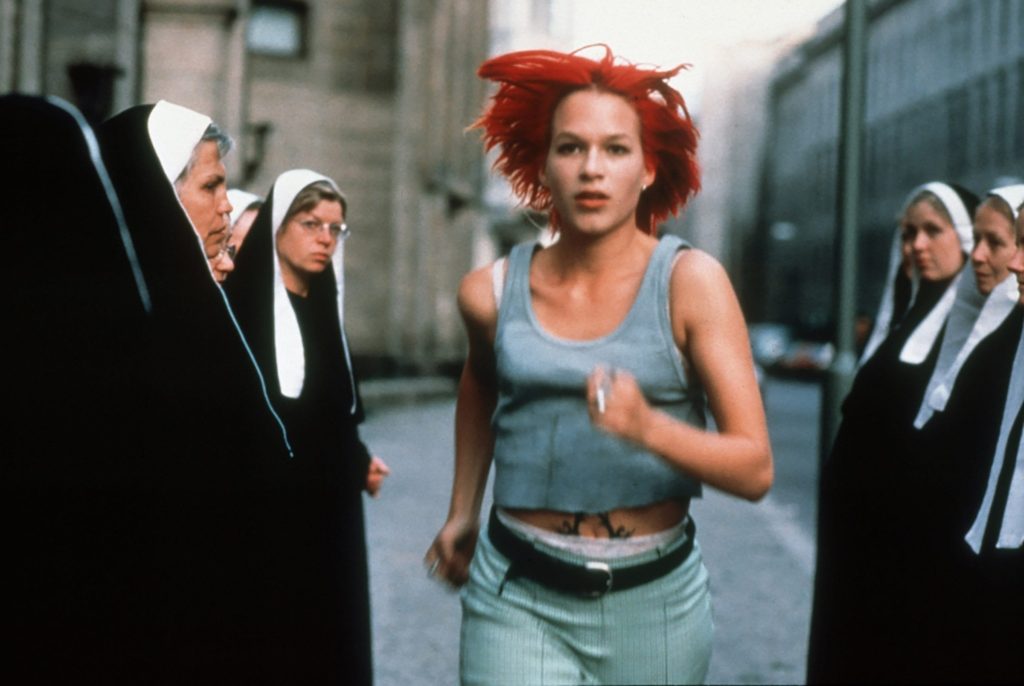
Photo caption: Franka Potente in RUN LOLA RUN. Courtesy of Sony Pictures Classics.
You’ll never see a more kinetic movie than Run Lola Run, the 1998 German indie thriller which has been remastered in 4G and re-released into theaters. Lola (Franka Potente) has only 20 minutes to raise 100,000 Deutschmarks and save her boyfriend’s life from his gangster boss. In only 81 white knuckle minutes, writer-director Tom Tykwer has Lola desperately sprinting around Berlin in three different scenarios.
Lola’s desperation and the ticking clock make for a pedal-to-the-metal performance by Potente. This also a physically challenging performance. Incidentally, Potente is now a director, and her new film Home with Kathy Bates played at last year’s SFFILM.
Run Lola Run is Tykwer’s masterpiece, and it’s one of the great stories told in real time (which I love).
This is a wonderful movie to see in a theater. Run Lola Run is also available to stream on Amazon, AppleTV, Vudu, YouTube and Google Play.
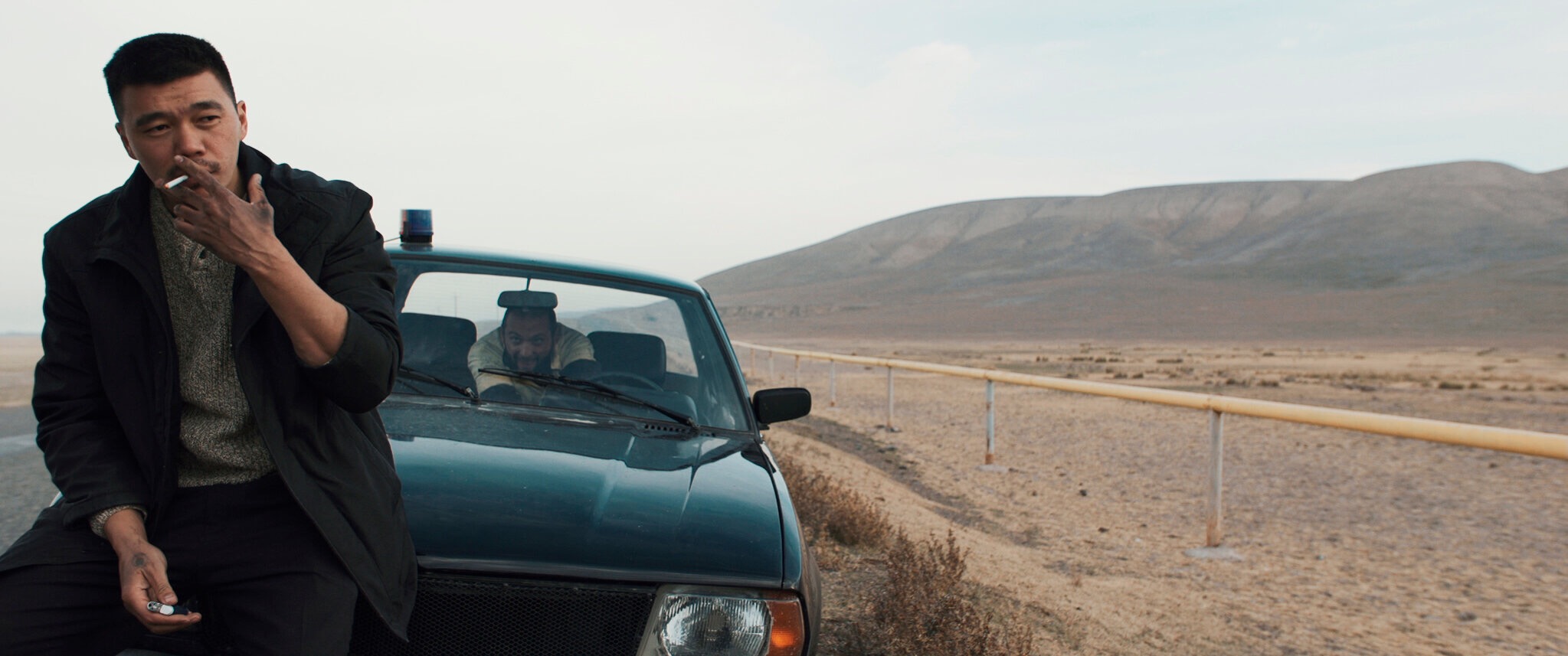
Photo caption: Daniyar Alshivnov in A DARK, DARK MAN. Courtesy of MHz.
In the Kazakh neo-noir A Dark, Dark Man, a provincial detective is stationed in a place that is remote, even by the standards of Kazakhstan. The authorities are unaccountable and utterly corrupt, and human life isn’t so much cheap as it is valueless. A boy has been murdered and wheels having no relation to justice begin to grind.
The cop is Bekzat (Daniyar Alshivnov), a smart guy whose moral compass drives him to solve the crime, not to cover it up. But he’s also practical, and he understands that he doesn’t have the power to undermine his bosses, who have decided that Pukuar, a mentally disabled local, is the suspect.
The sordid order of things is rocked by the arrival of a nosy journalist Ariana (Dinara Baktybaeva), who uncomfortably points out that 11 suspects have died in police custody in the past year, and that this murder shares convincing similarities with a series of local murders over the past decade. It appears that someone has been getting away with serial murder while the cops “round up the usual suspects”.
In a compelling performance, Alshivnov has us hanging on Bekhat’s moral decision. Which choice will he make, and at what risk? How can he survive?
Yes, this is my first Kazakh film. Director and co-writer Adilkhan Yerzhanov uses absurdism to depict the incompetence of the rural police. The violence in A Dark, Dark Man is anything but stylized – Yerzhanov makes it up-close-and-personal and messy.
Teoman Khos is superb as the innocent Pukuar, both half-witted and pranksterish, and understanding more of what is going on than it seems.
Make sure you watch the interview with star Daniyar Alshivnov (embedded below the trailer). You will be surprised.
A Dark, Dark Man is streaming on MHz. MHz has split it into 3 episodes, but it’s a coherent 2 hour, ten minute movie that is easy to binge.
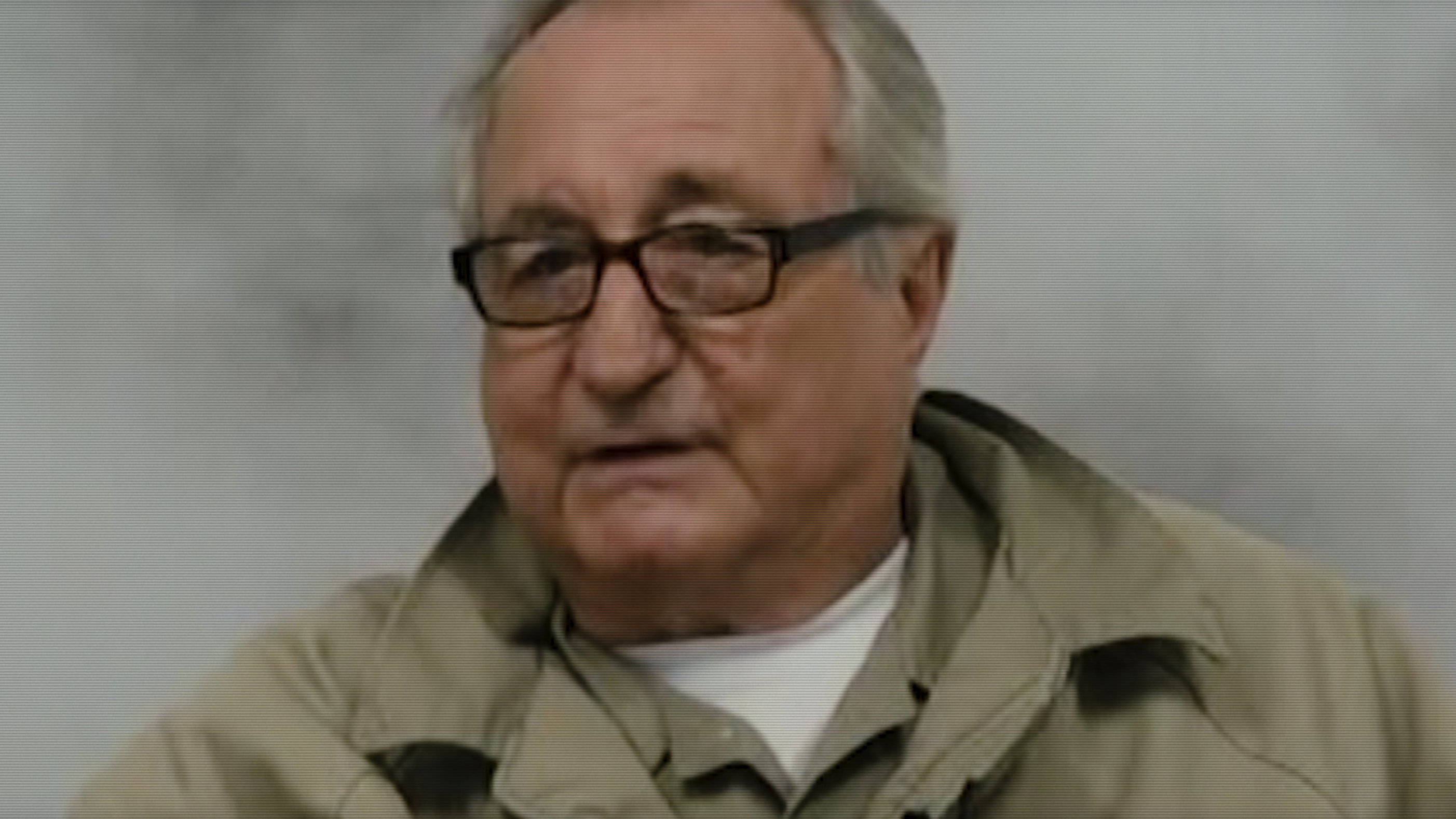
Photo caption: Bernie Madoff in MADOFF: THE MONSTER OF WALL STREET. Courtesy of Netflix.
Netflix’s documentary Madoff: The Monster of Wall Street is a pretty good watch. Most folks, like me, thought they understood the now 15-year-old story of Madoff’s house of cards collapsing at the same time as the 2008 mortgage meltdown, ruining hundred of investors, including pensioners and non-profits. But Madoff: The Monster of Wall Street contributes a comprehensive perspective and some jaw-dropping nuggets, to wit:
How the SEC whiffed MULTIPLE TIMES, even when the case was giftwrapped for them by a credible Wall Street expert;
The moment when the SEC and FBI learned that the fraud was not in the millions, but in the TENS OF BILLIONS;
How Bernie Madoff banned his own sons from the separate office in which the fraud was committed;
How Madoff concealed the fraud in plain sight with brazenness alone;
The one zillionaire investor who must have known about the Ponzi scheme and kept bailing Madoff out; and
What happened to the main characters in the saga, including Madoff’s family and confidantes – it is operatic.
We benefit from Madoff: The Monster of Wall Street‘s comprehensive look at the scandal because our knowledge of it come from the news coverage at time of his arrest, which focused on the plight of Madoff’s victims. That’s a key part of the story, but it helps to (in my case) learn that Madoff’s stature was earned by his building two entirely legitimate Wall Street businesses, co-founding the NASDAQ and becoming a sage adviser to the SEC. It also helps to revisit the scale of his fraud (the largest Ponzi scheme in world history) and how it differed from other Ponzi schemes – NONE of his victims’ money was ever invested.
One of the key themes is the contrast between the two suites of Madoff offices – with only Madoff himself having access to both. His sleek 19th floor suite housed the two legitimate businesses, was immaculately decorated in black and silver, and primarily staffed with well-educated Jews. The 17th floor, which housed the fraud, was staffed by high-school-educated Italian-Americans, and was a messy warren of cardboard boxes and a DOT MATRIX PRINTER.
Madoff: The Monster of Wall Street is well-sourced with the federal agents who arrested Madoff, his personal secretary and employees of both his legitimate and his fraudulent businesses, and clips of Bernie himself in prison garb, ‘fessing up, We also meet the guy who proved as early as 2000 that Madoff had to running a Ponzi scheme, only to be rebuffed by the SEC five times between 20000 and 2008.
Madoff: The Monster of Wall Street was directed by Joe Berlinger, who has directed some of the 21st century’s very best documentaries – the Paradise Lostseries and Metallica: Some Kind of Monster. This time, I did not care for his odd technique of using look-alike “actors” in “re-creations”, obviously to fill in for a scarcity of file footage, but it ultimately did not detract from telling a great story. Anyway, hopefully, Netflix will keep hiring Berlinger to make films, which is a great thing.
Madoff: The Monster of Wall Street is streaming on Netflix.