HAMNET: a grieving couple finally aligns

Photo caption: Jessie Buckley in HAMNET. Courtesy of Focus Features.

In Chloe Zhao’s glorious Hamnet, based on the Maggie O’Farrell novel, a couple must deal with the death of a child. That couple is none other than William Shakespeare (Paul Mescal) and his wife Agnes (Jessie Buckley).

Will is an aspiring writer with ambitions too big for their provinical hometown of Stratford. Agnes is just the kind of woman that we imagine would attract Shakespeare – smart, spirited, earthy and a determined non-conformist. The two fall in love and start a family, settling into an affectionate relationship and comfortable parenting partnership.

As someone who runs a London theater company, Will is necessarily away on business in London much of the time. To Agnes, who stays raising the kids in Stratford, where there is no theater, Will’s world is only theoretical. Although, he sends money for the family and even buys the biggest house in town, she just has no way of comprehending what he really does in London.

No European family in the late 1500s could hope to avoid pestilence, and tragedy strikes the Shakespeares – unfortunately while Will is away from home.

People do not experience grief the same way nor on the same timeline. Heartbroken parents may not feel like they are sharing the suffering together. Often, marriages do not survive the death of a child.

Hamnet is framed in a very 21st Century perspective – about using one’s art to process grief and express one’s feelings. In Hamnet, Will works out his grief by penning Hamlet, and Agnes can only align her grief with Will’s by experiencing his play.

Jessie Buckley’s performance as Agnes is wondrous. She perfectly captures Agnes’ freethinking independence, lusty passion and nurturing motherhood. When Agnes suffers her loss, Buckley shows her in the deepest despair and in her profound resentment of Will. Her personal catharsis makes for the most emotionally powerful movie ending of the year.

From her movie debut in the disturbing Beast, followed by acclaimed performances in Wild Rose and The Lost Daughter, Buckley has demonstrated that she is unsurpassed as a screen actor. Her work in Hamnet is a tour de force, and she will be nominated for a Best Actress Oscar.
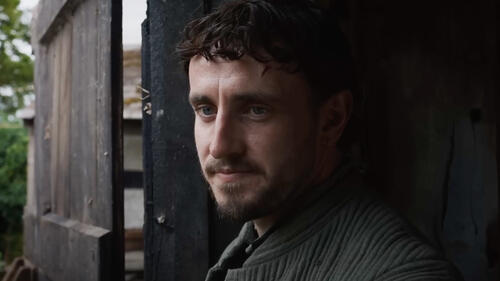
Paul Mescal in HAMNET. Courtesy of Focus Features.

This is Jessie Buckley’s movie, but Paul Mescal is very good as William Shakespeare, even if he doesn’t have as much to do in the first two acts. Mescal blossoms in the third act as Shakespeare writes, directs and then acts in Hamlet. In particular, Mescal’s Shakespeare recites the To Be. Or not to be. speech as he contemplates taking his life, and it’s never been so raw and powerful. And I have never see the King’s Ghost played as compellingly as does Mescal in the play-within-the-movie.

There are also fine supporting performances by the esteemed Emily Watson as Agnes’ mother-in-law and and Joe Alwyn as Agnes’ brother.

I loved how director Chloe Zhao presents the Globe Theater – as the site of the most spectacular entertainment that the audience would have ever seen or imagined. The crowd enters with the anticipation of a throng entering an NFL stadium on game day. When the play begins, there’s a hush as the audience is enthralled at the wonder of it all – the backdrop, the costumes, the swordplay, and even the primitive special effects.

Zhao, of course, won Best Director and Best Picture Oscars for Nomadland. That indie triumph earned her the payday of a Marvel franchise movie with big stars, The Eternals. Her early film, The Rider, with a nonprofessional actor as the protagonist, made me into a huge Chloé Zhao fan.

The play Hamlet ends with Fortinbras of Norway striding on stage amid the corpses to summarize things, and Zhao doesn’t go there. She avoids the anti-climax by following Billy Wilder’s screenwriting advice – Don’t stick around. I’m very impressed with any filmmaker who ends their film not even one second too late. After all, even Alfred Hitchcock made the mistake of ending Psycho with a psychological expert played by Simon Oakland explaining that Norman Bates’ psychological disorder really does exist and blah blah blah. So, I would say that Chloe Zhao ends Hamlet better than Shakespeare did.

Hamnet is one of the Best Movies of 2025.

Movies to See Right Now

Photo caption: Joel Edgerton and Kerry Condon in TRAIN DREAMS. Courtesy of Netflix.

It’s prime movie season and this week on The Movie Gourmet – new reviews of the superb drama Train Dreams, Kelly Reichardt’s dark comedy The Mastermind, the new biodoc Orwell: 2+2=5 and the affecting indie drama Burt, which screened at three Laemmle theaters this week.

Of my Best Movies of 2025 – So Far, you can see It Was Just an Accident and Sentimental Value in theaters now and THE REST ARE STREAMING.

Last week, I also posted notes on The American Revolution, Spinal Tap II: The End Continues and Being Eddie.

CURRENT MOVIES

ON TV

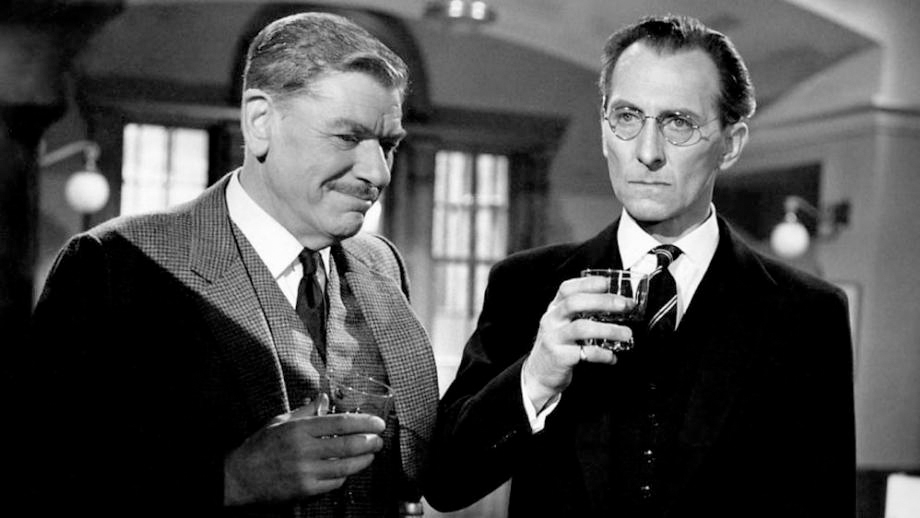
Andre Morell and Peter Cushing in CASH ON DEMAND.

Turner Classic Movies has gift-wrapped a present for us on December 13 and 14. Cash on Demand, made in 1962 by the British horror schlock studio Hammer Films, is a ticking bomb suspenser and a Perfect Crime movie. It’s also an unlikely Christmas movie, with characters that evoke Dickins’ A Christmas Carol.

The Scrooge is the manager of a bank branch (Peter Cushing) – everyone’s most despised boss. He revels in the tyranny of his miniature fiefdom and never misses a chance to make the jobs of his underlings unnecessarily onerous or humiliating. The Bob Cratchit (Richard Vernon) is the dedicated and able bank clerk, who is doing his best while under the manager’s sadistic thumb.

The manager gets his comeuppance when a posh customer (André Morell) arrives. The manager’s kowtowing and boot-licking is interrupted by the discovery that the customer is actually pulling a heist and forcing the manager – by threatening his family – to help.

The crook has apparently thought of every possibility and devised a perfect heist. Cash on Demand becomes a bank procedural as we learn about 1862 state-of-the-art vault security.

There’s a deadline – the vault needs to be emptied at a certain time or the manager’s family will come to grief. All of Cash on Demand occurs in real time and all inside the bank, under the inescapable face of the wall clock.

Andre Morell’s bank robber, while ruthless, is generally jovial – the very model of clubby affability. Cash on Demand is a study in contrast between the cool-as-a-cucumber crook and the bank manager, who looks absolutely stricken throughout the movie.

Cash on Demand will be aired on TCM’s Noir Alley, with the intro and outro by Eddie Muller.

THE MASTERMIND: when selfishness exceeds talent

Photo caption: Josh O’Connor in THE MASTERMIND. Courtesy of MUBI.

In Kelly Reichardt’s dark comedy The Mastermind, a slacker steals valuable paintings from a museum in suburban New England in 1970. But The Mastermind is less of a heist film than a character study of a man with little character.

James Blaine Mooney (Josh O’Connor) is James to his wife and parents and J.B. to his friends. His guiding value is selfishness. With a degree in the arts, he is an occasional cabinet-maker who lets his hardworking wife (Alana Haim) support his family with a real job, while he sponges off his mom (Hope Davis). Instead of working, J.B. spends his time fantasizing how to make money without working. He lands on a scheme to rob the local art museum and fence the paintings.

He is smart enough to get the paintings out of the museum and hide the loot. But then his own character flaws begin to betray him. Having watched many crime movies, we all know that any criminal conspiracy is only as strong as its weakest link. But J.B. has employed three untrustworthy low lifes as crime partners. Of course, J.B. is too unreliable himself to recognize reliability in anyone else. And then The Mastermind follows J.B. as he tries to avoid the consequences of his choices – and his flight becomes a consequence in and of itself.

What makes this a comedy? The running joke is that J.B. never makes the responsible, prudent choice throughout the movie, always taking what he sees as the easy path, regardless of morality or loyalty.

Usually, a movie audience roots for the heist to be successful. Here, we don’t sympathize with the museum, which doesn’t value its collection enough to invest in even the most basic security. But we don’t care about J.B. either, because he is a shit who only needs the money so he doesn’t have to get a job. We do care about other people in J.B.s life, and he ruins the lives of his wife and family, puts at risk his dear friends and his own sons, fleeces his mother, and surely humiliates his father.

Josh O’Connor is very good as a man who never misses a chance to think only of himself. I would recommend another film with a heist element, La Chimera, where O’Connor plays a more complex character.

Fine actors all, Davis, Haim, Bill Camp, Gaby Hoffman and John Magaro are perfect in supporting roles. Hoffman is especially strong as an old friend who recognizes how dangerous J.B.’s affable charm really is. Davis has an inspired moment when she breaks a corn cob in half – and then quickly assesses which half has moire kernels,

Writer-director Reichardt is an acclaimed indie filmmaker who usually makes languorous, observational movies and gets excellent performances out of actors like Michele Williams, Lily Gladstone and Jared Harris. Her Wendy and Lucy is a masterpiece. There is more humor (the quiet, sly kind) and much, much more plot in The Mastermind than in Reichardt’s other works. I keep waiting for Reichardt to make another Wendy and Lucy, which is probably as unfair as waiting for Orson Welles to make another Citizen Kane.

Reichardt, who was only six years old in 1970, completely nails the verisimilitude of the time and place.

The very best thing about The Mastermind is the original music by Rob Mazurek, usually a solitary jazzy cornet or drums. The Mastermind is Mazurek’s first feature film score, but his Wikipedia page details an impressive and varied career as a musical artist.

Bottom line: The Mastermind is an exceptionally well-made film about a guy who we wouldn’t like to know in real life, but who ultimately gets his just desserts.

ORWELL: 2+2=5: we didn’t get the message

Photo caption: ORWELL: 2+2=5. Courtesy of NEON.

The impassioned and innovative documentary Orwell: 2+2=5 is less a biopic of the author George Orwell than a cry of alarm, imploring us to heed Orwell’s message about resisting totalitarianism and its tools of propaganda and repressive violence. It’s a distress signal – and an urgent one.

Primarily through clips from movie versions of 1984 and Animal Farm, we are reminded of Orwell’s revulsion at those who deny objective fact and try to pervert public opinion. War is Peace. Freedom is Slavery. Ignorance is Strength. Big Brother. Thought Police. Newspeak.

Historical clips illustrate figures like Hitler, Stalin, Franco and Pinochet employing these methods. And contemporary news clips focus on the evil deeds of today’s authoritarian nationalists in Russia, China, Myanmar, Hungary, Italy, France and, notably, in the US.

Orwell: 2+2=5 takes us from Orwell’s work to instances of book burning from the Nazis through to today, including a jarring list of books banned in American libraries. Orwell found goosestepping particularly offensive, and Orwell: 2+2=5 shows us plenty of contemporary examples of that, too.

When Orwell wrote Animal Farm and 1984, he had seen Goebbels’s Big Lies in action and experienced Stalinist thought-oppression. But, although he hadn’t seen AI, election deniers or corporate hegemony of television news, Orwell: 2+2=5 makes it clear that his guiding principles still apply.

We do get just enough content about Orwell’s life to help understand what shaped him. He spent five years in his early twenties as a colonial policeman in Burma, which caused him to understand (before his peers) that European colonization was exploitation based on white supremacy and that he himself had been an instrument of repression. He fought against fascism in the Spanish Civil War, where his leftist unit was purged by communists. Physically disabled from wounds in Spain, he got another chance to fight fascism in World War II by working for the BBC, ironically, as a propagandist.

Orwell: 2+2=5 is the work of Oscar-nominated documentarian Raoul Peck. His James Baldwin biopic I Am Not Your Negro was also innovative; Peck chose to present Baldwin’s thinking through only his own words, in archival recordings or voiced from Baldwin’s writings, unadorned by talking heads. As in I Am Not Your Negro, the editing in Orwell: 2+2=5 is brisk.

Orwell: 2+2=5 is a fine film and an important piece of advocacy. It’s playing in arthouse theaters, but difficult to find.

TRAIN DREAMS: quietly thinking and quietly feeling

Photo caption: Joel Edgerton in TRAIN DREAMS. Courtesy of Netflix.

The last few years, he expected some great revelation about his life would descend upon him.  But, as of yet, none had.

The dreamy and deeply evocative Train Dreams is a portrait of a very thoughtful man. Robert Granier (Joel Edgerton) is thoughtful, but uneducated, and he doesn’t look at life with any philosophical, religious or political framework. He spends most of life in the stillness of the great primeval forests, with the absence of distractions allowing him to consider what life has given him and what life has taken away. He ponders Why?

In the early 20th century, Robert Granier had been sent, as an orphan boy, to a small town in Idaho. He grew to work as a laborer, on railroad construction projects and on logging old growth forests of Pacific Northwest. His jobs take him off for months at a time, working in ever new teams of strangers. It is always dangerous work, organized without even a casual nod to worker safety.

Granier experiences lots of drudgery, interrupted with moments of terror, sadness, confusion and soaring joy, before a tragic loss settles him into profound grief.

Joel Edgerton is magnificent as Granier, one of those stolid, reserved men of very few words, who is nonetheless very emotional. He’s not flamboyant about it, but he feels things very deeply.

Edgerton first emerged as a hunky Australian action star in the 2010 Australian crime thriller Animal Kingdom before playing the Navy Seal leader in 2012’s Zero Dark Thirty. Since then, he’s written five feature films (including The King with Timothee Chalamet) and directed two. And he has delivered wonderfully nuanced and magnetic performances in movies like Master Gardener and Loving. I especially recommend watching him in The Gift, which he also wrote and directed.

Edgerton has become a filmmaking brand. If Joel Edgerton is in the credits, it’s almost certainly an excellent and substantial film.

Joel Edgerton and Kerry Condon in TRAIN DREAMS. Courtesy of Netflix.

Train Dreams benefits from superb performances from the cast of great character actors, led by Felicity Jones, John Diehl, William H. Macy and Clifton Collins, Jr. The standout is Kerry Condon, who is compelling as an indomitable woman who has had equivalent experiences to Granier’s and has worked out her own response.

Train Dreams was directed and co-written by Clint Bentley with his usual writing partner Greg Kwedar, based on the Denis Johnson novella. The pair have also written the screenplays for Jockey (directed by Bentley), Sing Sing and Transpecos (directed by Kwedar). Clifton Collins, Jr. starred in Jockey and appeared in Transpecos.

Bentley makes very effective use of voice-over narration to establish where Granier comes from, literally and figuratively. The narration pairs perfectly with Edgerton’s performance to trace Granier’s internal journey. The fine character actor Will Patton is wonderful as the narrator.

Joel Edgerton in TRAIN DREAMS. Courtesy of Netflix.

This is a beautiful looking and sounding film. thanks to Bentley, cinematographer Adolpho Veloso and composer Bryce Dessner. The final montage is very moving .

I’ve been reading some Oscar buzz about Train Dreams, and it’s deserving. Train Dreams is one of the Best Movies of 2025, and it’s streaming on Netflix.

BURT: irrepressible generosity

Burton Berger in BURT. Courtesy of Cinequest.

The title character in the affecting dramedy Burt is a an elderly street musician with Parkinson’s Disease. Burt rents a room in the home of his landlord Steve, an ever-suspicious and oppositional guy who is Burt’s age. Nevertheless, Burt is relentlessly upbeat. A young man, Sammy, arrives with a letter from one of Burt’s youthful flames, explaining that Sammy is Burt’s son. Burt jumps into belated fatherhood with both feet, and then discovers that all is not as it seems.

Burt (Burton Berger) may face disappointment and hurt, but he does so with an irrepressible generosity of spirit. This is not a Disease of the Week movie. It’s not about Burt’s Parkinson’s. It’s about Burt, a vital guy who is open about his living with Parkinson’s, but who focuses on what he can still experience.

Oliver Cooper and Burton Berger in BURT. Courtesy of Cinequest.

Oliver Cooper (David Berkowitz in Mindhunter, Levon in Californication) captures the contradictions within Sammy, who’s been incarcerated until recently.  Sammy shares a lot of traits with the average criminal – not smart, not strategic, irresponsible and easily led astray.  I’m guessing that his impulse control and anger management aren’t great, either.  But, somehow, Sammy has a reservoir of empathy that may impede his criminality. Cooper also co-wrote.

A remarkably endearing movie, Burt is just the second feature for director and co-writer Joe Burke. Burke shot Burt in seven days for $7,000 with a three person crew.  He succeeded in getting fine performances from the non-professional actors playing Burt (Berger) and Steve (Stephen Levy)..

Burt was executive produced by indie stalwart David Gordon Green (George Washington, All the Real Girls, Undertow). I screened Burt for its world premiere at Cinequest, where it made my The Best of Cinequest.

Burt will play at LA’s Laemmle theaters this week: the Royal on December 10, the NoHo 7 on December 11 and the Glendale on December 12.

Movies to See Right Now

Photo caption: Nina Ye and Shih-Yuan Ma in LEFT-HANDED GIRL. Courtesy of Netflix. Cr. LEFT-HANDED GIRL FILM PRODUCTION CO, LTD © 2025.

Another busy week on The Movie Gourmet – new reviews of the wonderful family dramedy Left-Handed Girl, the layered character-driven drama Sentimental Value, and the witty and poignant Jay Kelly. Plus two recommended movies coming up on TV this week. And here are mini-capsules on some other current films and miniseries:

  • The American Revolution: The Ken Burns five-part documentary on PBS is excellent. I learned a lot, even after multiple college courses and much reading and podcast-listening on the subject. It’s not as thrilling as The Civil War or Baseball, nut its both important and very watchable. Watch on you TV’s PBS channel, the PBS YouTube channel or the PBS website.
  • Spinal Tap II: The End Continues: More of a fond tribute to the great This Is Spinal Tap than a sequel, this film returns the original stars with chuckles and the occasional guffaw. Some of the Biggest Names in music have cameos, and Elton John’s bits are the best. Valerie Franco adds a burst of energy as the band’s fearless new drummer. I treasure the original film, so I enjoyed most of this homage, but not all of these jokes work.
  • Being Eddie: Eddie Murphy tells his version of his life and career in this Netflix doc. He is an interesting guy, but this is a puff piece.

REMEMBRANCES

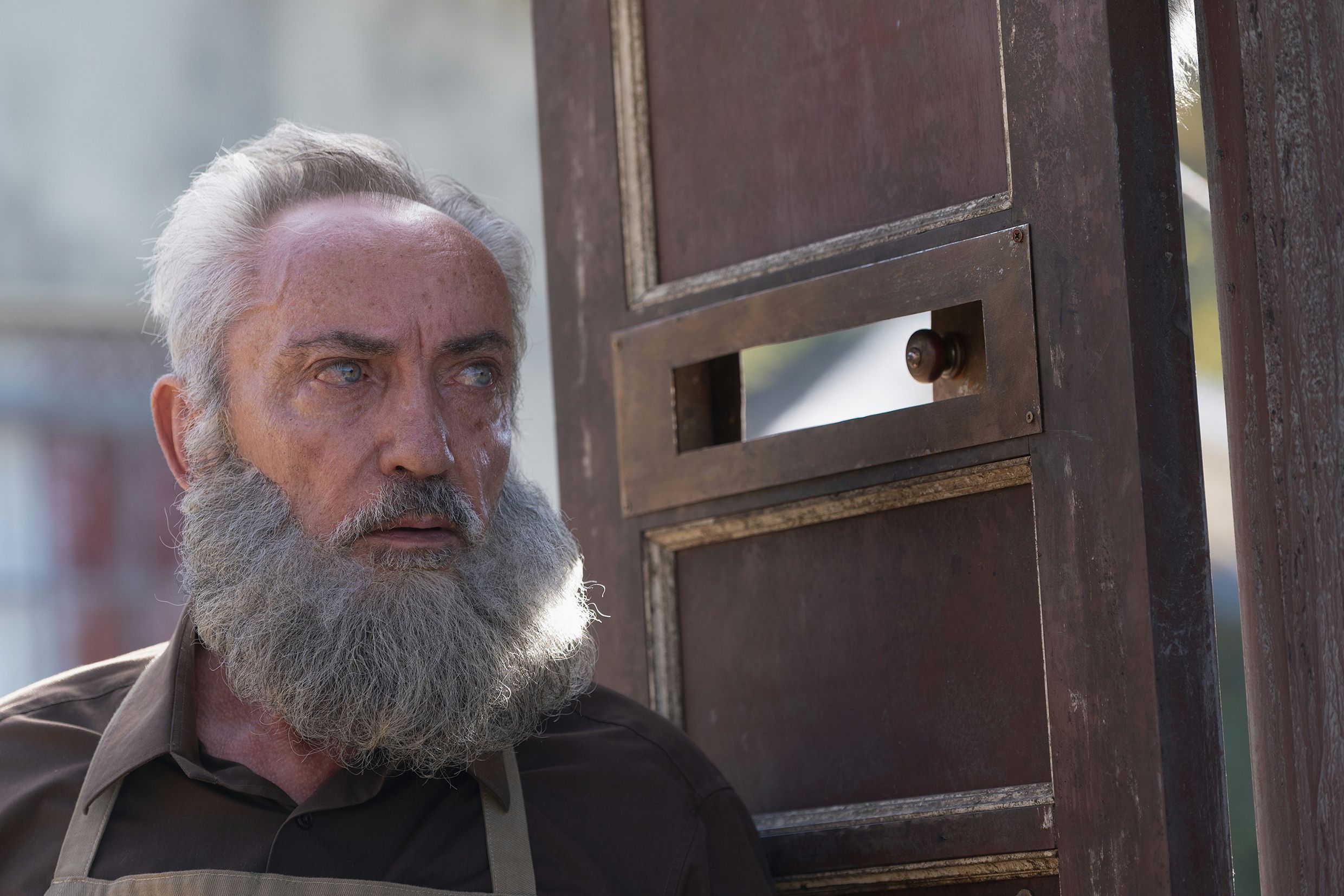
Udo Kier in MY NEIGHBOR ADOLF. Courtesy of Cohen Media Group.

Udo Kier proved that one can have a prolific career (275 IMDb credits) as a character actor in both art and cult cult movies. He worked with directors like Werner Rainier Fassbinder, Werner Herzog, Wim Wenders and Lars Von Trier, and in Hollywood films like Johnny Mneumonic, My Own Private Idaho, Armageddon, Halloween and Ace Venture: Pet Detective. His visage, scarier as he aged, worked well in horror movies. and he did many, beginning with Jim Morrisey’s Andy Warhol’s Frankenstein and Blood for Dracula. I’ll be writing about Kier’s last film, the very droll My Neighbor Adolf, when it comes out in January.

Lee Tamahori directed the intense and authentic Once Were Warriors, perhaps the best contemporary film on the Māori people and widely considered the greatest New Zealand film, and several Hollywood films, involving the James Bond Die Another Day

CURRENT MOVIES

ON TV

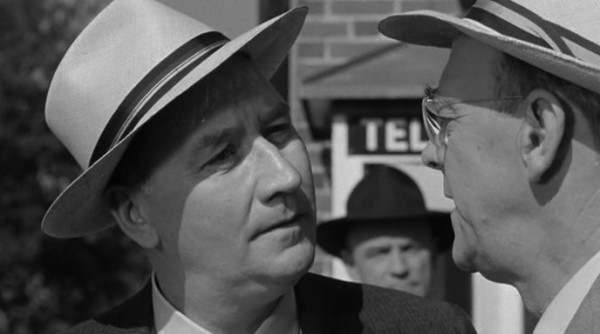
Edward Andrews and John McIntyre in THE PHENIX CITY STORY

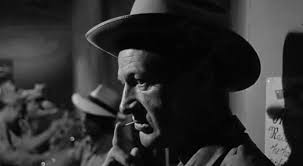
On December 9, Turner Classic Movies will broadcast The Phenix City Story; gritty, crisp and unvarnished, it’s a jarring contrast to 1950s Ozzie and Harriett American culture. It’s impossible to imagine a film noir that is more “ripped from the headlines”. The Phenix City Story is one of my Overlooked Noir; it’s hard to find to stream, so set your DVR for TCM this week.

John Larch in THE PHENIX CITY STORY

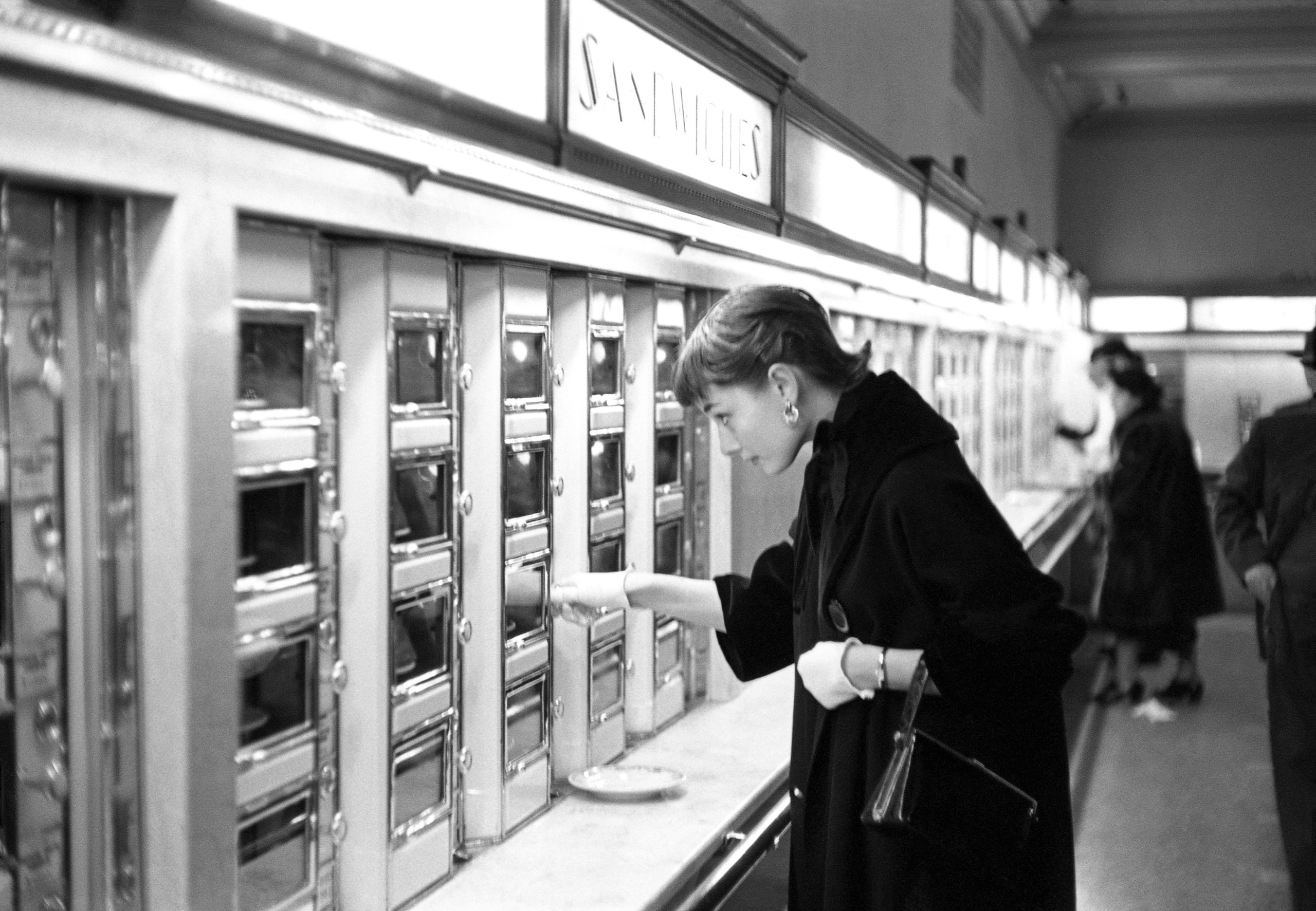
And, on December 11, TCM will air a charming 2022 documentary that I had recommended during its blink-and-you-missed-it theatrical run – The Automat. It traces the fascinating seven-decade run of the marble-floored food palaces where one could put nickels in a slot and be rewarded with a meal. Filled with unexpected nuggets, The Automat gives voice to those nostalgic about the automat, but it is clear-eyed about why it didn’t survive. The Automat is the first film for director Lisa Hurvitz, who spent eight years on the project. 

THE AUTOMAT: Actress Audrey Hepburn photographed by Howard Fried in New York City as part of a multi-day photo shoot for Esquire magazine, 1951. Courtesy of A Slice of Pie Production

SENTIMENTAL VALUE: generational healing

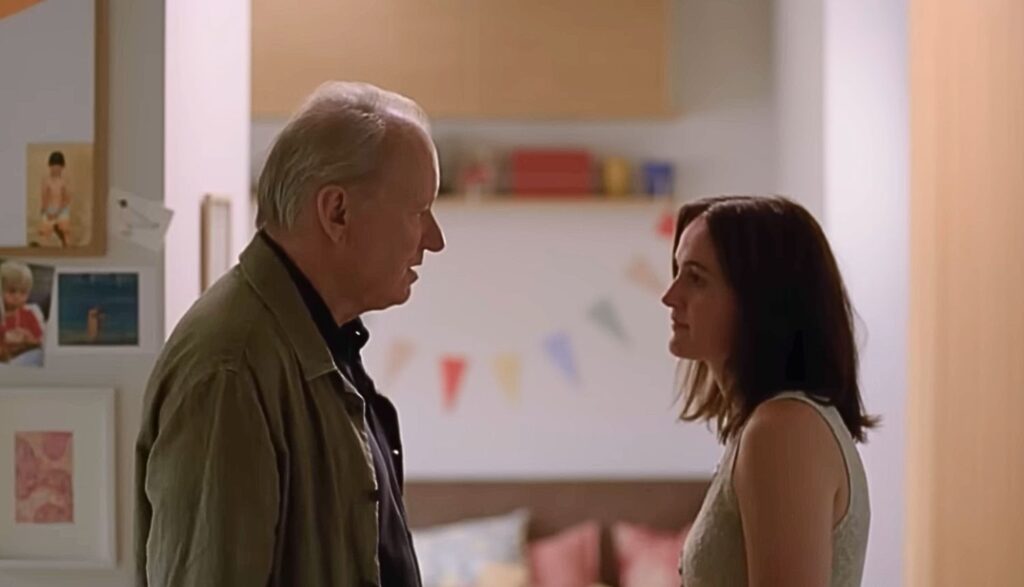
Photo caption: Stellan Skarsgard and Renate Reinsve in SENTIMENTAL VALUE. Courtesy of NEON.

Sentimental Value opens with Norway’s top stage actress, Nora Borg (Renate Reinsve) on the verge of an epic stage fright meltdown on opening night. Afterwards, she and her historian sister Agnes (Inga Ibdotter Lilleaas) try to get through the funeral of their mother. Unexpectedly, their estranged father Gustave (Stellan Skarsgaard) appears at the family gathering to pay his expects…and perhaps more. Having seen little of their father since they were young girls, Nora and Agnes find his surprising visit to be less of a comfort and perhaps even a provocation. Nevertheless, Gustave plods forth, trying to make nice.

Gustave is a famous European art film director at the end of his career. He’s now ready to make his final film, and he’s written a screenplay for Nora to star in. Still, raging at his decades of emotional neglect, Nora refuses.

Gustave persists hanging around, and lucks into casting the major Hollywood star Rachel (Elle Fanning) as his lead. Awkwardly, Gustave still owns the family home, which never got transferred during the divorce. Now he plans to use it as the shooting location for the film.

Both Nora and Agnes were traumatized by their parents’ breakup. Nora’s anxiety and attachment issues are more obvious, but Agnes’ life has been affected too.

Gustave is self-absorbed, stubborn and often emotionally tone-deaf. But what made him that way? Writer-director Joachim Trier reveals the history of the Borg family home, through flashbacks and through Agnes’ research. What happened in the house to Gustave’s mother molded her. And what Gustave saw of his mother molded him, too. Now, the family dominoes have continued to fall on Nora and Agnes.

Joachim Trier is one of contemporary cinema’s greatest story-tellers, as he has demonstrated in his breakthrough film Reprise, the grievously overlooked Louder Than Bombs and his Oscar-nominated The Worst Person in the World, which also starred Reinsve. Here, we think we’re watching a conventional family drama about a long-absent father, until Trier pulls us into a study of inter-generational emotional damage.

Reinsve and Skarsgard have justly received loads of recognition for their superbly nuanced performances. I was just as impressed by the work of Inga Ibdotter Lilleaas as Agnes, who becomes more and more central as the story evolves.

Trier, Skarsgard and Reinsve will be in the hunt for Oscar nominations for their work here. Sentimental Value is in theaters.

LEFT-HANDED GIRL: a family’s path to to catharsis

Photo caption: Shi-Yua Ma in LEFT-HANDED GIRL. Courtesy of Netflix.

In the wonderful family dramedy Left-Handed Girl, a family moves back to Tapei. The single mom Shu-Fen (Janet Tsai) opens a noodle stand in a boisterous night market. The teen daughter I-Ann (Shi-Yua Ma) takes a job in a very dodgy betel shop. The five-year-old daughter I-Jing (Nina Ye) starts kindergarten and finds adventure zipping around the night market on her own. Shu-Fen, the mom, is exhausted all the time, and we learn that she’s experiencing grief and shame, too. Each of the three independently faces her own deeply stressful situation, until the revelation of a family secret, in the most awkward of circumstances, brings catharsis.

The extended family lives in Taipei, but offer little support. Shu-Fen’s adult sisters all bicker, Grandma makes international runs for a trafficker, and the grumpy Grandpa insists that I-Jing’s lefthandedness is the work of the devil. (I-Jing takes Grandpa seriously, and unwelcome results ensue.)

All of the angst is leavened with humor, and there are lots of laughs in Left-Handed Girl. The extended family is funny, as is Johnny (Brando Huang), the good-hearted, goofy owner of the gadget stand in the market, who is sweet on Shu-Fen. And there’s Goo-Goo, an unexpected mammal in the story, which I will not spoil.

You may not have heard of Left-Handed Girl’s director, Shih-Ching Tsou, but you’ve seen her work. She met Sean Baker in film editing class, and the two have since collaborated as filmmaking partners. They co-directed their first film, she produced his Starlet, Tangerine, The Florida Project and Red Rocket, and Baker and Tsou co-wrote Left-Handed Girl.

Left-Handed Girl brings us a slice of working class life in urban Taiwan, and family foibles that we all recognize. It also is a pointed critique of traditional gender roles in Taiwan. Although everybody except the grandpa wants to move on from the old-fashioned superstition about left-handedness, they’re all obsessed with saving face and marrying off the daughters so the generational wealth can pass to the son.

The child actor Nina Ye is adorable, and all the is acting excellent. Shi-Yua Ma is superb as what we first see as just a selfish, surly teen, but who grows into a much more complicated character as the story evolves.

Left-Handed Girl is a triumphant directorial debut for Shih-Ching Tsou, and one of the Best Movies of 2025 – So Far. It is streaming on Netflix.

JAY KELLY: finding that the ship has sailed

Photo caption: George Clooney and Adam Sandler in Jay Kelly. Courtesy of Netflix.

In the witty and poignant Jay Kelly, the famous movie star Jay Kelly (George Clooney) is having an end-of-career crisis. Jay has two grown daughters and never leaves the house without an entourage led by his longtime manager Ron (Adam Sandler).

His younger daughter (Grace Edwards) is taking a pre-college trip to Europe, which causes him to assess the relationships he has with his daughters. Jay impulsively decides to surprise her in Europe, so he heads off on a private jet with his team of manager, publicist, hair and makeup person, personal assistant and security guy.

Jay is finally forced to face the sharp reality that his daughters have experienced. It’s true, of course, that, as a parent, he has no privacy from fans and paparazzi and that he must leave town to make movies. But it’s clear that Jay hasn’t tried to forge family and personal connections by working around those obstacles. Although he refuses to admit it, he has been content to accept the tradeoffs.

At the same time, the members of Jay’s entourage question how Jay returns the devotion that they give to him. Ron, in particular, must ask himself whether Jay, after a decades-long partnership sees him as a friend. The film could have been aptly titled Jay and Ron.

Jay Kelly is very, very funny throughout, as it sends up the pretensions, narcissism, disloyalty, and hypocrisy that Hollywood is known for. The screenplay was co-written by the film’s director Noah Baumbach (The Squid and the Whale, Marriage Story) and the actress Emily Mortimer (her first feature screenplay). (Mortimer has a small role as one of Jay’s minions.)

Interestingly, Jay Kelly is not a stand-in for a George Clooney-type A-lister but is more of a Tom Cruise-type action mega star.

George Clooney, who doesn’t seem to take himself too seriously, is perfect as a movie star who does. Adam Sandler is very affecting as Ron. The entire cast is excellent, especially Billy Crudup as an old acquaintance of Jay’s. 84-year-old Stacy Keach plays Jay’s dad, and, unsurprisingly, he’s a hoot.

The most compelling performance is by Riley Keough as Jay’s elder daughter, who is determined to survive the emotional damage she has suffered.

This is an enjoyable comedy with substance. Jay Kelly is in theaters now and releases on Netflix on December 5.