Mr Corleone is a man who insists on hearing bad news at once.
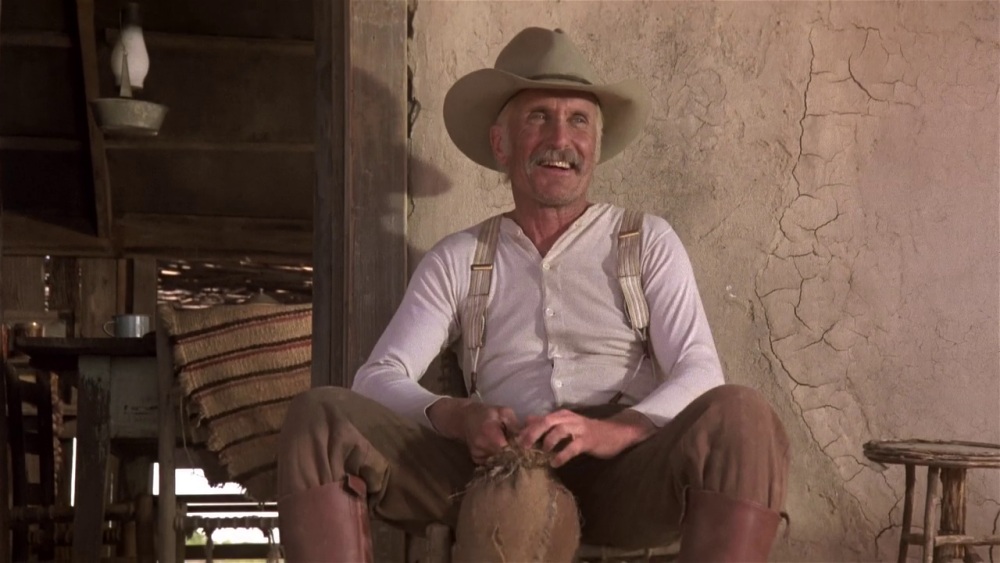
Lorie darlin’, life in San Francisco, you see, is still just life. If you want any one thing too badly, it’s likely to turn out to be a disappointment. The only healthy way to live life is to learn to like all the little everyday things, like a sip of good whiskey in the evening, a soft bed, a glass of buttermilk, or a feisty gentleman like myself.
We just can’t imagine any actor other than Robert Duvall delivering these lines. I can’t imagine Apocalypse Now!, The Godfather or Lonesome Dove without Duvall.
Duvall had the gift of finding the essence of each character. He had an unerring instinct to turn his roles into indelible characters. His supporting performances are as memorable as his starring turns.
Duvall was nominated for an Oscar seven times, including for The Great Santini, where his Colonel Bull Meecham organized his family with “Moving day. Let’s go, Hogs! Breaking camp. Everybody at the car in 5 minutes. Move it!” Duvall won the Best Actor Oscar for Tender Mercies.
Duvall started out as a New York stage actor, rooming with fellow struggling actor Dustin Hoffman, and then Gene Hackman. Working mostly on television, he amassed 50 screen credits before The Godfather. He did get to play Boo Radley in To Kill a Mockingbird.
Eventually, in 1968 he began to get roles in high profile movies: Bulitt!, M*A*S*H*, the John Wayne True Grit, Francis Ford Coppola’s early film The Rain People and he starred in George Lucas’ debut film, THX 1138
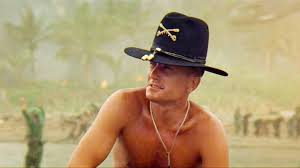
Robert Duvall in APOCALYPSE NOW!
Then came The Godfather in 1972, launching an amazming 12-year run that included The Godfather, Part II, Network,The Great Santini, Tender Mercies and The Natural. His most beloved performance came in 1989, as Gus McCrae in Lonesome Dove.
Between Godfather movies, he starred in a grievously overlooked neo-noir The Outfit, which I recommend streaming on Amazon, AppleTV, YouTube or Fandango.
Duvall himself had a sly sense of humore. He appeared uncredited as the plastic-covered corpse in The Conversation and the silent priest on a swing in Invasion of the Body Snatchers.
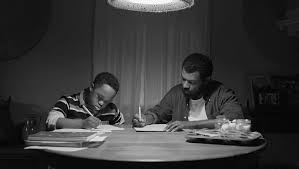
Photo caption: Jeremiah Daniels and William Catlett in COLOR BOOK. Courtesy of NashFilm.
As a blog, The Movie Gourmet has evolved to specializing in film festival coverage, with a concentration in filmmakers’ first feature films. The most exciting payoff from my coverage of this year’s Slamdance, Cinequest, San Luis Obispo, Frameline and Nashville film festivals were these discoveries. The first four are listed on my Best Movies of 2025 , Although I saw most of these at film festivals, before their releases, you can already stream seven of them now.
Shih-Ching Tsou (US/Taiwan), Left-Handed Girl: Although this is Shih-Ching Tsou’s directorial debut, you’ve already been seeing her filmmaking work. She met Sean Baker in film editing class, and the two have since collaborated as filmmaking partners. They co-directed their first film, she produced his Starlet, Tangerine, The Florida Project and Red Rocket, and Baker and Tsou co-wrote Left-Handed Girl.Left-Handed Girl is a character-driven dramedy about family foibles that we all recognize, and with a pointed critique of traditional gender roles in Taiwan. Netflix.
Alexandra Simpson (US), No Sleep Till: A hurricane is about to hit downscale Florida beach towns; the tourists are already gone, and workaday Floridians prepare to evacuate or hunker down. The storm is merely the setting for a compendium of short stories, as Simpson reveals essential truths about her characters, one or two at a time – a lost crush, a solitary obsession, a resuscitated friendship. Each chapter is so authentic, I had to keep reminding myself that I wasn’t watching a cinema verité documentary. Simpson also wrote, edited, produced and collaborated on the sound design, and she is a writer of uncommon economy. Simpson and cinematographer Sylvain Froidevaux capture the ominous weather, which mirrors the turbulence in the lives of the characters. hoopla.
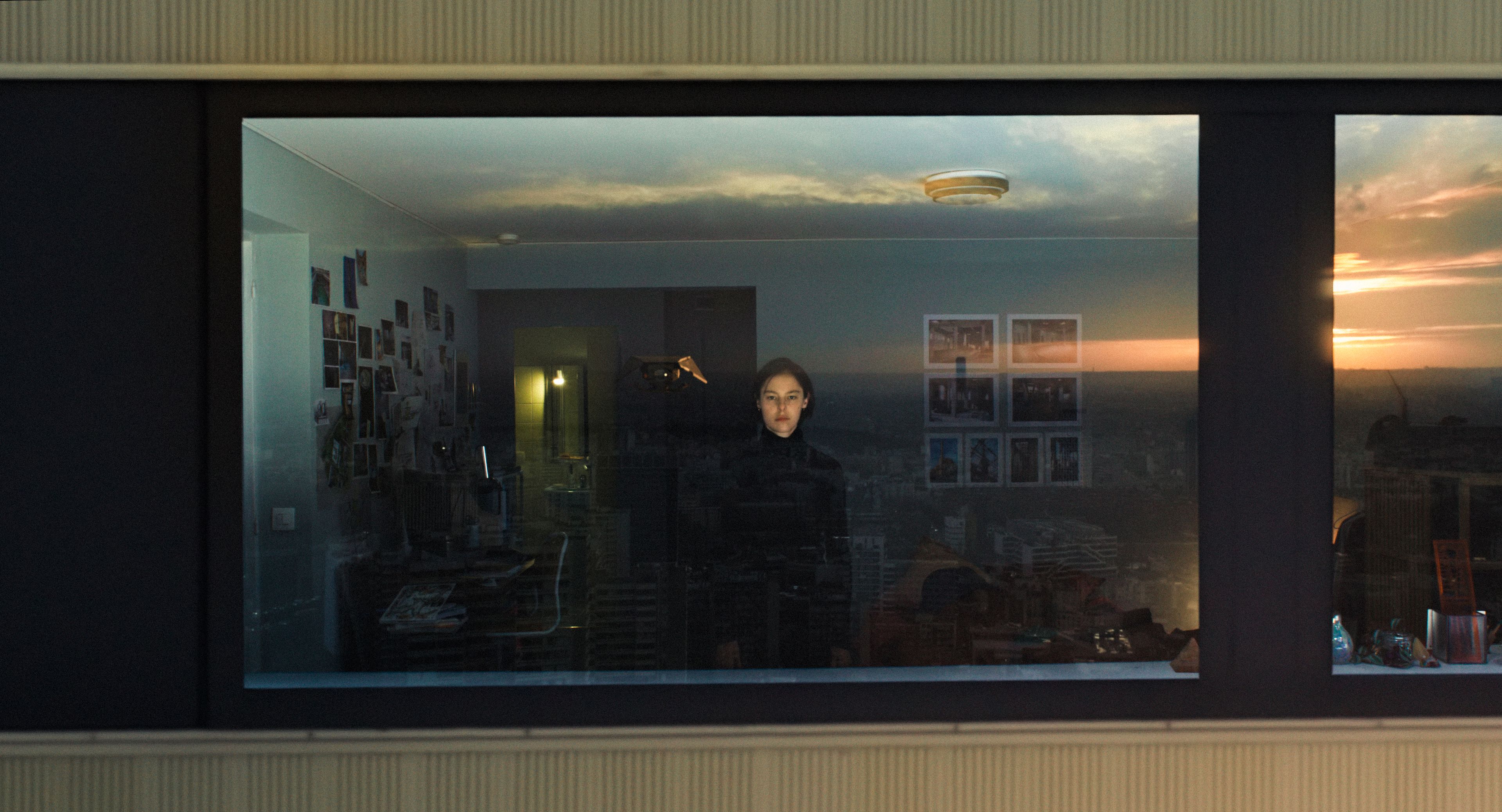
Simon Bouisson (France), Drone: A woman is stalked through Paris by a mysterious drone, in a thriller that explores issues of privacy and the male gaze. A magnificent 4-minute opening sequence, introduces us to the vulnerability caused by the voyeur drone. There are exhilarating set pieces in a parking garage, a motorcycle chase and an abandoned factory, as writer-director Simon Bouisson and cinematographer Ludovic Zulli keep their drone camera in pursuit of the story’s stalker drone. In his first theatrical feature, Bouisson keeps the tension pounding, all the way to the ingenious ending.
Cris Tapia Marchiori (Argentina), Gunman: A minor hoodlum goes on the run in a 75-minute, real-time thrill ride. Based on a true story and shot in its actual setting, the drug-plagued Buenos Aires neighborhood of Isla Maciel, Gunman is brimming with verisimilitude.
Giovanni Tortorici (Italy), Nineteen (Diciannove): .Diciannove is the singular and imaginative calling card of a new auteur; Tortorici may be a visual show-off, but he has an uncommon gift for creating a realistic, but compelling and unpredictable character. He maintains visual interest by throwing everything at the screen – disco scenes with an operatic score, slow motion, animated dreams and every kind of fancy cut. Nighttime scenes in a cold and hard London give way to lovingly beautiful shots of tranquil Siena. .AppleTV.
David Fortune (US), Color Book: After the sudden death of his wife, Lucky is left to parent their son Mason, who has Down syndrome. Now grieving and trying to make ends meet on a one income, Lucky faces the unrelenting struggles of single parenting – why does everything have to be so hard? Although he has a hard time asking for help, in many ways, Lucky is the ideal dad – affectionate, patient and consistent. Lucky wants to thrill Mason with his first major league baseball game, but the two get a bigger dose of Atlanta’s transit system than they would ever want. The journey is far more more meaningful than is the destination. Atlanta writer-director David Fortune has won eight festival awards in the US and France with his inaugural film. The black and white cinematography by Nikolaus Dummerer is exquisite. Without a hint of sentimentality, Color Book is authentic and endearing.
Woody Bess (US), Portal to Hell: In this witty, dark comedy, a hangdog bill collector named Dunn (get it?) discovers a portal to hell, replete with hellfire and brimstone, in his local laundromat, and he strikes a bargain with its proprietor. Dunn is too nice for his wretched job, but just what is he capable of? And how about the insipid pop band who sings your least favorite earworm – who wouldn’t want to consign THEM to hell? Portal to Hell considers the question, what is a good person? but never too seriously. This is an imaginative, comic triumph for writer/director/cinematographer Woody Bess.
Richard Melkonian (UK), Universe25: This thoughtful, ever-surprising and mysterious film embeds a fable of self-discovery in a dystopian sci-fi framework. Mott the Angel is sent to Earth, essentially on a cleanup mission, by a Creator who is ready to pull the plug on our world. In a singular and impressive feature debut, writer-director Richard Melkonian has imagined a look at humanity from an space alien’s point of view. As he careens from Britain to Romania, Mott questions just what/who he aspires to be. Hilariously, the story is revealed when the scroll that Mott writes for the Creator ends up in the lost mail bin, where it is read by a bitter postal clerk.
Erica Xia-Hou’(China), Banr: In this marvel of innovative storytelling, an elderly husband (Sui Li) is struggling to hold on to his wife as she sinks into Alzheimer’s, with the support of their adult daughter (Xia-Hou herself). That main story is told in a cinéma vérité documentary style, but that’s just what the husband and daughter see in their lucidity. Those segments are interwoven with fragments of the wife’s memory and her delusions and dreams. In depicting the most ordinary daily activities, Xia-Hou keeps us continually off-guard by shifting the points of view between the clear-eyed and the muddled. weaving together the lucis and the confused With the exception of herself, Xia-Hou used all non-professional actors.
Freddy MacDonald (US, Sew Torn: The young protagonist is a mobile seamstress and her super power is rigging Rube Goldberg solutions with needle and thread to face any emergency situation. It doesn’t take long before she’s entangled in a fight to the death between two gangs of crooks, and we’re asking just what are we watching here? There’s a surprise in the construction of the story, which I won’t spoil, except to say that it involves the reimagining of outcomes. Amazon, AppleTV, YouTube.
Kate Beecroft (US), East of Wall: In the engrossing indie family drama, a grieving widow struggles to support her family and a brood of foster kids by training horses. Beecroft handles the central thread of the story – the highly charged relationship with the mom’s rodeo champion teen daughter – with remarkable authenticity. What is most impressive is that, with the exception of supporting players Scoot McNairy and Jennifer Ehle, Beecroft is doing this with non-professional actors in all the main roles. These are all rural South Dakotans playing fictionalized versions of themselves. Amazon, AppleTV, Fandango.
Kelsey Taylor (US), To Kill a Wolf: In this character-driven indie drama, a reclusive woodsman in the Pacific Northwest finds a seventeen-year-old runaway collapsed in the forest. He brings her back to his isolated cabin, nurses her back to health and tries to learn how he can return her to her home. She’s not forthcoming, so he has a mystery to solve. Meanwhile, the audience is on to other mysteries – why is the Woodsman (that’s the character’s appellation in the credits) living such an isolated life and why is his relationship with local community members so charged? As the Woodsman takes Dani on a road trip to her most recent residence, the answers, one by one, are revealed. A superb story-teller, Taylor doesn’t explain behaviors before you need to understand them. We’re continually wondering about the characters and about what will happen next, and are usually surprised about what the Woodsman is doing and why. Music is unusually important to the characters and to the film itself. The way Taylor ends the film is perfect – the final shot is not even a half-second too long. Amazon, AppleTV, YouTube.
Xinyan Yu (China) and Max Duncan (US), Made in Ethiopia: This scintillating documentry is a brilliant exploration of clashing cultures and economic imperialism. PBS, PBS POV.
Gala del Sol (Spain/Columbia):,Rains Over Babel: In an imagined Cali, Columbia, bars connected to the Underworld (not the just criminal underworld), are ruled by a sexy loan shark who is the Grim Reaper. Among the denizens are a sleek and smarmy bartender, a prudish preacher, a gangland enforcer who’s been dead for twenty years, a talking salamander and more drag queens than you can shake a stick at. The story, fraught with desperation and Faustian bargains, flies by. Del Sol says she marries magic realism with gritty realism, and Rains Over Babel is visually orgiastic. The intricate production designs of the interiors could be by a demented Wes Anderson. The sound design is jarring and totally original. As an auteur, Gala del Sol is thinking so far outside of the box that you can’t tell that there’s a box.
Raul Sebastian Quintanilla (Mexico), The Move In (Mudanza): A couple moves into a new home and, the first night, think someone has broken in; it turns out to be only the clang of an old window, but it’s a really scary experience, and the man, heading off to defend them, suffers a panic attack. As they unwind from the incident, it appears like they can get past it, but can they? In his first feature, writer-director-producer RS Quintanilla gradually reveals more about the origin and underpinnings of their newish relationship, as the incident’s impact lingers. It’s a similar premise to Ruben Ostlund’s Force Majeure, but The Move In is more subtle and perhaps even better. This a profoundly clever screenplay, and The Move In was one of the very best films at Cinequest.
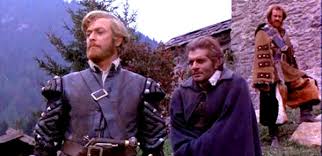
Photo caption: Michael Caine (left) and Omar Sharif (center) in THE LAST VALLEY
The historical epic The Last Valley is set in 1643 when a band of mercenaries led by The Captain (Michael Caine) is foraging. They happen upon a remote hamlet tucked deep in the Tyrolean Alps that, miraculously has not yet been ruined by warfare. The Captain has conscripted a wandering refugee, the teacher Vogel (Omar Sharif), for his value in an illiterate time. The Captain and Vogel broker a deal with village’s headman Gruber (Nigel Davenport) for the soldiers to spend the winter in the village, a respite from the combat, starvation and plague prevalent everywhere else.
It’s a great deal for the mercenaries – they get food and shelter (and some designated women companions) for the winter. In return, the soldiers will refrain from massacring the villagers and will protect them from other raiders.
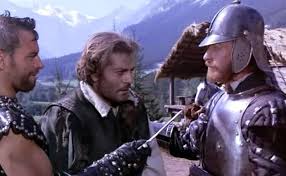
Of course, the arrangement comes with underlying tensions. The peasants would rather not be sharing their village with strangers who are professional killers. The villagers are Catholic and most of the soldiers are nominally Protestant, although they have switched sides from time to time. The one local ideologue is a fanatic priest (Per Oscarsson), who fumes at what he sees as intolerable heresy.
There’s also always the threat of thuggish behavior from the newcomers, who are used to taking whatever they want at the point of a sword. All civil order depends on the discipline enforced remorselessly by the Captain.
The Captain and Gruber agree that Vogel, who serves as The Last Valley’s moral center, will decide disputes.
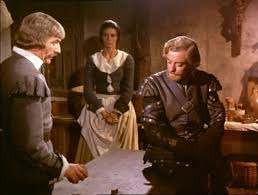
By the way, the Captain has taken Gruber’s beautiful wife (Florinda Bolkan) as his live-in companion, which Gruber accepts only because he has no choice. Gruber simmers.
Nigel Davenport, Florinda Bolkan and Michael Caine in THE LAST VALLEY
Will the two sides be able to co-exist for the entire winter? What will happen in the springtime? This was a time of superstition, cruelty and total war, so it’s unlikely that everyone will survive unscathed.
The Last Valley is set amid the Thirty Years’ War, when political power in Europe was being reset by the Reformation. Catholic emperors tried to resist losing parts of their realms to new Protestant states. From 1618 through 1648, armies fought their way back and forth across Central Europe. Smaller armed bands, both sectarian and mercenary, preyed on civilians, plundering, raping and, incidentally, spreading plagues. Europe in the mid 17th Century was a bad time to be a soldier, and far worse to be a peasant. Over five million lost their lives, and the population was reduced by 50% in parts of Germany.
So, this must clearly be the best movie about the Thirty Years War. But is it a good movie, and does it stand up today? On the plus side, the characters of the four main characters – Vogel, the Captain, Gruber and Erica – are textured and novel, and the performances of Sharif, Caine, Davenport and Bolkan are excellent (although Caine is the only actor who chose to speak English with a German accent). On the minus side, the minor characters (the best example is Hansen, played by Michael Gothard) are one-note stereotypes that only exist to create conflict for the plot. And the dialogue is often stilted or lame.
What The Last Valley does very well is to replace the the perspective of popes, emperors and kings with that of ordinary Europeans on the ground, both soldiers and civilians. This isn’t the history book (or Wikipedia) account of the Thirty Years War, it’s what most Europeans experienced.
The Last Valley features an international cast, from the UK (Caine, Davenport, Brian Blessed, Jack Shepherd, Andrew McCulloch, John Hallam), Egypt (Sharif) Brazil (leading lady Florinda Bolkan), Sweden (Per Oscarsson), Poland (Vladek Sheybal)), Greece (Yorgo Voyagis) and the US (Arthur O’Connell).
The Last Valley was directed by James Clavell, who adapted a novel by J.B. Pick.. Clavell had worked as a screenwriter, beginning with the original 1950s The Fly, before he harnessed his own experience as a WW II POW to write the autobiographical King Rat (which he got to direct) and the global hit The Great Escape. His success allowed him the time to write the novel Tai-Pai, which became a massive best-seller. Back at directing in 1967, Clavell then had a hit with To Sir, With Love. At this point in his career, Clavell directed The Last Valley.
The Last Valley was not a commercial success. I think that’s because it was marketed as a super widescreen epic; but almost a decade had passed since Spartacus, Cleopatra, How the West Was Won and The Bible – and cinema culture had moved on. That’s too bad, because The Last Valley, with its revisionist politics and dark view of humanity, fits in with the maverick cinema of the 1970s.
After directing The Last Valley took time to write another blockbuster novel, Shogun. This novel and the 1980 spin-off television series Shogun, both monster hits, were Clavell’s biggest successes and most memorable works.
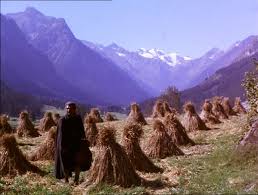
The Last Valley was shot around Gschnitz in the Austrian Tyrolean Alps, a scenic place that must be immeasurably more livable than it was four hundred years ago.
The Last Valley is not yet available to stream and is very hard to find, except on pre-owned DVDs.
Set your DVR to record the September 26 early morning airing of El Vampiro Negro on Turner Classic Movies. This is NOT a vampire movie – it is a serial killer movie – and an unforgettable one. Restored by the Film Noir Foundation, it is on my list of Overlooked Noir, and is very hard to find, although you can stream it on kanopy..
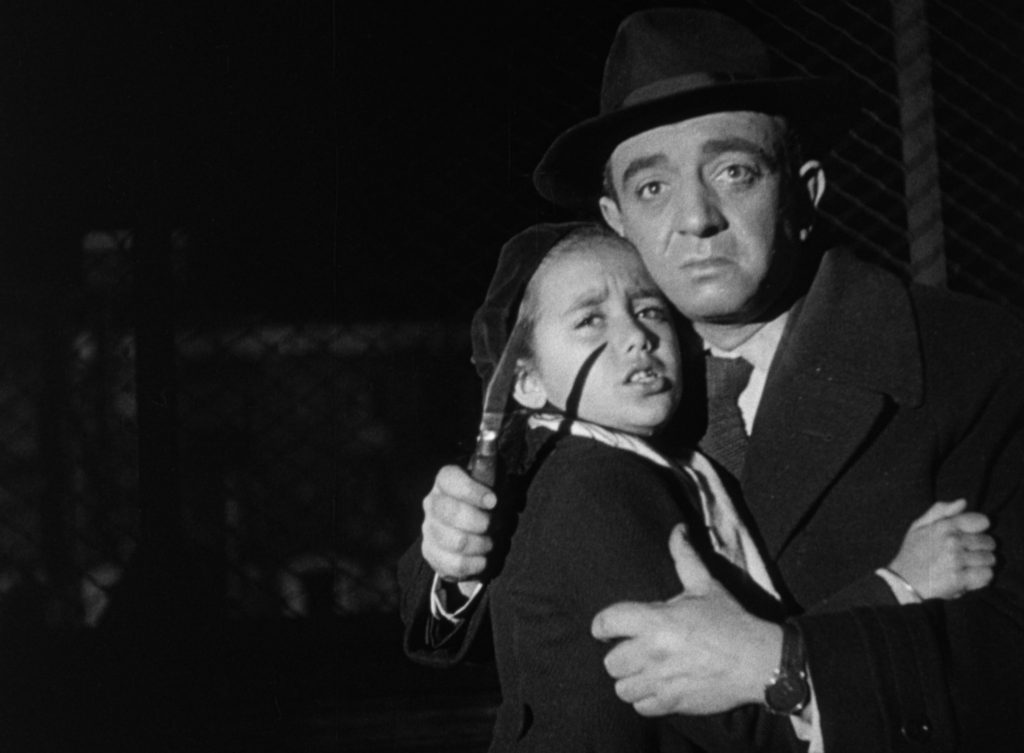
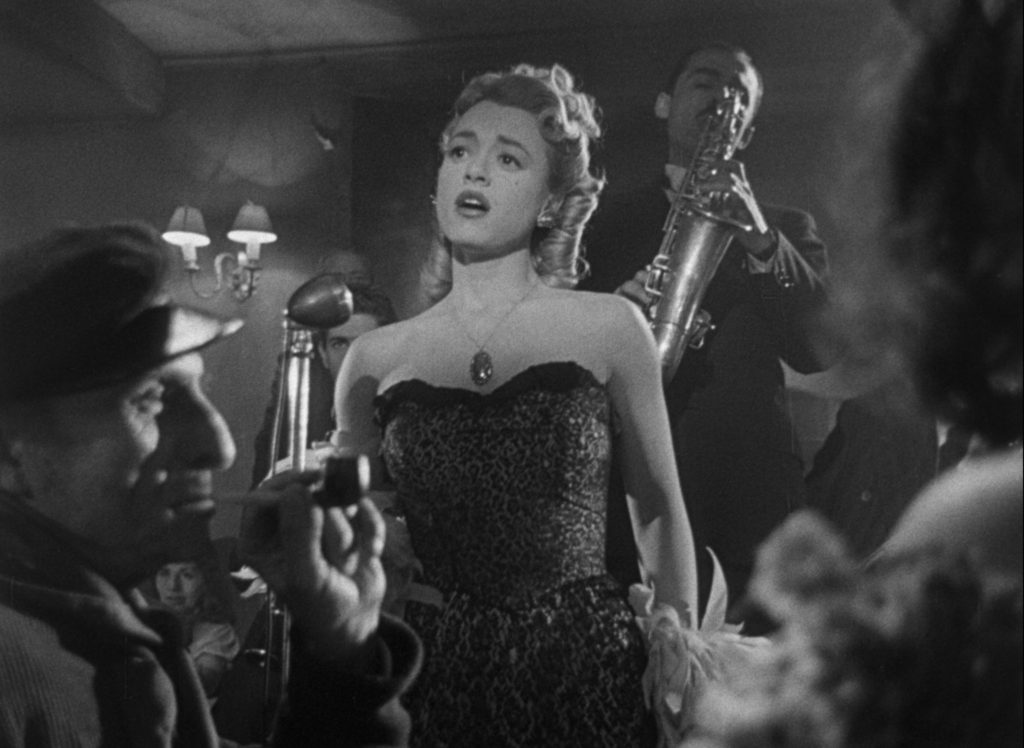
The Argentine suspense classic The Black Vampire opens with a man stumbling on steps, then with a Rorschach test, and then with a nightclub in which each of the patrons is a different version of Up To No Good. We’re in the underworld, but an underworld that is rocked by serial murders. And we can tell that this is no run-of-the-mill crime movie.
The city is consumed by a child murderer on the prowl, and the police are turning the city upside down. With the cops disrupting business, the criminals launch their own man hunt. If this plot sounds familiar, it’s because The Black Vampire is a remake of Fritz Lang’s 1931 M. As in the 1931 M, there is a blind balloon vendor, a killer whistling In the Hall of the Mountain King and and an underworld dragnet.
As the lead, Nathán Pinzón is AT LEAST AS GOOD as was Peter Lorre in the original M. Often sweat-beaded, Pinzón tightropes the line between scary and pathetic. This character is a complete pervert, but he’s aware of and tries to restrain his horrific compulsions.
Pinzón was chiefly known as a usually comic actor; he played the leering, cynical Carpax in The Beast Must Die. Pinzón’s birth surname was Garfunkle.
In contrast to the monstrous killer animated by Pinzon’s charisma, the prosecutor (Roberto Escalada) is a stick-in-the-mud; but, for some perverse spice, he is sexually frustrated because his wife is physically disabled.
The director Román Viñoly Barreto is known for beginning and ending each film with a Biblical verse – and for the death of a child in each movie. Here he makes The Black Vampire as trippy as any 1953 movie could be. It’s best when it’s set in the nightclubs and streets and the haunts of the lowlifes, and highly stylized. When it is set in the prosecutor’s office and his apartment, The Black Vampire drags.
The Film Noir Foundation restored both Román Viñoly Barreto’s The Black Vampire and The Beast Must Die. I attended the premiere of both restorations at Noir City in 2020. The Film Noir Foundation has since DVD. You can also stream El Vampiro Negro from kanopy.
One of the highly stylized nightclub scenes in THE BLACK VAMPIRE
Killers of the Flower Moon: Whiskey just keeps showing up, from King (Robert De Niro) greeting Ernest (Leonardo DiCaprio) with a glass to Mollie (Lily Gladstone) bringing out the good stuff to entertain Ernest.
The Holdovers: In The Holdovers, Paul is a bourbonaholic, who usually drinks Jim Beam, and he buys a pint in the Boston liquor store. (I’m a fan of The Holdovers, but not Jim Beam).
Past Lives: The film is bookended a scene in a New York City bar with the three main characters; Arthut (John Maguro) is drinking an Old Fashioned.
Oppenheimer: The flask keeps showing up – and in the 1940s US, it’s gotta contain whiskey.
Pasta:
Anatomy of a Fall: Defense attorney Vincent fixes spaghetti when first visiting Sandra (Sandra Huller) after her husband falls to his death. It’s a simple, light colored pasta like cacio a pepe or alla Gricia, and that’s what I’ll be preparing.
Past Lives: Given the choice of any cuisine available in New York City, Hae Sung requests pasta, so Nora and Arthur take him to an Italian restaurant where there have pasta with a red sauce.
American Fiction: Monk (Jeffrey Wright) and Coraline (Erika Alexander) are preparing a pasta dinner at her place, when their relationship takes a turn.
To go salad in a deli clamshell from American Fiction: Monk is at a hotel conference center to serve on a panel judging books for a literary prize. At the lunch break, he grabs a clamshell salad instead of a wrapped sandwich, which just perfectly fits the character.
Toast and milk from Barbie: Barbie (Margot Robbie) holds a piece of toast and a cup of milk (but doesn’t actually CONSUME them because she’s made of plastic, after all).
Chinese takeout from Maestro: Lenny (Bradley Cooper) and Felicia (Carey Mulligan) enjoy this Manhattan staple in their Upper West Side apartment with their artsy, intellectual friends.
Pasteis de nata from Poor Things: Belle (Emma Stone) gets addicted to these delectable Portuguese egg custards as she matures into having really good taste. The best pasteis de nata in the Western Hemisphere are from Adega in San Jose, but we had to make our own poor substitute.
German pastry from Zone of Interest: This is from the scene when Hedwig (Sandra Huller) is impressing her mother with the lifestyle perks of Hedwig’s marriage to the big boss.
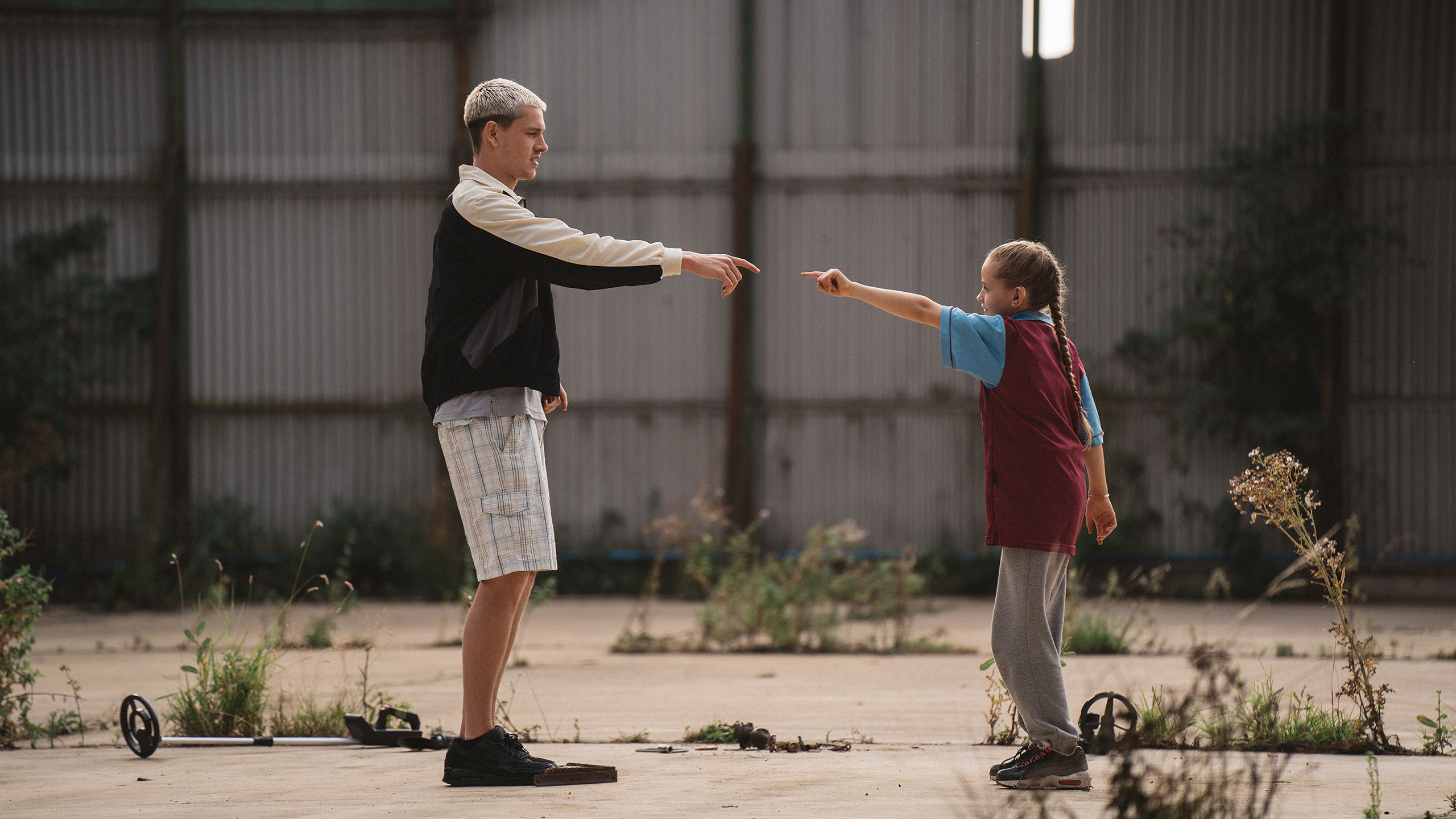
Photo caption: Harris Dickinson and Lola Campbell in Charlotte Regan’s SCRAPPER at Cinequest. Courtesy of Kino Lorber.
Cinequest, Silicon Valley’s own major film festival, returns live and in-person August 15, back in downtown San Jose, with screenings August 15-24 at the California, Theatre and the Hammer Theater. For August 24-30, the program moves to the ShowPlace ICON Theatre in Mountain View. That means TWO opening nights (San Jose and Mountain View).
Highlights of the 2023 Cinequest include:
Films from Korea, Poland, China, Iran, Bulgaria, India, Australia, and Mexico, and I’ve already screened Cinequest features from North Macedonia, the Netherlands, Belgium, Romania, Germany, and the UK, too.
New movies with Timothy Spall, Jennifer Esposito, Anabella Sciorra, Dermot Mulroney, Bradley Whitford, Alice Braga, Harris Dickinson, Abigail Breslin, Ryan Philippe, Mena Suvari and Steve Zahn.
See it here FIRST: Scrapper is among the movies slated for theatrical release later this year.
And, at Cinequest, it’s easy to meet the filmmakers.
As usual, I’ll be covering Cinequest rigorously with features and movie recommendations. This year, of my top seven films, five are world premieres; six are the first or second films by their director, and the seventh is by an Oscar-nominated, veteran filmmaker.
I usually screen (and write about) over thirty Cinequest films from around the world. Bookmark my CINEQUEST 2023 page, with links to all my coverage (links on the individual movies will start to go live on Sunday, August 13).
Frameline —the world’s largest LGBTQ film festival—is taking place Thursday, June 16 through Sunday, June 26, 2022. Screenings will take place at the Castro Theatre, Roxie Theater, SFMOMA, Proxy and AMC Kabuki in San Francisco and the New Parkway Theater in Oakland. Many films in the program will also be available to stream from June 24 through June 30.
The program will feature over 130 films from more than 30 countries. There will be 18 world premieres, eight North American premieres, five U.S. premieres, 28 West Coast premieres and 44 San Francisco Bay Area premieres. See it here first.
Highlights include:
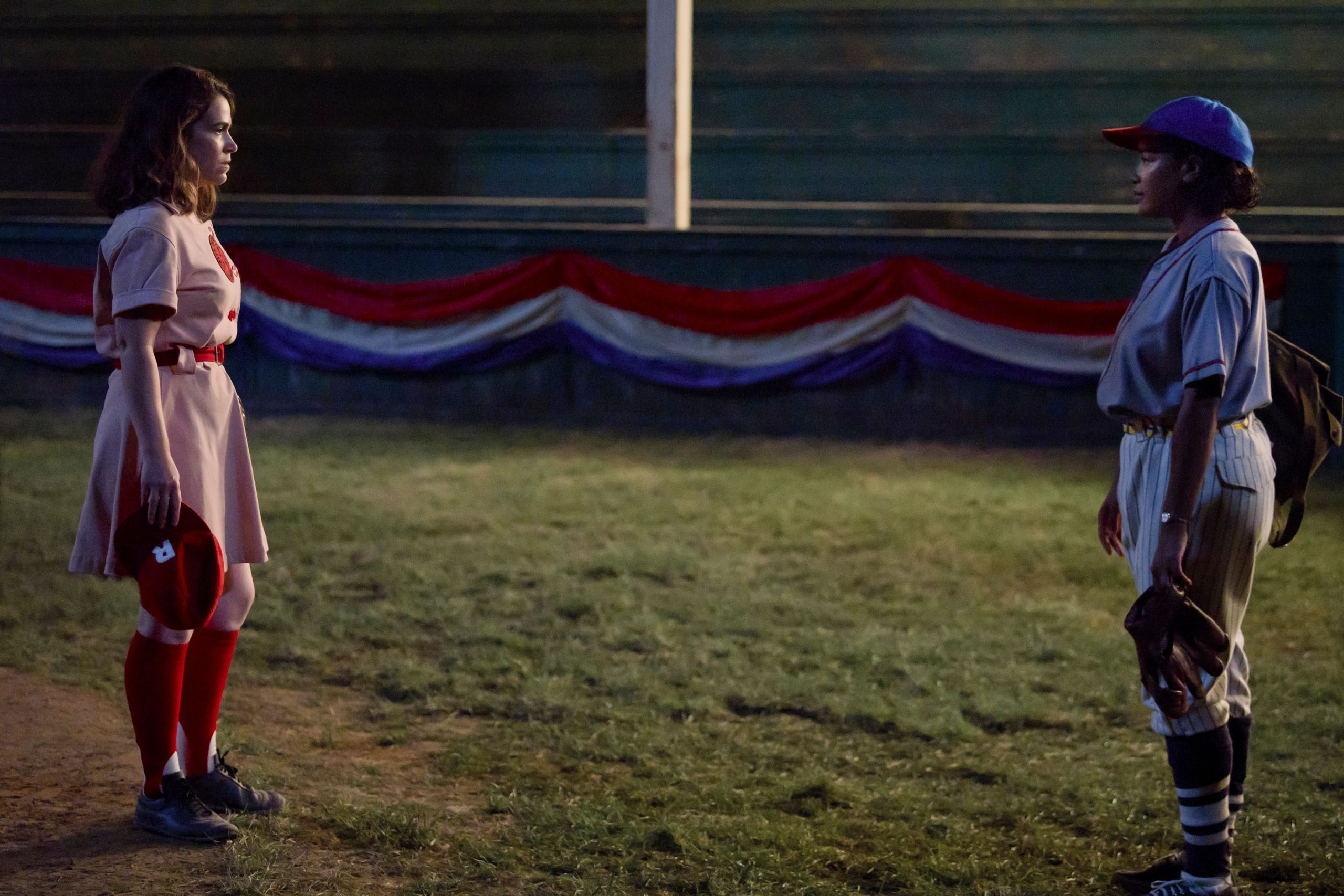
A League of Their Own: the first two episodes of the new Amazon Prime series based on the beloved 1992 movie.
Mars One: the Brazilian indie hit at Sundance that will be coming to art house theaters later this year.
I haven’t seen either of those two, but I’ve been screening festival films and will post my recommendations on June 16. Stay tuned. Peruse the program and buy tickets at Frameline.