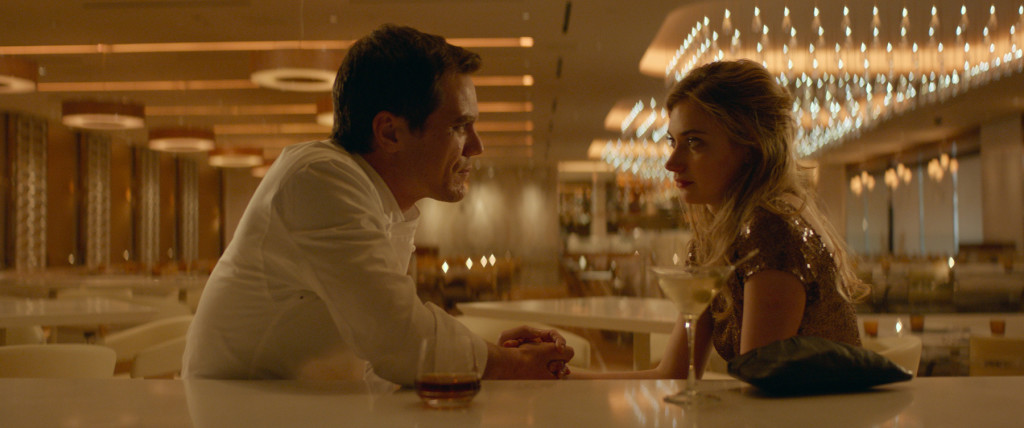
FEVER AT DAWN: romance, identity and a moral choice

FEVER AT DAWN
FEVER AT DAWN

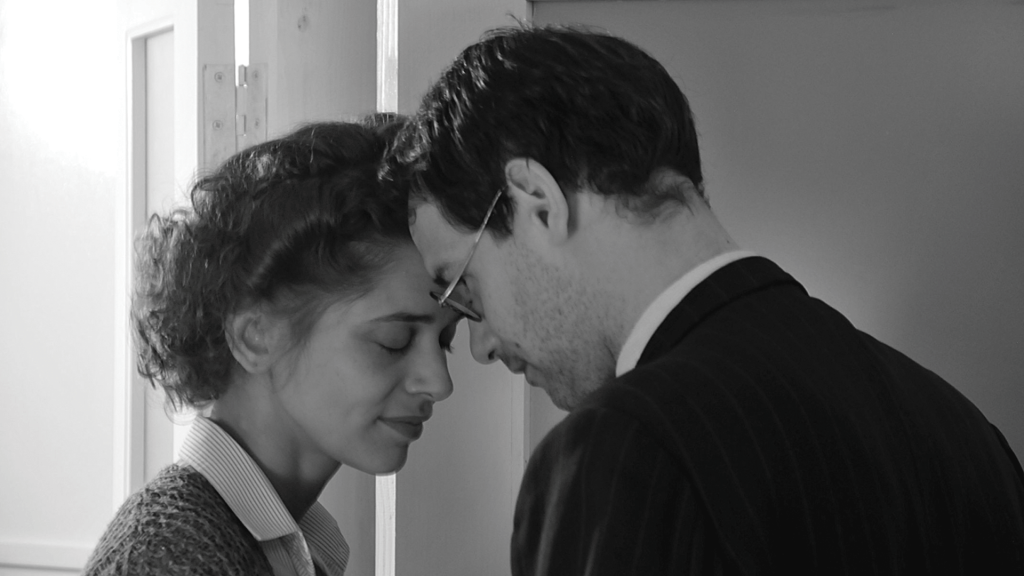
The Hungarian drama Fever at Dawn is a little movie with an epic romance. Set just after the liberation of the Nazi concentration camps, Hungarian invalids who survived the camps have been sent to convalesce in hospital camps in Sweden. A young patient, Miklos, gets a dire diagnosis and determines to find love once more before he dies. A half century before internet dating, he concocts a scheme to get himself in front of every sick Hungarian woman in Sweden. When he meets his potential soulmate Lili, a moral question rises to the surface – should he share his diagnosis with the woman he is courting?

Some Holocaust survivors experienced ambivalence about the very Jewish identity that led to yellow stars on their clothes and, essentially, targets on their backs. This ambivalence becomes a significant thread of Fever at Dawn and is addressed more explicitly than is common for Holocaust (or post-Holocaust) movies.

Don’t read too much about this movie before seeing it. There’s an unexpected nugget at the end.

I saw Fever at Dawn earlier this year at its US premiere at Cinequest.  It’s being featured at this years San Francisco Jewish Film Festival (SJFF36), where you can see it at San Francisco’s Castro on July 26, at the Berkeley Rep’s Roda Theater on July 28, and at CineArts in Palo Alto on July 29.

MY GOLDEN DAYS: the urgency of first love

MY GOLDEN DAYS
MY GOLDEN DAYS

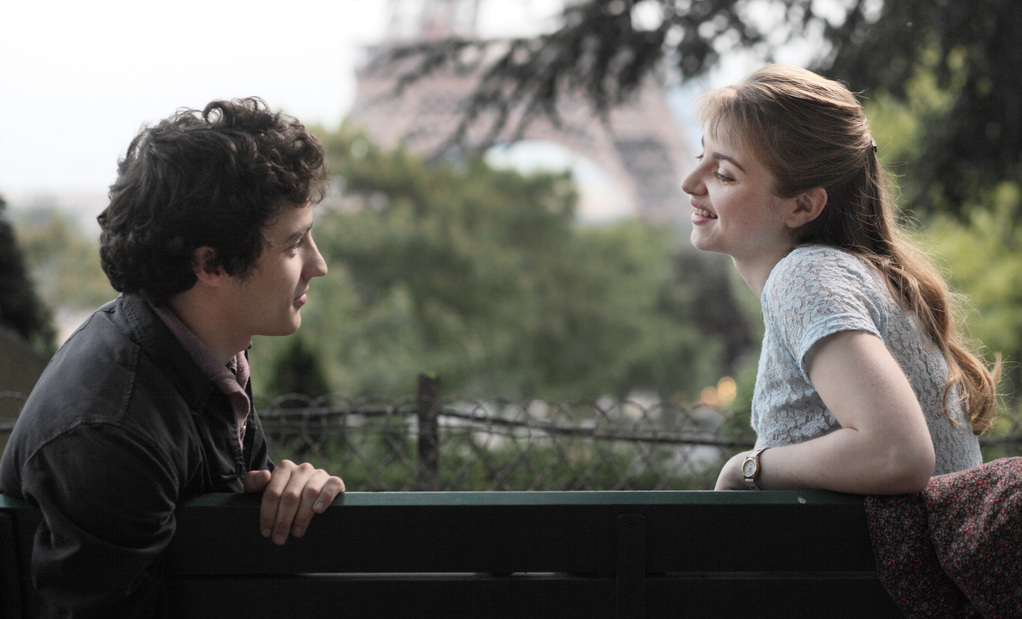
The first love depicted in Arnaud Desplechin’s coming of age film My Golden Days is completely evocative. That first love is inevitable even if the young lovers don’t know it yet, and then filled with passion, importance, obsession, angst, conflict, breakups and makeups. And then it runs its course.

The performance of Lou Roy-Lecollinet as the unpredictable object of the young protagonist’s affection really elevates My Golden Days. Roy-Lecollinet has looks which won’t attract every guy, but would be irresistible to some. She’s able to convincingly play a girl with a devastating combination of confidence, forthrightness, charm, wit, impulsivity and a wandering eye.

That story makes up the core of My Golden Days, a flashback bookended by the contemporary, middle-aged version of the protagonist (Mathieu Amalric). The story of young romance is perfect – one that we can all recognize. But, in the epilogue, the Amalric character (who has lived a full and eventful life in the 15-20 years since) is oddly still fervently bitter about what happened years before; with that distance, most of us would look back with nostalgia or, at least, a wistful acknowledgement of lessons learned. I was a bit put off.

And what’s with the lame title My Golden Days, which makes this sound like the story set in a retirement home? The original title is Trois souvenirs de ma jeunesse which I think translates into Three Memories of My Youth – that would be better and there’s gotta be plenty of more appealing and descriptive titles.

My Golden Days, which I saw at Cinequest, is a movie that anyone who is decades removed from first love should see.


Cinequest: FEVER AT DAWN

FEVER AT DAWN
FEVER AT DAWN

The Hungarian drama Fever at Dawn is a little movie with an epic romance.  Set just after the liberation of the Nazi concentration camps,  Hungarian invalids who survived the camps have been sent to convalesce in hospital camps in Sweden.  A young patient, Miklos, gets a dire diagnosis and determines to find love once more before he dies.  A half century before internet dating, he concocts a scheme to get himself in front of every sick Hungarian woman in Sweden.  When he meets his potential soulmate Lili, a moral question rises to the surface – should he share his diagnosis?

Some Holocaust survivors experienced ambivalence about the Jewish identity that led to yellow stars on their clothes and, essentially, targets on their backs.   This ambivalence becomes a significant thread of Fever at Dawn and is addressed more explicitly than usual for a Holocaust (or post-Holocaust)  movies.

Don’t read too much about this movie before seeing it.  There’s an unexpected nugget at the end.

Fever at Dawn’s US Premiere will be on March 2 at Cinequest, with additional Cinequest screenings on March 3, 7 and 9.

FAR FROM THE MADDING CROWD: if you’re looking for a bodice ripper

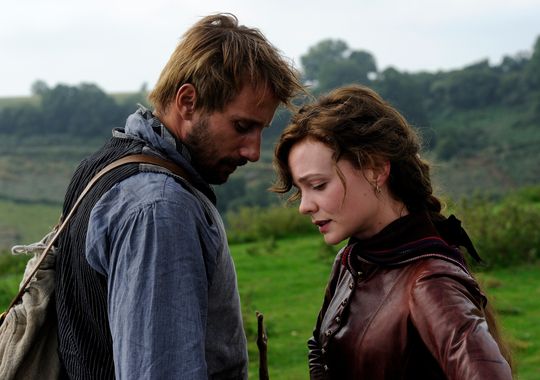
Matthias Schoenaerts and Carey Mulligan in FAR FROM THE MADDING CROWD

If you’re looking for cinematic romance with a proto-feminist perspective, you can do worse than Far from the Madding Crowd. Now I’m neither the target audience for a period romance or a fan of Carey Mulligan, but Far from the Madding Crowd is pretty fresh for having been based on a Thomas Hardy novel, and delivers an unusual (for the 19th Century)  female character and sweeping, sometimes operatic melodrama.

Mulligan plays a young woman who is smart, attractive, capable and VERY confident but has the wrong taste in men.  Because she has lucked into affluence, she has no NEED for a husband.  Indeed, under English law of the Victorian period, she would diminish her legal standing and lose her economic freedom if she marries.   A character sings the song “Let No Man Steal Your Heart”, and we know that the stakes are high.

Men DO try to steal her heart, sometimes with cringeworthily abrupt proposals of marriage (with pianos proffered to sweeten the deal).  She is wooed by the “safety” and comfort from a rich guy (Michael Sheen) vs the loyal hunk (Matthias Schoenaerts) who is below her station.  Then a very handsome soldier (Tom Sturridge), who turns out to be shallow and cruel, comes into play with a WOWZA of a first kiss.  We know who is the right guy for her, but SHE doesn’t see it that way, which creates all the drama.

I love the work of Danish director Thomas Vinterburg – 1998’s The Celebration (Festen), 2012’s The Hunt (Jagten).  Here he does a pretty good job keeping the wild swings and improbable coincidences of Hardy’s plot from becoming laughable.  How many ways are there to kill off an entire herd of sheep, anyway?

Far from the Madding Crowd opens tomorrow, and is a good choice for someone looking for a period romance.

DVD/Stream of the Week: I ORIGINS – a thoughtful romance that muses on the boundaries of science and spirituality

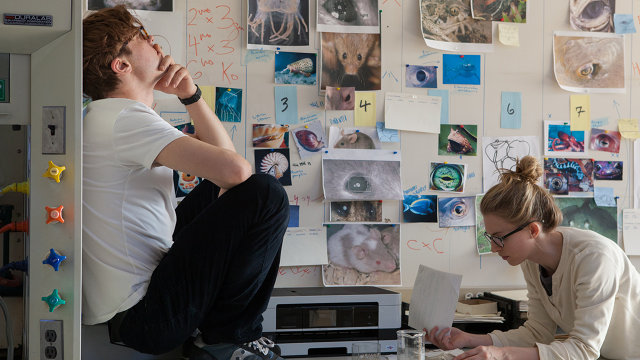
Michael Pitt and Brit Marling in I ORIGINS

The romance I Origins (which opens tomorrow) explores the conflict between science and spirituality. Our scientist protagonist (Michael Pitt) is completely empirical and militantly anti-spiritual. He is obsessed with the study of iris scans and patterns of the eye (the “I” in the title is a pun). He is hoping to prove that eyes can be evolved, which he believes will debunk the Creationist pseudo-science of Intelligent Design. He meets a model (Astrid Berges-Frisbey) – and they don’t meet CUTE, they meet HOT. Through a string of scientifically improbable coincidences, he is able to track her down for a second encounter that is sharply romantic. They fall in love – an attraction of opposites because she is mercurial and vaguely New Agey.

Along the way, he gains a new lab assistant (Brit Marling), who is just as smart and more driven than is he. Together they find the lab breakthrough to prove his theory. The main three characters are affected by a life-altering tragedy. Seven years later, the story resumes with the public release of the discovery. As our hero takes his victory lap over religion, he is faced with new evidence that cannot be explained by science…

Writer-director Mike Cahill (Another Earth, also starring Marling) has constructed a story that sets up a discussion on the limits of empiricism. I give Cahill extra points for raising the issue without ponderosity or pretension. Some critics have harshly judged the movie, but they see it wrongly as a corny religion-beats-science movie instead of a contemplation on the possibilities. And they altogether miss the fact that the film is basically a romance, which Cahill himself sees as one of the two central aspects of I Origins. Cahill explores and compares the intense lust-at-first-sight, opposites-attract type of love with the love relationship based on common values and aspirations.

There are, however, two shots involving pivotal moments in the story (and both involving billboards) that are such self-consciously ostentatious filmmaking that they distracted me, rather than bringing emphasis to each moment.

Pitt, an actor of sometimes unsettling affect, is very good here, as he was in The Dreamers and Last Days. Berges-Frisbey and Marling deliver fine performances, too. If Marling is in a movie, it aspires to being good – I loved The East, which she co-write and starred in. Archie Panjabi, without the boots and the upfront sexiness she wears on The Good Wife, is solid in a minor part.

I Origins works both as a scientific detective story and as a meditation on romance. I found it to be smart and entertaining.  I Origins is available on DVD from Netflix and streaming on Amazon Instant Video, iTunes, Vudu, YouTube, Google Play and Xbox Instant Video.

DVD/Stream of the Week: THE FACE OF LOVE: who is she really in love with?

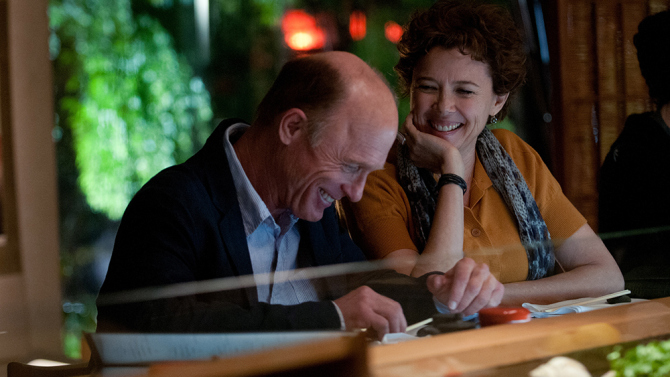
Ed Harris and Annette Bening in THE FACE OF LOVE

Here’s an underrated 2014 romance that most of us didn’t get to see in theaters: The Face of Love.

Annette Bening plays a woman whose husband suddenly dies, and she is plunged into an immediate and harsh sense of loss.  She goes on with her life and then is surprised to meet a man who is attracted to her.  They begin to date and fast develop a serious bond.  Here’s the kicker – the new boyfriend looks EXACTLY like her late husband (both are played by Ed Harris).  You know that eventually he is going to find out, and that eventually her kids and friends are going to find out, and that people are going to think this is very weird.  Those characters – and the audience – will wonder whether she is in love with this new man – in love with the image of her husband.

As one would expect, Bening and Harris both give compelling performances.  The scene where the new guy asks her out on a date is especially fun.  The Face of Love is a worthwhile watch.

The Face of Love is available on DVD from Netflix and streaming from Amazon, iTunes, YouTube, Google Play and Xbox Video.

DVD/Stream of the Week: WORDS AND PICTURES: an unusually thoughtful romantic comedy

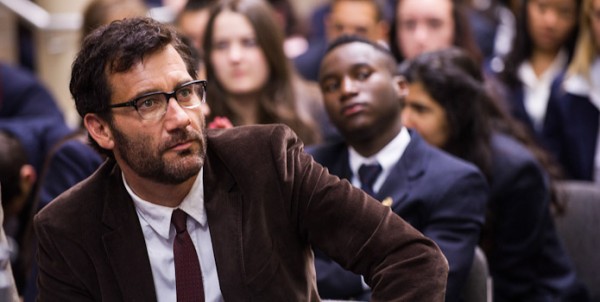
words picturesIn the unusually thoughtful romantic comedy Words and Pictures, Clive Owen and the ever-radiant Juliette Binoche star as sparring teachers. The two play world-class artists – Owen a writer and Binoche a painter – who find themselves in teaching jobs at an elite prep school. As they spiritedly disagree over whether words or pictures are the most powerful medium of expression, they each admire and are drawn to the other’s talent and passion.

Words and Pictures contains the wittiest movie dialogue in many moons and reminds us that real wit is more than some clever put downs. Owen’s English teacher worships the use of language to evoke original imagery and also revels in pedantic wordplay – the more syllables the better. When his boss asks him, “Why are you always late?”, he retorts “Why are you always dressed monochromatically?”.

The reason that he IS always late is that he’s an alcoholic hellbent on squandering his talent and alienating his friends and family. This is a realistic depiction of alcoholism and of its byproducts – unreliability, broken relationships and fundamental dishonesty. In an especially raw scene, he expresses his self-loathing by using a tennis racquet and tennis balls to demolish his own living space. Top notch stuff.

Binoche plays a woman of great inner strength and confidence who has been shaken by the advances of a chronic illness. According to the credits, Binoche herself created her character’s paintings.

Words and Pictures sparkles until near the end. When the students make the debate over words vs pictures explicit in the school assembly, the intellectual argument loses its force and the tension peters out. So it may not be a great movie, but Words and Pictures is still plenty entertaining and a damn sight smarter than the average romantic comedy.

I saw Words and Pictures earlier this year at Cinequest. It’s available now on DVD from Netflix and Redbox and streaming from Vudu and Xbox Video.

LOVE IS STRANGE: gentle and poignant, but contrived and random

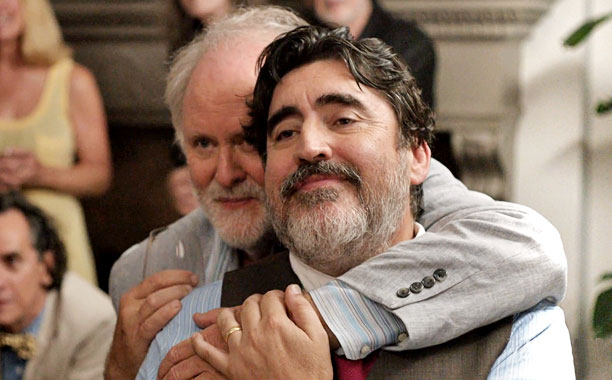
John Lithgow and Alfred Molina in LOVE IS STRANGE

In the almost satisfying romantic drama Love Is Strange, Alfred Molina and John Lithgow play New York City men who, 39 years into their relationship, marry and then are separated by circumstance. By far the best part of Love Is Strange is that Molina and Lithgow develop unique characters, credible and truthful, neither a stereotype in any way. It’s a pleasure to watch these guys, and their embrace on a rainy night is shattering. Another good part: they have a teen nephew, and there’s some truth in the movie’s depiction of the difficulties of being a teenager and raising a teenager.

Unfortunately, Molina’s and Lithgow’s talents are left high and dry by co-writers Ira Sachs (who directed) and Mauricio Zaharias. The set-up to split up the couple’s living arrangements is contrived and unrealistic. Several plot points range from random to confusing (why do some characters steal some library books?), and some fade out without any resolution. Sachs also makes some directorial missteps. There’s a concert scene in which we are jarred with closeups of four or five non-characters (and, I think, non-actors) that really can’t be explained unless these are vanity shots of the movie’s investors. And a climactic shot of a character crying in a stairwell goes on one count, two counts, then twenty counts too long.

Love Is Strange is not a bad movie – and it does contain the splendid performances by Molina and Litgow – but it sure ain’t a Must See.

THE ONE I LOVE: a relationship enters the Twilight Zone

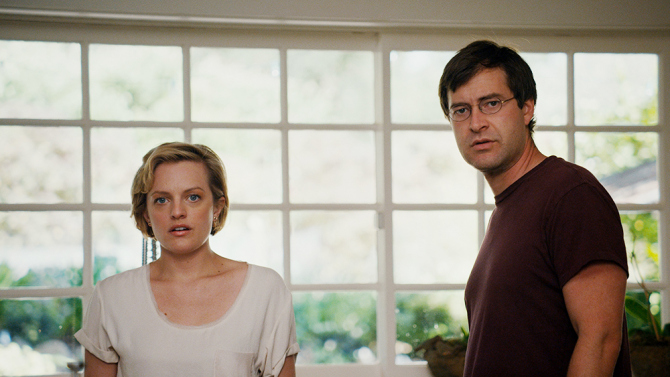
Elisabeth Moss and Mark Duplass in THE ONE I LOVE

Opening tomorrow, The One I Love is one of the year’s most original stories – a romance, dark comedy and sci-fi fable rolled into one successful movie.  Mark Duplass and Elisabeth Moss play a couple in that place in their relationship where quirks have become annoying instead of endearing, some trust issues have emerged and the two are just generally misfiring.  Their couples therapist recommends a weekend at an idyllic, isolated vacation cottage, which also has a second (presumably unoccupied) guest house.  The beautiful setting is enhanced by a bottle of wine and a reefer, and the desired rekindling of romance and intimacy occurs.  So everything goes as we would expect for this first nine minutes of the movie, and then – WOW – a major plot development that involves the guest house.

As soon as one of the characters explicitly references TV’s The Twilight Zone, the story becomes what would have been a perfect episode in that Rod Steiger series.  Screenwriter Justin Lader pulls off a What’s Gonna Happen Next? story that has its moments of creepy thriller and madcap comedy.  But, at its heart, the story explores these questions:  what is it about our partners that keeps us in or drives us out of a relationship?  How do we stay in love with someone who has changed from who we fell in love with?  Or who hasn’t become the person we had projected?  The One I Love is only 91 minutes, so the tension and the thoughtfulness can slowly build while keeping us on the edges of our seats.

Moss and Duplass are simply remarkable here – these are two great performances.

MINOR SPOILER ALERT: Both Duplass and Moss play other characters in this movie – and they excel at creating subtle differences in the characters that are revealing, thought-provoking and scary.

I Origins: a thoughtful romance that muses on the boundaries of science and spirituality

Michael Pitt and Brit Marling in I ORIGINS

The romance I Origins (which opens tomorrow) explores the conflict between science and spirituality. Our scientist protagonist (Michael Pitt) is completely empirical and militantly anti-spiritual. He is obsessed with the study of iris scans and patterns of the eye (the “I” in the title is a pun). He is hoping to prove that eyes can be evolved, which he believes will debunk the Creationist pseudo-science of Intelligent Design. He meets a model (Astrid Berges-Frisbey) – and they don’t meet CUTE, they meet HOT. Through a string of scientifically improbable coincidences, he is able to track her down for a second encounter that is sharply romantic. They fall in love – an attraction of opposites because she is mercurial and vaguely New Agey.

Along the way, he gains a new lab assistant (Brit Marling), who is just as smart and more driven than is he. Together they find the lab breakthrough to prove his theory. The main three characters are affected by a life-altering tragedy. Seven years later, the story resumes with the public release of the discovery. As our hero takes his victory lap over religion, he is faced with new evidence that cannot be explained by science…

Writer-director Mike Cahill (Another Earth, also starring Marling) has constructed a story that sets up a discussion on the limits of empiricism. I give Cahill extra points for raising the issue without ponderosity or pretension. Some critics have harshly judged the movie, but they see it wrongly as a corny religion-beats-science movie instead of a contemplation on the possibilities. And they altogether miss the fact that the film is basically a romance, which Cahill himself sees as one of the two central aspects of I Origins.  Cahill explores and compares the intense lust-at-first-sight, opposites-attract type of love with the love relationship based on common values and aspirations.

There are, however, two shots involving pivotal moments in the story (and both involving billboards) that are such self-consciously ostentatious filmmaking that they distracted me, rather than bringing emphasis to each moment.

Pitt, an actor of sometimes unsettling affect, is very good here, as he was in The Dreamers and Last Days.  Berges-Frisbey and Marling deliver fine performances, too. If Marling is in a movie, it aspires to being good – I loved The East, which she co-write and starred in. Archie Panjabi, without the boots and the upfront sexiness she wears on The Good Wife, is solid in a minor part.

I Origins works both as a scientific detective story and as a meditation on romance. I found it to be smart and entertaining.