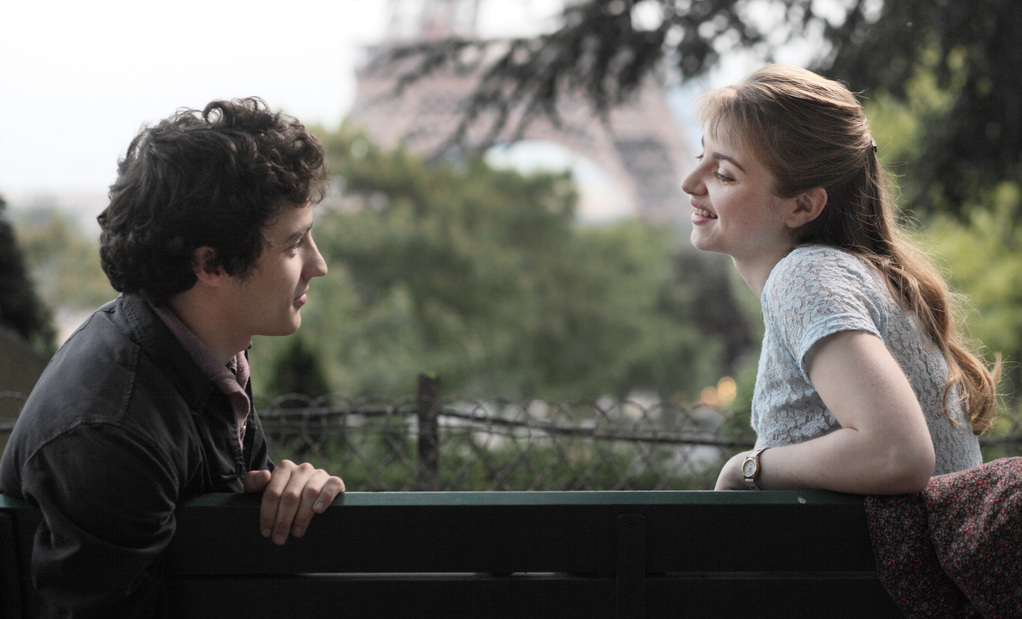
TWO PIANOS: he doesn’t know what he should want, but the women do

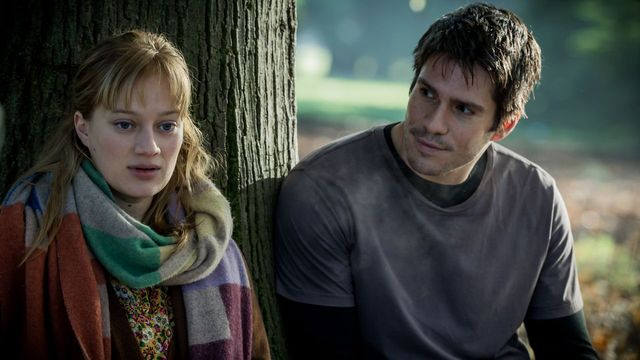
Photo caption: Nadia Tereszkiewicz and Francois Civil in TWO PIANOS. Courtesy of Kino Lorber.

In the well-crafted French melodrama Two Pianos, concert pianist Matthias (three-time César nominee Francois Civil) returns to his hometown of Lyon after a decade abroad. Matthias is already in a mid-career malaise, but things get more complicated when he re-encounters his formidable mentor Elena (Charlotte Rampling) and his best friend’s wife Claude (Nadia Tereszkiewicz). Matthias, who had dated Claude just before his self-exile, is further rocked when he sees that her ten-year-old son looks exactly like him. A well-crafted melodrama ensues, albeit one with unconventional turns.

Two Pianos is the latest from French director Arnaud Desplechin, who made the delightful My Golden Days, which I loved, and then Ismael’s Ghosts, which although it was generally favorable critical buzz, I loathed. Desplechin has received uneven notices for his recent narrative features. He co-wrote Two Pianos.

The plot of Two Pianos pivots on an unforeshadowed surprise which clears the way for a conventional ending, which Desplechin thankfully avoids. This plot point is so unabashedly convenient that some viewers have found it off-putting. I uneasily went with it and was relieved when Desplechin steered the story away from what would have been corny.
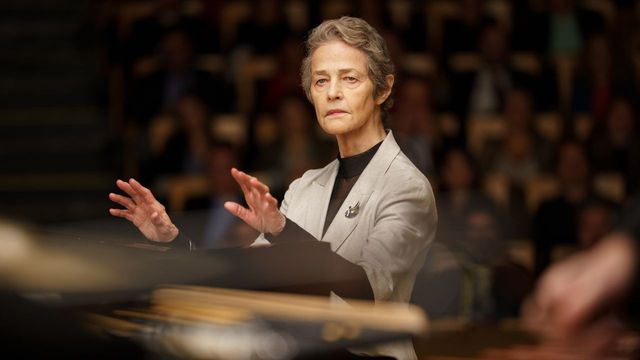
Charlotte Rampling in TWO PIANOS. Courtesy of Kino Lorber.

Civil has the challenge of playing a protagonist of uncertain will, who spends much of his screen time hand-wringing and naval gazing. The audience will see that, in contrast to Matthias’ dithering, all of the female characters know exactly what they want – the iron-willed Elena, Matthias’ unsentimental mother (Anne Kessler), Claude’s bestie Judith (Alba Gaia Bellugi) and, eventually, even the vulnerable and temperamental Claude.

Nadia Tereszkiewicz has a sexy magnetism and a feral unpredictability that serves her well in Two Pianos and in the underappreciated Only the Animals.

Charlotte Rampling is a treasure, and her performance as the exacting Elena is one of the pleasure of Two Pianos.

I especially appreciated that the story is set in Lyon, a city underrepresented in cinema. Lyon, after all, is the third largest city in France and the place where Parisian foodies go to experience the best of French cuisine. It’s a wonderful city.

I screened Two Pianos for the 2026 SFFILM festival. It opens in theaters this weekend.
ISMAEL’S GHOSTS: indecipherable waste of talent

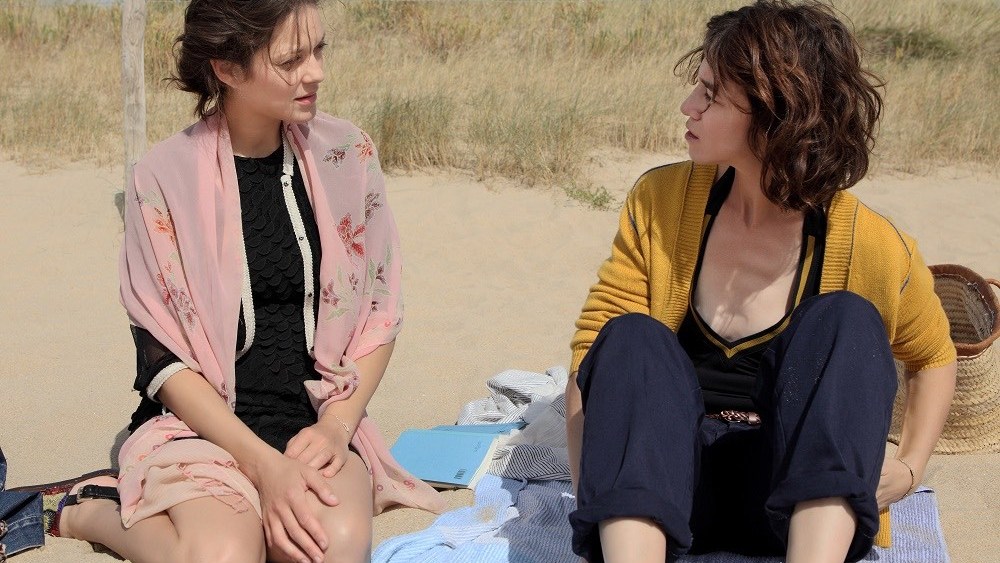
Marion Cotillard and Charlotte Gainsbourg in ISMAEL’S GHOSTS

Suppose that you’re in mid-life, mid-career and mid-relationship, and your ex-spouse – whom you have thought dead for a decade – suddenly shows up.  In Arnaud Desplechin’s Ismael’s Ghosts, that is exactly what happens to a filmmaker (Mathieu Amalric) when his long-disappeared ex (Marion Cotillard) pops in.  So far, so good.  But then Ismael’s Ghosts begins to slide off the rails.

The filmmaker accompanies his ex-father-in-law, who is being honored in Israel, but then the story becomes unhinged and, finally, impossible to follow.  It’s just one indecipherable mess.

I was actually looking forward to this movie.  I loved Desplechin’s My Golden Days, and I admire Cotillard and Charlotte Gainsbourg (who plays the filmmaker’s current partner).  But Ismael’s Ghosts is just a waste of their talent and my time.  I saw Ismael’s Ghosts at Cinequest before its US theatrical release.

MY GOLDEN DAYS: the urgency of first love

MY GOLDEN DAYS
MY GOLDEN DAYS

The first love depicted in Arnaud Desplechin’s coming of age film My Golden Days is completely evocative. That first love is inevitable even if the young lovers don’t know it yet, and then filled with passion, importance, obsession, angst, conflict, breakups and makeups. And then it runs its course.

The performance of Lou Roy-Lecollinet as the unpredictable object of the young protagonist’s affection really elevates My Golden Days. Roy-Lecollinet has looks which won’t attract every guy, but would be irresistible to some. She’s able to convincingly play a girl with a devastating combination of confidence, forthrightness, charm, wit, impulsivity and a wandering eye.

That story makes up the core of My Golden Days, a flashback bookended by the contemporary, middle-aged version of the protagonist (Mathieu Amalric). The story of young romance is perfect – one that we can all recognize. But, in the epilogue, the Amalric character (who has lived a full and eventful life in the 15-20 years since) is oddly still fervently bitter about what happened years before; with that distance, most of us would look back with nostalgia or, at least, a wistful acknowledgement of lessons learned. I was a bit put off.

And what’s with the lame title My Golden Days, which makes this sound like the story set in a retirement home? The original title is Trois souvenirs de ma jeunesse which I think translates into Three Memories of My Youth – that would be better and there’s gotta be plenty of more appealing and descriptive titles.

My Golden Days, which I saw at Cinequest, is a movie that anyone who is decades removed from first love should see.


Cinequest: MY GOLDEN DAYS

MY GOLDEN DAYS
MY GOLDEN DAYS

The first love depicted in Arnaud Desplechin’s coming of age film My Golden Days is completely evocative.  That first love is inevitable even if the young lovers don’t know it yet, and then filled with passion, importance, obsession, angst, conflict, breakups and makeups.  And then it runs its course.

The performance of Lou Roy-Lecollinet as the unpredictable object of the young protagonist’s affection really elevates My Golden Days.  Roy-Lecollinet has looks which won’t attract every guy, but would be irresistible to some.  She’s able to convincingly play a girl with a devastating combination of confidence, forthrightness, charm, wit, impulsivity and a wandering eye.

That story makes up the core of My Golden Days, a flashback bookended by the contemporary, middle-aged version of the protagonist (Mathieu Amalric).  The story of young romance is perfect – one that we can all recognize.  But, in the epilogue, the Amalric character (who has lived a full and eventful life in the 15-20 years since) is oddly still fervently bitter about what happened years before; with that distance, most of us would look back with nostalgia or, at least, a wistful acknowledgement of lessons learned.  I was a bit put off.

And what’s with the lame title My Golden Days, which makes this sound like the story set in a retirement home?  The original title is Trois souvenirs de ma jeunesse which I think translates into Three Memories of My Youth – that would be better and there’s gotta be plenty of more appealing and descriptive titles.

My Golden Days, which I saw at Cinequest, is a movie that anyone who is decades removed from first love should see.