NOUVELLE VAGUE: a subversive trickster bets that he is an artist, too

Photo caption: Zoey Deutch and Guillaume Marbeck in NOUVELLE VAGUE. Photo credit. Jean-Louis Fernandez; courtesy of Netflix

With Nouvelle Vague, one of America’s greatest filmmakers, Richard Linklater, pays tribute to the French New Wave, which invigorated global cinema and inspired generations of American indie filmmakers. Nouvelle Vague, Linklater’s first film in French, tells the story of Jean-Luc Godard making his first film, the groundbreaking and influential Breathless. And it’s a hoot.

The French New Wave was a period when the young film writers at a cinema magazine got to direct their own movies. Basically, this was a time in the late 1950s when a bunch of movie nerds got to create their own cinema, resulting in a burst of freshness and originality. Godard’s peers Francois Truffaut and Claude Chabrol had already transitioned from film critic to movie director, but Godard still hadn’t directed his first film, and he was itching to get started.

With all the arrogance of a 29-year-old novice who is certain of his abilities, Godard famously proclaimed that all you need to make a movie is a girl and a gun. This is that film.

In Nouvelle Vague, Godard (Guillaume Marbeck) gets the casting gift of a famous Hollywood starlet, Jean Seberg (Zoey Deutch), to team with his boxer buddy Jean-Paul Belmondo (Aubry Dullin, who is an acting novice. Godard leads his cast and crew on an anarchic 20-day shoot that Godard makes up as he goes along, with no script and no shooting schedule, which challenges the mental health of his producer Georges de Beauregard (Bruno Dreyfurst). No one can tell if the film, if it gets finished, will be any good.

The key here is the character of Godard himself (brilliantly played by Marbeck in his feature debut), who is posing as an important artist even as he tries to become one, wearing sunglasses day and night. A subversive trickster, he is strong-willed and self-confident for sure, but is he just a narcissistic dilettante? Is his artistic vision just a delusion? So, the making of Breathless is a wild ride, one turns out to be interesting because we know that Breathless will turn out to be an artistic success and an important, influential film.

Linklater fills the Nouvelle Vague with a Who’s Who of French New Wave figures and plenty of jokey references to that style of filmmaking. LInklater even shows the last scene of Truffaut’s The 400 Blows, with its indelible freeze-frame, reflected in Godard’s sunglasses.

So, can you enjoy Nouvelle Vague even if you’re unfamiliar with the French New Wave, and haven’t seen any Godard films? Yes. The madcap nature of the shoot, and the other characters all reacting with amusement, frustration and disbelief to Godard’s outsized personality are plenty entertaining.

But, if you a cinephile, then Nouvelle Vague is a Must See. Linklater’s references are delightful. The actors physically look just like the real people they are playing, and Zoey Deutsch looks phenomenal in Seberg’s iconic blonde pixie cut and Breton stripes. Not many faces resemble Belmondo’s but Aubrey Dullin’s does; Dullin perfectly captures Belmondo’s rogueish charm and working class lack of pretension.

This is the Jean-Luc Godard of his early masterpieces (Breathless, Contempt, Band of Outsiders), before his arrogance made him into a tiresome polemicist. That later insufferable Godard is satirized in Godard, Mon Amour by Michel Hazanavicius (The Artist), which would make a fine second feature on the double bill. (I have found all of the Godard films since 1967’s Weekend to range from disappointing to completely unwatchable.) 

Nouvelle Vague is streaming on Netflix.
BLUE MOON: wit and vulnerability

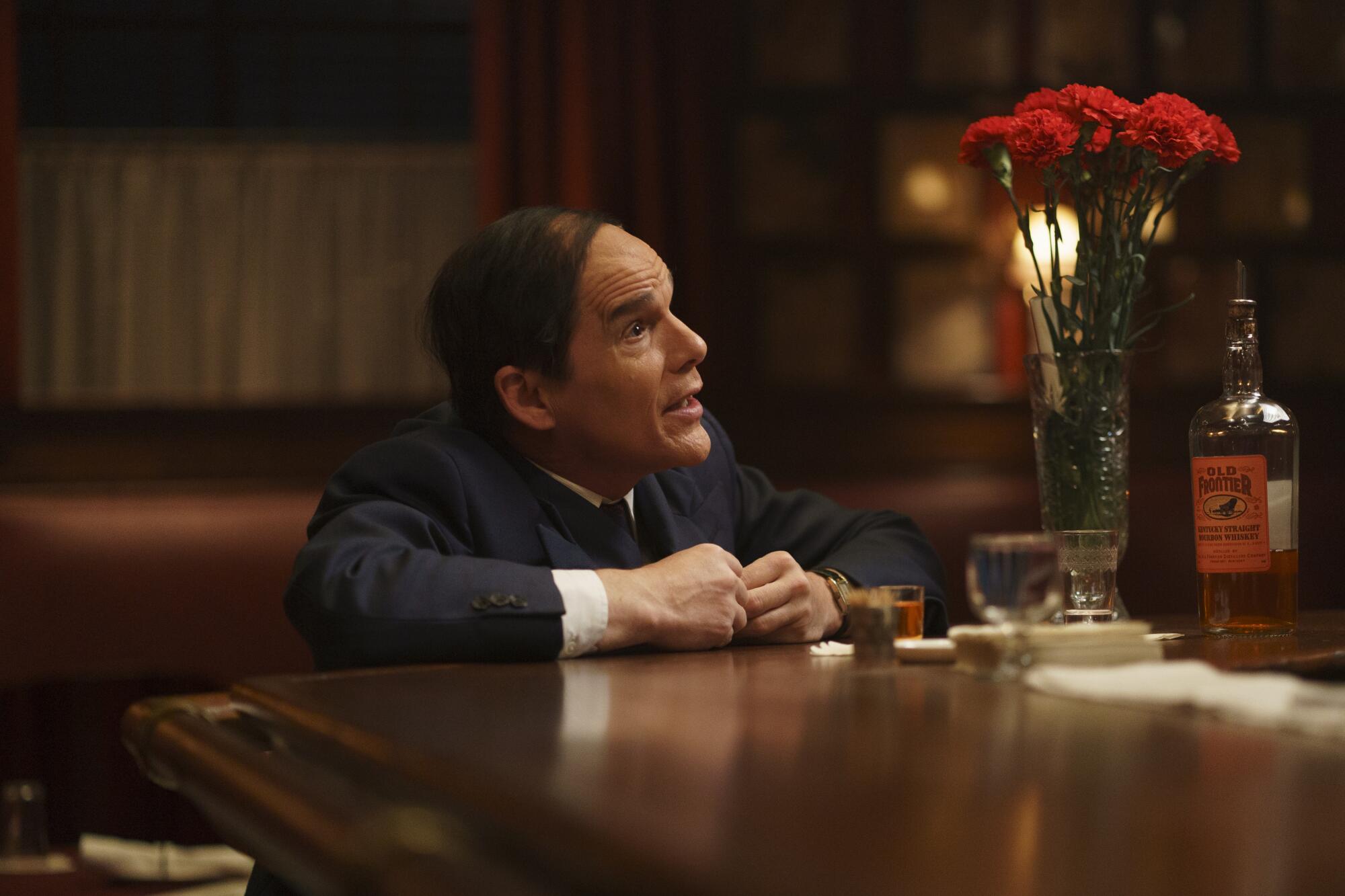
Photo caption: Ethan Hawke in BLUE MOON. Courtesy of Sony Pictures Classics.

The protagonist of Richard Linklater’s Blue Moon is lyricist Lorenz Hart (Ethan Hawke), who Linklater immediately shows us dying of alcoholism, before taking us to a night eight months earlier. Hart, having left the opening night production of Oklahoma!, has entered a familiar haven, the bar at Sardi’s, where he is ready, as always, to hold forth. His longtime partner Richard Rodgers has dumped him for a new collaborator, Oscar Hammerstein, and Hart has immediately recognized that the new duo’s debut musical would dwarf the success of the Rodgers and Hart work. It’s hard to feel good about yourself when you are dumped by your partner of 24 years, who then soars to new heights with a different collaborator.

Beginning in 1919 (when Hart was 24 and Rodgers only 17), the two created 28 stage musicals (including Babes in Arms and Pal Joey and more than 500 songs for Broadway and Hollywood, many of which have become American standards, like Manhattan, The Lady Is a Tramp, My Funny Valentine, and, of course, Blue Moon.

Seeing that body of work eclipsed in one night has Hart reeling. But, now, in 1943, Hart was 48 and Rodgers 41. Hart’s alcoholism has made him unreliable, so Rodger has moved on. Hart’s gift at wordplay is as brilliant as ever, but his confidence is crushed – and he is desperate to work again, and, in his wildest dreams, with Rodgers.

Hart’s career desperation is matched by his romantic desperation – from a doomed fixation with the comely Yale coed, Elizabeth (Margaret Qualley). Elizabeth is self-confident and ambitious, towers over the shrimpish Hart and can match wits with him . Hart is a successful celebrity, but not rich or conventionally attractive, and being an over-the-hill drunken gay man, neither the audience or other characters in Blue Moon see Hart’s pursuit of Elizabeth as anything but a pathetic fantasy.

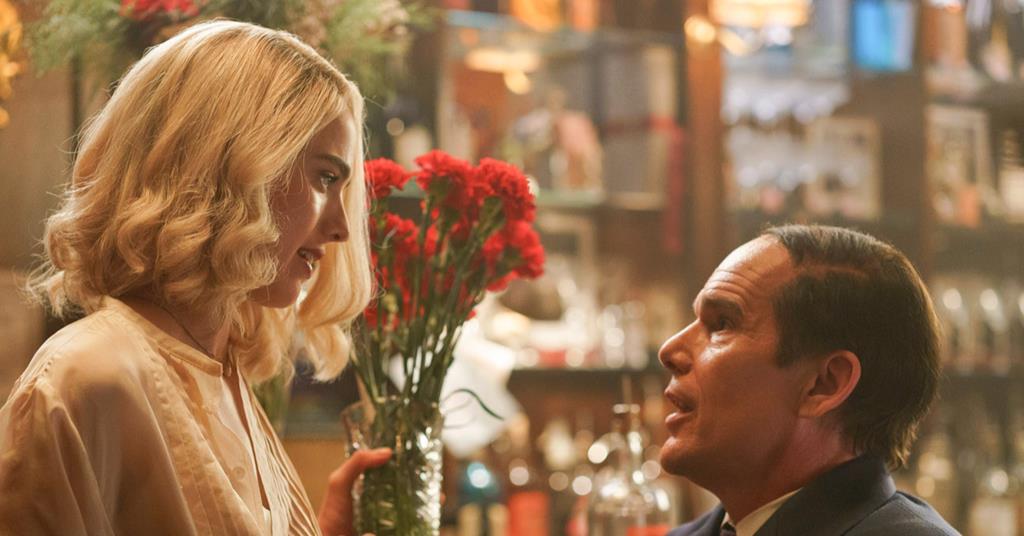
Margaret Qualley and Ethan Hawke in BLUE MOON. Courtesy of Sony Pictures Classics.

Hart presides over all conversation in the bar, and proves himself a most witty raconteur. Hart, usually unintentionally, reveals himself in banter with Sardi’s affable bartender (an excellent Bobby Cannavale).

Finally, Richard Rodgers (Andrew Scott) leads in his entourage from Oklahoma! for the opening night party, and Hart explodes into the full wheedle. Moment by moment, we learn more about Rodger’s complicated experience with Hart. It’s clear that Rodgers is genuinely grateful for Hart’s contribution to his life and is also relieved not to no longer be a secondary victim of Hart’s drinking. Rodgers still is affectionate and nostalgic with Hart, but wary about reliving Hart’s worst behavior. When Hart offers a celebratory glass of champagne, Rodgers recoils and barks, “I won’t drink with you!”, registering the pain that Hart’s drinking has inflicted on him over many years.

Why isn’t Blue Moon, a portrait of a man’s crash-and-burn, unwatchably sad?

  • Foremost, even when Hart is being sad, he’s very, very funny.
  • Hawke’s performance is deliciously vivid.
  • We stay engaged in sussing out the complicated relationship between Hart and Rodgers.
  • We delight in the stellar cast and in Richard Linklater’s storytelling genius.

Hawke is one of our very most interesting actors, and his turn as Hart is exceptional, plumbing all of Hart’s desperation, self-loathing and vulnerability. Of course, Hawke, who is 5′ 10″, can play a dreamy romantic lead, so there’s some movie magic – and a bad comb over – employed to help us see him as a 5 foot gnome. Others have described Hawke’s performance here as career-topping, but it’s hard for me to see this performance, as good as it is, as even better than those in Before Sunrise, Before the Devil Knows You’re Dead, and First Reformed, for example.

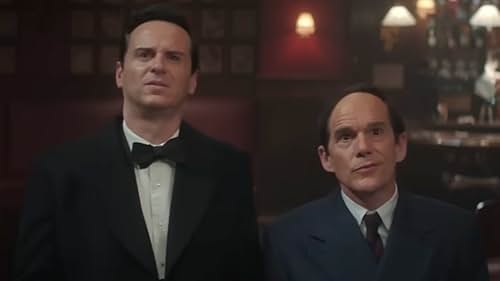
Andrew Scott and Ethan Hawke in BLUE MOON. Courtesy of Sony Pictures Classics.

Lorenz Hart is a flashy role, but Andrew Scott (Tom Ripley in the recent television episodic Ripley) is quietly mesmerizing as Rodgers, who struggles to contain the embarrassment, wariness, revulsion, pity and love that Hart triggers. Scott won the supporting actor Silver Bear at the Berlinale for this performance.

Qualley just seems to brighten every movie that she’s in – shall we call it the Joan Blondell quality?

One of the most interesting encounters in Blue Moon is between Hart and another bar patron, the writer E.B. White (Patrick Kennedy). The two know and admire each other’s work, although they are conversing for the first time. White can keep up with Hart intellectually, and also has the emotional intelligence to see, without comment, what’s going on with Hart. It’s a remarkably subtle performance by Kennedy.

The entire movie takes place in Sardi’s, except for two or three minutes at and near the beginning. Over 80% of the story takes place in Sardi’s bar. But Blue Moon never looks as inexpensive as it must be. No filmmaker has delivered more fine movies on low budgets than Linklater; I couldn’t find a Linklater movie budgeted at more than a frugal $35 million (School of Rock). Nevertheless, Linklater has created the three most thoughtful romances in cinema (the Before Sunrise series) and the milennium’s best film (Boyhood), along with launching an entire generation of actors in Dazed and Confused.

Here, Linklater turns one night into a vivid portrait of a man’s life and times, and Blue Moon is both funny and profound.

HIT MAN: who knew self-invention could be so fun?

Photo caption: Glen Powell in HIT MAN. Courtesy of Netflix.

Richard Linklater’s sexy, funny thriller Hit Man is all about self-invention, and the story, with its twists and turns, is one of the year’s great crowd-pleasers.

Gary Johnson (Glen Powell) is a FAKE hit man for the police; when the cops are tipped off that someone wants to arrange a murder-for-hire, they send in Gary wearing a wire, pretending to be a professional assassin, to record the incriminating words and collect the payoff.

This is Gary’s side gig – he is a decidedly uncool philosophy professor, who drives a Civic and is essentially a male cat lady. His personal life is so non-existent that his sympathetic ex-wife suggests that he “see someone”; Gary thinks she means a therapist, but she explains that he should see “a woman”.

Obviously, he pretends to be someone else when he acts a a faux killer. Once, he adopts the supercool persona of fictional hit man Ron. Dressing in a cool leather jacket with new haircut and stylish shades, Gary learns that life is a lot more fun as Ron. He attracts the attention of beautiful Madison (Adria Arjona) in circumstances where he can’t reveal his true identity as Gary. Gary, as Ron, and Madison begin a torrid affair, and then things get out of hand…I won’t spoil the plot, but it becomes a twisty thriller.

Hit Man is plenty enjoyable as a comic thriller, but co-writer and director Richard Linklater also probes the process of self-invention. Gary is a good guy himself, but he is more popular with his colleagues and his students as the fictional Ron, and wouldn’t otherwise be able to attract Madison. And just who is Madison – has she reinvented herself, too?

There existed a real Gary Johnson. Linklater and Powell co-wrote the screenplay from Skip Hollandsworth’s magazine profile of the real Gary in Texas Monthly, and, of course, add plenty of invented sex and murder for embellishment.

The actual Gary Johnson worked in Houston, but Linklater set Hit Man in New Orleans, and those who love the Crescent City as I do will recognize many locales. There really is an intersection of Piety Street and Pleasure Street in New Orleans, and Linklater playfully drops in a shot of the street sign without comment.

Adria Arjona and Glen Powell in HIT MAN. Courtesy of Netflix.

Glen Powell is exceptionally good as an Everyman plunged into, first, a scary cops and robber game, and then a real life-or-death entanglement that he must navigate with his wits in real time. Of course, Powell has lots of fun portraying a character who is himself a master of disguise, immersing himself in a bevy of fictional characters.

Adria Arjona is a real discovery. She’s able to play Madison so that Gary/Ron and we see her as a needy and vulnerable victim, then as an independent bad ass, and we finally wonder if she is a femme fatale. It’s a smart and secy performance as a smart and sexy, smokin’ hot, character.

Austin Amelio is hilarious as the unrepentantly sleazy, crooked cop Jasper.

Richard Linklater, is unsurpassed as an American filmmaker. After all he made Boyhood, which I rate as the best film so far in the 21st century, and our greatest romantic trilogy (Before Sunrise, Before Sunset, Before Midnight). Not to mention his groundbreaking use of interpolated rotoscope in Waking Life and one of the trippiest drug movies, A Scanner Darkly. He kicked off the whole body of work with the generational time capsule Dazed and Confused, along with the infectious comedy School of Rock and the underrated Bernie.

Linklater isn’t trying to top Boyhood or the Before movies here, but he’s at the top of his game with Hit Man. I can’t imagine anyone not enjoying Hit Man. Must See.,

EVERYBODY WANTS SOME!!: busting balls and chasing girls

EVERYBODY WANTS SOME!!

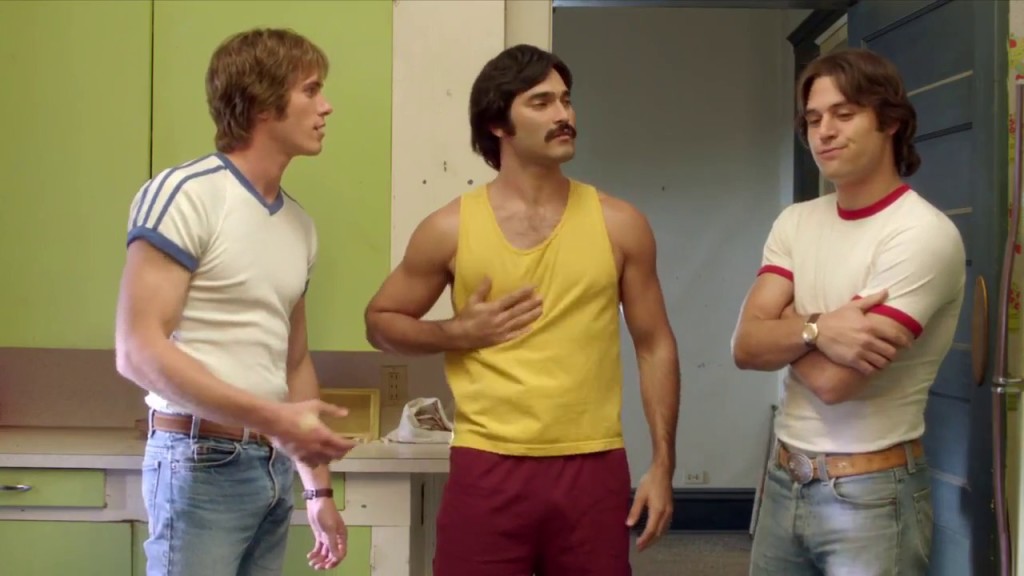
Everybody Wants Some!! is director Richard Linklater’s nostalgic romp through his college jock days.  He’s described Everybody Wants Some!! as a spiritual sequel to Dazed and Confused, and it has a similar vibe. We have college baseball players living in a house next to campus, and they drink lots of beer, get high, bust each other’s balls and chase girls. There are lots and lots of ball busting and girl chasing.  All in good fun.

Everybody Wants Some!! is a dead-on 1980 time capsule, showcasing the disco, non-Urban Cowboy and punk cultural moments.  And the very fun and evocative period soundtrack kicks off with My Sharona.

There is also a bong scene that has possibly the best stoned movie monologue (“language is just a construct”, Mayans, Druids, etc.) since Jack Nicholson’s “Venutians” riff around the campfire in Easy Rider.

The story’s point of view is that of the college guys, and it is not unknown for college-age guys to see women primarily as sexual opportunities. That’s pretty much the role of all the women in this movie, except for that Special Girl who gets our hero’s attention.

Linklater is the master of coming of age (Boyhood) and coming of age in relationships (the Midnight trilogy).  Everybody Wants Some!! may be the least insightful of his coming of age films, but sometimes Linklater just has fun (School of Rock, Bernie), and there’s nothing wrong with that.

Everybody Wants Some!! has an appealing cast of actors that I hadn’t remembered seeing before (including the one guy who played Ryder in Glee).  Dazed and Confused is known for launching the careers of hitherto unknowns Matthew McConaughey, Parker Posey, Ben Affleck, Milla Jovovich, Adam Goldberg, Joey Lauren Adams and Jason London. How about Everybody Wants Some!!? I don’t see stardom here for anyone (but keep in mind that Ben Affleck didn’t have a very showy or portentous part in Dazed and Confused).

Everybody Wants Some!! may not be Major Linklater, but it’s an amusing frolic – but probably more fun for a heterosexual male audience.

DVD/Stream of the Week: DAZED AND CONFUSED

DAZED AND CONFUSED
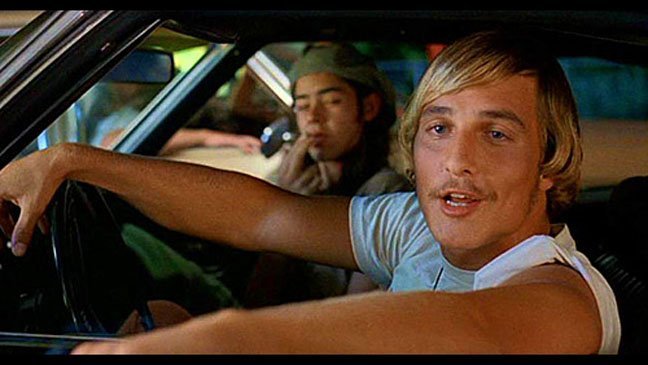
Rory Cochrane and Matthew McConaughey in DAZED AND CONFUSED

Richard Linklater’s newest movie Everybody Wants Some!! is coming out in theaters, which he describes as a “spiritual sequel” to his coming of age classic Dazed and Confused.  So let’s all go back to the last day of high school in 1976 and refresh ourselves.  All of these high school kids  are up for a massive year-end party, and they are either thinking about or avoiding thinking about the next phase in their lives.  It all adds up to the defining coming of age film for its generation.

Linklater is the master of coming of age (Boyhood) and coming of age in relationships (the Midnight trilogy).  In Dazed and Confused the most unforgettable – and cautionary – character is Wooderson; as played with sheer genius by Mayygew McConaughhey, Wooderson is the one character who aggressively embraces NOT coming of age – kind of a shady, dissolute Peter Pan.

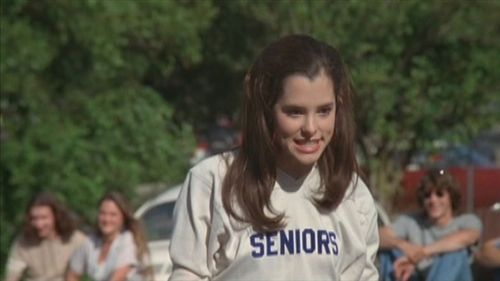
Dazed and Confused is known for launching McConaughey’s career,   as well as unleashing indie fave Parker Posey as a Mean Girl of uncommon enthusiasm.  This was Ben Affleck’s first main role, although his character is more of a one-dimensional bully, and doesn’t hint at his future success as an Oscar-winning screenwriter or major movie star.  The rest of the cast includes then-newcomers Milla Jovovich, Adam Goldberg, Joey Lauren Adams and Jason London.  I especially enjoy the turns by Wiley Wiggins and the hilarious Rory Cochrane (Black Mass).

Dazed and Confused is available to rent on DVD from Netflix and to stream from Amazon Video (free with Amazon Prime), iTunes, Vudu, YouTube, Google Play and Flixster.

Parker Posey in DAZED AND CONFUSED


Dazed and Confused is available to rent on DVD from Netflix and to stream from Amazon Video (free with Amazon Prime), iTunes, Vudu, YouTube, Google Play and Flixster.

DVD/Stream of the Week: BOYHOOD – the best movie of the decade?

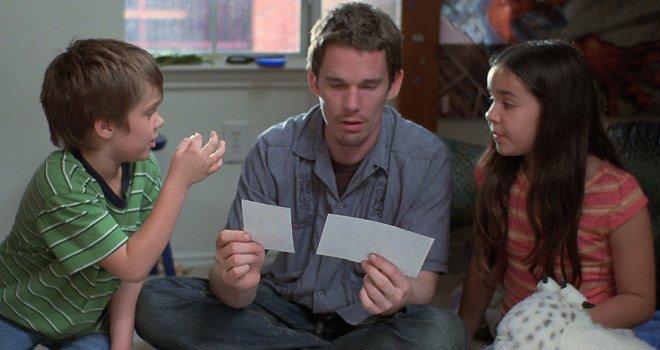
Eller Coltrane, Ethan Hawke and Lorelei Linklater in BOYHOOD

Boyhood is a profoundly moving film – and I’m still trying to figure out why. It’s a family drama without a drop of emotional manipulation – there’s no big moment of redemption and no puppies are saved. It’s just about a boy growing up in a family that we all can recognize and going through a series of moments that all of us have gone through. Still, I found myself responding very emotionally and, hardass as I may be, I had a lump in my throat and moist eyes during the last half hour or so.

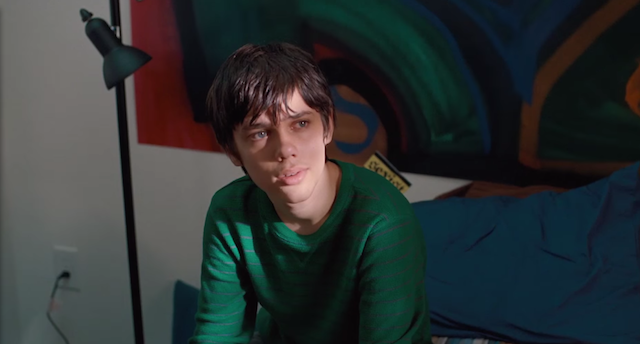
There’s a sense of fundamental human truth in Boyhood that comes from the amazing, risky and groundbreaking way that writer-director Richard Linklater made this movie. Boyhood traces the story of Mason (Eller Coltrane), his big sister (Lorelei Linklater) and their divorced parents (Patricia Arquette and Ethan Hawke) from the time when Mason was six-years-old to when he is going off to college at age 18. Linklater and the cast shot the movie in 39 days over a TWELVE YEAR PERIOD. So the cast members actually aged twelve years without the need for creating that effect with makeup or by switching the child actors. Other than Linklater’s own Before Sunrise/Before Sunset/Before Midnight series of romances spaced nine years apart, he only movies that have used this technique of aging-in-real-time have been documentaries, most notably the 7 Up series and Hoop Dreams.

Besides the authenticity that comes from the aging-in-real-time, the key to Boyhood is the reality of each moment. Each scene in the film is universal. Every kid has had to suffer the consequences of the life decisions made by his/her parents. Every kid has felt disrespected by a parental edict or disappointed when a parent has failed to come through. Everybody has been bullied in the school bathroom. Everybody has felt the excitement of connecting with a first love – and then the shock/humiliation/heartbreak of getting dumped. No scene individually moves the plot forward. But each scene helps complete our picture of who Mason is and how he is being shaped by his experiences.

Of course, when parents divorce and when a kid’s family is blended with that of a step-parent’s, those are especially big deals. All those things happen to Mason in Boyhood; he has control over none of them, but they all have a lasting impact on his life and development. And when his mom decides to better herself by working her way through college and grad school to become a college instructor, her self-improvement makes her less available to her kids – and that’s a big deal, too. (This part of Linklater’s story is autobiographical.)

As we trace Mason’s early years, we relate to these universal experiences and, without noticing it, start rooting for him and his sister. By the time he is 15, we are hooked and so seriously invested in him that it’s easy to feel as much pride in his high school graduation as do his fictional parents.

The actors who begin as children and age into young adults – Eller Coltrane and Lorelei Linklater (the director’s daughter) – are very good. Arquette and Hawke are also excellent in playing warts-and-all parents; each parent grows (in different ways) over the twelve years as much as do their kids.

So what’s it all about – as in, what’s life all about? That question is addressed explicitly by four characters in separate scenes in the final 35 minutes of the movie – by Mason as a brash and cynical, bullshitting 17-year-old, by his mom in a self-reflective meltdown, by his dad in a moment of truthful humility and by a potential girlfriend wise beyond her years. Whether any one of them is right and whether any one of them speaks for the filmmaker – that’s up to you.

Linklater has made other films that are exceptional and groundbreaking, most notably the Before series. His indie breakthrough Slacker followed a series of characters, handing off the audience to one conversation to another – a structure seemingly without structure. He followed that his Waking Life, another random series of conversations with his live actors were animated by rotoscope. Even his recent dark comedy Bernie is offbeat – a sympathetic take on a real life murderer (who is now out of prison and living in Linklater’s garage apartment). But Boyhood is Linklater’s least talky movie – and his masterpiece.

Boyhood is an important film – a milestone in the history of cinema. (I sure didn’t expect that I would ever write that sentence.) It may turn out to be the best film of the decade. It’s a Must See.  Boyhood is available on DVD from Netflix and streaming from Amazon Instant, iTunes, Vudu, YouTube, Google Play and Xbox Video.  Settle in and turn off all distractions for the next two hours and forty minutes – you’ll be glad that you did.

Eller Coltrane in BOYHOOD

BOYHOOD: why is this movie so profoundly moving?

Eller Coltrane, Ethan Hawke and Lorelei Linklater in BOYHOOD

Boyhood is a profoundly moving film – and I’m still trying to figure out why.  It’s a family drama without a drop of emotional manipulation – there’s no big moment of redemption and no puppies are saved. It’s just about a boy growing up in a family that we all can recognize and going through a series of moments that all of us have gone through.  Still, I found myself responding very emotionally and, hardass as I may be, I  had a lump in my throat and moist eyes during the last half hour or so.

There’s a sense of fundamental human truth in Boyhood that comes from the amazing, risky and groundbreaking way that writer-director Richard Linklater made this movie.  Boyhood traces the story of Mason (Eller Coltrane), his big sister (Lorelei Linklater) and their divorced parents (Patricia Arquette and Ethan Hawke) from the time when Mason was six-years-old to when he is going off to college at age 18.  Linklater and the cast shot the movie in 39 days over a TWELVE YEAR PERIOD.  So the cast members actually aged twelve years without the need for creating that effect with makeup or by switching the child actors.  Other than Linklater’s own Before Sunrise/Before Sunset/Before Midnight series of romances spaced nine years apart, he only movies that have used this technique of aging-in-real-time have been documentaries, most notably the 7 Up series and Hoop Dreams.

Besides the authenticity that comes from the aging-in-real-time, the key to Boyhood is the reality of each moment.  Each scene in the film is universal.  Every kid has had to suffer the consequences of the life decisions made by his/her parents. Every kid has felt disrespected by a parental edict or disappointed when a parent has failed to come through.  Everybody has been bullied in the school bathroom.  Everybody has felt the excitement of connecting with a first love – and then the shock/humiliation/heartbreak of getting dumped.  No scene individually moves the plot forward.  But each scene helps complete our picture of who Mason is and how he is being shaped by his experiences.

Of course, when parents divorce and when a kid’s family is blended with that of a step-parent’s, those are especially big deals.  All those things happen to Mason in Boyhood; he has control over none of them, but they all have a lasting impact on his life and development.  And when his mom decides to better herself by working her way through college and grad school to become a college instructor, her self-improvement makes her less available to her kids – and that’s a big deal, too.  (This part of Linklater’s story is autobiographical.)

As we trace Mason’s early years, we relate to these universal experiences and, without noticing it,  start rooting for him and his sister.  By the time he is 15, we are hooked and so seriously invested in him that it’s easy to feel as much pride in his high school graduation as do his fictional parents.

The actors who begin as children and age into young adults – Eller Coltrane and Lorelei Linklater (the director’s daughter) – are very good.  Arquette and Hawke are also excellent in playing warts-and-all parents; each parent grows (in different ways) over the twelve years as much as do their kids.

So what’s it all about – as in, what’s life all about?  That question is addressed explicitly by four characters in separate scenes in the final 35 minutes of the movie – by Mason as a brash and cynical, bullshitting 17-year-old, by his mom in a self-reflective meltdown, by his dad in a moment of truthful humility and by a potential girlfriend wise beyond her years.  Whether any one of them is right and whether any one of them speaks for the filmmaker – that’s up to you.

Linklater has made other films that are exceptional and groundbreaking, most notably the Before series.  His indie breakthrough Slacker followed a series of characters, handing off the audience to one conversation to another – a structure seemingly without structure.  He followed that his Waking Life, another random series of conversations with his live actors were animated by rotoscope.  Even his recent dark comedy Bernie is offbeat –  a sympathetic take on a real life murderer (who is now out of prison and living in Linklater’s garage apartment).  But Boyhood is Linklater’s least talky movie – and his masterpiece.

Boyhood is an important film – a milestone in the history of cinema.  (I sure didn’t expect that I would ever write that sentence.) It tops my list of Best Movies of 2014 – So Far and it may turn out to be the best film of the decade.  It’s a Must See.

Eller Coltrane in BOYHOOD

DVD/Stream of the Week: Before Midnight (and Before Sunrise and Before Sunset, too)

BEFORE MIDNIGHT

In 1995’s Before Sunrise, Jesse (Ethan Hawke) is an American writer in his early twenties who meets a French woman, Celine (Julie Delpy), on a train and talks her into walking around Vienna with him before his early morning flight back home. They banter and flirt, sparks fly and they agree to meet in six months. We find out what happened nine years later when they encounter each other again in Paris in Before Sunset. Now, in Before Midnight, it’s been another nine years and Jesse and Celine are 41. Their journeys have reached another stage, and we meet them in a Greek coastal resort.

In the first two movies, we were rooting for them to get together, but didn’t know whether it would happen. Now we know – they are a couple. The arcs of their careers have intersected, they face the roles of parent and step-parent and their attraction and feelings for each other have matured. As do all couples, they must negotiate each other’s expectations, desires, temperaments and quirks – with a combination of deliberation, accommodation, manipulation and argument.

All three movies in the series are deeply affecting because they are unusually authentic movie romances. The tension in the first two movies is what will happen when they fall in love. The tension in Before Midnight is whether – and how – they will stay in love. Jesse and Celine are perfect for each other – but is that enough?

Before Midnight is co-written by director Richard Linklater and stars Hawke and Delpy. Once again, we have a movie romance without the tired conventions of more superficial romantic comedies; in this series, there are no goofy best friends/roommates, obnoxiously intrusive parents – and no weddings. Instead, we have two attractive, intelligent and very verbal people who are very funny, and have potentially conflicting needs.

The series, which develops the same characters over eighteen years, is a very impressive work and Before Midnight is the year’s best romance (and one of the year’s best movies).

Before Midnight is available on DVD from Netflix and Redbox and streaming from Amazon, iTunes, Vudu and other VOD outlets. I recommend that you watch the prequels first. Both Before Sunrise and Before Sunset are available on DVD from Netflix and streaming on VOD from Amazon , iTunes, Vudu and other VOD outlets. Before Sunrise is free with Amazon Prime.

Before Midnight: the best romance in nine years

BEFORE MIDNIGHT

In 1995’s Before Sunrise, Jesse (Ethan Hawke) is an American writer in his early twenties who meets a French woman, Celine (Julie Delpy), on a train and talks her into walking around Vienna with him before his early morning flight back home.   They banter and flirt, sparks fly and they agree to meet in six months.  We find out what happened nine years later when they encounter each other again in Paris in Before Sunset.  Now, in Before Midnight, it’s been another nine years and Jesse and Celine are 41.  Their journeys have reached another stage, and we meet them in a Greek coastal resort.

In the first two movies, we were rooting for them to get together, but didn’t know whether it would happen.  Now we know – they are a couple.  The arcs of their careers have intersected, they face the roles of parent and step-parent and their attraction and feelings for each other have matured.   As do all couples, they must negotiate each other’s expectations, desires, temperaments and quirks – with a combination of deliberation, accommodation, manipulation and argument.

All three movies in the series are deeply affecting because they are unusually authentic movie romances.  The tension in the first two movies is what will happen when they fall in love.  The tension in Before Midnight is whether – and how – they will stay in love.  Jesse and Celine are perfect for each other – but is that enough?

Before Midnight is co-written by director Richard Linklater and stars Hawke and Delpy.  Once again, we have a movie romance without the tired conventions of more superficial romantic comedies; in this series, there are no goofy best friends/roommates, obnoxiously intrusive parents – and no weddings.  Instead, we have two attractive, intelligent and very verbal people who are very funny, and have potentially conflicting needs.

The series, which develops the same characters over eighteen years, is a very impressive work and Before Midnight is the year’s best romance (and one of the year’s best movies).

DVD/Stream of the Week: Before Sunrise and Before Sunset

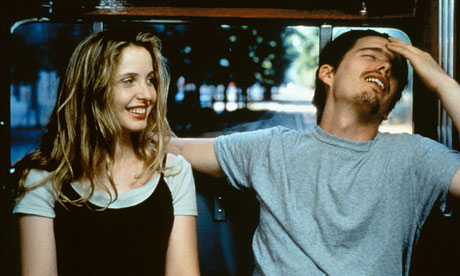
Julie Delpy and Ethan Hawke in BEFORE SUNRISE

The year’s best romance (and one of the year’s best movies), Before Midnight, is coming to theaters on May 31. So it’s time to get ready by watching (or revisiting) its prequels, Before Sunrise and Before Sunrise

In 1995’s Before Sunrise, Jesse (Ethan Hawke) is an American writer in his early twenties who has been moping around Europe after a breakup.  He meets a French woman, Celine (Julie Delpy), on a train and talks her into walking around Vienna with him before his early morning flight back home.   They banter and flirt – and sparks fly.  As they connect more deeply, each begins to explore whether this can be a real relationship, more than a transtice encounter or a one night stand.

Nine years later, in Before Sunset, Jesse and Celine have another encounter, this time in Paris just before he is again scheduled to fly back to the US.  (Before Sunset is only 80 minutes long.)

In the upcoming Before Midnight, it’s been another nine years and Jesse and Celine are 41.  To avoid spoilers, I’ll just say that their journeys have reached another stage, which is played out in a Greek coastal resort.

Co-written by director Richard Linklater and with characters developed by stars Hawke and Delpy, the series is deeply affecting because the movies are unusually authentic movie romances.  All three stories are constrained by time and set in beautiful European locations.  All three are about two intelligent people who are attracted to each other and are connecting deeply.   All three stories are unencumbered by the conventions of more superficial romantic comedies; in this series, there are no goofy best friends/roommates, obnoxiously intrusive parents – and no weddings.  There are no races to the airport to keep Jesse from leaving.

Most importantly, the filmmakers let the audience figure out what happens next.  As in real life, there’s no pat happy ending, and there’s the ambiguity of yet unwritten personal history.  At the end of Before Sunrise and Before Sunset, we don’t KNOW whether they are going to get together…but they could.  And we want them to.

Both Before Sunrise and Before Sunset are available on DVD from Netflix and streaming on VOD from Amazon , iTunes, Vudu and other VOD outlets.  Before Sunrise is free with Amazon Prime.