PRESSURE: a study in high-stakes decision-making

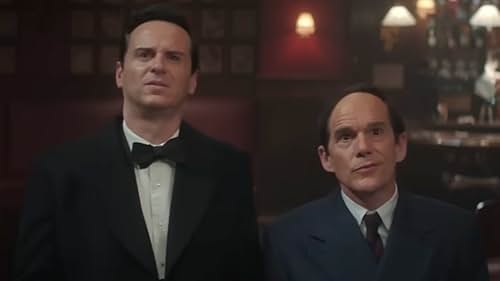
Photo caption: Brendan Fraser and Andrew Scott in PRESSURE. Credit: Alex Bailey/Focus Features/STUDIOCANAL © 2026 All Rights Reserved. Courtesy of Focus Features.

The superb historical drama Pressure is a study in high-stakes decision-making. Few human endeavors had higher stakes than the Allied invasion of Europe, upon which hinged millions of lives, the liberation of formerly free nations, and the defeat of the fascist and racist Nazi regime (whose worst crimes were yet to be publicized). And, after all the planning and investment in resources, the success of that invasion came down to secrecy and a weather report, made by human beings.

History’s most massive amphibious invasion would be logistically difficult and cost many lives, no matter how well things went. But it would certainly generate horrendous casualties and possibly even fail, if the Allies lost the element of surprise. The allies had gone to extraordinary lengths to mislead the Germans about the location of the D-Day landings. This spiderweb of secrecy, deception and misdirection couldn’t be maintained forever, and the clock was ticking.

While the Allies needed to launch D-Day as soon as possible, they also needed to wait for the right conditions. The landing required high tides and low-enough waves for landing craft, a moon-lit night for the airborne forces, along with good visibility and a high ceiling for air support. Missing the window for the moon and tides, would mean a two-week delay – with the threat of the secrecy unraveling.
Brandon Fraser in PRESSURE. Courtesy of Focus Features.

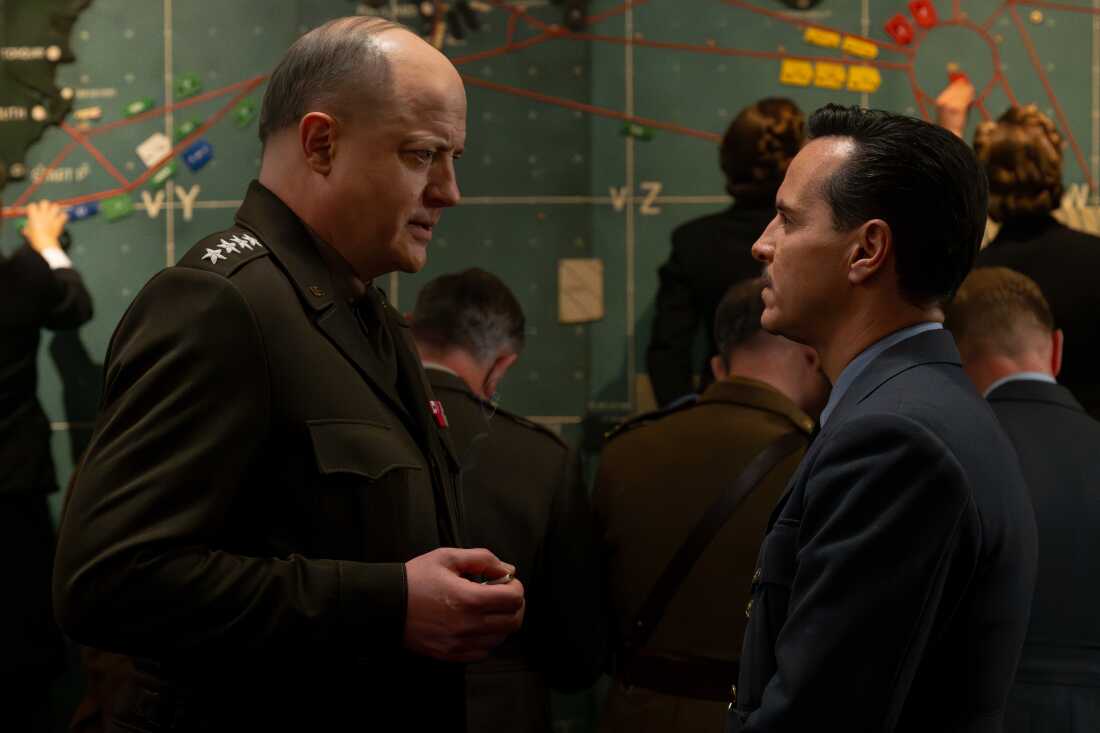
One man held the responsibility for the critical decision of when to deploy – General Dwight D, Eisenhower (Brendan Fraser). Eisenhower’s decision would pivot on the weather forecast by the British meteorologist British Captain James Stagg (Andrew Scott). Pressure is the harrowing moment-by-moment story of the crushing weight of this decision.

This is a true story, and Pressure is remarkably historically accurate. Some details are streamlined, but the truth of what happened is maintained. I fact-checked the two elements in the story that I wasn’t familiar with, and they turned out to be factual. As is the case with the best history, the historical events are humanized.

Director Anthony Maras co-wrote the screenplay with David Haig, based on Haig’s play. In his second feature, director Maras distills a complex story and maintains a blistering pace – only one-hour-and-forty minutes.

Brendan Fraser accurately captures the cauldron that Ike operates in, always burdened by the most immense responsibility, while being sniped at and undermined by rivals. Fraser’s Ike maintains control – and the appearance of control – while constantly second- and third-guessing himself.
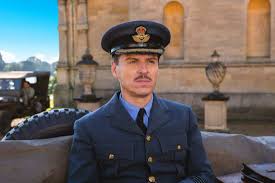
Andrew Scott in PRESSURE. Courtesy of Focus Features.

Likewise, Andrew Scott is excellent as the apparently humorless Stagg, who kept his eye on the science despite overwhelming pressure to come ip with a more desirable answer. There were no weather satellites in 1944, and Stagg had to get a handle on the future volatile weather by manually tracking real-time reports from various weather stations in the North Atlantic. Scientists like Stagg don;t give final reports with 100% certainty, and Eisenhower had to act decisively despite that. (I had the experience of helping to make important public health decisions during the COVID pandemic; political and military leaders are comfortable making decisions based on, say, 75% certainty, while doctors and scientists often refuse to be definitive unless they have 100% proof.)

Despite overwhelming pressure to do otherwise, Stagg had the balls to stand firm with his scientifically-informed forecast, no matter how unpopular. (I related to Stagg, having, many times in my own real-life career, told very powerful people what they did not want to hear, even in the presence of pandering sycophants.)

Kerry Condon is excellent as Kay Summersby, Ike’s driver and personal assistant, and essentially his work wife. Condon just keeps showing up in movies with yet another distinctive performance (Three Billboards Outside Ebbing, Missouri, Ray Donovan, Better Call Saul, The Banshees of Inisherin, Train Dreams). This time she brings a historical character to life, and, once again, she’s one of the best elements of a movie.

Similarly, Damian Lewis nails the supreme confidence and insufferable narcissism of Field Marshal Bernard “Monty” Montgomery. Montgomery was incapable of being a team player, and his arrogance and disloyalty is depicted here.

I saw Pressure with The Wife, who is generally not a fan of war movies, and she was absorbed in impressed by the film. Pressure is now in theaters.
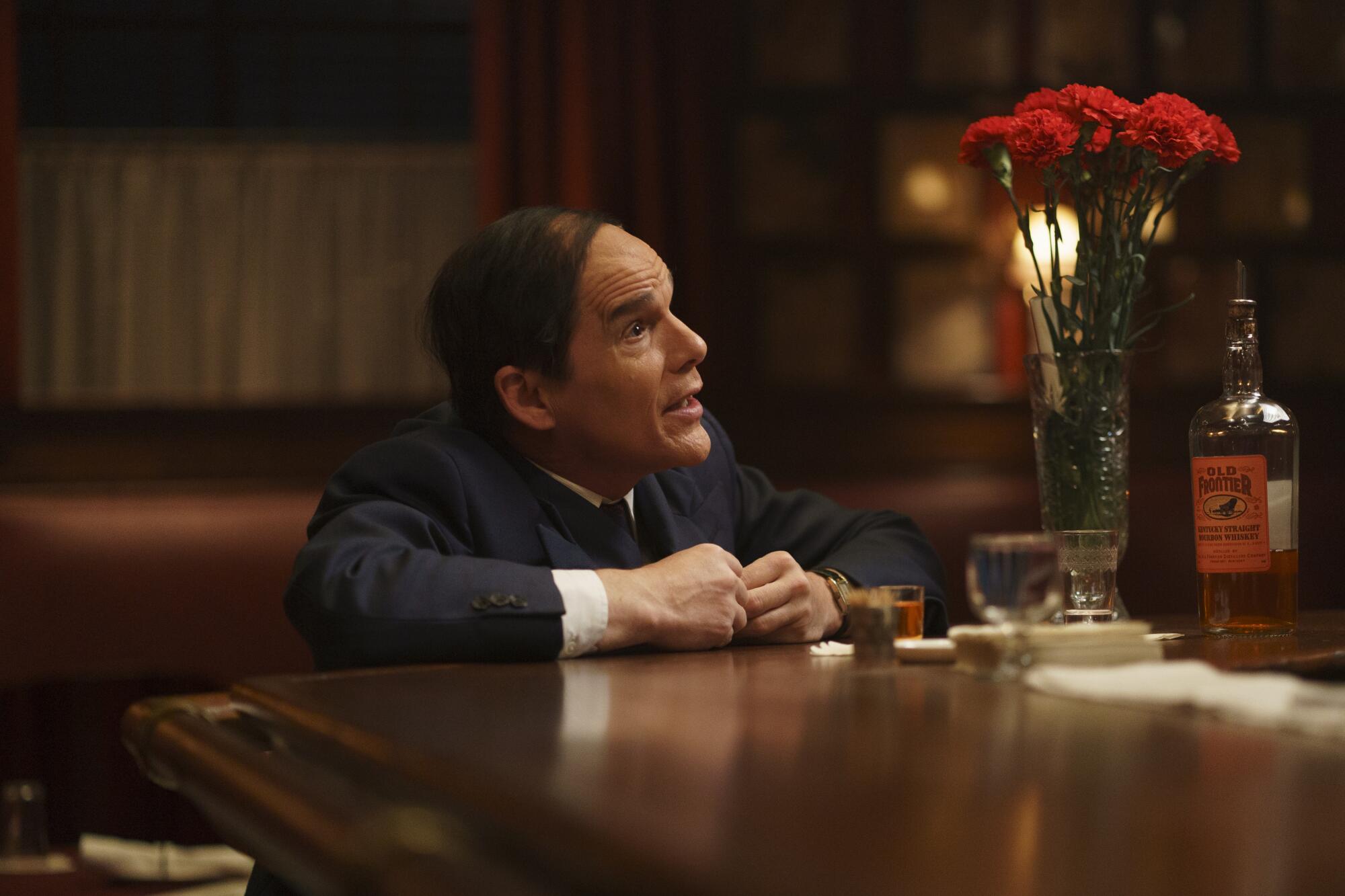
BLUE MOON: wit and vulnerability

Photo caption: Ethan Hawke in BLUE MOON. Courtesy of Sony Pictures Classics.

The protagonist of Richard Linklater’s Blue Moon is lyricist Lorenz Hart (Ethan Hawke), who Linklater immediately shows us dying of alcoholism, before taking us to a night eight months earlier. Hart, having left the opening night production of Oklahoma!, has entered a familiar haven, the bar at Sardi’s, where he is ready, as always, to hold forth. His longtime partner Richard Rodgers has dumped him for a new collaborator, Oscar Hammerstein, and Hart has immediately recognized that the new duo’s debut musical would dwarf the success of the Rodgers and Hart work. It’s hard to feel good about yourself when you are dumped by your partner of 24 years, who then soars to new heights with a different collaborator.

Beginning in 1919 (when Hart was 24 and Rodgers only 17), the two created 28 stage musicals (including Babes in Arms and Pal Joey and more than 500 songs for Broadway and Hollywood, many of which have become American standards, like Manhattan, The Lady Is a Tramp, My Funny Valentine, and, of course, Blue Moon.

Seeing that body of work eclipsed in one night has Hart reeling. But, now, in 1943, Hart was 48 and Rodgers 41. Hart’s alcoholism has made him unreliable, so Rodger has moved on. Hart’s gift at wordplay is as brilliant as ever, but his confidence is crushed – and he is desperate to work again, and, in his wildest dreams, with Rodgers.

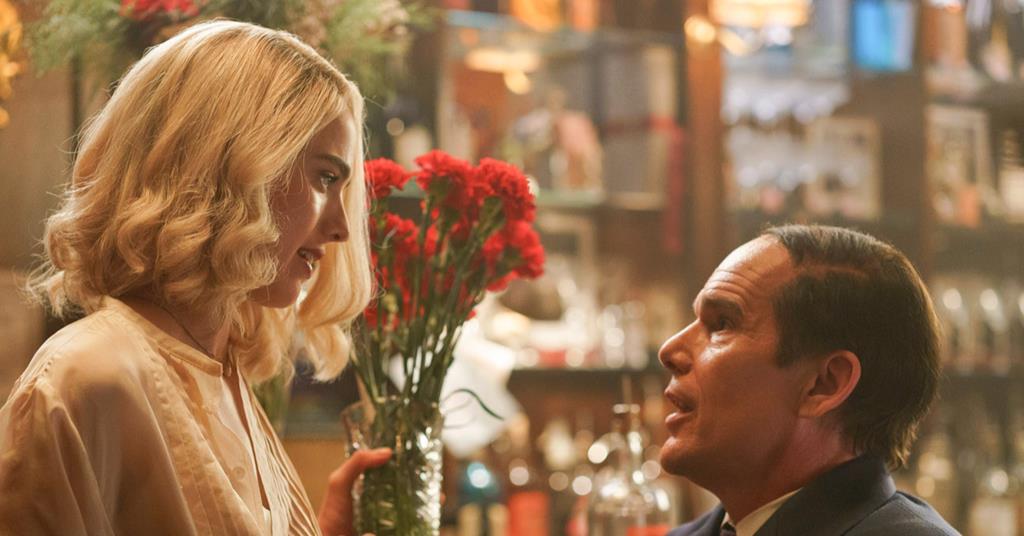
Hart’s career desperation is matched by his romantic desperation – from a doomed fixation with the comely Yale coed, Elizabeth (Margaret Qualley). Elizabeth is self-confident and ambitious, towers over the shrimpish Hart and can match wits with him . Hart is a successful celebrity, but not rich or conventionally attractive, and being an over-the-hill drunken gay man, neither the audience or other characters in Blue Moon see Hart’s pursuit of Elizabeth as anything but a pathetic fantasy.

Margaret Qualley and Ethan Hawke in BLUE MOON. Courtesy of Sony Pictures Classics.

Hart presides over all conversation in the bar, and proves himself a most witty raconteur. Hart, usually unintentionally, reveals himself in banter with Sardi’s affable bartender (an excellent Bobby Cannavale).

Finally, Richard Rodgers (Andrew Scott) leads in his entourage from Oklahoma! for the opening night party, and Hart explodes into the full wheedle. Moment by moment, we learn more about Rodger’s complicated experience with Hart. It’s clear that Rodgers is genuinely grateful for Hart’s contribution to his life and is also relieved not to no longer be a secondary victim of Hart’s drinking. Rodgers still is affectionate and nostalgic with Hart, but wary about reliving Hart’s worst behavior. When Hart offers a celebratory glass of champagne, Rodgers recoils and barks, “I won’t drink with you!”, registering the pain that Hart’s drinking has inflicted on him over many years.

Why isn’t Blue Moon, a portrait of a man’s crash-and-burn, unwatchably sad?

  • Foremost, even when Hart is being sad, he’s very, very funny.
  • Hawke’s performance is deliciously vivid.
  • We stay engaged in sussing out the complicated relationship between Hart and Rodgers.
  • We delight in the stellar cast and in Richard Linklater’s storytelling genius.

Hawke is one of our very most interesting actors, and his turn as Hart is exceptional, plumbing all of Hart’s desperation, self-loathing and vulnerability. Of course, Hawke, who is 5′ 10″, can play a dreamy romantic lead, so there’s some movie magic – and a bad comb over – employed to help us see him as a 5 foot gnome. Others have described Hawke’s performance here as career-topping, but it’s hard for me to see this performance, as good as it is, as even better than those in Before Sunrise, Before the Devil Knows You’re Dead, and First Reformed, for example.

Andrew Scott and Ethan Hawke in BLUE MOON. Courtesy of Sony Pictures Classics.

Lorenz Hart is a flashy role, but Andrew Scott (Tom Ripley in the recent television episodic Ripley) is quietly mesmerizing as Rodgers, who struggles to contain the embarrassment, wariness, revulsion, pity and love that Hart triggers. Scott won the supporting actor Silver Bear at the Berlinale for this performance.

Qualley just seems to brighten every movie that she’s in – shall we call it the Joan Blondell quality?

One of the most interesting encounters in Blue Moon is between Hart and another bar patron, the writer E.B. White (Patrick Kennedy). The two know and admire each other’s work, although they are conversing for the first time. White can keep up with Hart intellectually, and also has the emotional intelligence to see, without comment, what’s going on with Hart. It’s a remarkably subtle performance by Kennedy.

The entire movie takes place in Sardi’s, except for two or three minutes at and near the beginning. Over 80% of the story takes place in Sardi’s bar. But Blue Moon never looks as inexpensive as it must be. No filmmaker has delivered more fine movies on low budgets than Linklater; I couldn’t find a Linklater movie budgeted at more than a frugal $35 million (School of Rock). Nevertheless, Linklater has created the three most thoughtful romances in cinema (the Before Sunrise series) and the milennium’s best film (Boyhood), along with launching an entire generation of actors in Dazed and Confused.

Here, Linklater turns one night into a vivid portrait of a man’s life and times, and Blue Moon is both funny and profound.