
PRESSURE: a study in high-stakes decision-making

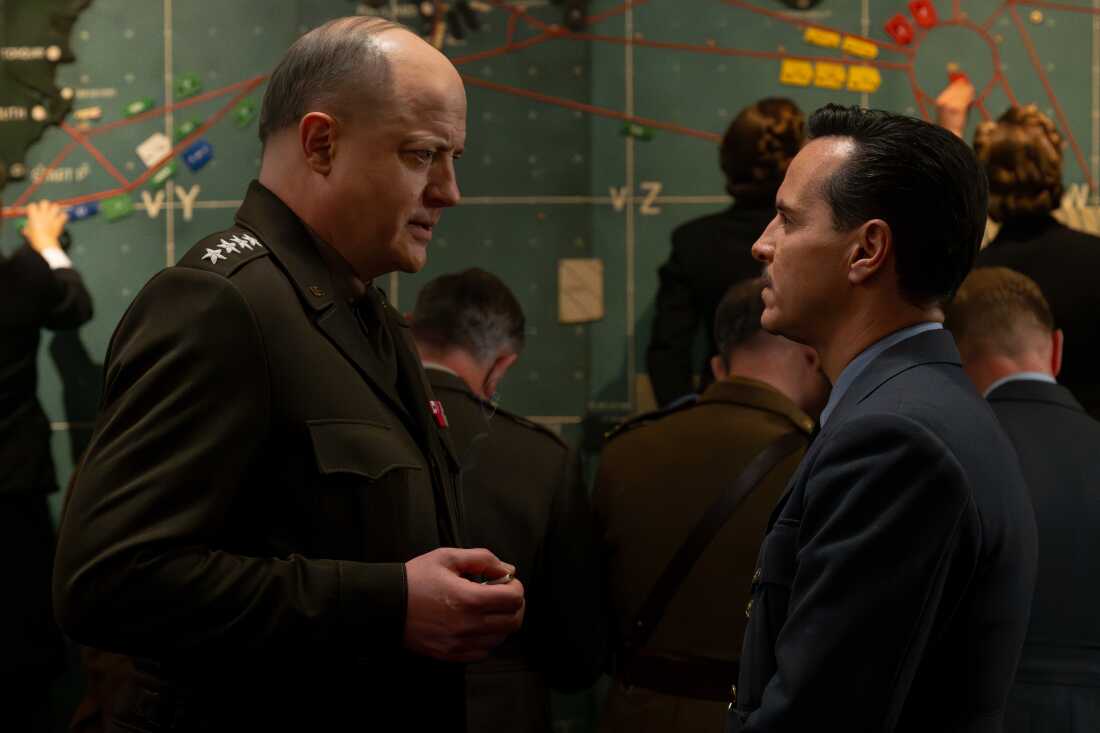
Photo caption: Brendan Fraser and Andrew Scott in PRESSURE. Credit: Alex Bailey/Focus Features/STUDIOCANAL © 2026 All Rights Reserved. Courtesy of Focus Features.

The superb historical drama Pressure is a study in high-stakes decision-making. Few human endeavors had higher stakes than the Allied invasion of Europe, upon which hinged millions of lives, the liberation of formerly free nations, and the defeat of the fascist and racist Nazi regime (whose worst crimes were yet to be publicized). And, after all the planning and investment in resources, the success of that invasion came down to secrecy and a weather report, made by human beings.

History’s most massive amphibious invasion would be logistically difficult and cost many lives, no matter how well things went. But it would certainly generate horrendous casualties and possibly even fail, if the Allies lost the element of surprise. The allies had gone to extraordinary lengths to mislead the Germans about the location of the D-Day landings. This spiderweb of secrecy, deception and misdirection couldn’t be maintained forever, and the clock was ticking.

While the Allies needed to launch D-Day as soon as possible, they also needed to wait for the right conditions. The landing required high tides and low-enough waves for landing craft, a moon-lit night for the airborne forces, along with good visibility and a high ceiling for air support. Missing the window for the moon and tides, would mean a two-week delay – with the threat of the secrecy unraveling.
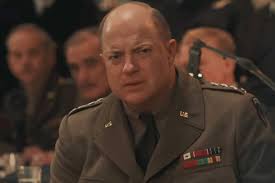
Brandon Fraser in PRESSURE. Courtesy of Focus Features.

One man held the responsibility for the critical decision of when to deploy – General Dwight D, Eisenhower (Brendan Fraser). Eisenhower’s decision would pivot on the weather forecast by the British meteorologist British Captain James Stagg (Andrew Scott). Pressure is the harrowing moment-by-moment story of the crushing weight of this decision.

This is a true story, and Pressure is remarkably historically accurate. Some details are streamlined, but the truth of what happened is maintained. I fact-checked the two elements in the story that I wasn’t familiar with, and they turned out to be factual. As is the case with the best history, the historical events are humanized.

Director Anthony Maras co-wrote the screenplay with David Haig, based on Haig’s play. In his second feature, director Maras distills a complex story and maintains a blistering pace – only one-hour-and-forty minutes.

Brendan Fraser accurately captures the cauldron that Ike operates in, always burdened by the most immense responsibility, while being sniped at and undermined by rivals. Fraser’s Ike maintains control – and the appearance of control – while constantly second- and third-guessing himself.
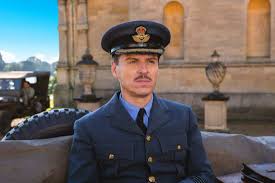
Andrew Scott in PRESSURE. Courtesy of Focus Features.

Likewise, Andrew Scott is excellent as the apparently humorless Stagg, who kept his eye on the science despite overwhelming pressure to come ip with a more desirable answer. There were no weather satellites in 1944, and Stagg had to get a handle on the future volatile weather by manually tracking real-time reports from various weather stations in the North Atlantic. Scientists like Stagg don;t give final reports with 100% certainty, and Eisenhower had to act decisively despite that. (I had the experience of helping to make important public health decisions during the COVID pandemic; political and military leaders are comfortable making decisions based on, say, 75% certainty, while doctors and scientists often refuse to be definitive unless they have 100% proof.)

Despite overwhelming pressure to do otherwise, Stagg had the balls to stand firm with his scientifically-informed forecast, no matter how unpopular. (I related to Stagg, having, many times in my own real-life career, told very powerful people what they did not want to hear, even in the presence of pandering sycophants.)

Kerry Condon is excellent as Kay Summersby, Ike’s driver and personal assistant, and essentially his work wife. Condon just keeps showing up in movies with yet another distinctive performance (Three Billboards Outside Ebbing, Missouri, Ray Donovan, Better Call Saul, The Banshees of Inisherin, Train Dreams). This time she brings a historical character to life, and, once again, she’s one of the best elements of a movie.

Similarly, Damian Lewis nails the supreme confidence and insufferable narcissism of Field Marshal Bernard “Monty” Montgomery. Montgomery was incapable of being a team player, and his arrogance and disloyalty is depicted here.

I saw Pressure with The Wife, who is generally not a fan of war movies, and she was absorbed in impressed by the film. Pressure is now in theaters.
THE WHALE: regret to redemption

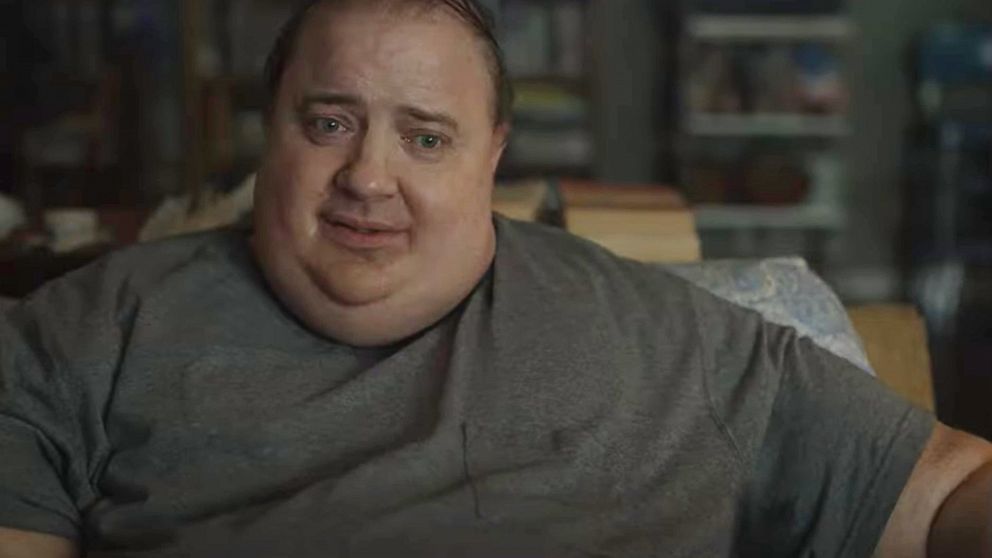
Photo caption: Brendan Fraser in THE WHALE. Courtesy of A24.

The emotionally powerful The Whale depicts a week in the life of Charlie (Brendan Fraser). The first thing we notice about Charlie is his obesity – his 600 pounds makes getting out of a chair a major challenge, and there’s just no way he can bend over to pick anything off the floor.  Refusing to seek medical attention despite labored breathing and catastrophic blood pressure, Charlie has exasperated his friend/caregiver Liz (Hong Chau), a nurse. He has congestive heart failure, and both Liz and Charlie know that he may be in his last week of life.

He is a grotesque, but unlike Quasimodo or The Elephant Man, he’s a grotesque of his own making. Charlie is grieving from a loss nine years before and is regretting a failed relationship with his child; he has reacted by emotionally eating himself to near-death. He no longer ever leaves his apartment, where he works remotely by teaching a college writing course on-line.

Charlie is a man of immense sensitivity, unusually moved by the sporadic snippets of crude honesty in his students’ writing. He is so sensitive that he is swallowed by grief, and cannot handle the anger of others. Charlie is constantly saying “I’m sorry”, but there are two things that he is decidedly not sorry for – fathering a daughter and falling in love with a man.

Charlie’s sad routine is interrupted by a visit from the young door-to-door missionary Thomas (Ty Simpkins), and then by an appearance from his estranged daughter Ellie (Sadie Sink), now a seething teen. It’s only a mater of time before Liz brings by his ex-wife Mary (Samantha Morton), too. Will Charlie mend his relationships? Will he find inner peace? Will he even survive?

What makes The Whale an exceptional movie is Brendan Fraser’s unforgettable performance as Charlie. He’s not just impersonating an extremely obese person; he’s portraying a complex character- a man who is weakened by self loathing and physical disability, but whose passions and humanity gleam through. Encased in a latex and CGI fat suit, Fraser makes us understand Charlie with his own beautiful and expressive blue eyes and with Charlie’s lurching and plodding.

Fraser has always been an appealing actor, and one of great humor. 25 years ago, the strikingly handsome Fraser used his physicality in The Mummy franchise and, literally in a loincloth, in George of the Jungle. It’s useful to remember that he did a serious art movie, Gods and Monsters, in that period, too.  His build, rangy then, has since morphed into burly, and in last years thriller No Sudden Move, to hulking. 

Of course, Fraser will be nominated for an Oscar, because the actors who vote for awards love performances with major physical transformations. But it’s important not to downgrade Fraser’s performance because of that phenomenon – this is a remarkable exploration into a character’s inner life.

Hong Chau has been doing strong and versatile work lately (Driveways, The Menu); her Liz is an uncommonly good and award-worthy performance. 

Samantha Morton is piercingly credible as the ex-wife.  (Where has SHE been since Minority Report and In America?)

The story is a play by Samuel D. Hunter. Darren Aronofsky, a director known for making splashy, pedal-to-the-metal movies (Requiem for a Dream, The Wrestler, Black Swan) has the artistic judgment to keep the camera in Charlie’s dank, claustrophobic apartment and let Hunter’s dialogue reveal the characters.

While The Whale is one of the best films of 2022, it has its flaws, especially Sadie Sink’s not-very-textured performance as the daughter (and I didn’t find Ty Simpkins very compelling, either).  The thread about the young missionary Thomas has at least one contrivance too many. Also, the weepy soap opera music cues underneath The Whale’s most emotionally powerful moments are unnecessary, distracting and unforgivable.

The scenes where Charlie is gorging himself are tough to watch.  I saw The Whale at a theater that is essentially next to my favorite French restaurant, and I like to cap a morning movie with a lunch of salade lyonnaise and steak tartare; but emerging from The Whale at lunchtime, I just couldn’t do that.  I recommend this film, but not for a movie/dinner or dinner/movie date.

Nevertheless, this is still one of the year’s best films because of Charlie’s compelling story and Brendan Frazier’s magnificent portrayal.