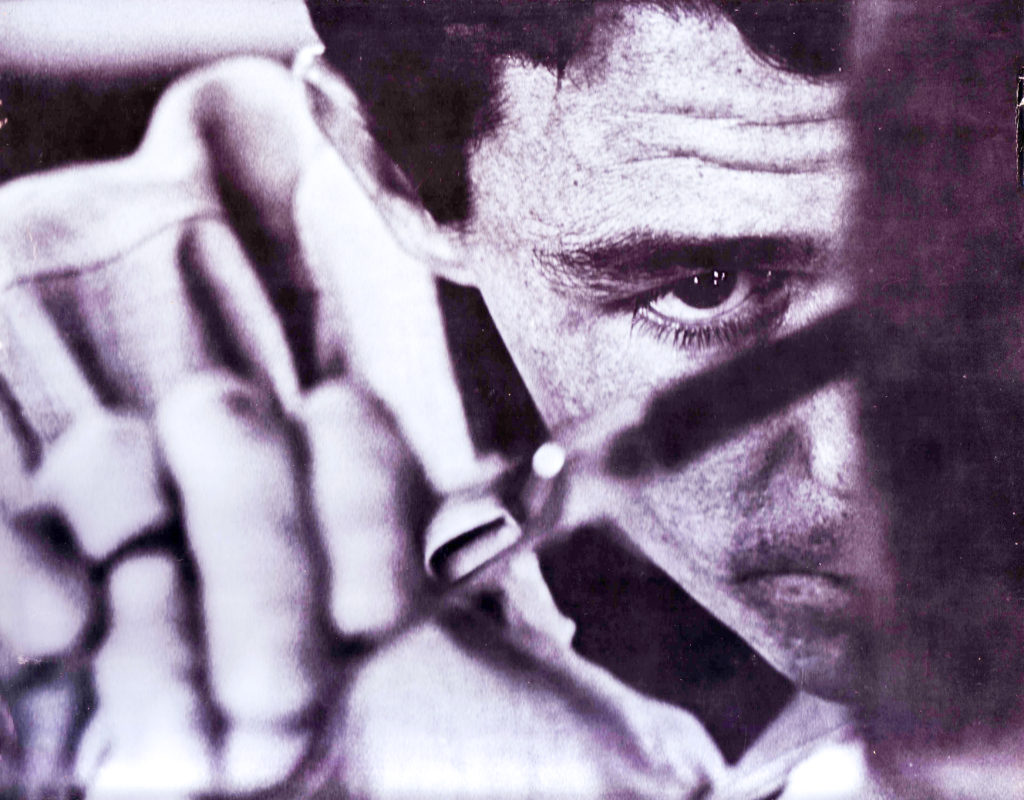
JAY SEBRING…CUTTING TO THE TRUTH. Photo courtesy of Cinequest.
Jay Sebring…Cutting to the Truth attacks the indignity of a person being remembered, not for his significant achievements, but for his victimhood. Jay Sebring was, along with his friend Sharon Tate, one of the Manson Family’s murder victims. But Sebring invented – by himself – the men’s hairstyling industry. And as what we now call an influencer, he led American men out of the Brylcreem Age.
This documentary is directed by Anthony DiMaria, the son of Sebring’s sister. The film is remarkably well-sourced, with Sebring’s sister, his best Navy buddy, his first wife, his first hair-cutting partner and Hollywood pals like actor Stuart Whitman. There’s even footage with Sebring’s first celebrity customer – Vic Damone (!), who introduced him to the Rat Pack and other crooners like Paul Anka; actors like Steven McQueen, Paul Newman and Henry Fonda soon followed.
Oddly, we meet Sebring himself through an industrial film he commissioned; this is as stilted as any of the industrial films of the 60s, so we don’t get any excitement coming from Sebring, only his drive and passion for hair styling. But that’s OK, because we get a sense of Sebring’s vitality and charisma through the people who knew him.
It took a substantial time it took to uncover the actual but unimaginable facts of the Manson Family’s murderous lunacy. Jay Sebring sadly reminds us that, during this period, the stories of the victims were sullied, when even mainstream media feasted on lurid speculation. Jay Sebring busts up those urban legends, adds some under-reported facts about Sebring’s actions during the Manson attack and a glimpse into what could have been a future with Sharon Tate.
Cinequest hosts the world premiere of Jay Sebring…Cutting to the Truth.
In the thought-provoking documentary We Believe in Dinosaurs, filmmakers Clayton Brown and Monica Long Ross introduce us to Ark Encounter, a Kentucky attraction with a full-size replica of Noah’s Ark. Explicitly pro-creationism and anti-evolution, Ark Encounter is filled with interpretive exhibits that illustrate the Biblical story of Noah as historical fact, kind of a fundamentalist, evangelical Smithsonian. Ark Encounter is 45 miles from its sister attraction, the Creation Museum.
There’s a lot to think about – and even marvel about – here. First of all, the Ark Encounter is an impressive spectacle. In Genesis, God directed Noah to build the ark to be 300 cubits long, 50 cubits wide, and 30 cubits high. That means that this thing is a football field-and-a-half long and over four stories high. We get to meet and observe the technicians and artists as they build the animatronic Noah family and the reproduced animals.
The bigger story here, though, is the massive investment in anti-science propaganda. To justify their literal acceptance of Biblical content that is inconsistent with scientific fact, these folks behind the Ark Encounter believe that they need to discredit science itself. And they’re not just defending the literal occurrence of every Bible story, but also the chronology of Bishop Ussher who, in the mid 1600s, calculated that the earth was created in 4004 B.C. That means that the Ark Encounter aggressively explains that the Earth and the human race, despite fossil evidence, are each 6,000 years old – and that dinosaurs lived alongside humans (and voyaged on the Ark). It also means that they seek to discredit the Theory of Evolution and the scientific method itself (while enjoying its byproducts – vaccines, for example).
When you distill their beliefs, these neo-creationists are essentially turbanless Taliban. Just for perspective, after suppressing Galileo’s 1615 discovery of the earth-centered solar system, the Catholic Church started backpedaling in 1718. That means that 300 years ago, even the reactionary Church decided not to double down on denying scientific discoveries.
And what about the scientists? And people of faith who accept science? We Believe in Dinosaurs
brings us the perspectives of Ark Encounter opponents, most notably a
geologist, and a former neo-creationist, both native Kentuckians.
There’s also a local Baptist minister, who thinks that people of faith
can also accept science.
One of the stunning aspects of We Believe in Dinosaurs is the unexpected David-and-Goliath story. We might expect the science-deniers to be outmatched. But the folks with most primitive beliefs are the creative masters. Anti creationists are the Goliath, supported by hordes of believers, massive private investment, capacity for technical wizardry and even state support. On the other hand, scientists are not often skilled in or equipped with tools for political persuasion and mass communications. The pro-science folks are, like John the Baptist, a lone voice in the wilderness, losing the optics battle.
Brown and Long Ross have a point of view (that science is good), but they don’t make the Ark Encounter people ridiculous. We directly hear the Ark Encounter leadership’s public pronouncements, and we meet the earnest and often sympathetic folks who are using their considerable talents to build and fill the attraction. Brown and Long Ross let us hear from both sides and let us connect our own dots. Watch the closing credits to the very end to get the subjects’ unfiltered view of the filmmakers. And wait for the film’s super-creepy money shot – that of an animatronic figure reflecting on the fate of others.
I saw We Believe in Dinosaurs at its world premiere at the San Francisco International Film Festival (SFFILM). We Believe in Dinosaurs can be streamed from Amazon, Vudu, YouTube and Google Play.
Pauline Kael in WHAT SHE SAID: THE ART OF PAULINE KAEL
What She Said: The Art of Pauline Kael is the remarkably thorough and insightful biodoc of the iconic film critic Pauline Kael and her drive for relevance.
Documentarian Rob Garver has sourced What She Said is well-sourced with the memories of Kael’s colleagues, rivals and intimates. Garver’s portrait of Kael helps us understand her refusal to conform to social norms as she basically invented the role of a female film critic and what today we might call a national influencer on cinema.
Of course, one of Kael’s defining characteristics was her all-consuming love of movies, a trait shared by many in this film’s target audience. Fittingly, Garver keeps things lively by illustrating Kael’s story with clips from the movies she loved and hated. Garver’s artistry in composing this mosaic of evocative movie moments sets What She Said apart from the standard talking head biodocs.
Kael was astonishingly confident in her taste (which was not as snooty as many film writers). For the record, I think Kael was right to love Mean Streets, Band of Outsiders, Bonnie and Clyde, and, of course, The Godfather. It meant something to American film culture that she championed those films. She was, however, wrong to love Last Tango in Paris. She was also right to hate Limelight, Hiroshima Mon Amour and The Sound of Music. But Kael was just being a contrarian and off-base to hate Lawrence of Arabia and Shoah.
Kael was by necessity an intrepid self-promoter and filled with shameless contradictions. She famously dismissed the auteur theory but sponsored the bodies of work of auteurs Scorsese, Peckinpah, Coppola and Altman. She loved – even lived – to discover and support new talent.
Most of the people we like and admire possess at least some bit of selflessness and empathy. Kael’s daughter Gina James says that Kael turned her lack of self awareness into triumph,. This observation, of course, cuts both ways.
I saw What She Said: The Art of Pauline Kael at the 2019 San Francisco Jewish Film Festival. It’s now playing in theaters in San Francisco and Berkeley.
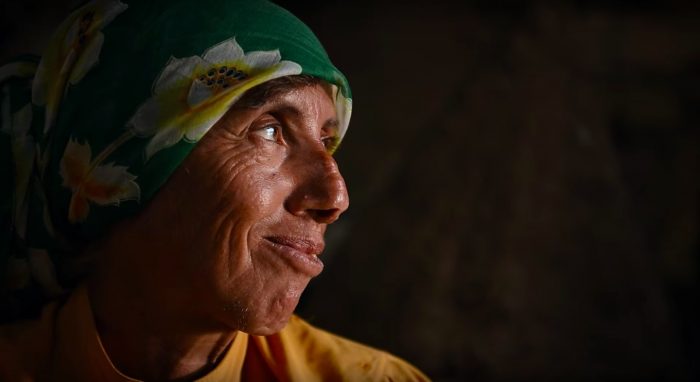
The documentary Honeyland is about a fiftyish Macedonian woman named Hatidze, who lives in an otherwise abandoned mountain village. She cares for her mother, who is blind and bedridden, and she clambers over rocky mountains to collect honeycombs and bees; she sells the honey in a nearby city for a living.
Suddenly, a thoroughly disorganized family moves in next door, sprawling litter and rowdy kids across the previously serene landscape. The father, Hussein, thinks that he will strike it rich raising cattle and bees; the fact that it’s not that easy utterly escapes him. Hussein is foolish, makes the lazy choice at every opportunity and blames the resultant misadventures on others.
Despite Hatidze’s best efforts, her mother’s health declines and Hussein’s self-made disasters continue. That’s all that happens in Honeyland. As my longtime readers will know, I’m more patient with the slowly paced, indie cinéma vérité than the next guy; but but I lost interest in Honeyland. The only reason I watched Honeyland to the end was because The Wife wanted to see if something more interesting was going to happen.
In fact, the only reason that I’m writing about this film at all is that it has somehow been Oscar-nominated for both the Best International Film and the Best Documentary, which I find baffling.
Reportedly, the filmmakers lived in tent in the remote village and filmed Honeyland over four years.
Hatidze is sweet, decent and fully aligned with popular values of sustainability. She has a sense of humor and some measure of snaggle-toothed charm. The film is only one hour 26 minutes, but it seems longer. I streamed Honeyland, but I don’t know why you should.
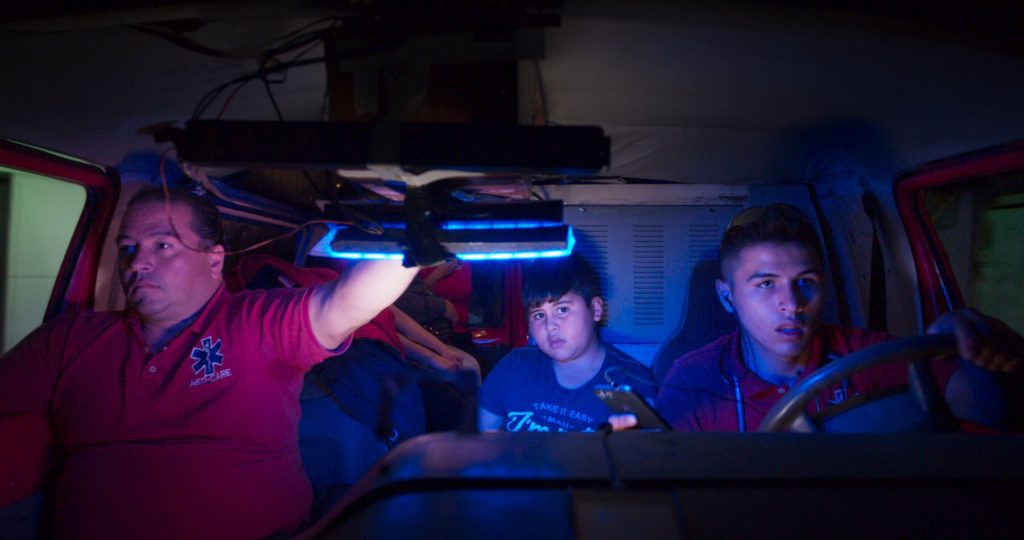
Luke Lorentzen’s MIDNIGHT FAMILY. Cuurtesy of SFFILM
In his gripping documentary Midnight Family, filmmaker Luke Lorentzen takes us on ridealongs with an all-night ambulance crew in Mexico City. It’s even wilder than you may expect.
Midnight Family is set in an absurd situation with life-and-death stakes. We learn right away that there are only 45 government-operated ambulances in Mexico City, a metropolis of 9 million. The rest of the ambulances are private and mostly independents.
Competition is cut throat. The private ambulances listen to police scanners and then TRY TO OUTRACE each other to the scene. One of these independent ambulances is the Ochoa family’s business.
Fernando Ochoa is the head of the family, and he collects the ambulance fee from hospitals and patients. His 17-year-old son Juan is the voluble front man and driver, who careens them through the Mexico City streets at alarming speed. The Ochoa’s colleague, the even-tempered medic Manuel, rides in the back. The youngest Ochoa son, pudgy, Ruffles-devouring 10-year-old Josue, rides along as a gopher. BTW there are no seat belts in the back.
The private ambulances operate in a shady world of semi-formal licensing, so they can always be shut down arbitrarily by the cops. Indeed, we even see the Ochoas arrested while trying to take a patient to the hospital. It’s common for the police to extract bribes from the vulnerable ambulance crews.
There is an incentive to steer patients to the private hospitals that will pay the ambulance crews, so their business is, by its nature, often a hustle; there are some instances of ethical ambiguity. Aiming to depict a “wide spectrum”, Lorentzen balances life-saving heroics with the more sketchy moments. Getting payment out of a grieving family when the loved one dies on the way to the hospital is, well, awkward.
Here is the Ochoa’s business model. Ideally, they get paid about $250 to deliver a patient to a private hospital. They deduct the cost of gasoline, medical supplies and police bribes, and then split what’s left four ways. If a patient can’t or won’t pay, if the vehicle breaks down, or if the cops shut them down – the Ochoas are out of luck.
Luke Lorentzen’s MIDNIGHT FAMILY. Cuurtesy of SFFILM
Fernando is silent but expressive. Carrying an alarming belly, he stoically juggles an assortment pills to treat his chronic illness. The loquacious Juan is a born front man, and basically provides play-by-play commentary throughout the film in real time. We see him downloading the previous night’s drama over the phone to his girlfrend Jessica and, by loud speaker, directing other Mexico City drivers out of his way.
Fernando and Juan sleep on the floor of a downscale apartment, and they never know if they’ll make enough money for tomorrow’s gasoline. It’s an incredibly stressful existence. How resilient can they be? Is there any limit to the stress they can absorb? As Lorentzen himself says, this is “a world where no one is getting what they need”.
I saw Midnight Family at the 2019 San Francisco International Film Festival (SFFILM), which included an in-person Q&A with Lorenzen. Lorentzen spent 80-90 nights with the crew. About 70% of the film comes from the last three nights that he rode with the Ochoas.
Midnight Family joins a mini-genre of rogue ambulance cinema. The very dark Argentine narrative Carancho stars the great Ricardo Darin as a LITERALLY ambulance-chasing lawyer. In the Hungarian dark comedy Heavenly Shift (I saw it at the 2014 Cinequest), an outlaw ambulance crew gets kickbacks from a shady funeral director if the patient dies en route to the hospital.
Midnight Family is just concluding a run at the Roxie in San Francisco. I’ll let you know when it’s streamable. Midnight Family is one of the nest documentaries of the year, and on my Best Movies of 2019.
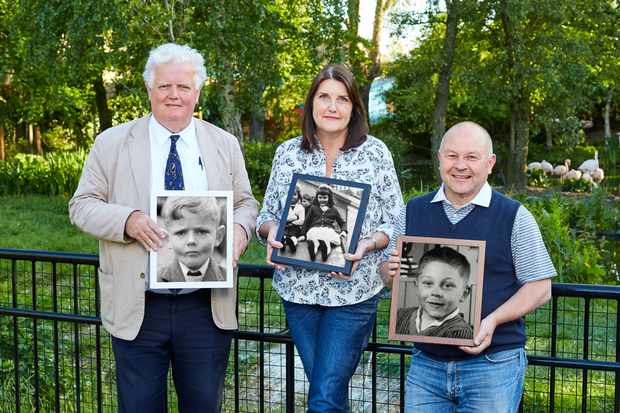
63 Up is the latest chapter in the greatest documentary series in cinema history (and on my list of Greatest Movies of All Time). Starting with Seven Up! in 1964, director Michael Apted has followed the same fourteen British children, filming snapshots of their lives at ages 7, 14, 21, 28, 35, 42, 49. and 56 – and now at age 63. Choosing kids from different backgrounds, the series started as a critique of the British class system, but has since evolved into a broader exploration of what factors can lead to success and happiness at different stages of human life. (Apted was the hands-on researcher, not the director on Seven Up! and then directed the next nine films in the series.)
We have seen these characters live roller coaster lives. The surprise in 56 Up was how contented they seemed to be, having independently reached a stage in their lives where they live with acceptance and satisfaction; the subjects had already weathered their broken marriages and other dramas and seemed to have settled into themselves. The same is true of 63 Up, but there is more reflection in light of mortality. There’s a death and a life-threatening illness, but all the characters understand that they’re longer at the beginning of their lives.
Because Apted includes clips from earlier films to set the stage for each character, you don’t need to watch all nine movies. Because there is so little conflict in 63 Up, it would be ideal to first screen an edgier film like 35 Up or 42: Forty Two Up. The earlier films are difficult, perhaps impossible, to find streaming, but the entire series (Seven Up!, Seven Plus Seven, 21 Up, 28 Up, 35 Up, 42 Up, 49 Up, 56 Up) is available on Netflix DVDs. 56 Up is streamable on Amazon, iTunes, Vudu, YouTube, Google Play and Kanopy.
The theme of the series at the outset was “Give me a boy of seven and I will give you the man“. This time, Apted asks this question directly of the subjects, with varying results.
As usual, the voluble Tony and the utterly unpredictable Neil are the stars, but I got more out of the stories of Symon and Paul than I had ever before. The biggest surprise for me was the earnest do-gooder teacher Bruce, who I hadn’t ever envisaged as a jovial family patriarch.
63 UP
Michael Apted is a big time director (Coal Miner’s Daughter, Gorillas in the Mist). It is remarkable that he has returned so faithfully to his subjects in the Up series.
I saw 63 Up at the Mill Valley Film Festival, with Apted in attendance. Apted is now 78, and hopes to direct 70 Up if he still has mental acuity. Apted acknowledges that his biggest mistake was not including enough girls at the outset (four girls out of fourteen kids); he’s tried to address it by expanding the roles of several of the male subjects’ female partners.
The Up series is significant and unique cinema – see 63 Up if you can.
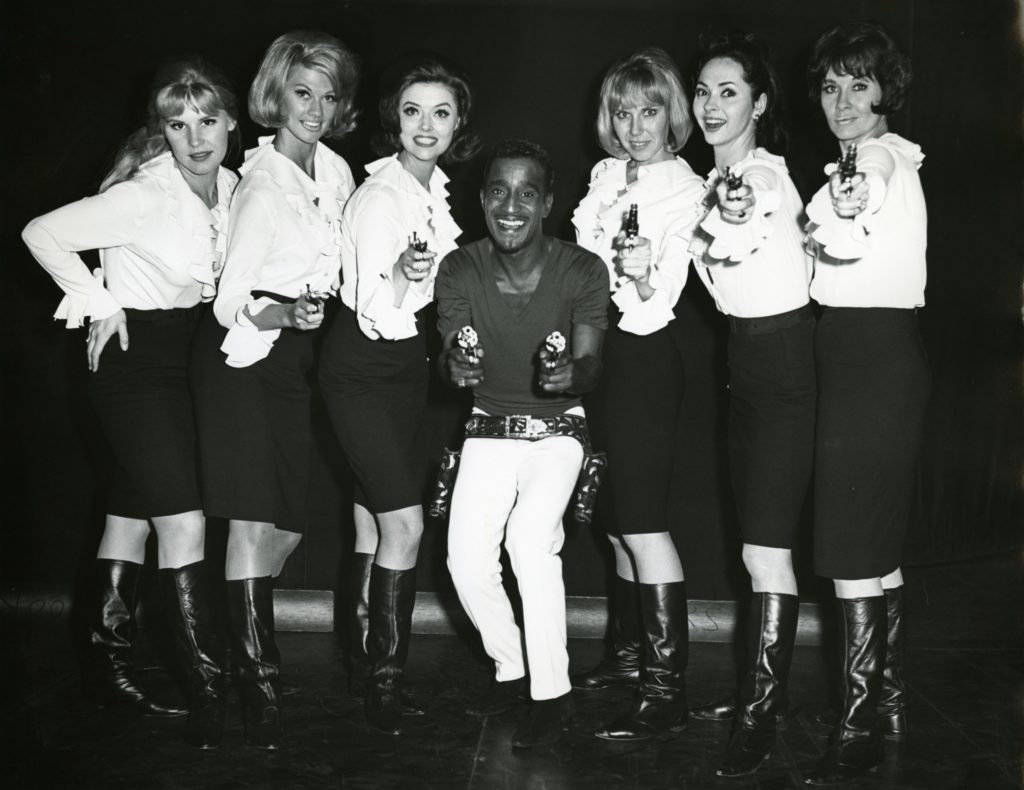
Still from SAMMY DAVIS JR.: I’VE GOTTA BE ME. Photo courtesy JFI.
Sammy Davis Jr.: I’ve Gotta Be Me is now available to stream (and free on Amazon Prime). As a Baby Boomer who had dismissed Sammy Davis Jr. from the moment he publicly hugged Richard Nixon, I found this to be the most surprising doc (and my favorite) at last year’s San Francisco Jewish Film Festival. I learned that Sammy’s 61-year career as a professional entertainer began at age three (with his first movie credit at age 7), a working childhood that left emotional needs It turns out that Sammy was a very, very talented but needy artist,, an uncomplicated man navigating several very complicated times.
Sammy’s life of entertainment began at 3. We get to see a clip of him in the 1933 Rufus Jones for President. All that professional work took away his childhood and engraved upon him a need to please. That and his generation produced the 50s showbiz style that seemed so insincere to us Baby Boomers. And, of course that embrace of Nixon seemed to be the ultimate sell-out moment.
Sammy Davis Jr.: I’ve Gotta Be Me also poses whether he was demeaned by Rat Pack humor? Were Frank and Dino laughing at Sammy, or with him?
But this was an immensely talented man, a masterful dancer with a remarkable crooner’s voice and a gift for mimicry. He was the first American entertainer of color to do impersonations of white celebrities. BTW there is some unbelievable dancing in Sammy Davis Jr.: I’ve Gotta Be Me. We get to see Sammy’s 60th anniversary in showbiz celebrated among a host of celebrities – he still had his dancing chops.
Sammy Davis Jr.: I’ve Gotta Be Me is the story of a man whose success condemned him to a career that spanned generations – none of which fit him comfortably. It’s a fine and insightful film. It can streamed on Amazon (included with Prime, iTunes, Vudu, YouTube and Google Play.
[Random note: This film title may contain the most different punctuation marks of any movie title: a comma, a period, a colon and an apostrophe.]
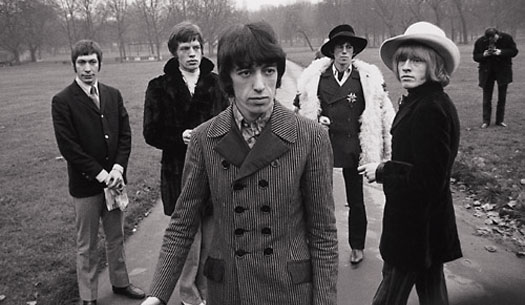
The title character in the documentary The Quiet One is the Rolling Stones bass player Bill Wyman. Wyman is an anti-flamboyant person at the very core of a circus of hedonistic excess and self-promotion.
Wyman is also an obsessive collector of memorabilia, and, at age 83, he now burrows into his irreplaceable archive of home movies and concert posters. What’s especially interesting in The Quiet One is the history of the Rolling Stones from his sober and humble perspective.
One famous associate says, “Bill never started acting like he’s famous”. Wyman himself says, “I suppose if you looked at my bookshelves you would understand me better.” What we do see is an astonishingly down-to-earth person, seemingly barely changed by stardom. He is honest about two marriage mistakes, one of them fairly appalling.
In the sweetest scene, we get to see today’s Wyman as a devoted fan, choking up while recalling an encounter with Ray Charles.
The Quiet One is a low key movie about a low key guy, and I recommend it to those interested in rock and roll history. The Quiet One is available to stream on Amazon, iTunes, Vudu, YouTube and Google Play.
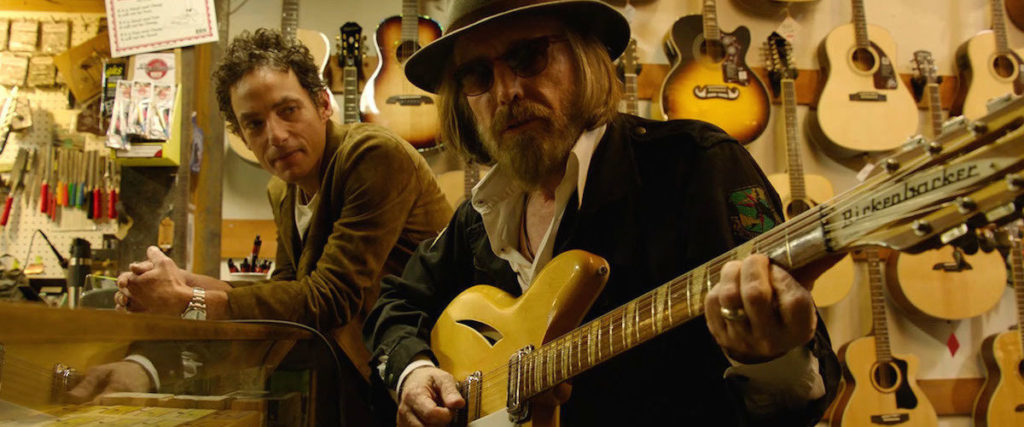
The documentary Echo in the Canyon explores a moment in music history – the beginnings of folk rock in LA’s Laurel Canyon in the mid-1960s. Think the Byrds, Buffalo Springfield, the Mamas and the Papas, all influenced by the Beach Boys and the Beatles.
There are some, but not a zillion, nuggets in the interviews with Roger McGuinn, David Crosby, Michelle Phillips, Eric Clapton, Graham Nash and Brian Wilson.
Jakob Dylan leads a band with Regina Spektor, Beck, Fiona Apple and Cat Power that plays some of the hits from the era. This is an excuse for a soundtrack album, but hardly a significant value add. The exception is singer Jade Castrinos, who seems born to sing the Mamas and Papas songbook, both the Michelle Phillips and Denny Doherty parts.
Echo in the Canyon is moderately interesting to fans of 1960s rock and roll and is available to stream on Netflix, Amazon, iTunes, Vudu, YouTube and Google Play.
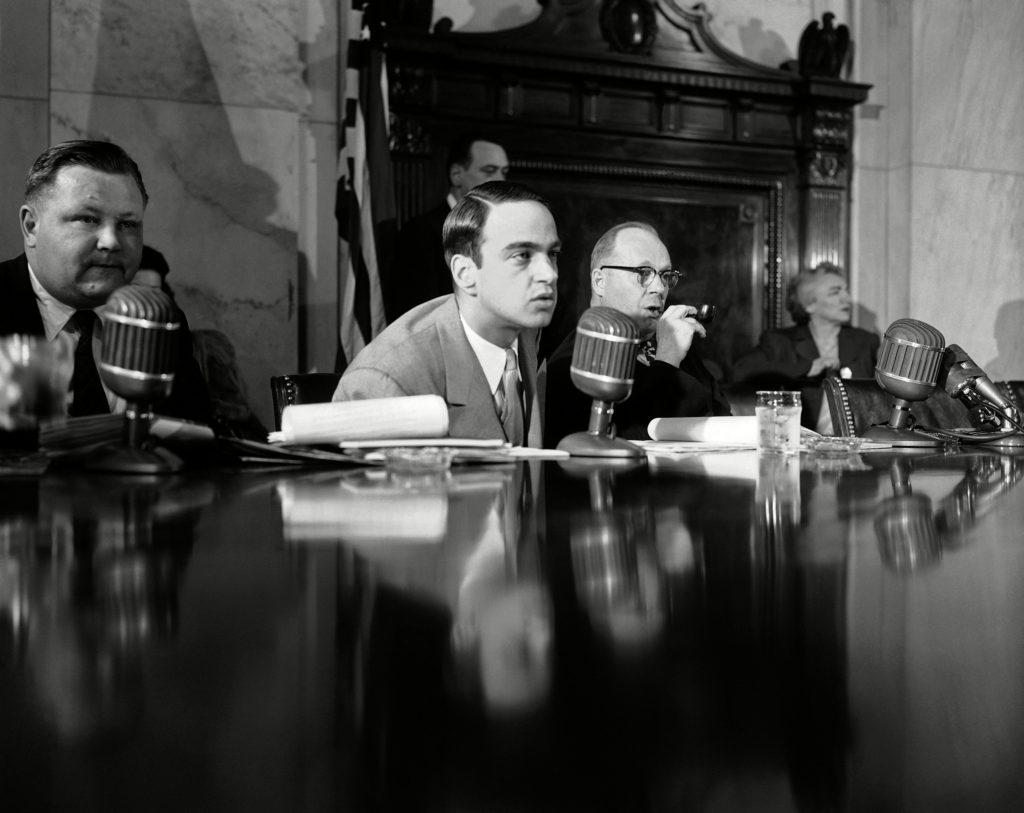
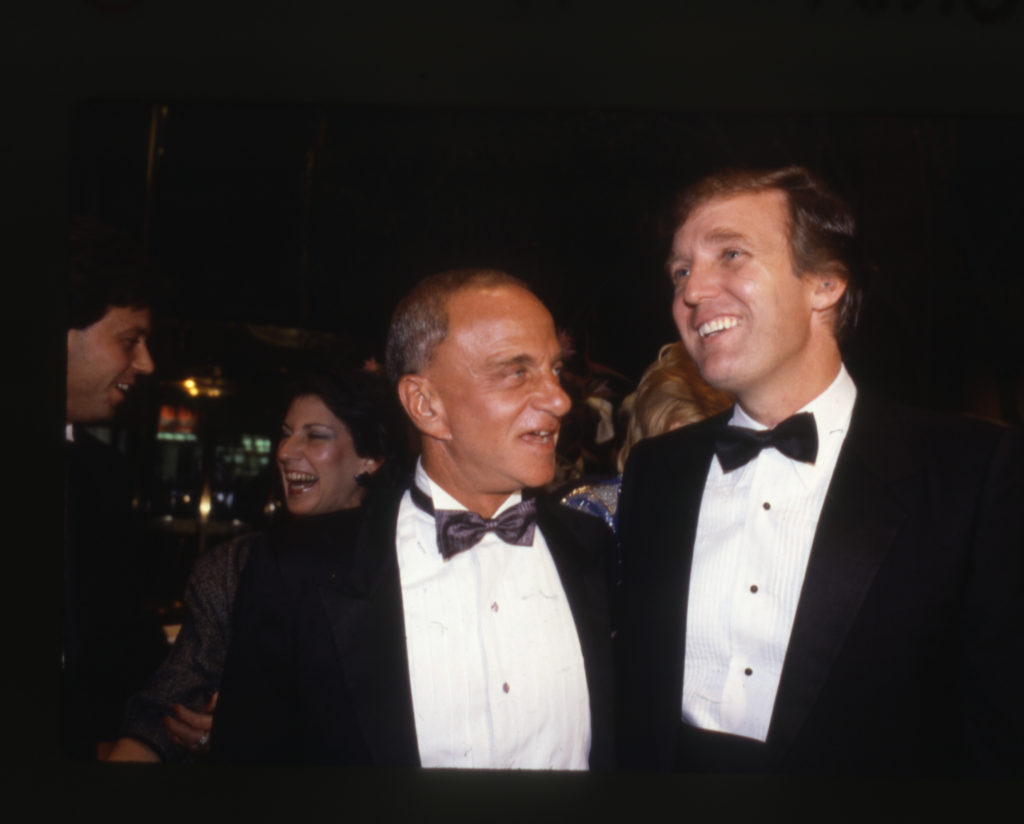
Roy Cohn (center) in WHERE’S MY ROY COHN? Credit: Photo by Henry Burroughs/AP/REX/Shutterstock. Courtesy Sony Pictures Classics.
Where’s My Roy Cohn? is Matt Tyrnauer’s superb biodoc of Roy Cohn – and is there a more despicable public figure in America’s 20th Century than Cohn? Has there been a more shameless hypocrite? A bully more cruel? A crook more craven?
It would be accurate but unhelpful to say that Roy Cohn didn’t invent scorched earth tactics, like saying that Hitler didn’t invent genocide. Cohn and his proteges certainly popularized what Bill Clinton called “the politics of personal destruction”.
I can’t remember ever before quoting movie publicity materials, but I can’t improve on this trenchant description of Cohn’s legacy from Sony Pictures Classics:
“Cohn formulated his playbook in the 50s, but it is all too familiar today: always attack; never admit blame or apologize; use favors and fear to ensure support for your objectives; expertly manipulate the media to gain advantage and destroy your opponents; lie shamelessly, invalidating the idea of truth; weaponize lawsuits; evade taxes and bills; and, most importantly, inflame the prejudices of the crowd by scapegoating defenseless people.”
Cohn’s central role in McCarthyism is well known, as is his role as a storied, self-promoting fixer (or legal terrorist) in the 1970s and 1980s. More recently, Cohn’s formative mentorship of the young Donald Trump has come to light.
Roy Cohn and Donald Trump in WHERE’S MY ROY COHN? Courtesy Sony Pictures Classics.
In Where’s My Roy Cohn?, Tyrnauer provides us with less well-known revelations. Cohn’s cousins and his longtime boyfriend are key witnesses. We learn about Cohn’s father, who exposed him to the seamy world of a political machine, and Cohn’s mother, from whom Cohn seems to inherited his ruthlessness. There’s an absolutely jaw-dropping anecdote about how far Mrs. Cohn would go to avoid interrupting her Seder. And there’s the important story of his Uncle Bernie’s financial ruin and public disgrace, which seems to have taught Cohn all the wrong lessons. Tyrnauer also brings us Cohn’s wresting control of the Lionel Train company from family members. And there’s an “insurance fire” on Cohn’s Florida yacht, which resulted in a homicide.
Cohn was the chief henchman leading Joseph McCarthy’s Lavender Scare to persecute LGBTQ Americans in public and military service. The famous Army-McCrthy hearings were sparked by Cohn’s seeking favorable treatment for David Schine, Cohn’s assistant and the object of his infatuation, as they cavorted across US bases in Europe, making life hellish for American gay soldiers. Despite a legendary reputation for same-sex encounters and relationships, Cohn always denied being gay himself or having AIDS, of which he died.
And, for good measure, one of his cousins also pegs Cohn as a self-loathing Jew.
There are also clips of Cohn on The Late Late Show with Tom Snyder. (Man, I haven’t thought of Tom Snyder in decades.) In one clip, Cohn defines “tough” as “vicious”, and says that his clients “buy scare value”.
Why spend almost two hours with Roy Cohn? Because Roy Cohn’s story is important to our understanding of 20th Century American history and of our current public culture.
Where’s My Roy Cohn? played at the Mill Valley Film Festival and opens in Bay Area theaters this weekend.