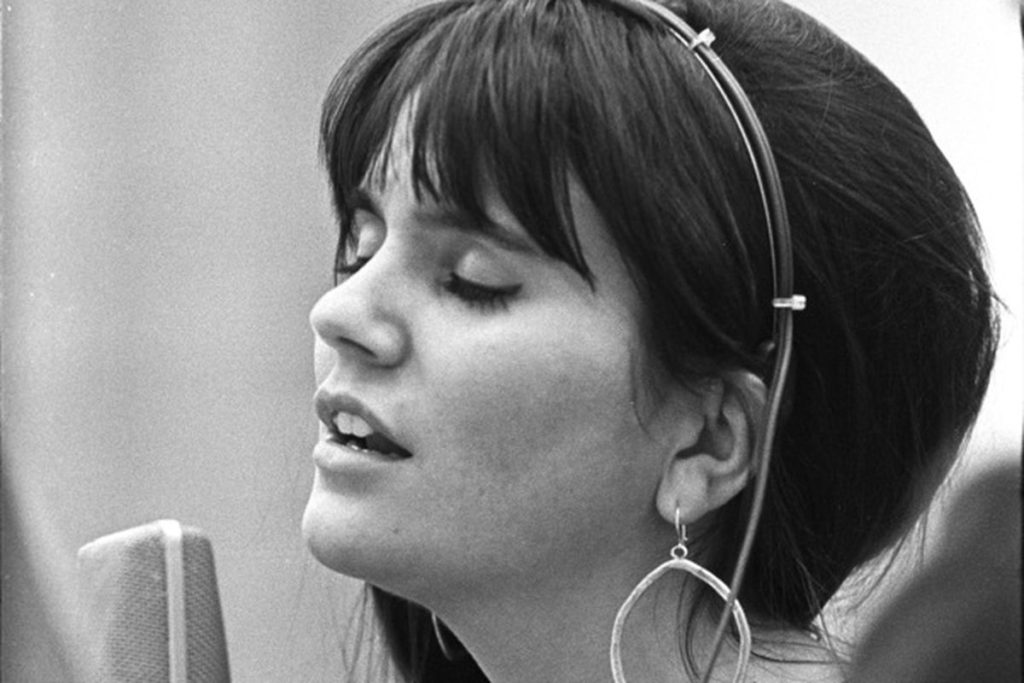
Linda Ronstadt: The Sound of My Voice is the insightful biodoc, based on Ronstadt’s own memoir, and narrated by Ronstadt herself. Ronstadt was the first female mega-rock star, and her story touches on feminism, the Counterculture and pivotal changes in the music industry. The film is comprehensive, tracing her upbringing and her romances with songwriter JD Souther and Governor/Presidential candidate Jerry Brown. The story is also poignant – her Parkinson’s disease has kept her from singing since 2007.
Ronstadt has been the auteur who is able to take someone else’s song and make it into her own art. She’s not a mere cover singer. I recommend listening to the Everly Brothers’ When Will I Be Loved, the Eagles’ Desperado, Dee Dee Warwick’s You’re No Good, Buddy Holly’s It’s So Easy and Little Feat’s Willin’ – and then matching them with Ronstadt’s versions.
Ronstadt is also unusual in that her interests and talent span the genres of pop and rock and country, various subgenres of Mexican music (earning Grammies across musical types) and even Gilbert and Sullivan (Tony nomination).
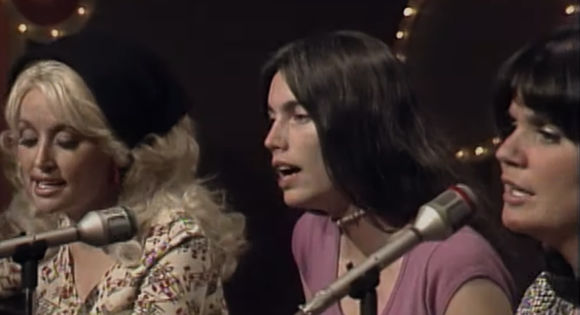
Dolly Parton, Emmylou Harris and Linda Ronstadt in LINDA RONSTADT: THE SOUND OF MY VOICE
Linda Ronstadt: The Sound of My Voice brings us a deep reservoir of witnesses: Ronstadt family members, Souther, former bandmates Don Henley and Waddy Wachtel, friends and collaborators Emmylou Harris and Dolly Parton. Both Emmylou and Dolly credit Ronstadt with helping them in critical career moments, Emmylou when she was paralyzed by grief and shock from the death of Gram Parsons.
Here’s a wonderful nugget from the film: Ronstadt had grown up in a family that sang Mexican music together, but her interest was rekindled by listening to the late night canciones of Harry Dean Stanton who was living in the garage behind Ronstadt and Souther.
It’s hard to imagine someone who wouldn’t enjoy Linda Ronstadt: The Sound of My Voice. And about that final scene of Linda with her nephew and cousin in the living room – just try to hold back the tears.
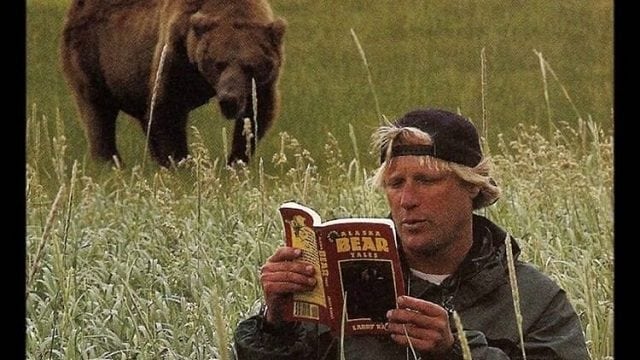
Werner Herzog’s mesmerizing and darkly funny documentary Grizzly Man is about Timothy Treadwell, who had spent summers observing the brown bears (grizzlies) in Alaska’s Katmai National Park, and believed that he had “gained their trust”. Driven by his ill-advised dream to befriend the grizzlies, Treadwell and his girlfriend Amie Huguenard essentially moved in with the grizzlies, camping by their fishing spot and personally interacting with them at close quarters. It did not end well.
Basically, grizzlies are hard-wired to hunt and eat humans. They are so fast that a human can’t escape one without a vehicle (or, possibly – but not for sure – tree climbing); They are so strong and fierce that a human can’t fend one off without a firearm (or, possibly, bear spray). This makes Treadwell’s’s quest remarkably foolhardy, This also makes Grizzly Man hilarious in a Darwin Awards way.
GRIZZLY MAN
As ridiculous as is Treadwell’s plan, this story had its life-and-death drama. Herzog’s presentation of a wristwatch and an audio recording is a moment that makes the hair on your neck stand up.
Werner Herzog, known for his German New Cinema art house hits of the 70s and 80s (Aguirre:The Wrath of God, Strozek Nosferatu the Vampyre,Fitzcarraldo), switched gears in 1997 with the underrated documentary Little Dieter Needs to Fly and followed it with Grizzly Man. Since, Herzog has become a prolific and masterful documentarian.
In Grizzly Man, Herzog makes use of 100 hours of Treadwell’s own video footage of his misadventure. As we’ve come to expect, Herzog’s research is impressively resourceful, and he assembles his finds to construct a masterpiece of story-telling Most remarkably, Herzog has also become one of the greatest narrators of English language documentaries; somehow, his German-accented narrations are hypnotic.
Grizzly Man is a superb film, which made my own list of Best Movies of the 21st Century (and Sophia Coppola’s, too) and my Best Movies of 2005. It can be streamed from Amazon, iTunes, Vudu, YouTube and Google Play, and it’s available on DVD from Netflix.
Amazing Grace is, at once, the recovery of a lost film, the document of an extraordinary live recording and an immersive, spiritual experience.
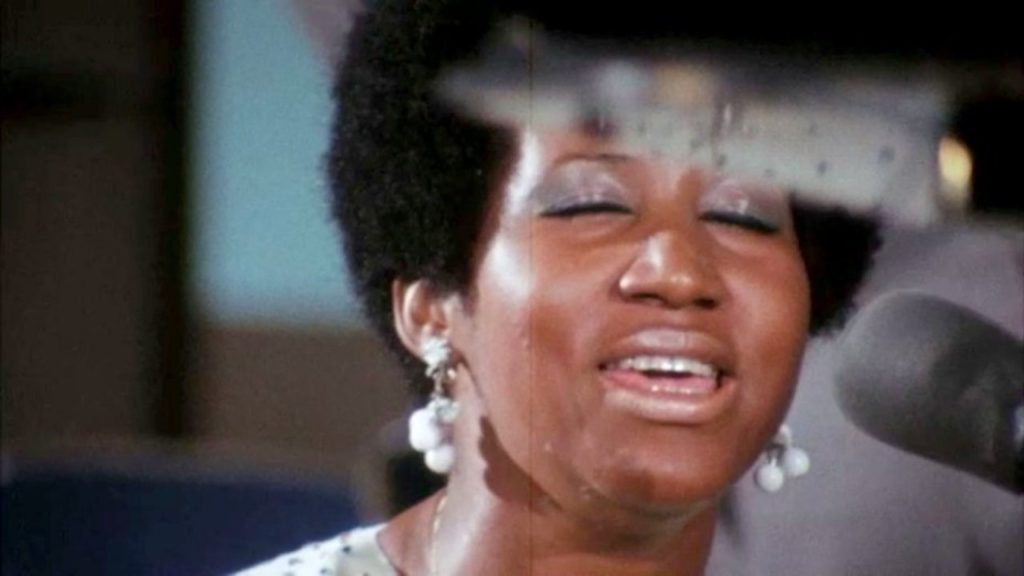
At the height of her popular success in 1972, Aretha Franklin recorded a live album of gospel music. She brought her producer Jerry Wexler and her band to New Temple Missionary Baptist Church in Los Angeles, a large but modest church with a cheesy mural of Jesus emerging from the waters after his baptism by John the Baptist. Accompanied by James Cleveland and the Los Angeles Community Gospel Choir, she performed for two nights, and the recordings became Amazing Grace, the top-selling gospel album of all time.
The whole thing was filmed by director Sydney Pollack and his crew with five cameras. Having made his bones in live television, Pollack would seem to be a great choice, but he made a critical mistake – he neglected to use clappers, the equipment that allowed for synchronizing the filmed images with the recorded sound. Frustratingly worthless, the film sat in canisters until decades later when technology allowed the music to be synced to the 16mm film. Aretha, however, was notoriously prickly in business affairs, and the rights could not be secured until after her death. Alan Eliot is responsible for finding and assembling Pollack’s footage and turning it into a feature film that could be released for the rest of us to see; appropriately, Eliot’s credit is “Realized and produced by Alan Eliot”.
What brought Aretha get to this moment in 1972? Aretha had grown up in the Detroit church led by her formidable father, C.L. Franklin, immersed in gospel music until she launched a pop music career at age 18. When she was 25, she began working with Wexler, who “got” her, and she became a soul and crossover superstar with Respect, I Never Loved a Man (The Way I Love You), Do Right Woman, Do Right Man, Baby I Love You, (You Make Me Feel Like) A Natural Woman, Chain of Fools, Ain’t No Way, Think, I Say a Little Prayer and Rock Steady. At 30, Aretha commanded the field of R&B and looked to return to her gospel roots.
When Aretha enters the church, the atmosphere is electric, and Aretha is ready from her very first note of Wholy Holy. The church audience knows their gospel music, appreciates what they are witnessing and is, to a person, thrilled. The audience becomes more and more emotionally involved.
Aretha’s version of What a Friend We Have in Jesus is unrecognizable (in the very best way). On Precious Memories, Aretha’s humming is internally intense, and then her voice soars. Completely committed, Aretha produces a prodigious amount of sweat.
The high point of the film is Aretha’s closing song on the first night, Amazing Grace. It’s a very long version of the song, and the choir doesn’t sing until the very end. As Aretha’s instrument wrings every drop of emotion from that most familiar song, we watch the choir members’ reactions, which range from admiration to inspiration, many moved to tears. The moment is one of genius for Aretha and one of epiphany for the choir and for the film audience.
One of the great pleasures of Amazing Grace is watching the choir leader, Alexander Hamilton, lead his choir with an expressiveness that is both elegant and funky. If there is a co-star in Amazing Grace, it’s Alexander Hamilton.
There are pauses for technical issues, which bring out the authenticity of the moment and reinforce that this was a live event. It’s easy to spot Mick Jagger and Charlie Watts in the crowd on the second night.
Where does Amazing Grace fit in the concert film canon along with Monterey Pop, The Last Waltz, Stop Making Sense, Woodstock and The T.A.M.I. Show? It’s in the conversation.
Amazing Grace, which is on my list of Best Movies of 2019 – So Far, can be streamed on Amazon, iTunes, Vudu, YouTube and Google Play; the DVD can be rented from Redbox.
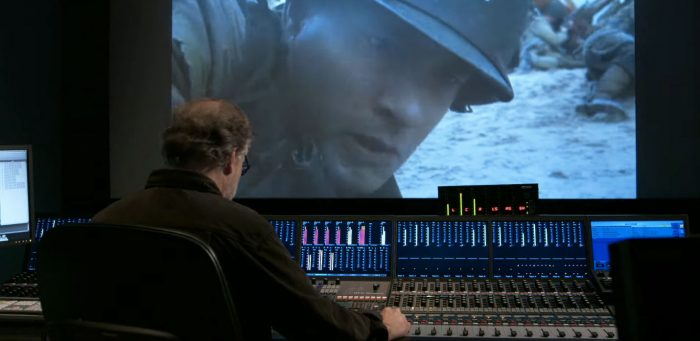
Steven Spielberg and Saving Private Ryan in AKING WAVES: THE ART OF CINEMATIC SOUND
We usually say that we SEE a movie, but what we hear (or don’t hear) is just as essential to the movie’s impact. The impact of movie sound is SUPPOSED to be subliminal, so we often enjoy a film without appreciating the sound. The documentary Making Waves: The Art of Cinematic Sound is a comprehensive primer on the art and science of movie sound.
Making Waves begins with the first decades of cinema, when movies aspired to include sound with images, but could only be accompanied by live music and live sound effects at their exhibition. Technology caught up in 1926 with synchronization of recorded sound and images.
The end of the studio period in the late 1960s coincided with the arrival of Walter Murch, the genius who invented modern movie sound design. Thankfully, Making Waves serves up plenty of Murch (The Godfather, The Conversation and Apocalypse Now!), before introducing us to Ben Burtt, who won an Oscar in his first gig (Star Wars) and Pixar’s Gary Rydstrom, who pioneered digital sound design. We also see the impact on movie sound of George Martin and the Beatles (multi-track recording), Barbra Streisand (movie exhibition in stereo) and Robert Altman (shooting with multiple mics).
Making Waves is best described as thorough and systematic, and I wouldn’t call it thrilling. But it’s a great choice for anyone who wants to understand and appreciate filmmaking.
There are plenty of cool tidbits, like how Burtt came up with Chewbacca’s vocalizations with the help of a bread-loving bear. And we see Foley artists at work, rolling a pine cone across dry lasagna to create just the right effect.
Making Waves is the feature debut for director Midge Costin and will be released theatrically later this fall. I saw Making Waves: The Art of Cinematic Sound at Cinema Club Silicon Valley, with a Q&A with Costin.
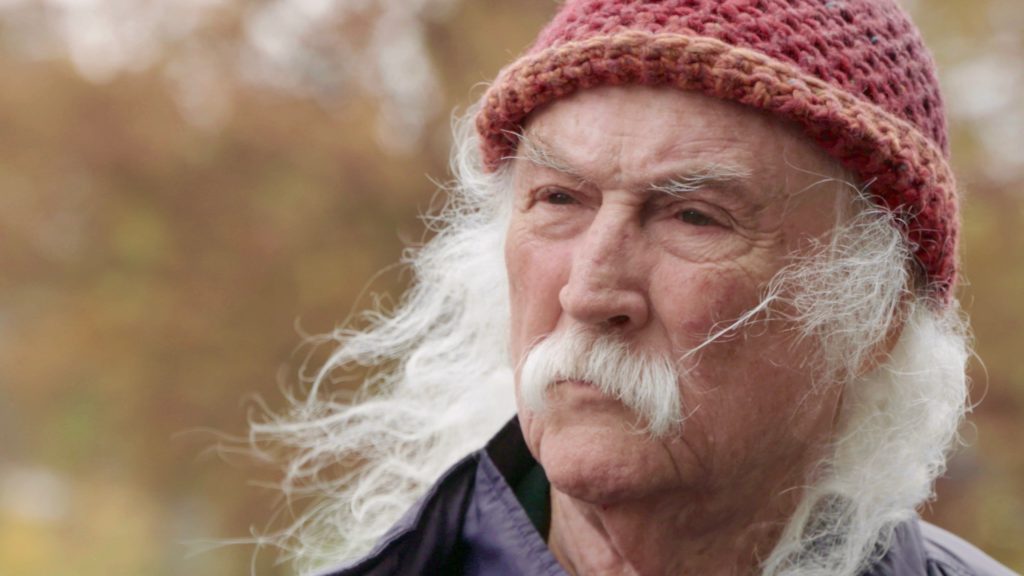
David Crosby in DAVID CROSBY: REMEMBER MY NAME Photo by Edd Lukas and Ian Coad. Courtesy of Sony Pictures Classics
The notoriously irascible Robert Altman and a drinking buddy once amused themselves by inventing titles of fake country-western songs; Altman came up with I’m Swimming Through the Ashes of All the Bridges I Have Burned. That’s the experience of watching the biodoc David Crosby: Remember My Name.
Most of the doc is a series of interviews with Crosby as he goes on yet another concert tour at age 76; before leaving, he cruises around his old haunts on Sunset Boulevard and Laurel Canyon. Remember My Name’s producer, the director Cameron Crowe, replays an interview with Crosby from 1974, when Crowe was the wunderkind rock writer portrayed in Crowe’s film Almost Famous. Crosby reacts with a telling observation about his friendships.
With the perspective of age, Crosby reflects on his musical achievements, his addiction and recovery and his trail of relationship carnage. He notes that “all” of his intimate collaborators – Roger McGuinn, Graham Nash, Steven Stills and Neil Young – “hate me”, and ruefully observes, “if it were just one, it could be an accident”. The film includes clips of McGuinn, Nash and Young (plus Stills’ emphatic silence) to corroborate.
Crosby’s well-known battle with cocaine and heroin came into play with his estrangements. I would reflect that recovery from addiction will generally IMPROVE behavior, but is no guarantee of ACCEPTABLE behavior. The drugs certainly didn’t help Crosby avoid his “two or three heart attacks” eight cardiac stints, his liver transplant and his diabetes.
Contemplations aside, David Crosby: Remember My Name does an excellent job of tracing Crosby’s musical career and personal life. We get his side of his romance with Joni Mitchell, and the story of getting dumped by Mitchell in front of all their friends – with a song Mitchell composed for the occasion. There’s an wonderful telling of the writing and recording of Neil Young’s great song Ohio.
And here’s an odd note for movie fans: Crosby’s father was Floyd Crosby, a prolific but usually pedestrian cinematographer whose career topper was his Golden Globe-winning work in High Noon. I compared the father-son career paths and found that in 1964-65, when David was starting with the Byrds and hanging out with the Beatles and Miles Davis, Floyd was cranking out Bikini Beach, Pajama Game, Beach Blanket Bingo, How to Stuff a Wild Bikini and Beach Ball. While David was in the vanguard of the 1960s Counterculture, Floyd was winding up the Annette Funicello/Frankie Avalon teen culture that had been hanging on from the 1950s.
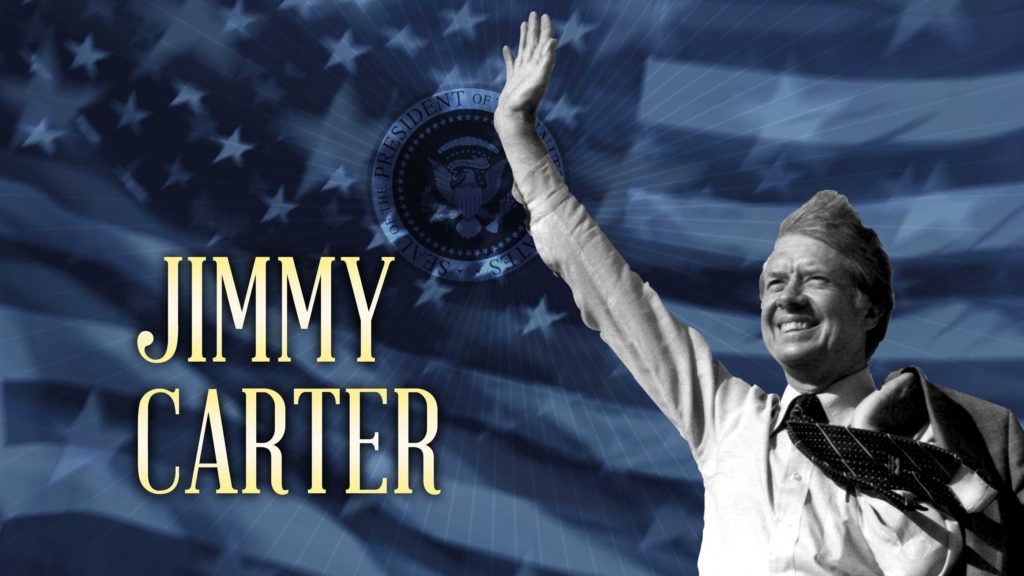
In PBS’ American Experience documentary Jimmy Carter, The New Yorker writer and former Carter speechwriter Henrik Hertzberg says:
Jimmy Carter was what the American people always SAY they want – above politics, determined to do the right thing regardless of political consequences, a simple person who doesn’t lie, a modest man, not someone with a lot of imperial pretenses. That’s what people say they want. And that’s what they got with Jimmy Carter.
And herein lies the rub.
In 1976, Americans were reacting to Watergate and wanted a President LEAST like Richard Nixon. We got him, in the form of Jimmy Carter; it turned out that Carter could deliver non-Nixon decency, but not the leadership that the era required.
Today, many – and the polls indicate, most – Americans seek a non-Trump. I share the view that ANYONE would be better then Trump, but Jimmy Carter is instructive that “anyone”, while better than Trump, might not be the best for the country.
In Jimmy Carter, we hear from those who know Carter best – including his wife Rosalynn Carter, his vice-president Walter Mondale, and right-from-the-start Carter insiders Jody Powell, Pat Caddell and Bert Lance. How the times made this man, then propelled him to such improbable electoral success and then finally doomed his Administration, is a great and cautionary story.
To stream Jimmy Carter from iTunes, search for “Jimmy Carter” under TV Episodes (not under Movies). Jimmy Carter is also available on DVD from American Experience.
Werner Herzog’s documentary Little Dieter Needs to Fly is a portrait of Dieter Dengler’s unimaginable life journey, highlighted by one of history’s most amazing feats of human endurance. With a childhood (as Herzog’s) in WWII Germany, Dengler survived US bombing raids that reduced his hometown to rubble; a glimpse of an American pilot spurred Dengler’s obsession with aviation. His drive to fly led him to emigration and a career as a US Navy aviator. Shot down in the Vietnam War, Dieter was captured and tortured. He made a daring escape, and, after the war, pursued civilian aviation; we finally see Dieter in his Marin County home with its odd survivalist features . Unsurprisingly, given the traumas he endured, Dieter has his quirks.
But the core of Little Dieter Needs to Fly is the amazing jungle escape. It was a 23-day ordeal with a manhunt hot on his heels. His 167-pound frame was whittled to 98 pounds. Herzog takes Dieter back to Southeast Asia and pays the locals to re-enact the capture and chase.
Werner Herzog, known for his German New Cinema art house hits of the 70s and 80s (Aguirre:The Wrath of God, Strozek Nosferatu the Vampyre, Fitzcarraldo), switched gears in 1997 with Little Dieter Needs to Fly and followed it with the masterpiece Grizzly Man. Since, Herzog has become a prolific and masterful documentarian.
Note: It’s not in Little Dieter, but, four years after the 1997 release of the film, Dieter was diagnosed with ALS and died from a self-inflicted gunshot.
The brisk 80 minutes of Little Dieter Needs to Fly can be streamed on Criterion, the Amazon Fandor channel, iTunes, Vudu and Google Play.
D.A> Pennebaker invents the music video in BOB DYAN: DON’T LOOK BACK
The influential filmmaker D.A. Pennebaker has died at age 94. Among Pennebaker’s innovative achievements:
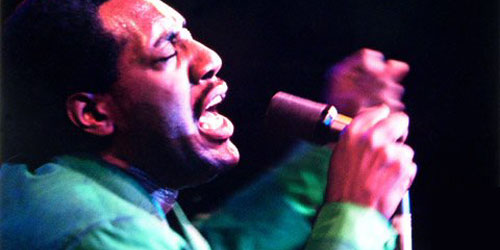
His 1968 Monterey Pop is in the conversation as the best ever concert film, and it undeniably influenced the other great concert movies that have followed (Woodstock, The Last Waltz, Stop Making Sense). This is one of the few DVDs that I still own, for the performances by Mamas and the Papas, Jimi Hendrix, Janis Joplin, Otis Redding, Canned Heat, Simon and Garfunkle, Jefferson Airplane, Eric Burdon and the Animals, Country Joe and the Fish and The Who. Pete Townsend and Jimi Hendrix had a guitar-destroying competition, which Hendrix, aided by lighter fluid, undeniably won. The Otis Redding set is epic.
Pennebaker’s 1993 The War Room, about the 1992 Bill Clinton campaign, sets the standard for the insider political campaign documentary.
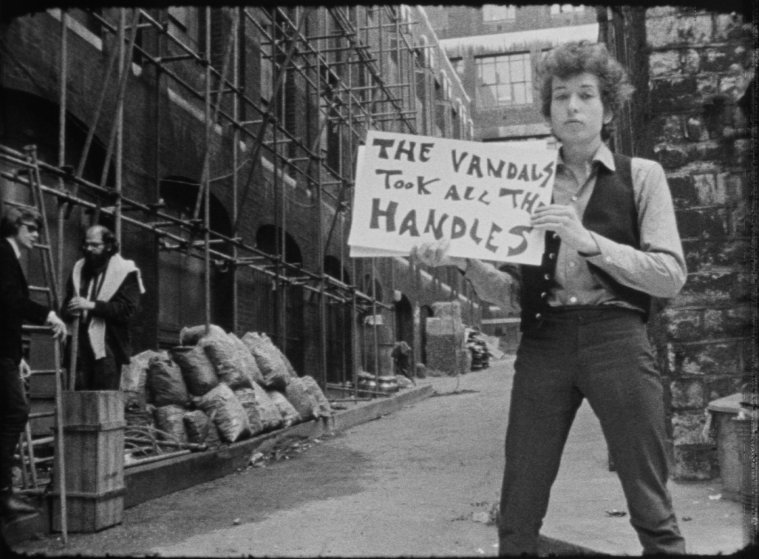
Pennebaker directedBob Dylan: Don’t Look Back(1967), the story of Bob Dylan’s 1965 tour of England, when he was transitioning from an acoustic to an electric artist. In the film’s opening, Pennebaker invented the music video, as Dylan holds up cards with the lyrics for Subterranean Homesick Blues. The pump don’t work ‘Cause the vandals took the handles
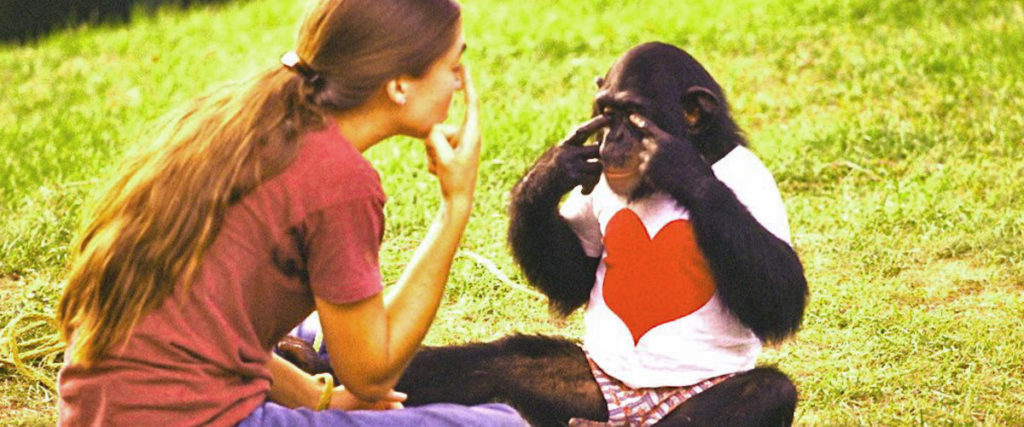
The documentary Project Nim tells the extraordinary story of a chimpanzee that was taught a human language – American Sign Language. In a remarkable and compelling journey, the chimp Nim is first placed as a baby with a human hippie family and then at a university-owned country estate and at college laboratories. Amazingly, he learns to use an ASL vocabulary – not just responding to commands, but initiating communication and forming sentences. Then, the experiment ends, and he is off to an assortment of post-placements, some terrifying.
Along the way, we hear from the motley assortment of humans involved in his raising, his exploitation and his care. One human who enters the story as a grad student, Bob Ingersoll, emerges as the hero of the story. It’s the story of a chimp, but we learn more about the foibles of humans.
Acclaimed documentarian James Marsh (Man on Wire) delivers another great story – one of the 2011’s best documentaries. Project Nim can be streamed from Amazon, iTunes, Vudu, YouTube and Google Play.
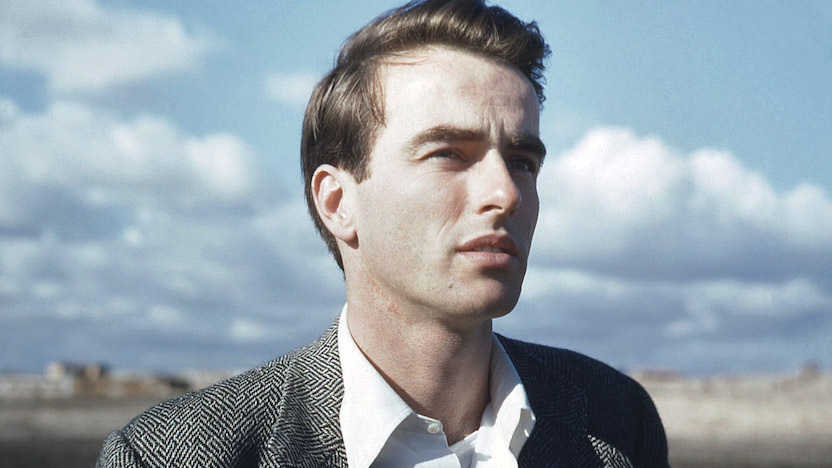
The best documentary in this year’s Frameline festival may be Making Montgomery Clift, from directors Robert Anderson Clift and Hilary Demmon. It’s an unexpectedly insightful and nuanced probe into the life of Clift’s uncle, the movie star Montgomery Clift. And it explodes some of the lore that has shaped popular understanding of Montogomery Clift.
Clift is the son of Brooks Clift, Montogmery Clift’s brother and archivist. The younger Clift never met his uncle Monty, but had access to his father’s vast collection of Monty memorabilia and to the memories of family, friends and previous biographers.
Many of us think we know the arc of Montgomery Clift’s life: success as a 1950s movie heartthrob is torpedoed by the inner torment of his closeted homosexuality; then alcoholic self-medication and disfigurement from an auto accident propel him into drunken despair and an early death. It turns out to be a much, much more nuanced story.
It turns out that some in the Clift family indulged in secret audio taping to a jaw-dropping degree. Directors Clift and Demmon take full advantage of the actual conversations of Monty and others. Their gift is to drop in the most startling revelations without lingering or even emphasizing them. To watch Making Montgomery Clift is a constant exercise in “wait…WHAT?” Demmon’s brisk editing helps, too.
How tormented was Monty by his sexuality (which we learn was a robust bisexuality)? Witnesses – who would know – let us know that Monty was comfortable in his own skin and fairly open – for the times – about his sexuality. This wasn’t Rock Hudson or Tab Hunter.
We learn that Montgomery Clift’s refusal to sign a studio contract was to preserve BOTH his artistic independence and his sexual independence (avoiding being forced into faux marriage and the like).
Making Montgomery Clift also discredits the view that Monty sank into depression after the accident changed his looks. His personally most satisfying performances came AFTER the accident.
The insights into Monty’s artistic process are unique and significant. We hear the actual conversation between Montgomery Clift and director Stanley Kramer about Clift’s riveting cameo in Judgment at Nuremberg. Monty’s intentionality in shaping the scene dispels the myth that, instead of giving a performance, he had an actual breakdown before the camera. Yes, he was acting it, and it was spectacular.
There has been a handful of recent showbiz biodocs made by younger relatives of the famous artists. Usually, these films add some personal family anecdotes, but are so fond of their subjects that they’re not especially insightful. Making Montgomery Clift is not that – it ascends above the pack – and should change how all of us understand Monty Clift.