AN AMERICAN STORY: NORMAN MINETA AND HIS LEGACY

AN AMERICAN STORY: NORMAN MINETA AND HIS LEGACY

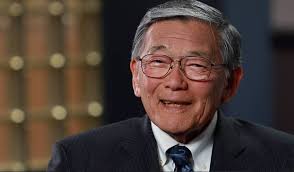
An American Story: Norman Mineta and His Legacy traces the life and times of Norman Mineta, who amassed a startling number of “firsts” and other distinctions in America history:

  • The first Asian-American mayor of a major U.S. city.
  • The first Japanese American member of Congress elected from the 48 Continental states.
  • A Cabinet Secretary in both Democratic and Republican Administrations.
  • The nation’s longest-serving Transportation Secretary.

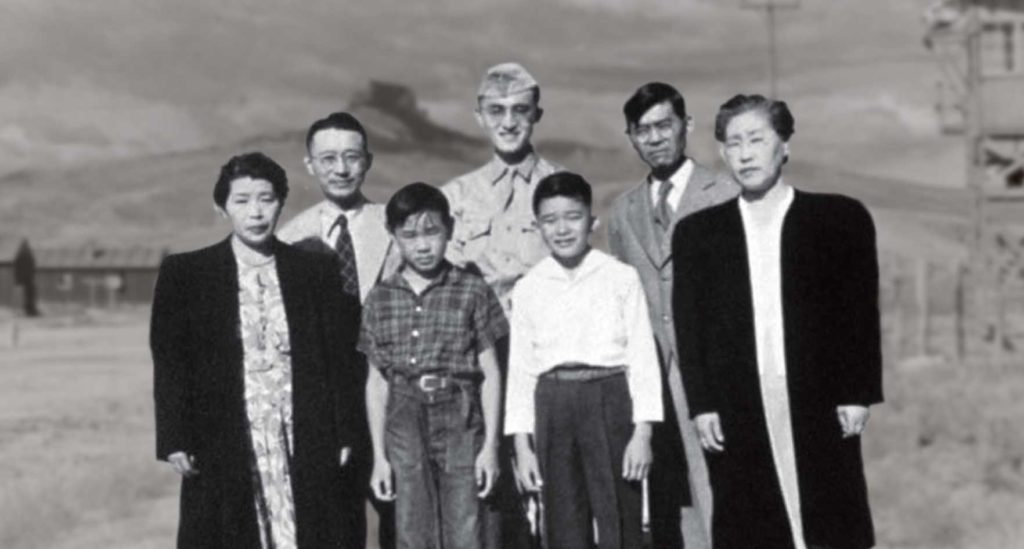
The achievements were even more remarkable given that, as a child, Mineta was imprisoned by his own US government in a WW II internment camp. And given that his political base had, during his career, an Asian-American population of far less than ten percent.

This didn’t happen by accident.  Norm Mineta is a driven man. At the same time, his ambition and will is tempered by his buoyancy and ebullience.

Documentarians Dianne Fukumi (director and co-producer) and Debra Nakatomi (co-producer) embed the story of Japanese-Americans, from immigration through internment, and on to reparations.

AN AMERICAN STORY: NORMAN MINETA AND HIS LEGACY

The defining event for Mineta’s Nissei generation was the WW II internment of 120,000 Americans by their own government. The central thread in the Mineta story is that the injustice of Mineta’s internment informed George W. Bush’s resistance to treating American Muslims that same way in the aftermath of the 9/11 attacks.

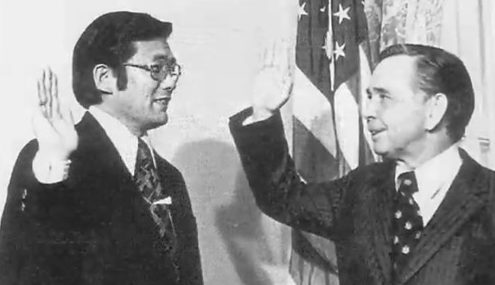
Mineta being sworn into the US House of Representatives by House Speaker Carl Albert in AN AMERICAN STORY: NORMAN MINETA AND HIS LEGACY

The film’s most delightful moment may be the octogenarian Mineta sunnily taking his luggage through security at Norman Y. Mineta San Jose International Airport.

[Full disclosure: I have known Norm since I served in his 1974 primary campaign and interned for him on Capitol Hill in the mid 70s.]

I saw An American Story: Norman Mineta and His Legacy at an October 2018 special screening with Norm Mineta, Fukumi and Nakatomi in San Jose. A brisk 60 minutes, it will be broadcast on PBS in May 20.

https://vimeo.com/266805068

MEETING GORBACHEV: uncritical but humanizing

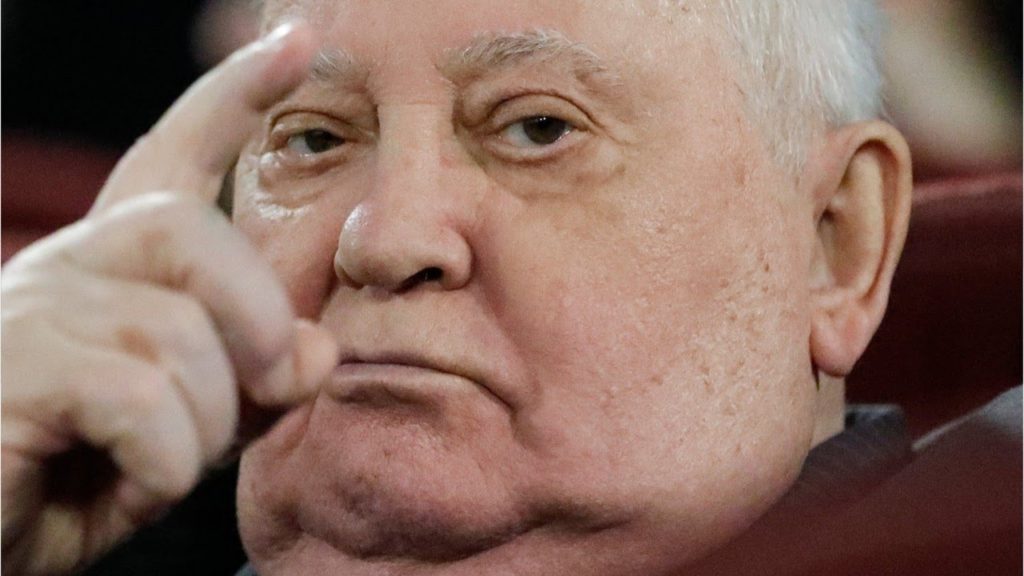
Mikhail Gorbachev in MEETING GORBACHEV

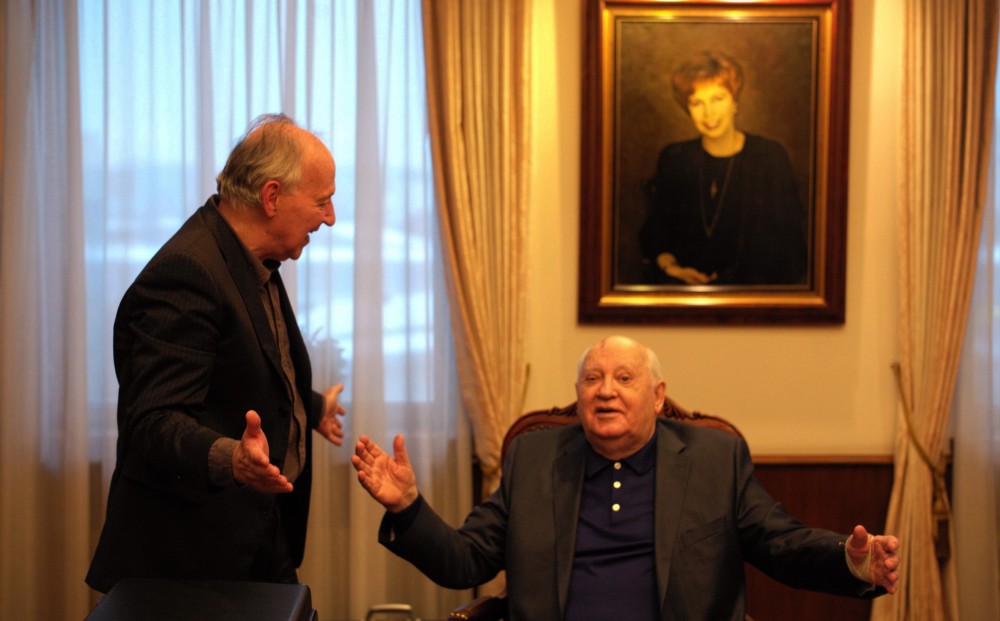
Meeting Gorbachev is Werner Herzog’s admiring biodoc of Mikhail Gorbachev, unquestionably one of the 20th century’s most pivotal figures. Herzog filmed three conversations with the then 87-year-old Gorbachev in 2018.

Gorbachev is revered in Germany – particularly by Werner Herzog – for allowing the peaceful, and startlingly quick, reunification of Germany. This biodoc is, to a fault, uncritical. At one point, Herzog even tells Gorbachev, “I love you”.

As the leader of the USSR, Gorbachev’s concepts of Perestroika and Glasnost transformed the political, economic and foreign policy of the Cold War superpower. More than any other individual, Gorbachev can claim credit for ending the Cold War, abolishing and destroying mid-range and short-range nuclear weapons, and the unchallenged independence of the Iron Curtain countries.

Gorbachev is also a tragic figure of Shakespearean proportions. He was intending to reform the USSR, not to destroy it. A coup by fossilized communists knocked him out of power but couldn’t be sustained, spinning out of control and leading to a chaos taken advantage of by the strong man Putin,.

Herzog’s film is excellent in its well-researched and well-told story of the rise of Gorbachev from a modest agricultural backwater – a talented achiever on the rise. Herzog’s irreverent sense of humors, as always, peeks through in the state funerals of Gorbachev’s predecessors, each more absurdly funny than the last.

The greatest gift of Meeting Gorbachev is, as the title suggests, is the unfiltered Gorbachev himself – now a grandfatherly raconteur. We get to appreciate his intellectual curiosity and his clarity of thought and direction. His charm and charisma, even at 87, help us understand how he rose to world leadership.

Werner Herzog and Mikhail Gorbachev in MEETING GORBACHEV

Herzog was a charismatic and innovative leader of German New Cinema. Between 1972 and 1982, he created the art house hits Aguirre:The Wrath of God, Strozek Nosferatu the Vampyre, and Fitzcarraldo.

In 1997, Herzog switched gears with the underrated documentary Little Dieter Needs to Fly and followed it with great docs like Grizzly Man and Encounters at the End of the World. Most remarkably, Herzog has also become one of the greatest narrators of English language documentaries; somehow, his German-accented narrations are hypnotic. (In 2007, Herzog slipped in Bad Lieutenant: Port of Call New Orleans with Nicholas Cage in the Klaus Kinski wild man role and cinema’s funniest iguana hallucination.)

Meeting Gorbachev played at the San Francisco International Film Festival (SFFILM). I saw Meeting Gorbachev at Silicon Valley’s Cinema Club.

Who is this guy Don McGahn?

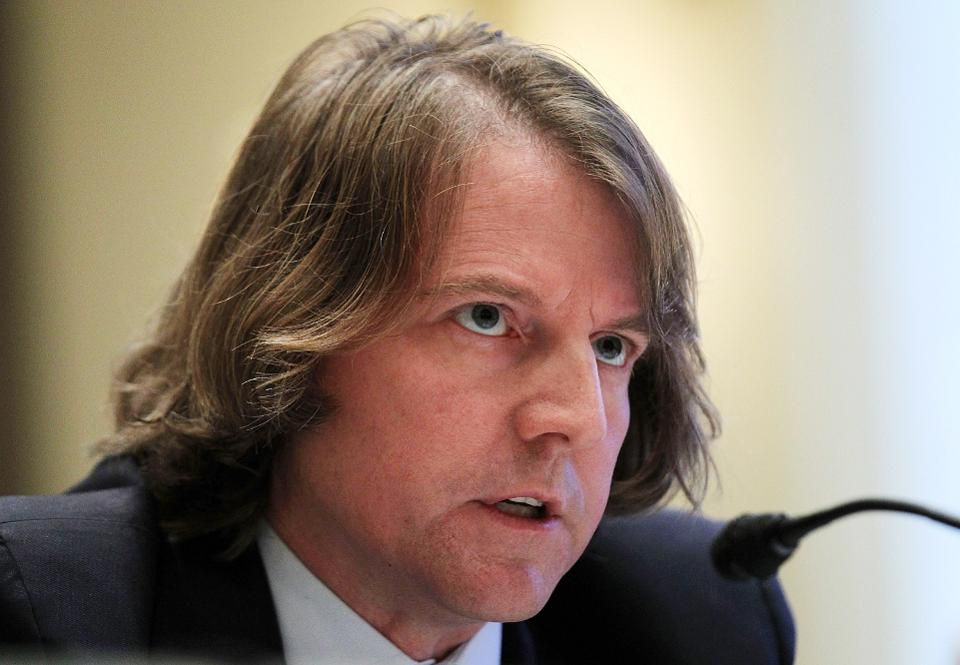
former FEC Commissioner Don McGahn

The Mueller Report has brought former White Counsel Don McGahn into semi-celebrity. McGahn was a major source for the Mueller Report, which portrays McGahn as one of the Trump Administration officials who, by disobeying and thwarting Trump’s orders, saved Trump from criminal charges of obstruction of justice. McGahn was the VILLAIN in last year’s
gripping documentary Dark Money, an expose of our new political environment, with unlimited secret money unleashed by the Supreme Court’s Citizens United ruling.

The Mueller Report recounts an episode where Trump advised a note-taking McGahn that Trump’s lawyers never take notes; McGahn memorably replied “But I’m a real lawyer.” But McGahn worked his way up as a Republican Party operative, and was a GOP appointee to the Federal Elections Commission (when he wore longish preppy hair). In one particularly nasty segment of Dark Money, we witness Commissioner McGahn unashamedly grinding the FEC’s gears of enforcement to a stop.  After the FEC, McGahn went on to serve as the Trump White House Counsel, with major responsibility for the Supreme Court nomination of Brett Kavanagh.

Dark Money’s writer-director Kimberly Reed takes us to her native Montana as conservative (but independent) Republican legislators find themselves deluged by massive and monstrous attacks from some even more conservative out-of-state sources. Intrepid small-town reporter John S. Adams and the understaffed state regulators follow the money and try to hunt down who is pulling the strings.

As the mystery unfolds, Dark Money also takes us to Wisconsin, where dark money has assaulted an unexpected branch of government. And we go to Washington, DC, to the Federal Elections Commission, where Ann Ravel, the Obama-appointed chair of the FEC, has resigned in disgust after Republican commissioners have blocked all enforcement of federal campaign finance regulation. (Disclosure: I have worked with Silicon Valley native Ravel in my day job.)

Here are some of Dark Money’s most disturbing revelations:

  • While it’s bad enough that we don’t know the extent of wealthy Americans like the Koch Brothers trying to buy elections, neither do we know about the secret election participation of FOREIGN players.
  • Dark Money sources are not stopping at trying to buy legislators and governors, but are also trying to take over state supreme courts!

And just when we need MORE scrutiny of the attempts to buy the legislative and judicial branches of state governments, we are witnessing the death of statehouse journalism.

Dark Money keeps us on the edges of our seats throughout and culminates in a real-life courtroom drama

I attended the sold-out Bay Area premiere of Dark Money, co-sponsored by Silicon Valley’s Cinema Club and by Santa Clara County. Both Ann Ravel and John S. Adams appeared at the post-screening Q&A. You can stream Dark Money from Amazon (free with Prime), iTunes, Vudu, YouTube and Google Play.

AMAZING GRACE: pure, sanctified Aretha

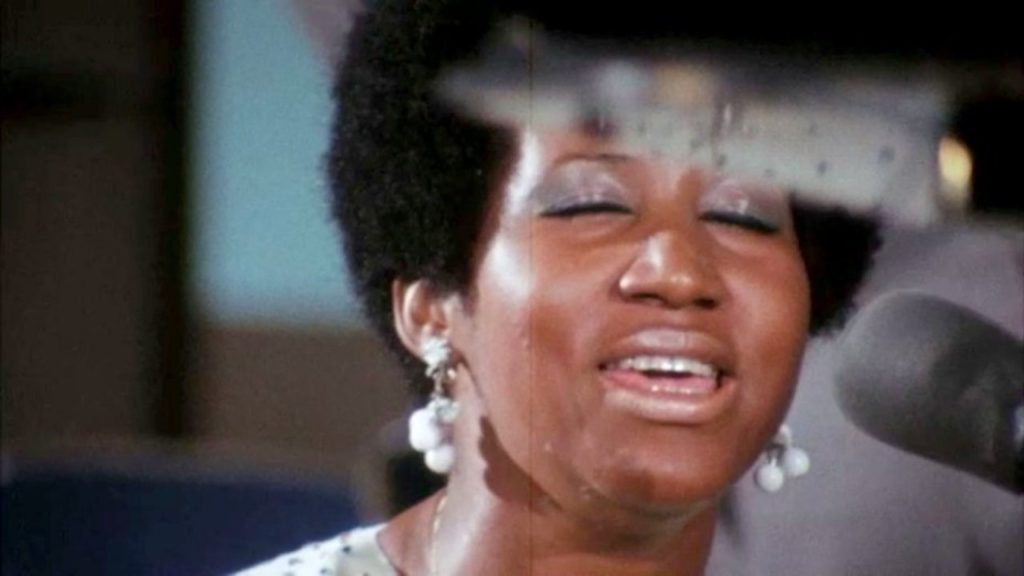
Aretha Franklin in AMAZING GRACE

Amazing Grace is, at once, the recovery of a lost film, the document of an extraordinary live recording and an immersive, spiritual experience.

At the height of her popular success in 1972, Aretha Franklin recorded a live album of gospel music. She brought her producer Jerry Wexler and her band to New Temple Missionary Baptist Church in Los Angeles, a large but modest church with a cheesy mural of Jesus emerging from the waters after his baptism by John the Baptist. Accompanied by James Cleveland and the Los Angeles Community Gospel Choir, she performed for two nights, and the recordings became Amazing Grace, the top-selling gospel album of all time.

The whole thing was filmed by director Sydney Pollack and his crew with five cameras. Having made his bones in live television, Pollack would seem to be a great choice, but he made a critical mistake – he neglected to use clappers, the equipment that allowed for synchronizing the filmed images with the recorded sound. Frustratingly worthless, the film sat in canisters until decades later when technology allowed the music to be synced to the 16mm film. Aretha, however, was notoriously prickly in business affairs, and the rights could not be secured until after her death. Alan Eliot is responsible for finding and assembling Pollack’s footage and turning it into a feature film that could be released for the rest of us to see; appropriately, Eliot’s credit is “Realized and produced by Alan Eliot”.

What brought Aretha get to this moment in 1972? Aretha had grown up in the Detroit church led by her formidable father, C.L. Franklin, immersed in gospel music until she launched a pop music career at age 18. When she was 25, she began working with Wexler, who “got” her, and she became a soul and crossover superstar with Respect, I Never Loved a Man (The Way I Love You), Do Right Woman, Do Right Man, Baby I Love You, (You Make Me Feel Like) A Natural Woman, Chain of Fools, Ain’t No Way, Think, I Say a Little Prayer and Rock Steady.  At 30, Aretha commanded the field of R&B and looked to return to her gospel roots.

When Aretha enters the church, the atmosphere is electric, and Aretha is ready from her very first note of Wholy Holy. The church audience knows their gospel music, appreciates what they are witnessing and is, to a person, thrilled. The audience becomes more and more emotionally involved.

Aretha’s version of What a Friend We Have in Jesus is unrecognizable (in the very best way). On Precious Memories, Aretha’s humming is internally intense, and then her voice soars. Completely committed, Aretha produces a prodigious amount of sweat.

The high point of the film is Aretha’s closing song on the first night, Amazing Grace. It’s a very long version of the song, and the choir doesn’t sing until the very end. As Aretha’s instrument wrings every drop of emotion from that most familiar song, we watch the choir members’ reactions, which range from admiration to inspiration, many moved to tears. The moment is one of genius for Aretha and one of epiphany for the choir and for the film audience.

One of the great pleasures of Amazing Grace is watching the choir leader, Alexander Hamilton, lead his choir with an expressiveness that is both elegant and funky. If there is a co-star in Amazing Grace, it’s Alexander Hamilton.

There are pauses for technical issues, which bring out the authenticity of the moment and reinforce that this was a live event. It’s easy to spot Mick Jagger and Charlie Watts in the crowd on the second night.

Where does Amazing Grace fit in the concert film canon along with Monterey Pop, The Last Waltz, Stop Making Sense, Woodstock and The T.A.M.I. Show? It’s in the conversation.

WE BELIEVE IN DINOSAURS: denying science on a monumental scale

WE BELIEVE IN DINOSAURS

In the thought-provoking documentary We Believe in Dinosaurs, filmmakers Clayton Brown and Monica Long Ross introduce us to Ark Encounter, a Kentucky attraction with a full-size replica of Noah’s Ark.  Explicitly pro-creationism and anti-evolution, Ark Encounter is filled with interpretive exhibits that illustrate the Biblical story of Noah as historical fact, kind of a fundamentalist, evangelical Smithsonian.   Ark Encounter is 45 miles from its sister attraction, the Creation Museum.

There’s a lot to think about – and even marvel about – here.  First of all, the Ark Encounter is an impressive spectacle.  In Genesis, God directed Noah to build the ark to be 300 cubits long, 50 cubits wide, and 30 cubits high.  That means that this thing is a football field-and-a-half long and over four stories high.  We get to meet and observe the technicians and artists as they build the animatronic Noah family and the reproduced animals.

The bigger story here, though, is the massive investment in anti-science propaganda.  To justify their literal acceptance of Biblical content that is inconsistent with scientific fact, these folks behind the Ark Encounter believe that they need to discredit science itself.  And they’re not just defending the literal occurrence of every Bible story, but also the chronology of Bishop Ussher who, in the mid 1600s, calculated that the earth was created in 4004 B.C.  That means that the Ark Encounter aggressively explains that the Earth and the human race, despite fossil evidence, are each 6,000 years old – and that dinosaurs lived alongside humans (and voyaged on the Ark). It also means that they seek to discredit the Theory of Evolution and the scientific method itself (while enjoying its byproducts – vaccines, for example).

When you distill their beliefs, these neo-creationists are essentially turbanless Taliban.   Just for perspective, after suppressing Galileo’s 1615 discovery of the earth-centered solar system, the Catholic Church started backpedaling in 1718.  That means that 300 years ago, even the reactionary Church decided not to double down on denying scientific discoveries.

And what about the scientists? And people of faith who accept science?  We Believe in Dinosaurs brings us the perspectives of Ark Encounter opponents, most notably a geologist, and a former neo-creationist, both native Kentuckians.  There’s also a local Baptist minister, who thinks that people of faith can also accept science.

One of the stunning aspects of We Believe in Dinosaurs is the unexpected David-and-Goliath story.  We might expect the science-deniers to be outmatched.  But the folks with most primitive beliefs are the creative masters.  Anti creationists are the Goliath, supported by hordes of believers, massive private investment, capacity for technical wizardry and even state support.  On the other hand, scientists are not often skilled in or equipped with tools for political persuasion and mass communications.  The pro-science folks are, like John the Baptist, a lone voice in the wilderness, losing the optics battle.

Brown and Long Ross have a point of view (that science is good), but they don’t make the Ark Encounter people ridiculous.  We directly hear the Ark Encounter leadership’s public pronouncements, and we meet the earnest and often sympathetic folks who are using their considerable talents to build and fill the attraction.  Brown and Long Ross let us hear from both sides and let us connect our own dots.  Watch the closing credits to the very end to get the subjects’ unfiltered view of the filmmakers. And wait for the film’s super-creepy money shot – that of an animatronic figure reflecting on the fate of others.

I saw We Believe in Dinosaurs at its world premiere at the San Francisco International Film Festival (SFFILM).  While We Believe in Dinosaurs is just starting out on the festival circuit, this film is too compelling and audience-friendly to go very long without a distributor; I expect that you’ll be able to see it, too, this year.

SATAN & ADAM: more than an odd couple

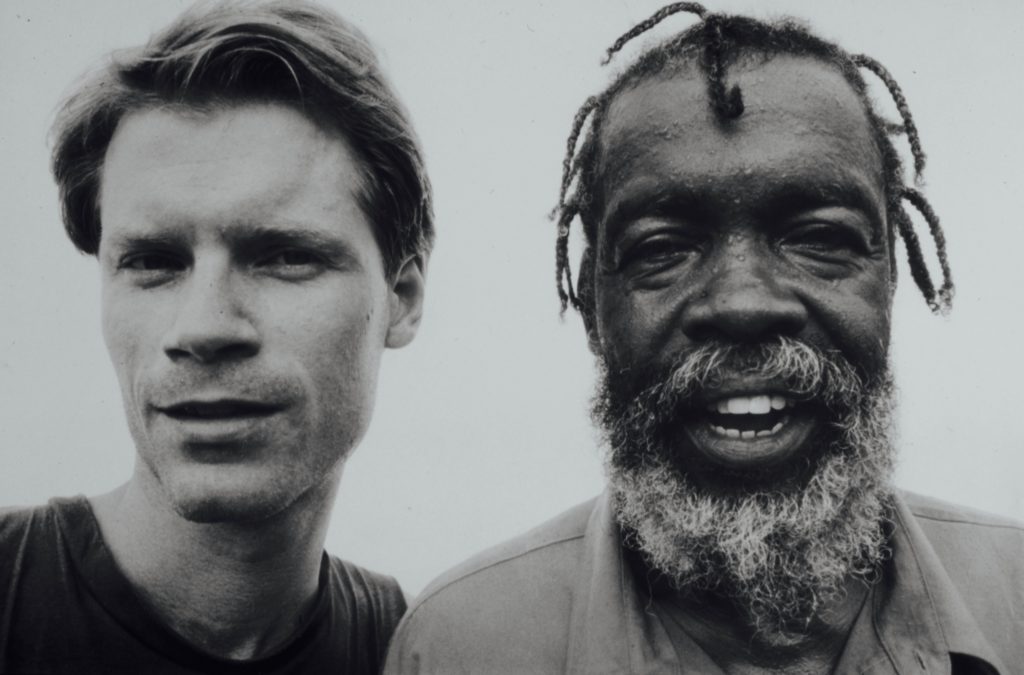
From L:R – Subjects Adam Gussow and Sterling “Mr. Satan” Magee in a still from SATAN & ADAM. Photo courtesy JFI

In the engaging documentary Satan & Adam, Adam, a young white Ivy Leaguer, takes a stroll through Harlem and encounters an older African-American street guitarist, who calls himself Mr. Satan. Adam, a talented amateur blues harmonica player sits in, and soon the odd couple are a busking team, a popular attraction at their regular sidewalk venue in Harlem.

“Mr. Satan” is an alias for an artist of note.  Mr. Satan’s talent and the odd couple novelty allows the act to soar to totally unexpected heights. But Satan has emotional and medical issues, and Adam might be a better fit for a career in academia, so this is a story with plenty of unexpected twists and turns.  Let’s just say that, over the past 23 years, there have been some significant detours on this journey.

The core of the film is about this unusual relationship and the peculiarities of these two guys, but it also traces the evolving race relations in NYC.

Satan & Adam is told primarily from Adam’s point of view, which is understandable because of Mr. Satan’s periodic unavailability and, when we see him unfiltered, his oft puzzling inscrutability.

I saw Satan & Adam at the San Francisco Jewish Film Festival (SFJFF), a fest noted or its especially rich documentaries.  It has finally been released in at least one Bay Area theater.


THE BRINK: craving relevance

Steve Bannon in THE BRINK, a Magnolia Pictures release. Photo courtesy of Magnolia Pictures.

The Brink is documentarian Alison Klayman’s up-close-and-personal portrait of Steve Bannon, the outsized personality who founded Breitbart as a “platform for the alt right” and who encouraged Donald Trump’s race-baiting right into the White House.

But even Trump is not shameless enough to keep Bannon around – as The Brink opens, Bannon has just been fired from the Trump Administration in the wake of the wake of the Charlottesville disgrace (“very fine people on both sides“).  Bannon is now embarking on a campaign of uniting the European populist Right around a common racist/ white supremicist/anti-immigration message.

Bannon, of course, is a genius at political messaging, and his major outcome was the once unthinkable re-emergence of public white supremicism – voicing those who lived under the dark, damp underside of rocks and logs with the other creepy-crawlies, and making them feel like they can walk the earth erect like other vertebrates.

Bannon is a major ham, and all too happy to let the world watch him in action.  Bannon, of all people, is savvy enough to understand that Klayman is hostile to his beliefs and career,yet he granted her intimate access.  His ego must not have allowed him to resist a movie about himself – or he learned from Trump that no publicity is bad publicity.

For her part, Alison Klayman (Ai Wei-wei: Never Sorry) is clever enough to let Bannon himself reveal his flaws.   As he thinks he is showing us his skills, he is also showing himself to be an attention-craving blowhard.  The horror isn’t that Bannon is some invincible evil mastermind but it’s in the masses (only glimpsed) that are so consumed by the fear and hatred that he peddles.

In the riveting opening sequence, Bannon describes how German technocrats designed the Birkenau death camp to be masterfully efficient.  The banality of evil is not an original thought, but Bannon’s insights are more than a little scary (and his appreciation of Nazi efficiency is uncomfortable).

I found The Brink to be irresistible and watched with fascination.  To those who have had their fill of the propagandists of the Right in Divide and Conquer: The Story of Roger Ailes and Get Me Roger Stone (with Paul Manafort as bonus, I say that The Brink still offers insights – and more satisfaction.  Bannon wants his political skill to be validated, but The Brink reveals how pathetically he craves relevance.

TRE MAISON DASAN: sins of the father…

A scene from Denali Tiller’s TRE MAISON DASAN, playing at the 2018 San Francisco International Film Festival, April 4 – 17, 2018. Courtesy of SFFILM.

The unwavering and emotionally powerful documentary Tre Maison Dasan was my top pick from the World Premieres at the 2018 San Francisco International Film Festival (SFFILM) – and you can finally watch on TV this weekend.  The title reflects the names of three Rhode Island boys with incarcerated parents.  Unfettered by talking heads, Tre Maison Dasan invites us along with these kids as they interact with their families – both on the outside and the inside.  It’s all about the kids, all of the time – an effective choice by writer-director Denali Tiller In her feature debut.

One of the parents is released from prison early in the film; the other two are going to stay there during critical developmental periods in their children’s lives. Tre, Maison and Dasan are each taking different paths.  One kid is getting wonderful nurturing and guidance from a released parent, and lots of support from the community; we sense that he’s going to be OK.  That’s not the case with all of the kids.

Tiller doesn’t get academic or partisan.  By simply showing the impact on these children of having a parent incarcerated, she gets our attention and sympathy.  Tre Maison Dasan may not be a call to action in itself, but it’s an essential predicate.   PBS is airing Tre Maison Dasan on its Independent Lens series on April 1; you’ll also be able to stream it on PBS.

WBCN AND THE AMERICAN REVOLUTION: inventing a medium

WBCN AND THE AMERICAN REVOLUTION

There was a time before FM radio was a big deal, and a time when someone had to imagine it. A fairly conventional-appearing lawyer named Ray Rieman did just that in Boston, and started by assembling a team of colorful misfits.  Mirroring the counter-culture, these guys invented just about every aspect of the album-oriented FM radio that became ubiquitous in American cities within just a few years.The documentary WBCN and the American Revolution tells this story.

Rieman was an iconoclastic genius who faced new challenges daily.  For example, what happens if you run a radio station and your news director learns from the new wire that he has just been indicted for terrorism?

One of the less remembered aspects to hippie culture was that it was pretty sexist. That’s how WBCN started out, but these guys were very open to change, especially after local women listeners delivered a pointed gift of live baby chicks to the station.

We see WBCN’s impressive set of firsts – the first alternative radio news show, the first female rock DJs, the first gay radio show, and the first time that Bruce Springsteen was live on the radio, along with Patti Smith’s obscenity-laced poetry.

Of course, WBCN and the American Revolution is a time capsule, rekindling vivid memories for Baby Boomer and serving as an excellent cultural history for those younger,

Cinequest is hosting the world premiere of WBCN and the American Revolution.

TRAVEL BAN: MAKING AMERICA LAUGH AGAIN: using comedy to explore the uncomfortable

Comic Aron Kader in TRAVEL BAN: MAKE AMERICA LAUGH AGAIN

Since medieval court jesters tweaked royal courts, we’ve used comedy to explore difficult conversations.  In the documentary Travel Ban: Making America Laugh Again, comedians confront the misunderstanding, bigotry and hatred faced by Americans who are Muslim and by Americans whose families come from the Middle East.

One unfortunate aspect of our culture is the impatience with and resistance to accepting nuance and complication.  Many Americans are content to accept a world in which “the Middle East” is a nation – one entity that is ever-hostile to the United States and ever evil-intentioned to all Americans.

Muslims and Middle Easterners have always endured negative stereotypes, made worse by 9/11.  But, this has worsened in the Trump Era because Trump empowers and licenses the open spewing of hate speech into our national discourse.

In response, Comics Aron Kader, Raz Jobrani and Ahmed Ahmed, who performed on the Arabian Knights and Axis of Evil comedy tours, mobilized even more stand-up comics for the Travel Ban tour.

Travel Ban includes the on-stage and off-stage banter of over a dozen American comics of Middle Eastern heritage or Muslim religion.  As one would expect, some are far funnier than others. My favorite is Feraz Ozel, who also has the movie’s funniest line in response to “Why don’t the good Muslims get together and fight the bad Muslims?”  (You’ll have to watch the movie for to get the devastating punchline.

Travel Ban is NOT purely a concert film; we do see performances, but the comics also discuss their experiences off-stage.  For context, there are some bracing videos of actual hate crimes and hateful rants by ignorant “real Americans”.  And Travel Ban brings in some key factual tidbits; for example, zero Americans have been killed by anyone from any of the countries targeted by Trump’s travel ban.

This is a serious film with some hilarious comedy.   As one of the comics says off-stage, “a good comedian makes people laugh, a great comedian makes them think”.

Cinequest hosts the world premiere of Travel Ban: Making America Laugh Again.

https://vimeo.com/292645468