KILL THE JOCKEY: surrealism in the stables

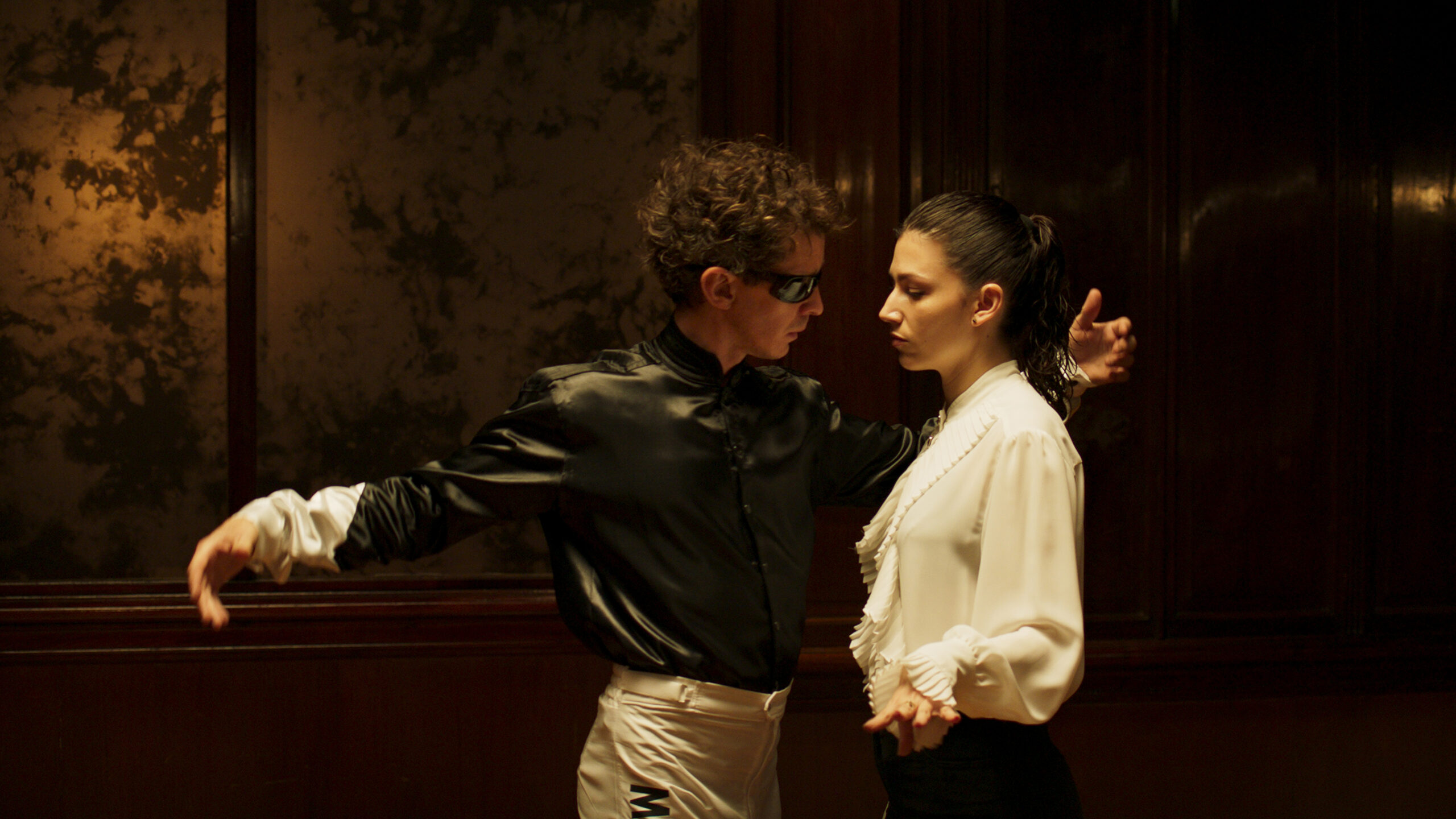
Photo caption: Nahuel Perez Biscayart and Ursula Corbero in KILL THE JOCKEY. Courtesy of Music Box Pictures.

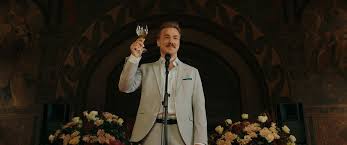
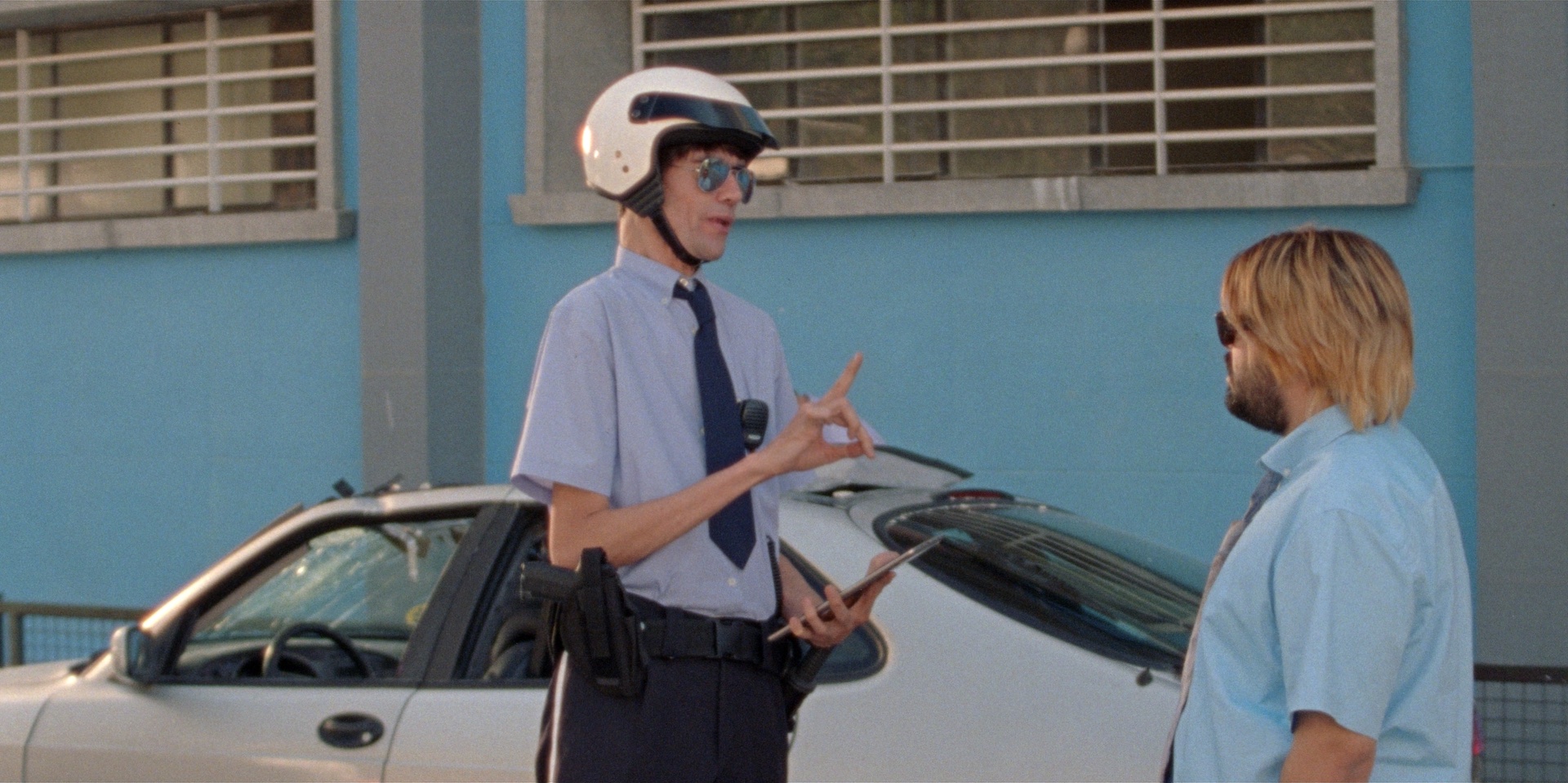
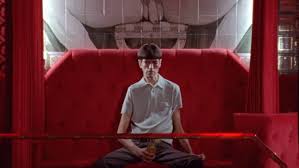
In the surreal Argentine comedy Kill the Jockey, Remo (Nahuel Perez Biscayart) is a once-champion jockey, who is zealously self-sabotaging his career; self-medicating with alcohol and even swiping the racehorses’ drugs and the booze left on a good luck altar, he has become utterly unreliable. Remo can only emerge from his narcosis to demonstrate his passion for his wife Abril (Ursula Corbero). Abril is also a jockey, and her racing career is on the upswing, although she will soon have to pause it to have their baby.

Both Remo and Abril ride for a mobster (Daniel Jimenez Cacho), who, against all available evidence, has concluded that Remo can still win a big race. As a result, Remo suffers a brain injury, which spurs catatonia and, eventually, a major change in his identity. Remo leaves the hospital without being discharged, and wanders the city in a walking stupor, unaware that both a frantic Abril and the mobster’s murderous goons are searching for him. At this point, Remo is not an ideal gunowner, but he gets a pistol, and the lives of Remo, Abril and the mobster take significant twists. Kill the Jockey morphs into a fable of identity.

Nahuel Perez Biscayart in KILL THE JOCKEY. Courtesy of Music Box Pictures.

Director and co-writer Luis Ortega tells this story with plenty of droll absurdism. Inexplicably, the mobster usually carries an infant, a mounted brass band suddenly appears, the possessions of a coat pocket include a live fish, and there’s ceiling-walking. Kill the Jockey has its share of LOL moments in the first half of the film.

Early in the film, Abril launches a celebratory dance, is soon joined by Remo, and the two move together as unhinged marionettes. It’s as if figures in a Dali painting broke into a sensuous dance. This is a spellbinding scene, the best one in Kill the Jockey and, possibly, in any movie this year so far.

Unfortunately, the second half of Kill the Jockey, with more Remo and less Abril, is not as compelling. Ortega keeps throwing in the entertainingly bizarre, but the film loses momentum as Remo transforms.

I first saw Nahuel Perez Biscayart as the star of the psychological Holocaust thriller Persian Lessons. He’s a good choice to play the tragicomic Remo, a broadly funny character that morphs into a heartfelt one. But the most interesting performance in Kill the Jockey is Ursula Corbero’s as Abril – brimming with charisma and vitality; Abril must navigate her life and Remo’s as Remo’s condition keeps changing dramatically.

Kill the Jockey is Argentina’s submission for the Best International Feature Film Oscar and has been nominated for significant awards, including the Goya (best Iberoamericano film) and the best film at Venice Film Festival. It releases into theaters this weekend, including the Laemmle NoHo in LA, the Roxie in San Francisco and the Smith Rafael Film Center in San Rafael.

LA CAGE AUX FOLLES: groundbreaking, humane and funny

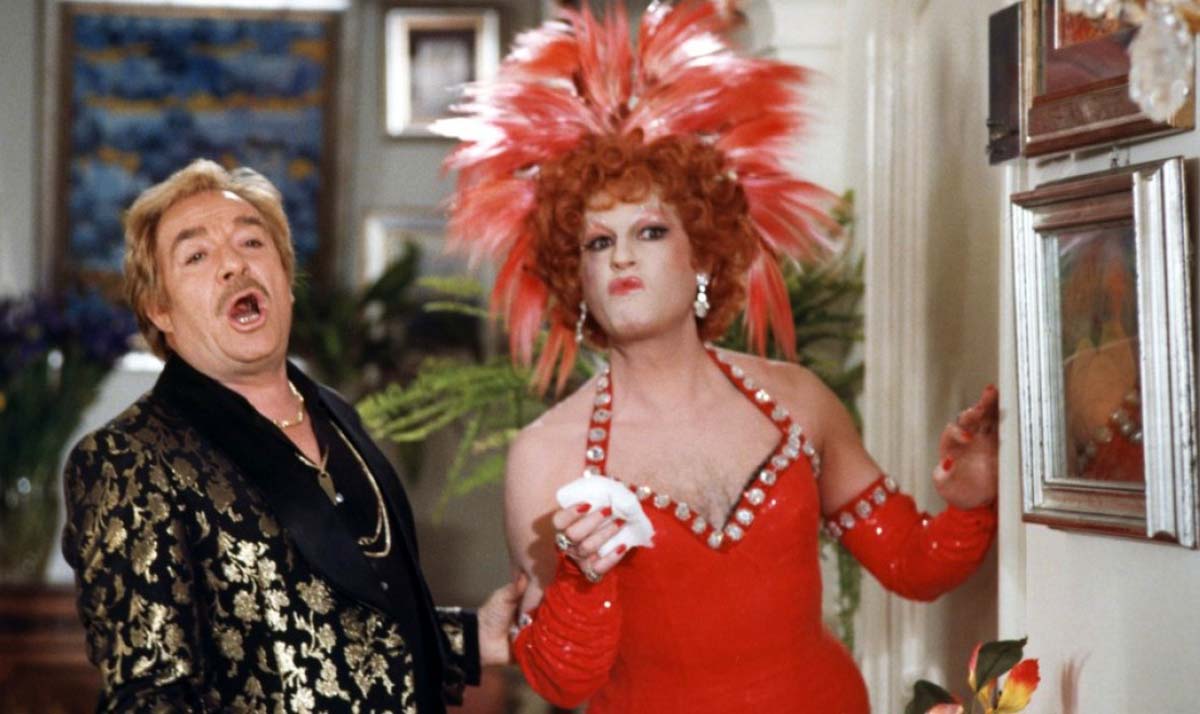
Ugo Tognazzi and Michel Serrault in LA CAGE AUX FOLLES

On June 13, Turner Classic Movies will present the groundbreaking French comedy La Cage Aux Folles – a daring film in 1978, when few were thinking publicly about same-sex marriage. A gay guy runs a nightclub on the Riviera, and his partner is the star drag queen. The nightclub owner’s beloved son wants him to meet the parents of his intended.  But the bride-to-be’s father is a conservative politician who practices the most severe and judgmental version of Roman Catholicism, so father and son decide to conceal aspects of dad’s lifestyle. Madcap comedy ensues, and La Cage proves that broad farce can be heartfelt. Michel Serrault is unforgettable as Albin/Zaza – one of the all-time great comic performances. (La Cage was tepidly remade in 1996 as The Birdcage with Robin Williams, but you want to see the French original.)

I’m currently watching my way through the program of this year’s Frameline LGBTQ film fest, which I just previewed. I don’t think you can overestimate the cultural impact of La Cage Aux Folles, which charmed straight audiences into relating to sympathetic portrayals of LGBTQ people.

FRIENDSHIP: the loser isn’t lovable

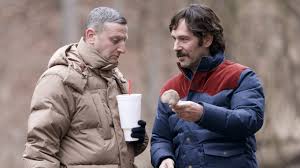
Photo caption Tim Robinson and Paul Rudd in FRIENDSHIP. Courtesy of A24.

The disappointing comedy Friendship has a promising premise: what happens when a very uncool guy is invited into friendship by a very cool guy.

Craig (Tim Robinson) is socially tone deaf and has a gift for turning every situation into a gaffe. He meets his new neighbor Austin (Paul Rudd), who brims with savoir faire and has the cheeky grin of, say, Paul Rudd. Paul invites Craig along on a mischievous adventure and over for beers with Austin’s bro friends. In fact, Austin seems to live inside a guy-fantasy beer commercial. Craig has been a stick in the mud but is now intoxicated by the possibilities of being a popular kid.

Of course, Craig, devoid of charm and emotional intelligence, just can’t keep up, and his clumsiness – and his insistence on doubling down on his gaffes – sabotage his social aspirations. When he tries to hang with Austin’s friends, a social disaster results. When he tris to impress his wife Tami (an excellent Kate Mara) by duplicating his adventure with Austin, it’s a real disaster, not just a social one.

The situation is grist for a very smart story. Every one of us has felt socially inadequate or left out at some point. Every one of us has done something dorky in public. So the audience is ready to identify with a movie character who is suffering from embarrassment and lack of social confidence.

The problem here is that Craig isn’t a well-meaning, lovable loser that we can root for. As created by writer-director Andrew DeYoung and played by Tim Robinson, he’s a jerk. And the screenplay misses the easy opportunities to explore the male fantasy of the perfect buddy.

There some LOL moments in Friendship, the best being when Tami reports on what occurred when she was stuck in a municipal sewer. And it develops that even Austin is hiding an uncool secret.

After a while, we stop cringing for Craig, because we no longer care about him. Friendship is a swing-and-a-miss.

EGGHEAD & TWINKIE: funny, sweet and genuine

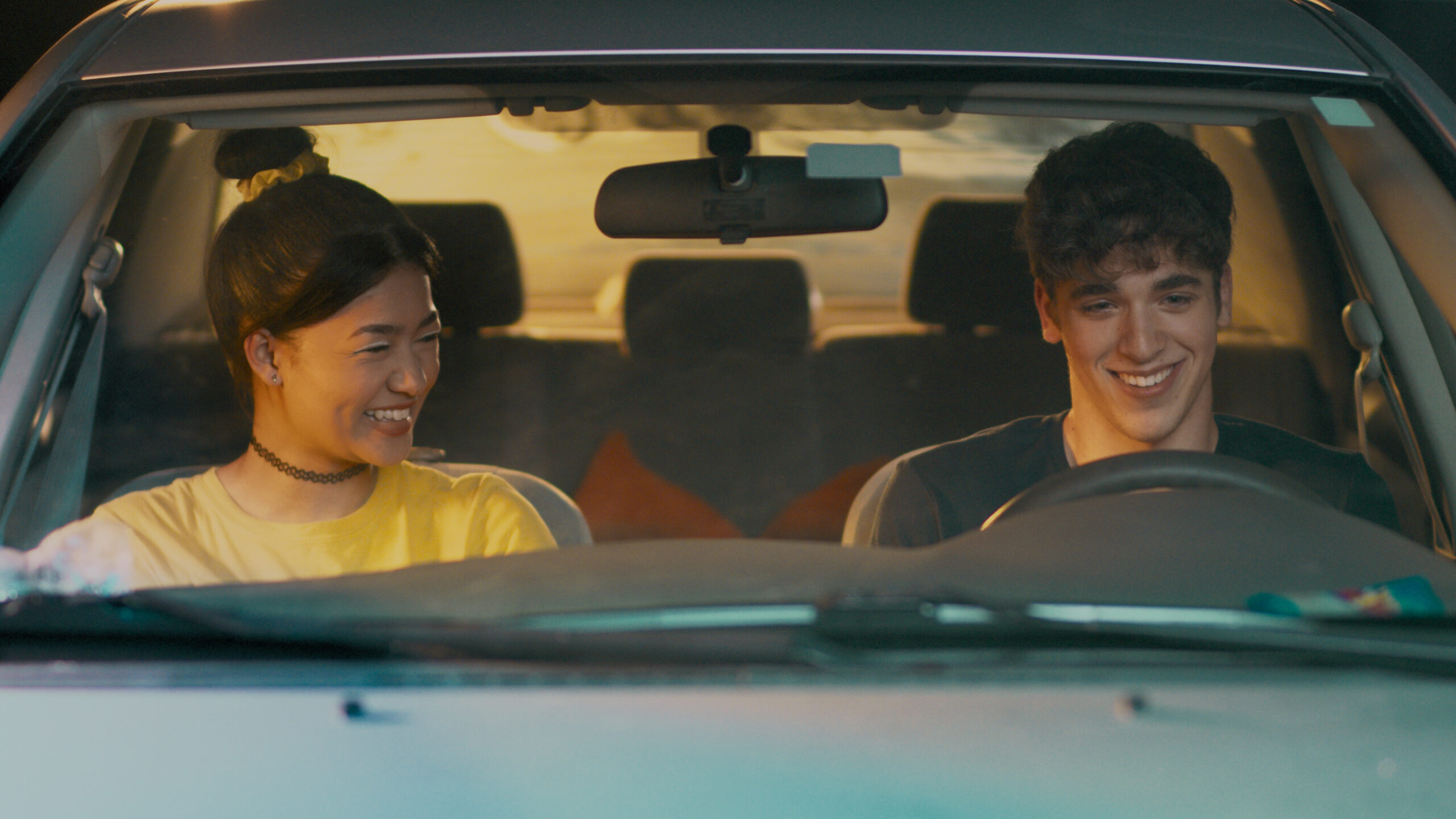
Photo caption: Sabrina Jie-A-Fa and Louis Tomeo in EGGHEAD & TWINKIE. Credit: Olivia Wilson, Courtesy of CanBeDone Films and Orange Cat Films.

In the funny, sweet and genuine coming of age film Egghead & Twinkie, Twinkie (Sabrina Jie-A-Fa) is finishing high school and trying to navigate her sexual awakening as aa lesbian – and it’s not easy. Her lifelong bestie is the neighbor boy Egghead (Louis Tomei), and he’s now sweet on her; (Egghead and Twinkie are their nicknames for each other), Twinkie impulsively commandeers her dad’s car and heads out on a cross country road trip to join her Internet object of desire (Tik Tok star Ayden Lee). Egghead is so loyal, smitten and cluelessly hopeful that he comes along.

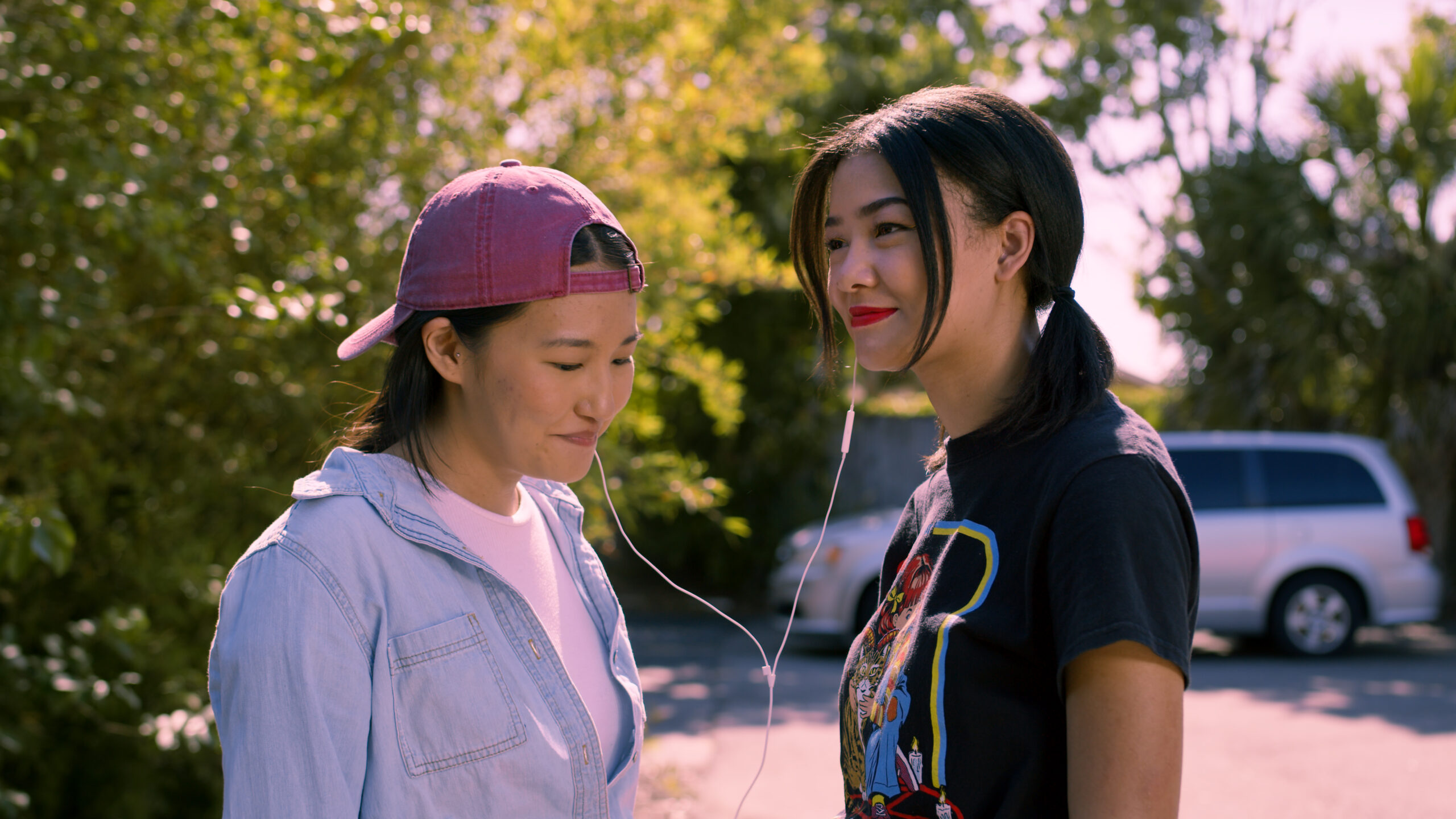
Along the way, they have their share of zany road trip experiences. Twinkie meets the girl (Asahi Hirano) who REALLY is perfect for her, but Twinkie is first destined to learn a cruel lesson about being infatuated with a player. It’s a hoot, and there’s not one false note. For all their kooky antics, the kids’ feelings are remarkably authentic.

The entire cast is very good. Sabrina Jie-A-Fa is a charming force of nature as Twinkie. She’s in every scene, and she’s a real talent.

Asahi Hirano and Sabrina Jie-A-Fa in EGGHEAD & TWINKIE. Credit: Olivia Wilson, Courtesy of CanBeDone Films and Orange Cat Films.

Egghead & Twinkie is the first feature for writer-director Sarah Kambe Holland, and it’s an impressive calling card. Egghead & Twinkie is perfectly paced, and Kambe Holland sprinkles in just enough animation to help leaven the angst with the whimsical. Kambe Holland says,

The kernel of an idea that turned into EGGHEAD & TWINKIE was
more of a question: Can I find humor in the coming out process? I
was nineteen years old at the time, and I had just come out to my
own parents a few months before. The stress of coming out was
fresh in my mind, but so was the hilarious awkwardness of it all. I
challenged myself to write a short film script about a teenage girl
who comes out to her parents, but I was adamant that it wouldn’t be
a drama. It would be a comedy, and the message would be one of
hope and friendship.

Of course, given Kambe Holland’s inspiration for the story, Twinkie just doesn’t HAPPEN to be gay or HAPPEN to be Asian-American, but the themes are universal, and Egghead & Twinkie is one of the best coming-of-age films of the decade.

I screened Egghead & Twinkie for its premiere at Cinequest.. After  a strong festival run, Egghead & Twinkie is available on VOD, including Amazon, AppleTV and YouTube, beginning today.

CHEVALIER – male competitiveness, brilliantly skewered

CHEVALIER. Photo courtesy of Strand Releasing and SFFILM.

To celebrate this week’s opening of SFFILM, here’s a gem from the 2016 SFFILM, Athina Rachel Tsangari’s Chevalier, a sly and pointed exploration of male competitiveness, with the moments of drollness and absurdity that we expect in the best of contemporary Greek cinema. Tsangari is bringing her newest film Harvest, starring Caleb Landry Jones and Harry Melling, to to the 2025 SFFILM.

In Chevalier, six guys are taking a holiday week on a yacht in the Aegean Sea. Each has his own stateroom, and the crew includes a chef. They spend their days scuba diving, jet skiing and the like. After a post-dinner game of charades, one suggests that they play Chevalier, a game about “Who is best overall?”. Of course, men tend to be competitive, and their egos are now at stake. The six guys began appraising each other, and their criteria get more and more absurd. “How many fillings do you have?”

In one especially inspired set piece, the guys race each other to construct IKEA bookcases, which results in five phallic towers on the boat’s deck (and one drooping failure). Naturally, some of the guys are obsessed with their own erections, too.

Athina Rachel Tsangari, director of CHEVALIER . Photo courtesy of SFFILM.

Director Athina Rachel Tsangari is obviously a keen observer of male behavior. Both men and women will enjoy laughing at male behavior taken to extreme. I sure did. Chevalier is perhaps the funniest movie of 2016, and it’s on my list of Best Movies of 2016.

I saw Chevalier at the 59th San Francisco International Film Festival (SFFILM), where I pegged it as the Must See of the fest. (In 2011, Tsangari brought her hilariously offbeat Attenberg to SFFILM.)

Make sure you get the 2015 Greek Chevalier, not the 2023 Hollywood bodice-ripper.

Unfortunately, in the Bay Area, Chevalier only got a blink-and-you’ve-missed-it release in 2016. Chevalier is now available to stream from Amazon, AppleTV, YouTube and Fandango.

THANK YOU VERY MUCH: provocateur explained

Photo caption: Andy Kaufman in THANK YOU VERY MUCH. Courtesy of Drafthouse Films.

Andy Kaufman was an original, whose art always confounded the expectations of others. The fine biodoc Thank You Very Much both reminds us of Kaufman’s gifts and explains the roots of his offbeat, often bizarre humor..

Director Alex Braverman takes us to Kaufman’s formative childhood and the parental lie that shaped much of his psyche. We hear from Kaufman’s dad, his creative partner Bob Zmuda and Andy’s girlfriend Lynne Margulies. Friends Danny Devito, Marilu Henner and Steve Martin pop in, too.

Kaufman was a prankster and a provocateur, so much so that, when a woman suffered a fatal heart attack on stage, the audience suspected that it might be a part of Kaufman’s act; (it wasn’t).

And what about his notorious wrestling wrestling against women? It’s the most controversial element of Kaufman’s work and the most inexplicable. Thank You Very Much sheds important light on this obnoxious performance art.

And here’s a delightful nugget – we even get to learn the origin of Latka’s accent on Taxi.

Thank You Very Much is in theaters, with filmmaker appearances at several LA theaters this week. You can also stream it on Amazon and AppleTV.

FOUL EVIL DEEDS: from not so bad to worse

Photo caption: Alexander Perkins in Richard Hunter’s FOUL EVIL DEEDS. Courtesy of Slamdance.

The deadpan anthology FOUL EVIL DEEDS depicts a range of aberrant human behavior, most of it darkly funny. The deeds themselves arise from a wide variety of root causes:

  • a couple’s social clumsiness;
  • a loner’s inner rage;
  • some kids’ youthful stupidity;
  • one guy’s uncommon sexual need;
  • an otherwise upstanding dog-walker’s entitlement;
  • and one man filled with deep-seated, sociopathic evil.

The threads are woven together into a wry, clever and very cynical movie that veers to the misanthropic. The segment about a neighbor’s cat could have been written by Larry David about George Costanza.

Writer-director Richard Hunter’s debut feature is consciously an art film; Hunter says he is influenced by the work of Ulrich Seidl, Michael Haneke and Roy Andersson, and it shows. It’s a slow burn, and the audience wonders, why is that guy checking out the remote wooded wetland? (Hint: he’s looking to coverup a future evil deed.)

Hunter seems to be measuring human behavior by its impact on others. Some might still consider an unconventional sexual practice to be a “sin”, but it’s entirely victimless (and isn’t even illegal). In another thread, what is intended as a harmless practical joke becomes tragic.

Alexander Perkins is excellent as a man with anger management issues that he can’t shake. As a consequence, he is grinding his teeth through workaday drudgery, and he’s mad about that, too. Does he have a path out of his situation, or he just going to stew until he explodes? There’s only one person who he can talk to (Oengus MacNamara in an unexpectedly riveting performance).

I think that FOUL EVIL DEEDS is likely to secure US arthouse distribution. FOUL EVIL DEEDS It premiered at Locarno, and I screened FOUL EVIL DEEDS for its North American premiere at Slamdance.

Through March 7, 2025, you can stream FOUL EVIL DEEEDS on the Slamdance Slamdance Channel. A 2025 Slamdance Film Festival Virtual Pass, which brings you FOUL EVIL DEEDS and almost all of my Slamdance recommendations, only costs $50.

PORTAL TO HELL: Faust at the laundromat

Photo caption: Trey Holland and Romina D’Ugo in Woody Bess’ PORTAL TO HELL. Courtesy of Portal to Hell LLC.

In the witty, dark comedy, Portal to Hell, a hangdog bill collector named Dunn (get it?) discovers a portal to hell, replete with hellfire and brimstone, in his local laundromat. Dunn, with best of intentions, strikes a bargain with its proprietor. Dunn is too nice for his wretched job, but just what is he capable of? And how about the insipid pop band who sings your least favorite earworm – who wouldn’t want to consign THEM to hell? 

Portal to Hell considers the question, what is a good person? but never too seriously. This is an imaginative, comic triumph for writer/director/cinematographer Woody Bess. Bess has a gift for the deadpan and the absurd.

Trey Holland is excellent as the continually perplexed Dunn, sapped of resilience by a personal loss. So is Romina D’Ugo as the reluctant authority figure at the laundromat. Lauded actor Keith David is perfect as Dunn’s cranky neighbor, ever assessing the younger generation with a critical eye. The great Richard Kind soars as a workaday (but crafty) demon.

This is a very funny movie. I screened Portal to Hell for its world premiere at Slamdance, where I predicted it to be the biggest crowd-pleaser at the fest.

WALLACE & GROMIT: VENGEANCE MOST FOWL: another smart and charming romp

Photo caption: Wallace and Gromit in WALLACE & GROMIT: VENGEANCE MOST FOWL. Courtesy of Netflix.

The Claymation romp Wallace & Gromit: Vengeance Most Fowl is another smart and charming winner from Aardman Studio. If you haven’t met them yet, Wallace is a cheese-loving and socially clueless English inventor. Gromit is his longsuffering dog, who is the one with common sense. Their house is filled with Wallace’s Rube Goldbergesque contraptions.

Wallace often invents gadgets that are totally unnecessary. This time, Wallace, oblivious to how lovingly Gromit tends his English garden, invents a robotic gardening gnome. As they are coping with the inevitable resulting mayhem, they are targeted for revenge by an old nemesis, and things get really out of hand.

Years earlier, they had nabbed the chicken mastercriminal Feathers McGraw for a jewel heist. Now Feathers has escaped from prison and wants to get even. What happens in the fastmoving 82 minutes of Vengeance Most Fowl is very funny and very entertaining.

I’ve loved all the Aardman Studio films (except for Pirates! Band of Misfits, which was merely amusing). Vengeance Most Fowl is even funnier than the usual Aardman fare.

Netflix labels this as “for Kids”, and kids will enjoy it, but adults; will find it very funny, too; like any good children’s content, there are loads of references that will swoop over the heads of kids while the adults are cracking up.

Wallace & Gromit: Vengeance Most Fowl is streaming on Netflix.

LAKE GEORGE: when you know you’re not going to win

Photo caption: Carrie Coon and Shea Whigham in LAKE GEORGE. Courtesy of Magnolia Pictures & Magnolia Releasing.

As the comic neo-noir Lake George opens, the hangdog Don (Shea Whigham) has just been released from a ten-year stint in prison. He has no prospects and is coerced by the fearsome crime lord Armen (Glenn Fleshler) into taking a job he doesn’t want. Having done his stretch for a white collar crime, Don is decidedly non-violent (and unlucky). He would be the first to agree that he is the worst possible choice to pull off a murder-for-hire, but Armen and his henchman Hanout (Max Casella) insists, on pain of Don’s own life, that Don whack the boss’ girlfriend and business associate, Phyllis (Carrie Coon).

Don tracks down Phyllis, and, of course, things do not go according to plan. She convinces him to join her in stealing stashes of loot from Armen, and the two are off on an odd couple road trip.

Phyllis is much, much smarter and quicker-thinking than any of the men in this story. And she’s just as ruthless, too. She has an impressive gift of persuasion and can apparently manipulate anyone into anything. Imagine if Brigid O’Shaughnessy were a lot smarter than Sam Spade. Femme fatale, sociopath – that’s Phyllis.

Don, on the other hand, kno ws that he has been a loser and that he ain’t gonna win this time either. Even if he is not quickest, Don is by no means stupid. Don is smart enough to know that doing Phyllis’ bidding is unlikely to work out and that Phyllis is only out for herself and has zero loyalty to Don. That’s the core of Lake George – Don trudging along at Phyllis’ side because he can’t figure out any alternative.

Lake George is a character study, and it’s an acting showcase for Shea Whigham. Ever dazed by the Phyllis’ increasingly outrageous acts, Whigham’s Don seems to be squinting into a bright light as he ponders how he can possibly escape each situation with his life.

Whigham is one of those character actors who works a lot and is always memorable (The Gray Man, A Country Called Home, Boardwalk Empire, True Detective, The Wolf of Wall Street, American Hustle, Take Shelter). It’s great to see him get a lead role.

Coon has fun with Phyllis’ ever-bubbling self-interest and almost manic charm. It’s an interesting take on the femme fatale because she doesn’t sexually seduce Don. Her smarts and gift of gab are so effective that she doesn’t need to use her gams.

There is a massive plot twist near the end. Lake George was written and directed by prolific TV director Jeffrey Reiner, his first theatrical feature in 29 years.

My personal preference would be to make Lake George more noir by cutting the last minute. But it’s a mildly entertaining lark, and the wonderful character study by Whigham is the most compelling reason to watch it.

Lake George is now streaming on Amazon, AppleTV, YouTube and Fandango.