
LONG DAY’S JOURNEY INTO NIGHT: memory of a doomed romance and an epic plunge into neo-noir


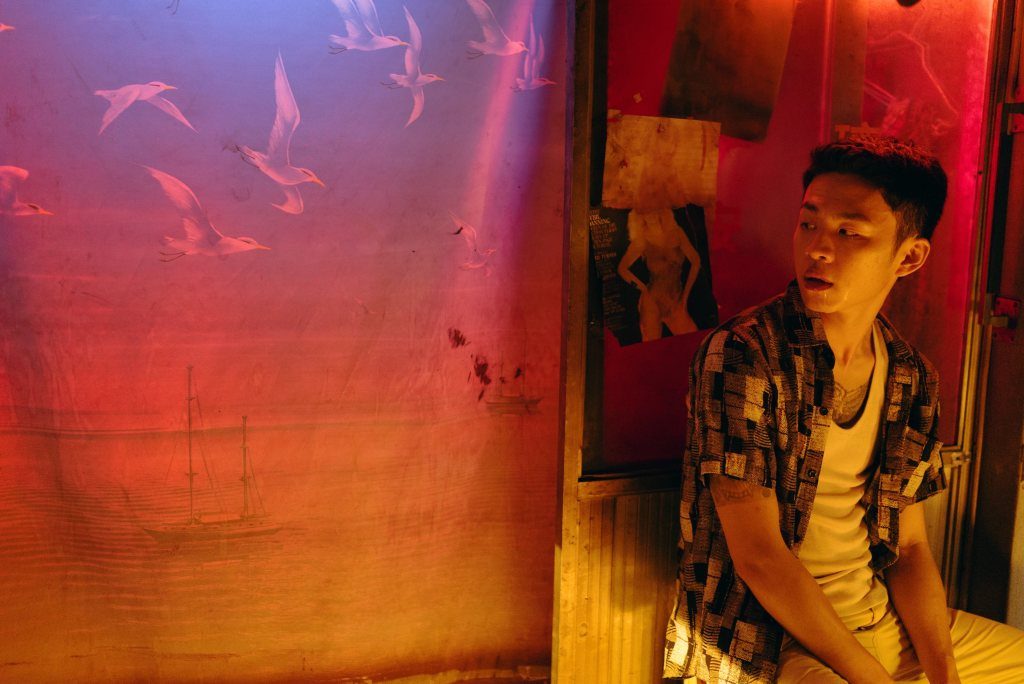
Jue Huang in a scene from Long Day’s Journey Into Night. Photo by Bai Linghai, courtesy Kino Lorber.

In the singular Chinese neo-noir Long Day’s Journey Into Night, Luo (Jue Huang) embarks on a search to find the mysterious woman he dallied with twenty years before. As he follows the clues, he plunges into an atmospheric underworld of dripping darkness and people who don’t want to talk. Along the way, he encounters the sultry, down-on-her-luck floozy Wan Qiwen (Wei Tang), whose lethal, fedora-adorned boyfriend does not want to relinquish her to Luo’s quest.

After a low burn beginning, Luo’s search reaches its climax in a spectacular ONE-HOUR single shot. It’s nighttime and both the exteriors and interiors are lit to evoke a surreal world stained by noirish danger. The shot requires the camera to follow Luo and Wan Qiwen, together and separately, inside and outside, between various levels and twice past a nervous horse, all while other characters interact with them. It’s right up there with the magnificent shots in Children of Men, Goodfellas, Touch of Evil, The Secret in Their Eyes, Atonement, Gun Crazy and the one-shot film Victoria.

Long Day’s Journey Into Night is the triumph of writer-director Bi Gan, who never forgets that he is telling his story in the medium of cinema. Long Day’s Journey Into Night is so atmospheric that sometime we feel the dankness of his set designs. Repeatedly, the richest of colors stand out against noirish backdrops. Wan Qiwen is unforgettable in her satiny emerald green dress, lit by Luo’s headlights as he tracks her by automobile in a dark tunnel. (Bi Gan has acknowledged his admiration for Wong Kar-wai, and Bi Gan has created a film as visually intoxicating as Wong Kar-wai’s.) Ban Gi used three directors of photography; the second cinematographer prepared the final shot for the third. There are recurring themes of spinning rooms, flooded floors and dripping ceilings, single flames and sparklers. The soundtrack centers on ambient sound, with very few musical cues.


Wei Tang, Yongzhong Chen in a scene from Long Day’s Journey Into Night. Photo by Liu Hongyu, courtesy Kino Lorber.

All of this enhances the story of Luo’s obsession with a doomed romance (and possibly more than one doomed romance). He can’t sure that what he hears is true – or even that what he sees is real. It’s a world filled with dissolute and murderous men and unreliable women. Luo asks a man, “Is that child yours?” and is answered, “She was a master story teller” (not a complement in this instance).

Bi Gan says, “It’s a film about memory”. Indeed, he has Luo say, “The difference between film and memories is that film is always false. They are composed of a series of scenes. But memories mix truth and lies. They appear and vanish before our eyes .”

That final shot is in 3D. Bi Gan says, “After the first part (in 2D), I wanted the film to take on a different texture. But I believe this three-dimensional feeling recalls that of our recollections of the past. Much more than 2D, anyway. 3D images are fake but they resemble our memories much more closely.


Hong-Chi Lee in a scene from Long Day’s Journey Into Night. Photo by Liu Hongyu, courtesy Kino Lorber.

This film is entirely written by Bi Gan, with no apparent relationship to the identically-titled 1962 film of the Eugene O’Neill play, the famed four-hander with Katharine Hepburn, Ralph Richardson, Jason Robards and Dean Stockwell. The Mandarin title of Bi Gan’s film is literally Last Evenings On Earth, a title which came from a short story by Roberto Bolaño. Bi Gan just liked the title Long Day’s Journey into Night and thought that it fit the spirit of his film.

Long Day’s Journey Into Night is the biggest Chinese art house hit ever, and won an award at Cannes in 2018. It opens this weekend in the Bay Area.
HER SMELL: powerhouse Elisabeth Moss

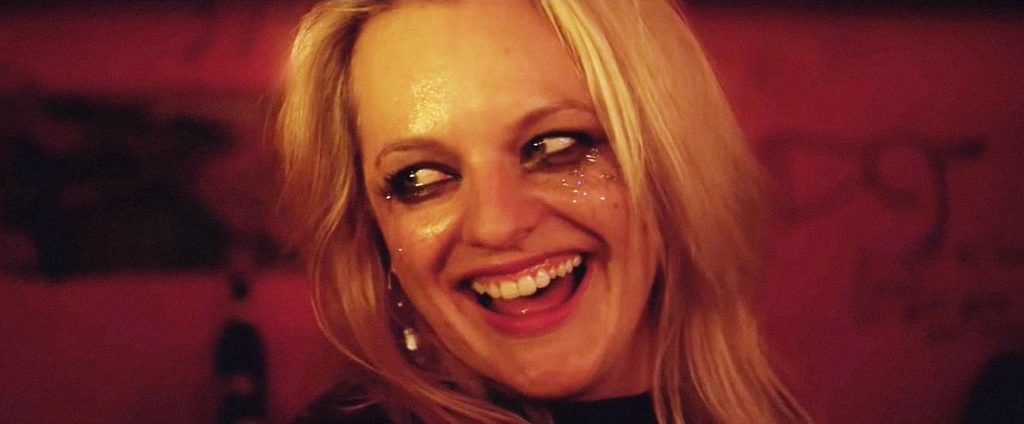
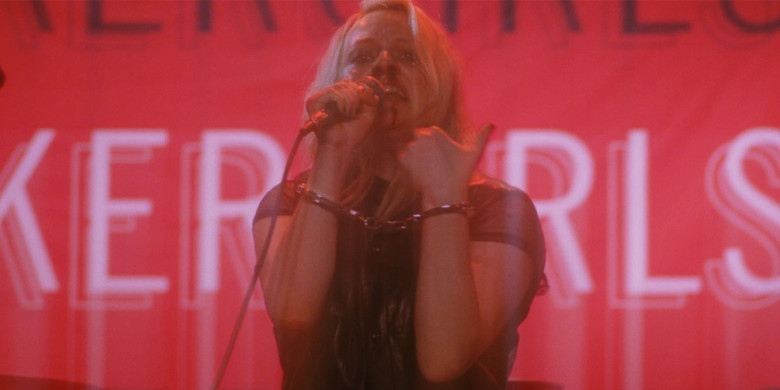
Elisabeth Moss in HER SMELL

Elisabeth Moss soars in Her Smell, a portrait of epic self-destruction. Moss plays a talented and charismatic rock star, her narcissism exponentially magnified by drugs. She is so deranged that we can’t tell if she is possessed by demons or is a demon herself. While the drugs make her a monster, we learn that they are not the only influence on her damaged psyche.

Moss’ performance as the volatile and feral Becky Something is terrifyingly unhinged and explosive. Becky immediately pivots (even mid-sentence) between charmer and predator. Moss is utterly committed to this role and left nothing on the sound stage. It’s the powerhouse performance of 2019.

We first grew to appreciate Elisabeth Moss as Peggy Olson, perhaps the Mad Men character with the greatest arc. Since then, she’s anchored The Handmaid’s Tale, and I recommend her less well-known turn as an Aussie cop in the Top of the Lake miniseries. But after people see Her Smell, they’ll start thinking that she can play ANYTHING – and anything compellingly .

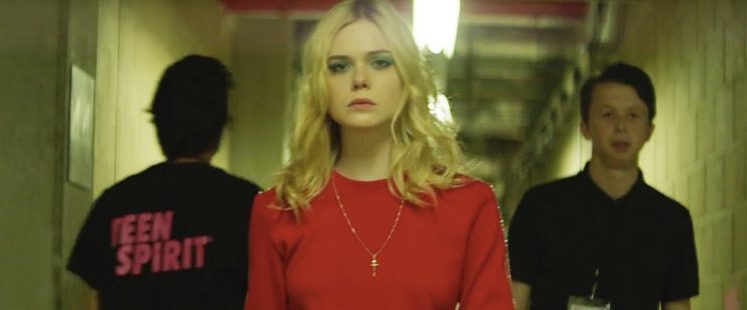
Moss also sings well enough to make a credible rock star. As I wrote about Elle Fanning in Teen Spirit, given that Rami Malek just won an Oscar for lip-syncing, we should bestow a Nobel upon Moss. 

Elisabeth Moss in HER SMELL

The Wife noticed that writer-director Alex Ross Perry’s choices of chaotic camera and discordant musical tones mirror the character’s inner chaos; later, he uses serenity and stillness to help us distill Becky’s persona. I also agree with The Wife that Her Smell is unnecessarily long at two hours and fourteen minutes; this would be a much more powerful film at 100 minutes. (Ross also wrote Listen Up Philip, a very funny dark comedy about another dysfunctional protagonist and one of the very few successful mumblecore films; Moss co-starred with Jason Schwartzman in that one.)

Her Smell’s supporting players are superb, especially Agnyess Deyn and Gayle Rankin as Becky’s bandmates, Dan Stevens (Downton Abbey) as her ex and art house vet Eric Stolz as her manager; in turn enabling Becky and being victimized by her, they are always walking on eggshells. Becky’s mom is played by the sublime Virginia Madsen. Former model Cara Delevingne was excellent in the teen film Paper Towns, and does well here as one of Becky’s bewildered acolytes.

Her Smell’s theatrical run is not likely to last long – try to find it. I’ll make a point of making it a Stream of the Week when it becomes available on video.

Movies to See Right Now

Aretha Franklin in AMAZING GRACE

OUT NOW

  • The Aretha Franklin concert film Amazing Grace is, at once, the recovery of a lost film, the document of an extraordinary live recording and an immersive, spiritual experience.
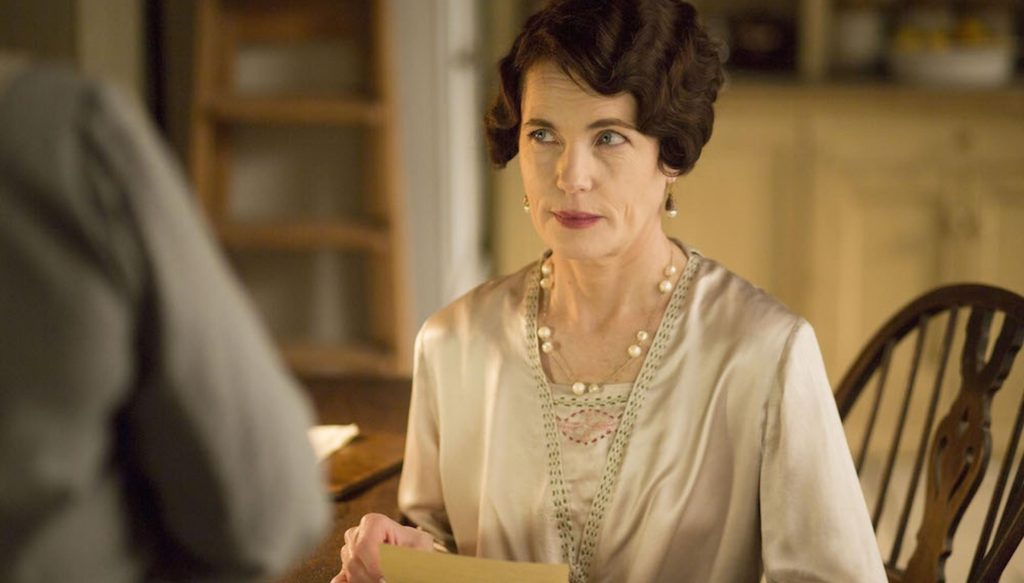
  • In The Chaperone, Downton Abbey’s writer Julian Fellowes and star Elizabeth McGovern reunite for a pleasing character study of self-discovery in 1921 America – it’s deeper than it first appears to be.
  • The Man Who Killed Don Quixote: after 25 years of misfortune and missteps, Terry Gilliam has succeeded in making a Don Quixote movie – and it’s good.
  • In Teen Spirit, Elle Fanning plays an underdog teenager who has the chance to win a talent contest and become an instant pop star – yes, it’s a genre movie, but it’s a pretty fair one.
  • The Brink is documentarian Alison Klayman’s up-close-and-personal portrait of Steve Bannon, the outsized personality who coached Donald Trump’s race-baiting right into the White House. As Bannon unintentionally reveals himself to be pathetically craving relevance, I found The Brink to be irresistible, and I watched with fascination.
  • For the first hour-and-a-half of Sunset, I was convinced that I was watching the best movie of the year. Then the coherence unraveled, but I still recommend Sunset, even with its flaws, for its uncommon artistry.
  • The puzzling thriller Transit, with all its originality, just isn’t director Christian Petzold’s best.
  • Ramen Shop is a lightly-rooted dramedy about a Singaporean-Japanese family’s reconciliation. There’s also a metaphorical foodie angle.
  • Skip The Hummingbird Project – two good scenes just isn’t enough.

Elle Fanning in TEEN SPIRIT

ON VIDEO

My video choice, the psychological suspense movie Una, revolves around two twisted people who make for two unreliable narrators  (Rooney Mara and Ben Mendelsohn).  I originally saw Una at the 2017 Cinequest.  You can stream it from Netflix Instant, Amazon, iTunes, Vudu, YouTube and Google Play.

ON TV

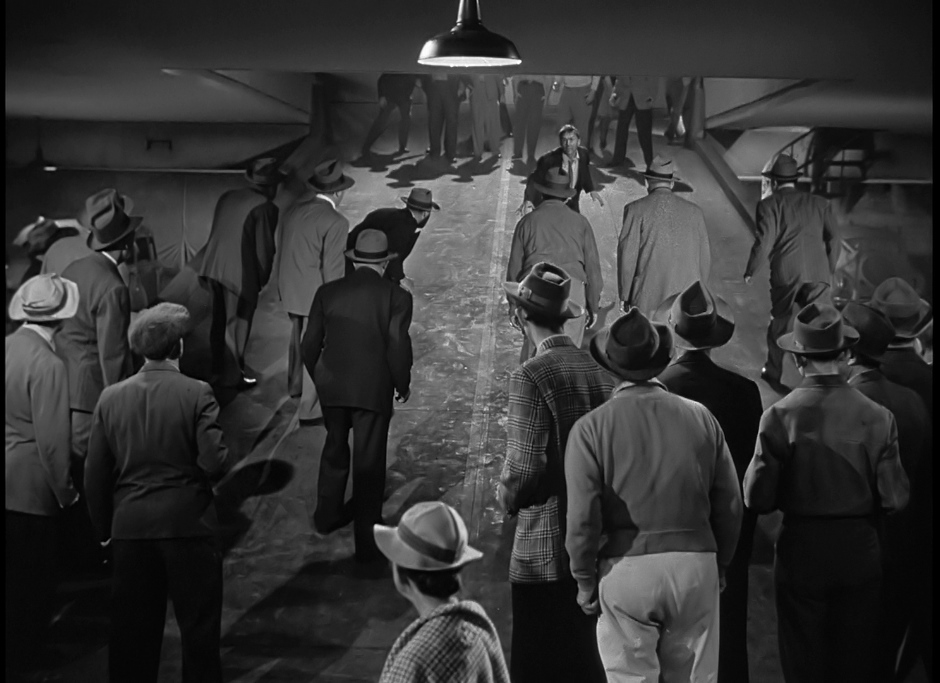
On April 27, Turner Classic Movies will air the 1950 version of M, directed by Joseph Losey. This is a remake of Fritz Lang’s great 1931 M with Peter Lorre. The Losey version is not a masterpiece like the original, and I find it pretty odd. However, Los Angeles’ storied Bradbury Building, which has been in many a movie, was never been as gloriously revealed from basement to roof as in M. The Bradbury Building and the film as a whole benefit from the cinematography of Ernest Laszlo; Laszlo also shot D.O.A., The Well, The Steel Trap, Stalag 17, The Naked Jungle, Kiss Me Deadly and While the City Sleeps, before being Oscar-nominated eight times for more respectable, but lesser films. The cast is filled with film noir faves – Raymond Burr, Norman Lloyd, Howard Da Silva, Steve Brodie and Luther Adler. M is playing on TCM’s Noir Alley series, and I look forward to Eddie Muller’s intro and outro.

On May 1, TCM airs The Rack (1956): A returning US army captain (Paul Newman) is court-martialed for collaborating with the enemy while a POW. He was tortured, and The Rack explores what can be realistically expected of a prisoner under duress. It’s a pretty good movie, and Wendell Corey and Walter Pidgeon co-star.

Joseph Losey’s M

RAMEN SHOP: yummy reconciliation

Eric Khoo’s RAMEN SHOP. Courtesy of SFFILM.

Ramen Shop is about a family’s reconciliation in light of troubled Singaporean-Japanese history. Masato (Taikumi Saito) is a young Japanese ramen chef who loses his father; his Singaporean mom had died when he was a young child. He heads to Singapore to probe his family’s past and encounters a smorgasbord of Singaporean cuisine, a helpful and comely food blogger and his relatives – some more welcoming than others.

The first thirty minutes – with the grief of the son, his memories of his saintly mother and the flashbacks of parental romance – are too schmalzy for me. On the other hand, the thread of family turmoil as the legacy of a specific trauma from the Japanese conquest of Singapore works well.

There’s a metaphorical foodie angle here, too, in Masato’s Holy Grail – fusion of Singaporean pork rib soup with Japanese ramen stock. The foodie scenes – especially the food exploration scenes in Singapore – are mouth-watering.

I saw Ramen Shop at the San Francisco International Film Festival (SFFILM). It opens this week in the Bay Area.

Who is this guy Don McGahn?

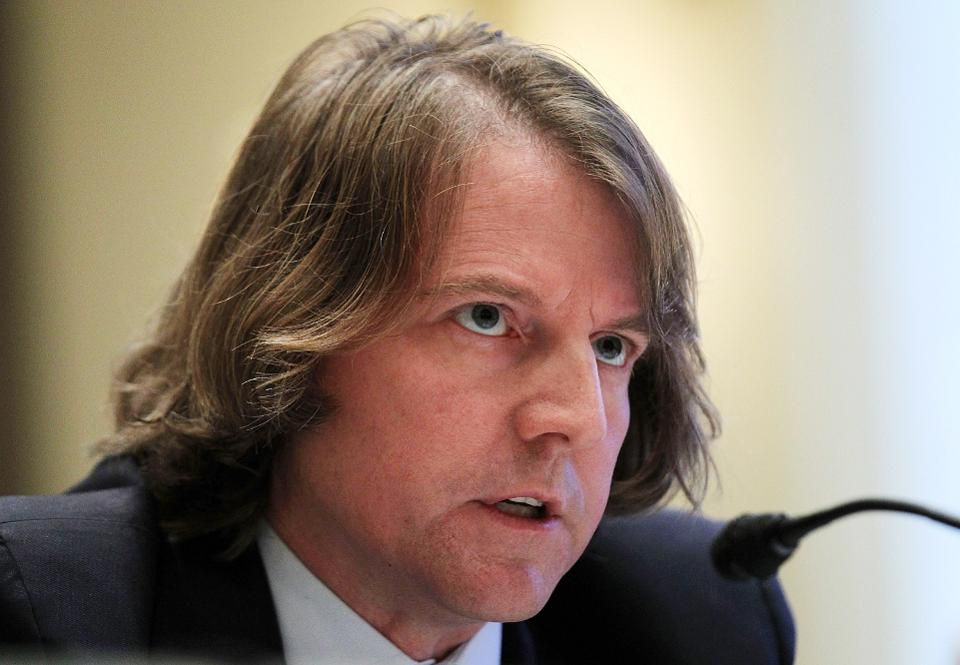
former FEC Commissioner Don McGahn

The Mueller Report has brought former White Counsel Don McGahn into semi-celebrity. McGahn was a major source for the Mueller Report, which portrays McGahn as one of the Trump Administration officials who, by disobeying and thwarting Trump’s orders, saved Trump from criminal charges of obstruction of justice. McGahn was the VILLAIN in last year’s
gripping documentary Dark Money, an expose of our new political environment, with unlimited secret money unleashed by the Supreme Court’s Citizens United ruling.

The Mueller Report recounts an episode where Trump advised a note-taking McGahn that Trump’s lawyers never take notes; McGahn memorably replied “But I’m a real lawyer.” But McGahn worked his way up as a Republican Party operative, and was a GOP appointee to the Federal Elections Commission (when he wore longish preppy hair). In one particularly nasty segment of Dark Money, we witness Commissioner McGahn unashamedly grinding the FEC’s gears of enforcement to a stop.  After the FEC, McGahn went on to serve as the Trump White House Counsel, with major responsibility for the Supreme Court nomination of Brett Kavanagh.

Dark Money’s writer-director Kimberly Reed takes us to her native Montana as conservative (but independent) Republican legislators find themselves deluged by massive and monstrous attacks from some even more conservative out-of-state sources. Intrepid small-town reporter John S. Adams and the understaffed state regulators follow the money and try to hunt down who is pulling the strings.

As the mystery unfolds, Dark Money also takes us to Wisconsin, where dark money has assaulted an unexpected branch of government. And we go to Washington, DC, to the Federal Elections Commission, where Ann Ravel, the Obama-appointed chair of the FEC, has resigned in disgust after Republican commissioners have blocked all enforcement of federal campaign finance regulation. (Disclosure: I have worked with Silicon Valley native Ravel in my day job.)

Here are some of Dark Money’s most disturbing revelations:

  • While it’s bad enough that we don’t know the extent of wealthy Americans like the Koch Brothers trying to buy elections, neither do we know about the secret election participation of FOREIGN players.
  • Dark Money sources are not stopping at trying to buy legislators and governors, but are also trying to take over state supreme courts!

And just when we need MORE scrutiny of the attempts to buy the legislative and judicial branches of state governments, we are witnessing the death of statehouse journalism.

Dark Money keeps us on the edges of our seats throughout and culminates in a real-life courtroom drama

I attended the sold-out Bay Area premiere of Dark Money, co-sponsored by Silicon Valley’s Cinema Club and by Santa Clara County. Both Ann Ravel and John S. Adams appeared at the post-screening Q&A. You can stream Dark Money from Amazon (free with Prime), iTunes, Vudu, YouTube and Google Play.

Stream of the Week: UNA – two twisted people

UNA
UNA

The psychological suspense movie Una revolves around two twisted people, one of whom has been damaged by trauma. Here’s what the audience can be confident really happened: at age 14, Una (Rooney Mara) was seduced by a much older man, Ray (Ben Mendelsohn); she became infatuated with Ray and they carried on a sexual relationship for three months until he was caught and imprisoned for four years. Upon leaving prison, he changed his name and started a new life. It’s now fifteen years after the original crime and Una has tracked him down.

We can tell that Una is obsessed with Ray. What we don’t know is whether Una is seeking vengeance or whether she is in love with him – or both. She’s so messed up that even she may not know.

Lolita was a novel with a famously unreliable narrator. Una presents us with TWO unreliable narrators. Almost every statement made by Ray COULD be true, but probably isn’t. He was in love with her, he came back for her, she was his only underage lover, he’s not “one of them”, he’s told his wife about his past – we just can’t know for sure. Ben Mendelsohn delivers a performance that tries to conceal whatever Ray is thinking and feeling but allows his desperation to leak out.

The excellent actor Riz Ahmed (Four Lions, The Reluctant Terrorist) is very good as Ray’s work buddy, who must deal with one totally unforeseeable surprise after another.

Una really relies on Rooney Mara to portray a wholly unpredictable character in every scene, and she succeeds in carrying the movie. Mara’s face is particularly well-suited when she plays a haunting and/or haunted character, and it serves her well here.

I originally saw Una at Cinequest.  You can stream it from Netflix Instant, Amazon, iTunes, Vudu, YouTube and Google Play.


AMAZING GRACE: pure, sanctified Aretha

Aretha Franklin in AMAZING GRACE

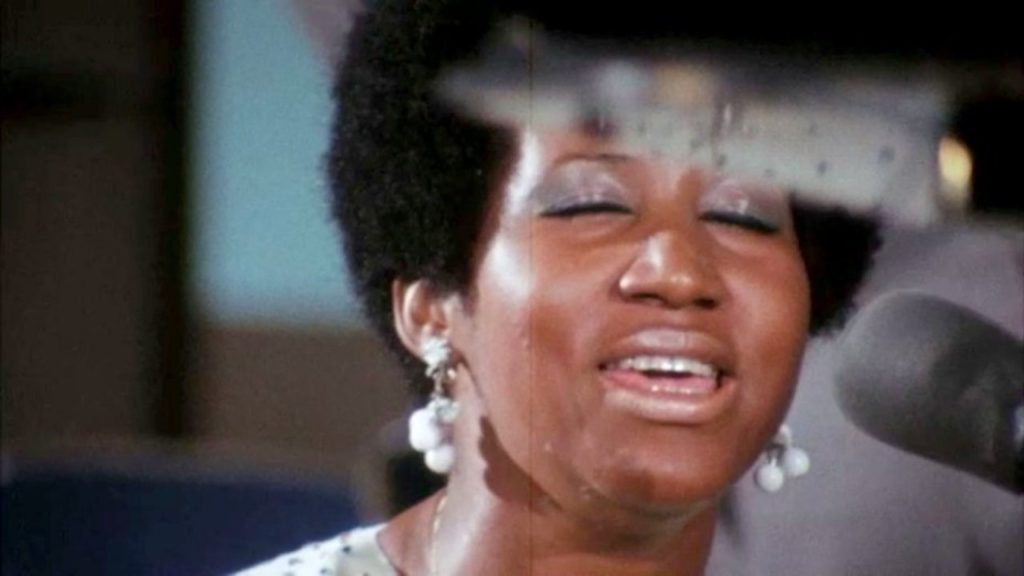
Amazing Grace is, at once, the recovery of a lost film, the document of an extraordinary live recording and an immersive, spiritual experience.

At the height of her popular success in 1972, Aretha Franklin recorded a live album of gospel music. She brought her producer Jerry Wexler and her band to New Temple Missionary Baptist Church in Los Angeles, a large but modest church with a cheesy mural of Jesus emerging from the waters after his baptism by John the Baptist. Accompanied by James Cleveland and the Los Angeles Community Gospel Choir, she performed for two nights, and the recordings became Amazing Grace, the top-selling gospel album of all time.

The whole thing was filmed by director Sydney Pollack and his crew with five cameras. Having made his bones in live television, Pollack would seem to be a great choice, but he made a critical mistake – he neglected to use clappers, the equipment that allowed for synchronizing the filmed images with the recorded sound. Frustratingly worthless, the film sat in canisters until decades later when technology allowed the music to be synced to the 16mm film. Aretha, however, was notoriously prickly in business affairs, and the rights could not be secured until after her death. Alan Eliot is responsible for finding and assembling Pollack’s footage and turning it into a feature film that could be released for the rest of us to see; appropriately, Eliot’s credit is “Realized and produced by Alan Eliot”.

What brought Aretha get to this moment in 1972? Aretha had grown up in the Detroit church led by her formidable father, C.L. Franklin, immersed in gospel music until she launched a pop music career at age 18. When she was 25, she began working with Wexler, who “got” her, and she became a soul and crossover superstar with Respect, I Never Loved a Man (The Way I Love You), Do Right Woman, Do Right Man, Baby I Love You, (You Make Me Feel Like) A Natural Woman, Chain of Fools, Ain’t No Way, Think, I Say a Little Prayer and Rock Steady.  At 30, Aretha commanded the field of R&B and looked to return to her gospel roots.

When Aretha enters the church, the atmosphere is electric, and Aretha is ready from her very first note of Wholy Holy. The church audience knows their gospel music, appreciates what they are witnessing and is, to a person, thrilled. The audience becomes more and more emotionally involved.

Aretha’s version of What a Friend We Have in Jesus is unrecognizable (in the very best way). On Precious Memories, Aretha’s humming is internally intense, and then her voice soars. Completely committed, Aretha produces a prodigious amount of sweat.

The high point of the film is Aretha’s closing song on the first night, Amazing Grace. It’s a very long version of the song, and the choir doesn’t sing until the very end. As Aretha’s instrument wrings every drop of emotion from that most familiar song, we watch the choir members’ reactions, which range from admiration to inspiration, many moved to tears. The moment is one of genius for Aretha and one of epiphany for the choir and for the film audience.

One of the great pleasures of Amazing Grace is watching the choir leader, Alexander Hamilton, lead his choir with an expressiveness that is both elegant and funky. If there is a co-star in Amazing Grace, it’s Alexander Hamilton.

There are pauses for technical issues, which bring out the authenticity of the moment and reinforce that this was a live event. It’s easy to spot Mick Jagger and Charlie Watts in the crowd on the second night.

Where does Amazing Grace fit in the concert film canon along with Monterey Pop, The Last Waltz, Stop Making Sense, Woodstock and The T.A.M.I. Show? It’s in the conversation.

WE BELIEVE IN DINOSAURS: denying science on a monumental scale

WE BELIEVE IN DINOSAURS

In the thought-provoking documentary We Believe in Dinosaurs, filmmakers Clayton Brown and Monica Long Ross introduce us to Ark Encounter, a Kentucky attraction with a full-size replica of Noah’s Ark.  Explicitly pro-creationism and anti-evolution, Ark Encounter is filled with interpretive exhibits that illustrate the Biblical story of Noah as historical fact, kind of a fundamentalist, evangelical Smithsonian.   Ark Encounter is 45 miles from its sister attraction, the Creation Museum.

There’s a lot to think about – and even marvel about – here.  First of all, the Ark Encounter is an impressive spectacle.  In Genesis, God directed Noah to build the ark to be 300 cubits long, 50 cubits wide, and 30 cubits high.  That means that this thing is a football field-and-a-half long and over four stories high.  We get to meet and observe the technicians and artists as they build the animatronic Noah family and the reproduced animals.

The bigger story here, though, is the massive investment in anti-science propaganda.  To justify their literal acceptance of Biblical content that is inconsistent with scientific fact, these folks behind the Ark Encounter believe that they need to discredit science itself.  And they’re not just defending the literal occurrence of every Bible story, but also the chronology of Bishop Ussher who, in the mid 1600s, calculated that the earth was created in 4004 B.C.  That means that the Ark Encounter aggressively explains that the Earth and the human race, despite fossil evidence, are each 6,000 years old – and that dinosaurs lived alongside humans (and voyaged on the Ark). It also means that they seek to discredit the Theory of Evolution and the scientific method itself (while enjoying its byproducts – vaccines, for example).

When you distill their beliefs, these neo-creationists are essentially turbanless Taliban.   Just for perspective, after suppressing Galileo’s 1615 discovery of the earth-centered solar system, the Catholic Church started backpedaling in 1718.  That means that 300 years ago, even the reactionary Church decided not to double down on denying scientific discoveries.

And what about the scientists? And people of faith who accept science?  We Believe in Dinosaurs brings us the perspectives of Ark Encounter opponents, most notably a geologist, and a former neo-creationist, both native Kentuckians.  There’s also a local Baptist minister, who thinks that people of faith can also accept science.

One of the stunning aspects of We Believe in Dinosaurs is the unexpected David-and-Goliath story.  We might expect the science-deniers to be outmatched.  But the folks with most primitive beliefs are the creative masters.  Anti creationists are the Goliath, supported by hordes of believers, massive private investment, capacity for technical wizardry and even state support.  On the other hand, scientists are not often skilled in or equipped with tools for political persuasion and mass communications.  The pro-science folks are, like John the Baptist, a lone voice in the wilderness, losing the optics battle.

Brown and Long Ross have a point of view (that science is good), but they don’t make the Ark Encounter people ridiculous.  We directly hear the Ark Encounter leadership’s public pronouncements, and we meet the earnest and often sympathetic folks who are using their considerable talents to build and fill the attraction.  Brown and Long Ross let us hear from both sides and let us connect our own dots.  Watch the closing credits to the very end to get the subjects’ unfiltered view of the filmmakers. And wait for the film’s super-creepy money shot – that of an animatronic figure reflecting on the fate of others.

I saw We Believe in Dinosaurs at its world premiere at the San Francisco International Film Festival (SFFILM).  While We Believe in Dinosaurs is just starting out on the festival circuit, this film is too compelling and audience-friendly to go very long without a distributor; I expect that you’ll be able to see it, too, this year.

Movies to See Right Now

Elizabeth McGovern in THE CHAPERONE

There are some good movies on Silicon Valley and Bay Area screens, and this is the final weekend of the San Francisco International Film Festival (SFFILM Festival):

OUT NOW

  • In The Chaperone, Downton Abbey’s writer Julian Fellowes and star Elizabeth McGovern reunite for a pleasing character study of self-discovery in 1921 America – it’s deeper than it first appears to be.
  • The Man Who Killed Don Quixote: after 25 years of misfortune and missteps, Terry Gilliam has succeeded in making a Don Quixote movie – and it’s good.
  • In Teen Spirit, Elle Fanning plays an underdog teenager who has the chance to win a talent contest and become an instant pop star – yes, it’s a genre movie, but it’s a pretty fair one.
  • The Brink is documentarian Alison Klayman’s up-close-and-personal portrait of Steve Bannon, the outsized personality who coached Donald Trump’s race-baiting right into the White House. As Bannon unintentionally reveals himself to be pathetically craving relevance, I found The Brink to be irresistible, and I watched with fascination.
  • You can still stream Tre Maison Dasan, the unwavering and emotionally powerful documentary about boys with incarcerated parents from PBS.
  • For the first hour-and-a-half of Sunset, I was convinced that I was watching the best movie of the year. Then the coherence unraveled, but I still recommend Sunset, even with its flaws, for its uncommon artistry.
  • The puzzling thriller Transit, with all its originality, just isn’t director Christian Petzold’s best.
  • Skip The Hummingbird Project – two good scenes just isn’t enough.

ON VIDEO

The San Francisco International Film Festival (SFFILM) in underway, and this week’s video pick comes from the 2016 festival:  the absorbing neo-noir romance Frank & Lola. You can stream it on Amazon Instant, iTunes, Vudu, YouTube and Google Play.

ON TV

On April 20, Turner Classic Movies presents the movie that invented the mockumentary: This Is Spinal Tap, co-written by Christopher Guest, Michael McKean, Harry Shearer and the director Rob Reiner. Guest, of course went on to direct the mockumentaries Waiting for Guffman, A Mighty Wind, For Your Consideration, Mascots and his masterpiece, Best in Show. This Is Spinal Tap follows a dim-witted rock band on the decline. Tony Hendra is brilliant as the band’s long-suffering road manager; he downplays their cancelled show in Boston with, “I wouldn’t worry about it though, it’s not a big college town.” Watch for Dana Carvey and Billy Crystal as mimes. It’s difficult to pin down the funniest moment – the Stonehenge-themed stage set, the band’s succession of ill-fated drummers or the guitar amp that goes to eleven.

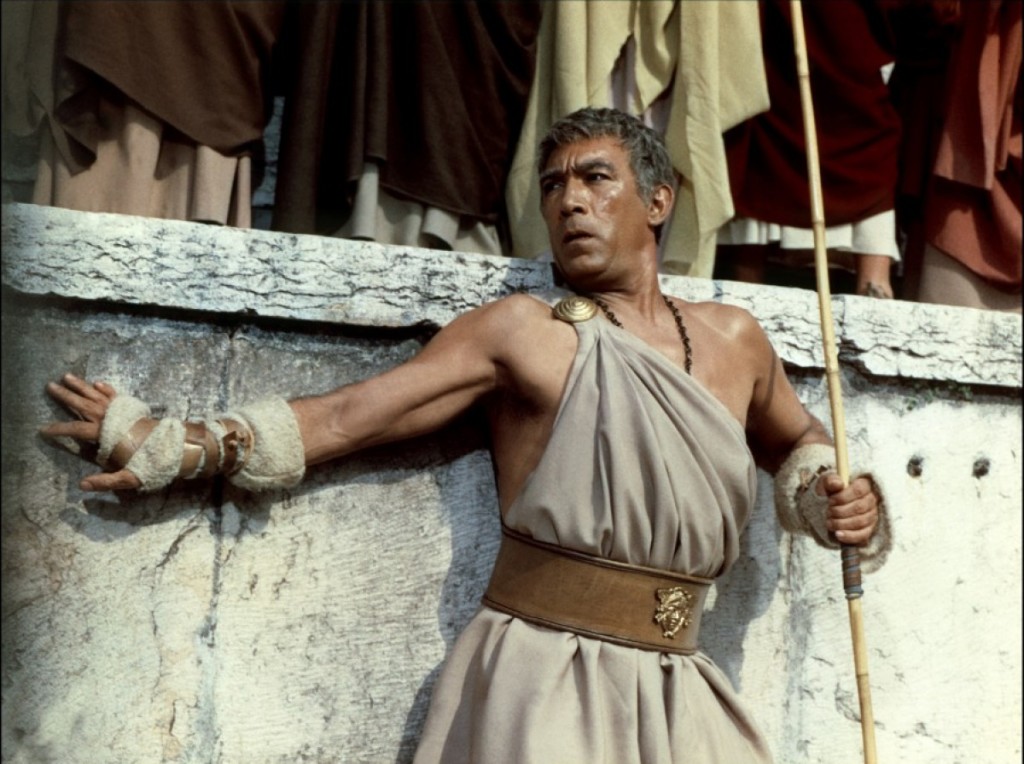
Easter always triggers television networks to pull out their Biblical epics. If you’re going to watch just one Sword-and-Sandal classic, I recommend going full tilt with Barrabas, broadcast by Turner Classic Movies on April 21. This 1961 cornball stars Anthony Quinn as the Zelig-like title character.

The story begins with the thief Barabbas avoiding crucifixion when Pontius Pilate swaps him out for Jesus (this part is actually in the Bible). Because the Crucifixion isn’t enough action for a two-hour 17-minute movie, Barabbas is soon sent off as a slave to the salt mines, where he is rescued by a miraculously timely earthquake. He then joins the Roman gladiators, complete with a javelin-firing squad, gets lost in the catacombs and emerges to the Burning of Rome. He has encounters with the Emperor Nero and the Apostle Peter before he converts to Christianity – just in time for the mass crucifixion. Watch for an uncredited Sharon Tate as a patrician in the arena.

Anthony Quinn in BARABBAS

Stream of the Week: FRANK & LOLA – Bad Girl or Troubled Girl?

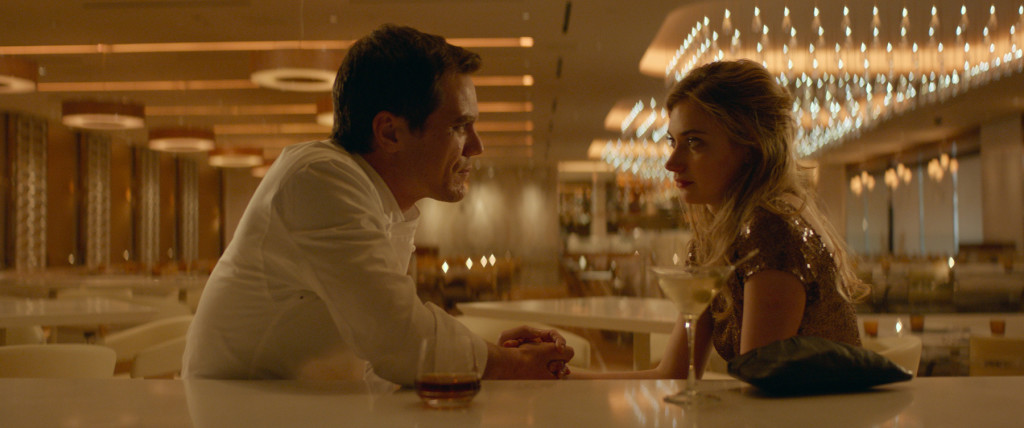
Imogen Poots with Michael Shannon in FRANK & LOLA. Photo courtesy of the San Francisco Film Society.
Michael Shannon and Imogen Poots in FRANK & LOLA.
Photo courtesy of SFFILM.

The San Francisco International Film Festival is underway, so this week’s video pick comes from the program of the 2016 festival. The absorbing neo-noir romance Frank & Lola opens with a couple lovemaking for the first time – and right away there’s a glimmer that he’s more invested than she is. Soon we’re spirited from Vegas to Paris and back again in a deadly web of jealousy.

Lola (Imogen Poots) is young and beautiful, a lively and sparkly kind of girl. Frank (the great Michael Shannon) is older but “cool” – a talented chef. He is loyal and steadfast but given to possessiveness, and he says things like, “who’s the mook?”.

In a superb debut feature, writer director Matthew Ross has invented a Lola that we (and Frank) spend the entire movie trying to figure out. Imogen Poots is brilliant in her most complex role so far. She’s an unreliable girlfriend – but the roots of her unreliability are a mystery – is she Bad or Troubled? A character describes her with “She can be very convincing”, and that’s NOT a complement. Poots keeps us on edge throughout the film, right up to her stunning final monologue.

Shannon, of course, is superb, and the entire cast is exceptional. There’s a memorable turn by Emmanuelle Devos, the off-beat French beauty with the cruel mouth. Rosanna Arquette is wonderful, as is Michael Nyqvist from the Swedish Girl With the Dragon Tattoo movies. I especially liked Justin Long as Keith Winkleman (is he a namedropping ass or something more?).

Frank & Lola has more than its share of food porn and, as befits a neo-noir, lots of depravity. But, at its heart, it’s a romance. Is Lola a Bad Girl or a Troubled Girl? If she’s bad, then love ain’t gonna prevail. But if she’s damaged, can love survive THAT either? We’re lucky enough to go along for the ride.

I saw Frank & Lola in 2016 at the San Francisco International Film Festival. I liked it more than most and put it on my Best Movies of 2016Frank & Lola is now available to stream on Amazon Instant, iTunes, Vudu, YouTube and Google Play.

https://vimeo.com/188033673