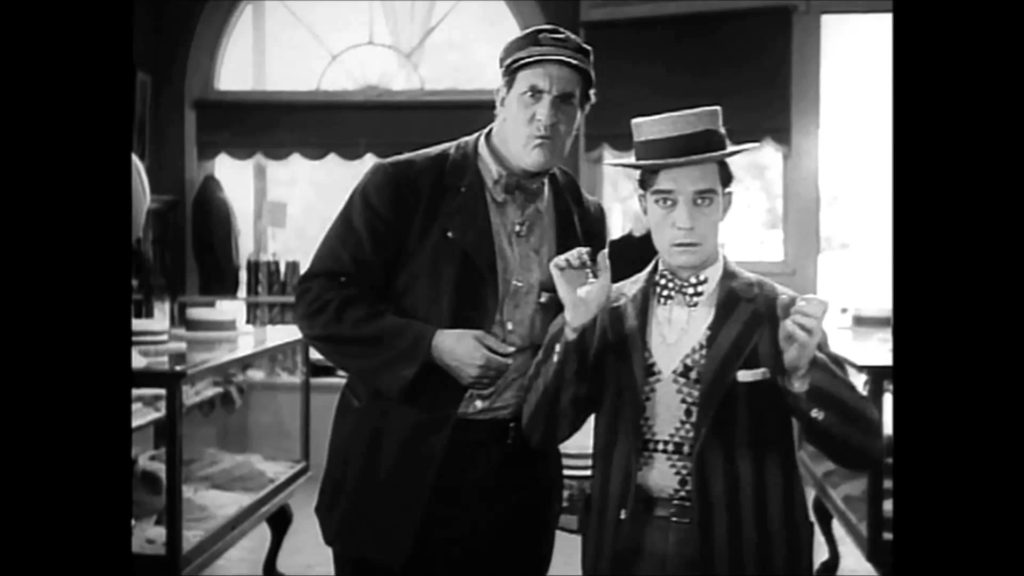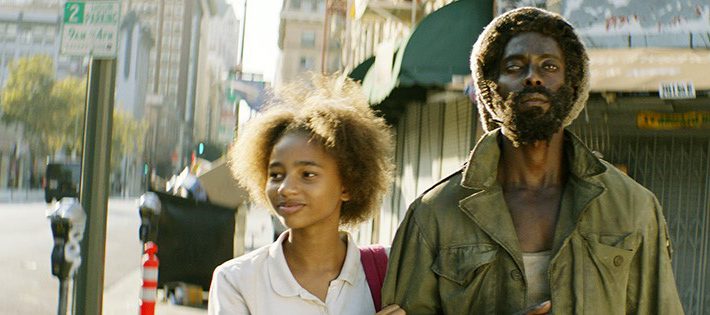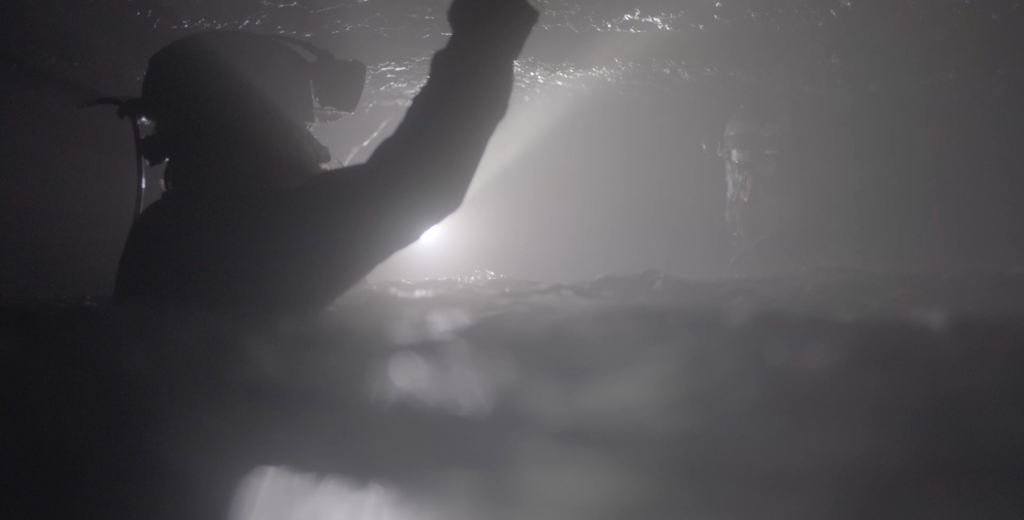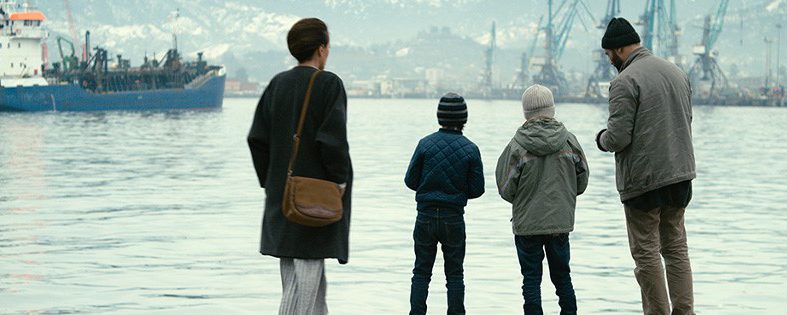
tonight on TV: SAMMY DAVIS, JR.: I’VE GOTTA BE ME: a needy talent through complicated times

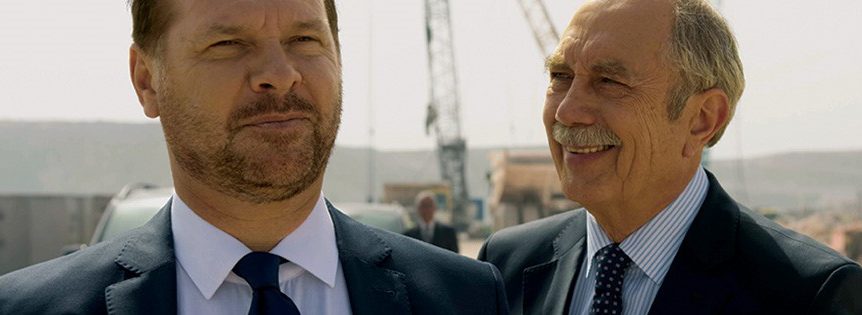
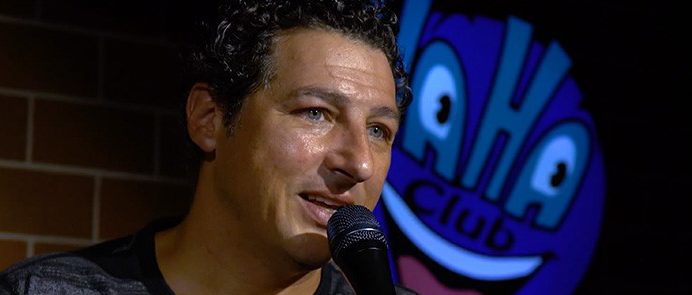
Still from SAMMY DAVIS JR.: I’VE GOTTA BE ME. Photo courtesy JFI.

Tonight, PBS airs Sammy Davis Jr.: I’ve Gotta Be Me on its American Masters series.  As a Baby Boomer who had dismissed Sammy Davis Jr. from the moment he publicly hugged Richard Nixon, I found this to be the most surprising doc (and my favorite) at last year’s San Francisco Jewish Film Festival. I learned that Sammy’s 61-year career as a professional entertainer began at age three (with his first movie credit at age 7), a working childhood that  left emotional needs  It turns out that Sammy was a very, very talented but needy artist,, an uncomplicated man navigating several very complicated times.

Sammy’s life of entertainment began at 3.  We get to see a clip of him in the 1933 Rufus Jones for President.  All that professional work took away his childhood and engraved upon him a need to please.  That and his generation produced the 50s showbiz style that seemed so insincere to us Baby Boomers.  And, of course that embrace of Nixon seemed to be the ultimate sell-out moment.

Sammy Davis Jr.: I’ve Gotta Be Me also poses whether he was demeaned by Rat Pack humor? Were Frank and Dino laughing at Sammy, or with him?

But this was  an immensely talented man, a masterful dancer with a remarkable crooner’s voice and a gift for mimicry.  He was the first American entertainer of color to do impersonations of white celebrities.   BTW there is some unbelievable dancing in Sammy Davis Jr.: I’ve Gotta Be Me.  We get to see Sammy’s 60th anniversary in showbiz celebrated among a host of celebrities – he still had his dancing chops.

Sammy Davis Jr.: I’ve Gotta Be Me is the story of a man whose success condemned him to a career that spanned generations – none of which fit him comfortably.  It’s a fine and insightful film.

[Random note: This film title may contain the most different punctuation marks of any movie: a comma, a period, a colon and an apostrophe.]

THEY SHALL NOT GROW OLD: technology transforms film and resurrects a generation

THEY SHALL NOT GROW OLD

In They Shall Not Grow Old, Lord of the Rings filmmaker Peter Jackson has, for the first time, layered humanity over our understanding of World War I. By slowing down the speed of the jerky WWI film footage and adding sound and color, Jackson has allowed us to relate to the real people in the Great War.   All of the narration is from the recorded oral histories of actual WW I soldiers.

Jackson started with 100 hours of archived film and 600 hours of oral histories.  Removing the jerkiness by changing the film speed makes the biggest difference, but adding the sound of what we’re seeing through the work of Foley artists and even forensic lipreaders (who knew?) is also magically impactful.  Jackson was meticulous in newly recording the sounds of actual WWI equipment and artillery.

Stuff that we thought we knew is made real for the first time.  For example, we hear story after story of underage boys being accepted by military recruiters.  The non-battle relations between the Brit and German grunts seems new. And there are new tidbits, like the “sit on the rail” sanitary technique.   The soldiers’ reactions to the Armistice is unexpected – “too exhausted to enjoy it” and “the flattest feeling”.  I counted 94 individual oral histories in the end credits.

They Shall Not Grow Old is about 90-minutes long and is accompanied by a fascinating 30-minute “making of” documentary.  Jackson points out that soldiers had seen movies, but movie cameras were a novelty, so many soldiers are filmed staring at the camera agape and trying to hold still (as for a still camera).  Jackson also takes us to see a sunken road in the film today – and explains that most of the soldiers in the archived footage were in the final 30 minutes of their lives.

As he explains in the “making of ” documentary, Jackson chose to focus on the experience of the ordinary soldier, so he does not depict the naval or air wars, the roles of women and colonial troops or the home front.  It’s all-infantry all of the time.  That distillation is a sound choice and  allows the audience to immerse ourselves into that particular experience.

This is a generational achievement that should not be missed.

VICE: like Macbeth, only funny

Christian Bale in VICE

Vice is the comic biopic of Dick Cheney by writer-director Adam McKay (The Big Short).  Cheney is played by a physically transformed and unrecognizable Christian Bale.

McKay’s take is that Cheney’s driving motivation and genius is the accumulation and exercise of power – to whatever end and by whatever means.  McKay also sees Cheney as a mediocre slacker molded and fueled by Lynne Cheney (Amy Adams), whose own ambitions were limited in the 1960s by her gender.  So, this is a tale of ruthless grasping along the lines of Macbeth or House of Cards, only mostly non-fiction.

McKay drops in the horrifying real impacts of Cheney’s exercise of power, but this is mostly a very funny movie.  Donald Rumsfeld, Cheney’s mentor in power-grabbing, and George W. Bush, Cheney’s stooge, are played for laughs in very broad performances by Steve Carell and Sam Rockwell.  McKay also tosses in a funny faux ending and has Dick and Lynne, in bed for the night, erupt in Shakespearean dialogue.  Jesse Plemons plays a fictional Everyman narrator.

Bale’s performance is extraordinary, and goes well beyond the impeccable impersonation, down to every Cheney mannerism – stoneface, sneer and grunt.  Adams is excellent as his Lady Macbeth.  So is the rest of the fine cast, especially Alsion Pil as lesbian daughter Mary, Tyler Perry as Colin Powell and Shea Whigham as Lynne Cheney’s probably murderous father.

Vice is pretty good history, biography from a sharp point of view and a damn entertaining movie.

STAN & OLLIE: comic geniuses facing the inevitable

Left to right: Steve Coogan as Stan Laurel, John C. Reilly as Oliver Hardy,
Photo by Nick Wall, Courtesy of Sony Pictures Classics

In Stan & Ollie, Steve Coogan as Stan Laurel and John C. Reilly as Oliver Hardy deliver remarkable portraits of a partnership facing the inevitability of showbiz decline. An iconic movie comedy team, Laurel and Hardy made 107 films, including 23 features. Their run started in 1926 and made the transition into the sound era more successfully than their peers in silent comedy. But by 1945, their popularity was over, and most of Stan & Ollie is set in 1951, when they are trying to rekindle their careers with a British live tour.

Coogan and Reilly’s impersonations (and Reilly’s makeup) are impressive. However, the most interesting aspect to Stan & Ollie is the depiction of the partnership, which like any partnership, is unequal and complementary; each individual has a different personality and a different role. Together, their act was so seamless that we forget that the two, one English and the other from Georgia, were veteran professionals already in their mid-thirties when they hooked up. Hardy was bossy on-screen, but Laurel was the business and creative leader of the team.

In a flashback (during the 1937 filming of Way Out West), we see the two at the height of their career arc. That sets us up to watch the two manage struggle and disappointment later on.

The technical highlight of the Coogan and Reilly performances is a dead-on re-creation of Stan and Ollie’s dance in front of an Old West saloon in Way Out West, a dance which is comic perfection; it’s worth finding Way Out West for the original version of the dance, which is much longer. My own favorite Laurel & Hardy film is the 1933 Pre-Code Sons of the Desert, where the duo mislead their wives to sneak off to the rowdy convention/drinkfest of the titular fraternal organization.

As usual I’ve embedded the trailer for you, but I recommend not watching it if you’re going to see Stan & Ollie – it gives too much away.

COLD WAR: tragic sacrifice for enduring love

COLD WAR

In the sweeping romantic tragedy Cold War, Wiktor (Tomasa Kot) is a talented musician/arranger in post-War Poland and an archivist of folk music. He becomes the musical director of a communist state-sponsored folk music revue, and falls for the ensemble’s comely and spirited lead Zula (Joanna Kulig), despite her being a bit of a brat. This being the Cold War, the question is whether the couple can flee Poland to freedom, artistic and otherwise. Zula is so unreliable that this is not cut and dried. Instead, the story spans a decade and four European countries as writer-director Pawel Pawlikowski explores the depths of sacrifice that humans will make for love.

The story in Cold War is inspired by that of Pawlikowski‘s own parents. Cold War is not as compelling as his recent masterpiece Ida. Virtually every shot in Ida could be hung in a gallery, which is not the case in Cold War although there are many beautifully filmed sequences. Both Ida and Cold War are shot in exquisite black-and-white and in a boxy aspect.

Joanna Kulig’s appearance changes dramatically depending on her makeup – to an unusual extent. The Wife suggested that this reflected a chameleon-like aspect to the character of Zula.

I enjoyed the character of the slime ball toadie Kaczmerak (Boris Szyc), the administrative manager of the folk music group. Kaczermak is so accepting of the corruption in Cold War communist society, that he greets every development with tranquil aplomb.

Fans of Ida will recognize Agata Kulesza, who played Ida’s aunt, as Wiktor’s musical partner Irena.

I saw Cold War at the Mill Valley Film Festival in October.  It releases in theaters on December 21 and, having been financed by Amazon Studios, will be streamable from Amazon.

GREEN BOOK: we get to spend time with Tony Lip!

Viggo Mortensen and Mahershala Ali in GREEN BOOK

Set in 1962, Green Book is the story of Tony Lip (a burly Viggo Mortensen), an Italian-American bouncer at the Copacabana, who is enlisted to accompany a highbrow African-American musician Don Shirley (Mahershala Ali) on a concert tour of the American South.  The title refers to the pamphlet that listed African-American-friendly accommodations in the segregated South.

These guys are an odd couple – one culturally refined and intellectually curious, the other decidedly not.    Tony uses his imposing physical presence, comfort with violence and uncommon chutzpah to navigate life.  Not surprisingly, given his Bronx working class background, he is racist by today’s standard.  Shirley, on the other hand, is a sometimes fastidious Renaissance Man.  Each underestimates the other UNTIL …

Green Book is a great movie because it transcends the odd couple movie formula by probing the depths of these characters.  Tony is irascible and  enjoys disregarding the niceties of rules; early in Green Book, he see him park his car next to a fire hydrant, dump out the contents of a garbage can and then use the can to hood the hydrant.  He knows his way around the world of Wise Guys.  His appetite for his favorite foods (even in mass quantities) is admirable.  He is comfortable in his own skin and resists self-improvement (until he needs some help with romantic letters to his wife).  In Green Book, Tony Lip is not impressed by ANYTHING until he hears Don Shirley play piano.

The hyper-achiever Shirley, in contrast, is decidedly not comfortable in his own skin.  He is isolated from whites by racism and isolated from most blacks culturally.  Shirley is moody – there are multiple roots to his dissatisfaction and unhappiness – and one particular root is revealed later in the film.  Ali’s Shirley flashes an insincere showbiz smile to accept an audience’s applause, but is otherwise obsessed with always maintaining his dignity on his terms.

To their surprise, both men are affected by the other.  As inhabited by Mortensen and Ali, these are two of the most compelling characters in any odd couple movie, road trip movie or civil rights movie.

An early title says that Green Book is “inspired by true story”, and the closing credits show us the real people who are portrayed. Peter Farrelly deserves massive praise for having snagged the rights to this story and recognizing what could be done with it.  Tony Lip is a marvelous character, and Viggo Mortensen’s performance in Green Book is one of the great pleasures of this year in the movies.

THE FAVOURITE: sex, intrigue and 3 great actresses in a misfire

Rachel Weisz and Olivia Colman in THE FAVOURITE

Great performances by three great actresses, sex and political intrigue were not enough; the critically praised The Favourite, didn’t work for me. The Favourite is director Yorgos Lanthimos’ version of the reign of Queen Anne, the British monarch from 1705 to 1714. Anne (Olivia Colman), beleaguered by her chronic health problems and perhaps the most heartbreaking childbearing history ever, was easily manipulated by her childhood friend Sarah, Lady Churchill (Rachel Weisz), the wife of England’s greatest general. At some point, Sarah’s unfortunate relation Abigail (Emma Stone) arrives to help at the palace, and begins her own ruthless climb to supplant Sarah.

Colman (especially), Weisz and Stone are quite brilliant here. Colman captures Anne’s neediness, weakness and occasional capriciousness.

Lanthimos is a very witty filmmaker, and he specializes in absurdity, of which there are many touches in The Favourite. Of course, hereditary monarchy, which bestows absolute power upon even the most ill-equipped by the accident of birth, is inherently absurd.

With the exception of Anne’s sex life after the death of her husband, which is imagined (and could be true for all I know – there’s just no evidence for it), the story faithfully follows the arc of history.

I surmise that the problem here is that Lanthimos is too in love with his own wit, and, lingering over his own funny bits, lets the interest drain out of them. I liked his Greek indie Dogtooth, but not his more recent work, particularly The Lobster. And not The Favourite.

STYX: a confident woman with no good choices

Susanne Wolff in STYX

In the gripping drama, Rieke (Susanne Wolff) is a woman who intends to pilot her sailboat on a solo voyage from Europe to Ascension Island off the coast of Africa. That’s one woman, all alone on her boat for 3,000 miles of open ocean.

Oozing matter of fact confidence, Rieke seems well-equipped for the adventure. She is fit, highly skilled, an experienced sailor and provisioned up with top quality gear and supplies. Rieke’s day job is as an emergency physician, and we see that no crisis situation seems to faze her.

In the first part of Styx, we think we’re watching a survival tale – woman against nature. But when a dramatic storm hits, we’re afraid for her but she’s not.

After the storm, she faces the first situation that she can’t handle on her own – one of life-and-death that has been spawned by a humanitarian crisis bigger than any individual. Frustratingly, she knows exactly what must be done, but she can’t do it herself; she must rely on civilized nations behaving according to expected norms. But are those expected norms available to everyone? And will it come?

Rieke’s persona is based on acting to solve every problem. But here, there are no good choices.

This is a German film about a German character, but almost all the dialogue is in English, the international language of navigation.

The second feature for director Wolfgang Fischer, Styx has won film festival awards, including at the Berlin International Film Festival. I saw Styx before its release at Silicon Valley’s Cinema Club. I’ll let you know when it becomes widely available.

THE OTHER SIDE OF THE WIND: Welles’ brilliance from beyond the grave

John Huston in THE OTHER SIDE OF THE WIND

Orson Welles’ The Other Side of the Wind, finally completed and released thirty years after Welles’ death, centers on the fictional cinema auteur Jake Hannaford (John Huston).  Not unlike Welles himself, Hannaford is widely recognized as brilliant and self-indulgent, as both a genius and impossible to work with, having a lifetime of relationship carnage strewn behind him.  For the zillionth time, Hannaford is broke and needs to find money to finish his latest movie.  He holds a screening party in hopes of snaring financial support from his now more successful protégé Brooks Otterlake (Peter Bogdanovich).

The backdrop is the sort of 1970s Hollywood hedonism where the party includes naked models, midgets (“The midgets broke into the wine cellar and got their tiny hands on the fireworks”) and female manikins for target practice. And, oh, they invited the mid-70s version of Dennis Hopper.

Peter Bogdanovich and John Huston in Orson Wells’ THE OTHER SIDE OF THE WIND

Hannaford is surrounded by his own posse of collaborators and hangers-on, and a cynical bunch they are.  That rampant and matter-of-fact cynicism is very witty, and things are funniest when things go badly – the money pitch is prematurely exposed and the screening of an art film has to be re-located to a drive-in!

John Huston’s performance is wonderful, especially when Hannaford is not suffering fools gladly.  Hannaford’s team of scoundrels is played by Mercedes McCambridge, Tonio Selwirt as the Baron, Gregory Sierra, Paul Stewart and Edmond O’Brien, with Lili Palmer as an ex and Susan Strasberg as a provocateur of the press.  In fact, virtually every actor delivers an excellent performance, except for Cameron Mitchell with his odd, apparently Southern, accent.

I was surprised by brilliance of Norman Foster’s performance as Hannaford’s gofer Billy, loyal, weary and crapped-upon; Foster is known for 57 screen credits as a director, but he also acted, supporting Walter Huston in one of the first talkies in 1929.

Norman Foster in THE OTHER SIDE OF THE WIND

And then there’s the surreal film-within-the-film – the unfinished Hannaford movie that is being screened at the party.  The star of that film is Welles’ real-life girlfriend, the Croatian actress Oja Kodar, who co-wrote The Other Side of the Wind.  Kodar’s character strides around empty vistas naked and dominates the pretty boy leading man (Robert Random).  This film is pure eye candy, with the most vivid colors and the most dramatic camera angles.  Kodar’s almost silent performance is exceptional – she has the gaze of a predator, always direct and in command. She looks great naked, and her sex scene in a moving car is exceptionally erotic.

Some critical comment suggests that the film-within-the-film is Welles’ satire on European art films. But, to my eyes, it’s consistent with a good art film of the 1970s, too.  Either way, you can’t stop watching it.

Oja Kodar in THE OTHER SIDE OF THE WIND

The Other Side of the Wind has been famous for decades as a Lost Film (and now as a recovered film).  But it’s best viewed without that baggage – by just absorbing what’s up on the screen.

Not everyone will like The Other Side of the Wind, especially those who like their movies to be linear.   Is The Other Side of the Wind a mess, as some have described it?   I don’t think so because the party scenes are SUPPOSED to be frenetic – Welles dips deeply into chaos and ambivalence and obscurity with intentionality.

The Other Side of the Wind is Welles’ unsparing glimpse into his own personality – a personality that self-sabotages his art and cruelly mistreats those closest and most necessary to him.  The question he seems to ask himself is whether the self-created tumult is a REQUISITE for his art or an IMPEDIMENT?

The Other Side of the Wind is available for streaming on Netflix. It is accompanied by two documentaries on Orson Welles and his final movie: They’ll Love Me When I’m Dead and A Final Cut for Orson: Forty Years in the Making, also both available to stream on Netflix.

In each of four decades Orson Welles produced unforgettable works of art. Citizen Kane is an undisputed masterpiece, and I consider A Touch of Evil and Chimes at Midnight to be great movies. The Other Side of the Wind is in that class. Thirty-three years after it’s creator’s death, it’s one of the best movies of 2018.

or decades

Two documentary companions to THE OTHER SIDE OF THE WIND

John Huston, Orson Welles and Peter Bogdanovich in THEY’LL LOVE ME WHEN I’M DEAD

The release of The Other Side of the Wind is accompanied by two documentaries on Orson Welles and his final movie: They’ll Love Me When I’m Dead and A Final Cut for Orson: Forty Years in the Making. And they’re both available to stream on Netflix.

They’ll Love Me When I’m Dead is a feature-length documentary. We hear from the two guys involved with The Other Side of the Wind during its forty-year journey. Producer Frank Marshall was one of the four-person crew during the four years of shooting, along with Orson Welles, co-writer and star Oja Kodar and cinematographer Gary Graver.  Director Peter Bogdanovich began acting in one role and shifted to another during the shoot – and then played a pivotal off-camera role in the film’s completion.

Here’s what They’ll Love Me When I’m Dead helps you understand about The Other Side of the Wind:

  • How essential director of photography Gary Graver was to the project, one of the few non-porn flicks in his filmography.
  • Why impressionist Rich Little oddly shows up in the party in The Other Side of the Wind and what was his original role in the film;
  • How Welles treated his confidant Bogdanovich in real life, which gives a major insight into The Other Side of the Wind.
  • What The Other Side of the Wind insiders think is the intended meaning of the movie.
  • Just how charismatic and witty Welles was in real life – even more quick and refreshing than on his talk show appearances.

You can stream They’ll Love Me When I’m Dead on Netflix.

A Final Cut for Orson: Forty Years in the Making is a 38-minute “Making Of’ doc about the restoration and completion of The Other Side of the Wind. It’s a procedural that offers insight into all aspects of the final cut, including the editing and the music. A highlight is actor Danny Huston describing the looping of his father’s voice.  The story of rescuing the actual cans of film is a helluva detective story in itself.

Netflix offers A Final Cut for Orson: Forty Years in the Making, but makes it unnecessarily tough to find. Instead of using the Netflix SEARCH feature, go right to The Other Side of the Wind and scroll down and click on MORE TRAILERS.

Frank Marshall, Oja Kodar and Orson Welles in A FINAL CUT FOR ORSON: FORTY YEARS IN THE MAKING