TO KILL A WOLF: mysteries revealed

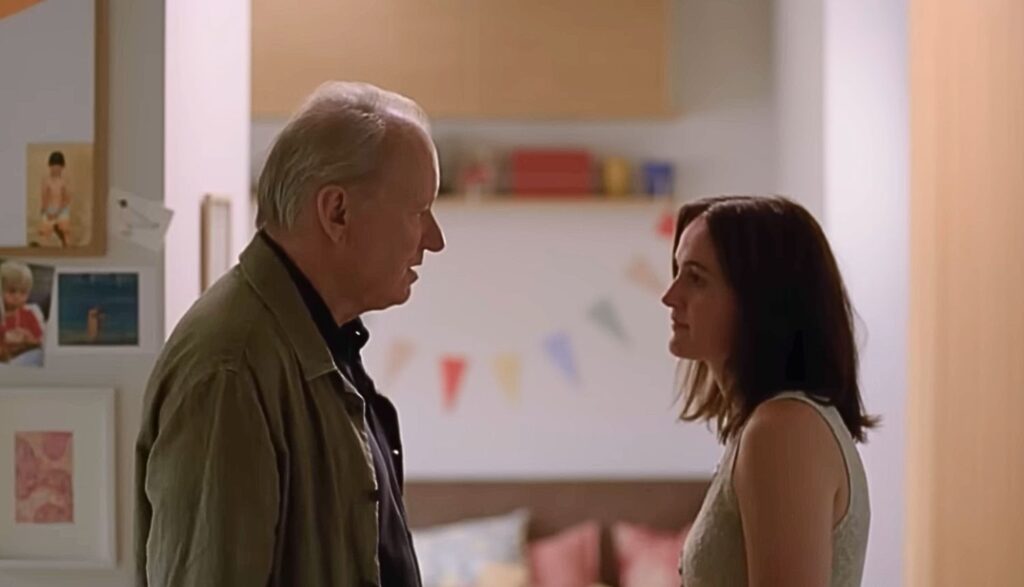
Photo caption: Maddison Brown in TO KILL A WOLF. Courtesy of To Kill a Wolf.

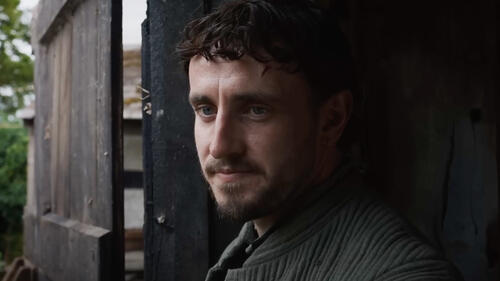
In the character-driven indie drama To Kill a Wolf, a reclusive woodsman in the Pacific Northwest (Ivan Martin) finds the seventeen-year-old runaway Dani (Maddison Brown) collapsed in the forest. He brings her back to his isolated cabin, nurses her back to health and tries to learn how he can return her to her home. She’s not forthcoming, so he has a mystery to solve. Meanwhile, the audience is on to other mysteries – why is the Woodsman (that’s the character’s appellation in the credits) living such an isolated life and why is his relationship with local community members so charged? As the Woodsman takes Dani on a road trip to her most recent residence, the answers, one by one, are revealed. It’s an absorbing story.

To Kill a Wolf is the first feature for writer-director Kelsey Taylor, who demonstrates herself to be a very promising filmmaker. A superb story-teller, she doesn’t explain behaviors before you need to understand. We’re continually wondering about the characters and about what will happen next, and are usually surprised about what the Woodsman is doing and why. Music is unusually important to the characters and to the film itself. The way Taylor ends the film is perfect – the final shot is not even a half-second too long.

Ivan Martin in TO KILL A WOLF. Courtesy of To Kill a Wolf.

The lead performances are excellent, as are those of the rest of the veteran professional cast. The roles of Dani’s Aunt Jolene and Uncle Carey are especially well-written, realistic and textured, and the performances of Kaitlin Doubleday and Michael Esper are vividly authentic. As the Rancher, David Knell captures the surprises in the character’s attitudes.

To Kill a Wolf opens this weekend at the Regal Sherman Oaks Galleria and rolls out in Regal theaters elsewhere. I’ll be sure to let you know as it becomes more accessible.

ARCHITECTON: unexpectedly hypnotic

Photo caption: ARCHITECTON. Courtesy of A24.

The singular documentary Architecton is cinema as high art and surprisingly entertaining. Almost narration-free and elevated by Evgueni Galperine’s original music, Architecton is director Viktor Kossakovsky’s immersion into rocks – rocks arranged and moved by Nature and by humans. The visual experience is hypnotic.

Kossakovsky takes us to the site of Baalbek, with its famed, massive stones, somehow hewn in antiquity and still among the world’s largest quarried stones and to its Roman quarry. We see scores of fallen segments of ancient fluted columns – and, then, the majesty of five columns still standing intact. Kossakovsky presents an enormous, tiered modern quarry, rock-crushing machinery in close-up and light cascading on wet, glisteneing rocks. In a very long shot, we see a seemingly endless freight train pulling a hundred gondola cars filled with rocks.

Architecton begins with ugly Soviet apartment blocks in Ukraine, destroyed by Russian bombardment. Later, we see similar damage in earthquake-ruined cities in Turkey. As the rubble is hauled away, it makes new mountains. It’s like the circle of life for inanimate rock.

There’s an elderly Italian architect named Marcele De Lucchi, who is directing construction of a circle of stones at his home; the only dialogue in Architecton is chatter between De Lucchi and his crew of stone masons.

ARCHITECTON. Courtesy of A24.

Kossakovsky had previously made the highly acclaimed Aquarela, taking audiences into the worlds of water. The movements of the camera and Kossakovsky’s choices of perspectives make looking at rocks for 98 minutes actually enthralling. The cinematographer is Ben Bernhard (Aquarela), who should win awards for his drone photography alone.

Early in Architecton there are close-ups of a rock slide, with four shots taking about four minutes, followed by an overhead shot. The scene could only have been safely captured by a drone zooming in, presumably, on a quarry explosion. It’s absolutely mesmerizing.

I take notes in darkened cinemas, and I wrote, “nowhere I’d rather be than in this theater watching this movie.” That was before the epilogue where Kossakovsky himself prompts De Lucchi to expound on the role of architecture, the malignant impacts of concrete and the planet’s future. The epilogue takes us out of the immersive experience and is a buzz kill, the one weak part of Architecton.

Architecton is now in theaters, and it’s one of those films which must be seen on the biggest screen that you can access.

SORRY, BABY: smart, witty and on the path to healing

Photo caption: Naomi Ackie and Eva Victor in SORRY, BABY. Courtesy of A24.

Set at a small New England liberal arts college, Sorry, Baby, revolves around Agnes (Eva Victor), a star grad student on her way to a professorship in American literature. Agnes experiences a trauma, and Sorry, Baby traces her path to healing over the next few years. Eva Victor also wrote and directed Sorry, Baby, and has infused leavening humor, including some LOL moments, throughout the film.

Sorry, Baby generated lots of buzz for Victor at Sundance and Cannes, and justifiably so. In her first feature film, she has demonstrated a gift for story-telling that is economical, always seems to hit the right tones and doesn’t underestimate the audience. For example, we don’t see the trauma, but we know what’s happening as Victor shows us a long shot of a house over an afternoon and evening. Then, Agnes’ matter-of-fact recounting of the event is infinitely more searing than if Victor had shown it as it happened.

Agnes isn’t the only smarty pants who has her quirks. But she must perpetually navigate life as the smartest-person-in-the-room, and is particularly observant of others’ foibles. Victor is sharply observant of human behavior, which gives her Agnes plenty of fodder for quick witticisms. The situation where Agnes would theoretically be the LEAST comfortable is jury duty, and Victor takes advantage of that in a very funny, and slyly revelatory, scene.

Eva Victor and John Carroll Lynch in SORRY, BABY. Courtesy of A24.

Sorry, Baby benefits from excellent performances from its remarkable cast. Agnes’ best friend is played by Naomi Ackie, the best thing about Mickey 17, and just as charismatic here. Louis Cancelmi (Killers of the Flower Moon, Billions) brings conflict and texture to what is, ultimately, a very selfish, cowardly and character-deficient villain. Lucas Hedges (Lady Bird, Manchester By the Sea) and John Carroll Lynch (Zodiac, Fargo) shine in their scenes with Victor’s Agnes. The broadest comedy comes from Kelly McCormack as Agnes’ most awful peer, a person so unhealthy that it’s hard to imagine her functioning outside of sheltered college life.

in the end, I admired Sorry, Baby more than I enjoyed it. I think that it was difficult for me to relate to the characters who inhabit the rarefied, insulated, self-congratulatory world of academia, which lends itself to so much self-absorption and over-thinking. That being said, Eva Victor is a promising filmmaker, and Sorry, Baby, manages to be smart, funny and heartfelt.

TO A LAND UNKNOWN: no good choices

Photo caption: Mohammed Ghassan (right) in TO A LAND UNKNOWN. Courtesy of Watermelon Pictures.

The searing thriller To a Land Unknown takes us to Athens, into the underground world of Palestinian migrants stuck until they acquire false passports that will get them into Germany. Yasser (Mohammed Ghassan) is a decent family man forced into low level criminality to survive and raise money for the forged passport; he is also burdened by responsibility for his cousin, whose drug addiction is a ticking bomb. Repeatedly exploited and defrauded, Yasser conceives of one very risky way out – to scam the very human traffickers preying on him.

Ghassan is excellent, as is Angeliki Papoulis as a fun-loving but clear-eyed Greek woman also living in the margins. 

To a Land Unknown is the gripping first feature for Dubai-born Mahdi Fleifel, who works between Britain, Denmark and Greece.

I screened To a Land Unknown for the Nashville Film Festival and recommended it in my Under the radar at Nashville. To a Land Unknown is now in arthouse theaters, including the Laemmle Royal, Town Center 5 and Glendale.

DICIANNOVE: coming of age – his way

Manfredi Marini (right) in Giovanni Tortorici’s DICIANNOVE. Courtesy of Oscilloscope Laboratories and Frameline.

The title of the coming-of-age film Diciannove is Italian for nIneteen, the age of Leonardo (Manfredi Marini), who is leaving his Palermo home for the first time to begin college in London. Ever restless, he is eager to embark on his life journey, but doesn’t know where to head, and, being nineteen, he won’t listen to anyone else. In mere days, Leonardo pivots from business courses in London to the study of Italian literature at a university in Siena. He discovers a passion for old Italian writers – just not the ones his professor assigns.

Nineteen is an age that most of us sample experiences, but Leonardo is an introvert, sometimes bratty, who refuses to socialize, and we wonder if he will ever forge relationships or act on his sexual urges. Diciannove is that highly original coming-of-age film in which what even Leonardo chooses NOT to do is interesting, and we can’t predict what could make his spirit soar at the end.

Diciannove is the debut feature for writer-director Giovanni Tortorici, a protege of Luca Guadagnino, who produced the film. Tortorici and cinematographer Massimiliano Kuveiller (who has also worked with Guadagnino) maintain visual interest by throwing everything at the screen – disco scenes with an operatic score, slow motion, animated dreams and every kind of fancy cut. Nighttime scenes in a cold and hard London give way to lovingly beautiful shots of tranquil Siena.

Diciannove is the singular and imaginative calling card of a new auteur; Tortorici may be a visual show-off, but he has an uncommon gift for creating a realistic, but compelling and unpredictable character.

I screened Diciannove in June for Frameline. It’s now releasing into US arthouse theaters, including Laemmle’s Monica Film Center and the Glendale.

OH, HI!: romantic disappointment becomes absurdly unhinged

Photo caption: Logan Lerman as Isaac and Molly Gordon as Iris in OH, HI!. Courtesy of Sony Pictures Classics.

The dark romantic comedy Oh, Hi! begins with Iris (Molly Gordon of Booksmart, Theater Camp, The Bear) and Isaac (Logan Lerman of The Perks of Being a Wallflower) heading off to a countryside vacation rental for their first romantic getaway. All is lustful fun until they discover that each has a different perception of what their relationship is and where it is headed. What could have been a merely awkward or hurtful moment precipitates an extreme reaction, and escalates into an absurdly funny situation.

Oh, Hi! is the sophomore feature for writer-director Sophie Brooks. Commitment-averse guys and overthinking gals are common fodder for rom com humor, but Brooks is sharply observant about relationships tending to evolve at different speeds for the participants. Although she has created a broadly funny, over-the-top situation, much of the comedy is character-driven. Brooks has mined the first act and later flashbacks with clever hints about each character’s level of commitment to the relationship and their emotional stability. It’s a smart screenplay.

The success of Oh, Hi! depends on Molly Gordon’s fine performance as a woman whose increasingly unhinged and transgressive behavior is vulnerability-based. Logan Lerman is very good as a guy thinking his way through through a surreal experience with complete helplessness.

Polly Draper (Thirtysomething) is very funny as Iris’ mother, dispensing supportive yet unhelpful advice. Josh Reynolds is hilarious as an uxorious goof who has become entangled in a No Win state of affairs.

I screened Oh, Hi!, which premiered at this year’s Sundance, for the San Francisco Jewish Film Festival. It releases in theaters this weekend.

SHOSHANA: two lovers amid a deepening conflict

Photo caption: Irina Starshenbaum and Douglas Booth in SHOSHANA. Courtesy of Greenwich Entertainment.

The thriller Shoshana is a historical drama set in pre-Israel Palestine that revolves around a love story between two people on different sides. The Jewish journalist Shoshana Borochov (Irina Starshenbaum) is a committed Zionist and a supporter of the paramilitary group Haganah. Thomas Wilkin (Douglas Booth) is the Assistant Superintendent of Criminal Investigation for the British authorities.

All of the significant characters in Shoshana were real people, and the story takes place from 1933 to 1944. We don’t see many movies set in this time and place. The Ottoman Empire had ruled Palestine for 400 years, until the Ottomans were expelled by the British in WW I. The British then took over governing Palestine, with its majority Arab population and small Jewish community, under an international agreement – the British Mandate – and with a policy that there should be a Jewish homeland in Palestine. The Arab residents have been living with a few Jews, but are horrified by the specter of mass Jewish immigration, and they revolt. Tit for tat murders begin between Arabs and Jews, which the British try to suppress. Soon there are rival Jewish paramilitary organizations, each with a different take on how to deal with the British, with the Arabs and with each other. When the British sharply limit Jewish immigration and frustrate the efforts to form a Jewish-majority state, the Jews react with anger against the British.

It becomes a lethal gam of three-dimensional chess. Shoshana does a pretty good job in helping the audience track who is who – and who wants to kill who. Shoshana was directed by the veteran Michael Winterbottom (Welcome to Sarajevo, Jude, The Claim, A Mighty Heart and The Trip movies).

Thomas Wilkin and Shoshana Borochov forge an 11-year relationship in an environment that becomes more stressful every year. But Thomas is unwilling to stop being a British policeman, and Shoshana is unwilling to put aside her Zionist beliefs. They love each other, but not enough for either to abandon deeply-held values or their personal identities.

What could doom their relationship is not just arguing politics at the dinner table, but something more ominous – there are plenty of players who want each of them dead. The situation is explosive – often literally. And neither can hide in a Tel Aviv still small enough that everybody knows each other.

The British are trying to cope with what we now know as asymmetrical warfare. A British officer sneeringly asks a Zionist terrorist why he is blowing up women and children, and gets the reply “Because we don’t have the resources that you do“. Ironically, the British in Shoshana are themselves employing mass reprisals, extrajudicial executions and torture that would clearly be considered war crimes today.

Of course, British colonial rule was known for arrogant, racist, and culturally tone-deaf twits, and they are represented by Shoshana‘s villain, police official Geoffrey Morton (the fine actor Harry Melling).

Arabs and their cause may not be depicted in depth in Shoshana, but are shown as victims of both Jewish terrorism and British atrocities.

The historical events constitute the origin stories for both the nation of Israel and the Israeli-Palestinian conflict. The British throw up their hands and fal to provide for Palestinian self-determination within the borders of Palestine. The Jewish organizations in Shoshana later evolved into the two major Israeli political parties of the past 75 years, and the Haganah morphed into the Israeli Defense Forces. Israel has since become a military power and now faces its own asymmetrical warfare.

Given the impact of this history upon the current day, we might have expected more films about this period. After all, there are a zillion films about the Holocaust and a lot set in post-1948 Israel. In 1960, Otto Preminger made the blockbuster film Exodus from the 1958 Leon Uris novel which was the biggest best seller in US since Gone With the Wind. Exodus was set in the period between 1946 and 1948. (My parents saw Exodus at a drive-in with me as a small boy in the back seat.) No less than the pioneering Zionist leader and Israeli prime minister David Ben-Gurion said of the novel, “as a piece of propaganda, it’s the greatest thing ever written about Israel“.

Shoshana is far more clear-eyed and nuanced than Exodus. Shoshana reflects a historical setting that was complicated, and tells the story of lovers’ inner conflicts amid a dynamic and perilous external conflict. Shoshana releases into theaters this weekend.

MADE IN ETHIOPIA: it’s just like China used to be

Photo caption: MADE IN ETHIOPIA. Courtesy of POV.

In the scintillating documentry Made in Ethiopia, businesswoman Motto is the face of a huge, new Chinese industrial park in Ethiopia. How huge? A factory with 3,000 workers is just one of its 130 businesses – and Motto is working on an 18,000-acre expansion.

Motto is smart, zealous, charismatic and utterly non-ironic. Along with the other Chinese, she has drunk the Koo-Aid and sees the park as entirely benevolent – bringing large scale employment and investment to a poor and neglected society. A visiting Chinese official exclaims, “it’s just like China used to be!“.

All of the workers are Ethiopian, who earn $50 per month in what is essentially a clean and gleaming sweatshop. All of the supervisors are Chinese who have left their families behind in China. The local farmers feel ripped off by their government, and an armed rebellion may be brewing. Apart from a global pandemic, what could possibly go wrong? In their first feature, directors Xinyan Yu and Max Duncan have created a brilliant exploration of clashing cultures and economic imperialism.

I screened Made in Ethiopia for the SLO Film Fest, where it made my Best of the SLO Film Fest. Now it’s on PBS’ POV. You can stream Made in Ethiopia on the PBS app or directly at the POV website.

Two Nuggets at this year’s SFJFF

Photo caption: Logan Lerman as Isaac and Molly Gordon as Iris in OH, HI!. Courtesy of Sony Pictures Classics.

The San Francisco Jewish Film Festival (SFJFF), always a major event for Bay Area cinephiles, opens tomorrow. The program offers 70 films from Belgium, Canada, France, Germany, Israel, Italy, Switzerland, the US and the UK and Uzbekistan. Here’s my festival preview.

This year, I’m recommending two nuggets:

Oh, Hi!: This dark romantic comedy begins with a couple heading off to a countryside vacation rental for their first romantic getaway. All is lustful fun until they discover that each has a different perception of what their relationship is and where it is headed. What could have been a merely awkward or hurtful moment precipitates an extreme reaction, and escalates into an absurdly funny situation. Oh, Hi! is the sophomore feature for writer-director Sophie Brooks, who has created a broadly funny, over-the-top situation that is sharply observant about relationships tending to evolve at different speeds for the participants. It’s a very smart screenplay. Oh, Hi!, which premiered at Sundance, is releasing into theaters soon; see it early at the SFJFF. (Full review to be published on July 23.)

THE STAMP THIEF. Courtesy of the San Francisco Jewish Film Festival.

The Stamp Thief: We don’t expect a Holocaust-related documentary to get wacky, but The Stamp Thief combines a historical whodunit and a real-life comic heist. It begins with tracking down a fourth-hand oral account of Nazi-stolen valuable stamps hidden in Poland: Is it true, who was the Nazi, where did he stash the loot and is it still there? And here’s where The Stamp Thief gets zany. Because the Polish authorities have not been supportive of the restitution of Nazi loot, our heroes decide to find and recover the stamps with a ruse. The team masquerades as a film crew shooting a romantic drama; they plan to dig around Polish basements until they find the stamps, under the noses of the Poles. What could possibly go wrong? How does the team navigate the moral ambiguity of lying for a good cause? Do they find the stamps? Do they get caught? What follows is Sherlock Holmes meets The Gang That Couldn’t Shoot Straight, an unusually colorful documentary. Full review.

The SFJFF runs through August 3 in select San Francisco and Oakland venues. Check out the program and buy tickets at SFJFF.

Here’s the trailer for Oh, My!.

THE STAMP THIEF: amateur detectives running amuck

Photo caption: THE STAMP THIEF. Courtesy of the San Francisco Jewish Film Festival.

We don’t expect a Holocaust-related documentary to get wacky, but The Stamp Thief combines a historical whodunit and a real-life comic heist.

The Stamp Thief’s shaky premise is based on what is at least a fourth-hand oral account: As Nazis looted the possessions of Jews heading to the death camps, one German officer pocketed highly valuable, easy-to-hide stamp collections. As he fled after the war with his family, he buried the stamps in the basement of the apartment building, intending to return and retrieve his booty. But, because the location was now behind the Iron Curtain in Poland, he was never able to go back.

Naturally, this story raises some fundamental questions, starting with whether it is true. If so, who was the Nazi and where did he stash the stamps? Has someone else found the stamps, or is the treasure still buried?

Gary Gilbert, after a distinguished career as a movie producer (Garden State, The Kids Are Alright, Margaret, La La Land) aspires to track down the truth, hoping to recover the stamps and to restore them, if possible, to the heirs of the original owners. The story comes from a series of potentially unreliable narrators, so Gilbert and colleagues must first undertake an impressive detective investigation, armed at first with not much more than a possibly tall tale and an old photo of two girls in front of a house.

And here’s where The Stamp Thief gets zany. Gilbert is both a man with a sacred mission and a bit of an adventurer. Because the Polish authorities have not been supportive of the restitution of Nazi loot, Gilbert decides to find and recover the stamps in secret. His plan is to take a faux film crew to Poland on the false pretense of shooting a romantic drama, and digging around until he finds the stamps, under the noses of the Poles. His team includes documentarian Dan Sturman, the The Stamp Thief’s director, who films their escapades. What could possibly go wrong? Gilbert’s cause is righteous, but he may not even be able to operate a metal detector competently.

How does the team navigate the moral ambiguity of lying for a good cause? Do they find the stamps? Do they get caught? What follows is Sherlock Holmes meets The Gang That Couldn’t Shoot Straight.

And was the distrust of Polish attitudes justified? There is one local fixer whose behavior is heroic, but the Polish government and the apartment dwellers do not cover themselves with glory here. Gilbert also happens upon a breathtakingly offensive tchotchke common in Polish households.

With its historical whodunit, an operation of deception, generational antisemitism and buried treasure, The Stamp Thief is an unusually colorful documentary.