Bix Biederbecke in BIX BIEDERBECKE: AIN’T NONE OF THEM PLAY LIKE HIM YET
The thorough documentary Bix Biederbecke: Ain’t None of Them Play Like Him Yet rediscovers a lost jazz legend. Bix Biederbecke was a cornet prodigy and an age peer of Louis Armstrong. His love for and obsession with music was undermined by alcoholism, and he drank himself to death at age 28 in 1931.
Biederbecke was an innovator and soulful performer. One of his bandmates compares the thrill of listening to Bix to hearing a woman say, Yes.
This superbly-sourced documentary was released in 1981 release, and includes interviews filmed in 1978-1980 with fellow musicians and band-mates, including his friend, Hoagy Carmichael. Bix’s sister also appears. There are also recordings of Bix’s performances.
Bix Biederbecke: Ain’t None of Them Play Like Him Yet has made my list of Longest Movie Titles.
This is a bit of a Lost Film, having been very, very hard to find on streaming platforms over the last few years. Bix Biederbecke: Ain’t None of Them Play Like Him Yet can now be streamed on Amazon.
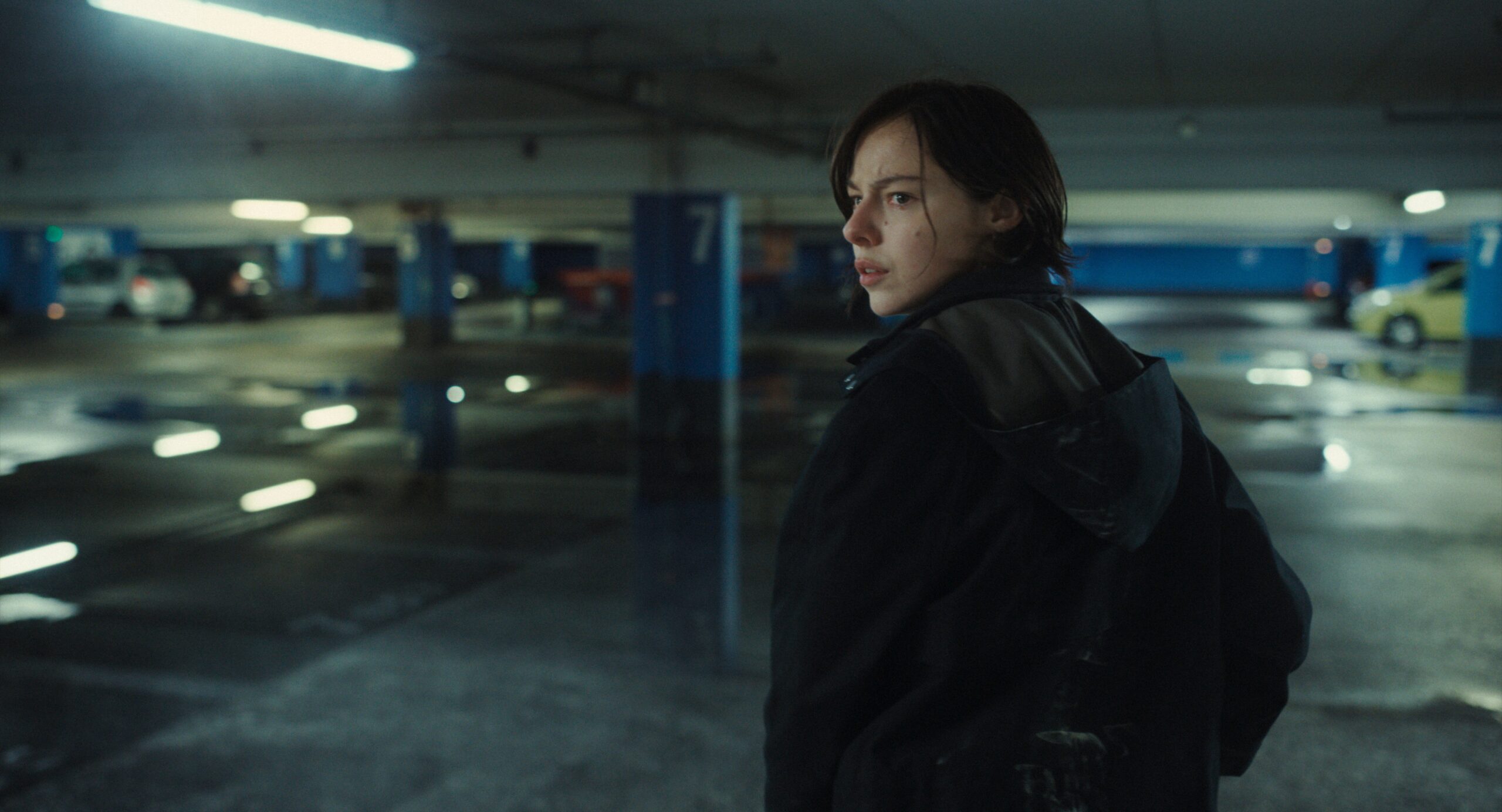
Photo caption: Marion Barbeau in DRONE. Courtesy of Frameline.
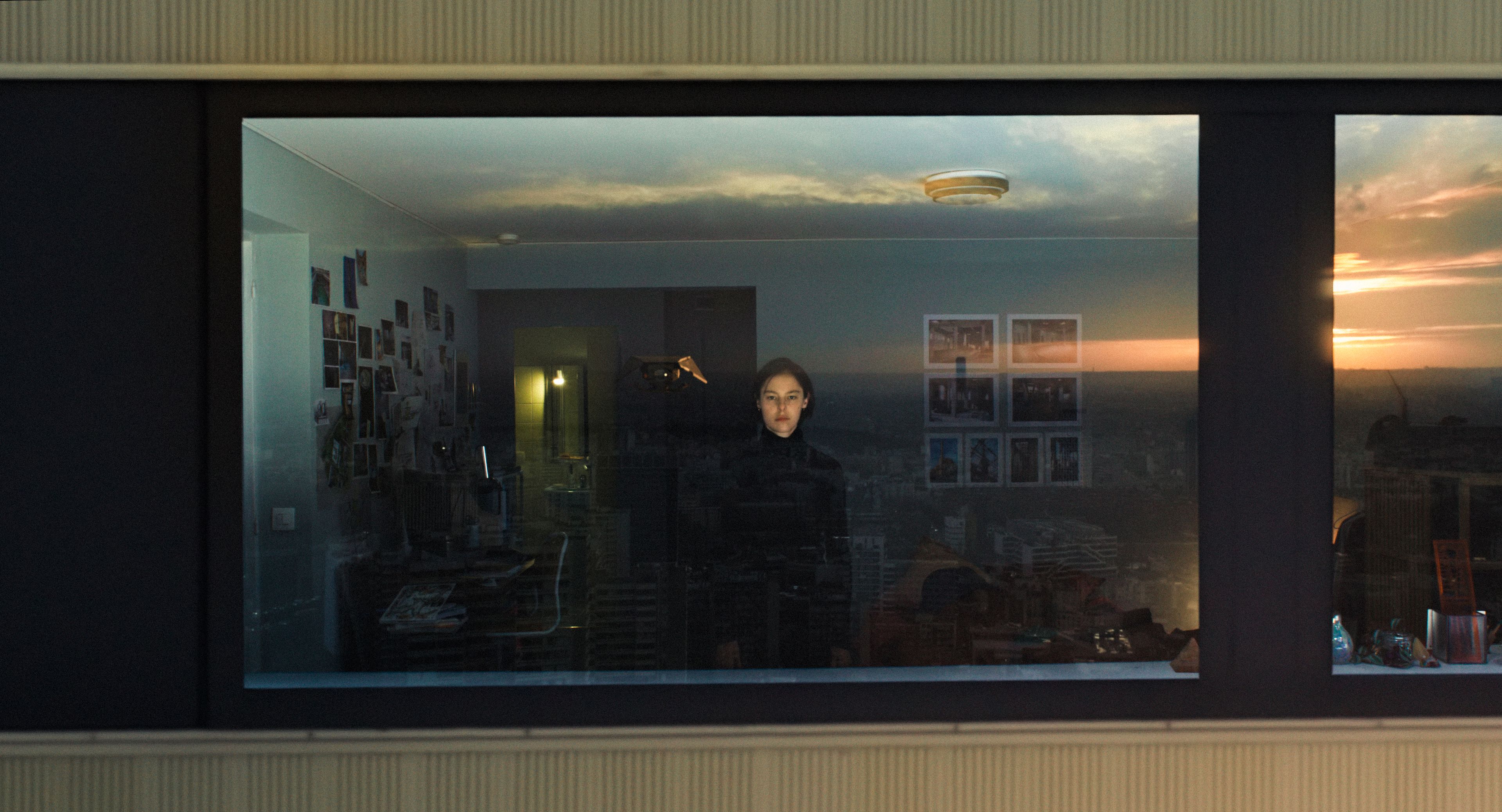
Émilie (Marion Barbeau) is stalked through Paris by a mysterious drone, in Drone, a thriller that explores issues of privacy and the male gaze. A magnificent 4-minute opening sequence, introduces us to the vulnerability caused by the voyeur drone. Émilie is funding her architecture studies by working as a cam girl, a situation where she is physically detached and in control of her male customers. But there is no detachment or control whenever the paranoia-inducing drone suddenly appears.
There are exhilarating set pieces in a parking garage, a motorcycle chase and an abandoned factory, as writer-director Simon Bouisson and cinematographer Ludovic Zulli keep their drone camera in pursuit of the story’s stalker drone. In his first theatrical feature, Bouisson keeps the tension pounding, all the way to the ingenious ending.
Marion Barbeau in DRONE. Courtesy of Frameline.
Émilie is a recent architecture graduate from Lilles who has earned a high-powered fellowship in Paris. As her fellowship project, she chooses an adaptive reuse of an abandoned factory. Of course, even without the drone, we would fear for Émilie’s safety as she wanders around the dark, creepy, abandoned factory and takes long solo jogs through the city at night.
Who is flying the drone? Is it a camgirl customer who has hacked the firewall? Is it her toxic male classmate? Or her swaggering, entitled boss? Or, perhaps most terrifying, nobody at all?
Émilie is relationship-shy, but reluctantly intrigued by a DJ. Will the budding romance put both women in drone-jeopardy?
Marion Barbeau, a former ballet dancer, is superb as Émilie. Émilie, so vulnerable throughout the movie, is remarkably strong and determined, which lifts Drone above the ordinary woman-in-peril genre. Barbeau is able to project Émilie’s fundamental badassness.
I’ve listed Drone in the special Festival Films category of my Best Movies of 2025 – So Far. I screened Drone for Frameline (where it was my favorite film), and I’ll let you know when it has a theatrical or VOD release in the US.
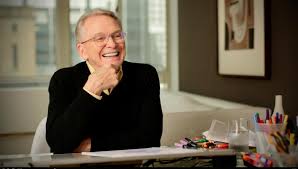
If ever a fashion designer dominated the Hollywood red carpet, it is Bob Mackie The biodoc Bob Mackie: Naked Illusion tracks his remarkable life and career, and his impact on the evolution of the red carpet.
Director Michael Miele had the cooperation of Mackie and Mackie’s design director Joe McFate (one of the producers). That leveraged access to Mackie clients Cher, Carol Burnett, Bernadette Peters, Pink, Mitzi Gaynor and Miley Cyrus, and to fashion icons RuPaul and Tom Ford, who all appear in this biodoc. So do members of Mackie’s very complicated family. Cher alone is worth the ticket price.
I saw Bob Mackie: Naked Illusion at a SLO Film Fest screening with Bob Mackie and Joe McFate in person; Bob Mackie: Naked Illusion won the SLO Film Fest’s Best Documentary Feature.
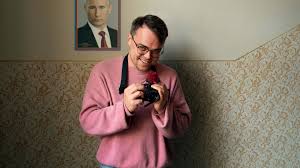
Pavel Talankan in MR. NOBODY AGAINST PUTIN. Courtesy of the SLO Film Fest.
Nothing has changed since Aeschylus observed that the first casualty of war is truth, as revealed in Mr. Nobody Against Putin, the blistering exposé of Putin’s outrageous domestic propaganda about his Ukraine War.
Pavel Talankan is an unassuming, goodhearted guy with a small-time job as the events coordinator at the school in a remote Russian industrial town. That also makes him the school videographer, so no no one notices that, as he films school assemblies, award ceremonies and performances, he is also capturing the blatant Big Lie propaganda. It’s a surreptitious documentary filmed in plain sight.
Pavel is an unlikely muckraker. He is a free-thinking nebbish who loves Russia and loves his hometown of Karabash in the Ural region, putrefied by a noxious copper plant and called “the most toxic place on earth”.
More than anything, Pavel cares about his students, and he is increasingly disgusted as Putin ramps up the propaganda. First, a cadaverous party hack, whose heroes are the most vile Commie hitmen in history, spreads empirically false information about Ukraine being the aggressor in the war. Then, horrifyingly, Wagner mercenaries are brought in as classroom guest speakers. Silently, Pavel continues to film, letting the propagandists defile themselves for history.
Pavel is a hero, albeit a non-violent one, who risked his life to gather this material. David Borenstein exquisitely formed Pavel’s footage into a searing exposé of Putin’s soul-crushing impact on Russia. The secret audio from the funeral of a former student killed in Ukraine is heart-rending. The film begins with video of Pavel’s midnight escape from Russia,
I saw Mr. Nobody Against Putin at the SLO Film Fest; I’ll let you know when it gets a theatrical or VOD release.
Photo caption: Eve Connolly in SEW TORN. Courtesy of Vertigo Releasing.
Sew Torn is the first thriller (or movie) I’ve seen where the main character’s day job isn’t detective or writer or architect, but mobile seamstress. Barbara (Eve Connolly) is a seamstress and her super power is rigging Rube Goldberg solutions with needle and thread to face any emergency situation. It doesn’t take long before she’s entangled in a fight to the death between two gangs of crooks, and we’re asking just what are we watching here?
We’re watching a compelling thriller, a genre film with a gimmick, albeit a sui generis gimmick, and it’s the calling card of its talented auteur. Writer-director Freddy MacDonald made the first version of Sew Torn as a 6-minute short while in high school, which led him to being accepted as the youngest ever Directing Fellow at the AFI Conservatory. After winning a student academy award, he and his father Fred MacDonald worked the screenplay of Sew Torn into a feature. Freddy MacDonald has yet to turn 25.
Both Barbara and Joshua (Caleb Worthy), a young hood embroiled in the gangland shootout, need to escape from the domination of their parents. Barbara’s mother is dead, but Barbara, struggling with depression, is trapped living her mother’s life. Joshua’s father (a bloodcurdling John Lynch) is very much alive and threatening the survival of everyone he encounters.
Barbara is glum and passive, and sure doesn’t look like the hero of a thriller, until she whips out a spool and a thimble to MacGyver herself out of a lethal jam.
There’s a surprise in the construction of the story, which I won’t spoil, except to say that it involves the reimagining of outcomes. You’ve certainly never seen this movie before.
I saw Sew Torn at the SLO Film Fest, where it won the Best Narrative Feature. After a successful festival run that began with a debut at SXSW, Sew Torn is available to stream on Amazon, AppleTV and YouTube.
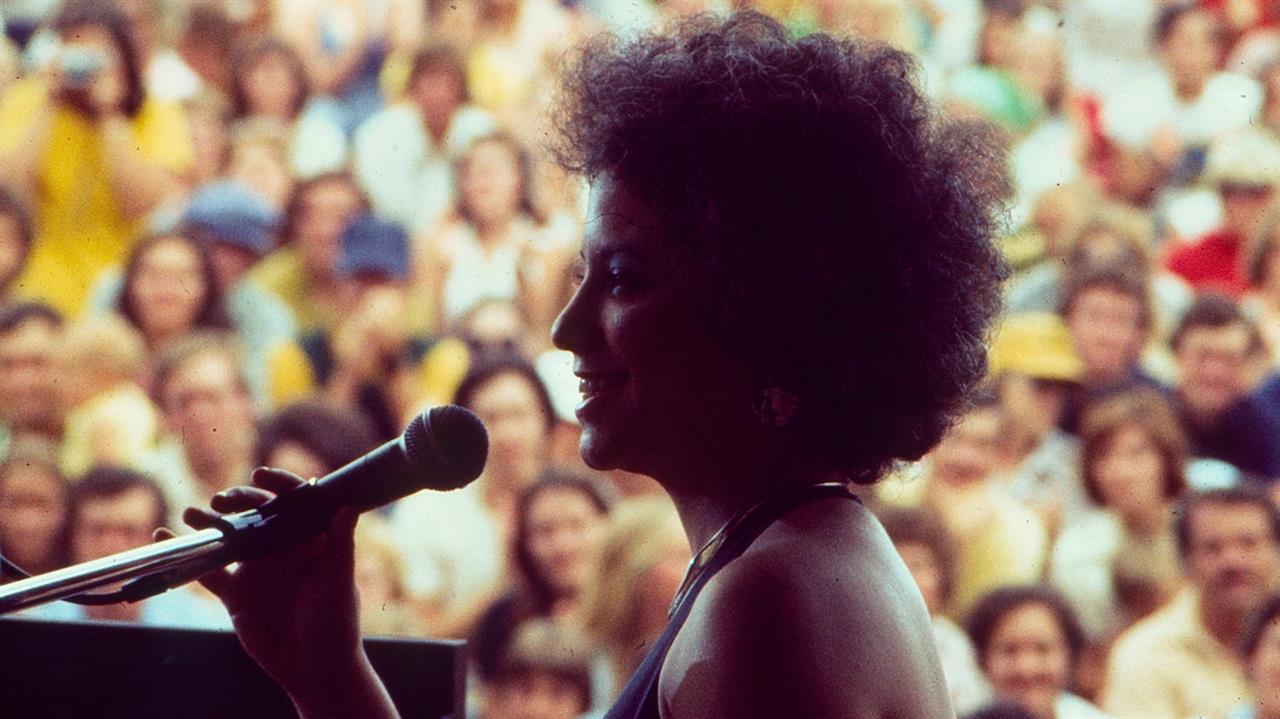
Photo caption: Janis Ian in JANIS IAN: BREAKING SILENCE. Courtesy of Greenwich Entertainment.
In Janis Ian, Breaking Silence, the biodoc of the earnest pop-folk singer-songwriter, a teen prodigy steps onto the roller coaster of the music industry at a tender age and experiences the highest highs and the lowest lows. And, it turns out that there’s more to Janis Ian than Society’s Child and At Seventeen.
The word prodigy is overused, but accurately describes Ian, who was doing professional-level song-writing at age 14. Her dad answers a booking request on the home phone with with, “You know she’s only 15, right?“
We’re not surprised that Ian experiences the shock of instant national stardom, the vicissitudes of record companies, the proverbial crooked business managers, (but not as MANY drugs as in most music biodocs). But it’s insightful to hear from Ian herself about how all this seemed and felt as it happened. Ian recounts her relationships while touring, with both men and women, and the impact of being outed involuntarily.
When Ian is unexpectedly confronted by someone who broke her heart years before, she blurts out the perfect last laugh.
Janis Ian: Breaking Silence was made with Janis Ian’s cooperation, and takes a very sympathetic point of view; that’s okay because Ian herself is clear-eyed, self-deprecating and maintains a solid, often wry, perspective on her experience. Janis Ian herself testifies, along with others close to her (including old pals Arlo Guthrie and Joan Baez).
This is the third feature for director Varda Bar-Kar, who is aided by excellent editing from Ryan Larkin in his first feature.
I originally reviewed Janis Ian: Breaking Silence for its brief thetricl release earlier this year. It’s now playing on PBS American Masters; you can find American Masters on your PBS channel or watch the film on the American Masters website.
Coming up this Saturday and Sunday on Turner Classic Movies’ Noir Alley with Eddie Muller, the Japanese neo-noir Pale Flower is a slow burn that erupts into thrilling set pieces. This is pioneering neo-noir. Pale Flower is writer-director Masahiro Shinoda’s masterpiece; its look and feel is as different from classic noir as are Elevator to the Gallows and Blast of Silence.
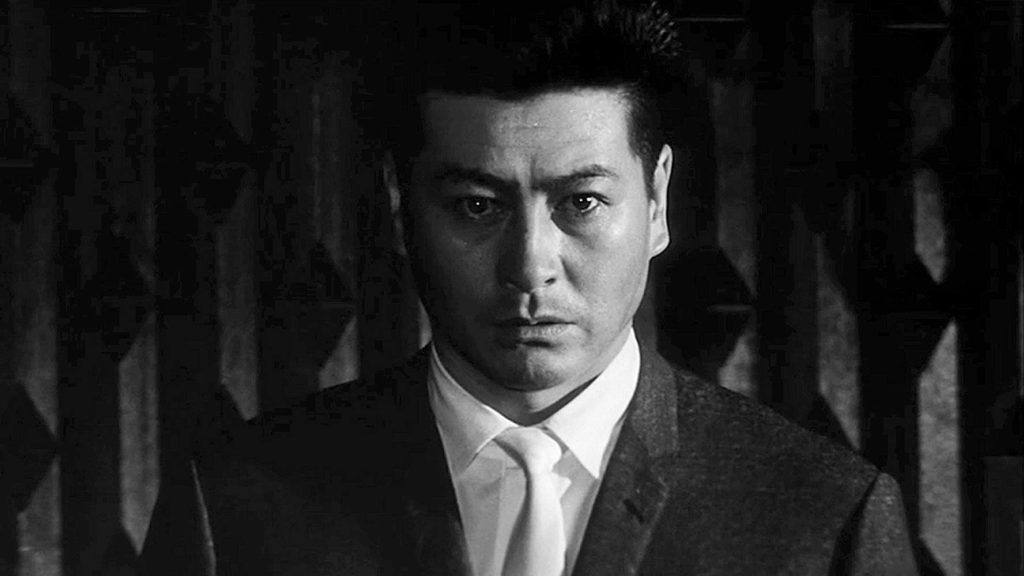
Maraki (Ryô Ikebe) is a fortyish Yazuka hit man, just released from loyally serving a prison term. He went away for offing a gangland rival, but now the two gangs have become allies. Out gambling with fellow Yakuza, he encounters the much younger woman Saeko (Mariko Kaga). The stoic and completely self-contained Maraki becomes fascinated by – and then obsessed with – Saeko, who lives her life seeking thrill after thrill.
PALE FLOWER
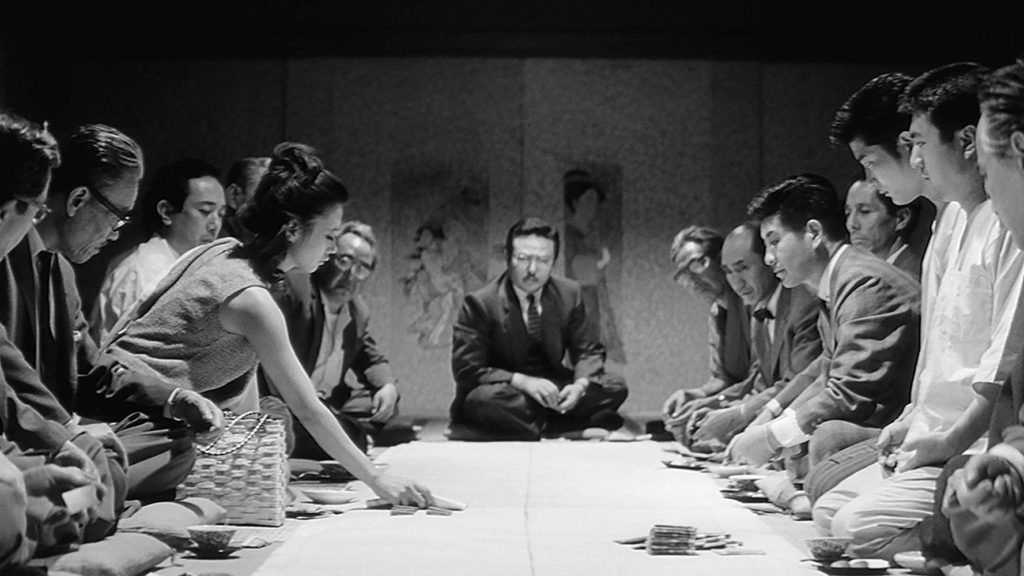
Maraki and Saeko meet gambling on the Japanese card game of hanafuda (flower cards). She is the only woman at a table surrounded by male gangsters. Shinoda makes the tension of card games resemble that of walking into a hostile bar or waiting an Old West quick draw gunfight. The card games are silent but for the ritual betting and the players clicking their cards. The film’s title refers to both hanafuda and Saeko.
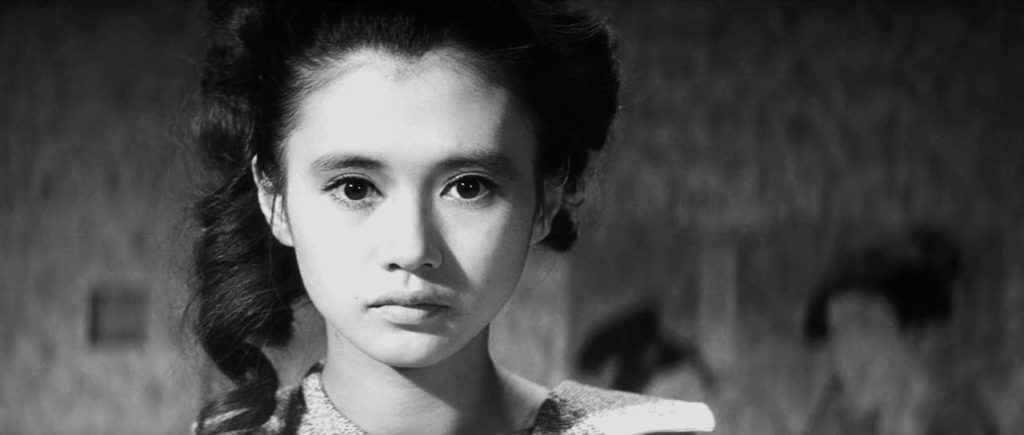
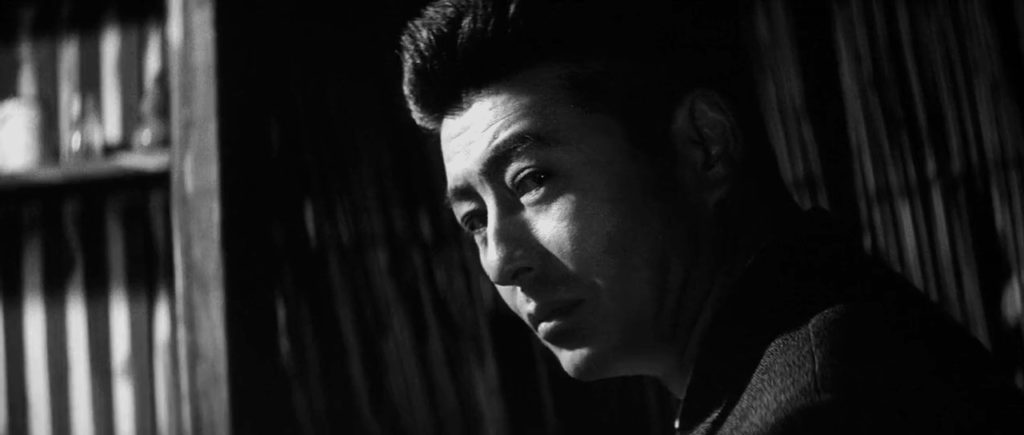
Mariko Kaga in PALE FLOWER
Just who is this mystery woman? Muraki is snagged, but he is too cool to search out her background. His obsession is more complicated than sexual passion alone, although there is a sexual element (watch whether he acts on it when he can). The mystery makes Saeko (the then 20-year-old Mariko Kaga in only her fourth movie) all the more captivating.
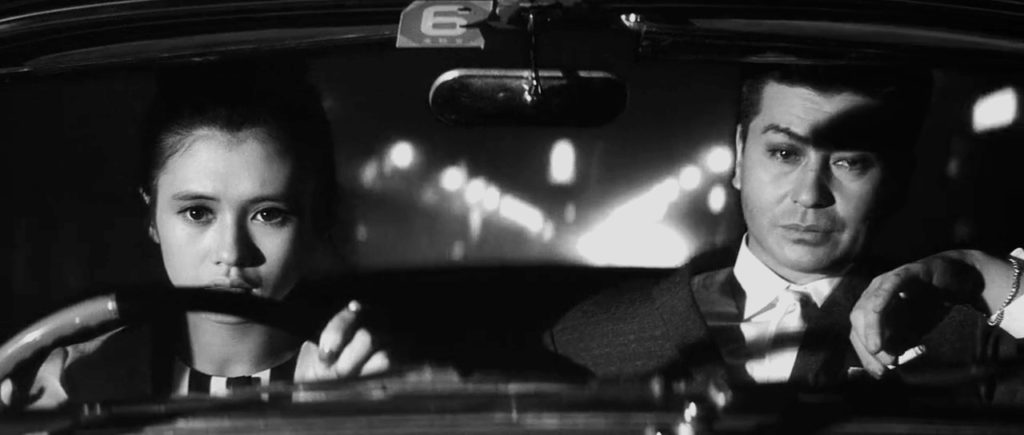
In another gripping set piece, Saeko races her sports car through Tokyo’s tunnels and overpasses at 2:30 AM. In the passenger seat, Muraki is transfixed by her recklessness. He’s not thrilled by the careening wild ride, he’s thrilled by Saeko’s compulsion to seek the thrill.
Mariko Kaga and Ryô Ikebe in PALE FLOWER
The ultimate thrill might be to accompany a hit man on the job. The climactic three-minute scene is a mob hit in a church, set to an aria, Henry Purcell’s Dido’s Lament. It is operatic – and remarkably similar to Francis Ford Coppola’s later montage in The Godfather where Michael Corleone’s assassins kills all his enemies while he is standing in church at the christening of his sister’s baby. Muarki’s murder-for-hire is up-close-and-personal.
When Maraki and Saeko are on-screen, Pale Flower is dramatically and stylistic Stylistic – the card games, the car race, the final killing, In contrast, we see the mundane plotting of the Yazuka bosses (but not their crimes) as they kibbitz at the horse races. Their underlings go bowling.
Does it all matter? is a central theme in film noir. Pale Flower’s powerful final prison scene is the the ultimate neo-noir ending.
Pale Flower is included in Roger Ebert’s Great Movies. Pale Flower is challenging to find; it can be streamed with a subscription to Criterion Collection or kanopy, and it plays occasionally on TCM, including on June 21-22.
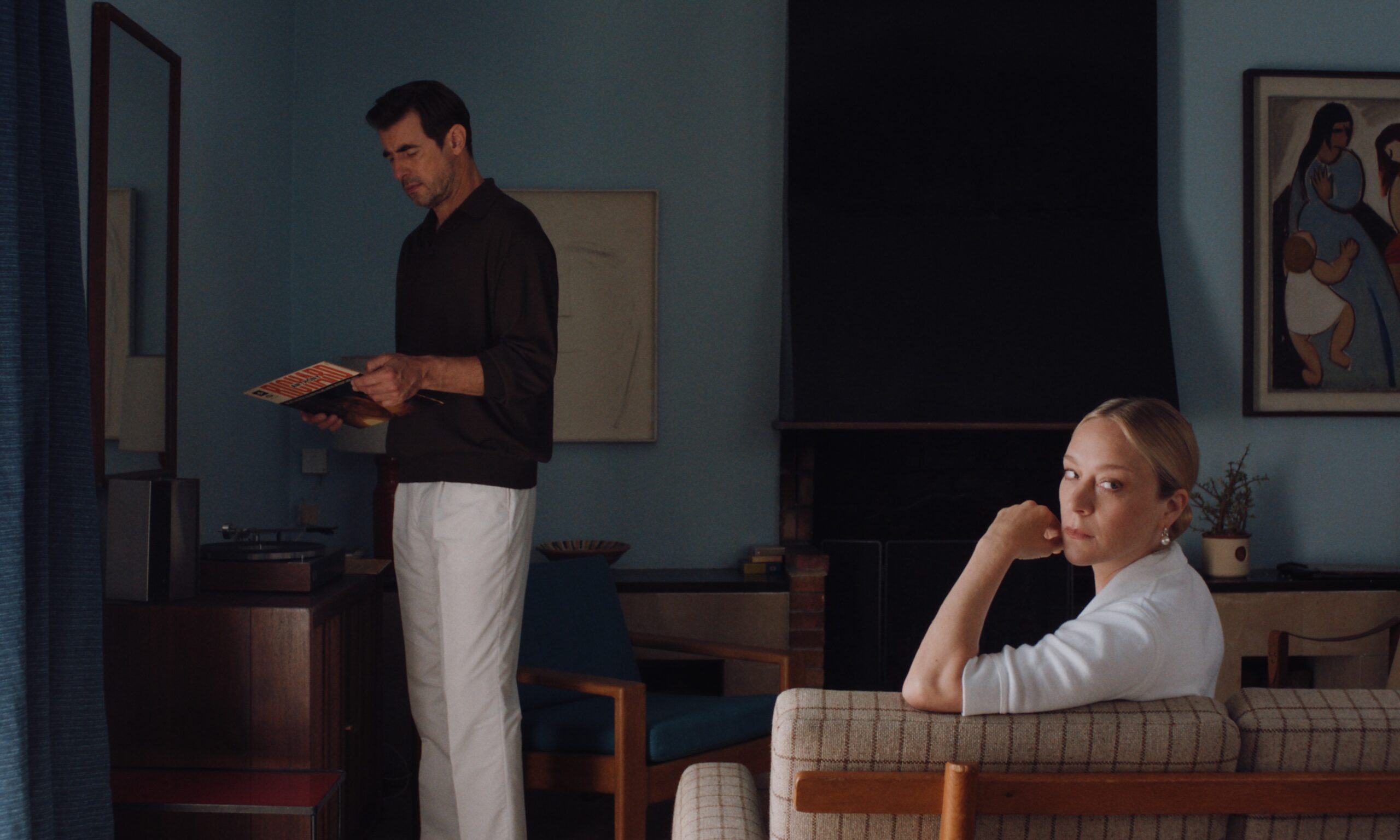
Photo caption: Claes Bang and Chloe Sevigny in in BONJOUR TRISTESSE. Courtesy of Greenwich Entertainment.
In the coming-of-age drama Bonjour Tristesse, Cécile (Lily McInerny) is on the cusp of adulthood and enjoying a languid summer holiday in a villa on the French Riviera (Bonjour Tristesse was shot in Cassis). She is accompanying her father Raymond (Claes Bang) and his girlfriend Elsa (Nailia Harzoune), who allow her to sneak off for make-out sessions on the beach with the young guy in the neighboring villa.
Cécile has a comfortable and playful relationship with Raymond, a charming lightweight. To his face, she describes him as often reckless and selfish, which he doesn’t dispute. At one point, Raymond offer, “I don’t know why luck is so easily dismissed. I’ve always found it dependable.” Raymond’s attractive girlfriend Elsa is also fun-loving, with a healthy libido and unfounded self-confidence.
Cécile’s mother died when she was a young child. So, when Cécile’s mother’s best friend Anne (Chloe Sevigny) shows up at the villa for visit, Cécile wants to learn about her mom. What were her parents like back in the day? Anne has also forged impressive achievements as a designer and is reserved and guarded, with a serious demeanor. The adults that Cécile is used to, Raymond and Elsa, are shallow and hedonistic, so Anne is a fascinating contrast.
Claes Bang, Lily McInerny and Chloe Sevigny in in BONJOUR TRISTESSE. Courtesy of Greenwich Entertainment.
Just as Cécile is glomming on to Anne as a model, Anne does something which upends the household. Soon, Cécile is learning life lessons that she didn’t sign up for. This is a character-driven story, and Cécile is forming her own persona as Raymong and Anne reveal who they are, down deep.
Bonjour Tristesse is the directorial debut for Durga Chew-Bose, who adapted the Francois Sagan novel.
After premiering at Toronto, Bonjour Tristesse became a NYT Critic’s Pick on its theatrical run. Bonjour Tristesse releases digitally this Friday on Amazon, AppleTV, YouTube and Fandango.
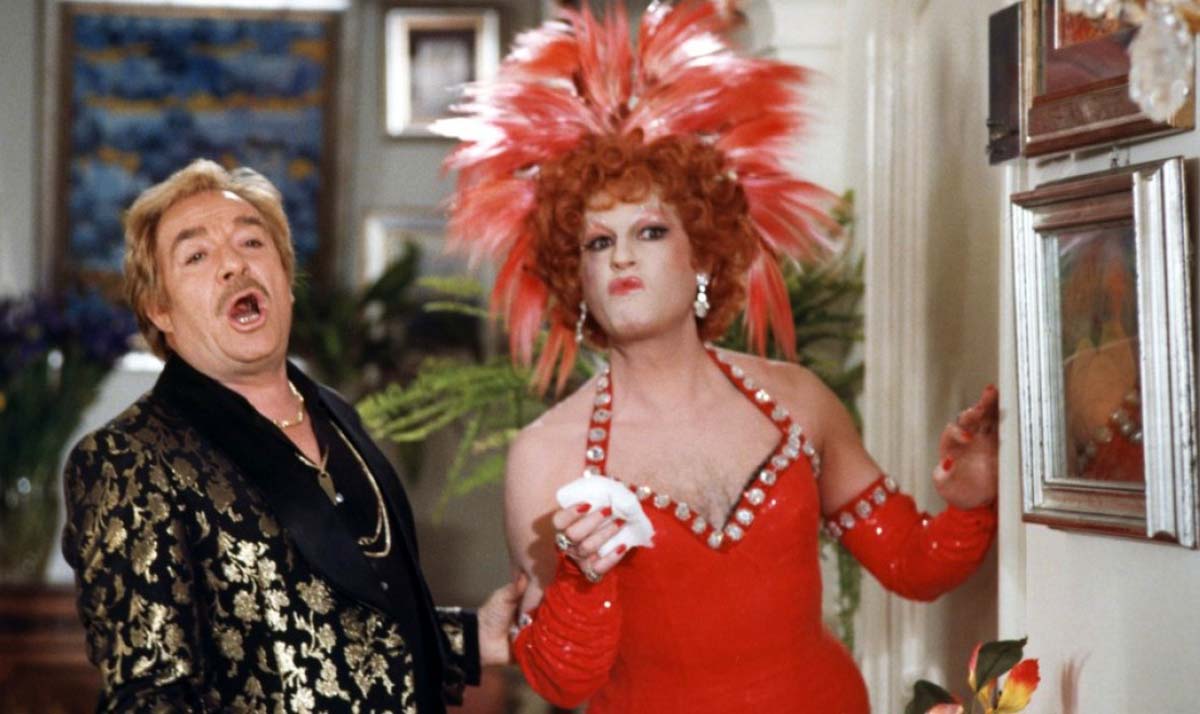
Ugo Tognazzi and Michel Serrault in LA CAGE AUX FOLLES
On June 13, Turner Classic Movies will present the groundbreaking French comedy La Cage Aux Folles – a daring film in 1978, when few were thinking publicly about same-sex marriage. A gay guy runs a nightclub on the Riviera, and his partner is the star drag queen. The nightclub owner’s beloved son wants him to meet the parents of his intended. But the bride-to-be’s father is a conservative politician who practices the most severe and judgmental version of Roman Catholicism, so father and son decide to conceal aspects of dad’s lifestyle. Madcap comedy ensues, and La Cage proves that broad farce can be heartfelt. Michel Serrault is unforgettable as Albin/Zaza – one of the all-time great comic performances. (La Cage was tepidly remade in 1996 as The Birdcage with Robin Williams, but you want to see the French original.)
I’m currently watching my way through the program of this year’s Frameline LGBTQ film fest, which I just previewed. I don’t think you can overestimate the cultural impact of La Cage Aux Folles, which charmed straight audiences into relating to sympathetic portrayals of LGBTQ people.
Photo caption: Paul Reubens in PEE-WEE AS HIMSELF. Courtesy of HBP Max.
The delightfully wacky character Pee-Wee Herman sprang on the scene, seemingly from nowhere, sweetly celebrating his own weirdness. Pee-Wee was the creation of actor Paul Reubens. Reubens, of course, had a life before Pee-Wee, and he had a very private personal life distinct from his invented persona. Sadly, Reubens lost his privacy in, not one, but two career-killing tabloid scandals.
HBO Max is airing the bio-doc Pee-Wee as Himself, from the acclaimed Silicon Valley native, New York-based documentarian Matt Wolf. Wolf has an uncanny gift for finding compelling stories that everyone else has overlooked: Teenage, Recorder: The Marion Stokes Project, Spaceship Earth and Rustin. Here, Wolf reveals three stories, each in itself worthy of a documentary.
The first is Paul Reubens’ origin story – his childhood, his self-confidence as an avant garde art student and his comfort in an out gay lifestyle. Reubens was failing as an actor, and his overweening drive to be successful as an actor led him to leave his partner and go back in the closet.
The second is Pee-Wee’s creation story – how Reubens joined the famed The Groundlings improv group, working with the likes of Laraine Newman, Phil Hartman and Elvira, and originated several characters, one of which was Pee-Wee. Amazingly, Reubens, as Pee-Wee, was a winning contestant on The Gong Show and even The Dating Game. When Reubens failed to be selected for Saturday Night Live, he determined to produce his own TV show – and the sui generis Pee-Wee’s Playhouse was born. Another helluva story.
Finally, we come to the tabloid scandal, an unexpected comeback and then a second scandal. As Reubens himself ruefully notes, by the time he realized the privacy tradeoffs that come with fame, “the ink had dried on my pact with the devil”.
Wolf had elicited permission from Reubens to make a film about Reubens’ life, and secured 40 hours of on-camera interview footage. But the mercurial Reubens, highly ambivalent to sharing his personal story, kept pulling the plug on the project. In the interviews, Reubens often brings up that ambivalence and repeatedly jerks Wolf’s chain. When Reubens fell ill, Wolf was in a race against mortality to get Reubens back on board. Fortunately, Wolf succeeded.
We also hear from Reubens’ sister and his longtime personal assistant, along with old pals like Laraine Newman, Elvira and Natasha Lyonne. We see an archival interview of Phil Hartman, reflecting on what he saw as a betrayal by Reubens.
I’m not sure that I’ve seen another biodoc where the subject himself, so wounded and humbled, stiffens his dignity to reflect on his own brilliance and his suffering from both injustices and his own mistakes. Pee-Wee as Himself runs three hours and twenty-five minutes and is airing on two parts on HBO Max.