Documentarian Al Bailey and his subject “Christian” swiping though Tinder. Photo courtesy of DTF and Gravitas Ventures.
In all fairness, the wild and unpleasant DTF is not the documentary that filmmaker Al Bailey planned to make. Bailey wanted to explore the world of dating apps by following a heavy user of Tinder as he coursed through a series of casual hook-ups.
Bailey thought he had the perfect subject, his friend Christian, a widowed, globe-hopping airline pilot. Bailey expected to harvest lots of prurient fodder from the horny Christian’s meeting and dating lots of single ladies across the world. And Bailey, who had introduced Christian and his late wife of 14 years, justifiably thought he knew Christian.
But Christian had become an altogether different person, not just a party hound, but someone who had descended into a vortex of sex addiction, depression and substance dependency. And when Christian is drunk, we see a despicable torrent of misogyny and racism.
“Christian” is not the pilot’s real name – and his face and voice are obscured throughout the film. If identified, he would certainly lose his job because DTF documents alcohol and drug use that violates the restrictions for long haul airline pilots.
“Men behaving badly” has become a genre of its own in narrative cinema and even documentaries. DTF is not that. Christian’s behavior is not just hedonistic, but jaw-droppingly dangerous to others. He is not just a jerk, but a public menace.
Now Bailey is not blameless here. There are several cringe-heavy moments where Bailey reneges on promises to Christian and his dates to stop filming them. And Bailey tries a Michael Moore-style ambush of Tinder’s corporate HQ, a tactic that I despise even when Moore or 60 Minutes deploys it. And there are moments where Bailey and his colleagues debate the ethics of continuing when the film itself may be prompting Christian toward even more risky behavior.
Sometimes I’ll watch a movie and feel like I need to shower afterwards. After DTF, I felt like I needed to dive into a pool of disinfectant. DTF is available to stream from on Amazon, iTunes, Vudu and other platforms.
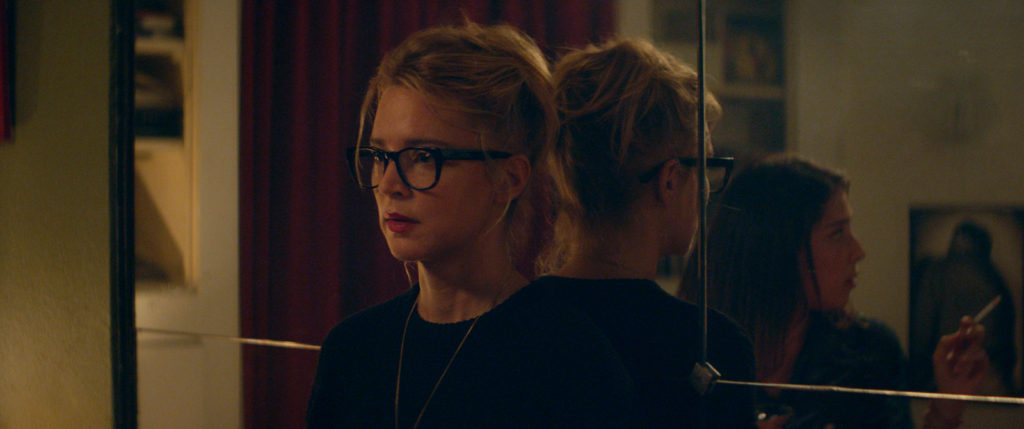
In director Justine Triet’s sex-filled (and sometimes darkly funny) melodrama Sibyl, the psychotherapist Sibyl (Virginie Efira) decides to phase out her practice and return to her primary obsession – novel writing. Sibyl is changing the trajectory of her own life, and she reflects on the one true love in her past (Niels Schneider), her sobriety, her parenting and the family of her sister (Laure Calamy).
While off-loading most of her patients, Sibyl picks up a new one – a needy young actress (Adèle Exarchopoulos from Blue Is the Warmest Color). The actress is about to jump start her movie career, but she’s having an affair with the other lead actor (Gaspar Ulliel), who is inconveniently married to the director Sandra Hüller (Toni Erdmann).
Each of these threads is its own melodrama, and Triet braids them together into an always entertaining story. We are our choices – and we can be our impulses.
Sibyl may be a psychotherapist, but she hasn’t mastered the concept of boundaries. Most egregiously, she doesn’t hesitate to use the personal secrets of her patients as fodder for her novels. Yikes! And she doesn’t resist rampant boundary-crossing by the actress, the actor and the director, either, and she’s used by all of them.
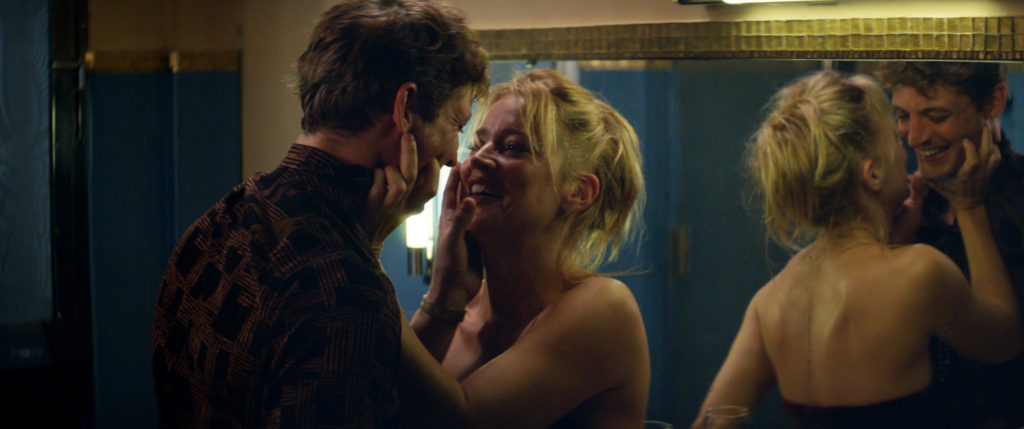
The characters, especially Sibyl, fill the camera lens with passionate sex – on the floor, up against a door, on the beach, on an apartment bathroom’s sink, on the deck of a boat, but not, to the best of my recollection, on a bed.
Niels Schneider and Virginie Efira in SIBYL
There’s lots of sly, dark humor, beginning with the over-intellectualized mansplaining in the very first scene. The sister is hilarious, especially when she coaches her niece on how to manipulate her mother. At one point, the director of the film-within-the-film responds to a lover’s meltdown on the set: “Guys, let’s keep the drama fictional if you don’t mind.“
The scene where the director first meets the actress who has just been impregnated by the director’s husband is another comic masterpiece from Hüller.
Many of us so revere French cinema that we forget that one of the things French filmmakers do well is trashy. And Sibyl is every bit as trashy as Fifty Shades of Grey. However, the editing (Laurent Sénéchal) and the acting are so exquisite that it masks the trashiness of the story.
Sibyl is streaming on Virtual Cinema; I watched it at the Laemmle.
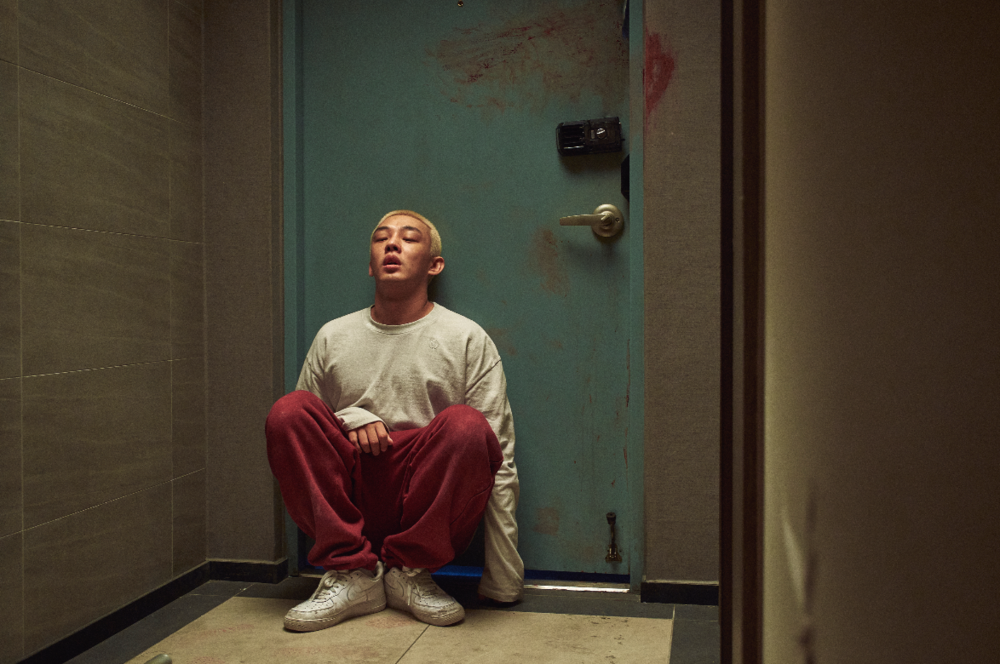
Ah-In Yoo in #ALIVE, Photo courtesy of Perspective Pictures.
Just suppose there’s a pandemic and you can’t leave your home. Oh, wait…
In #Alive, a pulmonary affliction is causing people in a Korean metropolis to savagely attack and bite other humans, further spreading the pandemic. The young gamer Jun-woo (Ah-In Yoo) is isolated in his eighth floor apartment, under siege from what are essentially zombies. It’s kind of Home Alone with zombies.
The hook here is that, like in Home Alone, our hero must depend on his ingenuity to survive, both in fighting off the cannibalistic attackers and in harvesting equipment, food and water from the ravaged apartment building. Fortunately, he discovers another, much smarter survivor, a girl (Shin Hye-Park) holed up in the apartment building across the courtyard. There are two surprises in the final 20 minutes.
Ah-In Yoo (wielding golf club) in #ALIVE, Photo courtesy of Perspective Pictures.
This is the first feature for writer-director Il Cho. He peppers #Alive with funny bits, all the more effective because he doesn’t linger on any of them. One example is when Jun-Yoo presses a button to wait for an elevator as a horde of zombies rush toward him.
#Alive contains the requisite amount of throat biting, brain eating, amputations and bloody splatter for a zombie movie. If you don’t like gore, there are better choices for you on my list of Zombie Movies for People Who Don’t Like Zombie Movies.
This isn’t great cinema, but it has its moments. #Alive is streaming on Netflix. On Netflix, the Korean dialogue is both subtitled and dubbed into English.
In the indie comedy Lucky Grandma, an elderly woman resists leaving her apartment in New York City’s Chinatown to join her son’s family in the burbs, Her plan is to invest her savings on a wild night in a New Jersey casino, but she falls into an ill-gotten treasure, running afoul of a murderous Chinatown gang that wants their loot back.
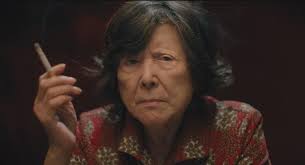
Tsai Chin (the mother in The Joy Luck Club) plays Grandma as a crusty curmudgeon who believes that the best defense is always a good offense.
Hsiao-Yuan Ha, a massive Taiwanese-born (just under 6’7″) actor, is winning as Grandma’s amiable mercenary bodyguard.
Lucky Grandma is the first feature for Asian-American female filmmakers, director Sasie Sealy and her co-writer Angela Cheng.
There’s not that much to Lucky Grandma except for Tsai Chin’s tour de grouch performance and the Chinatown setting. Lucky Grandma is moderately entertaining and is streaming on Amazon.
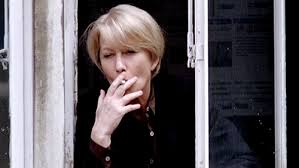
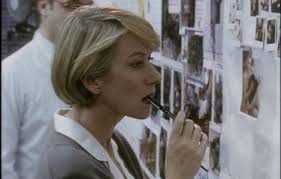
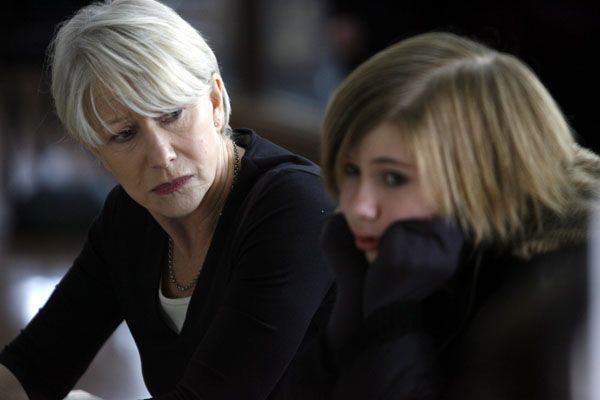
Throughout the seven seasons of Prime Suspect, Helen Mirren is surrounded by generations of Britain’s finest actors. Some of the finest performances are by the actors least known to the American audience.
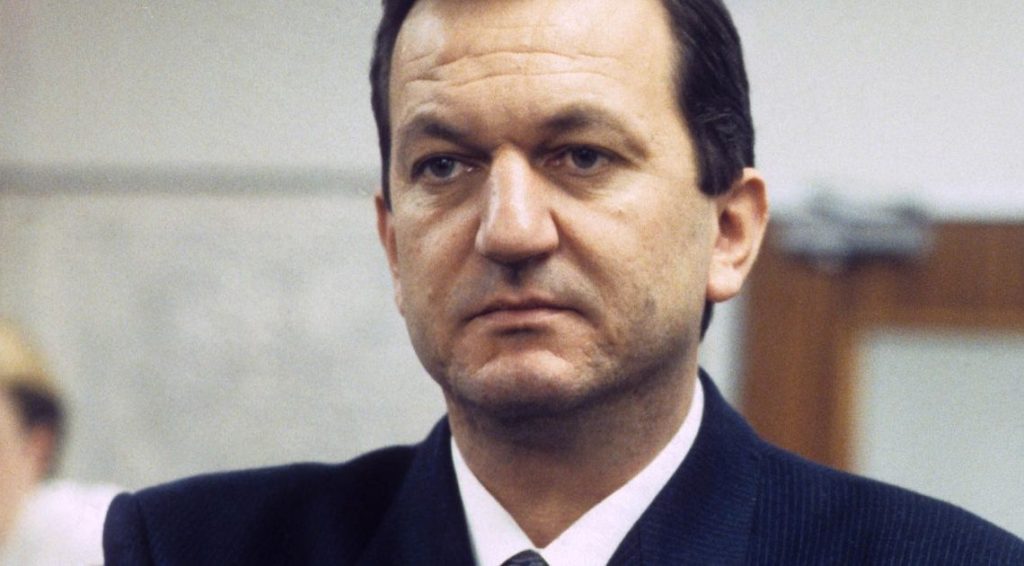
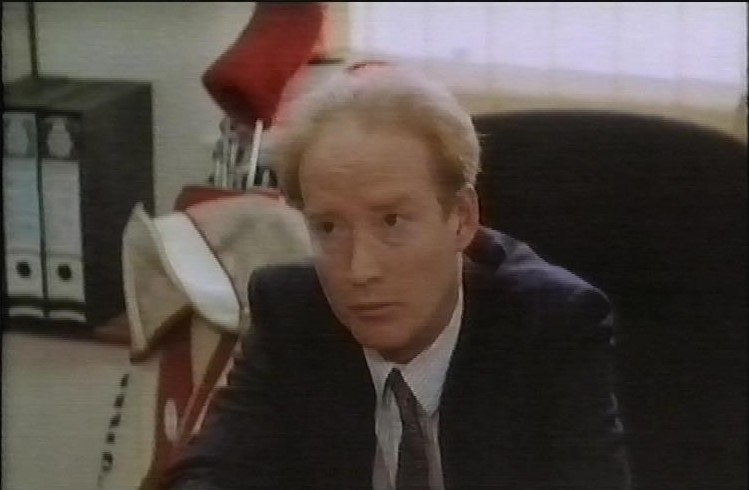
John Benfield in PRIME SUSPECT
Jane Tennison is always beset by the sexism of other police officers. In the first four seasons, John Benfield plays her boss, Mike Kernan, who is out to get her at first. Kernan cautiously warms to Jane, but never reliably has her back.
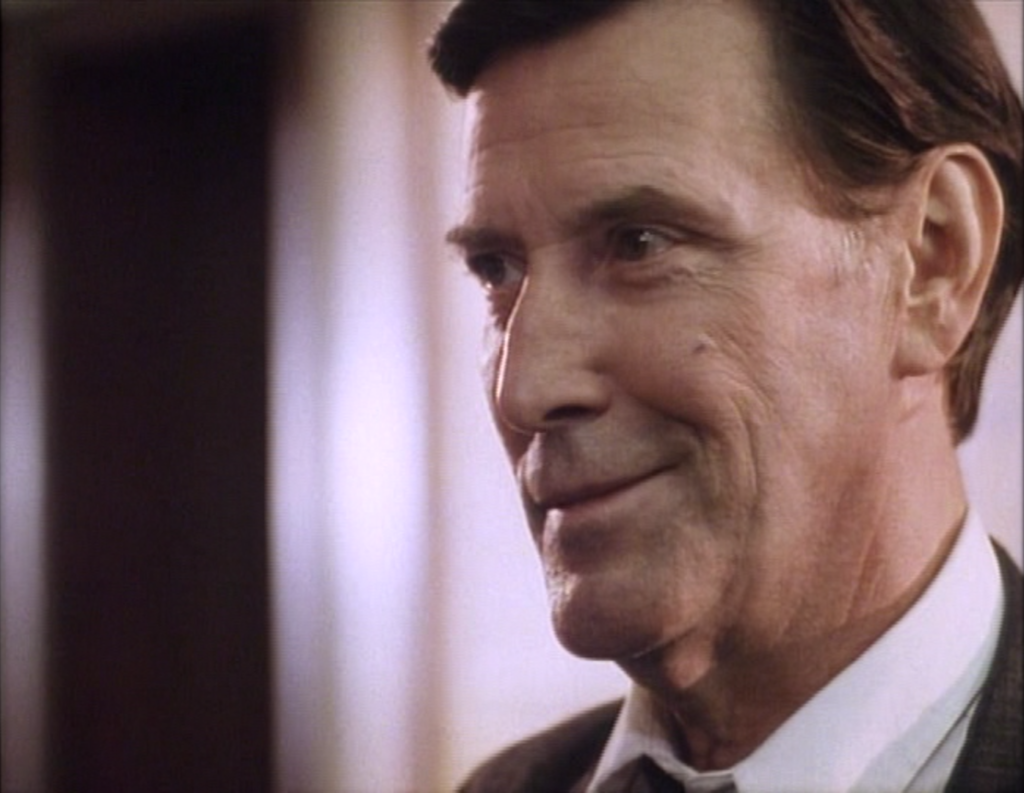
Tom Bell in PRIME SUSPECT
If Mike Kernan is Old School, then Tom Bell‘s Detective Sergeant Bill Otley is Neanderthal. Openly hostile and insubordinate to Jane from the outset, Bell’s Otley evolves over seasons 1, 3 and 7.
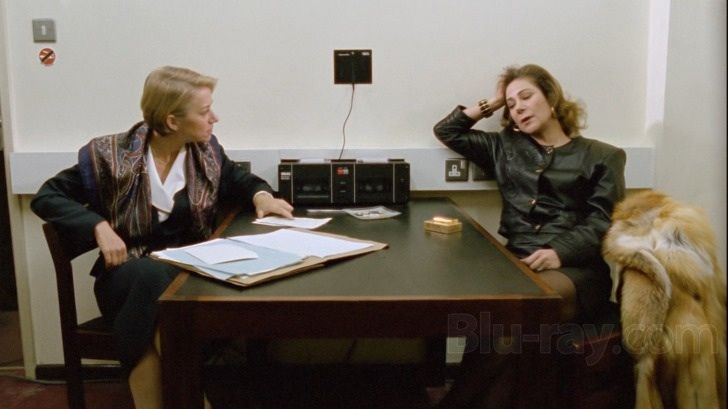
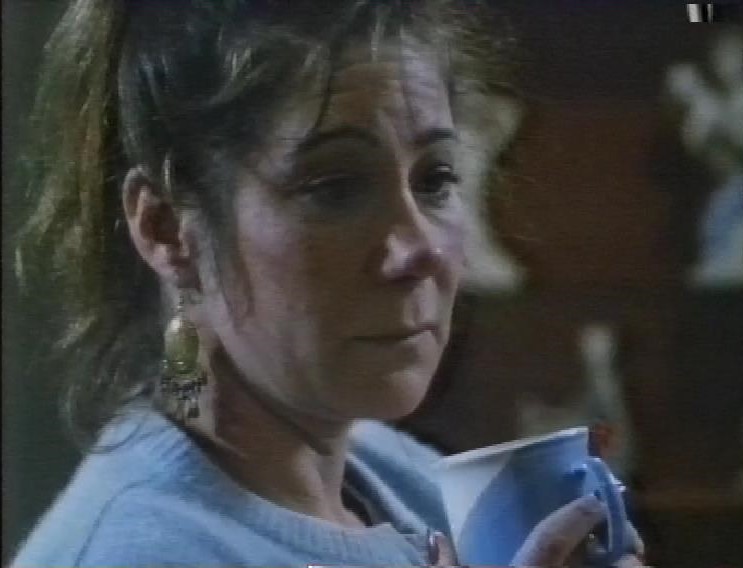
Zoe Wanamaker in PRIME SUSPECT
In season 1, the prime suspect’s partner is played by Zoe Wanamaker in a searing performance. Full of piss and vinegar, her character sloshes buckets of defiance on the police. Wanamaker is unforgettable when her character gets a revelation about her own unknown tie to the murders from Jane.
Here are more of the very best supporting performances in Prime Suspect:
Struan Rogers in PRIME SUSPECT
John Bowe as the narcissistic sociopath of a serial killer in season 1.
Colin Salmon as the charismatic but troubled Black cop Bob Oswalde in season 2.
Jenny Jules as Sara, the sister of a teen who may be a victim or a perpetrator in season 2.
Struan Rodger as Jane’s commander in season 3, who silently appreciates Jane’s moxie when she turns the table on their boss.
David O’Hara as the terse and unsmiling Manchester street detective in season 5.
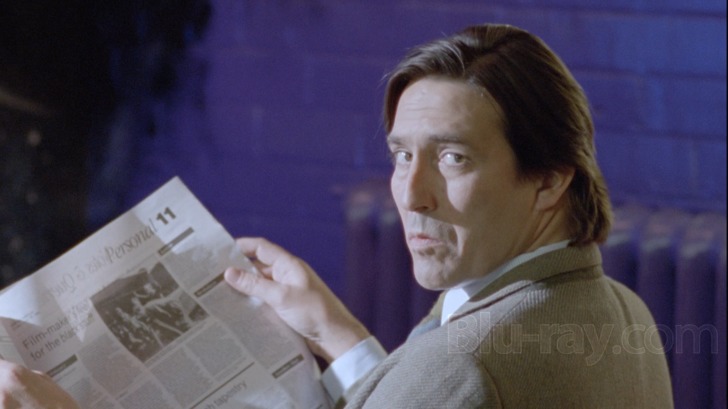
Ciaran Hinds in PRIME SUSPECT
Other notable actors in Prime Suspect:
Tom Wilkinson, before The Full Monty and his two Oscar nominations for In the Bedroom and Michael Clayton.
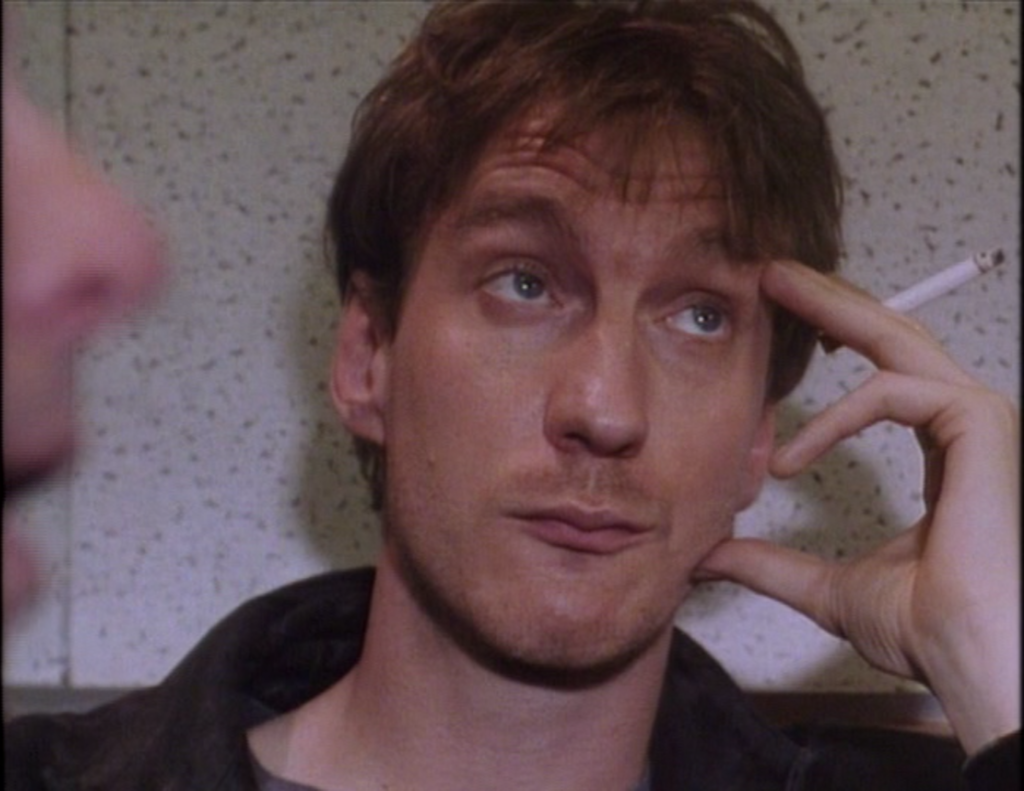
David Thewlis, the same year as his acclaimed performance in Naked.
Ralph Fiennes gets his very first screen credit, before Schindler’s List and The English Patient.
Ciarán Hinds, one of my favorite character actors (Tinker Tailor Soldier Spy, Rome, Game of Thrones, Harry Potter and the Deathly Hollows).
Peter Capaldi, playing a drag queen before his Doctor Who.
Mark Strong, before his string of popular action pictures.
Prime Suspect, the perfect Labor Day weekend binge, pairs one of cinema’s greatest actresses, Helen Mirren, with one of the most compelling characters ever on episodic television, Detective Jane Tennison. At once a sensational crime show and a high brow character study, the seven seasons of Prime Suspect follow a female protagonist over fifteen years.
Prime Suspect is a set of nine separate stories over 25 hours. Jane Tennison’s career spans from Chief Detective Inspector to Superintendent to Chief Superintendent. The episodes were created between 1991 and 20O5, and Helen Mirren herself ages from 46 to 60 in the role.
The core of Prime Suspect is the character of Jane Tennison, forged by writer Lynda La Plante and Mirren. Jane is a driven woman, in a career that ranges from when women cops were unwelcome novelties to more politically correct times. In the entire span, Jane is, at best, barely tolerated.
Jane gives as well as she gets. She can force her superiors to promote her by using the same heavy-handed methods they use to suppress her.
Indeed, each Prime Suspect story has multiple threads of conflict. There is, of course, Jane against the criminal she is trying to catch. At the same time, Jane is being distracted and hampered by forces inside her own department. And Jane is in a constant battle to hold herself together amid overbearing stress.
Jane Tennison is a solitary figure, alone with her demons. She faces the daily challenges to her career survival and advancement with an ever-prickly demeanor.
Jane is a person of overwhelming ambition. In the very first season, it’s clear that she cannot advance by being pleasant and waiting her turn. She recognizes that sometimes she has to be unpleasant, and she will need to seize advancement at other’s expense; (in season 3, she receives a critical favor from a peer and then swipes his dream job).
Jane Tennison is also a fully sexual Woman of a Certain Age, but career rock stars like Jane can’t have it all. Her obsession with career leaves a trail of relationship carnage. At one point, Jane has fallen in love with the one man who gets her and adores her, but she has learned about herself and about life and…
And there’s always too much stress. Jane smokes too much and drinks too much. In Prime Suspect 3, her jaw is constantly pounding away on nicotine gum. In one later episode, she drops into her neighborhood market to buy four microwaveable frozen dinners and two fifths of whisky.
At first, Jane faces the most open and unapologetic misogyny, which evolves in later episodes into more veiled and insidious sexism. Being a flawed feminist hero is complicated. As the series evolves, Jane herself discriminates against a subordinate who is parenting. And she is betrayed by a female protege and, later, fights being forced out to pasture by a gender-integrated set of bosses.
Prime Suspect is always topical. Besides the ever-present sexism, the stories touch on race, abortion, postpartum depression, AIDS, sex work and pedophilia.
Most of the Prime Suspect plots are serial killer whodunits, and one story turns on whether she got it wrong in solving her breakthrough case. In one story, we know the culprit right away, but Jane is a race against the clock to prevent further victims.
In an astounding performance, Mirren grips us each time she fiercely deflects yet another indignity, as she waves her hand through her hair when she needs a reset from a setback and as her eyes reveal that she is connecting the dots. Her entire body coils in frustration and stiffens in insubordination. It’s a tour de force.
Between seasons of Prime Suspect, Helen Mirren was compiling an imposing body of work: The Madness of King George, Gosford Park and her Oscar-winning Elizabeth II in The Queen.
I believe that Mirren’s Jane ranks, with James Gandolfini’s run as Tony Soprano, as one of the greatest in episodic dramas. I’m guessing that Mirren was on screen for over twenty hours of Prime Suspect and that Gandolfini was on screen as Tony Sopranos for about 35 of The Sopranos‘ 86 hours. Of course, Prime Suspect’s Jane Tennison is distinguished from most episodic protagonists by being female and by aging fifteen years.
This is one of the best and most entertaining episodic series ever on television. All seven series of Prime Suspect can be streamed from Amazon (included with Prime).
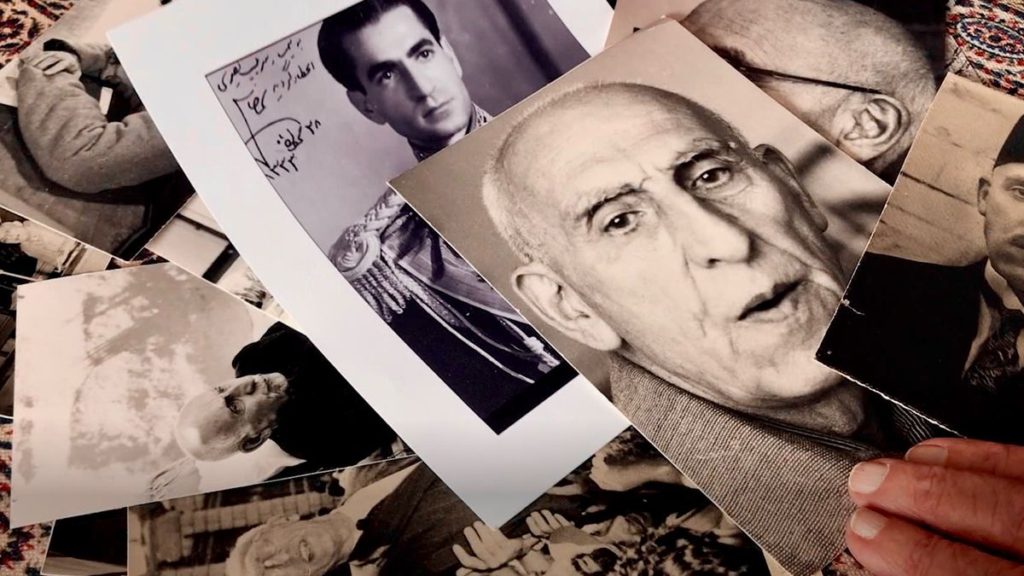
The Cold War espionage documentary Coup 53 brings astounding new source material to the history of the 1953 coup which replaced the democratically elected Premier of Iran, Mohammad Mosaddegh, with the Shah.
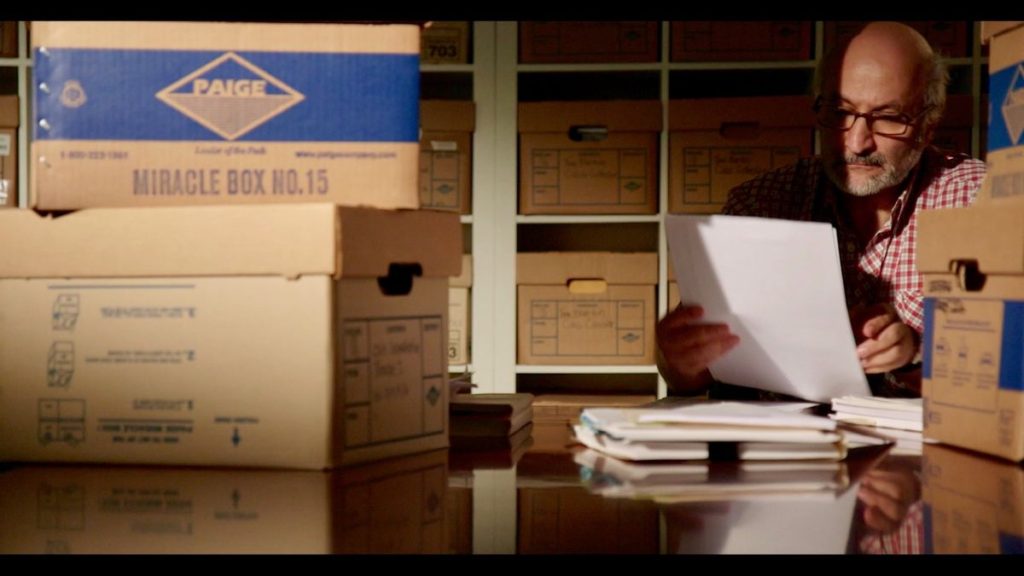
The key to the success of Coup 53 is that filmmaker Taghi Amirani uncovered troves of never-before seen source material. Amirani brings us oral histories of Iranian witnesses to the coup, including a play-by-play from Mosaddegh’s head of security. He adds a video interview with the last surviving Iranian coup plotter, an especially cadaverous and repugnant individual. There are also boxes of more recently-declassified CIA documents.
COUP 53. Courtesy of Coup 53
But, most essential are the tapes and transcripts of interviews for a 1970s BBC documentary. The testimony of Norman Darbyshire, the British spy who masterminded the coup, was cut from the BBC doc, but Amirani found an uncensored transcript. Ingeniously, Coup 53 reconstructs Darbyshire’s interview in the same room in London’s Savoy Hotel, with the same camera operator present (!) and actor Ralph Fiennes reciting Darbyshire’s actual words.
Why did Darbyshire spill the beans? He may have resented that CIA agent Kermit Roosevelt (TR’s grandson) exaggerated his role as a last minute bag man, when Darbyshire had laid the groundwork for years and was the real instigator.
Although the UK’s involvement has never been officially acknowledged by the UK government, everyone has known about it for decades. There’s even a clip in Coup 53 of Richard Nixon explaining it on TV in the 1970s or 1980s. But this is very personal to Taghi Amirani, and he puts great import on the smoking gun – an interview with the British spy who designed and directed the coup.
Although I think that Amirani oversells the proof of British involvement, there is is lot of exciting new stuff for the moderately informed rest of us. For example, we get a deeper-than-usual dive into Mohammad Mosaddegh himself, a man many of us have only seen as a victim of Western over-reaction to communism. We also learn that:
Harry Truman opposed the regime change, but newbie President Ike was persuaded by Wall Street’s Dulles brothers to green light the coup.
The CIA was walking away after an initial coup failure.
After the UK did the dirty work, the US got the most influence with the Shah, and, with Israel’s help, set up the Shah’s brutal and hated secret police, the Savak.
From Mosaddegh’s nephew, we learn about Mosaddegh’s final years under house arrest, his last secret joyride through Tehran and his unusual dining room burial.
There’s one stunning What If moment – revolutionary Iranian President Abolhassan Banisadr explains that after the first coup attempt failed, Mosaddegh had the list of all the coup plotters. Had he executed them all immediately, there would have been no coup in 1953, no revolution and Hostage Crisis in 1978 and today Iran would be a stable, 70-year-old Muslim democracy in the Middle East.
Coup 53 is directed by Taghi Amirani and its editor, Walter Murch. The Iran-born and UK-educated Amirani is the researcher and on-camera interviewer. Murch is probably our greatest living film editor and the person who invented the entire field of movie sound design in the 1970s.
Coup 53 is available to stream on Virtual Cinema; I watched it at the Roxie.
The powerful documentary Apocalypse ’45 takes never-before-seen footage of WWII action and blends it into an experience that brings new insights to familiar history.
Apocalypse ’45 takes on the war in the Pacific in 1944 and 1945; the Japanese military knew that its defeat was inevitable, and their strategy was to avoid unconditional surrender by making its price to the Americans too painful. What happened was horrible, and filmmaker Erik Nelson helps us appreciate that with his spare construction – Apocalypse ’45 is essentially three elements – the film itself, the voice over by survivors and starkly evocative titles.
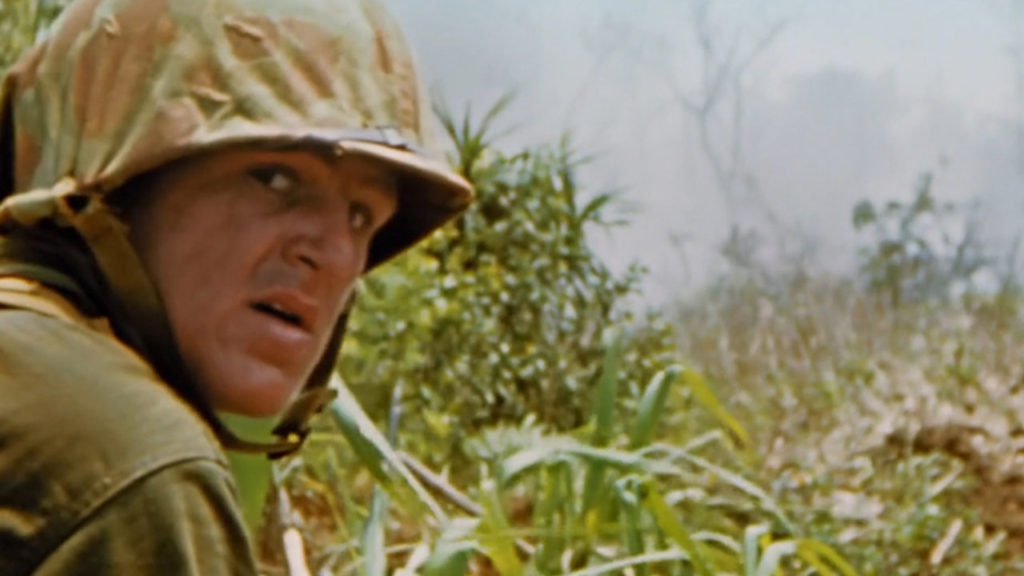
First, Nelson selected from 700 reels of archival film from the National Archive, digitally restored in 4K. It’s in color, and that makes a huge difference to those of us who have to be reminded that WWII was not fought in black and white.
The color and the 4K restoration makes these events look like we were living through them, too, and humanizes the people in the film, making them more relatable. The feeling for the audience is similar to what Peter Jackson’s They Shall Not Grow Old did for those who fought WWI. The somber fatalism of Marines in landing craft and the joyous relief of sailors and Marines in victory parades are palpable.
The shipboard footage of kamikaze attacks and the pilot’s eye views of strafing missions are breathtaking. The footage of a morass with a movie clapboard “Route 1 Okinawa Mud” helps us understand the challenges of moving an army through muck, even without enemy fire.
A few nonagenarians and centenarians have still survived WWII, and Nelson adds their memories in voice overs. Their reflections are unvarnished, and some of the Marines’ views of the Japanese adversaries are hard to hear. But the overall effect is an understanding of how awful this was:
About the planned invasion of Japan: “We didn’t think that the war would end before 1949.”
About the use of flamethrowers: “The smell was terrible…They could run (on fire) about 20 yards and that was it.”
“War is hell, but I never visualized hell being that bad.”
In the amazing account of a Hiroshima atomic bomb survivor: “That’s when everything blew up.”
Nelson ties together the footage and the testimonies with stark white-on-black titles, all the more chilling by their matter of factness. About the liberation of the Philippines): “100,000 civilians and the entire defending Japanese Army were killed” (and, indeed, 93% of the 350,000 Japanese soldiers and sailors died). About the fire bombing of Tokyo: 100,000 Japanese civilians were incinerated.
Nelson’s titles tell how the US manufactured enough Purple Heart medals for the invasion of Japan, based on American casualties in the conquest of Okinawa. After the surrender, those Purple Heart medals were warehoused – and the stockpile has been sufficient to supply every American conflict since 1945.
As Apocalypse ’45 begins, it may seem like a regular WW II documentary with some new imagery, but it becomes more and more powerful as the images, personal testimonies and narrative titles have their effect.
Apocalypse ’45 is now streaming on Virtual Cinema and eventive; I watched it at the Pruneyard Cinemas. It will premiere on the Discovery Channel on Labor Day weekend.
Writer-director Amy Seimetz’s offbeat fable She Dies Tomorrow is difficult to categorize, except as completely original and unlike anything we’ve seen before.
At first, it’s hard to figure out what’s going on, as we follow Amy (Kate Lyn Sheil), who recently has bought a house and is ready to embark on a fling with Craig (Kentucker Audley). But then Amy has an epiphany – she’s going to die tomorrow. No, she hasn’t decided to kill herself – she just is, for lack of a better word, prophesying that something will cause her death tomorrow. That’s pretty heavy and, as anyone would, she becomes fixated on her impending mortality.
Of course, it’s also absurd. How can anyone predict the date of her own natural or accidental death? But here’s where things really get crazy. Amy tells her geeky chemist friend Jane (Jane Adams), and afterward, Jane is convinced that she, also, will die tomorrow. Jane, in her pajamas, crashes the dinner party of her brother Jason (Chris Messina) and unloads her realization. Soon, Jason, his wife and their two guests have been “infected” – and become dazed by the belief that they, too, will die tomorrow. Virus-like, the phenomenon spreads to a seemingly well-grounded doctor (Josh Lucas), a poolside slacker (Michelle Rodriguez) and others.
And here’s another absurdity – how can a psychological disorder (if that’s what this is) be instantly contagious? She Dies Tomorrow is unrelentingly deadpan, so the absurdism is morbidly comic. Each character reacts differently to his/her infection, and this can be pretty funny. Some are profoundly distraught, while one dumps the boyfriend she has found tiresome. Amy’s own ordering of a very special leather jacket is especially perverse.
For all the humor (and this is not guffaw-producing humor), She Dies Tomorrow is also one scary movie. Of all the genres it touches, it is probably closest to horror.
The entire cast is very good. Sheil and Audley starred in Seimetz’s swampy neo-noirSun Don’t Shine.
For good reason, film critics boost films that break the mold, and She Dies Tomorrow has an Metacritic score of 80. John DeFore wrote in The Hollywood Reporter, “Movies like this are why art houses exist.”
She Dies Tomorrow is available on all the major streaming services.
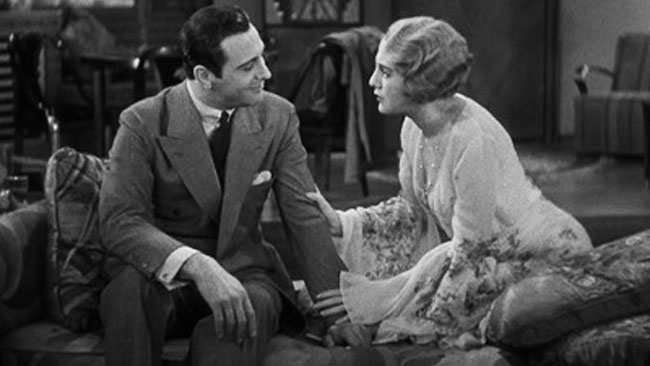
Ricardo Cortez and Bebe Daniels in 1931’s THE MALTESE FALCON
When we think of The Maltese Falcon, the 1941 John Huston film justifiably comes to mind. After all, it’s arguably the first film noir and undeniably influential. It’s also got Humphrey Bogart as an indelible detective Sam Spade and an unsurpassed ensemble cast. But this is only one of three movie versions of Dashiell Hammett’s source novel.
The 1931 movie was a sex comedy, and the 1936 version was a screwball comedy. All three films are united by Hammett’s cynicism.
THE MALTESE FALCON (1931)
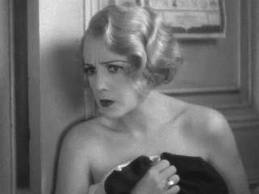
unclad Bebe Daniels in 1931’s THE MALTESE FALCON
The first cinematic The Maltese Falcon came out in 1931, only one year after the novel. It was directed by Roy Del Ruth with its screenplay adapted by Maude Fulton, Brown Holmes and Lucien Hubbard. Sam Spade was played by Ricardo Cortez, born Jacob Krantz to Austrian Jewish parents and recast by Hollywood into a Latin Lover.
Cortez’s Sam Spade is lecherous, cocksure, leering and pawing. Indeed, if this Pre-Code The Maltese Falcon is about anything, it’s about sex. It opens with a woman adjusting her hose before leaving Sam Spade’s office, evidence of a just-completed sexual encounter.
Bebe Daniels plays Miss Wonderly/Brigid O’Shaughnessy as sexually aggressive. She’s shown taking an obviously post-coital bath, and deals out lines like “who’s that dame wearing MY kimono?“.
At one point, a large banknote is missing and Spade takes Brigid into an adjoining room and strip searches her. This 1931 movie is the only Maltese Falcon that contains this sequence. What we see on camera is an apparently nude Brigid clutching her clothes behind the door.
As entertaining as this raunchy version is, much of the drama is drained drama from the final confrontation. Spade produces Chinese merchant Lee Fu Gow as an eyewitness to Archer’s murder, resulting in Brigid’s conviction. Then Spade shows up to jail to buy premium perks for Brigid while she is incarcerated. Off-screen, Wilmer kills Gutman and Cairo.
According to film noir expert Eddie Muller, this 1931 Effie (Spade’s secretary), played by Una Merkel, is the closest screen portrayal to the detective’s secretary in Hammett’s source novel.
The Hays Code prevented the re-release of The Maltese Falcon in 1936, which led to the 1936 remake. Because it’s so risque, the complete version of this 1931 film was not screened again in the United States until 1966.
SATAN MET A LADY (1936)
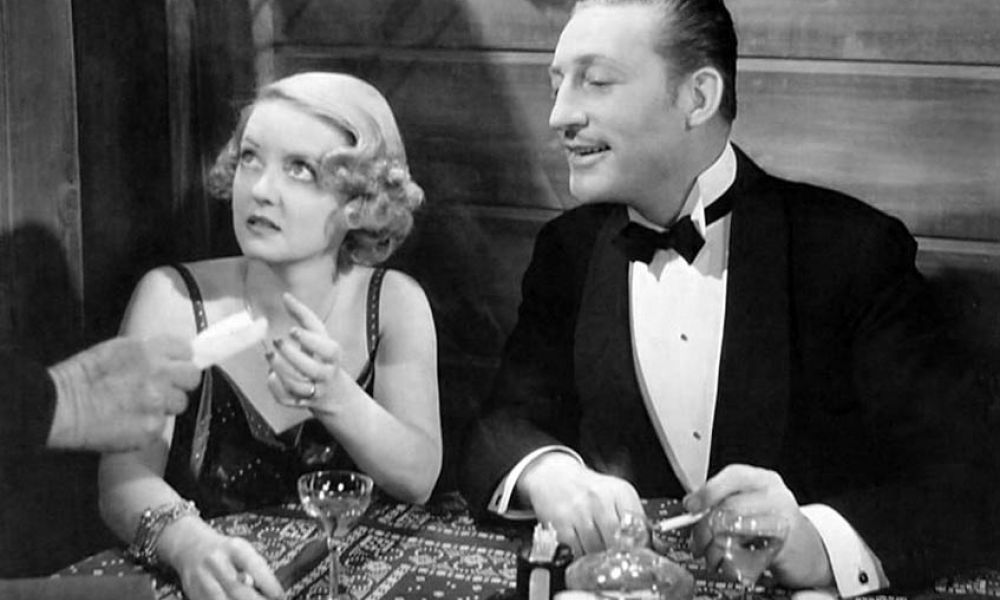
Bette Davis and Warren William in SATAN MET A LADY
That 1936 remake was directed by William Dieterle, with a screenplay by Brown Holmes. It’s more of a screwball comedy than a whodunit. And it’s an actor’s movie – with the stars riffing off their already established screen personae.
Like the title, all of the characters are renamed but recognizable. Warren William plays the shamus Sam Spade, Bette Davis is the Brigid fatale, ditzy Marie Wilson is the Effie, Alison Skipworth is a female take on the Gastman character and Arthur Treacher’s Travers fills the place of the Cairo character. The gunsel is played as an obvious homosexual by purring Maynard Holmes (an effective scene stealer despite being uncredited). And the MacGuffin they’re all chasing is The Horn of Roland, not the black bird.
Warren William was the King of Pre-Code, a leading man who delighted in playing shameless scoundrels. That’s what audiences were expecting, and that’s what they got in Satan Met a Lady. William’s Spade is flamboyant and always looking for a quick buck (and a quickie). Bette Davis matched up well with William, as she did earlier in the political satire The Dark Horse.
Alison Skipworth was already 72 when she made Satan Met a Lady, and her jovial but devious performance is at least as good as Sydney Greenstreet’s in the 1941 version.
Quips fly back and forth in a ping pong of witticisms. And you can’t take your eyes off Maynard Holmes and Marie Wilson whenever they’re on the screen.
THE MALTESE FALCON (1941)
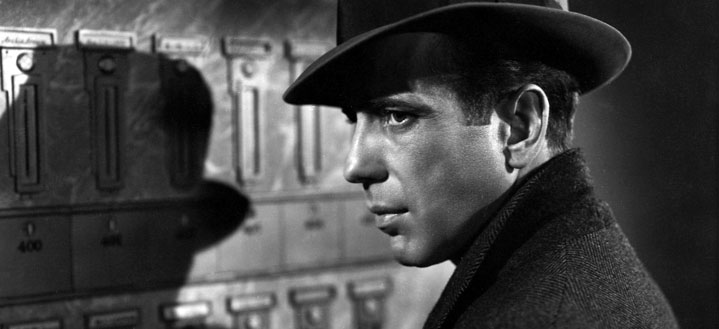
Humphrey Bogart in THE MALTESE FALCON (1941)
John Huston directed and adapted the screenplay for the 1941 The Maltese Falcon. This is the most famous version because it is by far the best. It’s darker, and virtually every character is richer, and the performances by Humphrey Bogart and Mary Astor are riveting.
Huston’s Maltese Falcon is often called the first film noir, and it’s certainly more influential than the other contenders. Huston and cinematographer Arthur Edeson (Casablanca) teamed up to create innovative camera shots and a a setting every much as shadowy as the characters. You can see The Maltese Falcon‘s look and feel in the entire genre of film noir.
Right away, audiences knew they were looking t something different. We see the shadow of the lettering “Spade and Archer” on the office floor. Spade’s phone is lit by outside streetlights when he gets the call about Archer’s demise. Many faces emerge from the shadows, dramatically lit. Spade leans over to kiss Brigid, and we see over his shoulder, out the window to Wilmer’s stakeout on the street below. Look for the shadows of the curtains blowing behind Spade in the final scene.
You can play a drinking game with the times that Brigid has bars across her, from the shadows of Venetian blinds, the stripes on cloths, and, finally, when the bars of the elevator are pulled across her face.
Bogart was a familiar face in crime movies, usually as the villain dispatched by the hero. But The Maltese Falcon put him on the A-List. Bogart’s Sam Spade was the streetwise, cynical guy looking out for himself, but who still adheres to a code, just like his upcoming iconic roles in Casablanca, To Have and Have Not, The Big Sleep and Key Largo.
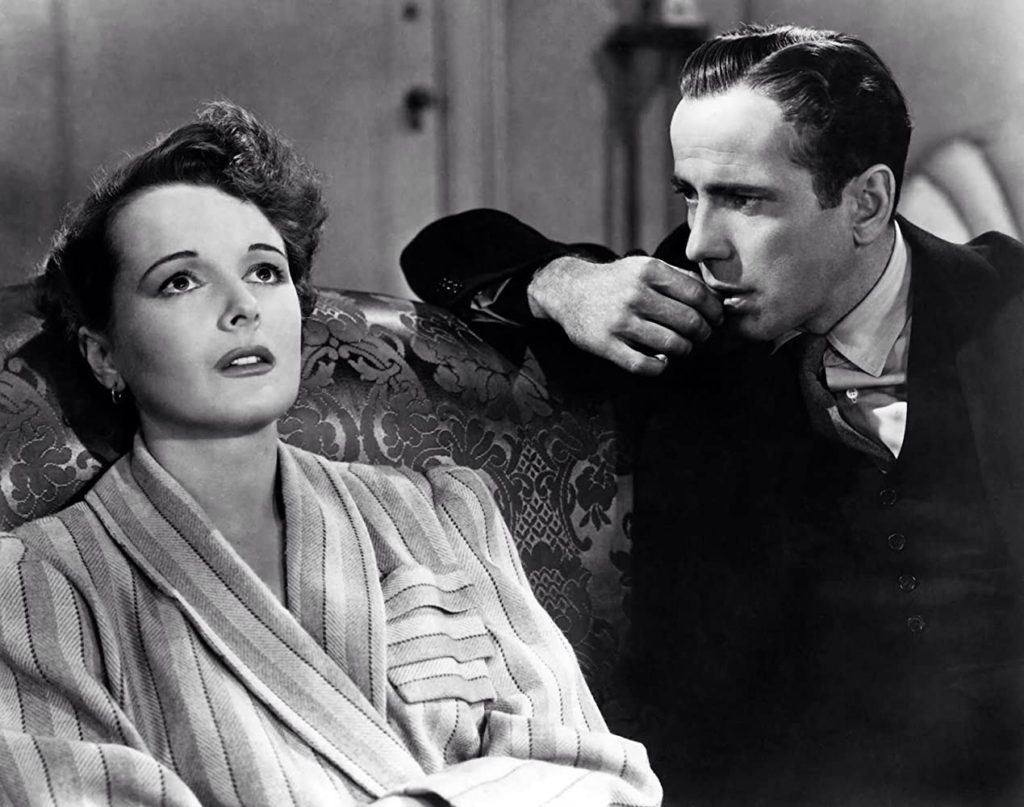
Humphrey Bogart trying to assess Mary Astor in THE MALTESE FALCON
Mary Astor’s Brigid O’Shaughnessy is a tour de force. Adorable, captivating and seemingly vulnerable, Astor’s Brigid is SO manipulative. Bogart’s Spade is so jaded that he expects the worst from everyone, but even he can let his guard down for Astor’s Brigid.
Astor was an uncommonly beautiful girl, and, beginning at age 15, she made 49 pictures in the Silent Movie Era. Her best role had been at age 29 in Dodsworth, filmed while she was being tormented by scandalous child custody litigation. Here, the 35-year-old Astor is seasoned enough to play a crafty woman who uses her sexuality without looking like that’s what she’s doing.
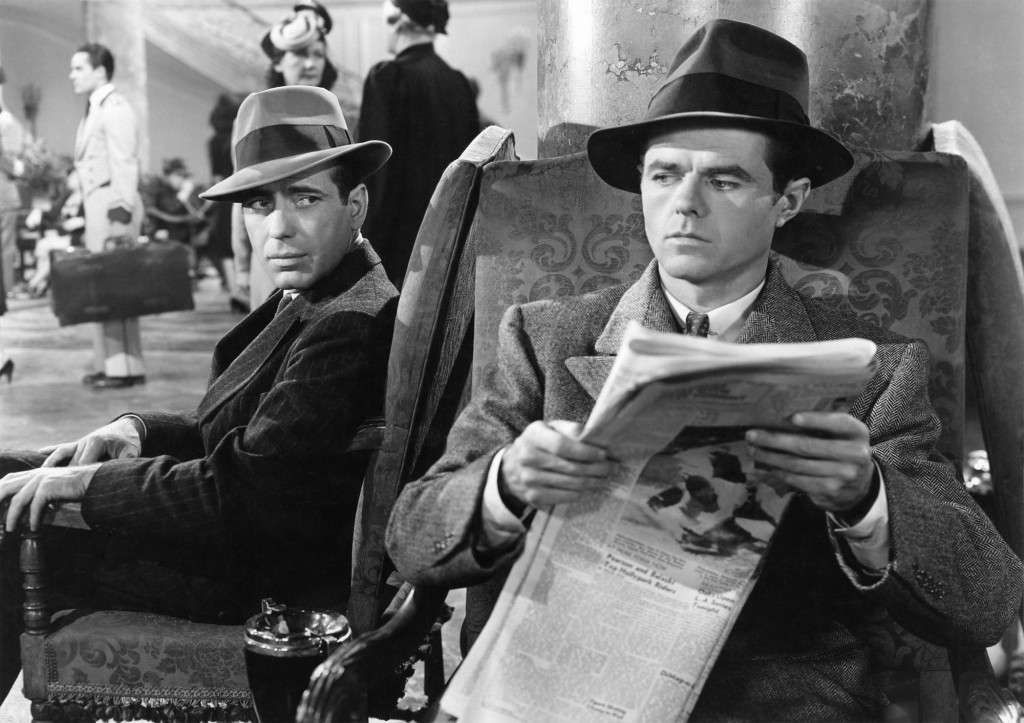
Superb performances abound, especially Sydney Greenstreet as the affable but sinister mastermind Gutman and Peter Lorre as the fey hustler Joel Cairo. As Wilmer, Elisha Cook, Jr., delivers the finest depiction of a weak punk, wannabe hard guy before John Cazale’s Fredo in The Godfather.
This was the first movie for the 61-year-old stage actor Greenstreet and the beginning of his on-screen pairing with Peter Lorre. Huston and Edeson film Gutman from below to emphasize his girth and menace. Upon receiving really bad news, the nervous Cairo melts down and Gutman clutches at his carotid artery, but then recovers and embarks in merry greed.
Dashiell Hammett’s world view – that no one can disappoint you as long as you expect them to act only in their craven self interest – pervades all three Maltese Falcons. But Bogart’s Sam Spade, as written by John Huston, elevates the 1941 version. Ever sympathetic, Bogart’s Spade is never cuddly; his partner is not yet in the ground when Spade has the sign painter remove the partner’s name from the office door. And, as would any man, Sam can have feelings for Brigid, but he won’t be her sap.
Elsiha Cook, Jr. finds out that Humphrey Bogart is on to him in the 1941 version of THE MALTESE FALCON