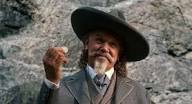
Photo caption: John C. Reilly in HEADS OR TAILS? Courtesy of Samuel Goldwyn Company.
Well, this was a disappointment. One of my personal favorite sub-genres is the Spaghetti Western. I really admired The Tale of King Crab, the first narrative by writer-directors Alessio Rigo de Righi and Matteo Zoppis, and I was delighted to see these guys riffing off Sergio Leone in a movie starring Nadia Tereszkiewicz, with her sexy magnetism and feral unpredictability, Allesandro Borghi of the acclaimed The Eight Mountains, and the always hilarious John C. Reilly. This looked really good.
Heads or Tails? begins with a bizarre, but historical event – Buffalo Bill Cody (John C. Reilly) putting on his Wild West Show, a live spectacle of cowboys and Indians, for an Italian audience circa 1900. Buffalo Bill lived through the most exciting phase of the Old West, having been a Pony Express rider, buffalo hunter and a scout in the Indian Wars. A remarkable showman and entrepreneur, he capitalized on his experiences by creating the Wild West Show, which entertained Easterners and Europeans with riding, roping, shooting, real life bison and an Indian “battle”. Indigenous cast members even included Sitting Bull. Of course, Cody himself knew that the show was filled with hokum, but he happily became rich by playing the role. The Wild West Show did tour Italy twice, once performing for the Pope.
A local aristocrat, a scummy wife-beater, has hosted Buffalo Bill’s performance, and afterwards, tries to further enrich himself with a crooked wager. Santino (Borghi), a dim but virile cattle worker, screws up the wager, and, the furious nobleman suspects that Santino has also been involved with his young wife Rosa (Tereszkiewicz). The aristocrat is killed, and Santino and Rosa go on the run.
At this point, Heads or Tails? leaves conventional Spaghetti Western territory, adds a heavy dose of surrealism, and becomes less coherent – and less watchable.
John C. Reilly, who captures Buffalo Bill’s performative bluster and worldly cynicism, is brilliant, but 80% of the story follows Rosa and Santino without Buffalo Bill.
I streamed Heads or Tails? on Amazon Prime, and most of the dialogue, except for Reilly’s, seemed dubbed in English. I found it off-putting, and didn’t understand it because Tereszkiewicz, who is French, speaks both Italian and English. Besides Amazon, you can also stream Heads or Tails? on AppleTV, YouTube and Fandango.
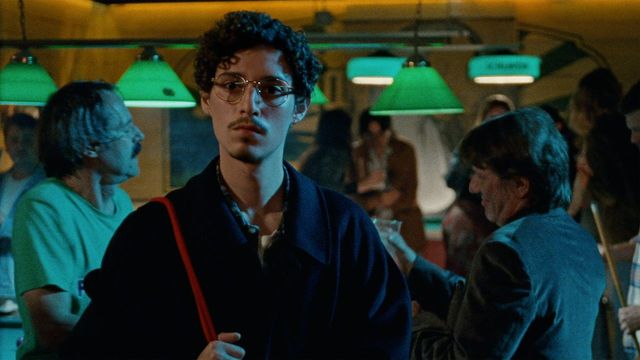
Photo caption: Filippo Scotti (center front) in THE LAST ONE FOR THE ROAD. Courtesy of Music Box Films.
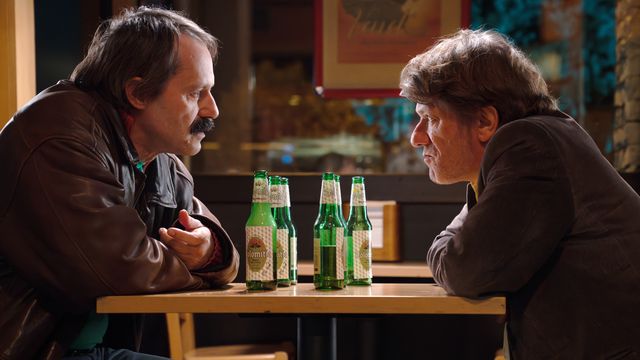
In the genial Italian comedy The Last One for the Road, we get to meet two cheerful reprobates, whose only ambition is for their next drink. On the downside of middle age, Carlobianchi (Sergio Romano) and Doriano (Pierpaolo Capovilla) employ their wily charms to cadge free drinks from a bachelorette party and even impersonate a team of architects expert in historical preservation. Bill Clinton said he represented the folks who “work hard, follow the rules and pay their taxes“; Carlobianchi and Dori are not those people.
Carlobianchi and Dori have a close friend returning home after decades abroad, and they resolve to meet him at the airport. Because they’ve never been to any airports in the province of Venice, this precipitates a meandering road trip to find the right one. While crashing a college graduation party, the two meet a straitlaced architecture grad student Giulio (Filippo Scotti), and take him along.
Giulio protests that he has an important academic presentation the next day, but Carlobianchi and Dori insist on dragging him along on their hazy mission. Giulio really does need to loosen up, he’s blowing it with the young woman he likes by being just too uptight. Will the two old slackers succeed in debauching him? The road trip evolves into a semi-voluntary kidnapping.
Sergio Romano and Pierpaolo Capovilla in THE LAST ONE FOR THE ROAD. Courtesy of Music Box Films.
The lengths that Carlobiachi and Dori will go to get another drink are funny; so is Giulio’s insistence that he is disembarking from their tour, despite never getting out of their car and calling an Uber, which any grown ass adult would do to “escape”.
The Last Round for the Road is a fun comic road trip, but there’s more here than it seems. The film begins with a factory worker’s entire work life rewarded with a Rolex, followed by a glimpse of how little that luxury watch really means to him. The industry of Carlobianchi and Dori’s old buddy Genio in masterminding a heist is not rewarded. Giulio’s passion for architecture and his academic discipline will surely pay off in professional success, but he takes notice that Carlobianchi and Dori, as aimless and irresponsible as they are, are enjoying a stress-free life. The party never ends.
The Last One for the Road, the second feature for director and co-writer Francesco Sossai, opens tomorrow at the Laemmle Royal in Los Angeles and releases more widely next weekend.
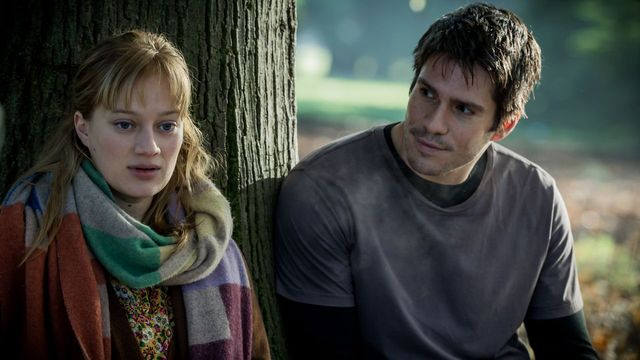
Photo caption: Nadia Tereszkiewicz and Francois Civil in TWO PIANOS. Courtesy of Kino Lorber.
In the well-crafted French melodrama Two Pianos, concert pianist Matthias (three-time César nominee Francois Civil) returns to his hometown of Lyon after a decade abroad. Matthias is already in a mid-career malaise, but things get more complicated when he re-encounters his formidable mentor Elena (Charlotte Rampling) and his best friend’s wife Claude (Nadia Tereszkiewicz). Matthias, who had dated Claude just before his self-exile, is further rocked when he sees that her ten-year-old son looks exactly like him. A well-crafted melodrama ensues, albeit one with unconventional turns.
Two Pianos is the latest from French director Arnaud Desplechin, who made the delightful My Golden Days, which I loved, and then Ismael’s Ghosts, which although it was generally favorable critical buzz, I loathed. Desplechin has received uneven notices for his recent narrative features. He co-wrote Two Pianos.
The plot of Two Pianos pivots on an unforeshadowed surprise which clears the way for a conventional ending, which Desplechin thankfully avoids. This plot point is so unabashedly convenient that some viewers have found it off-putting. I uneasily went with it and was relieved when Desplechin steered the story away from what would have been corny.
Charlotte Rampling in TWO PIANOS. Courtesy of Kino Lorber.
Civil has the challenge of playing a protagonist of uncertain will, who spends much of his screen time hand-wringing and naval gazing. The audience will see that, in contrast to Matthias’ dithering, all of the female characters know exactly what they want – the iron-willed Elena, Matthias’ unsentimental mother (Anne Kessler), Claude’s bestie Judith (Alba Gaia Bellugi) and, eventually, even the vulnerable and temperamental Claude.
Nadia Tereszkiewicz has a sexy magnetism and a feral unpredictability that serves her well in Two Pianos and in the underappreciated Only the Animals.
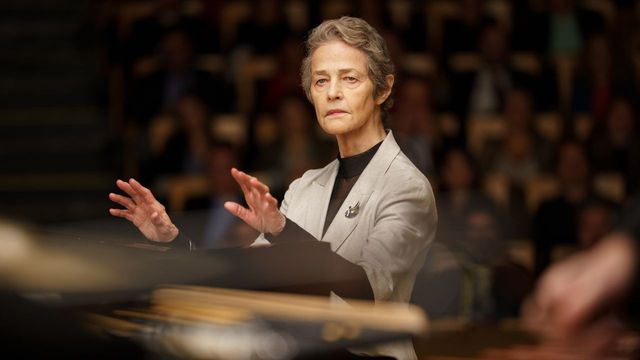
Charlotte Rampling is a treasure, and her performance as the exacting Elena is one of the pleasure of Two Pianos.
I especially appreciated that the story is set in Lyon, a city underrepresented in cinema. Lyon, after all, is the third largest city in France and the place where Parisian foodies go to experience the best of French cuisine. It’s a wonderful city.
I screened Two Pianos for the 2026 SFFILM festival. It opens in theaters this weekend.
Photo caption: Molly Belle Wright, Wyatt Solis and John Magaro in OMAHA. Courtesy of Greenwich Entertainment.
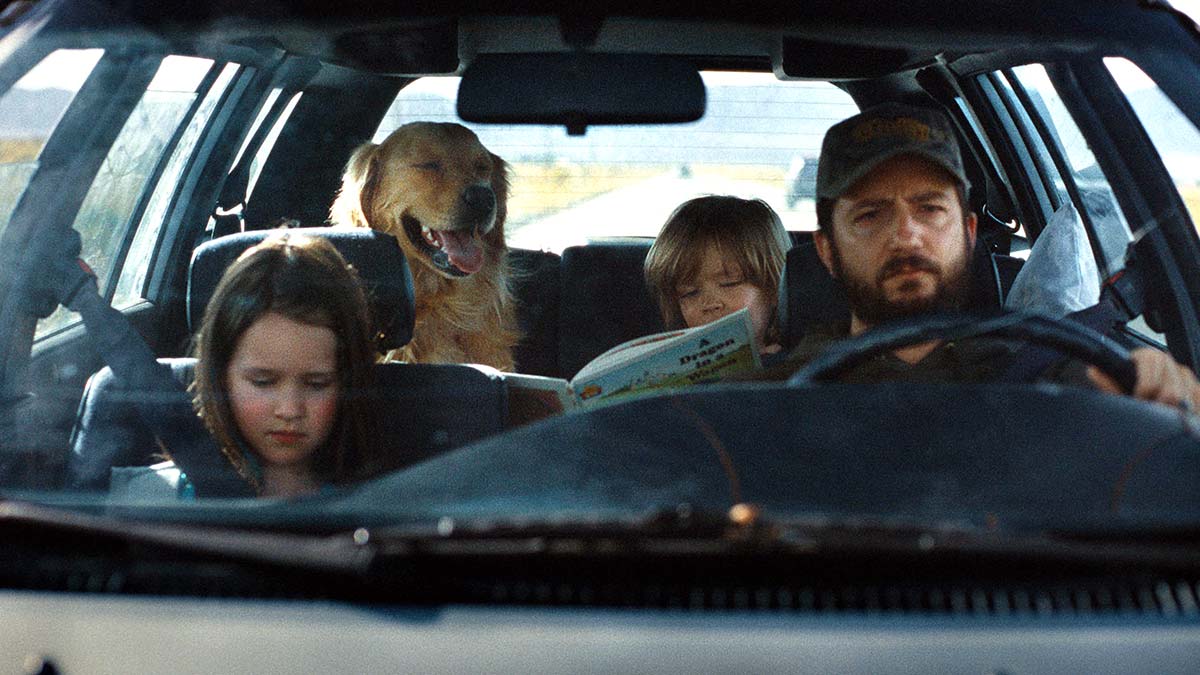
In the concise, searing drama Omaha, an especially devoted dad (John Magaro) has been financially ruined by his late wife’s final illness. He bundles their two kids into his barely drivable car for a road trip across the Great Basin toward Nebraska. The purpose of the road trip is mysterious, and even the whip-smart nine-year-old daughter can’t guess it. The emotionally powerful ending is shattering.
Omaha is a showcase for John Magaro (Past Lives). His inability to provide for his kids has filled him with desperation and profound shame, but he is determined to insulate his kids from his stress.
Magaro’s performance is in the same ballpark as his extraordinary turn in Past Lives, where his character, waiting to see if his girlfriend will run off with a childhood crush, puts on a mask of stoicism and civility while practically vibrating with anxiety. Before Past Lives, I had seen Magaro in The Big Short, The Many Saints of Newark and 18 1/2 without any appreciation that he was capable of work like this. Fortunately for us, Magaro is now getting even more high profile work (The Mastermind, Materialists, The Bride!).
Omaha is the first feature for director Cole Webley, working off a screenplay from Richard Machoian (God Bless the Child, The Killing of Two Lovers). Webley has a gift for portraying those seemingly minor life moments that tell the audience so much about relationships and motivations. Omaha is only 83 minutes long – and that’s perfect for this story.
I screened Omaha for the Nashvlle Film Festival and included it in my Must See at NashFilm. Omaha released theatrically last weekend in New York and more widely this Friday.
This charming comedy Gondola is the work of a unique filmmaker, German writer-director Veit Helmer, who has been making dialogue-free films in Central Asian nations for a decade. A gondola links two mountainsides in rural Georgia, and the two female gondola operators fall in love as they pass each other high above the valley.
It’s remarkable how Helmer is able to pack so many story elements into a film without dialogue. (I also love Helmer’s The Bra, which I tagged as just your average silent Azerbaijani comedy.) Gondola is ever funny, sweet and imaginative.
I screened Gondola for the 2024 Frameline film festival. Gondola can be streamed for free from kanopy and can be rented inexpensively from Amazon, AppleTV and YouTube.
Photo caption: Gael Garcia Bernal in MAGELLAN. Courtesy of Janus Films.
The historical epic Magellan tells the story of explorer/conquistador Ferdinand Magellan’s interactions with people of the Philippines, and most of the movie is set in the Philippines. Magellan begins in 1511, a decade before his most famous voyage, with Magellan serving a more senior Portuguese conquistador. Then the film touches briefly on his life back in Portugal before, again, briefly showing him leading a Spanish-sponsored voyage back to the Philippines.
The strongest element of Magellan is the depiction of historical events from the points of view of both Magellan and of the indigenous Filipinos. I also appreciated Magellan’s equating the superstitious qualities of the Spanish Catholic veneration of religious objects and the indigenous tribe’s idol worship.
Most of us know that Magellan commanded the first expedition to sail around the globe. As Magellan shows, Magellan himself didn’t survive to return home. As Magellan does not point out, a surviving Spanish crew led by one of Magellan’s subordinates did complete the groundbreaking voyage.
Magellan also gets credit for discovering what we know as the Strait of Magellan, the safest navigable route between Atlantic and Pacific Oceans. This is essential history, but it is only possibly referenced in Magellan in a scene where the sailors are all terrified of stormy seas and Magellan isn’t doing anything about it.
Many of the stills from the movie illustrate Magellan on a sailing ship, but I chose to post the image above because very little of this movie about the world’s most famous sailor is at sea.
Magellan is played by Gael Garcia Bernal, a fine actor and a magnetic presence, who isn’t asked to do much here. I doubt that the real Magellan was as passive as the character is written here.
Renowned Filipino writer-director Lav Diaz tells this story in two hours and forty minutes of intermittently interesting action. Diaz is an intentional practitioner of a cinematic style called slow cinema, which I am coming to loathe. I actually enjoy much longer shots and much more deliberate pacing than do most, but I just can’t take slow cinema, which feels to me like it is violating the rhythm of storytelling for no reason.
Magellan seemed longer than 140 minutes to me. I found the pace to range between insufferable and excruciating.
Magellan was the Philippines submission for the Best International Feature Oscar. It is streaming on the Criterion Channel.
Photo caption: Zendaya and Robert Pattinson in THE DRAMA. Courtesy of A24.
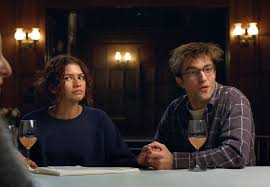
In The Drama, the darkest romantic comedy I’ve ever seen, Emma (Zendaya) and Charlie (Robert Pattinson) are getting married in a week. They’re out with their best friend couple, finalizing the wedding’s catering and wine menu, when the four, in their cups, play a game that changes everything.
Each of the four undertakes to share the worst thing they’ve ever done. Emma goes last, and confesses to something shocking. This is not something that can be explained away as a youthful indiscretion. It is something that calls Emma’s very sanity and humanity into question. The friends are horrified, but Charlie is rocked with the possibility that his adorable bride-to-be is a dangerous psychopath.
Wedding week continues, with the couple going through all the banal tasks – reviewing the wedding photographer’s picture list, approving the flowers, meeting the DJ, etc. All while Charlie is more and more terrified of Emma.
Charlie, not strong of character to begin with, starts to vibrant with stress and then decompensates into a human puddle. Emma, on the other hand, is just trying to get past her embarrassment until she plunges into terror that her very worst secret is going public. Believe me, this really IS a romantic comedy, but there are elements of psychological thriller along the way.
Both Pattinson and Zendaya are excellent as two people trying to cling to situations that may not be savable. Zendaya is just so impressive – a multi-platform superstar who started making Spiderman movies at 21 and still is choosing thoughtful, interesting work like this and Challengers. Other fine performances include:
Mamoudou Athie, whom I just saw as a menacing criminal in Wardriver, as Charlie’s very grounded best buddy;
Alana Haim, reversing the goodhearted charisma of her character in Licorice Pizza, as the friend hiding her inner malice;
Hailey Gates, hilarious as Charlie’s assistant Mischa, whose talents do not include connecting the dots.
The Drama is the work of writer-director Kristofffer Borgli, who also created the brilliant and utterly original comedy Dream Scenario. It’s in theaters now.
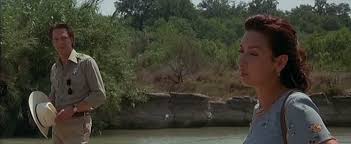
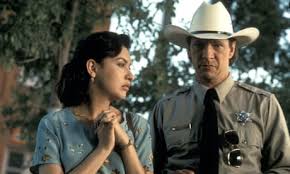
Photo caption: Chris Cooper and Elizabeth Pena in LONE STAR.
On April 9, Turner Classic Movies airs the 1996 John Sayles masterpiece Lone Star, a multi-generational story of mystery, corruption, racism, forbidden love and redemption. The ensemble cast is phenomenal: Chris Cooper, Elizabeth Pena, Matthew McConaughey, Kris Kristofferson, Miriam Colon, Joe Morton, Ron Canada, Frances McDormand, Clifton James, Stephen Mendillo, Tony Amendola. And the best part is the elegant storytelling of writer-director John Sayles.
The story is set in a small Texan town on the Mexican border. Sam Deeds (Chris Cooper) has returned to his hometown to serve as Sheriff. He hasn’t been in his hometown for many years because of his estrangement from his father, Buddy Deeds, the recently deceased previous Sheriff. The decidedly old school Buddy Deeds, who ran the county for decades, was respected and beloved – even legendary. After Sam introduces himself as Sheriff Deeds to an older local woman, she responds “Sheriff Deeds is dead, honey. You just Sheriff Junior.“
Sam’s daddy issues are mirrored by those of Delmore Payne (Joe Morton), a ramrod-striaght Colonel who has been assigned to command the nearby US Army base. Del resents growing up without his father Otis (Ron Canada), who owns a roadhouse outside the town proper, and Del is eager to unleash his bitterness upon Otis.
Inevitably, Sam finds his high school sweetheart Pilar (Elizabeth Pena) and the two rekindle a bond. Their relationship had been broken up by Sam’s dad Buddy and Pilar’s mom Mercedes, and Sam and Pilar have always thought it was on racial grounds.
Elizabeth Pena and Chris Cooper in LONE STAR.
Human remains are found in the desert, and they are identified as those of Buddy’s predecessor as Sheriff, the corrupt, racist and extremely fearsome Charlie Wade (Kris Kristofferson). Wade went inexplicably missing, and he was such a despicable bully, the relieved community didn’t seem to search for him very diligently.
The investigation of Charlie’s suspicious disappearance and death fall within Sam’s authority. Sam sees this as an opportunity to tarnish Buddy’s iconic status. Probing for some dirt to besmirch his father’s name, Sam asks Otis if Buddy ever took money for a favor, and gets back, “I don’t recall a prisoner ever died in your daddy’s custody. I don’t recall a man in this county – black, white, Mexican – who’d hesitate for a minute to call on Buddy Deeds to solve a problem. More than that, I wouldn’t care to say.”
Charlie disappeared before Sam and Pilar were born, but there are folks who were around at the time, Otis for one. Mercedes (Miriam Colon) is now a local business leader. The town’s good ol’ boy mayor Hollis (Clifton James) was, like Buddy, one of Charlie’s deputies. It turns out that what happened to Charlie is not so much a mystery as a long-suppressed secret.
Kris Kristofferson in LONE STAR.
As Sam undertakes the present day investigation, we see flashbacks of the time when Charlie, as terrifying as a T-Rex, walked the earth, and we see the young Buddy (Matthew McConaughey), Hollis and Mercedes. Sayles unspools the story with live segues, in which a single camera shot shows the flashback action at a location and then shifts to the present at the same place. In Sayles hands, the technique is a seamless storytelling device, and never just a gimmick.
Along the way, Sam encounters a flood of memorable, fully fleshed out characters. especially a metal-detecting Army sergeant (Stephen Mendillo), a feisty Mexican old-timer (Tony Amendola) and Sam’s own ditzy ex-wife Bunny (Frances McDormand, in the same year as her Oscar-winning turn in Fargo).
As the story moves to its conclusion, there are two surprising revelations in the plot. And Sayles ends the film with one of the all-time best best closing lines.
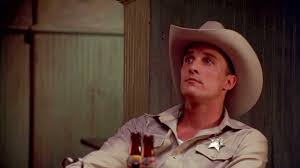
Matthew McConaughey in LONE STAR.
Cooper and Pena lead a cast filled with exemplary performances. The villainous Charlie Wade is my favorite Kristofferson performance. McConaughey was essentially unknown, and Sayles said “I needed a guy who didn’t have any star weight but who had the presence to play off against Kristofferson.” That casting paid off with McConaughey playing a callow character, with just the hints of the charisma and authority that he would later grow into. Cooper, Colon and Morton all appeared in previous Sayles films.
John Sayles’ body of work is as impressive as that of any American indie film director – and more diverse: Passion Fish, Eight Men Out, Matewan, The Secret of Roan Inish and some of the most iconic Bruce Springsteen music videos. In Lone Star, racial relations on the Texas border are complicated and dynamic, just like those in urban New Jersey in that other Sayles ensemble piece City of Hope. He first became known for Return of the Secaucus 7, which was probably the model for The Big Chill and Thirtysomething.
Sayles was Oscar-nominated for the screenplays of both Lone Star and Passion Fish. The dialogue in Lone Star is exceptionally witty, and not just funny, but insightful thought-provoking. Sayles has also been a distinguished script doctor, responsible for many uncredited rewrites, such as Apollo 13. (He started out writing the screenplays for Roger Corman’s Piranha and another exploitation movie Alligator.)
Lone Star is John Sayles’ best movie and IMO the very best movie of 1996, along with Fargo and Secrets & Lies. If you miss it on TCM, you can stream it from Amazon, AppleTV, YouTube and Fandango.
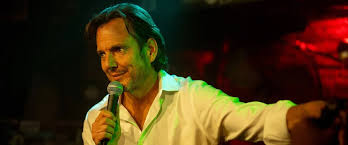
Photo caption: Will Arnett in IS THIS THING ON? Courtesy of Searchlight Pictures.
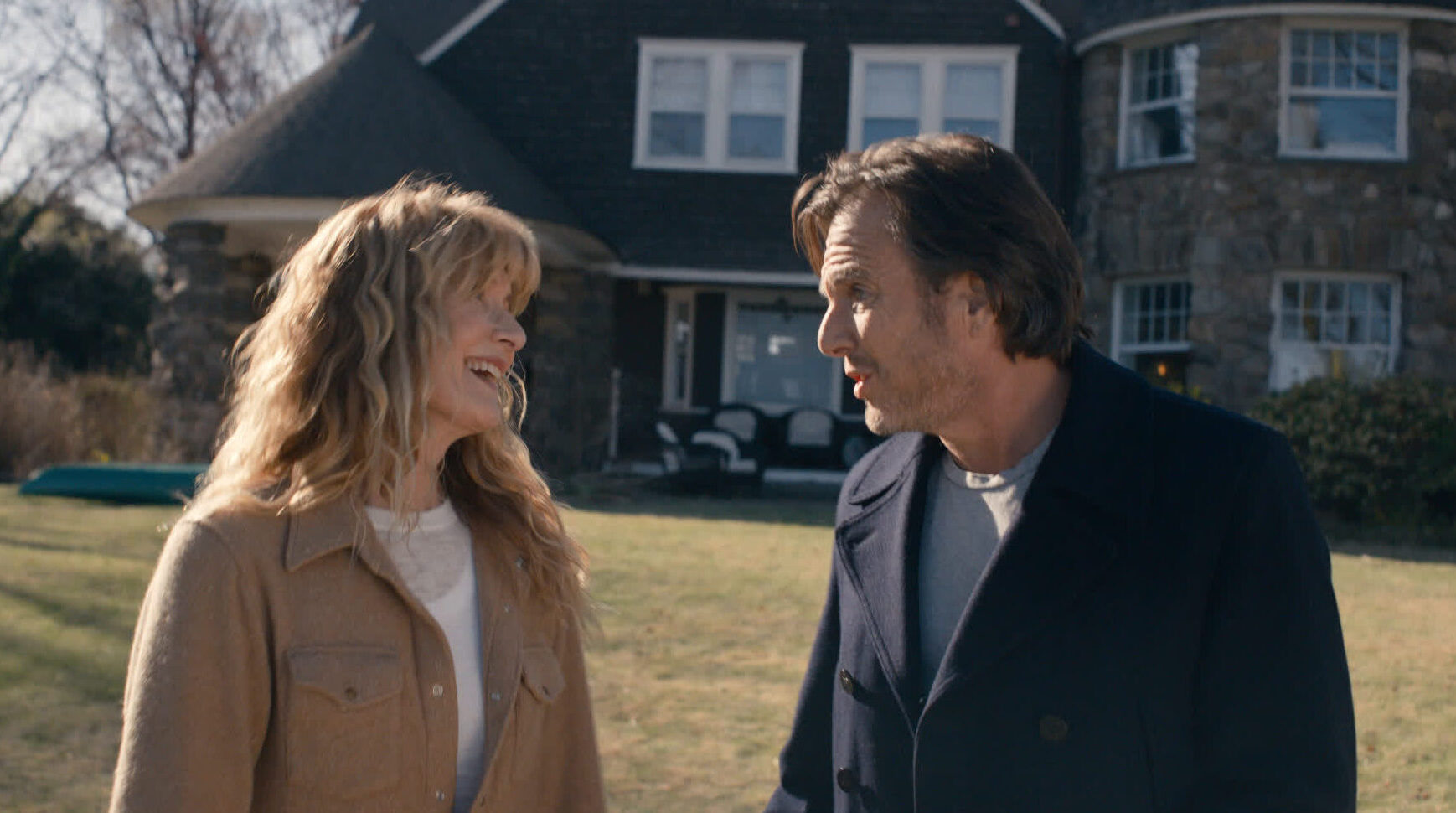
In the romantic dramedy Is This Thing On?, Alex (Will Arnett) and Tess (Laura Dern) are suburban New Yorkers heading for an amicable divorce. They’ve been together for 26 years, married for 23, and have a pair of precocious and adorable ten-year-old sons, but the passion in the relationship has petered out. Alex, who works in finance, has become a hangdog, passively accepting household assignments from Tess. Tess, a former Olympic athlete, runs the family, but she’s suffering from some undefined deficit. They like each other, and their lives are objectively comfortable, but each is miserable, so Alex takes a tiny apartment in Manhattan.
Despairing and confused, Alex is at loose ends when, on a whim, he gets on stage at a comedy club’s open mic night. He talks about his bewilderment to an audience, and finds it gratifying. Soon, he is spending every night doing stand-up, continuing to process his feelings, and actually getting proficient at comedy. Alex has found a new passion, and it’s stand-up comedy.
Tess is finding that the mere absence of Will isn’t making her feel better either, and decides to re-enter the world of sports as a coach. When Tess finally learns about Alex’s new pursuit, the two can finally start figuring out what has been keeping them from happiness.
Laura Dern and Will Arnett in IS THIS THING ON? Courtesy of Searchlight Pictures.
This is a mostly funny and unusually thoughtful rom com. Arnett and the director, Bradley Cooper, co-wrote the screenplay with Mark Chapell.
Both Will Arnett and Laura Dern are exceptional as the talented and privileged Alex and Tess, who founder as a couple and as singles. Bradley Cooper is very funny as Alex’s extremely shallow actor friend.
The way that Tess finds out about Alex’s stand-up comedy is contrived, as important plot points in any rom com tend to be, but I was distracted by the actor involved, who is very, very famous for non-acting. Jeezus, that’s Peyton Manning! Manning is actually good, but his sudden appearance took me out of the movie for a bit.
The Wife, on the other hand, walked out at that point. She had previously been distracted by the lack of economic consequences to the split of the one-income family into two households.
Nevertheless, I liked Is This Thing On?, which is as funny and redemptive as most rom coms, and smarter than most of them. Is This Thing On? is included with Hulu and rentable on Amazon and AppleTV.
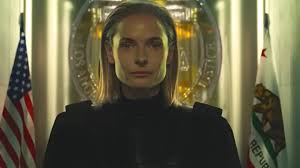
Photo caption: Rebecca Ferguson in MERCY. Courtesy of Amazon MGM Studios.
Here’s the interesting premise of the distopian AI thriller Mercy: in the near future, Los Angeles adopts a new AI-driven criminal justice system whereby a murder suspect is restrained in front of a screen, where an AI “judge” gives him the chance to prove his innocence; he is presumed guilty, and will be executed within ninety minutes unless he can lower his likelihood of guilt percentage under a numeric threshold that represents reasonable doubt. The object is to reach a fact-based conclusion quickly and with certainty, protecting the community and providing closure for victims’ loved ones. The Orwellian name for the new system is Mercy.
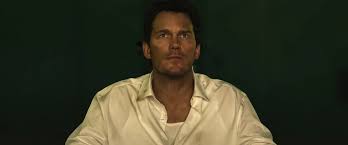
One of the biggest advocates of this new system is the police detective Chris (Chris Pratt), who wakes up from a blackout drunk to find himself strapped to the Mercy chair, charged with the murder of his wife. An initial review of facts demonstrate that he had the motive, means and opportunity – and things look really bad for Chris. He is being judged by an AI bot, played by Rebecca Ferguson. The bad news is that she/it is completely devoid of intuition and emotion, rigidly adhering to the programmed procedure.
The good news is that the court is a supercomputer which is able to provide Chris with INSTANT access to video from traffic cameras and security cams and police body cams, to everyone’s history of movements from cell phone tracking, al financial records, every call and text, and forensic evidence – blood, fingerprint, fiber and DNA. The key word is instant because it allows an investigation that would take days or weeks to be compressed in to just over an hour. That device also allows a whodunit story to be told in real time, which is always a plus in a movie.
Chris Pratt in MERCY. Courtesy of Amazon MGM Studios.
So, essentially, the plot of Mercy is a detective procedural, but one with very high stakes (summary execution) and under extreme time pressure. That all works to heighten the thrills in this thriller.
So far, so good, but it wasn’t enough for the filmmakers who, IMO, jump the shark with some silly add-ons, which I discuss in the spoiler paragraph below.
SPOILER: The problem I have with Mercy is that Chris, beside saving himself to solve the crime, ALSO saves his daughter from a hostage situation, saves downtown LA from being blown up in a terrorist strike, solves a previously closed case and forces the discredited AI justuce system to shut itself down. As well-crafted and exciting as the movie is, that’s really excessive plot. The story got so silly that it lost me in the final 20 or so minutes.
Mercy is streaming on Amazon (included with Prime) and AppleTV.