Wrapping up Cinequest’s Cinejoy

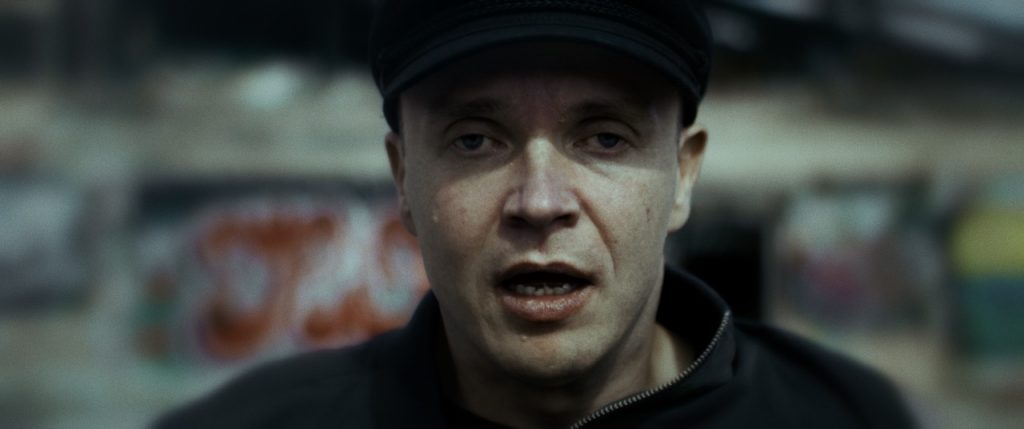
CATCHING THE PIRATE KING. Courtesy of Cinequest.

Cinequest’s online festival Cinejoy ran through March 12. Here are the films that in the program that I hadn’t posted about yet:

Egghead & Twinkie: In this remarkably funny, sweet and genuine coming-of-age film, high school senior Twinkie (Sabrina Jie-A-Fa – real talent) is trying to navigate her sexual awakening as a lesbian, and goes on a roadtrip with her lifelong bestie, the neighbor boy who is now sweet on her. Perfectly paced, with just the right amount of whimsical animation sprinkled in, Egghead & Twinkie is an impressive debut feature for writer-director Sarah Kambe Holland. IMO this is one of the best coming-of-age films of the decade.

Catching the Pirate King: The enthralling Belgian documentary is two movies in one. The first is a play by play of the hijacking of a Belgian ship by Somali pirates and the negotiating of their ransom. The second is about the Belgian law enforcement’s dogged campaign to bring the pirates to justice – in Belgium. We meet the ship’s captain and crew, the shipping company’s negotiator, the cops and prosecutors and even some pirates. Absorbing, exceptionally well-sourced and very well-crafted.

Under Water: This dark Dutch dramedy (or extremely dark Dutch comedy) starts out as the insistent effort of a pushy woman and her estranged husband to get her aged mother into residential care. The mother, a paranoid survivalist, resists every entreaty by the woman and her estranged husband to leave her isolated, condemned house – and even imprisons them in her basement. The husband’s role evolves, and we eventually see that this is a portrait of generational mental illness.

Sweet Disaster: This zany German comedy is driven by the protagonist’s ever-unleashed impulsiveness and utter lack of boundaries. Frida (Friederike Kempter) encounters and falls for an airline pilot and audaciously charms him into a relationship; their affair lasts just long enough for her to become impregnated and for him to abandon her for his ex. Consumed by the urge to win him back, Frida throws propriety to the winds. Frida’s zany roller coaster is tempered by sweet relationships with her apartment neighbors, a precocious teenage neighbor and a Greek Chorus of card-playing older women.

Sloane: A Jazz Singer: This is another laudatory doc on an overlooked musical artist. Now 82, she’s a lot of fun. I wasn’t wowed by an advance version that I screened, but I understand that revisions have since made this film very strong.

The Secret Song: This doc is an uncomplicated movie about a visionary and saintly public school music teacher. He has touched hundreds of lives; this movie won’t.

SHARE?: bread and circuses

Melvin Gregg in SHARE?

In the very funny sci fi think-piece Share?, an unnamed Everyman (Melvin Gregg) finds himself locked up in his civvies in a high tech cell – and he’s on camera. Through trial and error, he learns that he can acquire necessities – and also on-screen social interaction with other captives – by performing for the camera; the currency is not unlike the likes and follows of social media. There are many layers of metaphor in this exploration of human behavior and the human appetite for bread and circuses.

Our protagonist is able to connect through his screen with others in his situation. One veteran (a great Bradley Whitford) is jaded and burnt out, sometimes a sage life coach and sometimes bursting into a nihilistic frenzy. Another noobie (Alice Braga) is a brilliant, driven strategist who immediately turns to organizing their escape; she proves that rage and fear are clearly the most effective motivators of human behavior (Fox News essentially runs on this fuel), but is the trade off in mental health worth it? A third star of the computer screen (Danielle Campbell) advocates for complacent acceptance and exudes a creepy serenity.

So, how about our current addiction to social media? Is it all one big Distraction that steers us away from addressing real challenges, like injustice, socioeconomic inequality and planetary survival? It’s great to see sci fi that is once again about ideas, not just about blowing shit up in space.

One of the wry ironies in Share? is that the force that is sufficiently technologically advanced to have captured these people without their knowledge and imprisoned them in high tech cells employs a clunky user interface that resembles (and may even be) MS-DOS.

Here’s a novelty – all of Share? is entirely shot from one static camera position. As convenient as this must have been in working from a low budget and perhaps pandemic-driven restrictions, it figures to pose a challenge in keeping the audience interested. But, thanks to the collaboration between director Ira Rosensweig, Assistant Editor Peter Szijarto and Gregg (who’s on screen 99% of the time), that’s not a problem.

Melvin Gregg, with his energy and relatability, does an excellent job carrying the movie. The rest of the cast – Bradley Whitford, Alice Braga, Danielle Campbell – is great, too.

Share? is the first feature for director and co-writer Ira Rosensweig and the third feature for co-writer Benjamin Sutor. Cinequest’s online festival Cinejoy is hosting the world premiere of Share?, which tops my Best of Cinejoy recommendations. You can find the trailer and tickets at Cinequest.

DADDY: four guys, four chances to fail

A scene from DADDY. Courtesy of Cinequest.

The dark sci fi comedy Daddy: is set in a future where only a limited number of men are approved by the government to father children. Four guys apply for the privilege and are isolated in a mountain lodge to wait for the expert evaluator, who doesn’t immediately show up. As they try to figure out what’s going on and what they should do, they succeed only in demonstrating how unfit they would be as parents – until things get all Lord of the Rings. It’s a very funny skewering of both male overconfidence and male angst.

Finally, the guys get an unexpected visitor, who may or may not be the evaluator that they expect. What’s impressive about this episode is how each man’s instinctual reaction, different from each other’s, can be so profoundly wrongheaded.

The mountain lodge is equipped with an artificial baby model (a doll). Co-writers Neal Kelley and Jono Sherman refrain from overusing this prop in slapstick. It’s far funnier to glimpse the doll as it seems to silently rebuke the foolhardiness around it.

Daddy is the second feature and first feature, respectively, for for co-directors/co-writers Kelley and Sherman, who also play two of the guys. Cinequest’s online festival Cinejoy hosts the world premiere of Daddy.

DESTINY ON THE MAIN STAGE: anything but exploitative

Photo caption: DESTINY ON THE MAIN STAGE. Courtesy of Cinequest.

In the brilliant documentary Destiny on the Main Stage, a female director (and almost all-female crew) chronicle three years in the lives of Dallas-area strippers – and it’s authentic and NOT sensationalist or exploitative. The strippers include both a 20-year veteran very comfortable in her vocation and a former stripper organizing to help women exit the business. And, of course there are the very young women who are puddles of bad choices. Over the three years, the subjects’ lives take some very gripping turns.

This is not an advocacy film that seeks to criticize or promote the industry. This is cinéma vérité, and the pivotal events in the women’s lives are depicted as they happen. Hearing the strippers’ voices through a female lens/gaze/perspective is both novel and insightful. Director Poppy de Villenueve says, “These events are revealed as part of life, filmed in a nuanced way, reflecting something these women rarely are given the opportunity to have revealed.

What Destiny on the Main Stage is filled with, instead of titillation, is humanity. De Villenueve says, “It is difficult to find real intimacy and connection these days, but by highlighting it in the darkest environments, I believe we move the world towards a better, kinder place.”

This is a serious film that could become an audience favorite, too. Destiny on the Main Stage is the second feature for director Poppy de Villenueve. Cinequest’s online festival Cinejoy hosted the world premiere of Destiny on the Main Stage, and it’s playing the in-person Cinequest in August..

DESTINY ON THE MAIN STAGE. Courtesy of Cinequest.

EVERYBODY WANTS TO BE LOVED: bobbing in a vortex of others’ egotism

Lea Drinda and Anne Ratte-Polle in EVERYBODY WANTS TO BE LOVED. Courtesy of Cinequest.

This German dramedy Everybody Wants to Be Love is a triumph of the harried mom genre. As a psychotherapist, Ina (Anne Ratte-Polle) spends her workdays listening to whining and naval-gazing. Then she goes home to her self-absorbed boyfriend and her teen daughter – and the job of teenagers is to be self-absorbed.-Nobody is most narcissistic and entitled than Ina’s mom. It’s the mom’s birthday, and she is rampaging with demands. The daughter is threatening to move in with Ina’s ex, and the boyfriend wants to move the family to Finland for his career. As Ina is swirling around this vortex of egotism, she gets some sobering news about her own health. As everyone converges on the birthday party, what could possibly go wrong?

Everybody Wants to Be Loved is the first feature for director and co-writer Katharina Woll, who is a perceptive and clear-eyed observer of human behavior. Woll maintains the perfect level of simmering as Ina’s indignities build toward a meltdown.

Anne Ratte-Polle is excellent as the long-suffering Ina, whose tank is about to hit Empty if she doesn’t start putting her needs above those of everybody else.

The rest of the cast is excellent, too, including Urs Jucker as Ina’s maddening boyfriend. Lea Drinda is very good as the teen daughter who pushes Mom to get what she wants, but knows when to stop.

Cinequest’s online festival Cinejoy will host only the second screening of Everybody Wants to Be Loved in the US. It’s one of my picks for the Best of Cinejoy. Watch it through March 13 at Cinejoy.

WOMEN TALKING: safety and its costs

Photo caption: Judith Ivey and Claire Foy in WOMEN TALKING. Courtesy of United Artists Releasing.

In the drama Women Talking, a Mennonite farming settlement is rocked by predatory sexual abuse; some of the men are locked up, and the rest are away trying to bail them out. That leaves the women a moment to decide whether to stay and fight off the the men or to abandon their homes and flee for safety.

This is based on actual events in a Mennonite colony in Bolivia in 2011 – and the story was told in the slightly fictionalized book by Miriam Toews, then adapted into this screenplay by director Sarah Polley.

The women know that the return of the men in imminent, so they are under a deadline to debate whether to stay and fight or to leave. IMO that is a false choice, because they really can’t expect to fend off the abuse from the men in such an isolated environs. What they are really doing is assessing the cost of leaving – losing their husbands and older sons, the community that they have invested their lives in building and any possessions that they can’t carry on a horse-drawn buggy. The drama in Women Talking stems from the life and death consequences of their decision, as well as its urgency. It does seem to me that,once they have made a decision, it takes a lot of movie running time to implement it.

Ben Whislaw, Rooney Mara and Claire Foy in WOMEN TALKING. Courtesy of United Artists Releasing.

This is essentially a six-hander, with almost all the dialogue between the women played by Claire Foy, Rooney Mara, Jessie Buckley, Judith Ivey and Sheila McCarthy and the one remaining man, the gentle schoolteacher August (Ben Whislaw). August is serving as the taker of minutes.

This is an exceptionally well-acted movie. All six actors are superb. Frances McDormand produced Women Talking and plays an almost non-speaking role, although she ably deploys her fierce visage.

Jessie Buckley in WOMEN TALKING. Courtesy of United Artists Releasing.

Claire Foy’s character has the most pivotal moment, and Jessie Buckley’s gets some sparks, too. The scenes with Whislaw and Rooney are especially heartbreaking.

The Wife liked Women Talking much more than I did (and she had read much of the book, but paused, not wanting to spoil the movie). There were plot points that confused me, and I was impatient with all the decision-making process.

I was very disappointed, because I am a longstanding admirer of Sarah Polley. Polley’s very first film, Away from Her, was my pick for best film of 2007, and Polley’s adapted screenplay was Oscar-nominated. She followed that by directing her original screenplay Take This Waltz, with its remarkable performance by Michelle Williams, and the astonishing autobiographical documentary Stories We Tell.

Polley’s screenplay for Women Talking has also been Oscar-nominated, but it’s a failure anytime I am watching a movie and thinking about anything other than what is going to happen to her next? In Women Talking, I kept thinking about stuff like has it only been an hour?, THAT would never happen and was this originally a stage play? That’s never good, and it’s not what Polley intended.

A Mennonite colony in 2011 Bolivia is an odd setting for a Monkees song to pop up, but Polley’s use of Daydream Believer is inspired (and I think I recognized Anne Murray’s cover over the closing credits). Polley had brilliantly used Video Killed the Radio Star in Take This Waltz.

So, Women Talking is original and strongly acted, but not the most watchable movie.

LIVING: what is it to live?

Photo caption: Bill Nighy in LIVING. Courtesy of Sony Pictures Classics.

In Living, Bill Nighy plays Williams, a humorless prisoner of his own routine and of his place in a stultifying culture. Nighy’s performance is as dazzling in its artistry as is his character devoid of any sparkle.

It’s just after World War II, and Williams commands a platoon of clerks and their pod of desks and inboxes in the London government’s bureaucracy. The one thing everyone works hard at is finding an excuse not to actually accomplish anything, as they industriously push paper back and forth. The unifying ethos is conformity, and no one wants to be the nail that sticks up. It’s an environment that makes everyone comfortable with despair.

Williams gets some very bad news from his doctor. Although he lives with his son and daughter-in-law, he has no family or friends close enough to share his situation with. At first, Williams seeks out the traditional outlet of those with a short horizon – hedonism. He remains unsatisfied until he catches a spark from a much younger former co-worker and follows her example about how to live more fully. If you haven’t seen the film Ikiru (of which this is a remake), you will be surprised by the twists and turns in Williams journey, so I won’t spoil them with further detail.

Director Oliver Hermanus and screenwriter Kazuo Ishiguro adapted (and CLOSELY adapted) the screenplay from Ikiru, directed and co-written by Akira Kurosawa. The Wife noted the wisdom of the choice to set Living in postwar, rather than contemporary, London. The distance in time helps us appreciate Living as an allegory.

Kurosawa and his co-writers made an interesting choice in the original Ikiru – to make the protagonist’s soul-crushing career that of a bureaucrat instead of something else. It’s a great choice because the studied inaction of the bureaucrats affects themselves and outsiders, too – it’s really perfect for this story about the ripples in the pond when just one individual decides to fully LIVE.

Bill Nighy and Aimee Lou Woods in LIVING. Courtesy of Sony Pictures Classics.

I left the theater thinking that Aimee Lou Woods, who plays Miss Harris, the key to Williams metamorphosis, was adequate. But the more I thought about it, I realized that she is essentially working face-to-face with another actor who is giving an Oscar-worthy, career-topping performance; her performance stands up to his and is perfectly modulated. So, it’s more than adequate.

Williams’ louche tour guide through depravity is wonderfully played by Tom Burke, the-boyfriend-who-is-nothing-like-he-seems in The Souvenir.

Living is a very, very good movie with a great, great performance by Bill Nighy.

BROKER: in the margins, finding a profound humanity

Photo caption: Dong-wong Gang, Ji-eun Le and Song Kang-Ho in BROKER. Courtesy of NEON.

As Broker, the latest masterpiece from writer-director Hirozawa Koreeda, opens, two amiable but shady guys, Sang-hyeon (Song Kang-Ho) and Dong-soo (Dong-wong Gang), are in a church, being surveilled by the cops. A young woman leaves a baby in the “abandoned baby box”, and the two guys sneak over and take the baby! It turns out that they are baby sellers, which sounds repellent, but they place the babies in stable, loving families, whereas the baby would otherwise grow up in an orphanage. A cop (Bae Doona) is on to their scam and is taking out the church; she sees the whole thing and starts tailing the guys, planning to catch them in the act of selling the baby.

The mother, So-young (Ji-eun Lee), returns to the church the next day for the baby and discovers it is gone, but is able to find the guys and the baby. Now she wants a cut of the profits and the three take the baby on the road to another city to complete an arranged transaction; but that deal blows up, and the road trip continues, with a stop at the orphanage where Dong-soo, himself an abandoned baby, grew up. Dong-soo was the most spirited kid at the orphanage, and an eight-year-old boy, Hae-jin (Seung-soo Im), just like Dong-soo, often runs away. When Sang-hyeon, Dong-soo and So-young leave with the baby, they find a stowaway – Hae-jin has hidden himself in the van, and now it’s a party of five.

Off from one Korean city to another, hiding in plain sight in Sang-hyeon’s dry cleaning clean, they are still seeking a buyer for the baby. The cops are still in pursuit, and now some gangsters are, too. It turns out that So-young is not an innocent, which will restrict their options going forward.

Initially, Sang-hyeon and Dong-soo see the baby as a chunk of change, and So-young sees the baby as a problem to be rid of. But as they share infant care in close quarters, they begin to bond with the baby – and with each other. Each has failed in a family relationship or been denied one.

The dogged, humorless cop appears to be a relentless Javert who seems very judgy. It turns out that rigid adherence to order may not be what motivates her.

We grow to care deeply about each of these characters. Hirozawa Koreeda, in Broker and his other films, imbues his characters, however flawed, with profound humanity.

Dong-wong Gang, Ji-eun Le, Seung-soo Im and Song Kang-Ho in BROKER. Courtesy of NEON.

Koreeda has been focusing his work on marginalized people and chosen families. Broker is not his only triumph. His Shoplifters won the Palm d’Or, the top award at the 2018 Cannes Film Festival. Koreeda is also known for the 1995 art house hit Maborosi, one of the best movies of 2008, Still Walking and the 2018 The Third Murder

Broker could not work without the shambling likeability of Song Kang-Ho (Parasite, Memories of Murder). The audience has to relate to a major character who is doing something transgressive.

This should be a star-making performance for Ji-eun Lee. Her So-young is believable as she cycles through character evolution that is not apparent to the other characters. Is she a victim or a femme fatale? It’s complicated.

This is the debut film for the kid actor, Seung-soo Im, and where did they find this kid? He’s just great.

I cannot imagine why Broker was not nominated for the International Cinema Oscar. Howard Hawks says a great movie is “three great scenes and no bad scenes. There are no bad scenes in Broker, and more than three great ones. This is a magnificent film, one of the very best of 2022.

EMPIRE OF LIGHT: a woman, revealed

Olivia Colman in EMPIRE OF LIGHT. Courtesy of Searchlight Pictures.

The marvelous Empire of Light is a lot of things, but primarily a showcase for the genius of Olivia Colman. Colman plays Hilary, who lives in a British seaside resort town and works in an ornate British movie palace that is, in 1979, showing its age. She’s not the theater manager (who is male, of course), but she’s the person who runs the staff and makes everything operate.

Hilary seems to live a solitary life outside the theater, but she’s socially confident enough to dine alone in restaurants and to enjoy a social dance class. A young man, of African ancestry, takes an entry level job at the theater, and Hilary is drawn to his sensitivity, intellect and aspirations. The two connect, but their journey together faces difficulties.

There is Hilary’s mental health, for starters. Although, she is the solid presence that holds the theater together, it develops that she is on the rebound from a breakdown. She is taking lithium, for what would have been known in 1980 as a manic depressive disorder. She has been prescribed lithium for a reason – and when she feels good enough to stop taking it, there are consequences. It is later revealed that she, deep down, rages against her mistreatment by male authority figures in her life.

So, in Empire of Light, we have a middle-aged woman and a young man, the topics of mental illness and race relations in the UK during the skinhead revival and ascendency of Thatcherism. And it’s all set in a cinema, which allows director Mendes and cinematographer Roger Deakins and the audience to revel in their and our love of cinema. I loved the cinema’s marquee, which both marks the timeframe and celebrates the wonderful movies of the era: All That Jazz, The Blues Brothers, Gregory’s Girl, Raging Bull, Chariots of Fire, Being There.

As much as I loved and admired Empire of Light, the critical reception has been mixed (ranging between love and loathe), resulting in a middling Metacritic score of 54. Some critics whom I respect panned Empire of Light as a scattered misfire (although uniformly praising Colman). However, I see the multiplicity of topics as reflecting the complexity of life, not a lack of focus.

Sam Mendes has directed a slew of excellent films since winning an Oscar for American Beauty. This is his only second screenplay (the other was 1917). Here, his writing is a strength. The Wife appreciated the subtle signs of Hilary’s decompensation (lipstick on her teeth, an incompletely buttoned dress). We’re cringing, waiting for Hilary to melt down at the most public moment, but Mendes saves the real explosion for later, protecting her from total humiliation. The movie’s ending is sentimental without a hint of corniness.

Micheal Ward and Olivia Colman in EMPIRE OF LIGHT. Courtesy of Searchlight Pictures. © 2022 20th Century Studios All Rights Reserved.

We live in an age of great screen screen actresses, but I can’t see anyone other than Olivia Colman or Michelle Williams play this role with as much authenticity and emotional power. Colamn, with the greatest subtlety, takes Hilary through moments of tenderness, apprehension, joy, being degraded, exuding dignity, all ranging between command and decompensation. A scene where there is banging at her apartment door is especially heartbreaking. Somehow, Colman was not nominated for an Academy Award for this performance, surely among the five best in 2022.

Toby Jones has a scene, sitting on exterior stairs with Olivia Colman, that is extraordinary – a moment of regret when he stuns himself by reflecting on the cause of a relationship breach.

Micheal Ward is solid and credible as Stephen, and the rest of the cast is excellent, too. Colin Firth is a clump of humorless and pompous entitlement, an exile from the Mad Men era. Tom Brookes is especially memorable as theater worker Neil, whom we initially see for his lively and offbeat humor. Then we pick up that Neil doesn’t miss anything, and Neil’s uncommon decency and sensitivity is finally revealed.

Cinematographer Roger Deakins, having been nominated for fourteen Oscars and won twice, makes the most of the aging, once grand cinema and the sunsets and fireworks of the Margate coast. He’s earned another Oscar nod for Empire of Light.

Life is complicated, and sometimes art is complicated, too. Empire of Light is one of the best movies of 2022.

WAITING FOR THE LIGHT TO CHANGE: friendship tested

WAITING FOR THE LIGHT TO CHANGE. Courtesy of Slamdance.

In the reflective and contemplative indie drama Waiting for the Light to Change, five twenty-somethings meet for a long weekend at a secluded lakeside vacation rental – decidedly off-season. Two of the women, Amy (Jin Park) and Kim (Joyce Ma), were originally very close friends, but their lives (jobs in different cities and Kim’s new boyfriend) have moved them apart in recent years.

The three other friends (Sam Straley, Erik Barrientos, Qun Chi) impact the story, but mainly to reflect what is going on between Amy and Kim. I very much appreciated this fresh dynamic in the screenplay – Amy has recently lost a lot of weight and consequently is now much more attractive to men that she has previously been during her friendship with Kim.

The film was shot near Port Austin where Michigan’s Thumb juts into Lake Huron. There’s a boathouse, a dock, some woods to hike in and not much to do when the weather is bleak and chilly. The five, mostly in combinations of two, take measure of their lives, and they already have a lot of regrets for people so young. Waiting for the Light to Change has been pitched as an Asian-American The Big Chill, but the talky tone is more like Whit Stilman’s early films (albeit not about preppy slackers with inherited wealth).

As Amy and Kim probe and spar, and we wait to see how and whether their relationship will survive, Waiting for the Light to Change is a slow, slow burn. So slow that, twice, I thought that I had accidently paused the screener.

Waiting for the Light to Change is the directing debut for Linh Tran, who also co-wrote the screenplay. Tran shows a gift for framing shots, and the audience can’t tell that the film was made for just $20,000.

Waiting for the Light to Change won Slamdance’s Narrative Feature Grand Jury prize.

WAITING FOR THE LIGHT TO CHANGE. Courtesy of Slamdance.