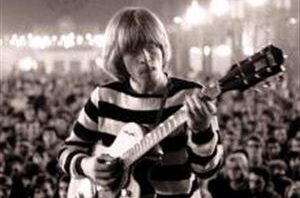
Photo caption: Brian Jones in THE STONE AND BRIAN JONES. Courtesy of Magnolia Pictures.
The Stones and Brian Jones tells the story of the ill-fated co-founder of The Rolling Stones. Most of us remember that Jones was fired from the band when his abuse of alcohol and drugs kept him from being able to record and perform with the band. This film delves into:
Jones’ unhappiness with Mick Jagger and Keith Richard’s diversification of the Stone’s portfolio beyond American Blues.
Jones’ insecurity about his role in the Stones being eclipsed by the band’s primary songwriters, Jagger and Richards.
Jones’ complex relationship with his parents.
The essential testimony of Jones’ girlfriends and those of other Stones (but not from the late Alita Pallenberg, who emerges as a villain in the story).
The most revelatory moments in The Stones and Brian Jones come from Jones’ bandmate, bassist Bill Wyman, who explains Jones’ musical contributions by pointing them out as we hear Stones songs.
Wisely, The Stones and Brian Jones doesn’t spend much time on Jones’ very unmysterious death. Somebody who mixes large amount of barbiturates and alcohol daily just isn’t going to survive very long, especially when they also get in swimming pools alone at night. Jones’ death occurred before premature substance abuse deaths of celebrity music figures (Jimi Hendrix, Janis Joplin, Mama Cass, Jim Morrison, Gram Parsons, Keith Moon) became more commonplace.
This is a competent and extremely well-sourced doc, which helps us understand someone who played a key role in forming an iconic band, but it’s not a Must See rock documentary. The Stones and Brian Jones is streaming on Amazon, AppleTV, Vudu and YouTube.
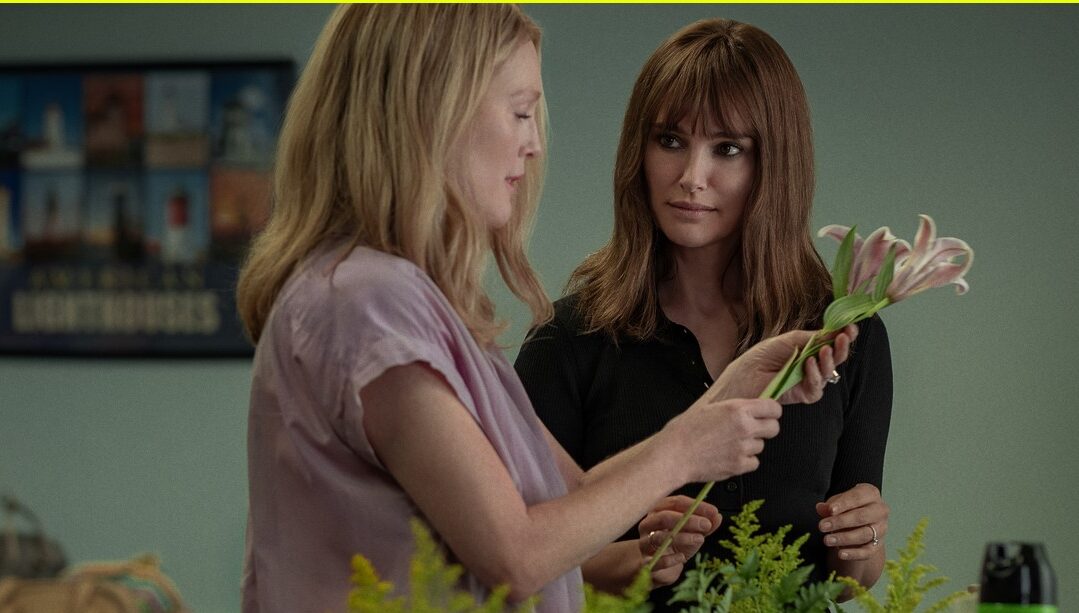
Photo caption: Julianne Moore and Natalie Portman, in MAY DECEMBER. Courtesy of Netflix.
Todd Haynes’ May December is both absorbing and unsettling. The TV actress Elizabeth (Natalie Portman) has been cast in a movie to play a real-life person Gracie (Julianne Moore) who,20 years before, had been embroiled in a tabloid scandal. that made her notorious. To research the role, Elizabeth visits the hometown of Gracie and her husband Joe (Charles Melton) to meet them and other people touched by the scandal. I’m not going to spoil that original scandal because Haynes unspools the story so skillfully; it’s a jaw-dropper.
Right off the bat, we notice two things. First, Elizabeth and Joe are both 36 years old, and Joe’s wife Gracie is much older. Second, although Joe and Gracie’s home and family seem very vanilla, Gracie’s behavior is a little off.
Haynes is known for visually rich, female-centered melodramas like Carol and Far from Heaven. This is far more psychodrama than melodrama.
As we and Elizabeth see Gracie with her children (the youngest are graduating from high school this week), she seems a little more than just a socially awkward bossy mom. She can act like a bossy mom with her husband, too. It’s not long before she veers from oddball quirks into the indisputably inappropriate.
As we consume news, we occasionally ask ourselves, What kind of person would do THAT? Or What kind of person would even THINK of doing that? Some people have a blind spot and feel no shame for something shameful they’ve done, justifying their own behavior and firmly seeing it as misunderstood by others. May December is a movie about such an abnormal personality, and the carnage she has wreaked.
Julianne Moore keeps us squirming in our seats throughout the film. Portman, who initially brought the story to Haynes, is equally superb in a role that grows from reacting to Gracie’s dysfunction into her own issues with boundaries. Both Moore’s and Portman’s performances are awards-worthy. Cory Michael Smith is also outstanding as Gracie’s son from an earlier marriage. It’s a vivid and memorable performance.
Casting director Samy Burch wrote the screenplay, her first feature, from her own story co-written with Alex Mechanix. Burch’s pacing in revealing more and more of the backstory is the key to May December’s effectiveness. When she drops in some exposition, it meshes with the behavior we’ve already seen from Gracie. Burch gives Gracie a couple stunning lines and Elizabeth has a killer line, too. When a characters say, “This is what grown-ups do“, it’s devastating.
Incidentally, for those who find the story farfetched, it is clearly based on an 1996 occurrence in Burien, Washington.
May December is in theaters, just before it streams on Netflix on December 1.
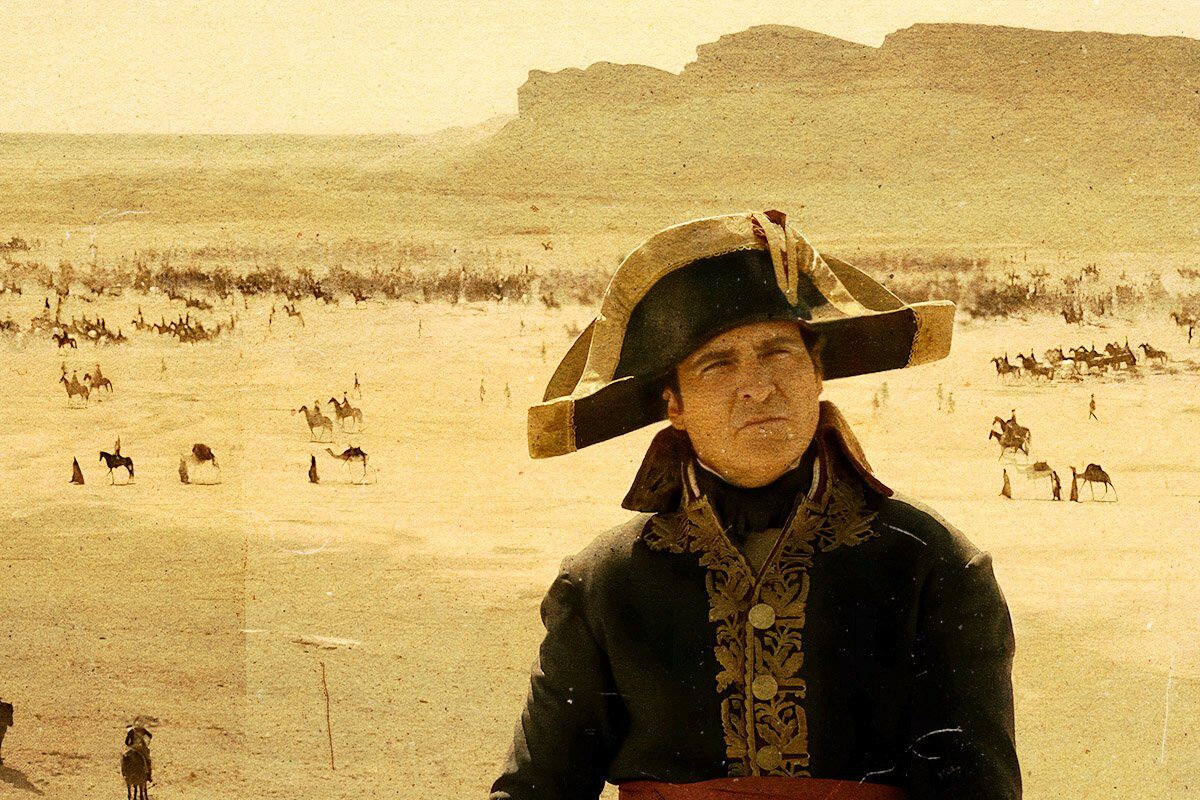
Photo caption: Joaquin Phoenix in NAPOLEON. Courtesy of AppleTV.
Of all living filmmakers, Ridley Scott would seem the most well-equipped to pull off a boundless EPIC, but his Napoleon, other than three spectacular battle scenes and a little sex, is boring, underwhelming and a little confounding. As The Wife said exiting the theater, it’s a slog, and she wasn’t referring to the winter retreat from Moscow.
For better or worse, Napoleon covers Napoleon Bonaparte’s entire public career – from his emergence in 1793 at age 24 to the beginning of his final captivity on St. Helena in 1815 at the age of 46. It’s kinda like a college survey course in the Napoleonic Era. Napoleon’s historical accuracy is solid, and, for a Hollywood movie, remarkably unusual.
Even with a running time of 2 hours and 38 minutes, there’s a lot of ground to cover. He did fight 61 battles, and it took the SEVENTH Coalition of opposing nations to defeat him. So, we get the briefest of glimpses of Napoleon’s mother, his second wife and other major figures in his life and times.
Here’s what is great about Napoleon – three extraordinarily spectacular battle scenes, depicting the Siege of Toulon, and the famous Battles of Austerlitz and Waterloo. They are amazing to watch, and the first two help us to understand Napoleon’s military genius (and the third, Wellington’s military genius). A segment of Austerlitz where Napoleon orders cannon fire to break the ice under enemy forces is one of greatest and most unforgettable battle scenes in cinema history.
Napoleon also does a pretty fair job with the the relationship between Napoleon (Joaquin Phoenix) and his first wife Josephine (Vanessa Kirby). It was a very uncomplicated one: he was utterly captivated by and devoted to her, and she just wasn’t that IN to him. Josephine was a survivor and an adventuress, who navigated through her misogynistic environment with a gift for canny manipulation. He finds that even making her an empress isn’t enough to quell her promiscuity. Phoenix and Kirby do a good job with this part of the story.
But, oddly for a biopic, Napoleon fails to help us understand Napoleon. Sure, he’s ambitious from the start, but why? And why does he need to keep conquering, at the risk of overreaching and losing everything? After all, didn’t they name a complex after this guy?
Joaquin Phoenix was so vivid as Johnny Cash in Walk the Line, as Commodus in Gladiator, and as Freddie in The Master; he was so original and authentic in Her and C’mon C’mon. But, in Napoleon, his performance doesn’t unwrap the package of Napoleon’s psyche. I can’t say it’s Phoenix’a fault, but the collaboration between Phoenix, Scott and screenwriter David Scarpa doesn’t pay off.
Scott does point out in an end title that 3 million lost their lives during the Napoleonic Wars, which raises the question, to what end? This guy with an insatiable appetite for power and conquest was starting wars with some twits who had been born into underserved monarchy.
Here’s a random digression from the movie Napoleon. Was Napoleon’s military prowess overrated? This is ironic, because Napoleon rose on his merits. But the forces he was defeating were led by royalty and aristocrats, who were given command of armies, not by their own training and demonstrated skills, but by the accident of birth. Alexander I of Russia, for example, started out as an immature, headstrong nitwit and aged into a fullblown nutcase. Maybe Napoleon was analogous to MLB Hall of Famers who never had to face black ballplayers. Hmmm.
Napoleon is now in theaters, and will stream on AppleTV on a date TBD.
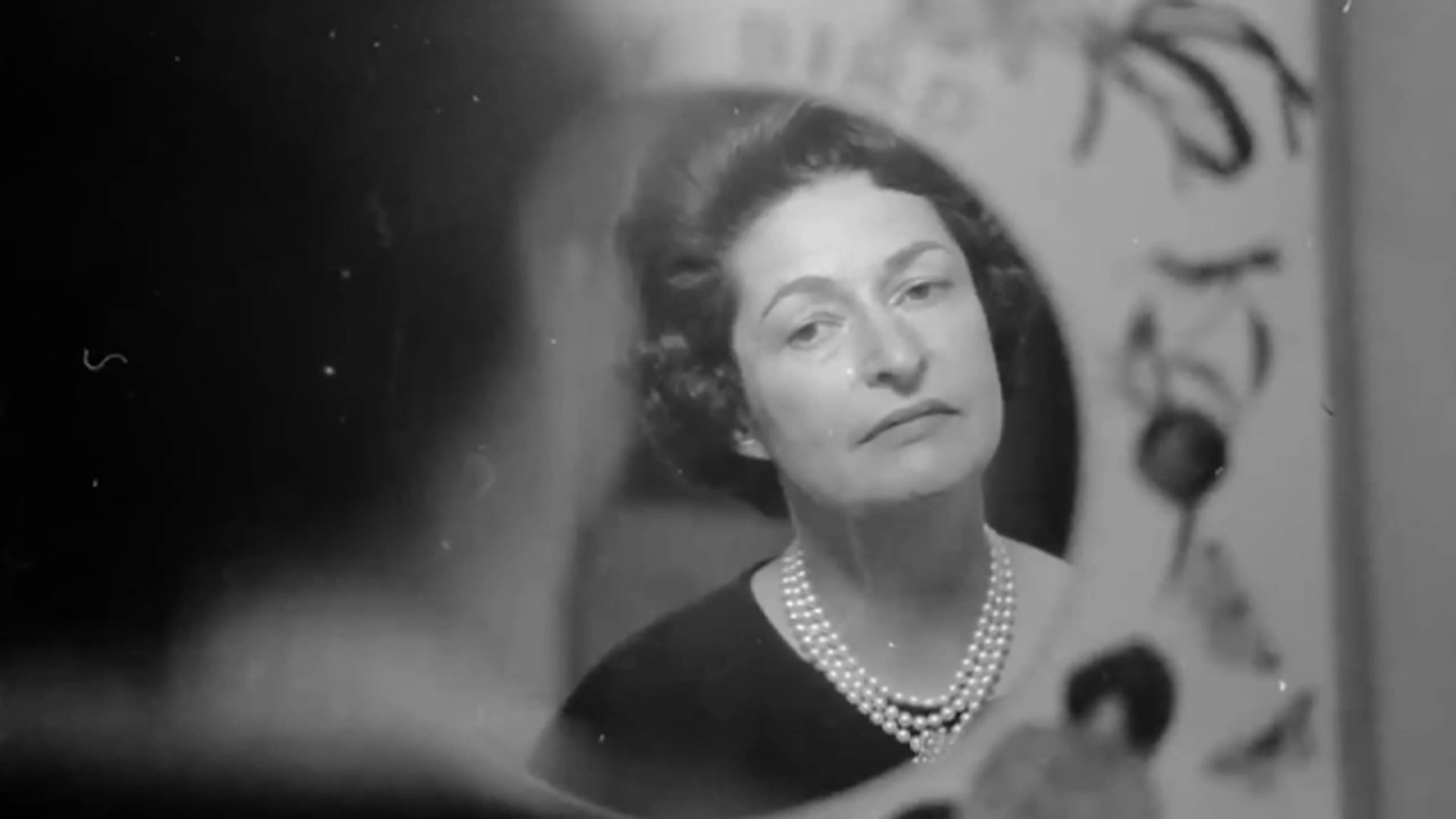
Photo caption: Lady Bird Johnson in THE LADY BIRD DIARIES. Courtesy of Hulu.
For students of 29th Century American political history, The Lady Bird Diaries is essential. In her time as First Lady, Lady Bird Johnson audio-recorded her candid observations of some of the nation’s most dynamic and turbulent years. The 123 hours of those recordings, now released after her death, have been excerpted into the core of this singular documentary.
We hear Lady Bird’s unique point of view on the JFK assassination, LBJ’s battles with depression, the infamous White House luncheon Eartha Kitt incident and RFK. And, after all, she was living in the White House with LBJ through his Civil Rights triumphs and the morass of Vietnam. LBJ’s presidency was so jampacked, we get the tiniest mention of Medicare (Oh, yeah, THAT was LBJ, too).
Lady Bird’s first-person perspective would be valuable enough in a written document, but hearing her actual voice brings even deeper insights into the events, LBJ and Lady Bird herself.
Indeed, The Lady Bird Diaries Lady Bird’s own voice is almost the entire film, annotated only by director Dawn Porter’s exceptional use of explanatory titles, archive clips and photos. Porter’s use of images is as brilliant as I’ve seen in a doc.
Lady Bird’s narration, combined with recorded phone calls between the Johnsons, makes clear Lady Bird’s involvement in her husband’s career. She gave him advice on matters both tactical, critiquing his speeches, and strategic (including whether to seek re-election). LBJ was notoriously thin-skinned, came closest to welcoming criticism only from Lady Bird. One of the most sharp and insightful segments is a disagreement between the Johnsons on how to handle the Walter Jenkins scandal (LBJ’s chief of staff caught in a homosexual haunt) days before the 1964 presidential election. Clearly, Lady Bird was determined to give LBJ her best thinking, whether he wanted it or not.
The Lady Bird Diaries also reminds us of:
Lady Bird’s groundbreaking work on the environment, then known as the “beautification” campaign.
Her gameness to campaign in a 1964 whistlestop tour through the South, facing down White voters howling about LBJ’s Civil Rights Act of 1964.
The toll on the Johnsons from the the unrelenting public scorn about Vietnam.
This is fantastic history and an extraordinary film. The Lady Bird Diaries is streaming on Hulu.
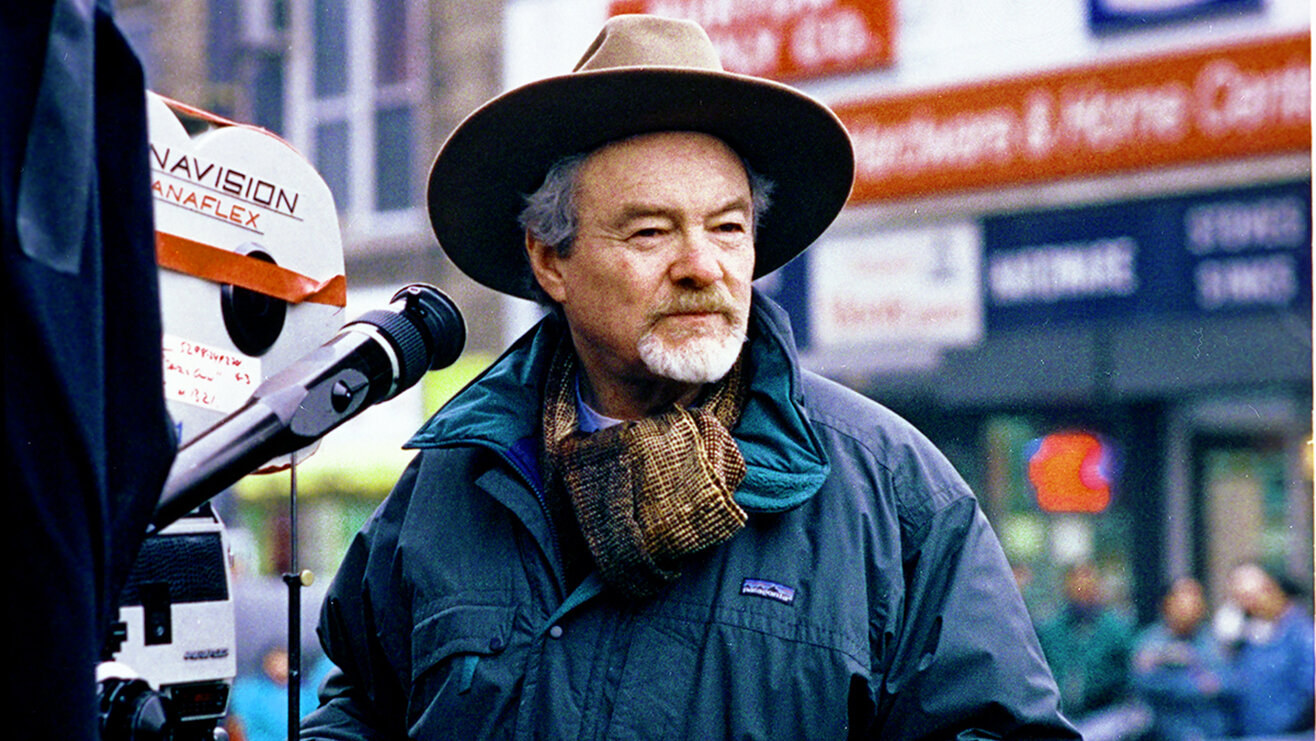
Alan Pakula in ALAN PAKULA: Going for Truth. Courtesy of Magnolia Pictures.
Alan Pakula: Going for Truth is the fine biodoc of the filmmaker Alan Pakula, who received Oscar nominations for producing To Kill a Mockingbird, directing All the President’s Men and writing Sophie’s Choice.
Pakula demonstrated very high standards, and, as entertaining as his films are, his filmography doesn’t contain anything cheap and popular or any dumbed-down content. Famous for his “paranoia trilogy” of the 1970s (Klute, The Parallax View and All the President’s Men), he was remarkably versatile, also mastering the psychological thriller (Presumed Innocent) and the heart-wrenching, high-brow drama (Sophies Choice). Pakula was also responsible for launching the directing career of screenwriter James Brooks (Terms of Endearment, Broadcast News).
Alan Pakula: Going for Truth is exceptionally well-sourced. We see plenty of clips of and interviews with Pakula himself. We hear from his colleagues and widow, along with Jane Fonda, Harrison Ford, Robert Redford, Meryl Steep, and Harrison Ford.
Alan Pakula: Going for Truth can be streamed from Amazon, AppleTV, Vudu and YouTube.
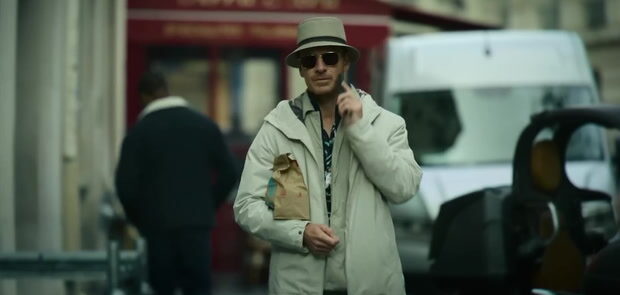
Photo caption: Michael Fassbender in THE KILLER. Courtesy of Netflix.
In The Killer, a professional hit man (Michael Fassbinder) goes about a revenge quest silently, but we, the audience, hear his constant interior thinking. Directed by David Fincher, the thriller aspects are superbly executed, but the novelty here is the protagonist’s nonstop patter, some reminding him of the basics of his craft and some wittily snarky observations of others.
The one brilliant note is that the hit man is constantly using false identities to transverse the globe, and he has chosen the names of iconic tv characters and the actors who play them. Very funny (and no spoilers from me).
Still, this is an ultimately empty film, and, although I enjoyed it, it’s very, very minor Fincher (Zodiac, Se7en, The Social Network, Gone Girl, Mindhunters).
Fassbinder is very good, as is Tilda Swinton, who elevates her turn in this genre film.
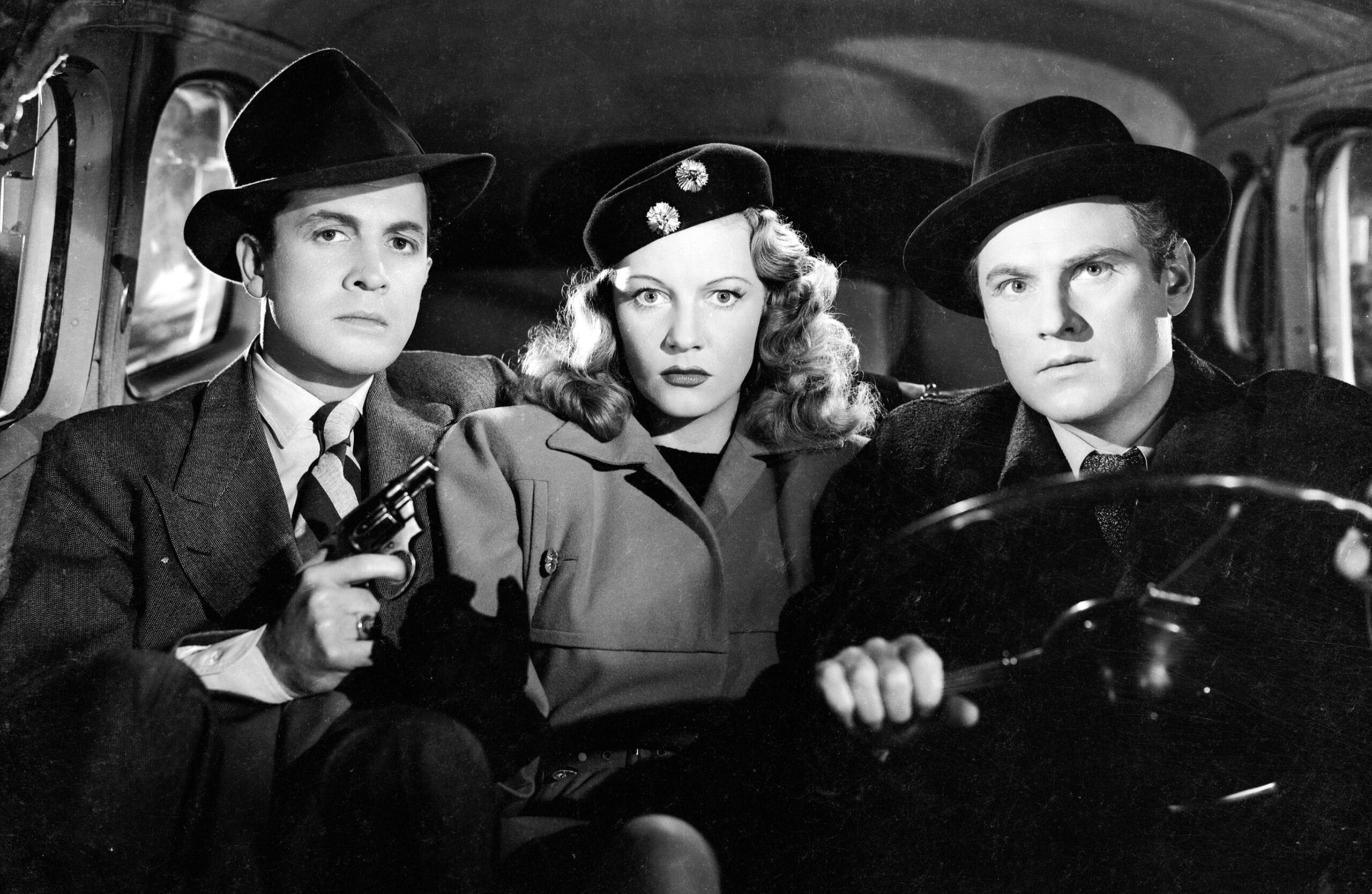
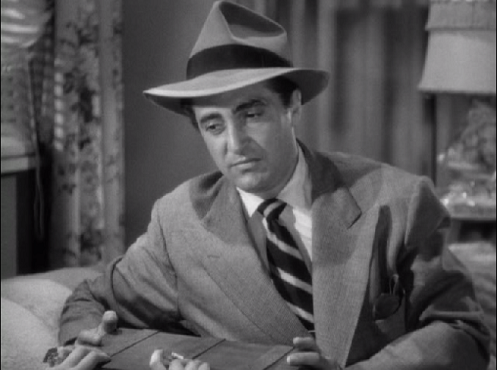
Photo caption: Ed Norris, Jean Gillie and Herbert Rudley in DECOY.
The obscure, low-budget Decoy is the first film that I’ve been unable to write about without spoilers, but you’ll still be able to appreciate it, even when you know some of what’s coming. It’s coming up on Turner Classic Movies on Friday night, November 17. Decoy, one of my Overlooked Noir , is not available to stream, so set your DVR.
Decoy, from 1946, stands out from the rest of film noir (and from much of cinema) for two elements. The first is the most hysterically evil femme fatale ever. The second is that the plot pivots on a preposterous premise.
The ill-tempered Frankie Olins (Robert Armstrong) is on California’s death row because he killed a cop in a robbery. The robbery netted a huge fortune, which Frankie has hidden. Frankie refuses to disclose the location of his loot, because he wants to maximize the incentive for others to work for his release. Frankie’s girlfriend, Margot Shelby (Jean Gillie), is two-timing him with another vicious hood, Jim VIncent (Ed Norris), who is bankrolling Frankie’s legal appeals, They hope to get Frankie out of prison to recover the loot, and then steal it from him. Alas, the appeals go for naught, and Frankie is about to be executed in San Quentin’s gas chamber, taking his secret with him to the grave.
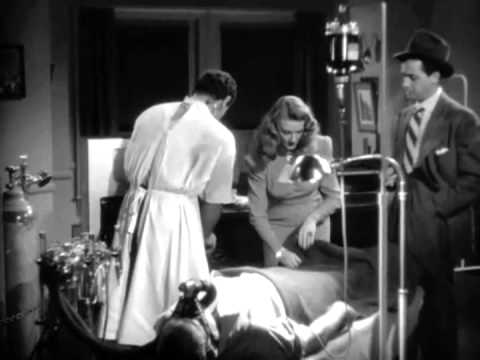
At this point, things get ridiculous. Margot and Jim revise their plan, pivoting to stealing Frankie’s body AFTER the execution and reviving him with a dose of methylene blue, an antidote for the cyanide used in the gas chamber. Now, the kernel of truth here is that methylene blue CAN be used as an antidote to cyanide poisoning in someone who is ALIVE. But, of course, methylene blue CANNOT reverse death by cyanide poisoning. But, indeed, the rest of Decoy’s plot is based on the resurrection of Frankie.
Margot and Jim manage to smuggle out Frankie’s corpse, and they force the earnest, do gooder Dr. Lloyd Craig (Herbert Rudley) to bring him back to life with methylene blue. Frankie unwisely draws a treasure map and is promptly removed from our story. Margot and Jim, with Dr. Craig driving his own car at gunpoint, head off to find and dig up the money.
At this point, Margot takes over the film. In Decoy’s final eight minutes, Margot is not only remorselessly murderous, but she’s sadistic as well. And she can even take pleasure in humiliating a man from her deathbed.
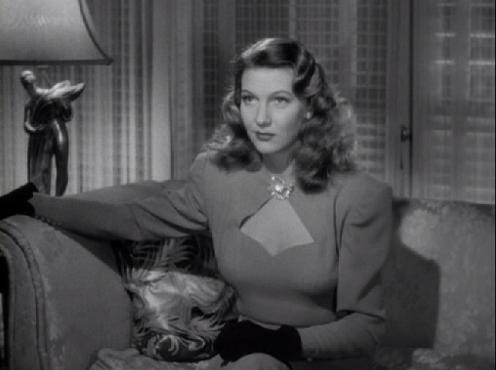
Jean Gillie in DECOY
As outlandish as Margot’s behavior becomes, Jean Gillie’s performance is fully committed. Her Margot actually rejoices in her own perversity. I’m serious when I rate Gillie’s Margot as the most evil femme fatale in cinema. Even compared to the Anne Savage role in Detour, and to the parts played by Cleo Moore in the Hugo Haas movies, she is the most depraved.
Gillie was an English actress who was married to Decoy’s otherwise undistinguished director, Jack Bernhard. That marriage broke up, and she didn’t like Hollywood. After her one major Hollywood movie, The Macomber Affair, supporting Gregory Peck, Joan Bennett and Robert Preston, she returned to England. Gillie promptly died of pneumonia at age 33.
Robert Armstrong is appropriately nasty as Frankie, and has a fun scene when he discovers that he has been resurrected. Thirteen years earlier, Armstrong played the human protagonist, along with Faye Wray, of King Kong.
The character of Jim Vincent is a one-dimensional thug, and Norris doesn’t add any other touches (as Dan Duryea would have).
Potentially, the best role in Decoy would have been Dr. Craig, who is a moral and decent man forced into misdeeds (and that resurrection) by evil people. He is psychologically ruined before he meets his end. There’s even a corny scene where the doc looks across his office, and the camera highlights the section of his medical oath that he is forced to transgress. By the midpoint of the movie, Herbert Rudley staggers around like a zombie as a Dr. Craig who is unable to fathom how his life could have been ruined in just one day. A better actor than Rudley could have brought more heartbreaking depth to this role.
Sheldon Leonard in DECOY.
One of the greatest delights in Decoy is Sheldon Leonard as the cop nicknamed Jojo, Police Sgt. Joe Portugal. Having put away Frankie, Jojo is watching Margot and Jim, waiting for the chance to nab them, too. He keeps showing up to pressure them, and he’s there at the end to pick up the pieces. Nobody could do out-of-the-side-of-his-mouth sarcasm like Leonard.
Leonard earned 109 film credits as an actor, the most memorable being the bartender Nick in It’s a Wonderful Life, Lt. Coyo in To Have and Have Not and Harry the Horse in Guys and Dolls. Although he was a perfect fit for film noir, he was rarely as prominent as he was in Decoy and, a year later, The Gangster. Leonard’s biggest mark on American culture came as a television producer – he produced some of the most popular and iconic TV shows ever: The Danny Thomas Show, The Dick Van Dyke Show, The Andy Griffith Show, Gomer Pyle, USMC and I Spy.
Decoy concludes with a startingly vicious act by Margot and then a very ironic ending (think Treasure of the Sierra Madre) when Frankie gets the last laugh.
Decoy is not a very good film, but it moves so quickly, and its two major elements are so astoundingly outrageous, that it’s fun to watch. Decoy is not currently available to stream. I watched Decoy on Turner Classic Movies.
Herbert Rudley, Jean Gillie and Ed Norris (around Robert Armstrong on the table) in DECOY.
Shere Hite in THE DISAPPEARANCE OF SHERE HITE. Courtesy of IFC Films.
The Disappearance of Shere Hite: This film, a triumph for director Nicole Newnham (Crip Camp), explores the life and times of the groundbreaking sex researcher and best-selling author. A woman of uncommon confidence, determination and resourcefulness, Hite sailed into the face of the patriarchy. Denied resources and respect by the academic establishment, her guerilla research uncovered pivotal truths of female sexuality and spoke them for the first time. The resulting sensation brought fame, acclaim and notoriety to Hite, accompanied by both financial success and a vicious backlash. The persistence of that backlash, and its personal toll, caused Hite to essentially revoke her own celebrity. Hite did not suffer fools, and was fearless until she wasn’t.
We meet a slew of Hite’s intimates in this superbly sourced film and gain insight into her personality. Shere Hite speaks to us directly in file footage and in her writings, voiced by Dakota Johnson.
For those of us who were roaming the earth in the 1970s, it’s still jarring to see the cultural resistance to what we now accept as biological fact. For those experiencing this story for the first time, it’s astonishing and powerful. I understand that women under age forty-five, having missed Shere Hite’s moment of ubiquitous media presence, are responding strongly to this film.
I screened The Disappearance of Shere Hite for the Nashville Film Festival, and it topped my Must See at NashFilm. It opens in theaters this weekend.
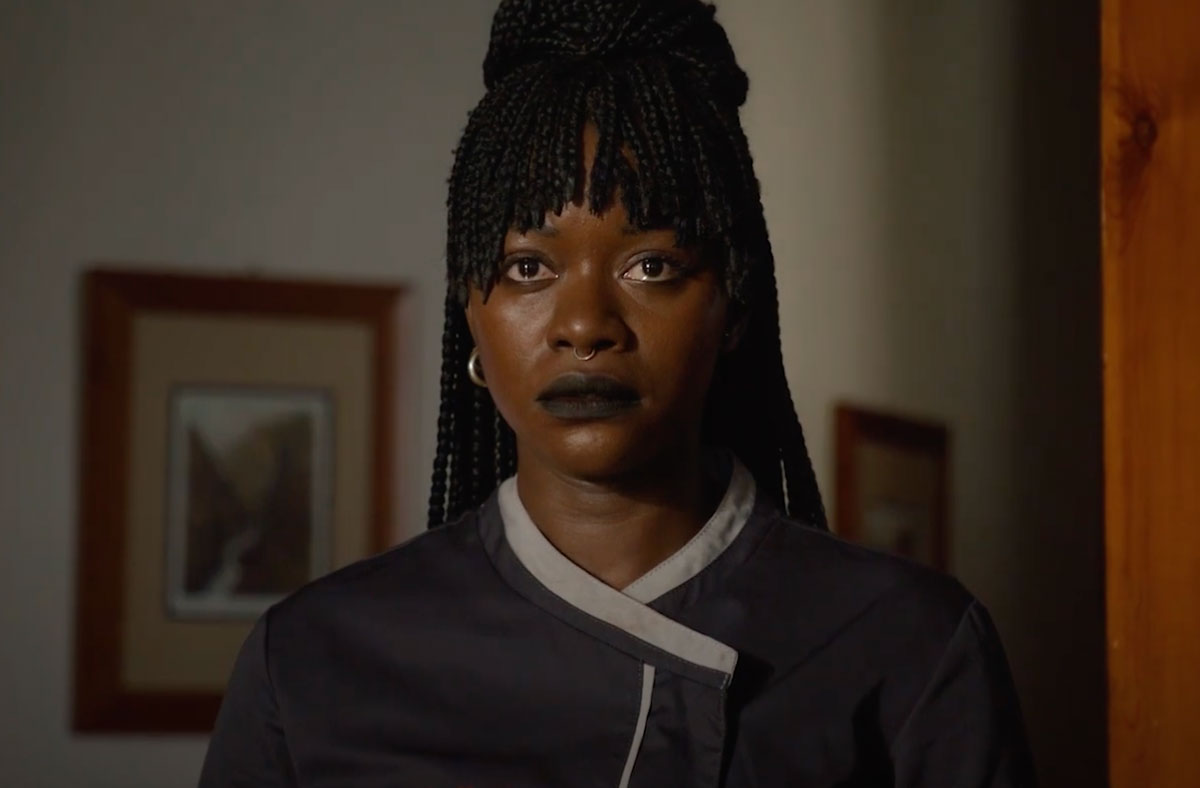
Photo caption: Babetida Sadjo in OUR FATHER, THE DEVIL. Courtesy of Cinedigm.
In the gripping drama Our Father, the Devil, an African immigrant in France is rocked when an African priest shows up in her workplace – and he could actually be the savage warlord who traumatized her in her homeland.
Marie (Babetida Sadjo) is the head chef at an elder care facility in a French mountain town. We see that Marie is talented, competent and kind. There are hints of trauma in her past – a hair trigger reaction to a possible threat, a scar on her back.
The new priest (Souleymane Sy Savane) shows up, and Marie fixes on his voice before she sees him and, before we see his face, she has positively identified him as the young commander from decades before. We wonder how she can be so certain, although that is later revealed.
Our Father, the Devil makes for a riveting character study of Marie that becomes a thriller when Marie gets extreme. We learn more and more about the back story – it’s not just her own victimization that has traumatized Marie. Does violence traumatize the perpetrators as well as the victims? And Our Father, the Devil ultimately poses this question – can revenge extinguish trauma?
Our Father, the Devil is the first feature for Cameroon-born, American writer-director Ellie Foumbi, and she’s both an impressive director and screenwriter.
Babetida Sadjo delivers a compelling performance as Marie, built on the intensity of her gaze and her extraordinarily expressive eyes.
Souleymane Sy Savane, so good in 2008 as the sympathetic, relatable lead in Ramin Bahrani’s fine Goodbye Solo, brings texture and depth to the priest – and his own evolving view of his past.
Our Father, the Devil benefits from interesting and filled-out minor characters – Marie’s dying mentor Jeanne Guyot (Martine Amisse), her cheeky best friend Nadia (Jennifer Tchiakpe), her love interest Arnaud (Franck Saurel), and even her stressed-out boss Sabine (Maelle Genet). There’s not a two-dimensional character or a poor performance in the lot.
Our Father, the Devil has been nominated for an Independent Spirit Award and has won the best picture award at over13 film festivals. I saw Our Father, the Devil at the SLO Film Fest in April, where it also won the jury award for Best Narrative Feature, and it’s now streaming from AppleTV, Vudu, YouTube and redbox.
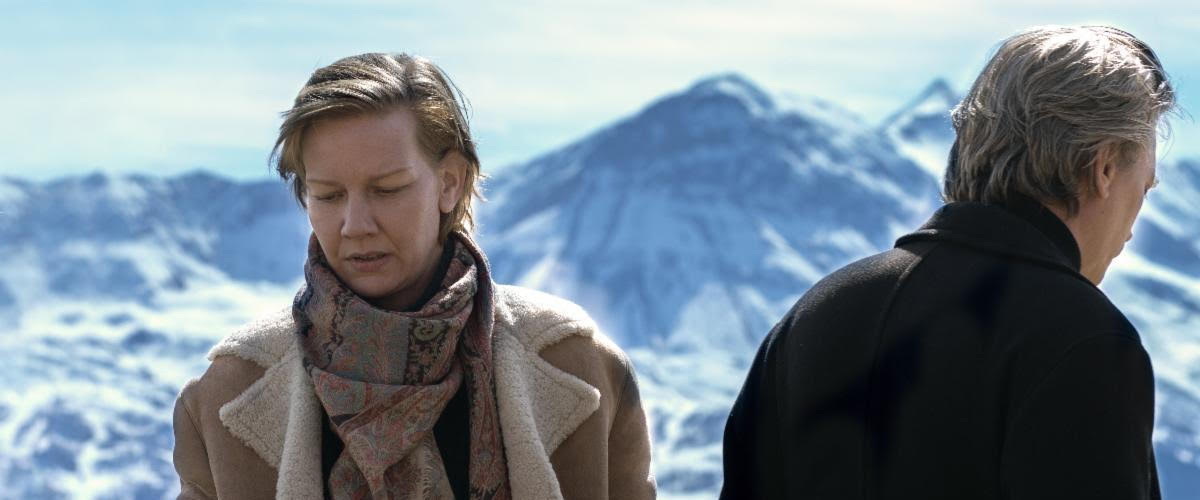
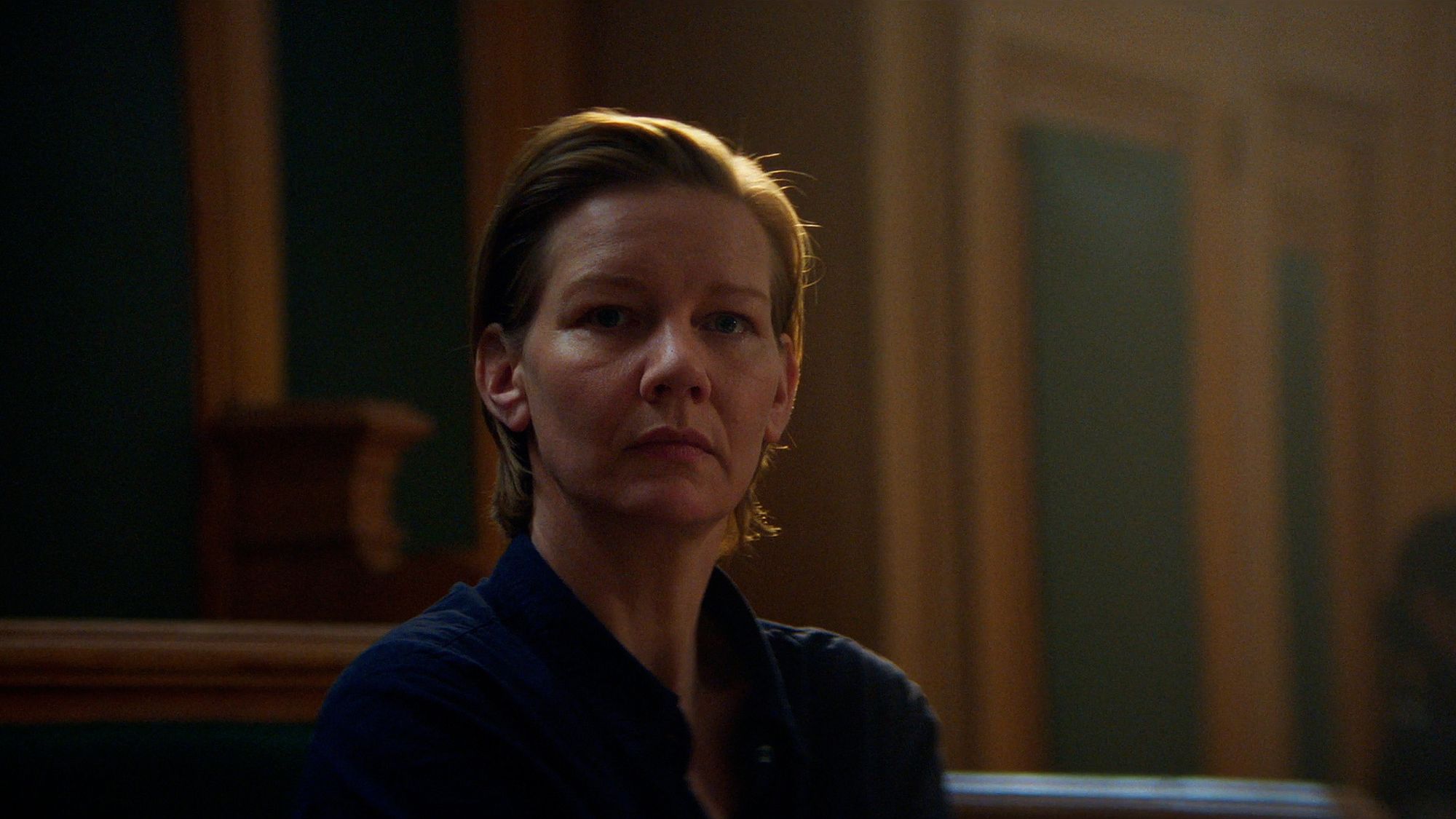
Photo caption: Sandra Huller and Swann Arlaud in ANATOMY OF A FALL. Courtesy of NEON.
Anatomy of a Fall is such a great film, on so many levels, that it’s taken me an entire week to mull over why it’s so good.
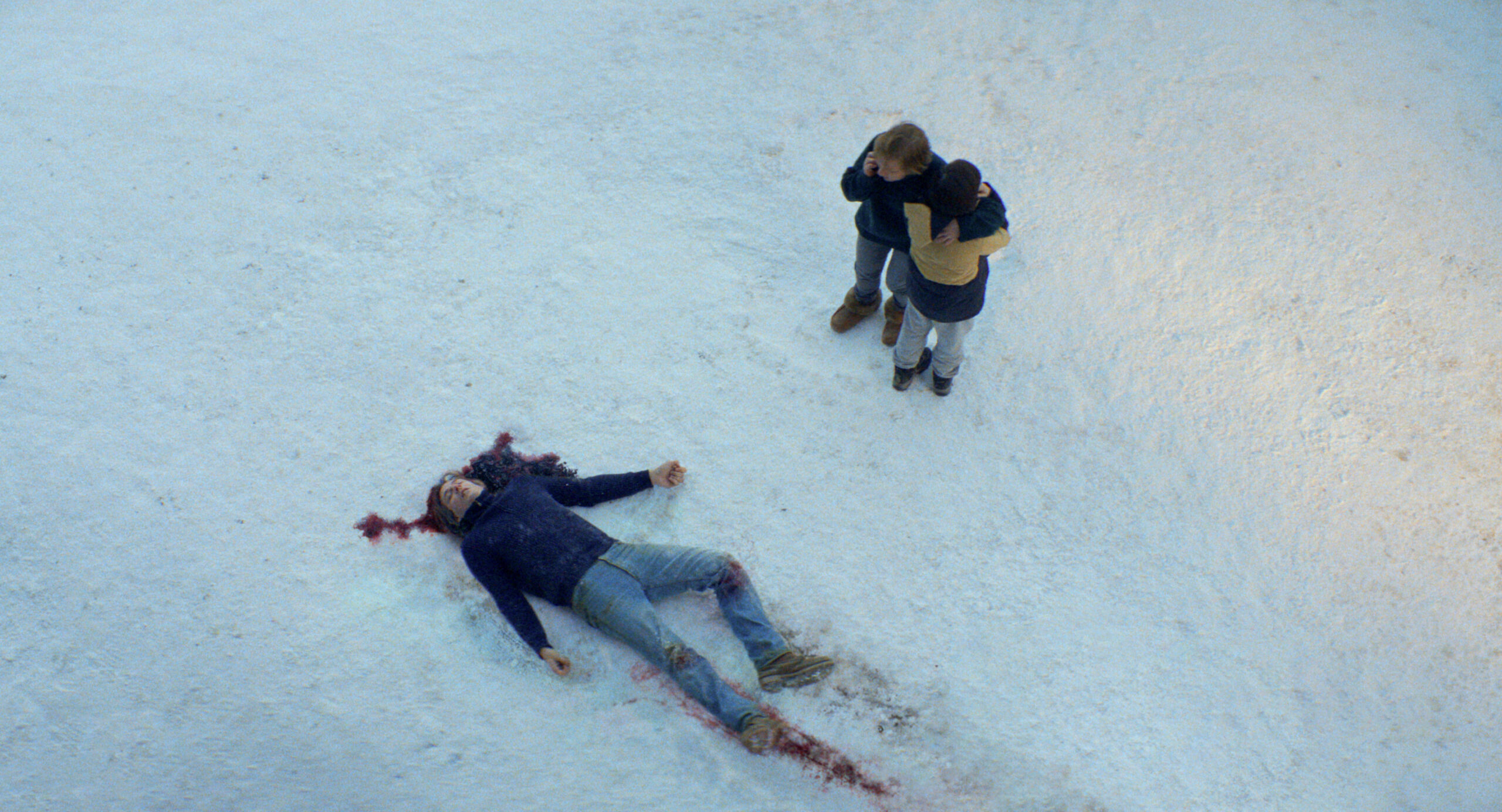
Here’s the story. The successful German novelist Sandra (Sandra Huller) and her French husband Samuel (Samuel Thiess), a teacher and wannabe writer, live in his hometown in the French Alps near Grenoble. They moved there, into a chalet that needs renovation, after a car accident caused their now 11-year-old son Daniel (Milo Machado Graner) to lose his eyesight. Daniel and his dog Snoop return from a walk and discover Samuel, who has fallen to his death from the chalet’s high attic window. Only Sandra was home at the time of Samuel’s death.
The evidence from Samuel’s autopsy might point to a suicide or to a murder. The investigators find something provocative on a thumb drive, and charge Sandra with Samuel’s murder. Anatomy of a Fall goes from a whodunit to a courtroom drama, and then to a family psychological drama, as the trial reveals explosive secrets.
Director and co-writer Justine Triet makes ambiguity more delicious than we could possibly expect. As Jon Frosch wrote in The Hollywood Reporter about Sandra, “But Richard Kimble she’s not. ” We don’t know if Sandra, unlike the famed The Fugitive, is really innocent.
Sandra might be a Kafkaesque victim, unjustly put through a humiliating and terrifying trial, Or she might be an extraordinarily gifted sociopath.
Ironically, Sandra’s literary success has come from transforming her real life experiences, and those of others, into best selling fiction. But Sandra is very closemouthed about her own private life and anything but confessional. Her worst nightmare is to have details of her marriage and her sex life exposed in a public trial.
As the onion of Sandra and Samuel’s marriage is peeled back, Anatomy of a Fall explores just how multi-faceted relationships, the dynamics of guilt and resentment, and how a marriage survives a trauma – or doesn’t. And each scene is filled with ambiguity andthe uncertainty of memory.
As the close of the trial approaches, there’s a a Wowzer cliffhanger that keeps us on the edges of our seats.
Although the story is set in France, most of the dialogue is in English because Sandra and Samuel speak English at home, and Sandra speaks English in the French courtroom.
Sandra Hullermust play Sandra so we believe that she could be innocent or guilty. In addition, Sandra’s character is complicated, even full of paradoxes. Huller’s performance has not been surpassed by that of any other screen actor this year, and she certainly deserves the Best Actress Oscar.
American art house audiences know her best for Toni Erdmann, where her corporate striver character must react to her zany father’s onslaught of ever more elaborate, outrageous and high-stakes practical jokes by maintaining a straight face and carrying on without giving away her shock, embarrassment and desperation. She’s on the verge of abject mortification for the entire movie. Hüller proved herelf a master of the take and the slow burn. She was similarly exquisite in a smaller role in Triet’s Sybil.
No one plays aggrieved, while struggling to maintain composure, as well as Huller. Can you imagine having to listen to your dead spouse’s shrink testify in public about all of his complaints about you in their private sessions? There are many injustices in that situation, and Huller makes us understand that Sandra is feeling each layer of indignity.
Huller has won Best Actress Awards from the European Film Awards and the Berlin and Toronto film festivals. She also stars in the upcoming Zone of Interest, another of the very most acclaimed films of 2023.
Anatomy of a Fall is just the fourth narrative feature for Justine Triet, a firecracker director. This one is the least comedic. I described her most recent film, Sibyl, as “masking its trashiness with expert filmmaking”.
In Anatomy of a Fall, Triet tells us so much before the opening credits. In just a few moments, we see both Sandra’s success and her off-putting manner, undeniable friction in her marriage, the boy’s visual handicap, his spirit and his loyal dog. And the discovery of a dead husband. Wow!
The entire cast is solid, especially Swann Arlaud (with a fabulous haircut) as the defense counsel, passionate about Sandra’s defense and perhap devoted to Sandra herself, but uncertain (and indifferent) as to her innocence. Samuel Thiess brings Samuel alive in flashbacks, especially in a searing mano-a-mano with his wife. Milo Machado Graner is wonderful as Daniel, a spunky kid who insists on his right to hear everything at the trial, but is unable to imagine all that will entail.
Howard Hawks said that a great movie is “three great scenes and no bad scenes”. There are no bad scenes in Anatomy of a Fall, and there are at least four great scenes:
An incredibly authentic argument (in flashback) between husband and wife;
Sandra’s courtroom confrontation with her husband’s shrink.
Sandra’s testimony after the courtroom has listened to a taped conversation.
Daniel’s explosive scene with his court-appointed social worker and Snoop.
BTW Snoop the dog is great. I’m now finding my own dogs very inadequate in comparison. There’s also the unexpected use of an instrumental version of 50 Cent’s P.I.M.P. to great effect.
Anatomy of a Fall won the Palm d’Or, the highest prize at the Cannes Film Festival. (That may indicate that the film is sublime like Shoplifters and Parasite or an unwatchable mistake like Titane, but, this time, it’s the former).