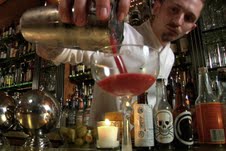
Hey Bartender explores the new wave of Craft Bartending. This is not about watching guys cry in their boilermakers at the neighborhood dive. It’s about the new application of culinary sensibilities – fresh ingredients, creativity, presentation and hospitality – to the cocktail. If you enjoy striking a blow for liberty now and again, this movie is cocktail porn – in fact, I’ve added it to my Best Food Porn Movies.
Hey Bartender takes us to the Museum of American Cocktail, and we learn that there is such a thing as a Cocktail Historian. We spend time at the New York City’s Employees Only, recognized as the world’s best cocktail bar. We meet the nation’s current celebrity bartenders and contrast them with the proprietor of a struggling family owned joint in Westport, Connecticut. We tag along with attendees at the major craft bartending convention, Tales of the Cocktail in New Orleans. And we see the featrured bartenders mix some delectable looking concoctions.
Because I streamed Hey Bartender at home, I was able to pause it at the 55-minute mark to make myself an Ellis Island (Makers Mark, Carpano Antica and a swish of Strega, shaken and served neat in martini glass, which I discovered at San Francisco’s Poesia.).
Hey Bartender is having a very limited theatrical run (a single showing this week in one local theater) and is available streaming fro, Amazon, Vudu, iTunes and other VOD outlets.
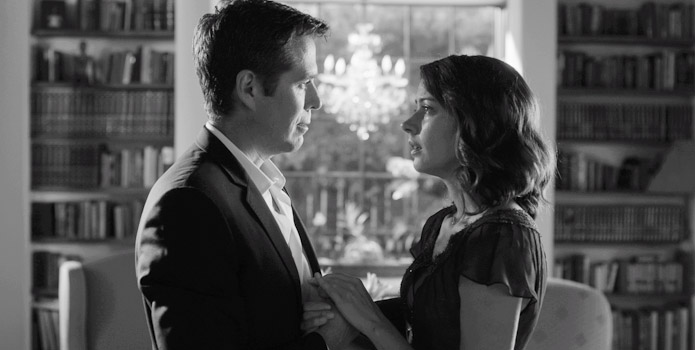
Alexis Denisof and Amy Acker in MUCH ADO ABOUT NOTHING
Director Joss Whedon (The Avengers, Buffy the Vampire Slayer) takes a break from pop with Shakespeare’s Much Ado About Nothing. It’s set in current times (with iPods and cupcakes) and filmed in black and white at Whedon’s Santa Monica home. It worked for me.
Whedon told NPR “Some people won’t see Shakespeare because they don’t believe there’s characters in them, they think it’s, you know, homework.” Whedon’s version brings out the screwball comedy sensibility of the tale. Indeed, there’s really nothing uniquely 16th century about the plot: one couple is perfectly matched but they think that they despise each other, another couple is head over heels in love and a mean, unhappy villain wants to break up the romance. As the primary couple who wage “a merry war” of wit, Alexis Denisof and Amy Acker keep up with the quickpaced barbed patter and show a gift for flopping-on-the-floor physical humor. Nathan Fillion hilariously deadpans the malapropisms of Dogberry, here the dimmest supervising rent-a-cop in English literature.
[Note: There’s also some serious home and party decorating/staging porn for the HGTV set.]
It’s all good fun, and there’s no need to review the play before enjoying it. In fact, I’m adding it to my list of Best Shakespeare Movies.
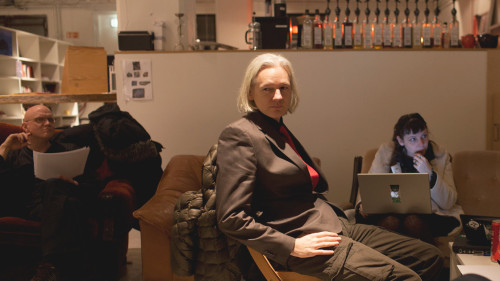
In We Steal Secrets: The Story of WikiLeaks, master documentarian Alex Gibney, weaves together three threads, each essential to the improbable story of WikiLeaks. First, there is the hermit-like anarchistic hacker Julian Assange, whose narcissistic brashness could deliver personal fame, but not sustain a movement. Then there’s the leaker Bradley Manning, a lonely misfit with one soaring talent. Finally, there is the post-9/11 security environment, in which US government secrets are now shared between many levels of many security agencies, presuming each lowly functionary has a need to know.
Gibney brings us interviews with Manning’s immediate supervisor in the Army, his boyfriend and the confidante who turned him in. We see footage of Assange in his hotel room before his big press conference (from another filmmaker – Assange did not cooperate with Gibney). Gibney does introduce us to Assange’s former team members at WikiLeaks, his journalistic partners and even a Swedish woman who accused him of sexually victimizing her. It all makes for a comprehensive inside perspective.
All three threads of the story are astounding, especially how anyone could keep Bradley Manning in the US Army and how the nation’s diplomatic and military secrets were all opened to a private at an isolated forward base in Iraq. Gibney could have made an equally entertaining movie, if less complete, based on Assange alone; Assange is an odd duck who had his rock star moment and left a trail of relationship carnage behind, burning every single friend, colleague and well-wisher along the way.
Gibney is remarkable prolific. After winning the 2008 Best Documentary Oscar for Taxi to the Dark Side, he has churned out Casino Jack and the United States of Money, Client 9: The Fall of Elliott Spitzer, Magic Trip, The Last Gladiators, Park Avenue: Money, Power and the American Dream and Mea Maxima Culpa: Silence in the House of God. It’s a body of work that is notable for its strong quality and even more astonishing productivity.
We Steal Secrets: The Story of WikiLeaks is in theaters and is also available streaming from Amazon, Vudu, YouTube, Google Play and other VOD outlets.
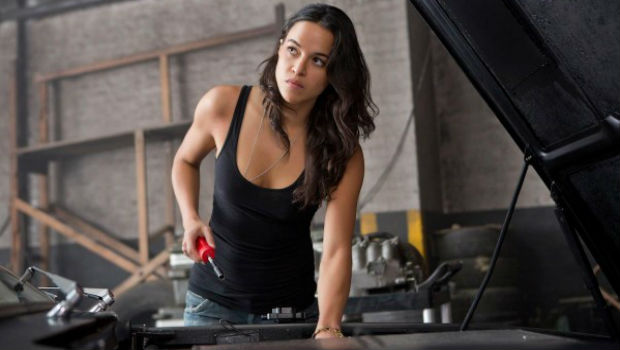
Driven to an air-conditioned theater by a weekend heat wave, I surprised myself by seeing Fast & Furious 6 (just “Furious 6” in the title sequence). Now you do not go to a franchise action thriller for strong characters, profound themes or plausible stories; instead you’re looking for fights and chases (and, in my case, air conditioning). Fortunately, Fast & Furious 6 delivers the cool chase scenes, doesn’t take itself too seriously and offers a couple of strong female performances to boot.
In a smoldering performance, Michelle Rodriguez steals the movie whenever she’s on screen. I was also delighted to see Gina Carano, whom I liked so much last year in Steven Soderbergh’s Haywire. Carano is a mixed martial arts star in real life, so she adds authenticity to an action picture.
Then there’s the dialogue and the plot. One team member says, as Dwayne “The Rock” Johnson approaches unseen from behind, “Why do I smell baby oil?”. That is the ONLY line in Fast & Furious 6 that I hadn’t heard in a movie before. The movie’s climactic set piece is over 20 minutes of frantic action as an airplane is trying to take off, and I calculated that the runway needed to be at least 68 miles long. But, because Furious 6 shows the good sense not to linger on anything for longer than a second or two, we don’t mind.
Some female viewers will gag at a male fantasy aspect of Fast & Furious 6. It’s not a sexual, but a gender behavioral fantasy – the women characters always release the men from any emotional drama. When a guy opts to leave his wife and their baby for a totally unnecessary suicide mission, she accedes, affirming that he’s gotta do what he’s gotta do. When the hero finds and rescues his old girlfriend, his current girlfriend is a good sport and steps aside with no hard feelings. It’s a Low Maintenance and No Drama world for the guys. This is the most implausible part of Fast & Furious 6.
Rodriguez: outstanding. Chases and Carano: good. Everything else: silly but harmless.
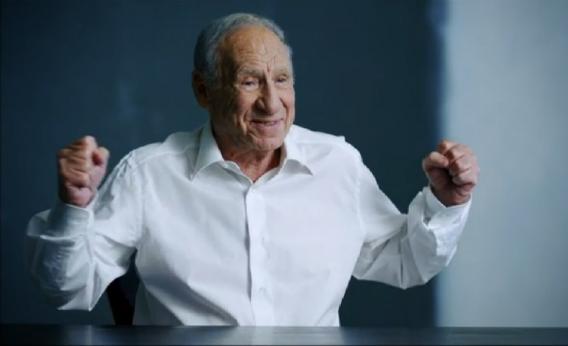
PBS’s American Master series is airing the documentary Mel Brooks: Make a Noise, which reviews the career of master filmmaker Mel Brooks. In particular, we glimpse inside the making of such masterpieces as The Producers (one of my Greatest Movies of All Time), Young Frankenstein and Blazing Saddles. We see clips from those movies and hear from Talking Heads (including Brook’s best friend Carl Reiner). But the best part of Make a Noise is hearing from Brooks himself. He’s personally delightful and remarkably clearheaded about what makes his films so funny.
{Note: I’m reposting this because The East’s wider release was delayed until this weekend – and it’s one of very few good new movies.)
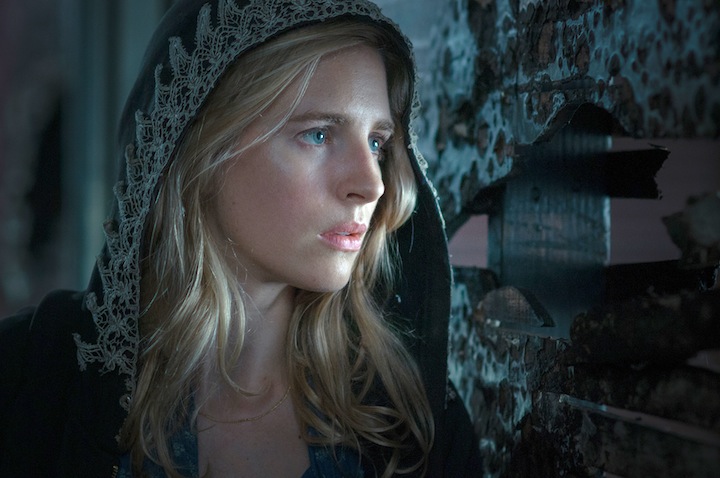
The East, coming out on Friday, is a smart and gripping thriller that explores both our response to corporate criminality and the unfamiliar world of anarchist collectives. Brit Marling plays a brilliant up-and-comer in an industrial security firm who goes undercover to hunt down and infiltrate a band of eco-terrorists named The East.
The East seeks to brings deadly personal accountability to corporate leaders who injure people and the environment. These aren’t Hollywoodized corporate villains – all of the corporate crimes depicted in the movie have occurred in real life. Lesser filmmakers would have made The East into a revenge fantasy with a Robin Hood-like merry band of earnest kids – or a conventional espionage procedural, hunting down a gang of wild-eyed terrorists.
The East is so good because it explores our helplessness in the face of corporate malfeasance. The corporate targets deserve to be held accountable, and their crimes cry out for punishment. Yet the vigilante violence of The East is clearly unacceptable. No self-selected group of avengers – no matter how legitimate their grievance – should be able to inflict extra-legal violence. (If you don’t think so, just substitute white supremacist militia, fundamentalist Mormons or Chechen immigrants for the hippies in this movie.)
We view this dilemma through the perspective of Marling’s protagonist, whose own views evolve through the course of the story. Marling co-wrote the screenplay with director Zal Batmanglij. Marling and Batmanglij spent over three months in an anarchist collective, living a cash-free life off the grid; that experience has paid off with an unusual authenticity in the depiction of the anarchist lifestyle.
Marling and Batmanglij also co-wrote the indie The Sound of My Voice, and Marling wrote and starred in last year’s sci-fi hit Another Earth. Here, they have created a set of original characters and invented some really ingenious plot points, especially a very powerful initiation dinner and an astounding bit of tradecraft involving dental floss.
Besides Marling, Ellen Page is especially good as one of the eco-terrorists. Julia Ormond is brilliant in a tiny part as a business executive. There are other fine performances by Patricia Clarkson as Marling’s nasty boss and by Alexander Skarsgaard and Toby Kebell as anarchists.
There may be some holes in the plot, but The East is such a tautly crafted thriller, that we don’t have time to notice. There is one unfortunately corny scene between Ellen Page’s character and Jamey Sheridan’s (he’s become the Go To Guy for entitled white male scumbags). But those are quibbles – The East is a very strong film.
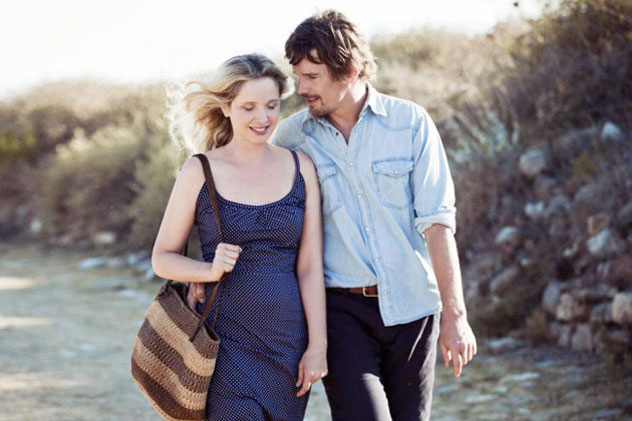
In 1995’s Before Sunrise, Jesse (Ethan Hawke) is an American writer in his early twenties who meets a French woman, Celine (Julie Delpy), on a train and talks her into walking around Vienna with him before his early morning flight back home. They banter and flirt, sparks fly and they agree to meet in six months. We find out what happened nine years later when they encounter each other again in Paris in Before Sunset. Now, in Before Midnight, it’s been another nine years and Jesse and Celine are 41. Their journeys have reached another stage, and we meet them in a Greek coastal resort.
In the first two movies, we were rooting for them to get together, but didn’t know whether it would happen. Now we know – they are a couple. The arcs of their careers have intersected, they face the roles of parent and step-parent and their attraction and feelings for each other have matured. As do all couples, they must negotiate each other’s expectations, desires, temperaments and quirks – with a combination of deliberation, accommodation, manipulation and argument.
All three movies in the series are deeply affecting because they are unusually authentic movie romances. The tension in the first two movies is what will happen when they fall in love. The tension in Before Midnight is whether – and how – they will stay in love. Jesse and Celine are perfect for each other – but is that enough?
Before Midnight is co-written by director Richard Linklater and stars Hawke and Delpy. Once again, we have a movie romance without the tired conventions of more superficial romantic comedies; in this series, there are no goofy best friends/roommates, obnoxiously intrusive parents – and no weddings. Instead, we have two attractive, intelligent and very verbal people who are very funny, and have potentially conflicting needs.
The series, which develops the same characters over eighteen years, is a very impressive work and Before Midnight is the year’s best romance (and one of the year’s best movies).
The East, coming out on Friday, is a smart and gripping thriller that explores both our response to corporate criminality and the unfamiliar world of anarchist collectives. Brit Marling plays a brilliant up-and-comer in an industrial security firm who goes undercover to hunt down and infiltrate a band of eco-terrorists named The East.
The East seeks to brings deadly personal accountability to corporate leaders who injure people and the environment. These aren’t Hollywoodized corporate villains – all of the corporate crimes depicted in the movie have occurred in real life. Lesser filmmakers would have made The East into a revenge fantasy with a Robin Hood-like merry band of earnest kids – or a conventional espionage procedural, hunting down a gang of wild-eyed terrorists.
The East is so good because it explores our helplessness in the face of corporate malfeasance. The corporate targets deserve to be held accountable, and their crimes cry out for punishment. Yet the vigilante violence of The East is clearly unacceptable. No self-selected group of avengers – no matter how legitimate their grievance – should be able to inflict extra-legal violence. (If you don’t think so, just substitute white supremacist militia, fundamentalist Mormons or Chechen immigrants for the hippies in this movie.)
We view this dilemma through the perspective of Marling’s protagonist, whose own views evolve through the course of the story. Marling co-wrote the screenplay with director Zal Batmanglij. Marling and Batmanglij spent over three months in an anarchist collective, living a cash-free life off the grid; that experience has paid off with an unusual authenticity in the depiction of the anarchist lifestyle.
Marling and Batmanglij also co-wrote the indie The Sound of My Voice, and Marling wrote and starred in last year’s sci-fi hit Another Earth. Here, they have created a set of original characters and invented some really ingenious plot points, especially a very powerful initiation dinner and an astounding bit of tradecraft involving dental floss.
Besides Marling, Ellen Page is especially good as one of the eco-terrorists. Julia Ormond is brilliant in a tiny part as a business executive. There are other fine performances by Patricia Clarkson as Marling’s nasty boss and by Alexander Skarsgaard and Toby Kebell as anarchists.
There may be some holes in the plot, but The East is such a tautly crafted thriller, that we don’t have time to notice. There is one unfortunately corny scene between Ellen Page’s character and Jamey Sheridan’s (he’s become the Go To Guy for entitled white male scumbags). But those are quibbles – The East is a very strong film.
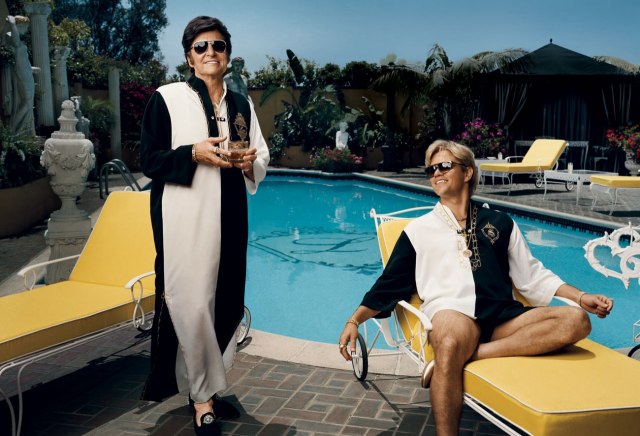
HBO’s Behind the Candelabra is the well-worn story of a rich older guy and his pretty young thing – except the rich older guy is Liberace. Michael Douglas (of all people) completely inhabits the character of Liberace, nailing his every mannerism of speech and gesture and delving deeply into his ego, neediness, self-absorption and genius for showmanship. Matt Damon (of all people) enthusiastically and skillfully plays Scott Thorson, Liberace’s boy toy of the late 1970s.
We have all seen the arc of this story before, with the relationship doomed by the power imbalance between the lovers. Of course, this is the story of a celebrity who was tightly closeted while he was intentionally projecting the persona of a flaming queen. And because Liberace was the Emperor of Excess, we don’t get often a chance to witness such extravagance (except for historical movies about Louis’ Versailles, Cleopatra’s Egypt, etc.).
Steven Soderbergh directed Behind the Candelabra in the smart and economical way he uses to elevate genre films like Side Effects, Haywire and Magic Mike. Rob Lowe is hilarious as a 70s Dr. Feelgood plastic surgeon to the stars.
There’s not that much to Behind the Candelabra, but it is entertaining. If you were missing Liberace, Michael Douglas definitely brings him back to life.
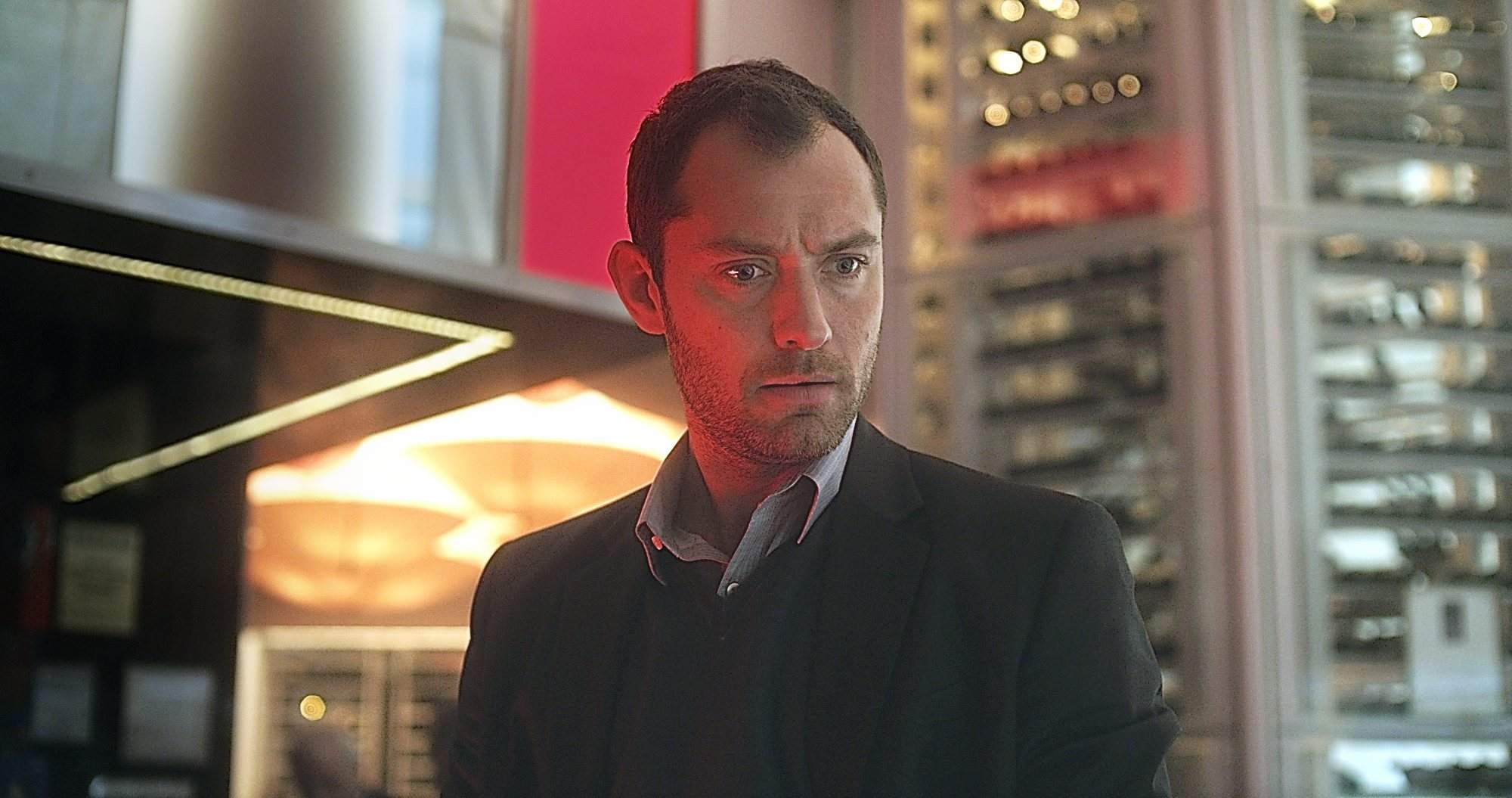
Side Effects is a psychological thriller that keeps thriller-lovers on the their toes by constantly changing its focus. First one character is on the verge of falling apart, then another and then another. Initially, we think that the story is about mental illness and prescription psych meds, but then it evolves into something else quite different. The plot might have seemed implausible in the hands of a lesser director, but Steven Soderbergh pulls it off with panache.
Soderbergh got superb performances by his leads: Jude Law, Rooney Mara and Catherine Zeta-Jones. Mara, so striking in The Social Network and The Girl with the Dragon Tattoo, serves notice that she is a perfect fit for psychological dramas; she can turn apparent fragility and unknowability into menace like few other film actresses. And few actors can take a character from charming confidence to a desperate meltdown like Law does here. Zeta-Jones shows that she play a frigid mistress of the universe who is passionate and needy underneath. The supporting players are all perfectly cast.
The insistent music by Thomas Newman, while never obvious, is an integral part of the suspense. Soderbergh, a master who has repeatedly elevated genre films, has another winner in Side Effects.
Side Effects is available on DVD from Netflix and streaming from Vudu,YouTube and GooglePlay.