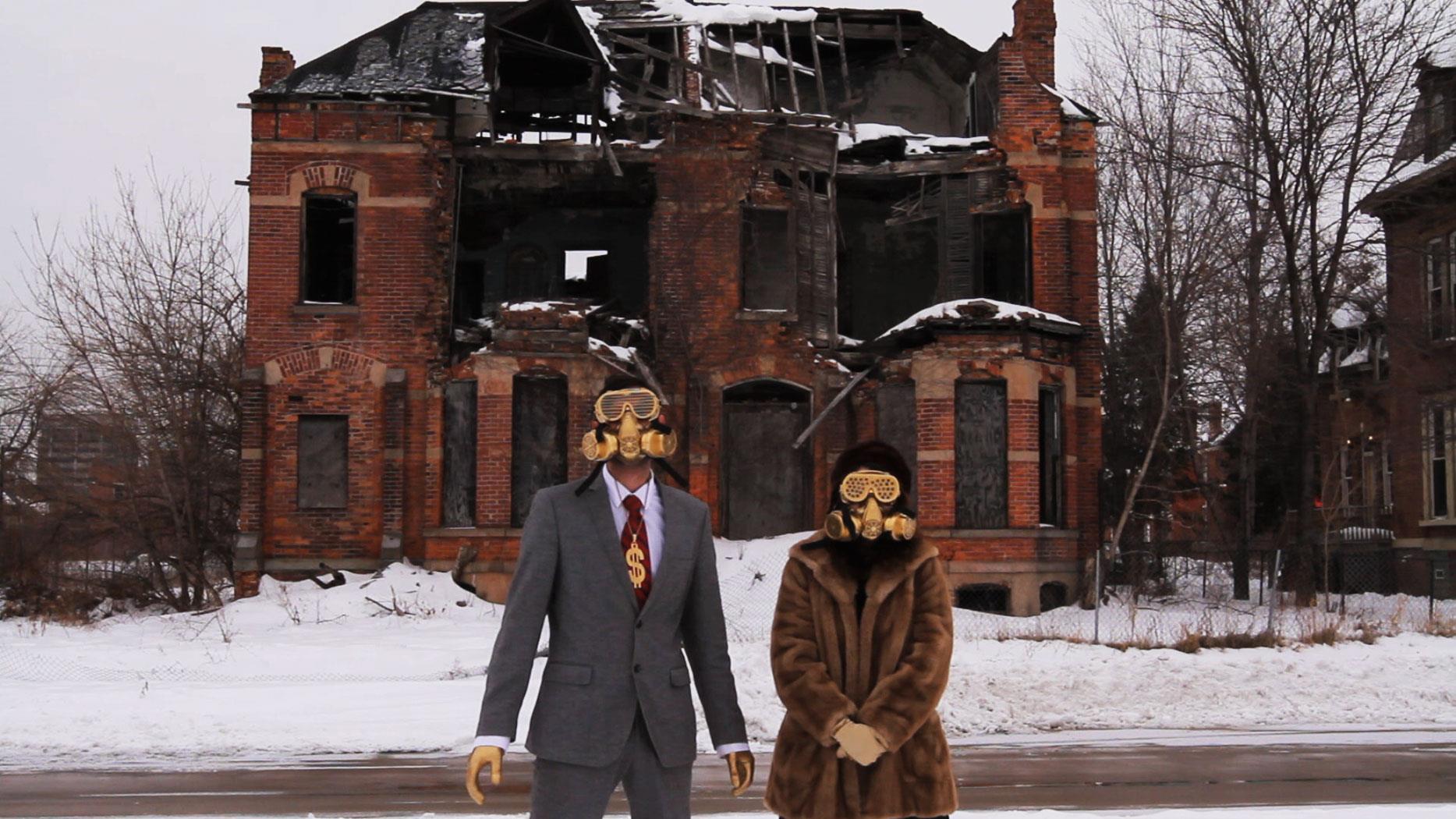
Detropia, the absorbing documentary about the plight of contemporary Detroit, will be broadcast on PBS’s Independent Lens beginning May 27. Detropia tells a compelling story in an unexpected and effective way.
Before watching the film, I knew that Detroit has lost half of its population and was not surprised to learn of its 30-50% unemployment. But I didn’t expect the blocks and blocks of abandoned homes and businesses and the streets with no traffic. Detropia’s Detroit looks like New Orleans after Katrina or San Francisco after the 1906 earthquake. Essentially, there’s been an economic tsunami here. I was astonished to see city leaders seriously considering the demolition of large parts of the city and the relocation of residents into more efficient and more cohesive concentrated neighborhoods.
How did this happen? And what can be done? There’s no agenda by the filmmakers – other than keen-eyed observation. The filmmakers give a voice to three sets of local witnesses who tell the city’s story. And there’s an interesting and unexpected choice to feature the city’s opera.
Most surprising, despite being a movie about urban decay, Detropia is still a visually arresting and often colorful and beautiful film. And, despite the hopelessness of Detroit’s situation, the perspective of the local witnesses keeps Detropia from becoming depressing.
The filmmakers, Heidi Ewing and Rachel Grady (Jesus Camp, 12th & Delaware), deserve recognition for making Detropia so compelling without it becoming a screed. Indeed, Detropia is a Sundance award winner.
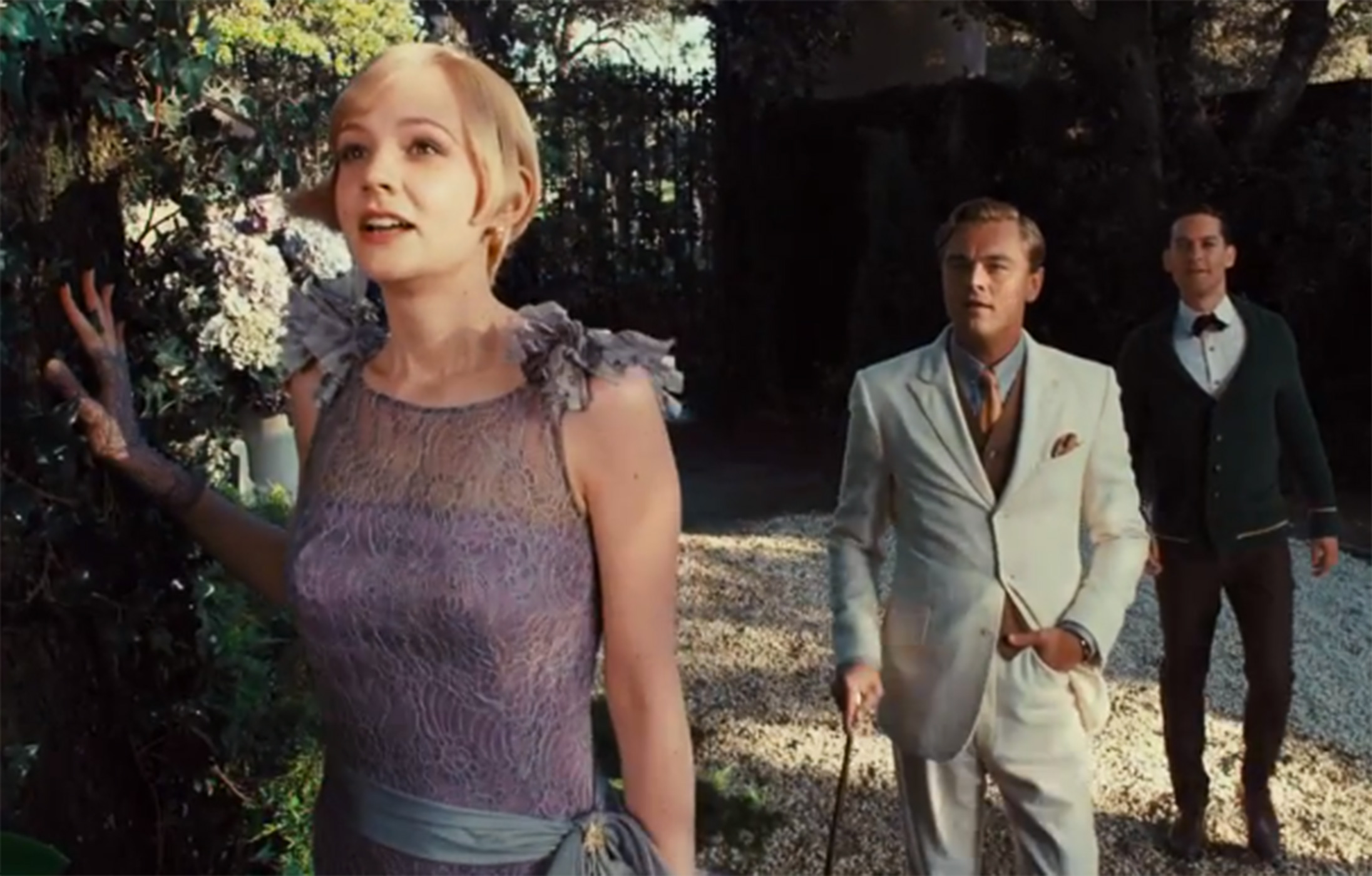
Carey Mulligan, Leonardo DiCaprio and Tobey Maguire in THE GREAT GATSBY
Let’s start with director Baz Luhrman’s decision to present The Great Gatsby in 3D. The source material, F. Scott Fitzgerald’s novel, is so compelling because it is character driven. Luhrman’s 3D cannot enhance the characters, but can only augment wild car chases and zooming camera shots that zip us down skyscrapers and across bays. So to use Gatsby as an excuse to launch some action sequences really misses the point of the story. See The Movie Gourmet’s Ten Really Bad Movie Ideas.
Indeed, there’s lots of eye candy in Luhrman’s Gatsby, but to what effect? The story seems set, not in the 1920s, but in a modern 1920s theme park where tourists waddle around chomping on churros while peering at flappers and Duesenbergs.
The story is about the Coolest Man in the World, the impenetrable Jay Gatsby, whose savoir faire, personal mystery and lifestyle splendor completely seduce his neighbor Nick Carraway, the story’s narrator. Now you would think that putting Leonard DiCaprio in impeccably styled white and pastel pink suits would take you a long way toward Cool. But this Gatsby is a little too anxious. And the screenplay dumbs down the story, and we learn too much about Gatsby’s real past too early and too easily. Similarly, Tobey Maguire as Carraway brings a yippy dog energy to a character that should be more observant (like Sam Waterston’s laconic Nick in the 1974 Gatsby).
Gatsby, the acme of the self-made, is driven to at long last possess Daisy (Carey Mulligan), the girl who got away (and who is now married to the boorish jock Tom Buchanan). The novel deeply explores Gatsby’s pursuit of Daisy. Can someone with New Money penetrate the Old Money set? Did Daisy really love Gatsby when they were younger, or was he just a girlish flirtation? Does Daisy love Gatsby now, or is she just flattered by his captivation and impressed by his bling? Can Daisy escape her class? Can Gatsby’s success buy him everything that he needs and wants?
Sadly, Luhrman reduces The Great Gatsby into a sappy melodrama of obsessive love. That’s kind of like turning The Sun Also Rises into a bullfight story or The Adventures of Huckleberry Finn into a river raft travelogue. It doesn’t help that Carey Mulligan’s Daisy is more neurotic than fickle – and just not that sexually fascinating to begin with.
The one good thing about this movie is Elizabeth Debicki’s turn as the celebrity golfer and jaded party girl Jordan Baker – her every glance commands the screen.
Luhrman made lots of other choices in this adaptation. Some work out (to my surprise, I didn’t mind the 21st century music) and some don’t (the odd and nakedly commercial casting of Bollywood star Amitabh Bachchan as Meyer Wolfsheim). But the resulting totality is a hollow, somewhat vulgar misfire. It’s the flashiest version of The Great Gatsby, but strangely not even as vivid as the written word.
In the novel, Daisy and Tom Buchanan are “careless” people – their Old Money has insulated them from the consequences of their selfishness and irresponsibility. Fitzgerald describes them thus:
Let me tell you about the very rich. They are different from you and me. They possess and enjoy early, and it does something to them, makes them soft where we are hard, and cynical where we are trustful, in a way that, unless you were born rich, it is very difficult to understand. They think, deep in their hearts, that they are better than we are because we had to discover the compensations and refuges of life for ourselves. Even when they enter deep into our world or sink below us, they still think that they are better than we are. They are different.
The Great Gatsby is almost 2 1/2 hours long. That means about four hours of your life, if you count driving to the theater, parking, buying popcorn beforehand and returning home afterward. The novel is only 192 pages, so I strongly suggest that you take the four hours and read the glorious book instead.
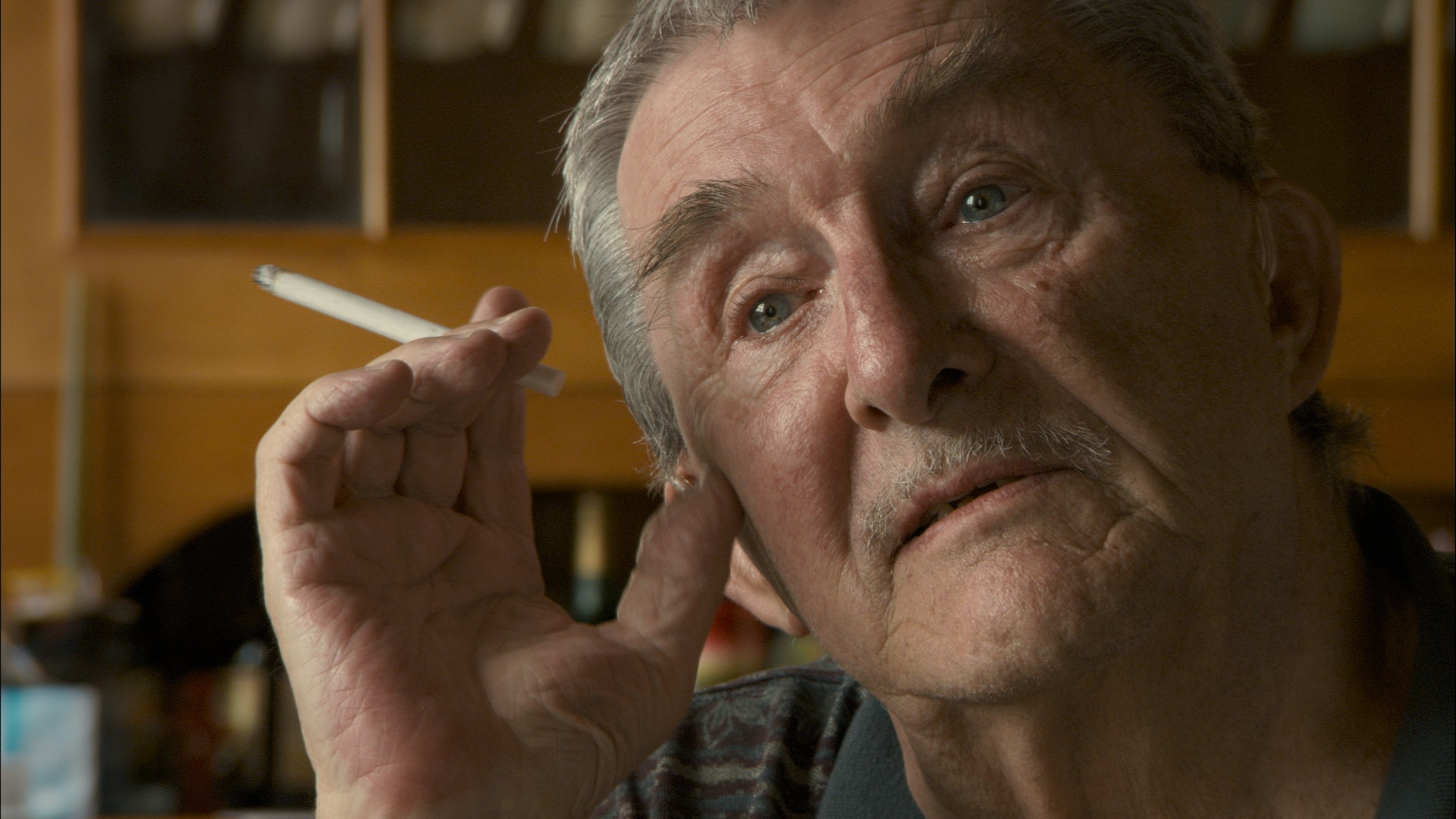
Stories We Tell is the third film from brilliant young Canadian directorSarah Polley (Away From Her, Take This Waltz), a documentary in which she interviews members of her own family about her mother, who died when Sarah was 11. It doesn’t take long before Sarah uncovers a major surprise about her own life. And then she steps into an even bigger surprise about the first surprise. And then there’s a completely unexpected reaction by Polley’s father Michael.
There are surprises aplenty in the Polley family saga, but how folks react to the discoveries is just as interesting. It helps that everyone in the Polley family has a deliciously wicked sense of humor.
The family story is compelling enough, but Polley also explores story telling itself. Everyone who knew Polley’s mother tells her story from a different perspective. But we can weave together the often conflicting versions into what seems like a pretty complete portrait of a complicated person.
Polley adds more layers of meaning and ties the material together by filming herself recording her father reading his version of the story – his memoir serves as the unifying narration.
To take us back to the 1960s, Polley uses one-third actual home movies and two-thirds re-creations (with actors) shot on Super 8 film. Polley hired cinematographer Iris Ng after seeing Ng’s 5 minute Super 8 short. The most haunting clip is a real one, a video of the actress Mom’s audition for a 60s Canadian TV show.
Make sure that you stay for the end credits – there’s one more surprise, and it’s hilarious.
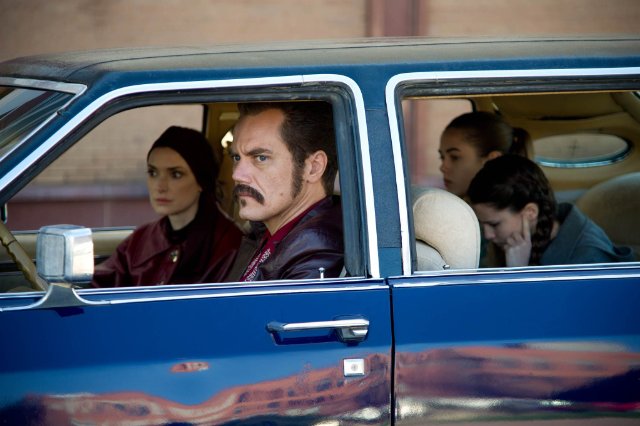
The Iceman is based on the true story of Richard Kuklinski, a New Jersey hitman said to have killed at least 100 (and possibly more than 250) people over thirty years until 1985. Besides his prolific trail of carnage, the most interesting aspect of The Iceman is its take on Kuklinski’s personality and its portrayal by Michael Shannon.
Shannon’s Kuklinski deeply loves his wife and daughters – and is psychotically indifferent to the fate of any other human (even his own). To him, killing another person is as unencumbered by morality or emotion as delivering a pizza or fixing a muffler. His “Iceman” nickname derives from his practice of freezing his victims and dumping their bodies months later – so investigators could not fix the time of death. But “Iceman” just as aptly applies to Kuklinski’s fearlessness and utter lack of empathy.
Ever since Shotgun Stories, Michael Shannon has been one of my favorite actors. He’s perfect for Kuklinski, because Shannon can combine impassivity and intensity like no one else. He can also use his hulking frame to enhance his menace (or, in Mud, his goofiness).
His fellow actors – including Winona Ryder, Ray Liotta and David Schwimmer – do a fine job. I particularly enjoyed Chris Evans as fellow hitman Mr. Freezy, who works out of his ice cream truck. Because I don’t watch superhero movies, I was unaware that Evans has recently starred as Captain America in The Avengers and as Johnny Storm in the Fantastic Four movies.
The Iceman is a solid true-life crime movie with an outstanding performance by Michael Shannon.
Greetings from Tim Buckley is a fictionalization of the events around singer-songwriter Jeff Buckley’s appearance at an actual 1991 tribute concert for his father, Tim Buckley. (The movie’s title comes from the name of the concert.) The tribute concert was emotionally charged for Jeff Buckley because he had only met his father once before Tim’s death from a drug overdose. Jeff was not invited to Tim’s funeral, so he accepted the gig primarily to clarify and express his feelings for the father who had abandoned him, but whose career path he was following. The concert came as Jeff Buckley was just launching his career. Jeff Buckley himself accidentally drowned six years after the concert at the age of 30.
In the movie, Jeff (Penn Badgley) arrives in NYC for the concert, meets his father’s admirers and musical partners, passes the time hanging out with a concert intern (Imogen Poots) and then performs. Throughout the film, the audience observes Jeff while he is internally processing his own fascination with and resentment of his father. Unfortunately, the final scene imagines an encounter that lets Tim off the parenting hook to some degree.
Penn Badgley (Margin Call) has gotten critical praise for his singing. Indeed, one of the high points is when Badgley’s Jeff shows off to the girl by riffing on seemingly every album in a record store. Badgley may not have Jeff Buckley’s freakish four octave singing range, but his pipes are pretty impressive. I was more impressed by his characterization – it must be difficult to act miffed by one’s absent father and not lapse into whininess. Poots, so outstanding in Solitary Man and A Late Quartet, is good here, too.
Primarily a movie for music fans, Greetings from Tim Buckley is also a film for those who want to see an actor depict interior conflict with very little external action. Greetings from Tim Buckley is available on VOD from Amazon, iTunes, YouTube, Vudu, Google Play and other outlets.
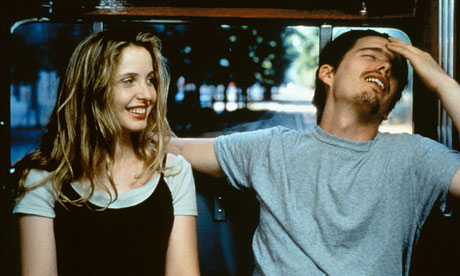
The year’s best romance (and one of the year’s best movies), Before Midnight, is coming to theaters on May 31. So it’s time to get ready by watching (or revisiting) its prequels, Before Sunrise and Before Sunrise.
In 1995’s Before Sunrise, Jesse (Ethan Hawke) is an American writer in his early twenties who has been moping around Europe after a breakup. He meets a French woman, Celine (Julie Delpy), on a train and talks her into walking around Vienna with him before his early morning flight back home. They banter and flirt – and sparks fly. As they connect more deeply, each begins to explore whether this can be a real relationship, more than a transtice encounter or a one night stand.
Nine years later, in Before Sunset, Jesse and Celine have another encounter, this time in Paris just before he is again scheduled to fly back to the US. (Before Sunset is only 80 minutes long.)
In the upcoming Before Midnight, it’s been another nine years and Jesse and Celine are 41. To avoid spoilers, I’ll just say that their journeys have reached another stage, which is played out in a Greek coastal resort.
Co-written by director Richard Linklater and with characters developed by stars Hawke and Delpy, the series is deeply affecting because the movies are unusually authentic movie romances. All three stories are constrained by time and set in beautiful European locations. All three are about two intelligent people who are attracted to each other and are connecting deeply. All three stories are unencumbered by the conventions of more superficial romantic comedies; in this series, there are no goofy best friends/roommates, obnoxiously intrusive parents – and no weddings. There are no races to the airport to keep Jesse from leaving.
Most importantly, the filmmakers let the audience figure out what happens next. As in real life, there’s no pat happy ending, and there’s the ambiguity of yet unwritten personal history. At the end of Before Sunrise and Before Sunset, we don’t KNOW whether they are going to get together…but they could. And we want them to.
Both Before Sunrise and Before Sunset are available on DVD from Netflix and streaming on VOD from Amazon , iTunes, Vudu and other VOD outlets. Before Sunrise is free with Amazon Prime.
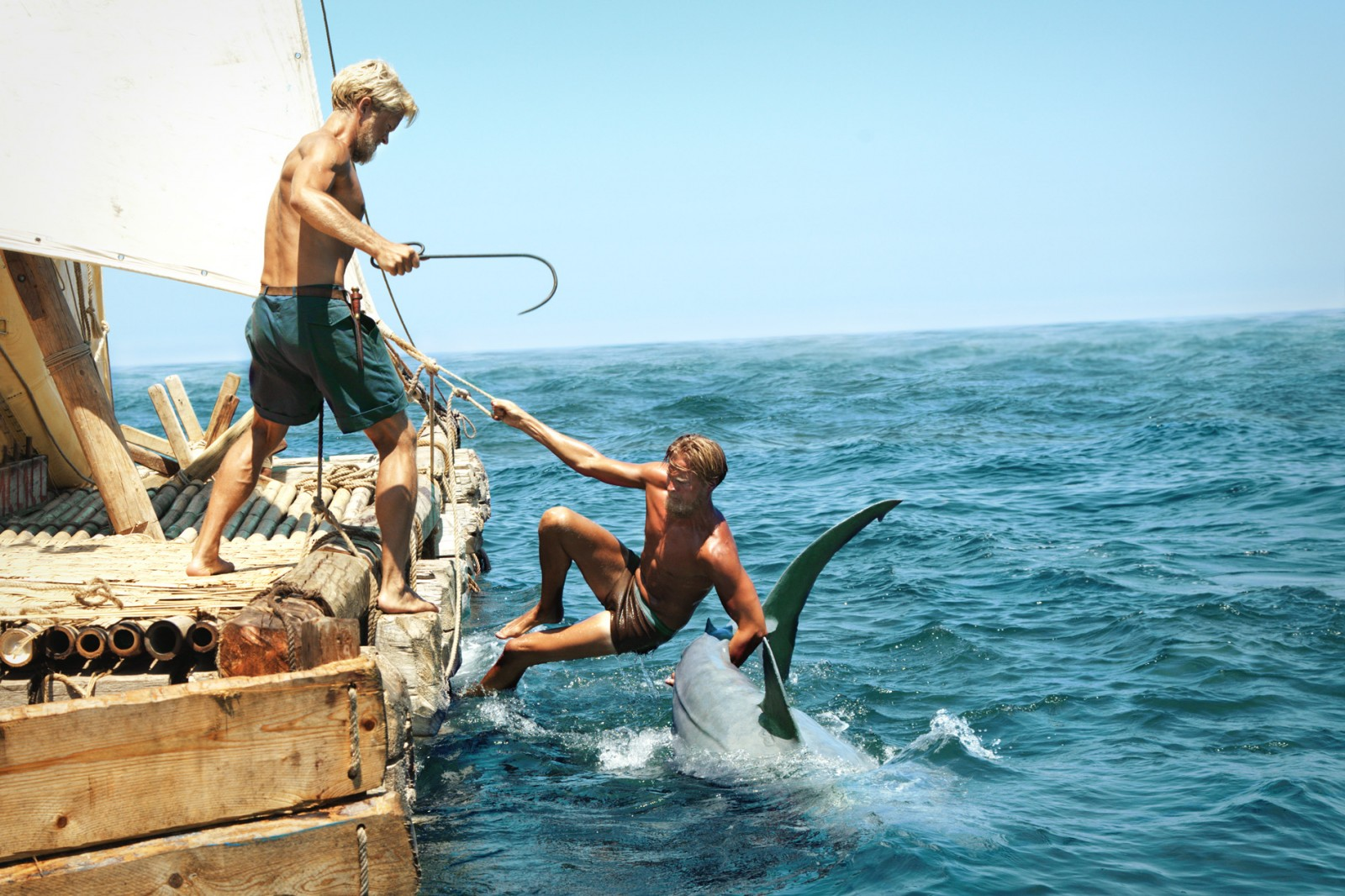
In 1947, Norwegian ethnologist Thor Heyerdahl and a five man Scandinavian crew constructed a Stone Age raft and floated almost 5,000 miles from Peru to French Polynesia to prove his academic theory. Kon-Tiki tells the story of that voyage, which was a helluva challenge.
The balsa wood raft was tied together with indigenous fibers. The crew had an intermittently operable radio, a sextant, some canned food and little other modern technology. The raft could not be steered, so there were many nerve-wracking days when they were drifting toward a current headed the wrong way. There were storms, sharks and all the usual hazards (except for Life of Pi’s tiger in the boat). The crew gets more and more sunburned and their blond beards grow bushier and bushier.
It’s a good story, but not really suspenseful. After all, Heyerdahl’s book about the expedition sold millions of copies, especially to boys of the Baby Boom generation (like me), and his documentary on the voyage won an Oscar in 1951. So it’s not really a spoiler to acknowledge that they made it safely to their destination.
Kon-Tiki portrays Heyerdahl as an affable but testosterone-fueled guy with unflinching (and oft misplaced) confidence that everything is going to work out for him. As a result, he recklessly puts at risk his life and his crew’s (as well as his marriage). It’s a mildly interesting characterization. As they say, it’s better to be lucky than good.
So Kon-Tiki is okay. I just wish it had acknowledged and addressed this fact: Heyerdahl was wrong. His theory that ancient Peruvians floated west and settled Polynesia flew in the face of nearly all anthropological, linguistic and archaeological evidence. Since the 1940s, of course, new scientific tools have been discovered, and DNA analysis now confirms that he was entirely, utterly, completely wrong. And, because he lived until 2002, Heyerdahl had to know it or live in ridiculous denial. So why not make a film about a guy who endures an amazing, life-risking ordeal just to find out that it was all in vain? I think that would have made the film more memorable.
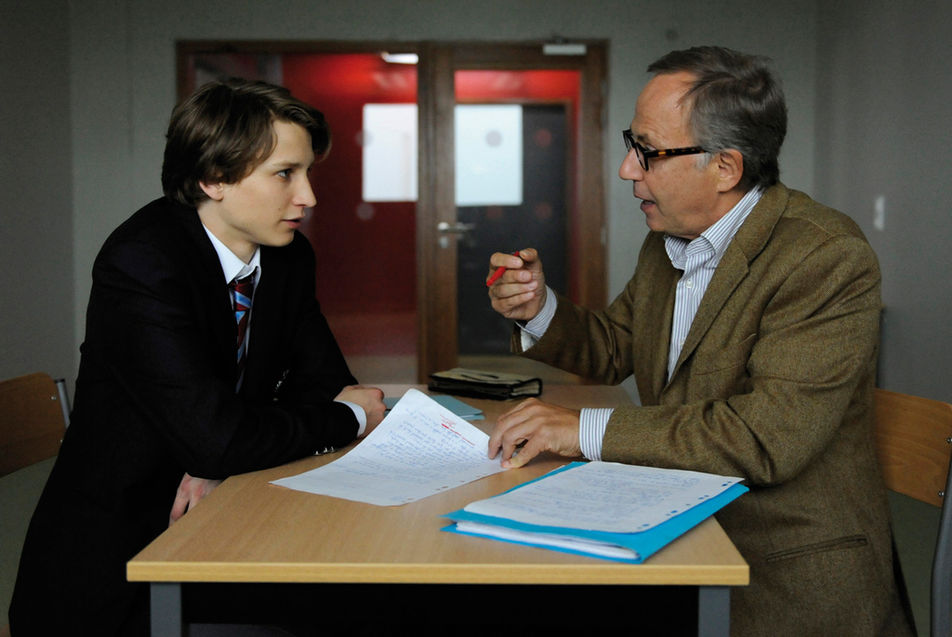
In the clever French movie In the House (Dans la maison), we met a high school literature teacher who is continually disappointed by his lackluster students. Then a new student shows a special talent for creative writing. Every day after school, the teacher provides extra coaching to the young writer, who starts spinning an episodic tale about his creepy infiltration of his friend’s family. We want to know what’s gonna happen in the next installment, and the teacher becomes hooked – even obsessed. Although the teacher is supposedly the mentor, soon the student is controlling the teacher.
The wonderful French actor Fabrice Luchini plays the teacher. Luchini is a master at playing socially awkward and inappropriate situations a la Seinfeld, Larry David and, of course, Woody Allen. (In my favorite Fabrice Luchini movie Intimate Strangers, he plays a tax lawyer who can’t bring himself to tell a woman that she’s sat down in the wrong office – thinking that she’s seeing a new therapist, she’s unburdening the intimate details of her marriage.)
In the House’s cleverness is not surprising, because it is directed by Francois Ozon (Swimming Pool, 8 Women, Potiche). Always her best in French films, Kristin Scott Thomas is very good as the teacher’s wife.
In the House is a funny and slightly creepy exploration of the creative writing process – and altogether satisfying.
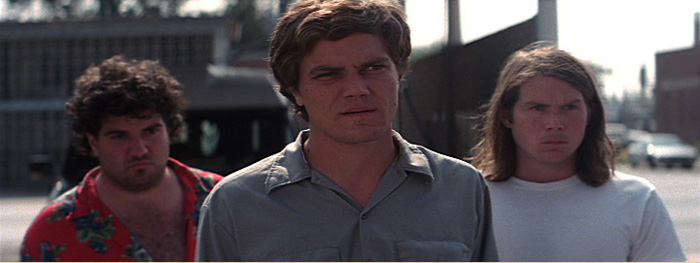
I am celebrating Mud this week by recommending writer-director Jeff Nichols’ Shotgun Stories. Nichols followed Shotgun Stories with Take Shelter and now Mud, which together constitute his “Arkansas Trilogy”. Shotgun Stories was also the breakout film for Nichols’ favorite leading man, Michael Shannon, who has since gone on to Boardwalk Empire, next week’s The Ice Man and the upcoming blockbuster Man of Steel.
Shotgun Stories opens with three brothers finding about the death of their no good father. He had abandoned them and their mother in poverty – and was such an indifferent father that he named his children Son, Boy and Kid. After walking away from his family, he found religion and started another, more prosperous, family with another set of three sons. The three older sons crash the funeral to express their bitterness, and it becomes clear that the two sets of brothers are headed for a clash.
Shannon plays the oldest brother, who has been forged into stony strength and determination by deprivation and long-smoldering resentment. Nichols uses that resentment to light a fuse that burns fitfully but inexorably for most of Shotgun Stories’ 92 minutes.
Shotgun Stories ranked #7 on my Best Movies of 2007. Shotgun Stories is available on DVD from Netflix and streaming from Netflix and iTunes.
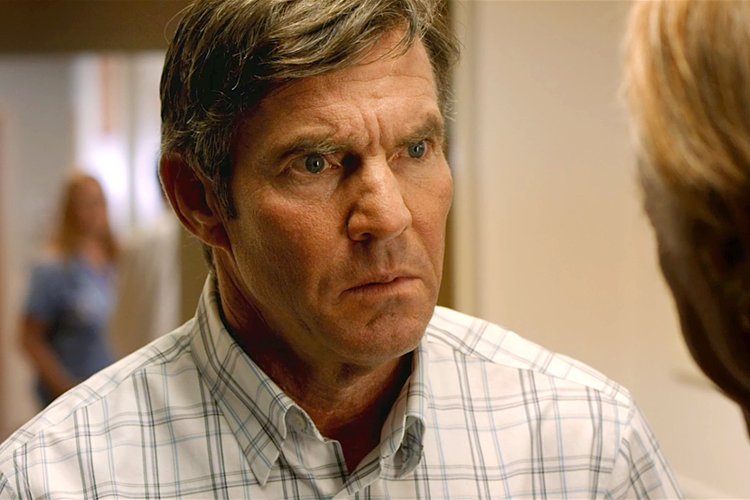
At Any Price is – at long last – a movie about today’s Farm Belt that farmers will recognize. American cinema has been romanticizing the small family farm for at least a quarter century since, to survive, US farmers have moved on to industrial scale agribusiness (with all its tradeoffs). The corporate farmer at the center of At Any Price is Henry Whipple (Dennis Quaid). Henry is a driven man, consumed by a need to have the biggest farm and to sell the most genetically modified corn seeds in southern Iowa. Henry is also stupendously selfish, utterly tone-deaf to the needs of anyone else.
Despite Henry’s dream to hand the business to one of his two sons, they despise him. The older son has avoided conflict by escaping to a vagabond life in international mountain climbing. The younger son, Dean (Zac Efron), plans his escape as a NASCAR driver and seems well on his path. Stuck on the farm for now, he can barely tolerate his father’s incessant grasping. But he’s small town royalty, he’s got a pretty girlfriend (Maika Monroe) and he’s as good-looking as Zac Efron, so life isn’t unbearable.
But Henry’s smug perch on top of the haystack is not as impregnable as it would seem. Along the way, he has cut some corners and stepped on other people, and it catches up to him. Henry’s empire threatens to topple, Dean clutches at his big career chance, and the two men – each and together – must react to developments that they never saw coming. Writer-director Ramin Bahrani spins a deeply authentic psychological drama as each man is forced into some uncomfortable self-examination.
It’s interesting that such a realistic exploration of New Agriculture in Middle America comes from Bahrani. Himself North Carolina-born, he has used nonprofessional actors to make three brilliant movies about struggling immigrants in America: Chop Shop, Man Push Cart and Goodbye, Solo. Goodbye, Solo was #5 on my list of Best Movies of 2009. Here’s a recent interview with Bahrani in the New York Times touching on At Any Price.
One of Bahrani’s insights is that the impacts of today’s capitalism aren’t necessarily from the malevolently rapacious (like Henry F. Potter in It’s a Wonderful Life), but from the indifference of the selfish. With almost every step that he takes, Henry Whipple screws other folks, but he’s convinced himself that he’s a prince of a guy.
At Any Price is a showcase for Quaid and Efron. Quaid’s portrayal of Henry is brilliantly textured, projecting a self-righteous bluster which barely masks the desperation threatening to erupt through his pores. And I’ve come to always look forward to seeing Efron, who, in Me and Orson Welles,The Paperboy and Liberal Arts, has proven that he is more than just the pretty boy of High School Musical.
Bahrani’s actors have taken full advantage of his screenplay. The character of Dean’s girlfriend is especially well-written. Beginning as a simple teen from a broken family looking for some fun, her journey takes several surprising turns. The actress Maika Monroe pulls it off with a memorable performance. In many ways, the story is anchored by Kim Dickens (Deadwood, Treme) as Henry’s wife and Zac’s mom, resolutely dragging her men out of their self-created sinkholes. Veteran character actor Clancy Brown (the guy has 209 acting credits on IMDb) is superb as Henry’s chief rival.
We are left with two men who finally must appreciate who they really are, whether we like them or whether they like themselves. After seeing At Any Price, I didn’t leave the theater thrilled, but that’s probably because a brilliant examination of two ambiguous men is more thought-provoking than stirring. And there’s nothing wrong with that.