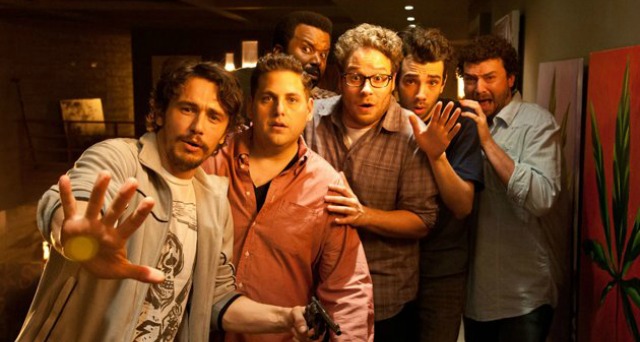
As gross-out comedies go, This Is the End is adequately entertaining. Seth Rogen, Jonah Hill, James Franco and other movie comedy stars play themselves – all partying at Franco’s over-the-top Hollywood mansion when the Apocalypse and The Rapture intrude.
The cast does a good job with the very broad material. Franco, Hill, Harry Potter’s Emma Watson and especially Michael Cera all poke fun at their own images. And, just when you think you’re watching a low brow comedy, Danny McBride arrives and takes that brow even further into the gutter.
It’s co-written and co-directed by best friends Rogen and Evan Goldberg, who co-wrote Superbad as teenagers. Jay Baruchel plays a character based on Goldberg, down from Canada to visit his boyhood chum and distrusting Rogen’s Hollywood posse. It’s a solid send-up of the apocalyptic movie genre, with a nice little homage to The Exorcist. The guys will enjoy This Is the End more than will the gals.
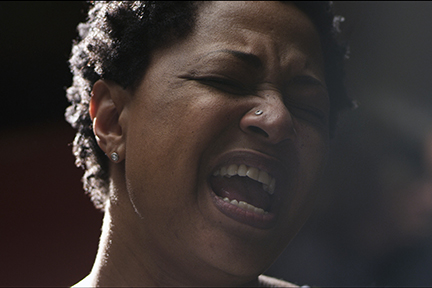
The documentary 20 Feet from Stardom delves into the careers of rock music’s backup singers – so close to the celebrity spotlight, yet so obscure and under appreciated. Some prefer the background (the Walkers and the electrifyingly talented Lisa Fischer), and some aspire to major solo careers (Judith Hill). Others have been disappointed in the quest for stardom (Merry Clayton and Claudia Linnear) – or stardom has been delayed (Darlene Love). We meet all of these very talented and appealing women, and hear from Mick Jagger, Bruce Springsteen and Sting.
The best parts are hearing Darlene Love’s story (which adds to the body of evidence that Phil Spector is a terrible human being), the inside glimpse into Merry Clayton’s iconic solo in the Rolling Stones’ Gimme Shelter and experiencing the magical voice of Lisa Fischer. It’s a little slow in places, but 20 Feet from Stardom is a pretty good choice for any viewer and essential for music fans.
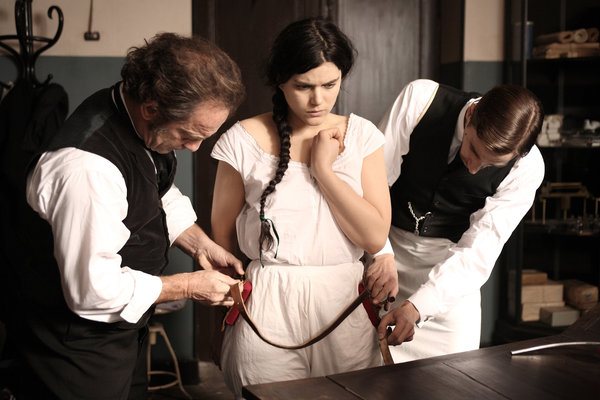
The absorbing French drama Augustine is based on the real work of 19th century medical research pioneer Jean-Martin Charcot, known as the father of neurology. A young kitchen maid begins suffering wild seizures and is brought to Charcot’s research hospital. He ascertains the triggers for the seizures, and begins to close in on cure. Needing funding for his research, he triggers her seizures before groups of his peers; he is showing off his research, but it’s clear that his affluent male audience is titillated by the comely girl’s orgasmic thrashes.
She is drawn to this man whose kindness to her belies their class difference and whose brilliance is the key to her recovery. The good doctor intends to cure her – but not until she has performed for his potential funders. She is unexpectedly cured just before Charcot’s most important demonstration, and she gets to decide whether to continue her exploitation. In the stunning conclusion, she gets the upper hand and her simmering feelings erupt.
The fine French actor Vincent Lindon (Mademoiselle Chambon) excels at playing very contained and reserved characters, and here he nails Charcot’s clash of decency and professional ambition. The French pop singer Soko is captivating as his patient.
It’s an auspicious first feature film for writer-director Alice Winocour. She has constructed a story that about two sympathetic characters whose interests converge, then diverge and then…
Life is at times stranger than fiction, and The Imposter is one of the most jaw-dropping documentaries I have seen. Nicholas Barclay, a 13-year-old Texas boy, vanished in 1994. Three years later, a young man surfaced in Spain, claiming to be an American boy kidnapped for sexual exploitation; he was identified by Spanish police as Nicholas Barclay. In fact, he was a serial impersonator named Frédéric Bourdin who had contrived the ruse to escape getting busted for his own petty misdeeds.
That’s not a spoiler, because The Imposter’s audience learns this framework right away. Here’s the first real shocker: the imposter is accepted by Nicholas’ family. This is more amazing because Frédéric is seven years older than Nicholas, is not a native English speaker and looks nothing like him. Of course, Frédéric is surprised that the family is embracing him as Nicholas – and then he begins to suspect why…
Filmmaker Bart Layton expertly spins the story, We meet the actual Frédéric Bourdin, members of the Barclay family, and the detectives who broke the case.
The Imposter is available on DVD from Netflix and streaming from Netflix, Amazon, iTunes and many other VOD providers.
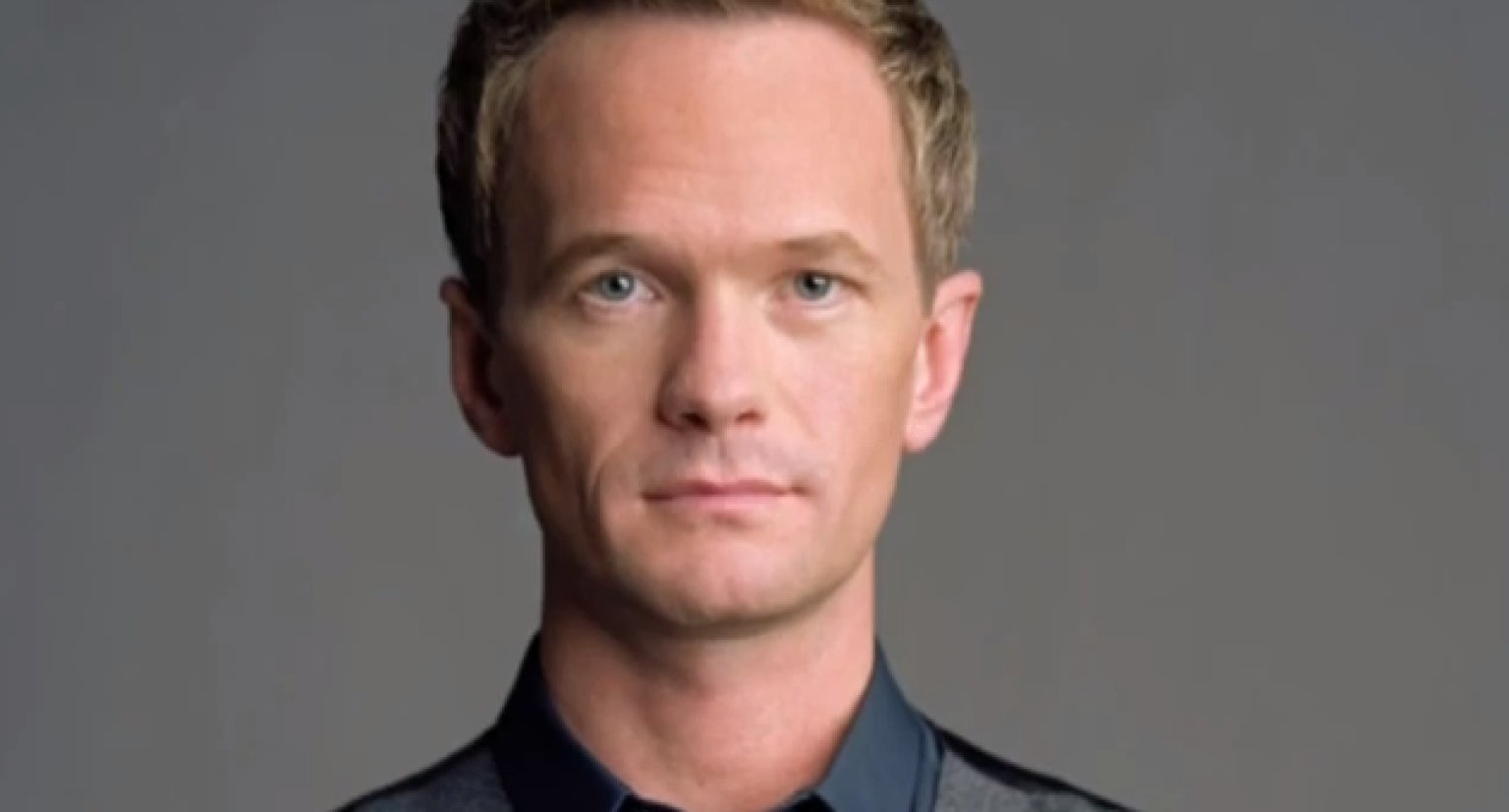
Another in HBO’s excellent summer documentary series, The Out List is a talking head documentary about the value of being out – both personally valuable and to the community. There are the celebrity performers that you would expect: Neil Patrick Harris, Cynthia Nixon, Wanda Sykes and Ellen DeGeneres. But it’s amazing to hear from Lupe Valdez, a lesbian Latina Democrat elected by the fine people of Dallas County, Texas to be their Sheriff. (There’s also the current favorite in the race for Mayor of New York City Mayor, Christine C. Quinn.) The most compelling stories come from drag queen promoter Lady Bunny, personal finance guru Suze Orman and transgender writer Janet Mock.
Their stories represent the range of all human stories – some funny, some touching and some both at the same time. Like in every group of humanity, there is some edginess and not everybody is trying to be appealing. But I would doubt that anyone could watch The Out List and still feel justified to be a hater. The Out List is not just for those interested in LGBT issues, but for everyone with an interest in people, society and the human experience.
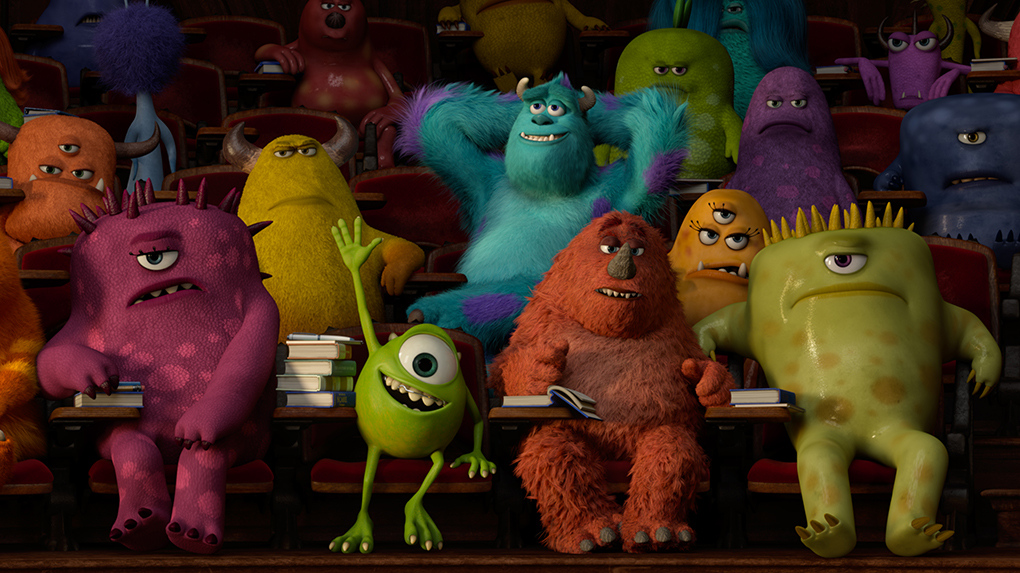
Pixar movies feature both excellent animation and outstanding storytelling., and such is the case with Monsters University, the welcome prequel to Monsters, Inc. This is the story of how Monsters Inc.’s Mike and Sully met at college, with Billy Crystal and John Goodman returning to voice the roles. When I saw Monsters University, the kids in the audience laughed plenty, but the adults were picking up on most of the college jokes; for example, Mike and Sully are relegated to the loser fraternity – so nerdy that the guys are living with one frat brother’s mom (a very funny Julia Sweeney).
Monsters University is preceded by an even better movie, the imaginative Pixar shortThe Blue Umbrella. The Blue Umbrella is a simple and sentimental story set at foot level, amid manhole covers, storm drains and the feet of city-dwellers – and there’s no dialogue. The animation is remarkable; in fact, I had to keep telling myself that it was animated, although it helped when the mailbox and the rain spout moved expressively. I’m sure that The Blue Umbrella will be nominated for the Best Animated Short Oscar.
In the dark comedy Nancy, Please, a neurotic and feckless Yale grad student has just moved in with his new girlfriend and realizes that he has left his copy of Little Dorrit at his old digs. His former female roommate is both hostile and passive aggressive, and she won’t return it. It’s a big deal, because he is up against a thesis deadline and his notes are annotated in the book.
But the central joke in the movie is that losing the book shouldn’t be THAT big a deal. Sure, she’s being a jerk, but it’s pretty hard to imagine that he can’t reconstruct his notes, as he is advised by everyone else in his life except one friend who has the excuse of being drunk. The grad student can’t let it go, making this molehill into a mountain that obstructs his progress on any and all fronts. As he becomes more and more emotionally paralyzed, his academic career, his new relationship and even the walls of his new apartment disintegrate. And a dose of maturity would solve the whole thing.
I did chuckle when his girlfriend, alarmed by his escalating obsession, announces “I can’t support this any more. I withdraw my support.” Still, we’re talking about a $3.99 rental and 84 minutes of your life, and Nancy, Please just is not THAT funny. Nancy, Please is available on VOD from Amazon, Vudu and Google Play.
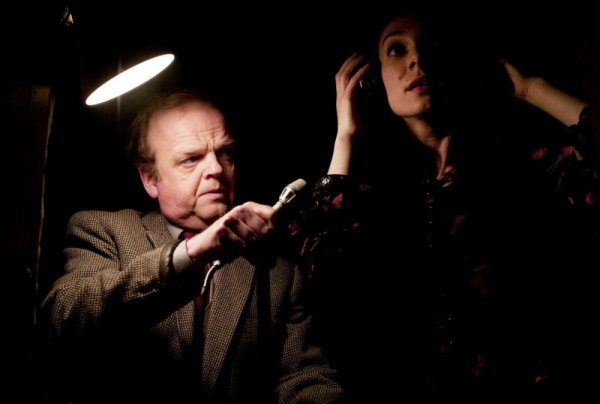
Here’s an inventive setting for a psychological thriller – the sound studio where the cheesy Italian horror movies of the 1970s were dubbed and mixed. Everyone comes to work, put on headphones and screams into a mic. Naturally, there’s plenty of droll humor, like when the two sound techs (named Massimo and Massimo) mimic the sound of stabbing human bodies by plunging butcher knives into watermelons.
A British sound engineer (Toby Jones) down on his luck, arrives for a gig and is horrified to discover that he’s working on a gory exploitation movie. His English reserve is no match for either his loud and volatile Italian coworkers or the impenetrable Italian business bureaucracy. Slowly (and this film is not quick-paced), he begins to crack.
This is not the kind of horror film with lots of on-screen gore. We only see the opening credits and one brief glimpse at the movie that is being dubbed. We hear the spinechilling screams and the scary sound effects while we are watching bored techies with headphones. The suspense is in the watching the Jones character teeter on the brink of unraveling.
Berberian Sound Studio is getting some rapturous critical praise that just seems like hyperventilating to me. It contains some clever parts, but there’s just not enough thrill there for a thriller. Toby Jones’ spiral into madness in the last 25 minutes is very good, but by that time I was struggling to stay awake.
Berberian Sound Studio is enjoying a brief theatrical release and is avaiable streaming from Amazon and other VOD purveyors.
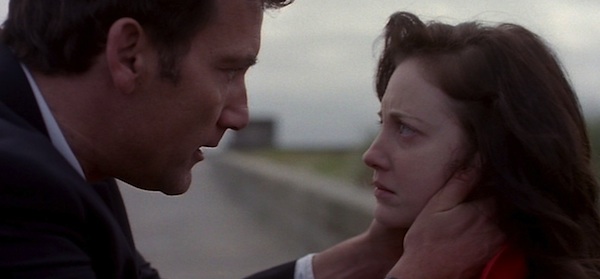
The riveting thriller Shadow Dancer takes place during The Troubles in 1990s Belfast. Thirtyish single mom Collette (Andrea Riseborough) is captured by British security while planting an IRA bomb in London. Faced with the choice of a long imprisonment with her young son snatched off to foster care, Collette reluctantly agrees to return to Belfast and inform on her IRA unit. This would make for a tense ride in any case, but Collette belongs to a crew run by her two adult brothers, and all three live with their mother.
Everyone in the cell, including the three siblings, is paranoid out of necessity. And paranoid is only a starting point in describing the IRA’s internal security chief, who soon figures out that there’s a mole in the unit, and begins a mercilessly ruthless investigation; before every interrogation, his assistant rolls out plastic sheeting on the floor – just in case an immediate execution is warranted. To make matters even more nerve-wracking, Collette’s British handler Max (Clive Owen) suspects that his superiors are making Collette expendable to protect another intelligence asset. And so we go along on Shadow Dancer’s wild ride, all the way to its noirish ending.
The heart of the film is Andrea Riseborough’s fine performance as Collette. Surrounded by suspicious friends and foes alike, she must be contained and ever watchful. She cannot reveal that the tension is ripping her apart on the inside.
All of the performances are excellent, especially Brid Brennan as Collette’s severe mother, always putting on the kettle for one of her terrorist offspring. David Wilmot is convincing as the IRA’s mole hunter, dead serious here after his comic turn in The Guard as the goon who couldn’t remember whether he was a psychopath or a sociopath.
Director James Marsh won an Oscar for his documentary Man on Wire. Marsh also directed Project Nim (one of my Best Movies of 2011) and the based-on-fact British crime drama Red Riding: In the Year of Our Lord 1980.
Here, Marsh demonstrates an excellent sense of pace. Pay attention to the scenes at the beginning with Collette’s little brother and with the London Underground. In contrast to many quick-cutting filmmakers, Marsh takes his time so dread settles in and the tension builds. It results in a top-notch thriller.
Shadow Dancer is showing in some theaters now, but can be hard to find. It is available streaming from Amazon, iTunes and Vudu.
The insightful HBO documentary Love, Marilyn uses Marilyn Monroe’s own words and those of people in her life to give us a candid yet sympathetic inside look at Marilyn. The core of the film is from a recently discovered trove of Marilyn’s own letters and journals.
Her friends Susan Strasberg and Amy Greene appear in this film. Others speak from file footage, including husband Arthur Miller, acting coach Lee Strasberg and her first Hollywood agent. For the rest, especially Marilyn herself (and biographer Norman Mailer, friends Elia Kazan and Truman Capote and frustrated director Billy Wilder), an all-star cast of readers bring their words to life.
The readers include four Oscar winners and six Oscar nominees. The most effective are Marisa Tomei reading Marilyn’s earnest efforts at educational self-improvement and Lili Taylor reading Marilyn’s struggles with a recipe she trying to put on the table for traditional hubby Joe DiMaggio. Everybody else (especially Evan Rachel Wood and Viola Davis) is really good, too, except for Ben Foster, who is mannered and overtheatrical when reading Mailer’s words.
There are some rel nuggets here. We see the book on human body movement that Marilyn used to create her signature jiggling walk. We hear Kazan’s description of how Arthur Miller made a good first impression by refusing to let Marilyn take a cab to a party. We understand how she flipped potential career-killing nude photo scandal into a huge publicity boost and better film roles. We even hear Amy Greene relate Marilyn’s assessment of DiMaggio’s most intimate skill.
Entertaining and sometimes moving, Love, Marilyn is a worthwhile contribution to our understanding of Marilyn, the person, the actress and the phenomenon.

 Pixar’s