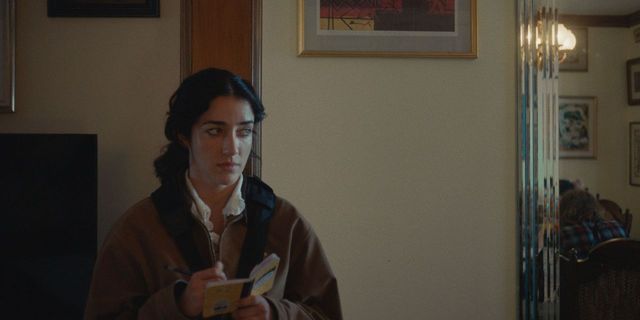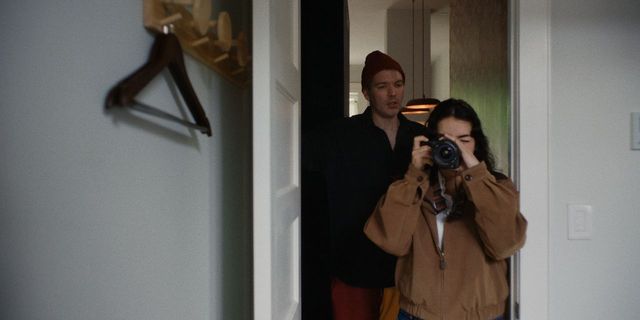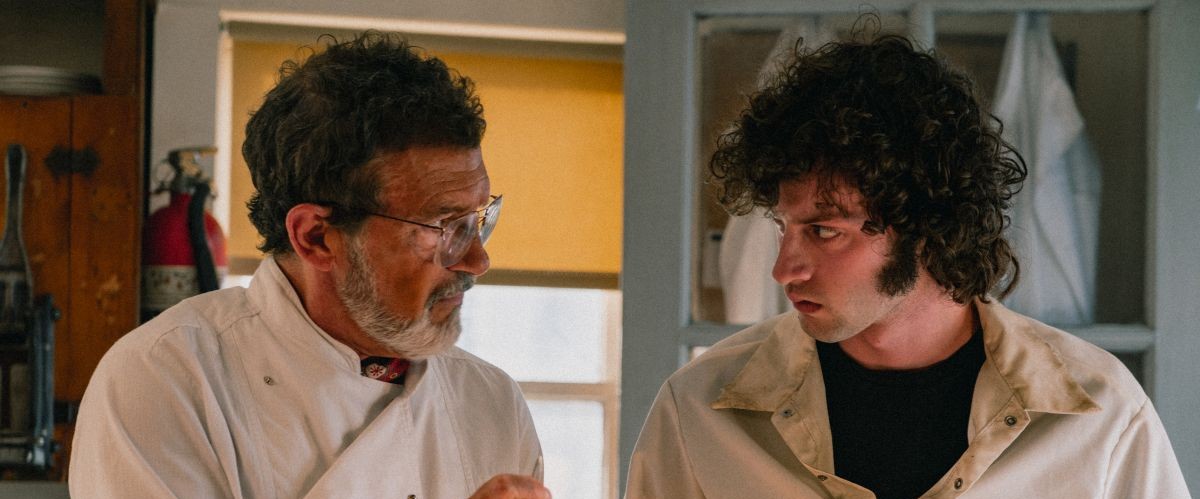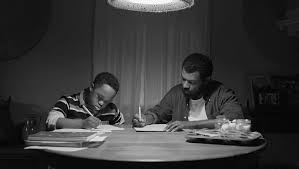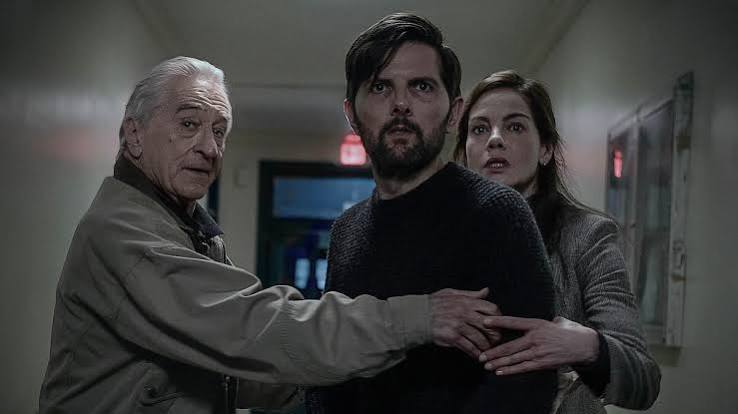
Photo caption: Laura Dern and Will Arnett in IS THIS THING ON? Courtesy of Searchlight Pictures.
This week on The Movie Gourmet – new reviews of the distopian AI thriller Mercy and the unusually thoughtful romantic dramedy Is This Thing On?
Note: The engrossing indie family drama East of Wall and the historical psychodrama Nuremberg are now both on Netflix.
CURRENT MOVIES
Is This Thing On? uncoiling the bewilderment of a break-up. Hulu (included,) Amazon, AppleTV.
Heel: don’t try this at home. Amazon, AppleTV, YouTube, Fandango.
La Grazia: it’s time to get past his malaise. Amazon, AppleTV.
The Bride!: a funnier Bonnie and Clyde, with monsters.In theaters.
Fackham Hall: silly, low-brow, and that’s okay. HBO Max (free), Amazon, AppleTV.
A Private Life: a shrink and her own issues. Amazon, AppleTV, YouTube.
Mercy: not as good as the premise. Amazon (included with Prime), AppleTV.
ON TV
Matthew McConaughey in LONE STAR.
Set your DVRs to record the 1996 John Sayles masterpiece Lone Star on April 9 on Turner Classic Movies. It’s a great multi-generational story of mystery, corruption, racism, forbidden love and redemption, and the screenplay was nominated for an Academy Award. The cast is also phenomenal: Chris Cooper, Matthew McConaughey, Kris Kristofferson, Elizabeth Pena, Francis McDormand, Miriam Colon, Joe Morton and Ron Canada.
I love and admire this film so much, and I was amazed to see that I hadn’t written about it in the 15-year history of this blog. So, on Monday, I’ll be publishing a full review.
Photo caption: Will Arnett in IS THIS THING ON? Courtesy of Searchlight Pictures.
In the romantic dramedy Is This Thing On?, Alex (Will Arnett) and Tess (Laura Dern) are suburban New Yorkers heading for an amicable divorce. They’ve been together for 26 years, married for 23, and have a pair of precocious and adorable ten-year-old sons, but the passion in the relationship has petered out. Alex, who works in finance, has become a hangdog, passively accepting household assignments from Tess. Tess, a former Olympic athlete, runs the family, but she’s suffering from some undefined deficit. They like each other, and their lives are objectively comfortable, but each is miserable, so Alex takes a tiny apartment in Manhattan.
Despairing and confused, Alex is at loose ends when, on a whim, he gets on stage at a comedy club’s open mic night. He talks about his bewilderment to an audience, and finds it gratifying. Soon, he is spending every night doing stand-up, continuing to process his feelings, and actually getting proficient at comedy. Alex has found a new passion, and it’s stand-up comedy.
Tess is finding that the mere absence of Will isn’t making her feel better either, and decides to re-enter the world of sports as a coach. When Tess finally learns about Alex’s new pursuit, the two can finally start figuring out what has been keeping them from happiness.
Laura Dern and Will Arnett in IS THIS THING ON? Courtesy of Searchlight Pictures.
This is a mostly funny and unusually thoughtful rom com. Arnett and the director, Bradley Cooper, co-wrote the screenplay with Mark Chapell.
Both Will Arnett and Laura Dern are exceptional as the talented and privileged Alex and Tess, who founder as a couple and as singles. Bradley Cooper is very funny as Alex’s extremely shallow actor friend.
The way that Tess finds out about Alex’s stand-up comedy is contrived, as important plot points in any rom com tend to be, but I was distracted by the actor involved, who is very, very famous for non-acting. Jeezus, that’s Peyton Manning! Manning is actually good, but his sudden appearance took me out of the movie for a bit.
The Wife, on the other hand, walked out at that point. She had previously been distracted by the lack of economic consequences to the split of the one-income family into two households.
Nevertheless, I liked Is This Thing On?, which is as funny and redemptive as most rom coms, and smarter than most of them. Is This Thing On? is included with Hulu and rentable on Amazon and AppleTV.
Photo caption: Rebecca Ferguson in MERCY. Courtesy of Amazon MGM Studios.
Here’s the interesting premise of the distopian AI thriller Mercy: in the near future, Los Angeles adopts a new AI-driven criminal justice system whereby a murder suspect is restrained in front of a screen, where an AI “judge” gives him the chance to prove his innocence; he is presumed guilty, and will be executed within ninety minutes unless he can lower his likelihood of guilt percentage under a numeric threshold that represents reasonable doubt. The object is to reach a fact-based conclusion quickly and with certainty, protecting the community and providing closure for victims’ loved ones. The Orwellian name for the new system is Mercy.
One of the biggest advocates of this new system is the police detective Chris (Chris Pratt), who wakes up from a blackout drunk to find himself strapped to the Mercy chair, charged with the murder of his wife. An initial review of facts demonstrate that he had the motive, means and opportunity – and things look really bad for Chris. He is being judged by an AI bot, played by Rebecca Ferguson. The bad news is that she/it is completely devoid of intuition and emotion, rigidly adhering to the programmed procedure.
The good news is that the court is a supercomputer which is able to provide Chris with INSTANT access to video from traffic cameras and security cams and police body cams, to everyone’s history of movements from cell phone tracking, al financial records, every call and text, and forensic evidence – blood, fingerprint, fiber and DNA. The key word is instant because it allows an investigation that would take days or weeks to be compressed in to just over an hour. That device also allows a whodunit story to be told in real time, which is always a plus in a movie.
Chris Pratt in MERCY. Courtesy of Amazon MGM Studios.
So, essentially, the plot of Mercy is a detective procedural, but one with very high stakes (summary execution) and under extreme time pressure. That all works to heighten the thrills in this thriller.
So far, so good, but it wasn’t enough for the filmmakers who, IMO, jump the shark with some silly add-ons, which I discuss in the spoiler paragraph below.
SPOILER: The problem I have with Mercy is that Chris, beside saving himself to solve the crime, ALSO saves his daughter from a hostage situation, saves downtown LA from being blown up in a terrorist strike, solves a previously closed case and forces the discredited AI justuce system to shut itself down. As well-crafted and exciting as the movie is, that’s really excessive plot. The story got so silly that it lost me in the final 20 or so minutes.
Mercy is streaming on Amazon (included with Prime) and AppleTV.
Note: The engrossing indie family drama East of Wall and the historical psychodrama Nuremberg are now both on Netflix.
REMEMBRANCE
Valerie Perrine always had a sex kitten image, but she held her own in some seriously good movies: Slaughterhouse-Five, Lenny, Superman, The Electric Horseman.
CURRENT MOVIES
Heel: don’t try this at home. Amazon, AppleTV, YouTube, Fandango.
La Grazia: it’s time to get past his malaise. Amazon, AppleTV.
The Bride!: a funnier Bonnie and Clyde, with monsters.In theaters.
Fackham Hall: silly, low-brow, and that’s okay. HBO Max (free), Amazon, AppleTV.
A Private Life: a shrink and her own issues. Amazon, AppleTV, YouTube.
ON TV
Rita Moreno, F. Murray Abraham and Jack Weston in THE RITZ.
On March 29, TCM airs a milestone in LGBTQ cinema, the 1976 madcap comedy The Ritz. A straight and very square suburban businessman (Jack Weston) is fleeing from his homicidal mobster brother-in-law (Jerry Stiller) and hides out in the very last place one would look for him – a gay bathhouse in Manhattan. The Ritz is a fish-out-of-water farce with lots of comic mistaken identities. Today, it’s plenty dated, and a handsome but squeaky-voiced detective (Treat Williams) falls especially flat. But it’s one of the first movies with a decidedly queer setting, and F. Murray Abraham plays one of the first entirely sympathetic and relatable gay movie characters. Rita Moreno is all in as Googie Gomez, the house entertainer. Watch for John Ratzenburger (Cliff the mailman in Cheers and the voice of many Pixar movies) as a bathhouse patron.
Photo caption: Toni Servillo in LA GRAZIA. Courtesy of MUBI.
When we talk of “coming of age” movies, we usually mean those about kids or young adults experiencing life lessons for the first time. But, the more mature among us also face new realities as we age into new phases of our lives. That’s the case with Paolo Sorrentino’s lyrical La Grazia.
La Grazia is an insightful and empathetic portrait of a fictional president of Italy (Toni Servillo) in the final months of his term. He is a man of quiet and resolute competence, a jurist admired for guiding the country through six political crises. He is also staid and taciturn, a man of boring countenance (except for an his fondness of the most current pop music, including rap).
He is a lame duck and in a malaise from the loss of wife of fifty years. He’s just running out the clock. Fortunately, his daughter Dorotea (Anna Ferzeti), an impressive jurist in her own right, is nudging him through his daily duties. To her frustration, he is refusing to make his final three official decisions, about whether to sign euthanasia legislation and whether to grant two pardons.
He believes that his beloved wife had an affair forty years before, and now, instead of working, he’s stewing over who was her lover.
His lethargy contrasts with the vibrant, over-the-top baroque art covering every surface of the Quirinale Palazzo, the former papal palace now the headquarters of Italy’s President. The only sparks of life come from Anna’s prodding and from dinners with the art critic Coco, his friend from grade school and his wife’s bestie (played in a charismatic performance by Milvia Marigliano).
As doggedly as the president drags his feet, we know that he will need to find a catharsis and reset his life. As he figures things out, there is a remarkable scene involving, of all things, an astronaut shedding a zero gravity tear.
Toni Servillo is excellent here as a much more decent and much less flamboyant politician than the ones he played in Sorrentino’s Il Divo and Loro. La Grazia matches up well with his Youth, another contemplation of the end of a career. As usual, Sorrentino takes full advantage of the palace interiors and Roman exteriors; visually and otherwise, Sorrentino’s masterpiece remains The Great Beauty.
Photo caption: Tommi Korpela and Pihla Viitala in THERAPY. Courtesy of Cinequest.
Beginning today, and thru midnight March 31, select films from this year’s Cinequest are now available to watch at home through Cinequest’s online festival Cinejoy. The price is less than ten bucks per movie for all but two, and you can watch all of them with a $50 pass.
There’s a Spotlight section where, for $14..99, you can join others watching the film at the same time and participate in Q&A with the filmmakers. The Spotlight film I recommend is Adult Children.
Amber Gray in HEARTWORM. Courtesy of Cinequest.
The other films that I recommend are in the Cinejoy Showcase section, so you can watch them whenever convenient, for only $9.99. They include my choices for the very best of the festival:
Heartworm: Set in a near future where humans can connect to an AI-generated world indistinguishable from reality, a couple grapples with the heartbreaking death of their daughter. The mom is bravely working through her grief, trying to harness her resilience; the dad, equally shattered, has emotionally shut down. When we see the daughter, is it a flashback or a reappearance? The mom must figure out whether she has experienced a trauma-induced hallucination or a psychotic break – or whether the dad has stepped into an insidious AI pseudo-reality where their trauma didn’t happen? The distinguished Broadway actress Amber Gray, most recently Tony-nominated for Hadestown, soars as the mom, fighting fiercely for her sanity at the moment of her greatest vulnerability. This brilliantly constructed film is a striking debut feature for writer-directors Miriam Louise Arens and Mitchell Arens. World premiere.
Therapy: A husband and wife team of therapists have over-invested in a spacious seaside manor, where they are about to host a five-day couples retreat. Trouble is, the splendid but decaying estate has tapped out their finances, and their own marriage is on the rocks. What could possibly go wrong? This very funny Finnish dramedy sends up psychobabble while exploring the topics of grief, loyalty, betrayal, jealousy, disappointment and relationship fatigue. Therapy’s screenplay brims with insight, wit and humanity. Second narrative feature for writer-director Paavo Westerberg. US premiere.
Photo caption: Andrea Riseborough, Kit Rakusen, Stephan Graham and Anson Boon in HEEL. Courtesy of Magnolia Pictures.
As the psychological thriller Heel opens, we see the feral teenage Tommy (Anson Boon) partying insatiably and behaving despicably. He is a bully, a vandal, and a hedonist who thinks of no one but himself. If he had any aspiration or cultural curiosity, he might see himself as the Malcom McDowell character in A Clockwork Orange. Addled by drugs and booze, he staggers off to pass out.
Tommy regains consciousness, and finds himself wearing a steel collar on his neck, chained to the wall of a dungeon-like basement. He doesn’t know where he is, but it’s in an isolated house in the remote English countryside. The home belongs to Chris (Stephen Graham) and Kathryn (Andrea Riseborough), who have KIDNAPPED Tommy with the intention of turning him into a good boy, a kid who is civil, respectful, considerate and responsible. Chris and Kathryn have a 10-year-old son Jonathan (Kit Rakusen), who is almost sickeningly obedient.
Yes, this is all bizarre. It is not okay to hold someone against their will, literally chained to the wall, even if Chris and Kathryn act like it’s the most normal and benevolent behavior. Even Tommy has enough awareness to label his situation a “Guantanamo”.
Chris and Kathryn hire a young, undocumented Macedonian woman, Rina (Monika Frajczyk), as a housekeeper. The family is so twisted, and Tommy is so vile, that Rina’s point of view validates the audience’ perspective.
Anson Boon in HEEL. Courtesy of Magnolia Pictures.
What Chris and Kathryn are doing is inhumane, illegal and very, very creepy. Corporal punishment does work to modify behavior in the short term, that’s not the reason that civilized society doesn’t use it anymore. Of course, this very extreme situation is used to explore just what children need from their parents. Kids do need stability, consistency, discipline, attention and unconditional love, and Chris and Kathryn get that much right.
As unhinged as Chris and Kathryn are, they DO really care about Tommy, which drives a surprise ending.
I love Stephen Graham as an actor. His characters can be very menacing and brutish. Here, his Chris acts like he’s naturally a milquetoast, but one very determined to stay on mission; he doesn’t LIKE using an electric prod, but if he has to…
Andrea Riseborough, another actor who is always superb, is wonderful in Heel as a woman who seems at first to live in a stupor of grief, but whose agency is eventually revealed.
The folks responsible for this story, in all its bracing originality, are Polish director Jan Komasa and co-writers Barto Bartosik (his first screenplay) and Naqqash Khalid (his second). Let’s order up some more movies from these guys!
Heel was originally titled Good Boy (which would have been a much better title IMO), but it was changed to avoid confusion with another film (the horror picture with the dog’s POV).
Heel is wild, unsettling and very entertaining. Heel is streaming on Amazon, AppleTV, YouTube and Fandango.
Alyssa Lemperis in DEAD OR DYING. Courtesy of Cinequest.
Cinequest is winding up its in-person program today, and transitioning to its virtual festival, which I will cover tomorrow. Here are the Cinequest 2026 films that I hadn’t written about yet. The first two would have made my Best of Cinequest had I been able to screen them earlier:
Dead or Dying: This acidly droll comedy satirizes modern self-absorption in a near future LA where, absurdly, there’s an epidemic of youngish people falling over dead. The film is a series of vignettes that are all pretty good, but the opener with a stunningly self-centered TV star (Alyssa Lemperis) is especially hilarious, as is one with two guys pitching a new app with a target market of bosses. First film for writer-directors John Purcell and Malin von Euler-Hogan. World premiere.
American Muscle: n this taut, 80-minute neo-noir, Ray (David Thompson) is the mechanic at an isolated auto shop in rural Kern County. Ray is in serious debt to a very serious man, but he has a scheme for raising the payoff. Trouble is, his lender’s two very scary enforcers arrive to collect the money now, and Ray doesn’t have it. Just then, Ray’s long-estranged sister Maggie (Liana Wright-Mark) shows up unexpectedly. Ray’s financial deadline is accelerated, and he is plunged into a desperate and apparently hopeless race against the clock. In his first feature, writer-director Joel Veach creates a vivid milieu and delivers a perfect ending. Veach understands a great truth that is also a tenet of film noir: if you’re a loser, you can always find a way to make yourself a bigger loser. The dry emptiness of American Muscle’s Kern County makes the Bakersfield of Honey Don’t look like Mumbai. The intellectual curiosity of the bantering enforcers is a very funny homage to the characters of Vincent and Jules in Pulp Fiction. Very entertaining and a first-class neo-noir. World premiere.
Liana Wright-Mark in AMERICAN MUSCLE. Courtesy of Cinequest.
Here are the others that I’m catching up writing about, in the order in which I liked them:
Victoria: A young beautician faces an urgent decision – whether to elope with the boyfriend her parents have rejected for her. Pressure mounts as she must orchestrate her escape by the end of the work day, all while minding the beauty shop by herself. Absurdly, she is also babysitting a rooster destined for a religious festival at night. Excellent lead performance by Meenakshi Jayan and a very human, relatable story. First film for writer-director Siviranjini J. US Premiere.
The Vanishing of Dolores Wulff: The elements that distinguish this true crime doc are 1) a murder solved after over forty years; 2) the impact of decades-long unresolved loss upon the victim’s children; 3) the family discomfort of the primary suspect being the father of the victim’s children; and 4) an appallingly funny Greek Chorus of hot-tempered knuckleheads in the extended family. Exceptionally resourced – we meet the family, the idiot would-be vigilantes and law enforcement. First feature for Paul Sadowski. World premiere.
Lady D: A teen sister and brother find themselves homeless, on the unforgiving streets of Tirana, Albania. They fall into a seamy scene filled with dangers for them to escape or survive; their fortunes turn when they meet a mysterious, hard-ass woman who knows how to navigate the underworld. Writer-director Fatmir Koçi embues the film with verisimilitude, and nobody in Tirana is getting the Parent of the Year award. US premiere.
98 lbs of Dynamite: A disability from birth has left a man very physically tiny, and confined to a wheelchair. Nevertheless, he is relentlessly upbeat and funny, and aggressively embracing life. We meet his mom and learn her impact on his attitude. Feel Good. First film for writer-director Loren Goldfarb. World premiere.
The Mechanics of Borders: A 19-year-old French Canadian guy, just out of foster care, has been establishing his own adult life, with an unpleasant first job and grubby first apartment; he has friends and a woman who wants to be his girlfriend. Suddenly, he gets a distress call from his long-estranged older sister who begs him to retrieve her from a bad situation in Arizona. Against his better judgment, he drives the two days to pick her up, and they embark on a road trip back to Quebec. Impulsive, volatile and unreliable, she is a hot mess. He is more functional, and she is more worldly, but both are emotionally scarred from their chaotic childhoods. On the road trip, they start to come to grips with the impact of their shared experience and to rebuild their relationship. Well-acted, with an especially powerful interlude while they wait for their van to be repaired, but the ending didn’t pay off for me. US Premiere.
The Mainland: In this enigmatic Russian tale, a woman brings her son to a remote island to await something that we will eventually discover. Superb lead performance by Anastasiya Kuimova as her character undergoes a wide palette of emotions: moodiness, determination, lust, fatigue, ennui and longing. The stark island landscape is visually stunning. But there’s also a mysterious whale on her side – some magical realism that didn’t work for me. US premiere.
Dancing on the Elephant: In this Canadian dramedy, an elderly woman (an excellent Sheila McCarthy) is moved from her home to an independent living facility. There she meets another female resident who is outrageously subversive. Not bad, but it mines the same material as much better geezer comedies like Cloudburst and Thelma. First narrative feature for directors Julia Neill and Jacob Z. Smith. US premiere.
Lonely Nights: In this Mexican coming of age drama, an almost-college-age kid flounders socially. His parents and friends are rich, but he is directionless and socially awkward. He hires a hooker and then becomes infatuated with her – which everyone but him knows cannot last. It’s a well-crafted and sweet film, but I’ve just lost all patience with the patient with angst of the very privileged. First feature for director and co-writer Julian Acosta Vera. World premiere.
Give It Up: A failing comic tries to restart his life by going on the road with yet another tour of one-night stands. Trouble is, this loser is too unlovable, so we just don’t care. World premiere.
After Love: A decades-long marriage between two aging Iranian immigrants has long ago sank into bitter co-existence. The husband finally snaps, launching a series of misadventures for the two. This is supposed to be a comedy, but the two are so unlikable and some moments so transgressive, that it’s not watchable. World premiere.
Tomorrow, I’ll be posting about which of these films, along with others I’ve already written about will become available to watch in Cinequest’s virtual festival, Cinejoy.
Meenakshi Jayan in VICTORIA. Courtesy of Cinequest.
Liana Wright-Mark in AMERICAN MUSCLE. Courtesy of Cinequest.
In the taut, 80-minute neo-noir American Muscle, Ray (David Thompson) is the mechanic at an isolated auto shop in rural Kern County. Ray is in serious debt to a very serious man, but he has a scheme for raising the payoff. Trouble is, his lender’s two very scary enforcers arrive to collect the money now, and Ray doesn’t have it. Just then, Ray’s long-estranged sister Maggie (Liana Wright-Mark) shows up unexpectedly. Ray’s financial deadline is accelerated, and he is plunged into a desperate and apparently hopeless race against the clock.
The out-of-town enforcers (Gbenga Akinnabe and Brendan Sexton III), with their chattiness and intellectual curiosity, are a welcome homage to the hit men Vincent and Jules in Pulp Fiction. (And I love that they wear bolo ties with their suits!)
Thompson and Wright-Mark are excellent as siblings who have survived a grim upbringing that will either make one strong and resilient or break one into weakness. American Muscle reveals that childhood’s impact on both Ray and Maggie.
David Thompson in AMERICAN MUSCLE. Courtesy of Cinequest.
In his first feature, writer-director Joel Veach creates a vivid milieu and delivers a perfect ending. Veach understands a great truth that is also a tenet of film noir: if you’re a loser, you can always find a way to make yourself a bigger loser.
The dry emptiness of American Muscle’s Kern County (it was actually shot in Santa Clarita) makes the Bakersfield of Honey Don’t look like Mumbai.
I screened American Muscle for its world premiere at the 2026 Cinequest. A perfectly-seasoned mixture of humor, menace and cynicism, it’s ever entertaining and a first class neo-noir.
David Thompson and Liana Wright-Mark in AMERICAN MUSCLE. Courtesy of Cinequest.
I’m still covering the ongoing Cinequest film festival, with all my coverage linked on my Cinequest 2026 page. Watch for my festival wrap-up on Monday and, on Tuesday, my recommendations for Cinequest movies you can stream at home.
CURRENT MOVIES
The Bride!: a funnier Bonnie and Clyde, with monsters. In theaters.
Fackham Hall: silly, low-brow, and that’s okay. HBO Max (free), Amazon, AppleTV.
A Private Life: a shrink and her own issues. Amazon, AppleTV, YouTube.
ON TV
THE FIREMEN’S BALL
On March 22, Turner Classic Movies presents Miloš Forman‘s 1967 Czech comedy The Firemen’s Ball. In his youth, Forman lived through the Nazis, who he described as evil, and the Communists, who he described as absurd. The Firemen’s Ball is a comedy of errors set during the annual ball of a small town fire brigade. It’s an obligatory occasion, and everyone is just going through the motions. No one is willing or able to do what they are supposed to be doing, whether it is protecting the raffle prizes or even putting out fires. The film eviscerated the moral bankruptcy of the Communist society.
The bumbling old farts on the ball committee try to put on a beauty contest; they shanghai a bunch of young women in attendance and parade them around the committee room to prep them for the pageant. The Wife was offended by the sexism of the scene, but she didn’t stick around to see the committee get their comeuppance when the contestants themselves blow up the Big Announcement and turn the committee members into objects of ridicule. Stick with it – the whole movie is only 73 minutes long.